

Registration Closing Soon for the 2nd Annual Smoky Mountain Primary Care Conference

2nd Annual Smoky Mountain Primary Care Conference
Kern Auditorium, Lake Junaluska Conference Center
Lake Junaluska, NC
April 27, 2024
The Smoky Mountain Medical Society is sponsoring a CME program on Saturday, April 27 at the Lake Junaluska Conference Center. This program is geared toward primary care providers and nurses in Western North Carolina, covering the topics of Diabetes & Weight Loss Medications, COPD, Anticoagulants, Adult & Pediatric Rheumatology for the Rural PCP, Urinary Incontinence and Behavioral Health: What to Do While Waiting for a Referral.
Learn more and register here.


NCMS Member Named Physician of the Year at AHHC H.O.M.E. Awards!

Dr. Deric Weiss AHHC H.O.M.E. Physician of the Year

NC Medicaid State Fiscal Year 2023 Annual Report Available Online

NC Medicaid published its State Fiscal Year Annual Report on its website at medicaid.ncdhhs.gov/reports/annual-reports-and-tables.
The public report summarizes the investments the Department has made in the health of North Carolinians and the impact of those investments.
The report highlights key investments and efforts NC Medicaid made in its programs and services as part of the Department’s commitment to whole-person care and value health outcomes for beneficiaries across the state in state fiscal year 2023 (July 1, 2022 – June 30, 2023).
Key milestones in the report include:
- North Carolina reached a historic milestone on March 27, 2023, when Governor Cooper signed HB 76 into law, expanding Medicaid coverage to more than 600,000 people across the state.
- For the tenth consecutive year, NC Medicaid ended the state fiscal year within budget, closing at $119 million under budget.
- Began unwinding the continuous Medicaid coverage provided during the federal COVID-19 Public Health Emergency. The Department began recertifying eligibility for Medicaid beneficiaries on April 1, 2023.
- Launched Tailored Care Management Dec. 1, 2022, providing beneficiaries with personalized care through a single designated care manager.
- Expanded the Healthy Opportunities Pilot to include Interpersonal Violence (IPV) services.
For additional information, contact Medicaid.NCEngagment@dhhs.nc.gov.

NCMS Member Dr. David Tayloe, Jr. Recognized in US Congressional Record
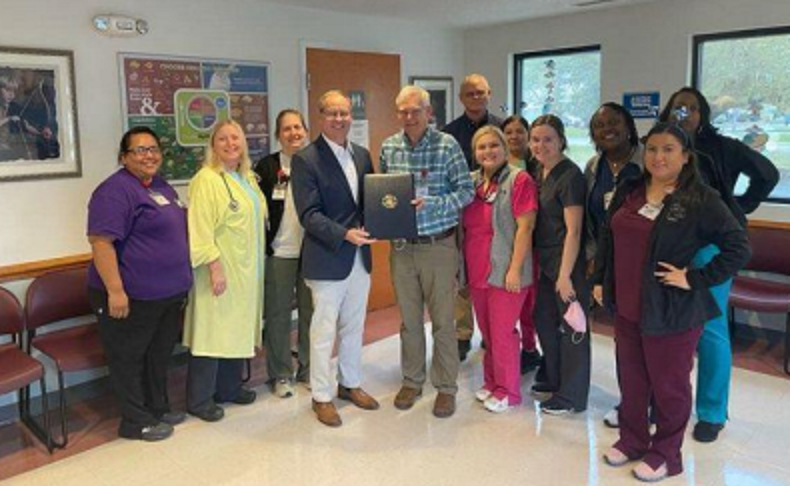
NCMS Member, Congressman Greg Murphy, MD, Recognizes Dr. David Tayloe in the Congressional Record
April 7, 2024 -- Congressman Gregory Murphy, MD, honored NCMS member Dr. David Tayloe in the Congressional Record.
Here is statement:
"I was honored to recognize an incredible physician, Dr. David Tayloe, in the Congressional Record for his commitment to community healthcare and his passionate advocacy for children.
Dr. Tayloe has led an extraordinary life of servant leadership. Be it caring for children at his practice Goldsboro Pediatrics, spearheading pediatric advocacy in the North Carolina General Assembly, or serving as the President to the American Academy of Pediatrics. He has spent his life caring for the less fortunate at home and abroad. I am in awe of his stewardship.
Thank you for being such an incredible leader in Eastern North Carolina. We are lucky to have you!"
Dr. Tayloe is a North Carolina Medical Society Life Member, a member of the NCMS 1849 Society, and has served on the Goldsboro City School and the Wayne County Public School Boards of Education. He graduated from the UNC-Chapel Hill School of Medicine. He founded Goldsboro Pediatrics in 1978.

NCMS Member Dr. Leo Spector Featured in "Business NC"
OrthoCarolina’s CEO has MD-MBA cred
OrthoCarolina’s new leader merges business acumen with a surgical background.
(BusinessNC, Kevin Ellis) -- When Charlotte spine surgeon Leo Spector returned to the classroom more than four years ago, his fellow students in the Duke University Executive MBA program peppered him with questions. A disconnect existed, he says, about the business of healthcare and his classmates’ familiarity with nonmedical corporations.
“Running a factory is not the same as running an operating room, although you can apply some of the same principles,” says Spector, who earned his MBA from Duke in 2020 and became CEO at Charlotte-based OrthoCarolina in January.
Spector, the son of a general orthopedic surgeon in Boston, started working at OrthoCarolina during a fellowship at its spine center 18 years ago. Around the same time, about 45 doctors who had been with Charlotte Orthopedic Specialists and Miller Orthopaedic Clinic formed the physician-owned practice in 2005.
Under previous CEOs Dr. Dan Murrey and Dr. Bruce Cohen, both surgeons like Spector, the practice has grown to about 112 physician shareholders, 472 medical providers and 1,700 employees. It has more than 30 orthopedic practices from Boone to Bennettsville, South Carolina, and as far west as Shelby.
Spine surgeon Murrey left in 2016 and is now chief physician executive for a large specialty care division owned by United Healthcare Group. Cohen, who is a foot and ankle surgeon, has returned to his general practice at OrthoCarolina.
While interviewing him for the job, Spector’s colleagues took note of his degree from Duke, which ranked as the fifth-best Executive MBA program last year, according to U.S. News
& World Report. “I think sort of tongue-in-cheek, they said, ‘OK, now that you’ve got your MBA, you’re ready to be the CEO, right?
“And I said, ‘I’m as ready to be the CEO with my MBA as I was ready to be a doctor with my MD,’ meaning, yeah, you’ve got the schoolwork, but you also have to get the actual practical experience,” says Spector.
Pursuing an MBA was a personal choice, supported by his wife and two children, who were 10 and 14 when he started the 18-month program. He says he had grown confident in his skill as a spine surgeon, a responsibility that terrified him when he was starting his practice. He knew his competency as a spine surgeon had grown when repairing a broken ankle caused him more anxiety than cutting into someone’s back, he notes.
CONSTANT GROWTH
Spector has always been interested in the business of medicine, which led him to leadership positions within OrthoCarolina, including chief quality officer and chair of
the Quality/Value Committee.
“I felt if I wanted to grow as an administrator, I should go back and get the formal education,” he says. “Life is all about learning and growing and constantly developing,” he adds. “Once you stop doing that, what’s the point?”
Spector and his wife, who have been married for 24 years, discussed the MBA’s cost and time commitment. Both agreed that if he didn’t pursue his goal, they’d regret the decision in 10 years. He isn’t sure if the degree factored into him getting the CEO position but counts that as a side benefit.
“I recommend business school to anybody. I really did love that 18-month period of time learning,” he says. “Business school is one of those places where every class is so applicable to life. Like, I took my negotiation class, and my wife didn’t like that because now I can negotiate with her on everything.”
He continued his medical practice during his MBA work and he’s still practicing two days a week. The program required him to spend one weekend a month at the Durham campus, with other coursework completed at night and on weekends. Approximately 20% of his class worked in the healthcare industry, and about half of those were physicians.
Nowadays, he spends a day per week seeing patients in a clinic setting, with a second day focused on surgeries. Keeping his hand in the practice of medicine remains important. “There’s obviously high stakes involved with spinal surgery, but like anything in life where there’s high risk there’s also high rewards,” he says. “There’s a great opportunity to really make a high impact in improving someone’s life and that’s what I love about the job.”
In the medical hierarchy, surgeons rank toward the top in pay. In 2022, orthopedic surgeons had the second-highest average annual compensation ($573,000) for specialists, behind plastic surgeons ($619,000), according to a report by Medscape news service.
“Every surgeon thinks they’re a rock star. You have to have a certain ego to think you should be able to cut open a human body and make it better,” he says. “No matter how big the ego is, they all learn that surgery is a very humbling experience. Typically, when your ego gets a little too big, it’s about to get deflated a little bit because unfortunately surgery doesn’t always go exactly the way we want it to despite the best efforts from the team and the surgeon. Those kinds of things help keep the ego in check.”
OrthoCarolina considers it important that a physician lead the practice. “Part of the desire to have an MD/CEO at OrthoCarolina is to have someone who is trained to take care of the patients every single day and sees the challenges that the providers (of care) face and the patient’s face,” says Spector.
He also sees the benefit of doing both. “When I’m working as an administrator, as the CEO, I can have that direct understanding of one-on-one with the tree (patient) and also that 10,000-foot view of the forest (practice.)”
LEARNING CURVE
Early into his CEO role, Spector says he’s learning about the roles and challenges of his different duties.
“As a surgeon, we’re very much used to being in charge,” he says. “As CEO, I can’t do everyone’s job at OrthoCarolina.” One job requires making quick decisions, the other listening, making sure different perspectives are heard. His Duke training helped him understand he didn’t need to be an expert in finance, marketing or business operations to be a successful CEO.
“My job as CEO is not to do everybody else’s job, it’s to make sure we have a great team and that we’re all pulling in the same direction, which is making sure we’re doing a great job of taking care of patients.”
OrthoCarolina is focused on improving access to care and trying to contain healthcare costs, he says. The enterprise is largely content with its existing markets, which benefit from the region’s strong population growth. The most recent clinic opening was in Fort Mill, South Carolina, one of the fastest-growing Charlotte suburbs.
OrthoCarolina and Durham-based EmergeOrtho employ about 50% of North Carolina’s orthopedic surgeons and account for about half of the musculoskeletal spending, says Spector. Emerge is larger, with about 270 physicians and specialists and 45 offices ranging from Beaufort to Waynesville. The two practices don’t compete in the same cities, except for Hickory, reflecting a conviction that direct competition wouldn’t serve anyone’s best interest, he says.
Last year, the two practices partnered with Optum Healthcare, a subsidiary of UnitedHealth Group, to help both practices control costs and improve outcomes. That partnership, called Health Innovation Value Enterprise, could grow into a “good model to other regions or states” to replicate, he says.
“There’s enough waste in the health care system — as in any industry — if we can help
get that out of the system, there’s plenty of savings to go around for patients to the government to doctors,” he says. Minneapolis-based UnitedHealth is the largest U.S.
health insurer.
Both OrthoCarolina and EmergeOrtho have resisted the trend in medicine to sell ownership stakes to private-equity companies. At least 15 PE-backed management companies own practices nationally, with dozens of sales occurring since 2017, KFF Health News reported last year.
OrthoCarolna’s leadership in its field in the Charlotte region means it works closely with the two dominant hospital systems, Atrium Health and Novant Health. Having both institutions benefits the region and physicians, Spector says. “Monopolies from a business standpoint are typically not the best,” he says. “So having some competition pushes both of them to be better and provide better service to the customer.”
In most cases, OrthoCarolina surgeons consider a patient’s primary healthcare provider and then schedule a procedure at the corresponding hospital. That provides easier access to patient medical records and coordination with primary doctors.
Spector says his life changed when he came to Charlotte for a fellowship at OrthoCarolina Spine Center. He planned to return to the Boston area, where he attended the University of Massachusetts Medical School and did a residency, and join his father’s medical practice. But his wife, whom he met while an undergrad at Colgate University in Hamilton, New York, fell in love with the area and its climate. Their oldest daughter was then 6 months old; she’s now a high school junior.
“Life takes interesting turns,” he says. “You just have to be open to where they take you.” The decision made a big difference in his career, he adds. “I don’t think I could have done what I do here if I were in Boston just because it’s so entrenched and not open to different people coming in.”
Spector says he has no timetable for how long he’ll remain in the dual roles. That decision will be balanced with his professional life, his medical practice and his family, he says.
The full article first appeared in Business NC
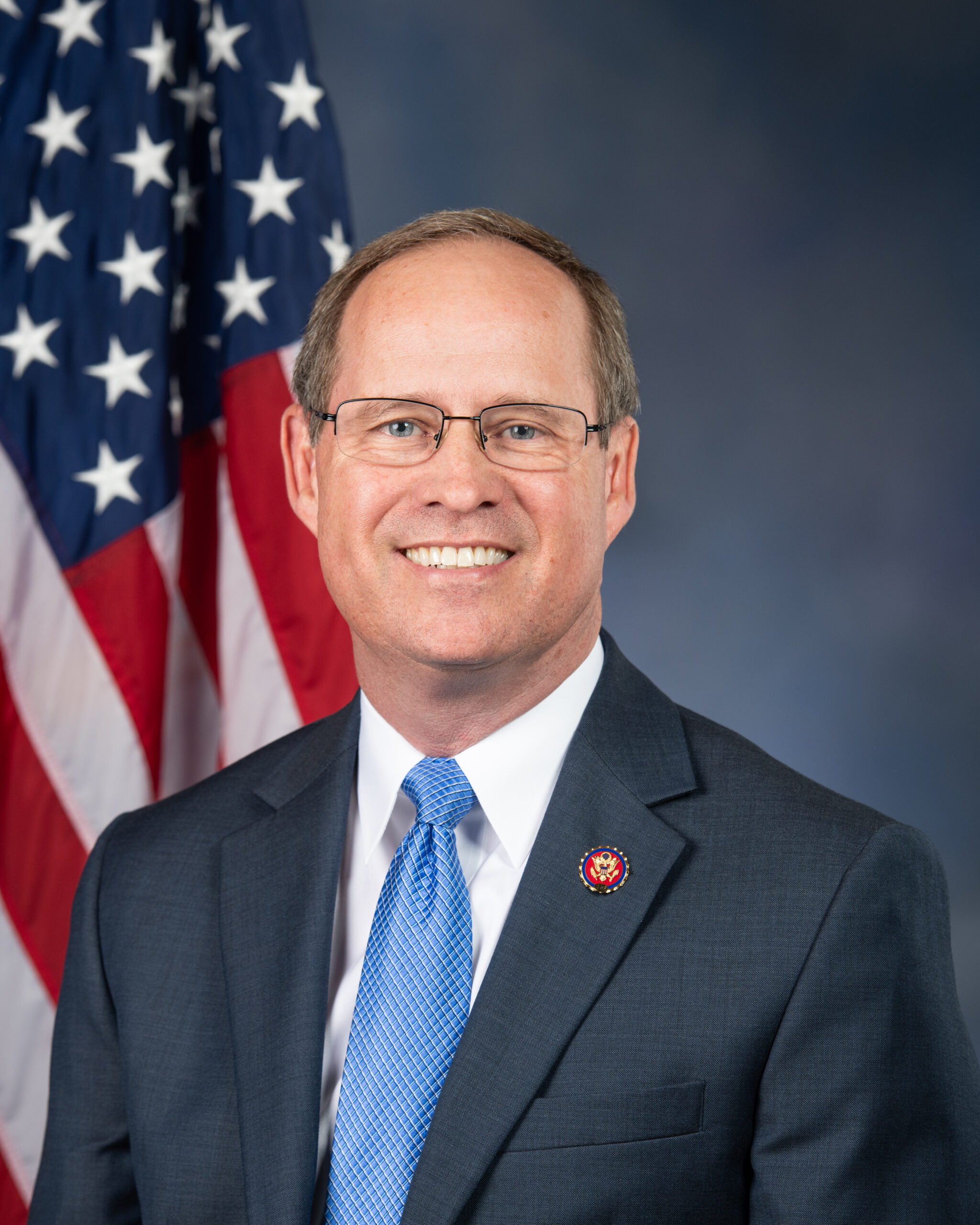
2024 NCMS Candidate Series - Dr. Greg Murphy

2024 NCMS Candidate Series Featuring Dr. Greg Murphy
The 2024 North Carolina Medical Society Candidate Series has an exclusive interview featuring Dr. Greg Murphy, who is running for reelection to the third Congressional District of North Carolina.
In this episode, Dr. Murphy talks about his career as a physician in Greenville and his plans to improve access to quality healthcare across the state. He also discusses the importance of a strong healthcare system for veterans and the elderly, the fate of Medicare in the state, and Prior Authorization.
All candidates who are members of NCMS and are running for either state or federal office have been extended invitations to articulate their perspectives on these crucial subjects. Stay tuned for forthcoming interviews with other candidates leading up to the November election.
See the full interview with Dr. Murphy here:
https://youtu.be/htj0felgovw

Health System Names New Chief Physician Executive Officer for Patient Experience
 Roxie Cannon Wells, MD
Winston-Salem-based Novant Health has named Roxie Cannon Wells, MD, as chief physician executive officer for patient experience.
In her new role, Dr. Wells will help steer the system's patient experience strategy, supporting both employed and independent clinicians.
According to the press release, Wells has over 25 years of healthcare experience, most recently serving as senior vice president and chief physician executive and strategy office for Novant's coastal region. She is also a past chair of the North Carolina Healthcare Association and has served on the board of trustees for the American Hospital Association.

Dermatologists Encouraged to Consider Skin Cancer, Infection Risks in Posttransplant Skin Disease

SAN DIEGO — The number of solid organ transplant survivors is on the rise, a dermatologist told colleagues, and they face unique challenges from higher risks for skin cancer and skin infections because of their suppressed immune systems.
"There are over 450,000 people with a solid organ transplant living in the United States. If you do the math, that works out to about 40 organ transplant recipients for every dermatologist, so there's a lot of them out there for us to take care of," Sean Christensen, MD, PhD, associate professor of dermatology, Yale University, New Haven, Connecticut, said at the annual meeting of the American Academy of Dermatology 2024. "If we expand that umbrella to include all types of immunosuppression, that's over 4 million adults in the US."
Christensen encouraged dermatologists to be aware of the varying risks for immunosuppressive drugs and best screening practices for these patients, and to take advantage of a validated skin cancer risk assessment tool for transplant patients.
Continue to the full article here.

Need Help? The Physician Support Line is Here for You!

Physician Support Line is a national, free, and confidential support line made up of hundreds of volunteer psychiatrists joined together in the determined hope to provide peer support for physicians and medical students.
Physician Support Line was created with the mission of physicians supporting physicians as they navigate the many professional and personal intersections of their lives.
For many, discrimination, bigotry, and intolerance towards disadvantaged and unjustly marginalized groups is an undeniable detriment to every aspect of their mental well-being. Volunteer psychiatrists at Physician Support Line are from diverse backgrounds. Physician Support Line promises to provide emotional support and a safe space for physicians and medical students who are affected by discrimination, bigotry, and intolerance.
- Free, Confidential & Anonymous
- No appointment necessary
- Call for any issue, not just a crisis
- Open Monday to Friday (except federal holidays)
Contact the national support line at 1-888-409-0141 or visit them online here.

Join Dr. Damon Tweedy for a Lively Conversation on His Latest Book Release

From the New York Times bestselling author of
Black Man in a White Coat
comes a powerful and urgent call to center
psychiatry and mental health care
within the mainstream of medicine
Quail Ridge Books-North Hills
4209-100 Lassiter Mill Road
Raleigh, NC 27609
Tuesday, April 9, 2024
7:00pm
ABOUT THE EVENT
Tickets include a signed copy of FACING THE UNSEEN, guaranteed entry to the event, and a seat in the reserved section. Dr. Tweedy will be in conversation with Steven Petrow. Tweedy will sign books after the program.
ABOUT THE BOOK
As much as we all might wish that mental health problems, with their elusive causes and unsettling behaviors, simply did not exist. Millions of people suffer from them, sometimes to an extreme extent. Many others face addiction to alcohol and other drugs, as overdose and suicide deaths abound. Yet the vast majority of doctors receive minimal instruction in treating these conditions during their lengthy medical training. This mismatch ignores the clear overlap between physical and mental distress, and too often puts psychiatrists on the outside looking in as the medical system continues to fail many patients.
In Facing The Unseen, bestselling author, professor of psychiatry, and practicing physician Damon Tweedy guides us through his days working in outpatient clinics, emergency rooms, and hospitals as he meets people from all walks of life who are grappling with physical and psychological illnesses. In powerful, compassionate, and eloquent prose, Tweedy argues for a more comprehensive and integrated approach where people with mental illness have a health care system that places their full well-being front and center.
ABOUT THE AUTHOR
DAMON TWEEDY, MD is a professor of psychiatry at Duke University School of Medicine and staff physician at the Durham Veteran Affairs Health System. His first book, Black Man in a White Coat, was a New York Times bestseller, selected by TIME magazine as one of the Top 10 non-fiction books of that year. He has also published articles about race, medicine, and mental health in medical journals and print publications including The New York Times and The Washington Post.
Piedmont Laureate STEVEN PETROW is an award-winning journalist and book author who is best known for his Washington Post and New York Times essays on aging, health, and civility. He’s also an opinion columnist for USA Today, where he writes about civil discourse and manners.


NCDHHS Urges Vaccination for Mpox as Cases Increase Statewide

NCDHHS Announces Statewide Increase in Mpox Cases, Urges Vaccine
The North Carolina Department of Health and Human Services is reporting a statewide increase in mpox cases. Over the past six months, 45 cases have been reported in 12 counties across North Carolina.
The national mpox outbreak began in late May 2022 and peaked from July to August 2022. A total of 703 cases were reported in North Carolina that year, and only nine cases occurred in 2023.
The mpox virus, formerly known as monkeypox, is primarily spread by prolonged close contact, typically skin-to-skin, that occurs during sexual activity. It is the associated rash, scabs or body fluid which contain the virus. Although anyone can become infected with mpox, cases have predominantly occurred among gay, bisexual or other men who have sex with men.
Fortunately, a safe and effective vaccine is available that reduces the risk of mpox infection, hospitalization and death. Those who are already fully vaccinated with two doses do not need to receive additional mpox vaccine doses.
"It is important people know how to protect themselves against mpox infection as we have seen cases increasing across North Carolina over recent months," said Dr. Erica Wilson, medical director for the medical consultation unit in the NCDHHS Division of Public Health. "The JYNNEOS vaccine is an important tool and North Carolina has an ample supply of vaccine."
Vaccines are currently free and available throughout North Carolina, regardless of immigration status. The two-dose JYNNEOS vaccine series is recommended for anyone at risk for mpox and aged 18 years and older, which includes the following:
- Anyone who has or may have multiple or anonymous sex partners; or
- Anyone whose sex partners are eligible per the criterion above; or
- People who know or suspect they have been exposed to mpox in the last 14 days; or
- Anyone else who considers themselves to be at risk for mpox through sex or other intimate contact.
The mpox vaccine locator can be used to find local vaccine providers.
Anyone who develops mpox symptoms should seek medical care. Symptoms include a rash on any part of the body, like the genitals, hands, feet, chest, face or mouth. The rash can initially look like pimples or blisters and may be painful or itchy. The rash will go through several stages, including scabs, before healing. Some people experience flu-like symptoms before the rash, while others get a rash first followed by other symptoms. In some cases, a rash is the only symptom experienced.
Other mpox symptoms can include:
- Fever
- Chills
- Swollen lymph nodes
- Exhaustion
- Muscle aches and backache
- Headache
- Respiratory symptoms (i.e. sore throat, nasal congestion or cough)
People with mpox are usually sick for about two to four weeks and can spread the virus from shortly before symptoms start until their rash is completely healed, meaning until the scabs fall off and new skin appears. Some patients may benefit from antiviral treatment, including those with severe illness or people with HIV that is not well controlled or other immune compromising conditions. Antiviral treatment may also help treat painful or severe mpox disease involving the eyes, mouth, throat, genitals and anus.
NCDHHS is working closely with local health departments and community partners to provide education about mpox, when to get tested and improve vaccine access for people at higher risk. These efforts to enhance communication, education and outreach include social media campaigns, distributing educational materials, the Mpox Equity Report, the Mpox Communications Toolkit and the Take Pride Now campaign.
More information about the virus, how to limit the risk of infection, and how to get vaccinated can be found on the North Carolina Mpox and CDC Mpox websites. [source]

BCBSNC: Additional Behavioral Health Care Services Reimbursable as Telehealth

Starting April 10, 2024, Blue Cross NC will begin reimbursing additional behavioral health inpatient and outpatient services performed via Telehealth visits according to the updated Telehealth Reimbursement Policy.
These additional behavioral health services include inpatient or outpatient daily care evaluative and/or discharge management services. Claims will still need to be billed with the appropriate place of service, procedure code and modifier combination for reimbursement.
This policy applies to Commercial, Host and Federal Employee Program (FEP). This will not apply to IPP Home or Medicare Advantage including Experience Health.

Your Feedback Needed to Improve the Medicaid Clinician Experience

NCMS's partners, Carolina Complete Health (CCH) and Carolina Complete Health Network (CCHN) will host their 2nd Annual Medicaid Managed Care Town Hall at the 2024 CPP Annual Meeting during NCMS LEAD Conference in November. In preparation for that session, we want to hear from clinicians across North Carolina who provide care to Medicaid enrollees.
Please share your experiences, challenges and successes, suggestions, and questions to help inform future programs, resources, opportunities, and collaborations that will improve health outcomes and enhance the overall care experience for Medicaid clinicians and enrollees.
All Medicaid clinicians are invited to complete this form, regardless of contract status with any of the PHPs.
Provide your feedback here.
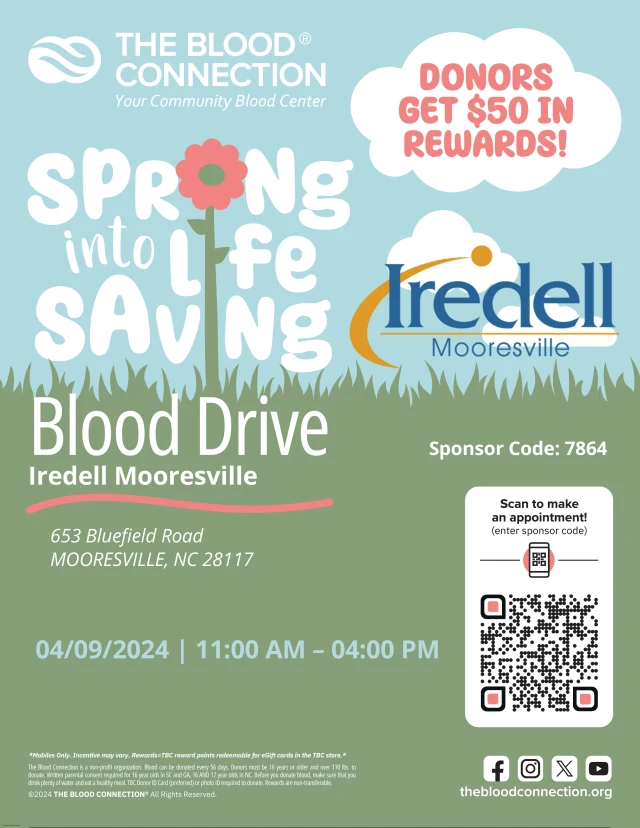
Spring into Life Saving! Give a Little, Save a Lot!

Spring into Life Saving Blood Drive
Iredell Health System, along with The Blood Connection, is hosting a blood drive on Tuesday, April 9, which will take place from 11 a.m. – 4 p.m. at Iredell Mooresville, located at 653 Bluefield Road.
You can make a life-altering difference in your community by donating blood. Donating blood is crucial for saving lives in emergencies, surgeries, and for treating various medical conditions. It helps ensure a steady supply of blood for patients in need. You can save three local lives in less than one hour through a blood donation.
Donors need to be at least 18 years old, weigh at least 110 pounds, and be in general good health. Make sure to bring a photo ID with you to your appointment. To schedule an appointment for the Iredell Mooresville blood drive, visit donate.thebloodconnection.org/donor/schedules/sponsor_code and enter “7864.”
Each donor will receive reward points for a $50 eGift Card with numerous popular options to choose from.
The blood drive is open to the public, and appointments are recommended.
Thank you for your support during this time of such critical need.

CDC Warns of Rise in Invasive Meningococcal Disease

Healthcare Workers Should be on Alert, Even if Patient Shows No Signs
The CDC announced there has been an increase in cases of the rare “invasive meningococcal disease." According to an advisory, healthcare workers should be on alert, even if patients do not exhibit typical symptoms.
"In 2023, 422 cases were reported in the United States, the highest annual number of cases reported since 2014," the CDC said. "As of March 25, 2024, 143 cases have been reported to CDC for the current calendar year, an increase of 62 cases over the 81 reported as of this date in 2023."
The bacteria Neisseria meningitidis is what causes meningococcal disease — and according to the CDC, it can cause symptoms such as fever, nausea or vomiting, altered mental status and rapid breathing. The disease, which can reach the bloodstream, is known to “worsen rapidly” and “become life-threatening within hours.”
Read the full article here.

NCDHHS: "Fight the Bite!" Avoid Tick- and Mosquito-Borne Disease

Warm Weather Means it is Time to 'Fight the Bite'
As warmer weather approaches, the North Carolina Department of Health and Human Services is urging North Carolinians to "Fight the Bite" by taking measures to reduce their risk of tick- and mosquito-borne diseases. In 2023, almost 900 cases of tick- and mosquito-borne illnesses were reported across the state.
April is Tick and Mosquito Awareness Month, and NCDHHS is announcing the return of the Fight the Bite campaign to increase awareness about the dangers of vector-borne diseases and educate residents about measures they can take to protect themselves. Students K-12 have been invited to submit an educational poster for the annual campaign contest.
"Recent tick and mosquito surveillance show both are present in North Carolina and their bites have the potential to cause serious disease," said Alexis M. Barbarin, Ph.D., State Public Health Entomologist. "We encourage all North Carolinians to explore the outdoors safely by taking protective measures like using DEET or other EPA-approved repellants."
Rocky Mountain spotted fever, Lyme disease and other tick-borne diseases can cause fever, headache, rashes, flu-like illness and other symptoms that can be severe. Lyme disease accounted for roughly 37% of all tick-borne diseases reported last year. While not reportable conditions, Southern Tick Associate Rash Illness and Alpha-gal syndrome have also been identified in North Carolina. Alpha-gal syndrome is an allergic reaction to red (mammalian) meat that has been linked to the bite of certain ticks. Most diagnoses of tick-borne diseases are reported between June and September.
Ticks live in wooded, grassy and brushy areas, and frequenting these areas can put you in contact with ticks and increase your potential exposure to vector-borne diseases. To reduce exposure to ticks:
- Use repellent that contains DEET (or other EPA approved replicants) on exposed skin and wear clothing treated with a pesticide called permethrin. Use caution when applying to children.
- Check yourself and your children for ticks if you have been in a tick habitat and remove them promptly.
- Reduce tick habitats with selective landscaping techniques.
The mosquito-borne diseases most often acquired in North Carolina are West Nile virus, eastern equine encephalitis and La Crosse encephalitis. Nationally, North Carolina was second to only Ohio in reported cases of infections from La Crosse virus between 2003 and 2022.
Most mosquito-borne diseases reported in North Carolina are acquired while traveling outside the continental United States, including cases of malaria, dengue, chikungunya and Zika.
To reduce exposure to mosquitoes:
- Use mosquito repellent that contains DEET (or equivalent) when outside. Use caution when applying to children.
- Consider treating clothing and gear (such as boots, pants, socks and tents) with 0.5% permethrin.
- Install or repair screens on windows and doors and use air conditioning if possible.
- "Tip and Toss" — reduces mosquito breeding by emptying standing water from flowerpots, gutters, buckets, pool covers, pet water dishes, discarded tires and birdbaths at least once a week.
- Talk with your primary care provider or local health department if you plan to travel to an area where exotic mosquito-borne diseases occur.
- Always check your destination to identify appropriate prevention methods. Travel associated health risk information is available at https://wwwnc.cdc.gov/travel
The annual Fight the Bite Campaign is a poster artwork contest between NCDHHS, local health departments and K-12 schools that uses illustration to increase awareness of tick- and mosquito-borne diseases in North Carolina. Entries are due by Monday, April 8, and information regarding contest submission and deadlines can be found on the NCDHHS website. Winners of this statewide awareness poster contest will be announced at the end of April.
For more information on vector-borne diseases in North Carolina, please visit the NCDHHS Vector-Borne Diseases webpage.

It’s Official! Tailored Plans Launches July 1st.
It’s official! Tailored Plans will launch on July 1.
At a recent legislative committee hearing, NC Medicaid shared that the Local Management Entities (LMEs) that will run Tailored Plans – Alliance Health, Partners Health Management, Trillium Health Resources, and Vaya Health – are all ready to go live.
Tailored Plans include services for people with serious mental health issues, substance use issues, intellectual and developmental disabilities, and traumatic brain injury.
People with NC Medicaid Direct who receive services for these needs may be moved to a Tailored Plan. The name will change, but the services will not.
From the NCMS Archives:
NC Medicaid Tailored Plan Update
NCDHHS Delays Medicaid Managed Care Tailored Plans
New Medicaid Managed Care Tailored Plans Launch Soon

Going to See the NC State Wolfpack (Men and Women - Woo Hoo!)? Here Are Some Tips for Your Trip
A Historic Weekend for NC State! Both the Men's and Women's Basketball Teams
are Playing in the Final Four!
RALEIGH -- Fans of North Carolina State are getting ready to switch into high gear. On Friday, play begins for two teams hoping to make it to a National Championship! First up will be the women on Friday at 7pm. The Wolfpack take on Number One seed South Carolina. If they survive that matchup, they will take on the winner of the UConn-Iowa game on Sunday.
For the men, who are experiencing a Cinderella tournament that has many recalling State's historic 1983 championship under the legendary Jim Valvano, the action begins Saturday at 6:09pm when they take on Number One seed Purdue. If the men advance they will play the winner of the Alabama-UConn game on Monday.
If you are planning to attend either, here are some things to look forward to:
The women play in Cleveland at the Rocket Mortgage FieldHouse. There are lots of events happening while you're in town. Check out events like the Four Bounce, Party on the Plaza, a FREE open practice by all four teams, and a Super Saturday concert. All you need to know about the events is here.
The men will be in Phoenix at the State Farm Arena and the city is rolling out the welcome mat. Events include the March Madness Music Festival with the Jonas Brothers, The Final Four Fan Fest, and loads of dining deals across the city. All you need to know about the events is here.
Everyone at the NCMS is wishing both teams the best as they represent North Carolina this weekend!

Two NC Hospitals Make Business NC's Top 20
 (image credit: Hendersonville Lightning)
UNC Health Pardee and AdventHealth made the top 20 in the annual best hospital rankings by Business North Carolina. Pardee claimed the 12th spot, while AdventHealth ranked No. 19. Both made top 10 in patient satisfaction surveys with Pardee also winning a high ranking for two types of surgeries.
In the magazine's annual ranking of the state’s best hospitals, Duke University Hospital earned the top spot, followed by Moses Cone Hospital in Greensboro, UNC Medical Center, Duke Raleigh and UNC Rex Healthcare. Mission Hospital tied for sixth.
Read the full article here.

More States Confirm Cases of Bird Flu as it Continues Spread Across Country

Contaminated water or feed may have caused dairy cows to become infected with the H5N1 avian influenza virus.
Recently, Texas officials issued a health alert about the first confirmed case of a human infection with a bird influenza virus that has found its ways into dairy cows.
The U.S. Department of Agriculture (USDA) says it has confirmed that the virus has infected cattle at farms in Texas, Kansas, New Mexico, and Michigan, while Idaho has a “presumptive” outbreak at one dairy farm.
The USDA stressed that the “current risk to the public remains low.” Contamination of commercial milk is of “no concern,” the agency said in a statement, because pasteurization reliably kills viruses, and milk from sick cows is not being sold. The Centers for Disease Control and Prevention (CDC) says people should not drink raw milk or products like cheese that are made from it. [source]
Recommendations for Clinicians
Providers should consider the possibility of avian influenza A(H5N1) virus infection in people who have symptoms of influenza and relevant exposure history. This includes people who have had close contact with a person with suspected or confirmed avian influenza A(H5N1) infection, affected animals, or unpasteurized milk from dairy farms with suspected avian influenza A(H5N1). A close contact is defined as a person who is within 6 feet of a confirmed or probable avian influenza A(H5N1) case for a prolonged period of time, or who had direct contact with infectious secretions while the case was likely to be infectious (beginning 1 day prior to illness onset and continuing until the resolution of illness).
Symptoms of avian influenza A(H5N1) infection in humans may include:
- Fever (temperature of 100°F [37.8°C] or greater) or feeling feverish or chills
- Cough
- Sore throat
- Runny or stuffy nose
- Headaches
- Fatigue
- Eye redness (conjunctivitis)
- Difficulty breathing/shortness of breath
- Diarrhea
- Nausea
- Vomiting
- Seizures
Join NCMS for a Regional Meeting With NHPCMS in Wilmington!

New Hanover-Pender County Medical Society and North Carolina Medical Society invite you to a joint meeting!
Pine Valley Country Club
500 Pine Valley Dr.
Wilmington, NC 28412
April 10th
6-8pm
Are You Feeling More Like a Factory Line Worker Than a Health Care Professional?
Join us to learn how we are working to put YOU back in health care decision making!
Here's what you can expect:
-
-
-
-
-
-
- 6:00pm - Socializing
- 6:30pm - Complimentary dinner
- 6:45pm - NHPCMS Scholarship Presentation & Announcements
- 7:10pm - NCMS Regional Meeting with Chip Baggett, NCMS EVP-CEO
- Discussion to follow
- 8:15pm - Adjourn
-
-
-
-
-
REGISTER NOW
Physicians, PAs, Residents, and Students
You do not need to be a member to register.
Questions? Contact Toni Hill, thill@ncmedsoc.org.

Measles Remain in Spotlight as Cases Continue to Rise Nationwide

As cases of measles continue to rise, health officials continue to stress the importance of vaccinations.
As of March 28, 2024, a total of 97 measles cases have been reported by several states: Arizona, California, Florida, Georgia, Illinois, Indiana, Louisiana, Maryland, Michigan, Minnesota, Missouri, New Jersey, New York City, New York State, Ohio, Pennsylvania, Virginia, and Washington. [source]
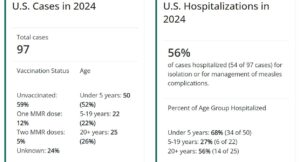
Symptoms of measles may include fever, cough, runny nose, watery eyes and a rash of red spots. According to the CDC, approximately 1 in 5 unvaccinated people in the US who get measles will be hospitalized, approximately 1 in every 20 children will develop pneumonia, and others may develop a dangerous swelling in the brain called encephalitis. Up to 3 of every 1,000 children who become infected with measles may die from respiratory and neurologic complications.
Thanks to a highly effective vaccine, measles is preventable. Experts recommend that children get the measles, mumps and rubella, or MMR, vaccine in two doses: the first between 12 months and 15 months of age, and a second between 4 and 6 years old. One dose is about 93% effective at preventing measles infection; two doses are about 97% effective. [source]

Register Now for NC Medicaid Managed Care Special Webinar
Medicaid Managed Care
SPECIAL WEBINAR:
Total Cost of Care (TCOC) Dashboard Launch for Providers
This month, NC Medicaid is launching a Total Cost of Care (TCOC) Dashboard for Advanced Medical Homes (AMHs).
This tool will allow AMHs to access and analyze data related to resource use and total cost of health care received by Medicaid members assigned to their practices.
The TCOC Dashboard aims to help AMHs identify potential drivers of overuse and inefficiency and assist them in making informed decisions when engaging in value-based arrangements with Medicaid prepaid health plans.
Join for one of three opportunities to learn more about this important new tool.
In the webinar, NC Medicaid will provide an overview of the dashboard and its metrics, walk through the login process, and demonstrate various functionalities for users of the AMH TCOC Dashboard.
Wednesday, April 17 | 5-6 p.m.
Thursday, April 18 | 5-6 p.m.
Tuesday, April 30 | 11:30 a.m.-12:30 p.m.


Join Us in Durham Next Week for the DOCMS Meeting at the University Club!

Join DOCMS at the University Club!
Wednesday, April 10, 2024 | 6:00pm - 8:00pm
University Club, 3100 Tower Boulevard, Suite 1700
Durham, NC 27707
AGENDA:
-
-
-
-
- 6:00pm- 6:30pm – Socializing & Housekeeping
- 6:30pm- 7:30pm – Dinner & Guest Speaker
- 7:30pm- 7:45pm – Q&A
- 7:45pm- 8:00pm – DOCMS 2024 Business
-
-
-
REGISTER NOW - Hybrid Meeting
Speaker:
Patrick Sullivan, MD | Director, UNC Suicide Prevention Institute
Dr. Sullivan is the Yeargan Distinguished Professor in the Department of Genetics and Psychiatry at the University of North Carolina at Chapel Hill. He is also a Professor at the Karolinska Institute in Stockholm, Sweden. His lab investigates the molecular genetics of schizophrenia, major depressive disorder (including post-partum depression), eating disorders, and autism. With funding from the Departments of Genetics and Psychiatry, he launched the UNC Center for Psychiatric Genomics. Dr. Sullivan is a founder and the lead principal investigator of the Psychiatric Genomics Consortium, the largest consortium in the history of psychiatry.
Spread the word: 9-8-8 suicide/crisis lineline, 24/7/365, talk, text, chat.
See https://988lifeline.org/ (great resource website too).
Questions or can't open the registration google link?
Please email Frank Snyder at fsnyder@ncmedsoc.org
1 CME Credit is available! Click here for how to claim your credit.
DOCMS Members & Prospective Members - FREE to attend
Guests - $25 to attend (will be collected at meeting
DOCMS is managed by the North Carolina Medical Society.
Please consider joining or learning more about the NCMS, at the links below.
NCMS MEMBERSHIP INFORMATION & BENEFITS
BCBSNC UPDATE: Financial Assistance Now Available for Providers Impacted by the Change Healthcare Outage

Independent providers in need of financial assistance as a result of the Change Healthcare outage that meet the criteria below may now apply for an interest-free loan through Blue Cross NC.
Eligible providers should email CHCFinancialAssistance@bcbsnc.com to start the process. Requesters will receive an automated email reply with a link to an attestation that needs to be completed and submitted. Once the attestation is complete, Blue Cross NC will review the attestation and accompanying information to confirm eligibility. A representative from Blue Cross NC will then notify the provider regarding eligibility, and any necessary next steps.
In addition to providing more information about how to apply for this financial assistance, we need to clarify the $5,000 in monthly submitted claims requirement. Please note the $5,000 per month is based on the provider’s 2023 claims data. The intent of the threshold is to establish material impact (or financial hardship) due to lack of claims payments as a result of the CHC outage.
If you have additional questions, please email CHCFinancialAssistance@bcbsnc.com as this email box is being continually monitored.
Blue Cross and Blue Shield of North Carolina (Blue Cross NC) is offering additional support to its provider community in the form of an interest-free loan to help ease the burden of the Change Healthcare outage.
For a provider to be eligible to receive this interest-free loan, they must meet the following criteria.
Providers must be:
- Contracted with Blue Cross NC
- Not involved in an active investigation for potential fraud, waste or abuse activities
- Located in North Carolina
- Confirmed as not having fully recovered their claims submissions to us and are submitting claims at a rate of less than 50% of comparable 2023 levels
- Independently owned
- Participating in our government business network(s) in support of our most vulnerable populations (This network requirement is not applicable to Dental Blue and Dental Blue Select providers; dental providers are otherwise eligible for an interest-free loan if all other criteria are met.)
- Submitting monthly claims for billed charges greater than $5,000
- Able to attest to financial hardship
BCBSNC is currently finalizing the application process for eligible and affected providers to apply for this program and will provide additional details within the next few days.
If you have any questions, please email CHCFinancialAssistance@bcbsnc.com.

EXTENDED: How Has Your Practice Been Impacted by the Change Healthcare Cyberattack? Take this Survey.

Since the Change Healthcare cyberattack in February and resulting system outages, the American Medical Association (AMA) has urged federal and state regulators to support physician practices with financial assistance and flexibilities in administrative requirements.
To assess the current level of workflow disruptions and financial impact on practices, the AMA is requesting those impacted to complete an informal, 11-question survey. The survey results will be used to inform AMA's advocacy to stakeholders and policymakers on behalf of physicians and their patients.
Response deadline extended to noon CT on WEDNESDAY, APRIL 3.
For the latest information on the Change Healthcare cyberattack response, please visit the AMA webpage dedicated to this topic.
Thank you for your time in completing this survey.

Governor Roy Cooper Declares April Child Abuse Prevention Month

PRESS RELEASE — Recognizing the role everyone plays in helping North Carolina’s children reach their full potential, Governor Roy Cooper declared April as Child Abuse Prevention Month. This Child Abuse Prevention Month, community organizations, government agencies, businesses, faith groups and other stakeholders will come together to focus on creating partnerships to prevent child maltreatment from occurring and the importance of building hope for children and families.
The theme of this year’s Child Abuse Prevention Month campaign is "Building A Hopeful Future Together." The North Carolina Department of Health and Human Services and Positive Childhood Alliance North Carolina (formerly Prevent Child Abuse North Carolina) recognize that every single child is filled with tremendous promise, and all North Carolinians are responsible for defending and nurturing that potential.
"We want North Carolina families to have access to supports they need, when they need them, so children can grow up in nurturing environments with hope for the future," said NCDHHS Deputy Secretary for Opportunity and Well-Being Susan Osborne. "Policies and programs that put families first are critical to ensuring parents and caregivers have the resources they need to keep children safe within their own communities. We are continuing to work to transform the many systems that directly impact child and family well-being to build a North Carolina where everyone can thrive."
Children who live in families with access to economic and social support are less likely to experience abuse and neglect. Too often, people think of raising healthy children as a parent or caregiver’s responsibility alone, but it takes community resources and partnerships to help lighten the burden of care and strengthen families. All North Carolinians share the responsibility of creating more positive outcomes for children by working together to address the underlying causes of health and social inequities in our communities.
In collaboration with statewide partners like NCDHHS, Positive Childhood Alliance NC (PCANC) is championing a new theory of change in North Carolina, which aims to build the well-being of our state’s children and families.
"At Positive Childhood Alliance NC, we are committed to challenging the status quo and advocating for policies that prioritize the well-being of all North Carolina children and families," said PCANC President and CEO Sharon Hirsch. "By offering data-driven coaching and professional development, building public understanding and advocating for systemic change, we're working toward a future where every child has more positive experiences filled with hope and joy, supported by caring relationships and connected communities."
During Child Abuse Prevention Month, PCANC and NCDHHS are joining the national effort to reshape the narrative around child maltreatment prevention and increase investments in programs and policies that prioritize children and families. This month, and all year long, communities and individuals can help NCDHHS and PCANC advance family-centered prevention programs and policies by taking action in the following ways:
- Attend a Pinwheel Planting hosted by NCDHHS and PCANC on Tuesday, April 2, 11:30 a.m., at the NC State Farmer’s Market (1201 Agriculture St., Raleigh, NC 27603). Learn more here.
- The public and media are invited to attend. Speakers include Lisa Tucker Cauley, Division Director, Human Services Child, Family, and Adult, Regional Support; Sharon Hirsch, President & CEO of Positive Childhood Alliance North Carolina; and Heather McAllister, Family First Prevention Services Manager in the Division of Social Services. Food and drink will be provided on a first come first serve basis.
- Wear blue on Friday, April 5 – Wear Blue Day – to show support for children and families. Post a photo or video on social media and include the #WearBlueDay2024 and #NC hashtags.
- Participate in digital advocacy day on Tuesday, April 16, to advocate for increased federal investment in community-based child abuse prevention grants that provide states and communities with the resources to implement community-based solutions to prevent child abuse and neglect.
- Follow PCANC on LinkedIn, Facebook, Instagram, YouTube, TikTok, Threads and X (Twitter) and share our posts throughout April. Encourage friends and family to do the same. Click here to follow NCDHHS on all social media platforms.
- Plant a pinwheel as a visual reminder of the world we want – for all children to grow up happy, healthy and prepared to succeed. Order pinwheels to plant in your community or go digital and plant one online here.
For more ways to get involved in Child Abuse Prevention Month, please visit PositiveChildhoodAllianceNC.org. (source)

2024 NCMS Candidate Series - Dr. Steven Feldman
2024 NCMS Candidate Series Featuring Dr. Steven Feldman
The 2024 North Carolina Medical Society Candidate Series has an exclusive interview featuring Dr. Steven Feldman who is running for North Carolina House District 10.
In this episode, Dr. Feldman talks about his desire to reintroduce civility to national politics, the national debt and its impact on healthcare. He also offers his plan to improve the rural healthcare gap in North Carolina.
All candidates who are members of NCMS and are running for either state or federal office have been extended invitations to articulate their perspectives on these crucial subjects. Stay tuned for forthcoming interviews with other candidates leading up to the November election.
See the full interview with Dr. Feldman here:
https://youtu.be/i2PWwXTqXRw

Happy Birthday to Our Members Celebrating This Month!
Grab your party hats and noisemakers and let’s celebrate!
Zachary A. Aberman, MD
Jennifer H. Adair, PA-C
John E. Adams, MD
Adeyinka A. Adegoroye, MD
Muhammad N. Ahmed, MD
Richard E. Akers, MD
J. McClees Aldridge, III, MD
Herbert R. Allen, Jr., MD
James L. Allen, MD
Nana Akua Amponsah, PA-C
James D. Anderson, MD
Eileen S. Andres, PA-C
Rebecca Anketell, DO
Vittorio Antonacci, MD
James H. Antoszyk, MD
Bryan S. Apple, MD
Matthew A. Applebaum, MD
Luis Alberto I. Arce, MD
Niti Armistead, MD
Ryan M. Aronberg, MD
Godfried A. Arthur, MD
Anthony L. Asher, MD, FACS
Mohammed A. Athar, MD
William E. Austin, MD
Samina A. Aziz, MD
Ghobad Azizi, MD
Karen R. Babcock, MD
Kathryn M. Baerman, MD
Richard S. Bahner, MD
Mubashir H. Bahrami, MD
Nancy C. Ballantyne, MD
Juliana Ballestero, MD
Mohammad H. Baloch, MD
Susan M. Bane, MD
Luz J. Barahona, MD
William M. Barrett, MD
Paul D. Barry, MD
Linda A. Bassett-Shaftoe, MD
Ali Batouli, MD
Nicole S. S. Beaufort, MD
Anna G. Becker, PA-C
John D. Bell, MD
Joseph T. Bell, MD, FAAP
Tracy L. Bell, PA-C
William H. Bell, III, MD
Ariel N. Berry, PA
Teresa G. Biggerstaff, DDS, MD
Kathryn F. Black, PA-C
Shem K. Blackley, III, MD
Peter F. Blomgren, MD
Gayle B. Bodner, PA
Richard W. Boette, MD
Tiffany L. Bonafe, DO
Richard P. Bonsall, MD
Corenthian J. Booker, MD
Gregory C. Borstad, MD
Phillip A. Bostian, MD
Kaitlin M. Bowers, DO
Richard M. Bowles, MD
Daniel P. Boyle, MD
Yun L. Boylston, MD, FAAP
Ashley E. S. Bragg, PA-C
Blanche E. Brais, PA-C
Byron C. Branch, MD
Thomas G. Braun, MD
Tara F. Brenner, MD
Andrew B. Bridgforth, MD
Donald S. Bright, MD
John C. Britt, MD
Scott R. Broadwell, MD
Philip A. Bromberg, MD
David M. Bronstein, MD
Matthew W. Brooks, DO
T. William Brooks, III, MD
Michael H. Brown, MD
Philip M. Brown, Jr., MD
Richard M. Browne, PA-C
Nicholas E. Bruns, MD
William A. Bryan, III, MD
Jose O. Buenaseda, MD
Jaime L. Bull, PA-C
Ulugbek N. Buriev, MD
Stephanie A. Burke, PA-C
Robin C. Burnette, MD
Andrew P. Bush, MD
John D. Butts, Jr., MD
Brian D. Buzzeo, MD
Cas M. Cader, MD
Gregory H. Campbell, MD
Jacob Carlson, MD
Melissa A. Carlucci, MD, FAAP
Colleen Casey Miller, MD
Ted F. Cash, MD
John H. Caughran, MD
Brent T. Cengia, MD
Matthew P. Chamberlain, MD
James S. Chambers, MD
Mark C. Chandler, MD
Joseph T. Cheatle, MD
Srinivas S. Cheruvu, MD
David A. Chesnutt, MD
Martha J. Chesnutt, MD
Donna R. Childress, MD
Michelle K. Chiu, MD
Gabriel T. Chong, MD
Sharif M. R. Chowdhury, MD, PhD
John A. Chretien, MD
Claudiu A. Cimpean, MD
Wendy Cipriani, MD
Edward J. Clark, III, MD
C. Porter Claxton, Jr., MD
Arthur R. Cohen, MD
Gregory A. Collier, PA-C
Matthew T. Collins, MD
Eli C. Colman, MD
Natalie J. Cook, PA-C
Graham H. Cosper, MD
Sheronette A. Cousins, MD
Robert J. Cowan, MD
George W. Crane, Jr., MD
Jennifer R. Cranny, MD
Dallas C. Craven, Jr., MD
Gregg E. Cregan, MD
Kevin M. Cregan, MD
Frederick A. Cruickshank, MD
Tammy N. Crumpler, MD
D. Andrew Culbreth, PA-C
Michael D. Culler, PA-C
Charles E. Cummings, MD
J. David Cunningham, MD
Dalena M. Custer, PA-C
Lisa G. Dabney, MD
Jeffrey M. Daily, MD
Christopher J. Danner, MD
Scott E. Dart, MD
Stephen A. Daugird, MD
Darshan D. Dave, MD
Benjamin J. Davis, MD
Brittany M. Davis, PA
G. Edward Davis, MD
Karen A. Davis, DO
Clayton C. Dean, MD
Ronit K. Dedesma, MD
Catherine L. DeWald, PA-C
Derek A. DeYoung, PA-C
Leon A. Dickerson, Jr., MD
Edgardo Diez, MD
Russell D. Dolan, MD
Bridget B. Donell, MD
Dianne B. Dookhan, MD
C. Thomas Dover, Jr., MD
Kevin M. Doyle, MD, FACS
Daniel L. Drotts, MD
Maddalena P. Duarte, MD
Ray H. Dunkelberg, MD
Diane S. Dutton, DO
E. Hunter Dyer, MD
Ernest B. Eason, MD
Kenneth P. Edel, MD
George S. Edwards, III, MD
Laura E. Edwards, MD
Allen W. Elster, II, MD
John B. Emery, Jr., MD
Fernando A. Escabi Mendez, MD
Colin M. Evans, MD
Ha N. Evans, MD
Andrew T. Fairchild, MD
David M. Fajgenbaum, MD
Richard S. Felkner, MD
Raymond J. Fencl, MD
Jennifer L. Ferguson, MD
Eric J. Finical, MD
Jonathon M. Firnhaber, MD
Oscar F. P. A. Florendo, Jr., MD
Rachana S. Fofaria, MD
Amy L. Ford, PA-C
Robert T. Foust, MD
Anna Fowler, PA-C
Craig R. Frater, MD
Nicole E. Frederickson, PA-C
David F. Freeman, MD
Marsha D. Fretwell, MD
Thomas C. Friedrich, MD
Robert V. Fulk, Jr., MD
Sarat Ganga, MD
Timothy B. Garner, MD
Sarah W. Garwood, PA-C
Michael T. Gaslin, MD
Thomas E. Gendrachi, Jr., MD
Patrick E. Georgoff, MD
Edward R. Gerrard, Jr., MD
Solomon T. Ghebregziabiher, MD
Leonard H. Gibson, Jr., MD
Kemery L. Gilbert, MD
Kelly A. Gill, PA
Lowell H. Gill, MD
Jacqueline K. Gividen, MD
Catherine S. Glazer, MD
Susan A. Glenn, MD, PhD
John P. Goforth, MD
Barbara L. Goheen-Brodish, MD
Trevor I. Goldberg, MD
Jeffrey B. Goldstein, MD
William R. Goldston, MD
Alejandro M. Gonzalez, MD
Gay M. Gooden, MD
Terrence L. Goodman, MD
Louis N. Gottlieb, MD
Alyssa C. Gottschalk, PA-C
Daniel L. Gottsegen, MD
Brittany L. Grady, DO
George R. Grant, Jr., MD
Terry A. Grant, MD, FACEP
David W. Grantham, MD
Shakira Greene
John H. Greig, MD
Scott K. Gross, MD
Herman L. Grossman, MD
Chris W. Guest, MD
Matthew A. Gullickson, MD
Subhash C. Gumber, MD
Madhur Gupta, MD
Dana L. Haake, DO
Luke E. Habegger, MD
Persia F. Hadad, PA-C
Tyler G. Hahn, PA-C
David M. Haimes, MD
Andrew J. Hall, MD
Steven D. Hammel, MD
Eli A. Hammer, MD
Vishwanath Hande, MD
Kimberley J. Hansen, MD
Prashanth H. Haran, MD
Joseph H. Hardison, Jr., MD
Stuart M. Hardy, MD
Margaret N. Harker, MD
Nivin Haroon, MD
Brian K. Harris, MD
Tasha J. Harris, PA-C
Brian K. Harshman, MD
Justin P. Hart, MD
W. Stuart Hartley, MD
Lindsey E. Harward, MD
Paul A. Haugan, MD
John Haverkamp, MD
Sara K. Hawes, MD
Taylor J. Heath, PA-C
Marilyn M. Heins, PA-C
Mark A. Hellreich, MD
Caroline M. Helmink, PA
Jonathan A. Henderson, MD
Robert D. J. Henihan, MD
Suzanne K. Hentz, MD
Samareh G. Hill, MD
David C. Hillsgrove, MD
Edward L. Hines, MD
Genesis V. Hines, MD
Bryan M. Hoag, MD
Edwin W. Hoeper, MD
Thaddeus D. Hollingsworth, MD
Patrick E. Holmes, MD
Windsor A. Holt, MD
L. Fuller Honeycutt, MD
Michael P. Hooker, MD
David J. Howe, MD
Jeffrey H. Howe, MD
Clarence P. Huggins, III, MD
Richard M. Hughes, MD
J. Sterling Hutcheson, MD
Joseph I. Ifokwe, MD
Peter J. Irigaray, MD
Amy V. Isenberg, MD, MPH
Michael T. Jacobs, MD
Mary-Margaret James, MD, FAAP
Mikell J. Jarratt, MD
Owais Jeelani, MD
Jeffrey D. Jenkins, MD, FACS
J. Charles Jennette, MD
Eric M. Johnsen, MD
Christopher M. Johnson, MD
David A. Johnson, MD
Eric M. Johnson, MD
Michael D. Johnson, MD
John G. Johnston, MD
Aaron M. Jones, MD
April M. V. Jones, PA
Carroll P. Jones, III, MD
James C. Jones, PA-C
Morris A. Jones, Jr., MD
Taylor D. Jones, PA-C
Lyndon K. Jordan, III, MD, FACR
Peter H. Joyce, MD
Peter N. Kane, MD
Jeffrey L. Kantor, MD
Oksana Kantor, MD
Firas Kassab, MD, FACR
Adithya Kattamanchi, MD
David S. Keith, MD
John S. Kelley, MD
David L. Kelly, Jr., MD
William S. Kelly, MD
Adam S. Kendall, MD
Archie D. Kesler, Jr., MD
John T. Kihm, MD
Michaux R. Kilpatrick, MD
James N. Kimball, MD
J. Leroy King, MD
Jessica L. Kirk, MD
John A. Kirkland, Jr., MD
Timothy H. Kirkland, MD
C. Richard Kirsch, MD
Arthur G. Klose, MD
Charles L. Knupp, MD
Robin F. Koeleveld, MD
Eugenie M. Komives, MD, FAAFP
Jill N. Konkol, MD
David B. Konstandt, MD
Crawford B. Koon, MD
Pallavi Kopparthy, MD
Stacy M. Kropp, PA
Judit M. Kuhn, MD
Susan E. Ladd-Snively, MD
Stephen H. Ladwig, MD
Tida T. Lam, DO
Charles G. Lampley, III, MD
Eric D. Lance, MD, FACS
Ronald M. Lather, MD
Daniel J. LaValley, MD
Melissa A. Laxton, MD
Henry N. Lee, Jr., MD
David Lefkowitz, III, MD
Alexander C. Lemons, MD
Khye Sheng A. Leong, MD
Alex H. Li, MD
Walter D. Liebkemann, MD
Christopher Lin, MD
Michelle Lin, MD
Jimmy Locklear, MD
Thomas D. Long, Sr., MD
Cynthia L. R. Lopez, MD
James C. Lorentzen, MD
Joshua W. Loyd, MD
Deborah M. Lucas, MD
Janet N. Lucien, DO
J. Douglas Mann, MD
Eric A. Mansell, MD, PhD
Steven P. Manuli, MD
Louis J. Marchetti, MD
E. Earl Maready, Jr., MD
David F. Martin, MD, FACG
Gary L. Martin, MD
Kimberly J. Martin, PA-C
Nora C. S. Mason, MD, FAAP
Syed A. Masood, MD
Satish Mathan, MD
Bryan A. Max, MD
Eugene H. Maynard, Jr., MD
Matthew J. Maynard, PA-C
Jennifer L. McCauley, MD
Bryan A. McCluer, MD
Joseph F. McConville, MD
Ann J. McCunniff, MD
Jack P. McDaniel, MD
Kimberly W. McDonald, MD
John C. McFadden, MD
Andrew S. McKnight, PA
Mark W. McManus, MD
Mary J. McNeely, PA-C
Donald D. McNeill, Jr., MD
Amie M. McPherson, MD
Mark F. Medley, MD
David V. Meehan, MD
Amy E. Messier, MD
Walson K. Metzger, MD, PhD
Clinton L. Meyer, MD
Davonia N. Wagner Michael, MD
Ashraf G. B. Mikhail, MD
Deana H. Miller, MD
Ryan D. Miller, PA-C
Stanley D. Mills, MD
Bradford C. Mitchell, MD
Joshua B. Mitchell, MD
Mark A. Mittelman, MD
Benjamin J. Moeller, MD
Garland R. Moeller, MD, FACR
Paul R. Moncla, MD
Jeffrey K. Moore, MD
Lacey F. Moore, MD
Robert M. Morgan, Jr., MD
Patrick J. Morgante, DO
Aaron S. Morrow, MD
Mark S. Moskowitz, MD
Richard G. Mostak, MD
Linda B. Mundle, MD
Shalini Mundra, MD
Bryant A. Murphy, MD
George H. Nashick, MD
Ayesha Nasir, MD
William R. Neal, MD
John M. Neidecker, DO
Todd B. Nelson, MD
Edwin Newman, MD
James E. Nicholson, III, MD
Timothy J. Novosel, MD
Robert H. O. Nunoo, MD
James M. Oelsen, MD
Alan E. Oester, Jr., MD
Robert J. Oglesby, MD
Ogochukwu N. Okoye, MD
David C. Oliver, MD
Pamela A. Oliver, MD
Daniel J. Olson, MD
Simon P. O'Regan, MD
Richard Orlowski, MD
Maggi C. Ormand, PA-C
Jennifer W. Orr, MD
Ann Ostrovsky, MD
Scott M. Otis, MD
Sami J. Oweida, MD
Brooke C. Owen, PA
Frederick T. Owens, MD
John S. Pace, MD, JD
Martin Palmeri, MD
Frederick G. Panico, MD
Robert S. Park, MD
David R. Parker, MD
J. Ashley Parker, MD
Peter E. Parker, MD
Jennifer L. Parker-Cote, MD
Lakshmi P. Paruchuri, MD
Martha Grace Patel, MD
Sandeep Patel, MD
Sandip J. Patel, MD
Vinay J. Patidar, MD
Frank C. Patrick, PA-C
Rolvix H. Patterson, III, MD
James M. Patton, MD
Ivan Y. Peacock, MD
Philip H. Pearce, MD
Joanna K. Pearson, MD
Marilyn R. Pearson, MD
James G. Peden, Jr., MD
Staci M. Pessetti, PA-C
Robert B. Peters, IV, MD
Aaron S. Peterson, PA-C
Donald D. Peterson, MD
Thai T. Phan, MD
Jennifer B. Phifer, MD
Brandon N. Phillips, MD
Jefferson D. Phillips, MD
Jerry C. Pickrel, MD
Charles G. Pierce, MD
Willard C. Pierson, Jr., MD
David M. Pilati, MD
Chelsea N. Poser, PA-C
Zachary E. Potter, MD
Hugh M. Powell, Jr., MD
Myron S. Powell, MD
Edwin T. Preston, MD
Amy C. Priestaf, PA-C
Leonard R. Prosnitz, MD
Amy E. Purvis, PA-C
Kathryn L. Ramsdell, MD
Jacquetta T. Randall, MD
Charles A. Rankin, Jr., MD
Richard A. Rappaport, PA-C
F. Catrina Reading, MD
Frederick J. Reindl, III, MD
Gregory P. Retson, PA-C
Lucia F. Reyes, MD
Harrison K. Rhee, MD
Edward J. Ricciardelli, MD
Christin N. Richardson, MD
Anthony L. Rico, MD
Catherine S. Riggan, MD, FAAP
John M. Roberts, MD
Noelle C. Robertson, MD
Laurael A. Robichaud, PA-C
Blair V. Robinson, MD
Theodore Y. Rodgers, III, MD
James T. Rogers, MD
Victor L. Roggli, MD
Alan J. Rosenbaum, MD
Joel B. Rosenberg, MD
Stanley J. Rosenberg, MD
Allan Ross, MD
Travis S. Ross, PA-C
Loreli L. Rowe, MD
Stephen S. Ruehle, MD
William M. Russell, MD
Jeffrey C. Ryan, MD
Regina M. Ryan, MD
Eric Sabatini Regueira, MD
James R. Sagar, MD
Bradley H. Saitta, MD
James D. Salisbury, DO
Jennifer T. Sandbulte, MD
Scott S. Sanitate, MD
Seeplaputhur G. Sankar, MD
Amy F. Schenk, PA-C
Thomas J. Schermerhorn, MD
Hilliard F. Seigler, MD
Claire E. Sellers, MD
Joseph R. Shackelford, III, MD
Lindsay E. Shade, PA-C, MHS
Parth N. Shah, MD
Martha K. Sharpless, MD
Frank S. Shaw, MD
Stacee E. Sheets Goodrich, MD
Hitesh Shivalingappa, MD
G. Michelle Shiver, MD
Oluwaseun D. Shogbesan, MD
Richard P. Silton, MD
Peter O. Simon, Jr., MD
Harmeet Singh, MD
Mark A. Sinning, MD
Steven E. Skahill, MD
Brandon L. Smallwood, MD
Cayce W. Smith, PA-C
Everett D. Smith, MD
John M. Smith, MD
Richard L. Smith, MD
Robert P. Snow, DO
John M. Snyder, MD
Hemant Solomon, MD, FACC
John R. Spellman, MD
Roger F. Spencer, MD
Edward V. Spudis, MD
Rodney M. Stalheim, MD
Bernard M. Stanfield, II, MD
Kevin J. Stanley, MD
James S. Starman, MD
Patrick J. Steele, MD
Sara H. Steelman, MD, FACEP, FAAP
C. Ryan Steinbaker, MD
Amy R. Stevenson, DO
John S. Stevenson, MD
Christopher W. Stewart, MD
Sarah Stout, PA-C
William V. Stucky, MD
Tyler D. Stutzman, MD
William C. Sugg, Jr., MD
Andrew I. Sumich, MD
Vyvyan Y. Sun, MD
Senthil N. Sundaram, MD
Edwin R. Swann, MD
Katherine M. Sweetapple, PA-C
Paul J. Swiersz, MD
Kassell E. Sykes, Jr., MD
Timothy N. Taft, MD
Samer Taj-Eldin, MD
Ryan J. Tarr, DO
H. Grant Taylor, Jr., MD, FACP
Richard A. Taylor, MD
Virginia B. Taylor, MD
Sheikh A. Tejan-Sie, MD
Ummuhan Tekin, MD
Daniel J. Thibaudeau, MD
John A. Thomas, MD
James S. Thompson, MD
Elizabeth E. Tilt, MD
J. Kehinde Tokunboh, MD
Rashmi Tomar, MD
Dominick P. Trapani, DO
Kelsey N. Trull, PA-C
William W. Truslow, MD
Yanki Tumer, MD
Pascal O. Udekwu, MD
Ami V. Vakharia, MD
Allen H. Van Dyke, MD
Amy J. M. Van Vooren, PA-C
Lawrence S. Van-Blaricom, MD
Sangeeta C. Varanasi, MD
Robert M. Varnell, MD
Ronald L. Vereen, MD
Mark A. Versnick, MD
Paul A. Vieta, Jr., MD
Ernesto M. Villareal, MD
Roger Vithalani, MD
Hanna von Hardenberg, MD
Andrew C. Voris, MD
Kira L. Vurlicer, MD
Richard A. Waldman, MD
Edward R. Walker Gallego, MD
Alexander R. Walters, MD
Kendall W. Wannamaker, Jr., MD
Mildred P. Warren, MD
Derek P. Watson, MD
Roy A. Weaver, MD
R. Kent Webb, MD
Sarah Webb-Wood Evers, MD
Cynthia B. Weeks, MD
Deric O. Weiss, MD
Jessica J. Wen, MD
Megan J. Wester, PA-C
Igor Westra, MD
Joshua W. Whitham, MD
Kerry N. Whitt, MD
William M. Wike, MD
Ian B. Wilds, MD
Marc A. Willi, MD
D. Robert Williams, Jr., MD, FAAP
Donna M. Williams, MD, FACP
J. Todd Williams, MD
Randal J. Williams, MD
Robert E. Williford, MD
Cameron J. Wilson, PA-C
Joseph B. Wilson, MD
Robert B. Wilson, MD
Richard L. Wing, MD
Scot L. Winters, MD
Lisa C. Wood, MD
Paula L. Wood, MD
Jessica A. Woodcock, MD
William W. Woodruff, III, MD
Eugene E. Wright, Jr., MD
Jill C. Wright, MD
Juliana R. Wulforst, PA
Limin Xu
Margaret A. Yacobozzi, MD
Ken T. Yang, MD
Cheryl H. Yanuck, MD
Dewey H. Yarley, MD
Sailaja Yerrabapu, MD
Kyle A. Young, MD
Arthur Zak, MD
Michael P. Zaleski, DO
Jeanne M. Zekan, MD
Zev J. Zingher, MD

Share Your Feedback on New Environmental Health Draft Policy

The North Carolina Medical Society's (NCMS) Policy Committee is charged with developing policies that align with the NCMS Mission and the NCMS Guiding Principles.
The Policy Committee recently came together to create a policy addressing environmental health. This policy will serve as an effective tool to guide and support NCMS advocacy efforts addressing environmental health in North Carolina.
The NCMS Policy Committee invites you to review the draft policy and share your feedback below.

Celebrating Women's History Month with Dr. Cheryl Walker-McGill
To help celebrate Women's History Month, NCMS has an in-depth interview with NCMS member Dr. Cheryl Walker-McGill, Executive Producer of the acclaimed documentary "Someone Else's Shoes."
The film focuses on the establishment of St. Agnes Hospital, one of the first Black-owned and operated hospitals in Raleigh. It also celebrates the achievements of Black pioneers in the field of healthcare and offers insight and context for anyone interested in the history of healthcare in North Carolina as well as a broader struggle for social justice and equality.
Dr. Walker-McGill opens up about why she decided to make the film and how it has impacted her life.
You can learn more about the movie and where you can see it here: Pearlz2Purpose.com
BCBSNC: Financial Assistance Coming for Eligible Providers Impacted by the Change Healthcare Outage
Blue Cross and Blue Shield of North Carolina (Blue Cross NC) is offering additional support to its provider community in the form of an interest-free loan to help ease the burden of the Change Healthcare outage.
For a provider to be eligible to receive this interest-free loan, they must meet the following criteria.
Providers must be:
- Contracted with Blue Cross NC
- Not involved in an active investigation for potential fraud, waste or abuse activities
- Located in North Carolina
- Confirmed as not having fully recovered their claims submissions to us and are submitting claims at a rate of less than 50% of comparable 2023 levels
- Independently owned
- Participating in our government business network(s) in support of our most vulnerable populations (This network requirement is not applicable to Dental Blue and Dental Blue Select providers; dental providers are otherwise eligible for an interest-free loan if all other criteria are met.)
- Submitting monthly claims for billed charges greater than $5,000
- Able to attest to financial hardship
BCBSNC is currently finalizing the application process for eligible and affected providers to apply for this program and will provide additional details within the next few days.
If you have any questions, please email CHCFinancialAssistance@bcbsnc.com.
How Has Your Practice Been Impacted by the Change Healthcare Cyberattack? Take this Survey.
Since the Change Healthcare cyberattack in February and resulting system outages, the American Medical Association (AMA) has urged federal and state regulators to support physician practices with financial assistance and flexibilities in administrative requirements.
To assess the current level of workflow disruptions and financial impact on practices, the AMA is requesting those impacted to complete an informal, 11-question survey. The survey results will be used to inform AMA's advocacy to stakeholders and policymakers on behalf of physicians and their patients.
Response Requested by Friday, March 29
For the latest information on the Change Healthcare cyberattack response, please visit the AMA webpage dedicated to this topic.
Thank you for your time in completing this survey.

HHS Distributes Additional Provider Resources for the Change Healthcare Disruption

The Department of Health and Human Services (HHS) distributed additional resources to assist physicians, pharmacists, and hospitals with the aftermath of the Change Healthcare cybersecurity attacks. In addition, HHS is making available the voluntary Healthcare and Public Health Cybersecurity Performance Goals, designed to help healthcare organizations strengthen cyber preparedness, improve cyber resiliency, and ultimately protect patient health information and safety.
In this document, providers will find information to help them connect with payers regarding impacts of the cyberattack, links to resources payers have set up (including guides to connect to alternate data clearinghouse services), information on advanced payments, and more.
*Please note the HHS’ cover letter points out that the resource document contains a national contact person for each plan. However, HHS urges physicians, pharmacists, and hospitals to reach out first to their health insurer’s regional contact. If these contacts do not respond to inquiries, please contact HHScyber@hhs.gov.

We Need Your Feedback on Fiscal Impact of Prior Authorization

NCMS and the North Carolina Medical Group Managers Association have partnered to create a survey on the fiscal impacts of prior authorizations on practices.
As we enter into short session at the legislature, we need to hear from YOU and your practice. Legislators in Raleigh need to be aware of the large impact this has on clinicians' ability to provide care.
Please take 5-10 minutes to fill out this survey.
The survey will close on April 26th.

Duke Awarded Up to $33 Million to Develop OA Therapies that Rebuild Bone and Joints
Along with Boston Children’s Hospital and UCLA Health, the federally funded project aims to alleviate the heavy cost burden of osteoarthritis
(DukeHealth) -- Duke Health is part of a multi-institution research team receiving funding from the federal Advanced Research Projects Agency for Health (ARPA-H) to develop an osteoarthritis treatment that regenerates joints.
The research project, which includes teams from Boston Children’s Hospital and the David Geffen School of Medicine at UCLA, was awarded a contract of up to $33 million, funded in two phases over five years. The project director is Benjamin Alman, M.D., chair of the Department of Orthopaedic Surgery at Duke University School of Medicine.
“We need a new approach to treat osteoarthritis, which is a leading cause of disability and represents a $128 billion cost burden on the U.S. health care system,” Alman said. “Regenerating cartilage and bone would be an effective therapy, and we have the technology, resources, and expertise in hand to make this a reality.”
The research team will base its proposed new therapy on recent evidence that joint tissues can heal. They will build on previous findings from project members, including the identification of small molecules and proteins that improve the cartilage regeneration process; the development of methods to deliver agents and target them to relevant joint tissues; the restoration of joint and bone tissue to a more normal “younger” state in animal studies; and an understanding of the genes and pathways needed to generate articular cartilage.
“We will achieve our goal of delivering a regenerative treatment for osteoarthritis by capitalizing on the expertise of our multi-site team, which includes biologists with extensive experience in bone and cartilage regeneration, as well as chemists and bioengineers with expertise in cutting-edge technologies to deliver therapeutic agents to the right place at the right time,” said Thomas Kremen, M.D., orthopaedic surgeon at UCLA Health and lead investigator for the planned clinical trial.
The researchers propose three therapies. The first would be an injection targeted into the joint to release regenerative factors in the bone supporting injured cartilage. The second would be an injection into the joint to regenerate cartilage tissue. A third therapy would be a systemic version of the injectable that could home in on diseased cartilage tissues in patients who have osteoarthritis in multiple joints.
By applying these therapies to specific cell populations over the appropriate time frame, the researchers hope to rebuild and rejuvenate a fully functional joint.
“Our team represents a collective and relentless effort to deliver a solution to those that suffer from joint pain,” said April Craft, Ph.D., assistant professor of orthopedic surgery at Boston Children's Hospital and Harvard Medical School and site director of the research project. “Our goal is to restore function to damaged joints by reactivating our own cells in a way that promotes healthy tissue regeneration.”
The researchers will collaborate across a centrally coordinated process to share findings quickly and capitalize on the diverse expertise within the team. Work will include developing pre-clinical large animal studies, planning for clinical trials with a diverse population of participants, and drafting an effective commercialization and technology transfer plan.
“A unique aspect of the work is considering the diversity of patients who would benefit from the treatment from the start of the project,” Alman said. “Osteoarthritis does not affect all populations equally, and the project will include an arm to identify populations that would benefit the most and to ensure that the proposed therapies are readily available to those patients.”
Funding is through ARPA-H's Novel Innovations for Tissue Regeneration in Osteoarthritis (NITRO) program. Its stated goal is to develop new ways to promote joint repair, including injectables that regenerate bones and cartilage, and replacement joints built from human cells.
ARPA-H is a federal agency established to advance high-potential, high-impact biomedical and health research that cannot be readily accomplished through traditional research or commercial activity.

Doctors' Day is Saturday, but You Can Thank Your Favorite Healthcare Hero with an E-Card Today!

Saturday, March 30, is the annual observance of Doctors’ Day, a time to honor you and the amazing work you do. And we want to give you an opportunity to recognize your colleagues.
Consider sending an e-card to show a colleague you care and recognize their contributions in honor of Doctors’ Day.
If you choose, their name will be publicized in our Morning Rounds newsletter and on our social media platforms. To make it even more meaningful, the proceeds from each $10 card goes to support the work of the NCMS Foundation.
Learn more about the Foundation and its many programs to improve access to care in North Carolina.
NCTracks ALERT: Be Aware and Vigilant of These Phishing Attempts

ALERT: Phishing Attempt Targeting Medicaid Durable Medical Equipment/Prosthetics & Orthotics Suppliers Providers
NC DHHS has received notification of an email phishing attempt targeted at Durable Medical Equipment/Prosthetics & Orthotics Suppliers (DME/POS) providers.
The email appears to be from NC Medicaid, complete with the NC DHHS name and logo, and offers a link requiring the provider to verify information to avoid revocation of their license. Providers should NOT click on the link or follow the instructions of this phishing email.
For DME/POS providers, NC Medicaid requires certification, not licensure. Even when licensure is required, NC Medicaid does not have the authority to “revoke” a license issued by an external licensing board.
When a credential on the NCTracks provider enrollment record requires attention, NCTracks will send a notification to the provider through the NCTracks Provider Message Inbox detailing the actions needed to maintain participation. The Office Administrator of record may receive an email notifying of the message added to the Inbox, but neither NC Medicaid nor NCTracks will send an email offering a direct link to update a provider record.
If providers have been targeted by this phishing attempt, we recommend they contact their own Privacy/Security Officer and follow their agency’s protocols for such an attempt.
Questions? Contact:
- NCTracks Call Center: 800-688-6696
- Provider Ombudsman: 866-304-7062

New Report: Hospitals Are Adding Billions in ‘Facility’ Fees for Routine Care

Unsuspecting patients find themselves at the mercy of institutions tacking on the bills
(Wall Street Journal) -- Hospitals are adding billions of dollars in facility fees to medical bills for routine care in outpatient centers they own. Once an annoyance, the fees are now pervasive, and in some places, they are becoming nearly impossible to avoid, data compiled for The Wall Street Journal show. The fees are spreading as hospitals press on with acquisitions, snapping up medical groups and tacking on the additional charges.
The fees raise prices by hundreds of dollars for widely used and standard medical care, including colonoscopies, mammograms and heart screening.
The added cost isn’t justified, physicians and economists say. Medicare advisers said last year the federal insurer likely overpaid for a sample of services by about $6 billion because of the fees in 2021.
Read the full WSJ article here.
Are the Days of Lyme Disease Numbered? Research Looks Promising!

Tick season is kicking off early this year — experts warn of Lyme disease risk
A vaccine for Lyme disease is not currently available, but two scientific initiatives to fight the condition are showing promising results, with one soon to be rolled out.
Borrelia burgdorferi and, less commonly, Borrelia mayonii are the bacteria that spur Lyme disease. In the northeastern, mid-Atlantic and north-central US, Borrelia burgdorferi is spread primarily through the black-legged tick, also called the deer tick. In the Pacific Coast states, the western black-legged tick is the main culprit.
Ticks are fond of yards, wooded areas and low-growing grasslands. Depending on the location, less than 1% to more than half of the ticks in the given area are carrying Lyme disease bacteria, which they contract via biting infected white-footed mice.
Memphis-based US Biologic aims to solve the epidemic by going straight to the source and vaccinating mice via food pellets, and studies have shown the method holds promise.
Pfizer and French biotech company Valneva have developed a vaccine candidate — VLA15 — that’s already in Phase 3 human trials, the CDC said.
Continue to the full article here.

Register Now for AMA Advocacy Insights Webinar

What We Need to do—Now—to Address the Maternal Health Crisis
Monday, April 15
11:00 a.m. Central time

With the U.S. having the highest maternal mortality and morbidity rates among developed countries, the AMA continues to sound the alarm to policymakers that a multi-faceted approach is needed, one which includes addressing the leading causes of preventable maternal deaths and investing in the physician workforce to improve access to maternity care. During Black Maternal Health Week, April 11-17, it is particularly important to raise not only awareness of this issue, as it disproportionately affects Black and Native American/Alaska Native pregnant and postpartum individuals, but also to advocate for solutions.
Register for this Advocacy Insights webinar to learn about the AMA’s newly released recommendations on maternal health and what approaches are needed.

Capitol Chronicle: NCMS Board Member Dr. Karen Smith Addresses Congressional Caucus on Medicaid Expansion

Dr. Karen Smith Addresses Congressional Caucus on Medicaid Expansion
While in the NC Senate, Don Davis was a champion for Medicaid expansion for North Carolina. Now that he’s in Congress and representing NC District 1 in the US House, he has continued to advocate for closing the coverage gap that persists nationwide. Rep. Davis has joined House colleagues in establishing the State Medicaid Expansion Coalition for that purpose.
Earlier this month, Rep. Davis and the Coalition hosted a roundtable on Capitol Hill to discuss the impact of Medicaid expansion on patient care, healthcare facilities, and communities. Participating in the event was NCMS Board of Directors member, Dr. Karen Smith who shared the impact of expansion in North Carolina from her perspective as a family physician in Raeford, NC.
The goal of the Caucus is to chronicle the experience of states that enacted Medicaid expansion and to encourage action to expand coverage in the eleven states that have yet to do so.
Joining Dr. Smith at the roundtable were:
- Ms. Tish Towns, Executive VP and CAO of Regional One Medical Center, Memphis, TN
- Mr. Ryan Loke, Chief Health Policy Officer, Grady Memorial Hospital, Atlanta, GA
Do you know your state and federal legislators? More importantly, do your legislators know you?
The NCMS can help you connect with policy makers as a constituent and advocate!


ECU Physicians hold "Chat With A Doc" to Improve Growing Health Care Workforce Shortage
 (image credit: ECU Health)
ECU Health Working to Solve Healthcare Workforce Shortage
Like many health care organizations across the nation, ECU Health is facing an immense challenge: solving the growing healthcare workforce shortage.
Through community partnerships, the health system is doing its part to grow its workforce, starting in eastern North Carolina.
At ECU Health Medical Center, students from several local high schools participated in the Health Sciences Academy event “Chat with a Doc.” Nine physicians from various specialties within ECU Health spoke to the students about their responsibilities, the diverse opportunities in the health care field and the rewarding experiences that come from caring for the people of our communities.
Each physician gave a brief overview of their specialty, and students had the opportunity to ask questions along the way. Students also had the unique opportunity to tour several areas of the hospital and learn first-hand how they all work together to offer high-quality care for patients.
Read the full article here.

FDA Authorizes New Drug for Pre-Exposure Prevention of COVID-19

The FDA issued an emergency use authorization for Pemgarda (pemivibart) for the pre-exposure prophylaxis of COVID-19 in certain adults and adolescents.
Pemgarda is authorized for individuals:
- who are not currently infected with SARS-CoV-2 and who have not had a known recent exposure to an individual infected with SARS-CoV-2;
- and who have moderate-to-severe immune compromise due to a medical condition or due to taking immunosuppressive medications or treatments and are unlikely to mount an adequate immune response to COVID-19 vaccination.
View the Fact sheet for Healthcare Providers for Emergency use Authorization of Pemgarda here.
View the Fact Sheet for Patients, Parents, and Caregivers Emergency Use Authorization of Pemgarda here.
View Frequently Asked Questions on the Emergency Use Authorization for Pemgarda for Pre-exposure Prophylaxis (PrEP) of COVID-19 here.
For more information about all Emergency Use Authorizations for Drugs and Non-Vaccine Biological Products, see the resources available on the FDA’s Emergency Use Authorization webpage.

With Cancer Diagnosis, Catherine, Princess of Wales, Shines Brighter Light on Rise in Disease Among Young People
Over the past 30 years, early-onset cancer rose 79 percent, one global study found
(Rachel Uda) -- When Catherine, Princess of Wales, revealed that she was diagnosed with cancer, it stunned the world.
She’s active, she apparently maintains a diet rich in antioxidants and raw fruits and veggies, and she’s only 42. But sadly, the princess is part of an alarming global trend. Studies show that more and more young people seem to be developing cancer. We’re taking a closer look at the latest research on young-onset cancer.
Studies show cancer is striking more young adults
A 2023 study found that over the past three decades, cases of early-onset cancer — defined as those appearing in people under age 50 — shot up a striking 79 percent, while death among younger cancer patients rose 28 percent.
The paper, published in BMJ Oncology, analyzed data from 204 countries and found that breast cancer accounted for the largest number of these, while windpipe and prostate cancers rose the fastest among younger patients over the 30-year period.
Another study focusing on U.S. patients found a modest bump in under-50 cases, but a substantial increase in people diagnosed between the ages of 30 and 39. Cancers among this group, from 2010 to 2019, rose about 19 percent. In line with the global analysis, breast cancer was found to be the most common among younger patients, while the fastest-growing cancers were gastrointestinal.
What’s causing the rise in cancer rates in young adults?
Researchers don’t know exactly. Experts have long pointed to alcohol, tobacco use, and poor sleep as factors. The rise in obesity and environmental factors like pollutants and toxic chemicals we may encounter in our water and food could play a role too.
Some of it simply has to do with the fact that more people are getting screened and diagnosed earlier, says Katherine Crew, M.D., an oncologist and associate professor of medicine and epidemiology at Columbia University Medical Center.
“We’re offering more patients genetic testing, and when they test positive, are screening those people at a younger age. Women with BRCA-1 or BRCA-2 mutations might start breast MRI screening in their mid-20s or patients with Lynch syndrome might start colonoscopies earlier too,” Dr. Crew tells us. “I think that’s part of what’s driving this.”
Another area of focus has been the gut microbiome, the trillions of bacteria, viruses, and fungi living in your intestinal tract. The composition of this universe of microorganisms can be easily thrown out of whack by antibiotics or diets heavy in processed foods, which has been linked to inflammation and certain cancers.
The chances that there’s a “smoking gun,” or one factor that’s behind this disturbing trend is unlikely, says Peter Liang, M.D., a gastroenterologist and assistant professor at NYU.
“It’s much more likely that it’s a combination of different factors that play a role,” Dr. Liang tells us.
That’s why researchers like him, who are trying to get to the bottom of the rise in early-onset cases, are looking at an impressive array of possible culprits. Surveys from Dr. Liang’s study, called the Colorectal Cancer in Adults at Young Onset (CRAYON), ask participants questions like what kinds of jobs they had as teenagers to determine if they could have been exposed to any toxins, if they were breastfed, and even if they were born by C-section. (One recent study found that women born by cesarean were more likely to develop CRC before 50.)
“We have to do more right now and we need answers to be able to figure out how to protect future generations,” he says.

2024 Dirty Dozen List of Fruits and Vegetables, Clean 15 Released
Report: Strawberries still have the most pesticides of any American produce
(Business Insider - Lauren Edmonds) -- Strawberries continue to reign supreme on the Environmental Working Group's annual "Dirty Dozen" list, which ranks fruits and vegetables by pesticide contamination.
The "Dirty Dozen" list is part of EWG's 2024 Shopper's Guide to Pesticides in Produce published on Wednesday. The report analyzed data collected from tests conducted by the USDA and FDA on 47,510 samples from 46 fruits and vegetables.
Both agencies take precautions to clean the produce before testing, with the USDA peeling or scrubbing produce before washing and the FDA only removing the dirt. Still, the report found that the analyzed produce contained 254 traces of pesticides.
The National Institute of Environmental Health Sciences reports that more than 800 pesticides are registered in the United States, "some of which are used in large quantities and may pose risks for a variety of health problems."
Here are the fruits and vegetables ranked on this year's "Dirty Dozen."
The report also listed Clean 15. The items with the lowest amounts of pesticide residues, according to the EWG analysis of USDA data. Here is that list:
- Avacados
- Sweet corn
- Pineapple
- Onions
- Papaya
- Sweet peas (frozen)
- Asparagus
- Honeydew Melon
- Kiwi
- Cabbage
- Watermelon
- Mushrooms
- Mangoes
- Sweet Potatoes
- Carrots
The full report is available by clicking here.

Register Now for 'Global Impact: Climate Change and Our Health'
Global Impact: Climate Change and Our Health, April 11
Thursday, April 11, 2024, 3:45pm EST
VIRTUAL
From poor air quality and flooding to extreme heat and years-long droughts, devastating weather events take a physical, emotional,
and financial toll on populations across the globe and here in the U.S. especially in marginalized communities. Are increased extreme weather events leading to a rise in health issues? Should those issues be looked at holistically or separately?
Join POLITICO on Thursday, April 11 for a conversation examining links between catastrophic weather events and medical challenges, and how industry and government can better collaborate to tackle disparities at the intersection of climate change and health care.
REGISTER HERE

Missed HHS' Webinar: Provider Briefing on Response to Cyberattack on Change Healthcare? Watch the Recording.

If you missed the Health and Human Services' briefing on Tuesday, March 19 on the Change Healthcare cybersecurity incident, you can find a recording of the webinar on HHS’ YouTube page here.
HHS has also provided the following resources:
Department of Health and Human Services
- Open Letter to Health Care Leaders on Cyberattack on Change Healthcare
- Healthcare Sector Cybersecurity Concept Paper
- HPH Cybersecurity Performance Goals (CPGs)
Centers for Medicare & Medicaid Services (CMS)
- Memo to All Medicare Advantage Organizations, Part D Sponsors, and Medicare-Medicaid Plans Addressing Impacts Related to the Cyberattack on Change Healthcare
- Change Healthcare/Optum Payment Disruption (CHOPD) Accelerated Payments to Medicare Part A Providers and Advance Payments to Part B Suppliers Fact Sheet
- CHOPD Accelerated and Advance Payments for Medicare Part A Providers and Part B Suppliers Frequently Asked Questions
- Change Healthcare Cybersecurity Incident – CMS Response and State Flexibilities Centers for Medicaid & CHIP Services (CMCS) Informational Bulletin
Administration for Strategic Preparedness and Response (ASPR)
- HPH Cybersecurity Resources
Health care organizations with general questions for HHS regarding the Change Healthcare cyber incident or seeking access to HHS resources and support to help them enhance their cybersecurity posture should contact hhscyber@hhs.gov or go to the department’s new website—https://hphcyber.hhs.gov/ —which serves as a centralized platform connecting healthcare organizations to a wealth of cybersecurity resources provided by HHS and other federal agencies. This new website is designed to be a consistently evolving, comprehensive, and accessible hub improving access to information, programs, and resources to enhance cybersecurity practices across the industry.
View UnitedHealth Group’s slides from the webinar here.

Doctors Perform First-ever Kidney Transplant from Gene-edited Pig

Doctors have performed the first transplant of a genetically modified kidney from a pig into a living human.
The four-hour surgery was performed at Massachusetts General Hospital, which was also the first hospital to perform a kidney transplant in 1954.
The patient, Rick Slayman, a 62-year-old manager with the Massachusetts Department of Transportation who had been diagnosed with end-stage kidney disease, is recovering well and expected to be discharged from the hospital soon.
Doctors said that they thought his new kidney could last years but also acknowledged that there are many unknowns in animal-to-human transplants.
Read full article here.
NCTracks: Providers Should Use These Updated Consent Forms
Providers should use the latest version of the sterilization consent form to ensure that the correct version of the consent form is submitted to the NC Medicaid fiscal agent.
NCTracks is reminding providers that the sterilization consent form found on the U.S. Department of Health & Human Services (HHS) website was updated in 2023. It is available in English and Spanish. These links can also be accessed from the North Carolina (NC) Medicaid website https://medicaid.ncdhhs.gov/forms.
Instructions for Federal Sterilization Consent Form
The NCTracks team has put together detailed instructions for filling out the Federal Sterilization Consent form, complete with explanations for each field of the form, to better help providers submit accurate information and eliminate errors that may cause denials. Providers are encouraged to download this PDF guide to learn from and reference when completing the form: Instructions for Federal Sterilization Consent Form
Instructions for Filling Out a Hysterectomy Statement
Detailed instructions on how to complete the Hysterectomy Statement correctly can be found here. A downloadable version of the instructions can also be found to the right of the linked page.