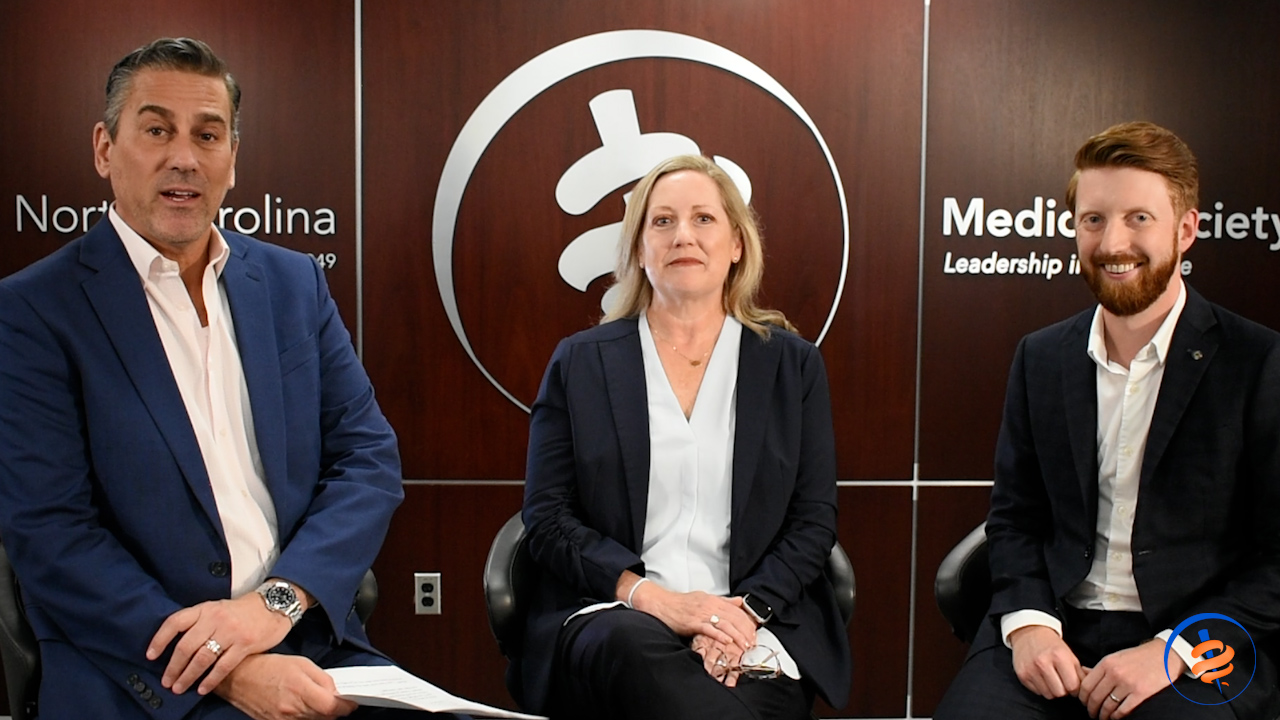
Foundation Friday! Doctors' Day Special Edition

Doctors’ Day Special Recognition
On Doctors’ Day, the NCMS Foundation offered a chance to extend special recognition to individual physicians by donating $10 to the Foundation in their honor. Thank you to generous donors who felt moved to pay public tribute to the following individuals.
Joseph Bell, MD
Chamaine Brooks-Locklear, MD
Cheryl Davis-Lowry, MD
Christina Hardin-Dial, MD
Ginger Jacobs Locklear, MD
Rachel Keever, MD
Shelly Lowery, MD
Gerri Mattson, MD
Robin Peace, MD
Joseph Roberts, MD
Gail Robinson, MD
Stephen Szabo, MD
John H. Wood, MD
Thank you once again for all you do for your patients each and every day!


"I would be dead." Ali Ingersoll is proof that the time is NOW for Prior Auth Reform
RALEIGH -- Ali Ingersoll has turned a tragic accident into a siren call for change in the American healthcare system. She was left paralyzed at 27 and spend seven years facing life altering diagnoses, surgeries, and mountain-after-mountains to climb as she fought for critical healthcare. Her fight for life happened in step with her fight with insurance companies for treatments, medicines, and equipment.
Along the way she became a professional speaker, disability consultant, fierce advocate, and Ms. Wheelchair America.
Ali’s powerfully authentic story serves as a testament to the power of resilience in order to empower others in adapting to the unknown and advocating for inclusivity.
She sat down with NCMS's Randy Aldridge to talk about the multitude of problems she has faced dealing with prior authorization and roadblocks from insurers. Her story is powerful, poignant, and, ultimately, uplifting.
https://youtu.be/2PkNsOG0QDw
After watching, please click here for how you can tell lawmakers that you support Prior Authorization Reform and how important it is to you and your patients. Feel free to share this video with them.

UnitedHealth Cyber Attack- How You Can Secure Your Practice
An Update on How to Secure Your Practice after UnitedHealth Cyber Attack
On February 21, Blackcat, a ransomware group, accessed Change Healthcare’s systems and 6 TB of data. This included medical and dental records, payment information, and patient information from a variety of Change Healthcare partners.
Sentinel, a risk management and benefit solutions company, has offered the following advice:
UNITEDHEALTH CYBERATTACK:
WHAT TO KNOW AND HOW TO PROTECT YOUR PRACTICE
WHO WAS THE TARGET?
The unlucky target was UnitedHealth Group’s Change Healthcare, which is a critical part of the country’s healthcare infrastructure. They coordinate payments, requests for insurers to authorize care, and more. Change Healthcare processes about 50% of medical claims in the U.S. for around 900,000 physicians, 33,000 pharmacies, 5,500 hospitals, and 600 laboratories.
WHEN WAS THE ATTACK?
On February 21, Blackcat, a ransomware group, accessed Change Healthcare’s systems and 6 TB of data. This included medical and dental records, payment information, and patient information from a variety of Change Healthcare partners.
WAS A RANSOM PAID?
Blackcat received $22 Million in Bitcoin on March 1. However, Change Healthcare has not confirmed any payment of a ransom.
WHO WAS AFFECTED?
Any Change Healthcare partners reliant on its systems for payment, claims, processing, etc.
IS CHANGE HEALTHCARE BACK UP AND RUNNING?
Its pharmacy network was 99% restored on March 7 and the electronic payments platform was running as of March 15. Its claims preparation software went back online on March 18.
HOW CAN YOU PROTECT YOURSELF?
- Enable Multi-Factor Authentication (MFA)
Most email platforms (Outlook, Gmail, etc.) allow you to adjust your settings to enable MFA at no cost. Additional MFA products are available for enhanced security.
- Use Difficult to Guess Passwords
Include uppercase, lowercase, numbers, and characters and update passwords regularly. Consider using phrases versus just words as a password.
- Ensure Employees Are Educated on Phishing Scams
To prevent phishing scams from infiltrating your company’s system, it is crucial to educate your employees on how to recognize them. If you need assistance in training your staff, Sentinel offers helpful webinar courses to ensure they are well-equipped to identify and avoid potential threats.
- Get In Touch with Sentinel
Our IT Service Provider Partners are experts in the field of cybersecurity and can help you assess your current controls, identify vulnerabilities, and recommend enhancements to improve your cybersecurity readiness. By working with our trusted partners, you can rest assured that your organization’s cybersecurity is in good hands. Go to sentinelra.com or call 855-490-2528.

Questions About Telehealth? New Guidance for NC Care

Need help telling your patients where to seek telehealth? Here is some simple guidance.
CAN I PROVIDE TELEMEDICINE TO PATIENTS OUT OF STATE?
The policy guidance of the North Carolina Medical Board to licensees practicing telemedicine is that the practice of medicine occurs in the state where the patient is located.¹ If providing medicine to patients in North Carolina, the provider should be licensed in North Carolina. If a North Carolina licensee is intending to practice medicine using telehealth technology, they should check with the licensing board in the state where the patient is located.² Most states require medical providers to be licensed where the patient is located.
ARE THERE EXEMPTIONS FOR OUT-OF-STATE PHYSICIANS CARING FOR NORTH CAROLINA PATIENTS?
- Provider to provider consultations across state lines where a NC licensee remains responsible for the care of the NC patient, but an out-of-state provider consults “on a irregular basis” is allowed.
- Episodic follow up care in which the patient is temporarily located in North Carolina but has an established relationship with an out-of-state provider (i.e. the patient is attending college or is vacationing in North Carolina) is allowed.⁴
WHAT ARE THE RULES FOR PRESCRIBING VIA TELEMEDICINE?
The North Carolina Medical Board expects proper prescribing and monitoring of controlled substances. Patient encounters conducted exclusively through telemedicine may not be deemed suitable. However, prescribing medications via telemedicine is at the professional discretion of the licensee, as long as it is in accordance with state and federal laws and the standards of practice.⁵
1. North Carolina Medical Board Position Statement, 5.1.4: Telemedicine
2. North Carolina Medical Board Position Statement, 5.1.4: Telemedicine
3. North Carolina Medical Board Position Statement, 5.1.4: Telemedicine
4.North Carolina Medical Board Position Statement, 5.1.4: Telemedicine
5.North Carolina Medical Board Position Statement, 5.1.4: Telemedicine
FOLLOW THIS LINK TO DOWNLOAD A FORM FOR YOUR OFFICE: Telehealth_Guidance

Doctors Call to Expand Syphilis Testing during Pregnancy Amid Recent Surge
(The Hill, Miranda Nazzaro) -- The American College of Obstetricians and Gynecologists (ACOG) published new guidance April 18, recommending doctors screen pregnant individuals for syphilis three times during pregnancy.
Obstetricians, gynecologists and other obstetric care professionals are now advised to screen all pregnant individuals for syphilis at the first prenatal care visit, during the third trimester and again at birth.
Previous guidance recommended risk-based testing in the third trimester for those living in communities with high syphilis rates and for those at risk of acquiring the infection during pregnancy.
“There has been a near eightfold increase in congenital syphilis cases in the last decade or more, and from a public health perspective, we recognize that obstetrician–gynecologists and other obstetric care clinicians play a critical role,” Christopher Zahn, a fellow of ACOG, said in a statement.
Zahn said a timely diagnosis and treatment are “key” to reducing syphilis rates, noting the “majority” of cases can be prevented.
Syphilis is a sexually transmitted bacterial infection that can be contracted through direct contact with a sore, or through casual contact with objects like toilet seats, doorknobs, swimming pools, shared clothing or utensils. The infection can also spread from a pregnant person to a fetus.
More than 3,700 babies were born with congenital syphilis in 2022, marking the most cases in more than 30 years, the Centers for Disease Control and Prevention (CDC) said last year.
In its full advisory, the doctors coalition pointed to the CDC’s finding that nearly 9 in 10 congenital syphilis cases “could have been prevented with timely screening and treatment.”
Syphilis transmission to a fetus can lead to the baby having a low birth weight, and it increases the chances the mother will deliver too early or have a stillborn or miscarriage, according to the CDC.
At birth, a babies might not have signs or symptoms of the disease, but if they do not receive treatment, they can develop health issues within a few weeks. These problems include cataracts, deafness, seizures or death, the CDC added.
Benzathine penicillin G is the preferred treatment for syphilis during pregnancy, though the drug has been in short supply since last year. Pfizer, which is the only company manufacturing the drug, said last year it would take until at least the second quarter of 2024 to increase production enough to end the shortage.

Former NCMS President Named President of Duke Regional Hospital
Devdutta Sangvai Takes on His Next Leadership Challenge at Duke Regional
(Duke University School of Medicine, Synclaire Cruel) -- Having a love of science, an eagerness to help people, and a propensity for leadership has propelled Devdutta Sangvai, MD, MBA, into the role of President of Duke Regional Hospital. It’s the latest achievement in his 22-year career at Duke.
“I've been really lucky with the opportunities that I've had,” Sangvai said. “By having groups of people put their trust in me to take on challenges, I have been able to build experience and confidence.”
Sangvai was named interim president of Duke Regional in 2022 and then named president in 2023 by a national search committee. In just two years, Sangvai has already begun to drive positive change. “This is the strongest bond we’ve had with the divisions of family medicine and community health in the last 20 years,” he said. “We have more family medicine doctors and residents taking care of patients at the hospital, and they provide all of our newborn care.”
It's a role he’s long prepared for, having held several leadership positions while at Duke. “I always knew I was going to go into some form of administration, and family medicine provided the ideal clinical foundation for it,” Sangvai said. “It’s one of the ideal specialties needed for a community hospital because both sides are thinking about the patient, other providers the patient is seeing, and the patients’ living environment, which really takes community into context.”
As a family medicine provider and educator, he gained unique insight on how best to lead fellow providers and staff members. “Having faced some of the challenges family medicine providers experience, I can relate and put myself in their shoes,” he said.
“There's about 2,800 people who work here, and everyone aims to deliver the best care to our patients. To be in an atmosphere where you've got that level of spirit around you is inspiring and uplifting, and you find it in different ways.”
- Devdutta Sangvai, MD, MBA
Sangvai also managed to further open the lines of communication and build a stronger foundation with his team. “In some cases, the role of a leader is not necessarily to bring your own expertise, but to create a framework that facilitates an environment for others to share and leverage their knowledge.”
He’s continuously getting feedback from members about what’s working well and what’s not and is able to apply that information when making decisions. However, Sangvai finds that working with his team is the best part of the job.

“There's about 2,800 people who work here, and everyone aims to deliver the best care to our patients. To be in an atmosphere where you've got that level of spirit around you is inspiring and uplifting, and you find it in different ways,” he said.
“You cannot walk through a hallway without strangers saying, ‘Hello, how is your day?’ That care extends to the way we care for our patients,” Sangvai said. “When we do that for each other, it makes caring for our patients that much easier.”
His interest in leadership began very early in life. “Growing up, I had a real affinity for wanting to help make the lives of others better,” Sangvai said. “But I also always liked the idea of being a leader and growing the next generation of leaders.”
He got his first glimpse into the business of health care by joining the Organization of Student Representatives, the student arm of the American Association of Medical Colleges (AAMC). It’s also where he first connected with Lloyd Michener, MD, previous chair of the department.
“I got a better understanding of how much more there is to medicine than just the bedside. I started to think of it as the administrative backbone that all this clinical care is delivered on,” he said. It’s what drove him to pursue his MBA at Duke’s Fuqua School of Business after completing his family medicine and chief residencies at the Medical College of Ohio.
Sangvai then joined the Duke Department of Family Medicine and Community Health in 2001 as a faculty member. “I liked being able to care for patients not only early in life, but through the later years as well, and in many cases, even before they’re born,” he said. But it’s also where he got the opportunity to perform more administrative duties and gain leadership skills. In addition to seeing patients, he was instrumental in setting up community-based clinics, including Lyon Park and Walltown in Durham.
“The unfortunate thing is, the more administrative you do, the less time you have for clinic,” Sangvai said. Despite this, he still manages to treat patients at Duke Family Medicine Center. “It allows me to stay connected to patients, some of whom I've been seeing for over 20 years. It gives me a deeper appreciation of continuing to deliver care.”
He later became a faculty member in the Duke Departments of Pediatrics and Psychiatry & Behavioral Sciences. Additionally, Sangvai is currently Vice President for Population Health Management, and overseeing DUHS Case Management and Duke HomeCare & Hospice. Previously he was the Director of Medical Services for Student Health, Chief of the Division of Family Medicine, Medical director of DukeWell, and associate chief medical officer of Duke University Health System.
Sangvai also chaired the Durham County Hospital Corporation Board of Trustees and held positions within the North Carolina Medical Society, the American Medical Association, and the Association of American Medical Colleges.
As president of Duke Regional, Sangvai is most looking forward to combining the needs of society and Duke’s mission to make positive change in the surrounding community.

Plan Now! NCDHHS Livestream Town Hall: HPV and Cancer Prevention
The North Carolina Department of Health and Human Services will host a live fireside chat and tele-town hall on Tuesday, April 23, from 6 to 7 p.m., to discuss human papillomavirus (HPV) prevention as well as HPV-related cancer guidance, resources and care.
Event participants include:
- Cushanta Horton, MPH, Branch Head, Cancer Prevention and Control Branch, Division of Public Health, NCDHHS
- Nadja Vielot, Ph.D., Assistant Professor of Family Medicine, University of North Carolina at Chapel Hill
Around 85% of people will get an HPV infection at least once in their life. HPV is a common virus and can cause several types of cancers in people of all ages and genders. In North Carolina, rates of HPV-related cancers are higher than the national rates, with head and neck cancers among men accounting for much of that difference.
HPV vaccines help prevent more than 90% of HPV-related cancers, including cervical cancer. HPV vaccines are recommended beginning around age 11, but adults up to age 45 can also receive the vaccine. However, in North Carolina in 2022, nearly half of youth who were eligible for an HPV vaccine had not received all recommended doses.
Fireside chat and tele-town hall panelists will discuss the following:
- HPV prevention, detection and treatment
- Impacts of HPV-related cancers
- Importance of HPV vaccines and recommended screenings
- How to access health care providers, services and resources
Cancer impacts families and communities across North Carolina, from those who have experienced a diagnosis to their loved ones and caregivers. Resources are available to help people access health services, providers and care, stay up to date on vaccines and recommended screenings, manage a cancer diagnosis and find long-term support.
The fireside chat will stream live from the NCDHHS Facebook, Twitter and YouTube accounts, where viewers can submit questions. The event also includes a tele-town hall, which invites people by phone to listen in and submit questions. People can also dial into the event by calling 855-756-7520 Ext. 100654#.

Mark Your Calendar for the Next DOCMS Meeting!

Join DOCMS at the University Club!
Wednesday, June 5, 2024 | 6:00pm - 8:00pm
University Club, 3100 Tower Boulevard, Suite 1700 - Durham, NC 27707
AGENDA:
- 6:00pm- 6:30pm – Socializing & Housekeeping
- 6:30pm- 7:30pm – Dinner & Guest Speaker
- 7:30pm- 7:45pm – Q&A
- 7:45pm- 8:00pm – DOCMS 2024 Business
“The Criminal Legal System, Incarceration and Health Disparities.”
Speakers:
Evan Ashkin, MD | Professor of Family Medicine UNC Chapel Hill and founder of the North Carolina Formerly Incarcerated Transition (FIT) Program
Tommy Green | FIT Program Community Health Worker
Registration link will be sent in May!
1 CME Credit is available! Click here for how to claim your credit.
DOCMS Members & Prospective Members - FREE to attend
Guests - $25 to attend (will be collected at meeting site)

Medicare's Push to Improve Chronic Care Attracts Businesses, but Not Many Doctors

Medicare enrollees with two or more chronic conditions are eligible for Chronic Care Management, which pays doctors to check in with those patients monthly. The service hasn't caught on.
(NPR, Phil Galewitz, Holly K. Hacker) -- Carrie Lester looks forward to the phone call every Thursday from her doctors' medical assistant, who asks how she's doing and if she needs prescription refills. The assistant counsels her on dealing with anxiety and her other health issues.
Lester credits the chats for keeping her out of the hospital and reducing the need for clinic visits to manage chronic conditions including depression, fibromyalgia and hypertension.
"Just knowing someone is going to check on me is comforting," says Lester, 73, who lives with her dogs, Sophie and Dolly, in Independence, Kansas.
At least two-thirds of Medicare enrollees have two or more chronic health conditions, federal data shows. That makes them eligible for a federal program that, since 2015, has rewarded doctors for doing more to manage their health outside office visits.
But while early research found the service, called Chronic Care Management, reduced emergency room and in-patient hospital visits and lowered total health spending, uptake has been sluggish.
Federal data from 2019 shows just 4% of potentially eligible enrollees participated in the program, a figure that appears to have held steady through 2023, according to a Mathematica analysis. About 12,000 physicians billed Medicare under the CCM mantle in 2021, according to the latest Medicare data analyzed by KFF Health News. (The Medicare data includes doctors who have annually billed CCM at least a dozen times.)
By comparison, federal data shows about 1 million providers participate in Medicare.
$62 per patient, per month
Even as the strategy has largely failed to live up to its potential, thousands of physicians have boosted their annual pay by participating, and auxiliary for-profit businesses have sprung up to help doctors take advantage of the program. The federal data showed about 4,500 physicians received at least $100,000 each in CCM pay in 2021.
Through the CCM program, Medicare pays to develop a patient care plan, coordinate treatment with specialists, and regularly check in with beneficiaries. Medicare pays doctors a monthly average of $62 per patient, for 20 minutes of work with each, according to companies in the business.
Without the program, providers often have little incentive to spend time coordinating care because they can't bill Medicare for such services.
Health policy experts say a host of factors limit participation in the program. Chief among them is that it requires both doctors and patients to opt in. Doctors may not have the capacity to regularly monitor patients outside office visits. Some also worry about meeting the strict Medicare documentation requirements for reimbursement and are reluctant to ask patients to join a program that may require a monthly copayment if they don't have a supplemental policy.
"This program had potential to have a big impact," says Kenneth Thorpe, an Emory University health policy expert on chronic diseases. "But I knew it was never going to work from the start because it was put together wrong."
He said most doctor's offices are not set up for monitoring patients at home. "This is very time-intensive and not something physicians are used to doing or have time to do," Thorpe says.
For patients, the CCM program is intended to expand the type of care offered in traditional, fee-for-service Medicare to match benefits that — at least in theory — they may get through Medicare Advantage, which is administered by private insurers.
But the CCM program is open to both Medicare and Medicare Advantage beneficiaries.
The program was also intended to boost pay to primary care doctors and other physicians who are paid significantly less by Medicare than specialists, says Mark Miller, a former executive director of the Medicare Payment Advisory Commission, which advises Congress. He's currently an executive vice president of Arnold Ventures, a philanthropic organization focused on health policy. (The organization has also provided funding for KFF Health News.)
Not "easy money"
Despite the allure of extra money, some physicians have been put off by the program's upfront costs.
"It may seem like easy money for a physician practice, but it is not," says Dr. Namirah Jamshed, a physician at UT Southwestern Medical Center in Dallas.
Jamshed says the CCM program was cumbersome to implement because her practice was not used to documenting time spent with patients outside the office, a challenge that included finding a way to integrate the data into electronic health records. Another challenge was hiring staff to handle patient calls before her practice started getting reimbursed by the program.
Only about 10% of the practice's Medicare patients are enrolled in CCM, she says.
Jamshed says her practice has been approached by private companies looking to do the work, but the practice demurred out of concerns about sharing patients' health information and the cost of retaining the companies. Those companies can take more than half of what Medicare pays doctors for their CCM work.
Dr. Jennifer Bacani McKenney, who runs a family medicine practice in Fredonia, Kansas, with her father — where Carrie Lester is a patient — says the CCM program has worked well.
She says having a system to keep in touch with patients at least once a month has reduced their use of emergency rooms — including for some who were prone to visits for nonemergency reasons, such as running out of medication or even feeling lonely. The CCM funding enables the practice's medical assistant to call patients regularly to check in, something it could not afford before.
For a small practice, having a staffer who can generate extra revenue makes a big difference, McKenney says.
While she estimates about 90% of their patients would qualify for the program, only about 20% are enrolled. One reason is that not everyone needs or wants the calls, she says.
While the program has captured interest among internists and family medicine doctors, it has also paid out hundreds of thousands of dollars to specialists, such as those in cardiology, urology and gastroenterology, the KFF Health News analysis finds. Primary care doctors are often seen as the ones who coordinate patient care, making the payments to specialists notable.
A federally funded study by Mathematica in 2017 found the CCM program saves Medicare $74 per patient per month, or $888 per patient per year — due mostly to a decreased need for hospital care.
The study quoted providers who were unhappy with attempts to outsource CCM work. "Third-party companies out there turn this into a racket," the study cites one physician saying, noting that companies employ nurses who don't know patients.
Nancy McCall, a Mathematica researcher who co-authored the 2017 study, says doctors are not the only resistance point. "Patients may not want to be bothered or asked if they are exercising or losing weight or watching their salt intake," she says.
How outsourcing works
Still, some physician groups say it's convenient to outsource the program.
UnityPoint Health, a large integrated health system based in Iowa, tried doing chronic care management on its own, but found it administratively burdensome, says Dawn Welling, the UnityPoint Clinic's chief nursing officer.
For the past year, it has contracted with a Miami-based company, HealthSnap, to enroll patients, have its nurses make check-in calls each month, and help with billing. HealthSnap helps manage care for more than 16,000 of UnityPoint Health's Medicare patients — a small fraction of its Medicare patients, which includes those enrolled in Medicare Advantage.
Some doctors were anxious about sharing patient records and viewed the program as a sign they weren't doing enough for patients, Welling says. But she says the program has been helpful, particularly to many enrollees who are isolated and need help changing their diet and other behaviors to improve health.
"These are patients who call the clinic regularly and have needs, but not always clinical needs," Welling says.
Samson Magid, CEO of HealthSnap, says more doctors have started participating in CCM since Medicare increased pay in 2022 for 20 minutes of work, to $62 from $41, and added billing codes for additional time.
To help ensure patients pick up the phone, caller ID shows HealthSnap calls as coming from their doctor's office, not from wherever the company's nurse might be located. The company also hires nurses from different regions so they may speak with dialects similar to those of the patients they work with, Magid says.
He says some enrollees have been in the program for three years and many could stay enrolled for life, which means they can bill patients and Medicare long-term.
NC Commission for the Blind Call for Nominees

The NCMS has an opportunity to appoint a new member to the NC Commission for the Blind. This appointment will fill an unexpired term until 6/30/25. Learn more about responsibilities of the NC Commission for the Blind here.
The commission serves in an advisory capacity on issues relating to services for persons with disabilities, especially independent living programs and services. The council also develops and submits a state plan to monitor, review and evaluate such issues and programs.
Physicians interested in the NC Commission for the Blind position should complete the application form and return it to Evan Simmons, esimmons@ncmedsoc.org, by Friday, May 10th. Interview Date for NC Commission for the Blind Appointment (Virtual): the evening of Tuesday, May 14th.

Calling All NCMS Physician and PA Members! Nominations Open for Leadership Positions
Want to be an NCMS leader?
Here's your opportunity to be part of our 175-year legacy!

The NCMS Nominating and Leadership Development Committee submits the following:
Call for Nominations:
- NCMS Board of Directors
- NC American Medical Association Delegation
- Nominating and Leadership Development Committee
Overview
The call for nominations for individuals to serve on the NCMS Board of Directors, NC American Medical Association Delegation, and Nominating and Leadership Development Committee are now open.
NCMS Board of Directors
- President Elect: OPEN
- Region 1 Representative: Claude Jarrett, MD (eligible for an additional term)
- At-Large Member: Jugta Kahai, MD (eligible for an additional term)
- At-Large Member: OPEN
View current NCMS Board of Directors here.
View the NCMS Board of Directors Job Description here.
NC American Medical Association Delegation
- AMA Delegate: E. Rebecca Hayes, MD (eligible for an additional term)
- AMA Delegate: Karen Smith, MD (eligible for an additional term)
- AMA Delegate: Royce Syracuse, MD (eligible for an additional term)
- AMA Delegate: OPEN
View current NC AMA Delegation here.
View the NC AMA Delegation Job Description here.
Nominating and Leadership Development Committee
NLDC Region 1: Joe Navejar, MD (eligible for an additional term)
NLDC Region 1: OPEN
NLDC Region 2: OPEN
NLDC Region 3: Labron Chambers, Jr., MD (eligible for an additional term)
NLDC Region 3: OPEN
NLDC Region 3: OPEN
NLDC Region 4: OPEN
NLDC Region 4: OPEN
NLDC Region 4: OPEN
View current NLDC members here.
View the NLDC Job Description here.
Nominations are due by May 13, 2024 (click here to view Nomination Form).
Process
Step 1: Candidates are nominated or may nominate themselves for a leadership position on the NCMS Board of Directors, NC American Medical Association Delegation, and Nominating and Leadership Development Committee (click here to view Nomination Form).
Step 2: Once a candidate submits their nomination form, they will receive an email confirmation and made aware of any follow-up if needed.
Step 3: Upon careful review of submitted materials, the Nominating and Leadership Development Committee (NLDC) will select candidates to be interviewed. Candidates will be notified via email by May 14, 2024, if they are selected for an interview. Interviews will take place via videoconference on Saturday, June 1, 2024.
Step 4: The NLDC will present the initial slate of candidates to NCMS membership on July 19, 2024, including a nomination form for Specialty Society-Component Society nominations. Specialty Society-Component Society nominations are due by August 9, 2024.
Step 5: Following any additional candidate interviews, the NLDC will select a final slate of candidates to be approved by the NCMS Board of Directors that will then be brought before the NCMS membership for a vote.
Step 6: The voting period for the elected positions will begin for all Active NCMS Members (Members who have paid 2024 dues) on October 14, 2024, and will end on October 30, 2024. Election results will be announced at the NCMS Annual Business Meeting on November 2, 2024.
All nominations and any information collected as part of the nominating process is strictly confidential.
For more information or questions about the nominating process, please contact Evan Simmons at esimmons@ncmedsoc.org.

New Report: Evidence of Racial Disparities in Healthcare Now Reported in Every US State

Researchers found health system performance is worse for many people of color.
(ABC News) -- Racial and ethnic disparities in health care are evident in every state, even those with robust health systems, according to a new analysis from the Commonwealth Fund.
In the analysis from the organization, which is aimed at promoting equitable health care, researchers found health system performance is markedly worse for many people of color compared to white people.
"Even among high performing states, we see significant disparities," Joseph Betancourt, M.D., President of the Commonwealth Fund, said in a report on the organization’s updated findings.
Six states were found to have better-than-average health system performance among all racial or ethnic groups, including Rhode Island, Massachusetts, Connecticut, Hawaii, New Hampshire and New York. However, even among these high-scoring health systems, racial disparities were observed.
"This report demonstrates that if you don't look under the hood, you won't identify where you're failing people and where you're leaving people behind," Betancourt said.
Particularly when looking at health outcomes, large disparities in premature deaths from avoidable causes are apparent in all states. Black, and American Indian and Alaska Native (AIAN) people are more likely to die before age 75 from preventable and treatable causes, including, but not limited to, some infections such as appendicitis and certain cancers, than white populations, according to the analysis.
There are also large disparities in health care access between white people and other racial or ethnic groups across all states. Despite coverage expansion by the Affordable Care Act in recent years, states' uninsured rates are generally higher and more variable for Black, Hispanic, and AIAN adults compared to Asian American, Native Hawaiian, and Pacific Islander (AANHPI) and white adults, according to the analysis. In particular, Hispanic people had the highest uninsured rates and cost-related difficulties in accessing care in almost all states.
"These groups have more problems accessing care and if quality of care is lower, then they have worse health outcomes compared to white people in many states," Senior Scientist David Radley, Ph.D., of the Commonwealth Fund, said in the report.
The analysis, which was done using publicly available databases reporting outcomes from more than 328,000,000 people during the years 2021 and 2022, concluded that achieving health equity requires policy action and health system action, including:
- Ensuring affordable, comprehensive, and equitable health insurance coverage for all
- Strengthening primary care
- Improving health care quality and delivery
- Health systems and providers prioritizing and centering equity
- Investing in social services
- Improving the collection and analysis of racial and ethnic data to identify gaps
- Developing equity-focused measures to inform and evaluate policy
"Some of the major takeaways of this work is that we still have a lot of work to do," Senior Scholar and Commonwealth Fund Vice President Sara R. Collins said in the organization’s report. "Maybe in a decade we'll look at this data and we'll see some of these gaps closing.”
Dr. Laurie Zephyrin, a senior vice president for the Commonwealth Fund, said undertaking the prescribed action will likely help.
"The reality is we can't improve healthcare if we're not accurately measuring and tracking these outcomes and experiences and using real data as a guidepost to ensure that we are advancing towards equity. ... All these comprehensive actions are truly a start. It really can help us move forward to advance health equity and address many of the inequities that we talked about today," she said in the report.
The Commonwealth Fund’s State Scorecard on Health System Performance series evaluated each state’s health care system and is a tool developed to understand health inequities and disparities. It uses 25 data indicators to designate a "State Health Equity Score," which indicates each state health system’s performance based on health care access, quality, service use and health outcome. Scores were also determined for each of five racial or ethnic groups (Black, AIAN, AANHPI and Latinx/Hispanic) during the years 2021 and 2022, notably incorporating post-pandemic effects on health disparities.
NC Medicaid: Changes to the 1E-5 Obstetrical Services Policy
Coverage Policy 1E-5, Obstetrical Services has been revised with an effective date of April 1, 2024. Revisions are applicable to both NC Medicaid Managed Care and NC Medicaid Direct.
Updates include the following:
- LMP is to be recorded in Field 14 on the CMS-1500 (Professional Claim)
- CPT code 0500F (Initial Prenatal Care visit) is to be documented for the date of service when a pregnant beneficiary is seen and evaluated by an OB provider which includes an Obstetrician (OB), Certified Nurse Midwife, Nurse Practitioner or Physician’s Assistant This code is not to be used for any pregnancy confirmation visit prior to the initial assessment by the OB provider.
- If a practice or health department assumes care during a pregnancy, the initial visit with the OB provider will also be recorded with 0500F.
- CPT code 0503F (Postpartum Care Visit) is to be documented on claim line 1 at the postpartum visit. This applies to new and existing practice beneficiaries. If postpartum care is included in a global or package service, a claim may be submitted with only 0503F on claim line 1. The date of service will be the date of the first postpartum visit.
- Providers will have until July 1, 2025, to follow billing both 0500F and 0503F. After this date, claims for delivery will deny if 0500F is not in history in NCTracks. Global package claims will require 0500F on line 1 and delivery code on line 2 if not already submitted.
- Added group prenatal care, effective July 1, 2023, as an optional service that may be provided to pregnant beneficiaries. Medicaid shall pay an incentive for group prenatal care when five or more visits are attended and documented in the health record. Records of this attendance must be available to NC Medicaid Direct or the NC Medicaid Managed Care health plans upon request. For the incentive, providers will bill CPT code 99078 with modifier TH.
- Increased the allotted number of brief emotional assessments to four to align with Health Check guidelines.
Providers are encouraged to review Clinical Coverage Policy 1E-5, Obstetrical Services for a detailed overview of other general language and formatting updates to the policy. Additionally, providers can also see the Maternity Coverage and Service Reimbursement Updates bulletin for more details on other changes which were made to maternity coverage in October 2023.
Free Prostate Cancer Screening Event in Greensboro
According to Zero Prostate Cancer, North Carolina ranks 13th in the nation in incidence of prostate cancer.
Prostate cancer is a slow growing cancer that may not show symptoms in its early stages. Regular screening is important to detect the disease before it spreads.
Cone Health Cancer Center is hosting a free prostate cancer screening event on Monday, April 29th from 9 am-1 pm at Cone Health MedCenter for Women at 930 Third St., Greensboro.
The free screening open to men aged 45-69 who have not had a prostate cancer screening within the past year. The screening includes a digital rectal exam and Prostate-Specific Antigen (PSA) blood test.
Appointments can be made by calling 336-832-0849.

8th Annual Pirates vs. Cancer Event Raises $15k at ECU
ECU medical students lead Pirates vs. Cancer fundraiser for pediatric cancer patients
Some have watched loved ones fight the disease, while others have worked with cancer patients during clinical rotations. Other students and alumni have even been cancer patients themselves.
Whatever their unique experiences with cancer have been, the response has been powerful. Their encounters with cancer turned into a growing tradition that benefits children from across eastern North Carolina who are fighting cancer battles of their own.
The eighth annual Pirates vs. Cancer event on April 12 raised close to $15,000 for pediatric cancer patients at ECU Health’s James and Connie Maynard Children’s Hospital.

Several Brody School of Medicine faculty volunteered to be pied in the face by students as one of the event’s fundraising activities.
Led by Brody students, the fundraiser has gained popularity and momentum over the years, with volunteers having their hair cut and donated, getting their heads shaved and even — for special faculty volunteers — receiving a pie to the face in support of the cause.
“One thing that I love about Pirates vs. Cancer is that you are able to see with your own eyes the direct impact of this work on the children at Maynard Children’s Hospital,” said Carly Uhlir, Brody student and event coordinator for Pirates vs. Cancer. “We know that every dollar we raise will add up to make a difference. Kids with pediatric cancer are more than just patients — they are among the strongest and bravest in our community. I want to continue the Pirates vs. Cancer mission that the founders so strongly believed in years ago and that has transcended all these years.”
Dr. Cedric Bright, senior associate dean of admissions for Brody, volunteered to receive pies in the face during the event on the lawn of the Health Sciences Student Center.
“It does your heart good to help the students with this type of thing to support those that are going through trying times with cancer,” he said. “Patients teach us so much, and this is just one way of us trying to give back to those patients that teach us so much.”
Jillian Berntsen of Kinston had her hair cut as an audience looked on and cheered — much like the health care teams and supporters helping her daughter during her cancer journey.
Berntsen said her daughter is receiving in-patient care at Maynard Children’s Hospital, her latest stay stretching for nine weeks. Pirates vs. Cancer gave the family a welcome respite from the hospital walls.

Jillian Berntsen of Kinston had her hair cut as her family watched. Berntsen said her daughter is receiving in-patient care at Maynard Children’s Hospital. (ECU photos by Steven Mantilla.)
“There are so many things this hospital does, and the people we get to interact with have really become our family at this point from everything she’s been through,” Berntsen said. “We never really thought we’d have to experience anything like this and had no idea that things like this existed. This is the first time we’ve left the hospital in nine weeks, and knowing we had this to look forward to all week was something to get us through another week.”
The event was also eagerly anticipated by Brody students and community volunteers who wanted to help create a memorable and meaningful way to benefit pediatric patients. It has become part of a lifeline of support that keeps this special patient population equipped with resources to help them during their cancer journeys.
“The funds raised by PVC are critical to the maintenance of a positive environment for pediatric cancer patients here in Greenville,” said Grant Irons, Brody student and interdisciplinary chair of Pirates vs. Cancer.
Irons, who plans to pursue medical oncology as a specialty and spent time before medical school working with cancer patients, said the event also offers students a chance to see the realities of what some patients face and an opportunity to pause and look at the bigger picture.
“As future health care leaders, it is important to remember why we are here,” he said. “We entered the health care field to improve the lives of others. To become a well-rounded physician, I believe it is important to be involved outside of the classroom. There are endless opportunities to support our patient population here in Greenville, and I would encourage all health sciences students to lend a hand in these efforts.”
Dr. Cathleen Cook, Brody clinical associate professor of pediatric hematology/oncology and faculty advisor for Pirates vs. Cancer, said the event gives students exposure to the care of pediatric patients right here in eastern North Carolina.
“This fundraiser allows them the chance to see their financial contributions directly help these children while they are hospitalized in James and Connie Maynard Children’s Hospital and cared for in our ECU Pediatric Hematology/Oncology Clinic,” Cook said.
Previous donations through the event, she added, have been used to remodel an inpatient playroom, a space of respite for patients undergoing treatment. Pirates vs. Cancer also helps fund a portion of summer camps for pediatric hematology and oncology patients — Camp Rainbow and Camp Hope.
“Often, donors and volunteers are unaware of the administrative costs that are allocated from the proceeds and not able to see their donations at work,” Cook said. “For Pirates vs Cancer, 100% of the donations are re-invested in our pediatric patients, most specifically our oncology patients. It is my vision to continue to engage these future physicians annually and help support their goal of expanding this fundraiser.”
Brody student Katie Holt decided to get involved with the event to make an impact beyond fundraising. She served as this year’s president of Pirates vs. Cancer.
“Helping to put on this event is awe-inspiring because it puts into perspective the actual size of the Brody and health sciences community,” Holt said. “Applying to Brody, you are frequently told about the passion of the community in serving Greenville and eastern North Carolina. Helping to organize this event gives you a front-row seat to this passion in action.”
Holt said the annual event has caught on across the community.
“People I have never met have reached out to us to offer their help,” she said. “Businesses across the community donate their time and money. Employees from all different departments buy T-shirts to support us. Students across the many health sciences schools donate their hair. The event has shown us firsthand that ECU doesn’t just talk about serving others but goes above and beyond to invest in its community.”
Holt said the event, in addition to benefiting pediatric cancer patients, helps center medical students and remind them why they chose health care careers.
“Serving others, through this event or another community service program, benefits the community as well as serves to fight burnout and protect your mental health,” she said. “I know it has done this for me and many others on the Pirates vs. Cancer team by connecting us to something bigger than ourselves and keeping our sights fixed on a point beyond the next test.”
Uhlir said the event brings participants full circle in seeing their own life journeys while also understanding the magnitude of the battles other people face.
“It is both humbling and inspiring. As medical students, we often lose sight of the big picture. These patients have been through so much, so it is an amazing opportunity to be able to support them directly,” she said. “I also think back to all of the children I have known both personally and indirectly from the time I was a kid myself until now, and how this is such a great way of honoring their spirits.”

ECU Names Deans for College of Health and Human Performance, Graduate School
The East Carolina University Board of Trustees approved the appointment of Dr. Nicole Bromfield as dean of the College of Health and Human Performance and Dr. Debra L. Jackson as dean of the Graduate School during its meeting April 12.
Dr. Nicole Bromfield
Bromfield has been appointed dean of the ECU College of Health and Human Performance, effective July 1.
In addition to extensive international academic experience in a 25-year career, including as an assistant professor at the United Arab Emirates University from 2010-16, Bromfield is a seasoned scholar and administrator with 16 years in academic administration in multiple leadership positions.
Her most recent leadership role was as associate dean for academic affairs for the University of Houston’s Graduate College of Social Work, where she has been an associate professor since 2016. Under her four-year tenure as associate dean, the college enjoyed 30% enrollment growth and received a full program reaccreditation. She previously held administrative appointments at Virginia Commonwealth University as a director of student services and as a student services coordinator.

Dr. Nicole Bromfield
“Being selected as the next dean of East Carolina University’s College of Health and Human Performance is an incredible honor,” said Bromfield, who recently served as a Fulbright Research and Teaching Scholar for 20 months at the University of Namibia. “I am delighted to lead our vibrant HHP community dedicated to fostering holistic well-being through groundbreaking research, service and experiential learning, and to work with the college to further foster a welcoming and collaborative environment that supports each one of our talented faculty, staff and students in reaching their full potential. Our collective commitment to enhancing human well-being, academic excellence and collaborative innovation in research, teaching, service and community engagement will continue to guide us in advancing the college’s legacy and impact on eastern North Carolina and beyond.”
Bromfield has completed research projects in the United Arab Emirates, Bangladesh, India, Namibia and other nations. She co-authored a scholarly book, “From Intercountry Adoption to Global Surrogacy: A Human Rights History and New Fertility Frontiers,” and her research has been highlighted in various media outlets, including The Boston Globe, The National UAE newspaper and BBC News.
“Dr. Bromfield’s expertise, academic experiences, and alignment with the dimensions of College of Health and Human Performance are a few of the reasons why I am very excited to welcome Dr. Bromfield to our ECU team,” said Provost Robin Coger. “I also thank interim dean Stacey Altman for her leadership over the last couple of years in collaborating with the faculty, staff and students of CHHP to ensure the many strengths of this critical college.”
HHP has been led by Altman since July 1, 2022. Her tenure will continue until June 30 when she completes her 22 years of service to ECU. Altman is looking forward to welcoming the new dean.
“Dr. Bromfield’s breadth of experience and collaborative style is ideally suited to lead the HHP community to further success and positive impact as we continue to deliver on the promises associated with the ECU mission,” Altman said. “I look forward to supporting her transition to ECU and the position.”
Bromfield earned a doctoral degree in public policy and administration, with a specialization in health policy, from VCU. She holds two degrees from West Virginia University — a Master of Social Work, with a concentration in community organization, and a Bachelor of Arts in sociology and anthropology as a summa cum laude graduate. She has completed academic leadership training with Harvard University, the Council on Social Work Education, the National Association of Deans and Directors, and the University of Houston.
The College of Health and Human Performance offers a wide range of degrees, certificates and other credentials in health education and promotion, human development and family science, interior design and merchandising, kinesiology, recreation sciences and social work, as well as home to Army ROTC and Air Force ROTC. The college serves the region by providing transformative opportunities for students while collaborating and promoting holistic health and well-being.
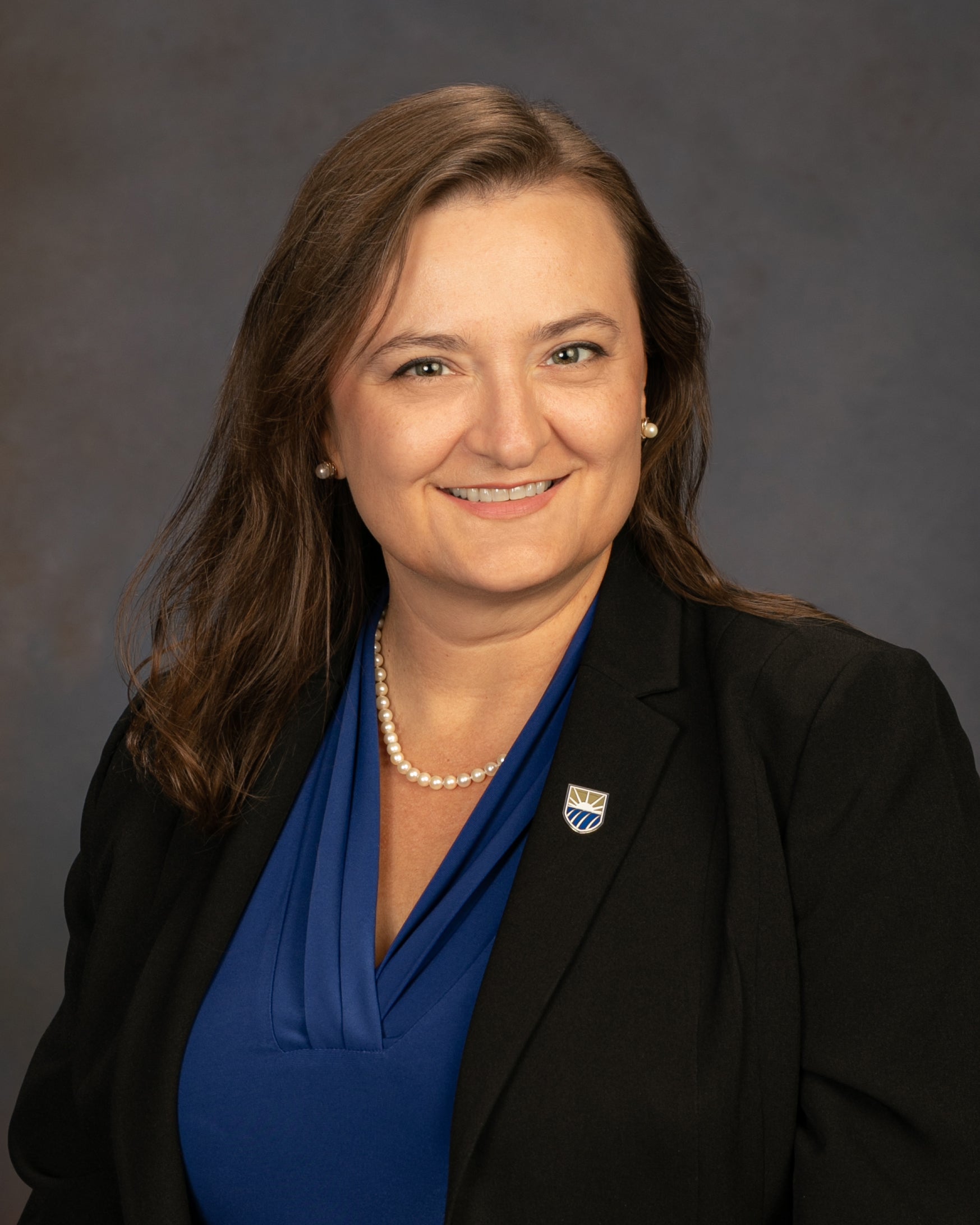
Dr. Debra L. Jackson
Jackson has been named dean of East Carolina University’s Graduate School, effective July 1.
Jackson takes over for interim dean Dr. Kathleen Cox, who has held the position since July 2022 following the retirement of Dr. Paul Gemperline.
“The work of our Graduate School benefits all of ECU, and Dr. Jackson’s experience and collaborative leadership style will enable the next phases of the development and growth of our Graduate School,” said Coger. “I am also extremely grateful for the leadership of interim dean Kathleen Cox over the last couple of years. These two leaders have already met and are eager to work together and with their teams in the Graduate School and across the university.”
Dr. Debra L. Jackson
Jackson joins ECU after serving two decades at California State University, Bakersfield. In her most recent role as associate vice president for academic affairs and dean of academic programs, Jackson secured $7 million in funds to support student success.
Under her leadership, CSU Bakersfield received a five-year grant from the Department of Education for “Promoting Excellence in Graduate Education and Increasing Hispanic STEM Related Degree Completion.” She also helped secure the 2023 Award for Innovation in Promoting Success in Graduate Education from the Council of Graduate Schools for a California State University system-wide program titled “The Next Step: Building Career Readiness Among Graduate Schools across the CSU.”
“I am very excited to join the Pirate Nation family and look forward to working with the incredible team in the graduate school,” said Jackson.
While at CSU Bakersfield, Jackson also served as the associate dean for graduate and undergraduate studies, interim associate dean for the School of Arts and Humanities, coordinator for the Women, Gender and Sexuality Studies program, and the assessment coordinator for both the School of Arts and Humanities and General Education program. She recently completed a three-year term on the executive board of the Western Association of Graduate Schools.
She is an active member of the Bakersfield community, volunteering with the Women’s and Girl’s Fund, Girl Scouts of Central California South, and the Panama – Buena Vista Union School District Equity Task Force.
Jackson’s research addresses ethical, political and epistemological issues regarding sexual violence against women. She earned her Doctor of Philosophy from Purdue University in 2002 and an undergraduate degree in philosophy from Middle Tennessee State University in 1996.
ECU’s Graduate School enrolls over 5,000 students and offers 69 master’s degree programs, two intermediate degree programs, five professional doctoral programs, 13 research/scholarship doctoral programs and 77 graduate certificates.

Hit the Trail! It's a Great Time to See National Parks in North Carolina
It is National Park Week!
National Park Week is an annual celebration of America’s national parks – from iconic vistas to significant historical sites. This year, NPF invites you to celebrate our parks while learning more about the ways we all can help preserve these wonderful places.
Here are some spots in North Carolina
-
NATIONAL SCENIC TRAIL
Appalachian
Maine to Georgia, CT,GA,MA,MD,ME,NC,NH,NJ,NY,PA,TN,VA,VT,WV
The Appalachian Trail is a 2,190+ mile long public footpath that traverses the scenic, wooded, pastoral, wild, and culturally resonant lands of the Appalachian Mountains. Conceived in 1921, built by private citizens, and completed in 1937, today the trail is managed by the National Park Service, US Forest Service, Appalachian Trail Conservancy, numerous state agencies and thousands of volunteers.
-
PARKWAY
Blue Ridge
Blue Ridge Mountains of Virginia and North Carolina, NC,VA
A Blue Ridge Parkway experience is unlike any other: a slow-paced and relaxing drive revealing stunning long-range vistas and close-up views of the rugged mountains and pastoral landscapes of the Appalachian Highlands. The Parkway meanders for 469 miles, protecting a diversity of plants and animals, and providing opportunities for enjoying all that makes this region of the country so special.
-
NATIONAL SEASHORE
Cape Hatteras
Nags Head, Buxton, Ocracoke, NC
The sound of ocean waves, the starry night sky, or the calm of the salt marshes, you can experience it all. Shaped by the forces of water, wind, and storms these islands are ever changing. The plants, wildlife, and people who live here adapt continually. Whether you are enjoying the beach, kayaking the sound, or climbing the Cape Hatteras Lighthouse there is something for everyone to explore!
-
NATIONAL SEASHORE
Cape Lookout
Harkers Island, NC
A boat ride three miles off-shore brings you to the barrier islands of Cape Lookout National Seashore. Horse watching, shelling, fishing, birding, camping, lighthouse climbing, and touring historic villages--there’s something for everyone at Cape Lookout. Be sure to bring all the food, water, and supplies you need (and carry your trash out of the park) when visiting these remote beaches.
-
NATIONAL HISTORIC SITE
Carl Sandburg Home
Flat Rock, NC
“I make it clear why I write as I do and why other poets write as they do. After hundreds of experiments I decided to go my own way in style and see what would happen.” Carl Sandburg's free verse style of poetry, journalism, biography, children's stories, prose writing, and social activism provided a popular voice for the American people of the twentieth century.
-
NATIONAL HISTORIC SITE
Fort Raleigh
Manteo, NC
Fort Raleigh National Historic Site protects and preserves known portions of England's first New World settlements from 1584 to 1590. This site also preserves the cultural heritage of the Native Americans, European Americans and African Americans who have lived on Roanoke Island.
-
NATIONAL PARK
Great Smoky Mountains
the states of NC,TN
Ridge upon ridge of forest straddles the border between North Carolina and Tennessee in Great Smoky Mountains National Park. World renowned for its diversity of plant and animal life, the beauty of its ancient mountains, and the quality of its remnants of Southern Appalachian mountain culture, this is America's most visited national park. Plan your visit today!
-
NATIONAL MILITARY PARK
Guilford Courthouse
Greensboro, NC
"I never saw such fighting since God made me. The Americans fought like demons." - Lt. General Charles, Earl Cornwallis On March 15, 1781, six years into the American Revolution, General Greene and Lord Cornwallis' troops faced off at a small courthouse community. The battle would change the course of the Southern Campaign of the American Revolution.
-
NATIONAL BATTLEFIELD
Moores Creek
Currie, NC
In the early morning hours of February 27, 1776, Loyalist forces charged across a partially dismantled Moores Creek Bridge. Beyond the bridge, nearly 1,000 North Carolina Patriots waited quietly with cannons and muskets poised to fire. This battle marked the last broadsword charge by Scottish Highlanders and the first significant victory for the Patriots in the American Revolution.
-
NATIONAL HISTORIC TRAIL
Overmountain Victory
NC,SC,TN,VA
Stretching 330-miles through four states (Virginia, Tennessee, North and South Carolina) the Overmountain Victory National Historic Trail traces the route used by Patriot militia during the pivotal Kings Mountain campaign of 1780. Follow the campaign by utilizing a Commemorative Motor Route which uses existing state highways marked with the distinctive trail logo, or 87 miles of walkable trails.
-
NATIONAL HISTORIC TRAIL
Trail Of Tears
AL,AR,GA,IL,KY,MO,NC,OK,TN
Remember and commemorate the survival of the Cherokee people, forcefully removed from their homelands in Georgia, Alabama, and Tennessee to live in Indian Territory, now Oklahoma. They traveled by foot, horse, wagon, or steamboat in 1838-1839.
-
NATIONAL MEMORIAL
Wright Brothers
Kill Devil Hills, NC
Wind, sand, and a dream of flight brought Wilbur and Orville Wright to Kitty Hawk, North Carolina where, after four years of scientific experimentation, they achieved the first successful airplane flights on December 17, 1903. With courage and perseverance, these self-taught engineers relied on teamwork and application of the scientific process. What they achieved changed our world forever.












ALL IN: Caring For North Carolina’s Caregivers Initiative Launches to Improve Health Worker Well-being
Raleigh, N.C. (April 18, 2024) – The North Carolina Clinician and Physician Retention and Well-being (NCCPRW) Consortium today announced a new statewide initiative with the Dr. Lorna Breen Heroes’ Foundation, the only non-profit organization exclusively focused on health worker mental health and well-being. ALL IN: Caring for North Carolina’s Caregivers seeks to support the state’s hospitals and health systems in redesigning their workplace environments to help team members feel valued and supported while creating the best environments to deliver safe, quality patient care.
“This first-of-its-kind consortium has done incredible work to bring physicians, PAs, nurses and health systems together to promote well-being that goes beyond work-life balance for those who are providing care to others,” said Chip Baggett, JD, CEO of the North Carolina Medical Society. “With the launch of this initiative, we are not only acknowledging but taking action to change our system so we can improve the lives of our caregivers and ultimately health outcomes for their patients.”
Hospitals and health systems participating in the initiative commit to:
- Make a public commitment to their workforce’s well-being by eliminating local barriers to mental health care access for licensed health workers.
- Participate in a digital curriculum to enhance understanding of the drivers of burnout and successful approaches to improve well-being.
- Create and implement a 12-month action plan to accelerate systems change to operational and administrative burdens.
This initiative is being launched with a calling to North Carolina hospitals and health systems to remove one of the most substantial causes to health workers’ poor mental health and well-being – the fear of losing their credentials to work due to overly broad and invasive mental health questions on credentialing applications. These questions are stigmatizing and discriminatory, and they often cause health workers to avoid seeking the mental health care they may need. The hospitals and health systems that audit and change language on credentialing applications will be recognized as being ALL IN for prioritizing clinician well-being and be recognized as a Wellbeing First Champion.
Additionally, many state licensure boards include these stigmatizing and invasive questions around mental health in their applications, which determine whether a health worker is licensed to work in a specific state. North Carolina’s attestation model in physician licensing applications, which uses supportive language around mental health, has served as a gold standard for other states to audit and change their applications. By launching ALL IN: Caring for North Carolina’s Caregivers, North Carolina is expanding on its leadership and commitment to support the mental health and well-being of its healthcare workforce.
“By launching this initiative, we are taking an enormous leap forward to ensure North Carolina’s health workers have healthy, supportive work environments and access to the essential mental health resources they deserve,” said Corey Feist, JD, MBA, co-founder and CEO of the Dr. Lorna Breen Heroes’ Foundation. “The state of North Carolina continues to demonstrate leadership in this space and dedication to the well-being of its health workers, building on its work for physician licensing and the efforts of the NCCPRW. We encourage every hospital and health system in North Carolina to join us in this critical effort, as we strive to improve the mental health and well-being of our healthcare workforce.”
For hospitals and health systems interested in being recognized as a Wellbeing First Champion, download the Dr. Lorna Breen Heroes’ Foundation’s toolkit to remove intrusive mental health questions from credentialing applications.
About Dr. Lorna Breen Heroes’ Foundation
The Dr. Lorna Breen Heroes’ Foundation’s vision is a world where seeking mental health care is universally viewed as a sign of strength for health workers. We believe every health worker should have access to the mental health care and professional well-being support that they may need, at every moment in their career. We carry out this mission by accelerating solutions, advancing policies, and making connections that put our healthcare workforce’s well-being first. For more information, visit drlornabreen.org.
About North Carolina Clinician and Physician Retention and Well-being (NCCPRW) Consortium
The North Carolina Clinician and Physician Retention and Well-being Consortium (NCCPRW) is a collaborative initiative aimed at identifying and developing strategies to reduce stress and improve well-being among the healthcare workforce at the individual, organizational, and state level. Founded in 2016 in response to concerns raised by the North Carolina Medical Society (NCMS) regarding invasive language in licensing renewal materials, the Consortium has evolved into a proactive force advocating for the mental health and wellness of healthcare professionals. In 2024, the Consortium transitioned into a 501(c)(3) nonprofit organization to further its mission.
Identify your hospital champions and use the ALL IN Getting Started document to begin this critical work.

Share Your Thoughts on New Environmental Health Draft Policy

The North Carolina Medical Society's (NCMS) Policy Committee is charged with developing policies that align with the NCMS Mission and the NCMS Guiding Principles.
The Policy Committee recently came together to create a policy addressing environmental health. This policy will serve as an effective tool to guide and support NCMS advocacy efforts addressing environmental health in North Carolina.
The NCMS Policy Committee invites you to review the draft policy and share your feedback. The form will close on May 17th.

Feedback Wanted on Fiscal Impact of Prior Authorization

TELL US YOUR THOUGHTS ON PRIOR AUTH PRACTICES
NCMS and the North Carolina Medical Group Managers Association have partnered to create a survey on the fiscal impacts of prior authorizations on practices.
As we enter into short session at the legislature, we need to hear from YOU and your practice. Legislators in Raleigh need to be aware of the large impact this has on clinicians' ability to provide care.
Please take 5-10 minutes to fill out this survey.
The survey will close on April 26th.
New Career Opportunities Here in North Carolina
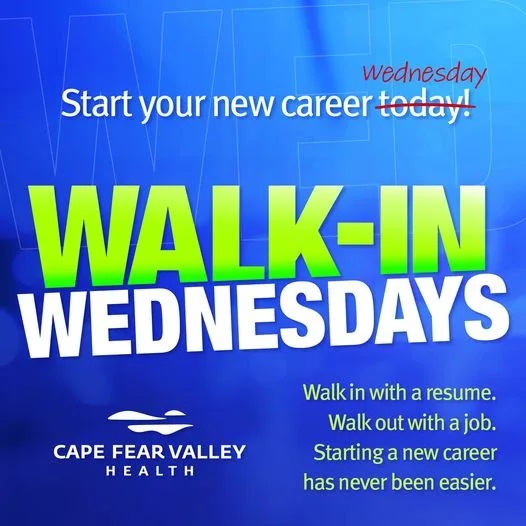
Walk in with a resume, walk out with a job
Join Cape Fear Valley on the 1st and 3rd Wednesday of every month from 9 a.m. to noon for Walk-in Wednesday. Walk in with a resume at one of their four locations and walk out with a job.
Walk-in Wednesday locations:
Cape Fear Valley Medical Center Front Lobby: 1638 Owen Drive, Fayetteville, NC 28304
Betsy Johnson Hospital: 800 Tilghman Drive, Dunn, NC 28334
Central Harnett Hospital: 215 Brightwater Drive, Lillington, NC 27546
Bladen County Hospital: 501 S Poplar St, Elizabethtown, NC 28337
To see open positions or apply now, visit http://capefearcareers.com. [source]

Register Now! Talking About Physician Suicide and "The Illusion of the Perfect Profession"

The North Carolina Medical Society Alliance is planning a free event on May 15 in Greensboro to address an important topic, physician suicide.
This event features speaker and author, Betsy Gall with a follow-up discussion from Dr. Joseph Jordan, CEO of the North Carolina Professionals Health Program (NCPHP).
Greensboro History Museum
130 Summit Ave.
Greensboro, NC 27401
May 15
6:15 pm – heavy hors d’oeuvres
7:00 pm – Program
Free admission
Download below flyer here (PDF).
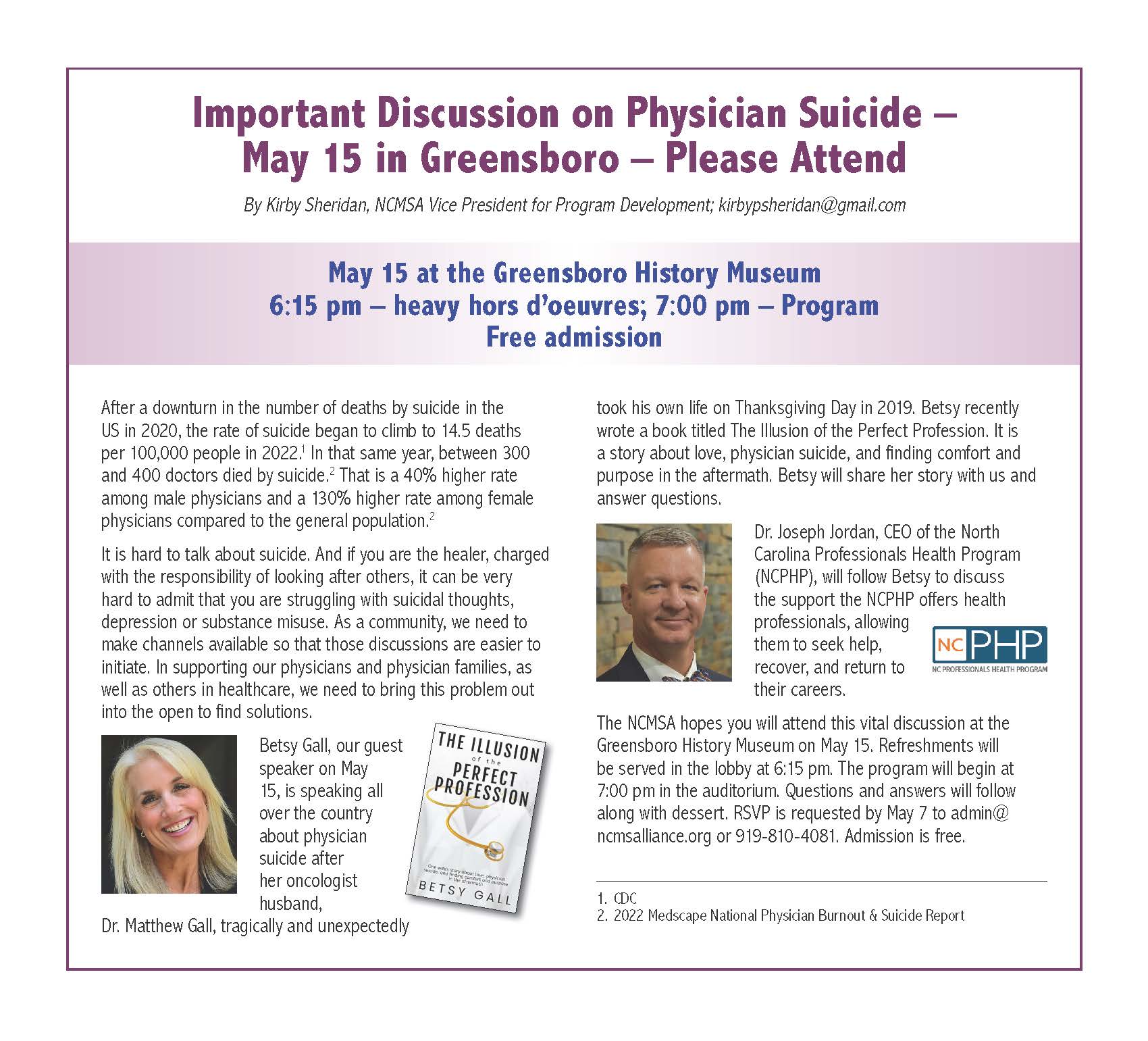
RSVP is requested by May 7 to admin@ncmsalliance.org or 919-810-4081.

Preparing for the Possibility of Measles in NC

These days, many doctors have only seen measles in textbooks.
The CDC reports measles cases in 18 states across the country, and some doctors believe it’s only a matter of time before the illness appears in North Carolina. Now, the Orange County Health Department is preparing doctors to identify and treat an illness most of them have never seen.
“We haven’t seen an actual case in our clinics in a long time, and so we’ve lost that memory of what it looks like when a patient has it,” said Dr. Erica Pettigrew, Medical Director of the Orange County Health Department.
The Orange County Health Department is planning a measles symposium for healthcare providers in the community. The health department is also working closely with UNC Hospitals.
Continue to full article here.
PAI Regulatory Advocacy Update
The latest Physician Advocacy Institute advocacy and federal regulatory developments.
PAI Files Amicus Curiae Brief in No Surprises Act Qualifying Payment Amount (QPA) Case Before U.S. Court of Appeals for the Fifth Circuit
PAI’s brief supports the Texas Medical Association’s (TMA) challenge to certain QPA calculation factors that allow insurers to skew the benchmark downward. Read more.
Federal Trade Commission (FTC), Department of Justice (DOJ) and Department of Health and Human Services (HHS) Prompt Investigation into Private Equity and Corporations’ Influence in Health Care
The cross-government public inquiry will investigate the effects of this trend on quality of care, patient health, workers’ safety and cost. PAI will weigh in. Read more.
Centers for Medicare and Medicaid Services (CMS) Releases Background on Federal Independent Dispute Resolution (IDR) Process Showing Physicians Prevailing in 77% of IDR Determinations
The resource shows a large volume of disputes submitted through the Federal IDR portal and substantial complexity in determining the disputes’ eligibility for the Federal IDR process. Read more.
President Biden Releases Fiscal Year (FY) 2025 Budget
The President's budget prioritizes investment in permanent premium tax credits, Medicaid coverage, drug price negotiation, mental health services and substance abuse treatment initiatives. Read more.
Substance Abuse and Mental Health Services Administration (SAMHSA) Issues Final Rule to Enhance Integrated Care and Confidentiality for Patients with Substance Use Conditions
The rule finalizes changes to the Confidentiality of Substance Use Disorder Patient Records regulations to protect the privacy of patients’ substance use disorder (SUD) treatment records. Read more.
CMS Ends Hospice Benefit Component of Value-Based Insurance Design (VBID) Model
CMS will conclude the Hospice Benefit Component at the end of 2024 and will not accept applications for calendar year (CY) 2025 due to escalating operational difficulties and decreasing participation. Read more.
HHS Releases 2023 Equity Action Plan Update
The 2023 update prioritizes child neglect prevention and care improvement, health care access, maternal health outcomes, behavioral health and diversity in clinical research. Read more.
For information on PAI’s advocacy initiatives, physician payment resources and research, please visit PAI’s website. Healthsperien’s Resource Updates page also has information on key issues in health policy and identifies potential reforms under the Biden Administration, Congress and in the states. Additionally, CMS releases their Quality Payment Program (QPP) Small Practices Newsletter, a monthly resource that provides small practices (15 or fewer physicians) with program updates, upcoming QPP milestones and resources to support their continued participation and success in the QPP. You can sign up here to receive this monthly resource.
PAI Files Amicus Curiae Brief in No Surprises Act QPA Case Before U.S. Court of Appeals for the Fifth Circuit
On March 26, PAI announced it filed an amicus curiae brief with the United States Court of Appeals for the Fifth Circuit supporting TMA’s third challenge to federal regulations implementing the No Surprises Act. In August 2023, United States District Court for the Eastern District of Texas Judge Jeremy D. Kernodle ruled partially in TMA’s favor. The ruling struck down provisions of federal agencies’ interim final rules that depressed the QPA and unbalanced the IDR process but upheld its minimal transparency requirements. The Administration subsequently appealed that decision.
PAI is joined on the brief by 15 state medical associations and six medical specialty societies. PAI’s brief supports TMA’s challenge to certain QPA calculation factors that allow insurers to skew the benchmark downward. The inclusion of “ghost rates”—prices for services a physician never or rarely provides—and out-of-specialty rates and the exclusion of incentive or bonus payments like those in value-based care arrangements depress the insurer-calculated QPA and make the IDR process inherently unfair. Addressing insurer payment practices that threaten patient access to care is foundational to PAI. That principle drives PAI’s support of TMA’s challenges to No Surprises Act implementation and will continue to guide its advocacy for as long as needed.
FTC, DOJ and HHS Prompt Investigation Into Private Equity and Corporations’ Influence in Health Care
On March 5, FTC, DOJ and HHS initiated a cross-government public inquiry to address the growing influence of private equity and other corporations within health care. Private equity and other corporate firms are increasingly participating in health care system transactions. The inquiry will investigate the effects of this trend on quality of care, patient health, workers’ safety and cost. The three agencies issued a Request for Information (RFI) soliciting public feedback about transactions conducted by health systems, private payers, private equity funds or alternative asset managers involving physicians, facilities or services. The RFI seeks comments regarding deals related to a wide range of health care entities and seeks to inform policy efforts to target consolidation and promote and preserve competition throughout the health care marketplace.
PAI is preparing an extensive comment letter in response to this RFI to share key research findings that document how practice acquisitions by private equity firms, insurer-owned entities, hospitals/health systems and large national pharmacies over the past decade have dramatically altered how physicians practice medicine in the United States. The related trend of physicians shifting from independent practice into employment has been equally dramatic, growing steadily every year over the past decade and nearing 80% at the start of 2024.
PAI will also share findings from the recently released employed physician survey for PAI by NORC at the University of Chicago that examined the experiences of physicians employed by hospitals and health systems, venture capital and private equity firms, health insurance companies and staffing agencies. Almost 60% of physicians who practice as employees of hospitals and other corporate entities reported that non-physician practice ownership results in a lower quality of patient care. Most physicians surveyed cited decreased time with patients and greater focus on financial success as factors negatively affecting quality at non-physician-owned medical practices. The survey demonstrates a belief among many employed physicians that corporate ownership may erode foundational aspects of the patient-physician relationship and impact patient outcomes.
CMS Releases Background on Federal IDR Process Showing Physicians Prevailing in 77% of IDR Determinations
On February 16, CMS released public use files for the Federal IDR process between January 1, 2023 and June 3, 2023. The resource notes that the first six months of 2023 were characterized by a large volume of disputes submitted through the Federal IDR portal and substantial complexity in determining disputes’ eligibility for the Federal IDR process. Between January 1, 2023 and June 30, 2023, disputing parties initiated 288,810 disputes through the Federal IDR portal. The number of disputes initiated through the Federal IDR portal over this six-month period was 13 times greater than the Departments of Treasury, Labor and HHS initially estimated for a full calendar year and has grown each quarter. Certified IDR entities rendered 83,868 payment determinations in the first six months of 2023. Physicians were the prevailing party in approximately 77% of payment determinations. Despite the increase in payment determinations, some disputing parties are still awaiting eligibility and payment determinations.
On December 28, PAI submitted a comment letter in response to a surprise billing proposed rule published by HHS. Physicians bear the brunt of the inefficient IDR process as medical practices across the nation experience significant payment delays awaiting eligibility and payment determinations. Widespread failure by insurers to make timely payments once determinations have been made exacerbate the issue further. PAI emphasized that the IDR process needs to be further refined, with input from physicians, to ensure that all parties have incentives to settle disputes more quickly and engage in fair contracting practices.
President Biden Releases FY 2025 Budget
On March 11, President Biden released his budget for FY 2025. The President's 2025 budget prioritizes significant health care investments and aims to expand access to high-quality services and lower costs. Key provisions include permanent premium tax credits, Medicaid coverage, drug price negotiation to reduce prescription costs, and initiatives targeting mental health services and SUD treatment. The budget also addresses health equity, veterans' health care needs and bolstering public health infrastructure. The table below highlights relevant provisions for physicians:

SAMHSA Issues Final Rule to Enhance Integrated Care and Confidentiality for Patients with Substance Use Conditions
On February 8, SAMHSA released a final rule that finalizes modifications to the Confidentiality of Substance Use Disorder Patient Records regulations, which protect the privacy of patients’ SUD treatment records. The rule was informed by the Coronavirus Aid, Relief, and Economic Security Act (CARES Act) that, among other things, required HHS to bring the Part 2 program into closer alignment with the Health Insurance Portability and Accountability Act of 1996 (HIPAA) Privacy, Breach Notification, and Enforcement Rules. The final rule includes the following modifications to Part 2:

CMS Ends Hospice Benefit Component of VBID Model
Beginning in CY 2021, the VBID Model permitted Medicare Advantage Organizations (MAOs) to incorporate the Medicare hospice benefit into their Medicare Advantage (MA) benefits package, known as the Hospice Benefit Component. Due to escalating operational difficulties and decreasing MAO participation, CMS announced on March 4 it will conclude the Hospice Benefit Component at the end of this year and will not accept applications for the CY 2025 Request for Applications for the component. The Hospice Benefit Component of the VBID Model aimed to alleviate coverage inconsistencies for MA enrollees electing hospice and assessed if MAOs covering the Medicare hospice benefit would enhance care quality while remaining budget neutral. Policies within the component, including comprehensive palliative care and concurrent care, fostered collaboration between MAOs and hospice physicians, aiming to mitigate care fragmentation at end-of-life stages. CMS gathered insights from various stakeholders to gauge the component's impact on care quality and safety. The decision to discontinue the Hospice Benefit Component does not indicate its success; CMS plans to evaluate it separately. CMS indicated that it would utilize the lessons learned from the Component and release clarifying guidance later this year.
HHS Releases 2023 Equity Action Plan Update
On February 14, HHS released the 2023 update to the Equity Action Plan related to its implementation of President Biden’s Executive Order on Further Advancing Racial Equity and Support for Underserved Communities Through The Federal Government. In alignment with the Biden-Harris Administration’s whole-of-government equity agenda, this Equity Action Plan supports HHS in advancing health equity and well-being for all. The plan includes the following five priority areas:

Since the release of the HHS’ first Equity Action Plan in 2022, HHS has proposed rules on language access and rules that prohibit discrimination based on disability. Additionally, HHS approved the provision of 12 months of continuous postpartum coverage through CMS in 42 states, D.C. and the Virgin Islands.
PAI is focused on addressing health equity issues for both patients and physicians, especially those in rural areas. This is a complex issue, and PAI will draw on the work of The Physicians Foundation, which has studied the problem of health-related social needs, as it works to advance policies that reduce inequities in health care delivery.
NC Commission for the Blind Call for Nominees
The NCMS has an opportunity to appoint a new member to the NC Commission for the Blind. This appointment will fill an unexpired term until 6/30/25. Learn more about responsibilities of the NC Commission for the Blind here.
The commission serves in an advisory capacity on issues relating to services for persons with disabilities, especially independent living programs and services. The council also develops and submits a state plan to monitor, review and evaluate such issues and programs.
Physicians interested in the NC Commission for the Blind position should complete the application form and return it to Evan Simmons, esimmons@ncmedsoc.org, by Friday, May 10th. Interview Date for NC Commission for the Blind Appointment (Virtual): the evening of Tuesday, May 14th.

Register Now for Navigating Communication and De-Escalation Webinar

Navigating Communication and De-Escalation
Wednesday, May 29, 2024 • 1 - 3 p.m. • Live Webinar
Wednesday, June 12, 2024 • 1 -3 p.m. • Location: Live Webinar
Friday, May 31, 2024 • 1 - 4:15 p.m. • Location: SR-AHEC
Friday, June 21, 2024 • 1- 4:15 p.m. • Location: SR-AHEC

Today people are offended more easily and a lot less tolerant of anything that disrupts their day. In an environment that demands healthcare providers go above and beyond to keep their clients happy, today's healthcare provider must continually work to improve their communication and conflict resolution skills.
This session will explore why conflict occurs and the different types of response to the event and review tactics/strategies that can be used in the workplace to manage these intense moments that keep our team supported and safe.
Join for this interactive session with open discussion of the true challenges and practical approaches to better protect yourself (physically and psychologically) while you resolve conflict.
Download the flyer here (PDF).
Join Columbus Regional TODAY for a National Healthcare Decisions Day Event
Do you have questions about advanced directives, need to make yours, or assist a loved one in making theirs? Join Columbus Regional Healthcare System (CRHS) and Lower Cape Fear LifeCare for National Healthcare Decisions Day

We Want to Hear YOUR Prior Authorization Stories!

Are you frustrated with administrative headaches and how they impact your patients? Have you faced denials for a care plan within standard practice for a patient?
We want to hear your story!
As NCMS continues to push for passage of HB 649 in the coming legislative session, we need to hear how you and your patients have been impacted by prior authorization.
We are looking for stories from physicians to highlight and draw attention to this issue that is impacting the health of so many North Carolinians.
Please complete this quick survey so we can share your stories with legislators and tell them how Prior Authorization is negatively impacting the lives of North Carolinians!

NCMB Issues Call for Physician and PA Candidates

Applicants are needed for two physician seats, one physician assistant (PA) seat and one nurse practitioner (NP) seat on the North Carolina Medical Board for terms beginning November 1.
All positions must be filled by the process set down in statute (N.C. Gen. Stat. 90-2 and 90-3), which requires interested parties to apply via the Review Panel for the North Carolina Medical Board. The Review Panel is an independent body that nominates candidates for consideration by Governor Roy Cooper. By law, the Review Panel must nominate two candidates for each open seat.
One physician seat and both advanced practice provider seats are currently occupied by individuals who are eligible for reappointment. However, incumbents must apply for reappointment via the normal application process.
Applications will be accepted online through 4:45 p.m. on Thursday, June 27.
For more information visit this website.
The Review Panel will consider only physicians (MDs or DOs), PAs and NPs who hold active, unrestricted NC medical licenses. Applicants must be actively providing patient care at least part time and must have no history of disciplinary action within the past five years.

AMA Provides Follow-up Information & Resources on Change Healthcare Cyberattack

In follow-up to a virtual meeting held Wednesday, April 10, in conversation on the Change Healthcare cyberattack with Jon Blum, CMS’s Principal Deputy Administrator & Chief Operating Officer, and Roger Connor, Optum Insight’s Chief Executive Officer, the AMA is making the following information and resources available:
- The AMA Press Release on most recent Change Healthcare Cyberattack informal survey results is available online. The results show the ongoing, devastating impact of the Change Healthcare cyberattack, which threatens the viability of physician practices across the country, and, according to respondents, has serious implications for patient care.
- According to UnitedHealth Group (UHG), it continues to emphasize the availability of advance/accelerated payments to providers in need. Optum’s CEO emphasized that the program has more flexibility than it did originally. For more information, please visit Temporary Funding Assistance for Providers. This program is designed to help bridge the gap in short-term cash flow needs for providers impacted by the disruption of Change Healthcare's services. In particular, UHG encourages practices that find the amount prepopulated in the Optum Pay system insufficient to meet their financial needs to please contact UHG—either submit a request through the Temporary Funding Assistance Program Form or call 1-877-702-3253.
- UHG also stressed that it has no plans or timetable yet to require repayment of these funds. Until all claims submission and payment systems are back up and running, UHG is not requesting repayment. UHG indicated that a practice-level, phased approach will be used to ensure that an individual organization’s functionality has been restored before repayment is requested.
- More information about the CMS Change Healthcare/Optum Payment Disruption (CHOPD) program is available online. Physicians and other Medicare providers experiencing disruption because of the Change Healthcare outage can apply for “amounts representative of up to 30 days of Medicare claims payments.” HHS also distributed these resources (PDF) to assist physicians, pharmacists and hospitals, in the aftermath of the Change Healthcare cybersecurity attacks.
- The AMA will continue to raise issues of concern to UHG, CMS, state regulators, and other payers. Additional information from the AMA is also available on the Change Healthcare cyber outage webpage.
- If you know of a practice that is particularly struggling and needs help with UHG, please reach out to your AMA Field Representative.

Duke Health Researchers Publish Study on Hormone Modification

Duke researchers published a study on using hormone-modification technology to enable transgender women to lactate.
The report, titled “Novel Lactation Induction Protocol for a Transgender Woman Wishing to Breastfeed: A Case Report,” was published on March 27 in the National Library of Medicine. It is the fifth report ever published on lactation for a transgender woman, but is the only one that used metoclopramide for lactation induction.
Read the full article here.
Register Now for NC Medicaid Managed Care Special Webinar
Medicaid Managed Care
SPECIAL WEBINAR:
Total Cost of Care (TCOC) Dashboard Launch for Providers
This month, NC Medicaid is launching a Total Cost of Care (TCOC) Dashboard for Advanced Medical Homes (AMHs).
This tool will allow AMHs to access and analyze data related to resource use and total cost of health care received by Medicaid members assigned to their practices.
The TCOC Dashboard aims to help AMHs identify potential drivers of overuse and inefficiency and assist them in making informed decisions when engaging in value-based arrangements with Medicaid prepaid health plans.
Join for one of three opportunities to learn more about this important new tool.
In the webinar, NC Medicaid will provide an overview of the dashboard and its metrics, walk through the login process, and demonstrate various functionalities for users of the AMH TCOC Dashboard.
Wednesday, April 17 | 5-6 p.m.
Thursday, April 18 | 5-6 p.m.
Tuesday, April 30 | 11:30 a.m.-12:30 p.m.


NC Hospital System Recognized Nationally for Black Maternal Health Excellence

CHARLOTTE – Two Advocate Health hospitals have been recognized for their efforts in supporting Black maternal health by U.S. News & World Report for Black Maternal Health Week 2024. Atrium Health Pineville in Charlotte, North Carolina, and Aurora Medical Center – Grafton in Grafton, Wisconsin, are two of 26 hospitals nationwide identified by U.S. News for achieving excellent outcomes for cesarean section and unexpected newborn complications among Black patients.
U.S. News identified hospitals that were rated “high performing” in U.S. News’ Best Hospitals for Maternity Care, served at least 20 Black patients per year and had newborn complication rates of less than 2.62% and c-section rates of less than 23.9% (among hospitals providing a higher level of care) or 23.6% (among hospitals not providing a higher level of care) among Black patients.
"At Advocate Health, our commitment to advancing health equity hinges on prioritizing equity in maternal care,” said Kinneil Coltman, executive vice president and chief community and social impact officer for Advocate Health. “We're dedicated to dismantling disparities, ensuring every woman receives the quality care and support she deserves during birth and well beyond. Not only are we reducing preventable deaths, but we are on a mission to safeguard every mother's right to a safe birthing experience."
In the Southeast, Atrium Health is addressing Black maternal health disparities and mortality with an intentional recruitment of a more diverse residency class. In addition, last year Atrium Health expanded its mobile services and fleet of mobile medical units to serve its communities in need. The initiative – known as Atrium Health Women's Care Drive to Thrive – is one of the nation’s first mobile units dedicated solely dedicated to bringing OB-GYN care into underserved communities. Its goals include decreasing maternal mortality rates and unintended pregnancies.
“Our commitment to quality women’s health care – especially in our underserved communities – is an ever-expanding mission,” said Dr. Katie Borders, senior medical director for the women’s care service line, Southeast region, Atrium Health. “We are constantly striving to develop the best comprehensive women’s health program focused on equitable care for women at all life stages.”
Across sites of care in Illinois and Wisconsin, Advocate Health Care and Aurora Health Care are making huge strides in safely closing the gap in c-section rates between Black and white patients, closing the gap more than 30% over the last two years. All physicians and nurses participate in the Alliance for Maternal Health, a quality improvement initiative that shares maternal health best practices across the country. Aurora Grafton was named a top 10 hospital in the nation for overall maternity care by U.S. News this past December.
“This national recognition reaffirms the clinical excellence patients have come to expect from us,” said Dr. Ann Windsor, vice president of the women’s health service line at Advocate Health Care and Aurora Health Care. "It wouldn’t be possible without our dedicated team of OB-GYN physicians and nurses who provide high quality, individualized care to all their patients.”
Last year, 32 Advocate Health hospitals earned recognition on U.S. News & World Report’s 2023-24 “Best Hospitals” list – 30 adult hospitals plus Advocate Children’s Hospital, in Chicago, and Atrium Health Levine Children’s Hospital, in Charlotte. In addition, 15 Advocate Health hospitals were recognized by U.S. News & World Report in its annual recognition for “Best Hospitals for Maternity Care.” [source]


App Offers eRecovery Support for Substance Use Disorder

This app is not a substitute for clinical treatment, rather an additional tool that can help people connect with peers and get additional recovery supports.
Through a new partnership, the North Carolina Department of Health and Human Services (NCDHHS) is making available CHESS Health's proven eRecovery program to help thousands of North Carolinians struggling with substance use disorders to achieve long-term recovery.
CHESS Health's eRecovery program features the Connections app, a smartphone app that provides participants with immediate access to a team of certified peer recovery specialists available 24 hours a day, seven days a week. It offers moderated peer support groups, on-demand digital cognitive behavioral therapy programs and a robust set of recovery tools. This solution is offered free of charge for North Carolinians who choose to enroll through their provider and download the app, funded fully by NCDHHS.
The CHESS Health eRecovery program will be introduced in phases to more than 100 organizations across North Carolina over the next two years.
If you or someone you know is struggling or in crisis right now, help is available. Both the NCDHHS Peer Warmline and 988 are available to anyone, anytime. Call 1-855-PEERS NC (855-733-7762) or call or text 988 or chat at 988Lifeline.org. People who speak Spanish can now connect directly to Spanish-speaking crisis counselors by calling 988 and pressing option 2, texting "AYUDA" to 988, or chatting online at 988lineadevida.org or 988Lifeline.org.

Available Now! NC Dementia and Brain Health Outreach and Awareness Tool

NC DHHS has announced the availability of the North Carolina Dementia and Brain Health Toolkit. This resource is intended to increase awareness and promote education about:
- The importance of risk reduction, early diagnosis of Alzheimer’s disease and related dementias (ADRD),
- Prevention and management of chronic conditions and avoidable hospitalizations, and
- The role of caregiving for persons with dementia.
The Toolkit was developed for:
- Local public health agencies and their partners,
- Community-based organizations,
- Dementia care programs,
- Dementia-capable services within home and community-based service (HCBS) systems,
- Community health workers,
- Insurance companies,
- ADRD advocates, and
- Other professionals.
The purpose of the toolkit is to be a resource for staff, the public, older adults, adults with disabilities, and those who are caring for them about brain health and dementia.
NC DHHS and partner agencies (Division of Aging and Adult Services, and Division of Public Health), collaborated to build NC’s capacity to advance cognitive health as an integral component of public health through the North Carolina Building Our Largest Dementia Infrastructure Project (NC BOLD) by
1) Integrating cognitive health into ongoing public health efforts;
2) Implementing policy, environmental, and systems changes; and
3) Expanding the number of stakeholders engaging in collaboration and action to protect brain health.
To meet its objective, DHHS implemented selected CDC’s Healthy Brain Initiative (HBI) Road Map (RM) activities.
To access the Toolkit, click here.

NCTracks: Re-Verification Terminations Will Extend to the DMH/DD/SUS

The Affordable Care Act mandates that all Medicaid Providers must be revalidated every 5 years. This is to ensure that provider information is accurate and current. As part of this process, the provider’s credentials and qualifications will be evaluated to ensure they meet the professional requirements and are in good standing. The re-credentialing process also includes a criminal background check on all owners and managing relationships associated with the provider record.
Currently, if a provider does not complete the re-verification process, or the re-verification application is denied due to a negative background finding, failure to complete fingerprinting, bad data, or expired credentials (license/accreditation/certification per the Provider Permission Matrix), only the provider’s non-Division of Mental Health, Developmental Disabilities and Substance Use Services (DMH/DD/SUS) health plans terminate.
Effective May 19, 2024, an update to NCTracks will be made to the re-verification process. If a provider’s Medicaid health plan is terminated during the re-verification process, their DMH/DD/SUS health plans will also terminate.
Providers will be required to submit a re-enrollment application to continue to render services to NC Medicaid or State-funded beneficiaries.
More information about the re-verification process and links to training documents can be found on the Provider Re-Credentialing/Re-verification page.
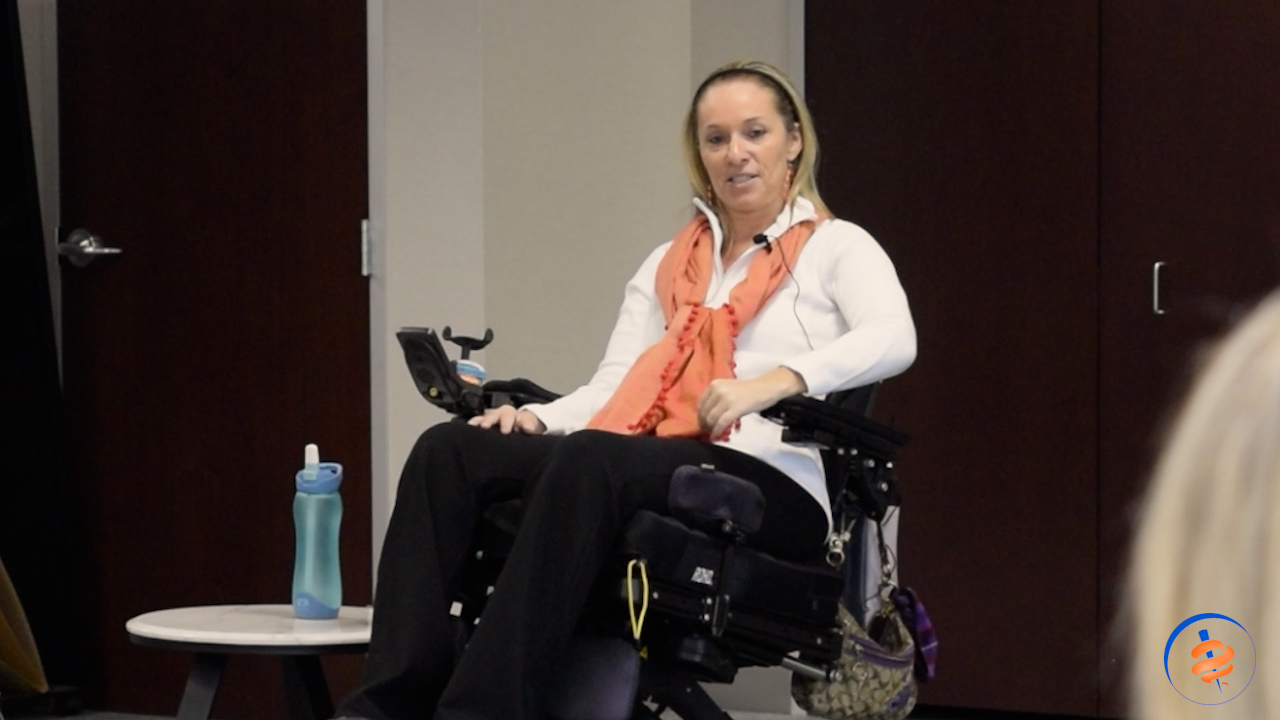
Meet Ali Ingersoll, the Quirky Quad, and Hear Her Take on Prior Auth Reform
Ali Ingersoll, the Quirky Quad, tells her life story, advocates for Prior Auth Reform
RALEIGH -- If you've never heard of Ali Ingersoll, this is your lucky day! She is a force of nature who has overcome unbelievable obstacles to emerge as healthcare advocate, public speaker, podcaster, disability consultant, and Ms. Wheelchair America!
Ali’s life took an unexpected turn when a tragic accident left her paralyzed at 27 leaving her paralyzed from the chest down. While she grappled with feelings of hopelessness through 7 years of life altering diagnoses, she was convinced her life had reached its end. Through her journey of self-discovery, she learned how to shift her thinking through harnessing the power of persistence to overcome incredible adversity.
She now calls herself the Quirky Quad, who normalizes disability "through dark humor and determination." Ali took some time to tell her story to the staff of the North Carolina Medical Society. Her presentation was both awe inspiring and motivational. She talked about how her accident led her down a daunting path of healthcare roadblocks and how she knocked them down one by one.
During her talk with NCMS staff she talked about the need for Prior Authorization reform in North Carolina, because, in her words, if she hadn't worked so hard she "would be dead."
Take a moment and hear her conversation. A full interview with Ali will be coming soon.
https://youtu.be/5j6elOh8n_U
Learn more about Ali here:
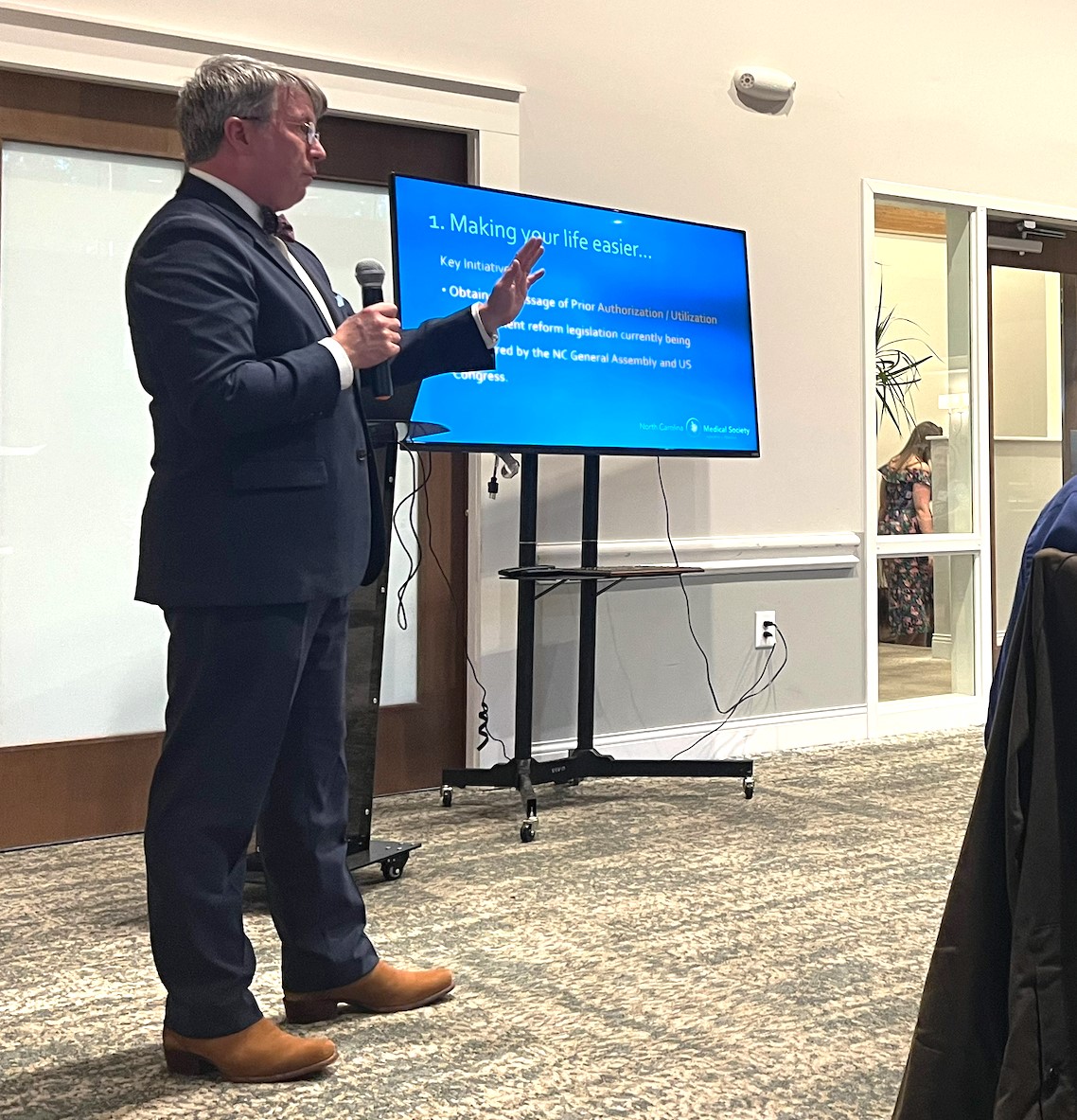
NCMS CEO Chip Baggett Addresses NHPCMS, Invites You to White Coat Day in June
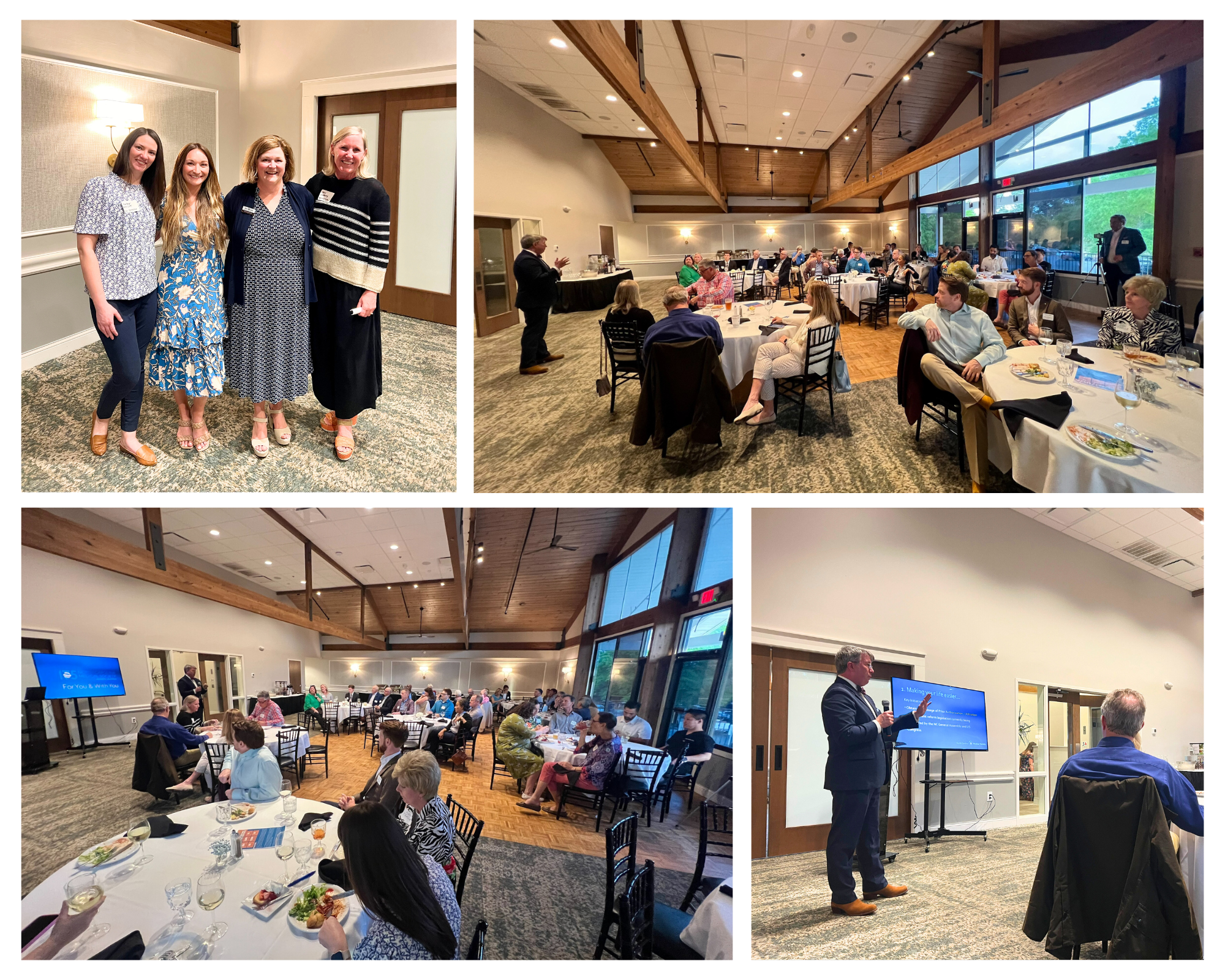
New Hanover and Pender County Medical Society Gets Outline of NCMS Priorities from Chip Baggett
(WILMINGTON) -- North Carolina Medical Society EVP/CEO Chip Baggett greeted an excited crowd in Wilmington Wednesday night at the New Hanover Pender Counties Medical Society was treated to an evening hosted by NCMS.
Baggett outlined the strategic priorities of the NCMS and answered questions from the crowd. He stressed how NCMS is working for our members and for patients across the state. Issues included how NCMS is making it easier for you to care for your patients, ensuring you have a choice of where and how you practice, the NCMS Leadership College, and helping you care for yourself so you can continue to show up for your patients.
Guests included NCMS Board member Dr. Claude Jarrett and former NCMS President Dr. Michael Utecht.
The presentation ended with Baggett saying "We are a political animal, medicine is a political animal, society is a political animal, you as doctors are political animals. I think it is really important in a time where everybody is talking about absolutes, we need to be the example of how to live a better society. I believe you do that every single day. Every single day in your clinic you show up and talk to patients who you don't know everything about. You don't know everything that is going on in their life. You don't know what brought them to other problems in their life outside of medical issues. You sit down and have a conversation with them about their needs in that moment. Right then right there. You find a solution. You don't worry about if they voted for the person you voted for, you don't care if they are running for office, you don't care if they can pay their bill. You just see them and take care of them.
Go forth and befriend. Befriend those who don't look, live, love, or vote like you. May your friendships so confuse the world that the church and state have to change their rules to make sense of your friendships. I believe we are doing that. If we can get our friends to do what you are doing on a daily basis we will have a better society. "
Empowered Members Power Change
Flood the General Assembly with White Coats June 12!
There is power in numbers, and a great way to demonstrate that is by joining your colleagues for a day of legislative engagement in Raleigh!
We'll gather at the NCMS headquarters in the morning for a brief overview of the day (and breakfast!). Learn about the latest developments at the NC General Assembly and the best messaging to use when meeting with your legislators. Then head down to the Legislative Building to meet one-on-one with your representatives and attend committee meetings on important healthcare issues. We'll wrap up the day with a Legislative Reception at the NC Museum of History. Share your experiences from the day with other attendees and NCMS staff while enjoying light hors d'oeuvres and drinks!
Space is limited, so be sure to register soon!

Shining Red Eyes and Deafening Noise! The Cicadapocalypse Coming Any Time Now
First Time This Has Happened Since
Thomas Jefferson Was President!
Southeast Should See Them Soon
(CNN) -- In a matter of weeks, they will dig their way out from underground, red eyes shining, deafening song filling the air. It will be a confluence of creatures the likes of which hasn’t been seen in the United States since Thomas Jefferson was president — and won’t happen again until 2245. It’s a rare emergence of insects some are referring to as cicadapocalypse.
Billions of cicadas are set to surface this spring as two different broods — one that appears every 13 years, and another every 17 years — emerge simultaneously. The 13-year group, known as Brood XIX, or the Great Southern Brood, is the largest periodical cicada brood, stretching across the southeastern United States. The Northern Illinois Brood, or Brood XIII, emerges every 17 years.
“It’s rare that we see this size of double brood emergence,” said Dr. Jonathan Larson, an extension entomologist and assistant professor at the University of Kentucky. “We’re talking about an absolute oddity of nature, one of America’s coolest insects.”
Though the idea of a cicadapocalypse may seem foreboding, experts predict that the two broods won’t overlap significantly, and the bugs themselves, while loud and numerous, are harmless. Here’s what you need to know going into cicada season.
What to know about cicada broods
This spring’s bugs are part of a genus, or group, of cicadas in the eastern US known as the Magicicada, or periodical cicadas. Three species emerge on a 17-year cycle, and four species are on a 13-year cycle. (Scientists have long debated the significance of these numbers, which are both prime — some researchers have suggested that emerging on these prime-numbered years makes the periodical cicadas less likely to be killed by predators that have two- or three-year life cycles, but the jury’s still out.)
The pattern periodical species follow is different from that of “annual” cicadas, which don’t actually have an annual life cycle, even though you can see them every summer in much of the United States. The nymphs, or babies, of annual cicadas spend two to five years underground, slowly growing, until they are ready to emerge. There are just so many overlapping generations that there appears to be a steady stream of these cicadas every year.
It’s easy to tell annual and periodical cicadas apart. Annuals tend to emerge later in the year than periodicals. For instance, the “dog day” annual cicadas in the genus Neotibicen tend to show up in the dog days of summer, around August, whereas the periodicals make their appearance in the spring. While there are numerous species of annual cicadas, many of them are large and greenish. Periodical cicadas are smaller and mostly black, with bright red eyes and orange-tinged wings and legs.
Cicadas are divided into groups called broods based upon when they emerge. A brood can contain cicadas from multiple species. As long as they are adults in the same 13- or 17-year cycle at the same time, they count as members of the same brood.
When and where will the cicadas emerge?
This spring’s periodical cicadas will make their appearance when the soil temperature 8 inches (20 centimeters) deep reaches 64 degrees Fahrenheit (about 18 degrees Celsius). It will likely happen sometime in mid-May. The individual bugs’ adult life cycles are just a few weeks, but their emergence will be staggered, so there will be about six weeks of cicadas.
That month-and-a-half period will be jam-packed with loud singing, mating and then dying, like “the most macabre Mardi Gras that you’ve ever seen,” Larson said.
Parts of the Midwest and Southeast are due for cicadas this spring.
Northern Illinois, along with southern Wisconsin, eastern Iowa and northwest Indiana are likely to see bugs from Brood XIII; central and southern Illinois, most of Missouri and scattered areas of Kentucky, Tennessee, Virginia, Maryland, North Carolina, South Carolina, Georgia, Alabama, Mississippi, Louisiana and Arkansas are due to get Brood XIX bugs.
There are some areas of central Illinois where the two broods’ geographic ranges have historically been close to each other and could potentially overlap. However, predictions of a cicadapocalypse — in which Brood XIII and Brood XIX show up at the same place at the same time — are probably an exaggeration.
“We’re not even sure that they’re really going to overlap,” said Dr. Chris Simon, a professor of ecology and evolutionary biology at the University of Connecticut. Her research group at the university maintains a website of cicada information, which includes maps showing where the broods have historically emerged.
The double emergence of Broods XIX and XIII is rare, occurring every 221 years (when the 13-year and 17-year cicadas overlap, as 13 times 17 is 221). These two broods haven’t been aboveground at the same time since 1803, and after this year, they won’t be reunited until 2245.
However, the co-occurrence of different cicada broods, somewhere in the United States, isn’t quite as rare. Such an event last happened in 2015; it’ll happen again in 2037.
Preparing for cicadas
Even though a major overlap of the two cicada broods is unlikely, only getting one brood in an area still means countless bugs.
“You should expect lots and lots of cicada exoskeletons to be covering your trees and shrubs. You should expect to hear lots and lots of noise,” Larson said. The insects are likeliest to be in wooded areas near water, he added.
While the sheer volume of insects, along with their distinctive jackhammer-loud sounds and bright red eyes, might give some people pause, Larson notes that cicadas are harmless. They don’t pose a risk to garden plants. However, if you have young trees, cicadas could potentially damage them when the insects cut into branches to lay their eggs. You can mitigate this harm by covering the trees with cicada nets.
Cicadas won’t bite or sting you or your pets. If your dog eats a cicada or two, he said, the animal will be just fine.
Dogs aren’t the only ones tempted to nosh on cicadas; people have eaten them for thousands of years. “They have kind of a natural, sweet nut flavor,” Larson said. (If you’re allergic to shellfish though, you should avoid eating cicadas — a protein in shellfish that’s tied to allergies is also present in many insects.)
If you live in an area with cicadas making an appearance this spring, you can download community science apps to help researchers studying these bugs.
“The main thing we want people to know is that they should download the Cicada Safari app, which is free on the web, and all they have to do is photograph whatever cicadas they see,” Simon said. Those photographs are sent to scientists, who then map where and when the cicadas are emerging: information vital for scientists studying how climate change affects cicadas and predicting future cicada activity.
Beyond the bigger scientific story of cicadas, Larson said he hopes people will embrace cicada spring simply because it’s a rare chance to see some of the world’s most unusual bug behavior.
“These are some of the coolest insects in America,” Larson said. “I really hope that people will appreciate this for what it is: this unique natural phenomenon that you don’t get anywhere else. It’s beautiful.”
Kate Golembiewski is a freelance science writer based in Chicago who’s especially interested in zoology, thermodynamics and death.

Duke Researchers Lead International Study on Jardiance and Heart Failure

Therapy Shows Promise in Delaying Hospitalizations for Heart Failure
Diabetes drug did not prevent all cardiovascular outcomes, but it did affect hospitalizations
(DukeHealth News & Media) -- About 800,000 people in the U.S. suffer a heart attack every year, and about 30% of them will go on to develop heart failure. There are limited treatments to prevent or slow that development.
A large international study led by Duke researchers investigated whether the diabetes drug empagliflozin (marketed under the brand name Jardiance) might prevent heart failure in patients after they had suffered acute myocardial infarction (heart attack).
While the study found that the drug did not reduce deaths, secondary findings show it did slow the time to first hospitalization for heart failure and reduced the total number of subsequent heart failure hospitalizations.
The secondary findings are published in the journal Circulation and presented at the American College of Cardiology’s Annual Scientific Session on April 6. Other findings from the study, called EMPACT-MI, were also simultaneously published in the New England Journal of Medicine and the Journal of the American College of Cardiology.
Empagliflozin was originally approved for use in patients with diabetes, but investigators chose to study the drug based on earlier findings that it showed benefit in preventing active heart failure from becoming worse. The study was funded by two companies that manufacture the drug - Boehringer Ingelheim and Eli Lilly and Company.
The study enrolled 6,522 patients across 22 countries, with roughly half randomly assigned to receive the therapy and the other half placebo. Both groups otherwise received standard care. Investigators credit the study’s simple design to its broad reach.
The Duke Clinical Research Institute coordinated and led the conduct of the trial.
The study findings on lower rates of heart failure offer some hope and underscore the importance of preventing poor outcomes after a heart attack, according to principal investigator and corresponding author, Adrian Hernandez, M.D., director of the Duke Clinical Research Institute.
“Developing heart failure is one of our major public health problems, and any step that gets us closer to preventing it is a step in the right direction,” Hernandez said. “After a heart attack, we should really be focused on how to prevent problems, especially the development of heart failure. This therapy fills in that gap.”
Hernandez said he would be curious to investigate the secondary findings further, especially because there are so many different factors that can play out after a heart attack.
“Heart attacks are pretty dynamic – in the first 24 hours things can change for the better or the worse; you can end up having a small heart attack or a big one,” Hernandez said. “We don’t know if there could be a difference in results from the therapy depending on the type of event and the timing of giving a treatment. Those could be areas to consider.”
In addition to Hernandez, study authors for the Circulation publication include Jacob A. Udell, W. Schuyler Jones, Stefan D. Anker, Mark C. Petrie, Josephine Harrington, Michaela Mattheus, Svenja Seide, Isabella Zwiener, Offer Amir, M. Cecilia Bahit, Johann Bauersachs, Antoni Bayes-Genis, Yundai Chen, Vijay K. Chopra, Gemma Figtree, Junbo Ge, Shaun Goodman, Nina Gotcheva, Shinya Goto, Tomasz Gasior, Waheed Jamal, James L. Januzzi, Myung Ho Jeong, Yuri Lopatin, Renato D. Lopes, Béla Merkely, Puja B. Parikh, Alexander Parkhomenko, Piotr Ponikowski, Xavier Rossello, Morten Schou, Dragan Simic, Philippe Gabriel Steg, Joanna Szachniewicz, Peter van der Meer, Dragos Vinereanu, Shelley Zieroth, Martina Brueckmann, Mikhail Sumin, Deepak L. Bhatt, and Javed Butler.

Mortality Gap Widens Amid Holes in Rural Healthcare Access, South Has Widest Gap
City-country mortality gap widens amid persistent holes in rural health care access
As Roach tracked the health of Arizona residents, the gap between mortality rates of people living in rural areas and those of their urban peers was widening.
The research analyzed Centers for Disease Control and Prevention death data from two three-year periods — 1999 through 2001 and 2017 through 2019. In 1999, the natural-cause mortality rate for people ages 25 to 54 in rural areas was only 6% higher than for city dwellers in the same age bracket. By 2019, the gap widened to 43%.
The researchers found the expanding gap was driven by rapid growth in the number of women living in rural places who succumb young to treatable or preventable diseases. In the most rural places, counties without an urban core population of 10,000 or more, women in this age group saw an 18% increase in natural-cause mortality rates during the study period, while their male peers experienced a 3% increase.
Within the prime working-age group, cancer and heart disease were the leading natural causes of death for both men and women in both rural and urban areas. Among women, the incidence of lung disease in remote parts of the nation grew the most when compared with rates in urban areas, followed by hepatitis. Pregnancy-related deaths also played a role, accounting for the highest rate of natural-cause mortality growth for women ages 25 to 54 in rural areas.
The negative trends for rural non-Hispanic American Indian and Alaska Native people were especially pronounced. The analysis shows Native Americans 25 to 54 years old had a 46% natural-cause mortality rate increase over those two decades. Native women had an even greater mortality rate jump, 55%, between the two studied time periods, while the rate for non-Hispanic White women went up 23%.
The rural-urban gap grew in all regions across the nation but was widest in the South.
The increased mortality rates are an indicator of worsening population health, the study authors noted, which can harm local economies and employment.
As access to and quality of health services in rural areas continue to erode, rural health experts said, the USDA findings should spur stronger policies focused on rural health.
Alan Morgan, CEO of the National Rural Health Association, said he found the report "shocking," though, "unfortunately, not surprising."
The disparity warrants greater attention from state and national leaders, Morgan said.
The study does not address causes for the increase in mortality rates, but the authors note that differences in health care resources could compromise the accessibility, quality, and affordability of care in rural areas. Hospitals in small and remote communities have long struggled, and continued closures or conversions limit health care services in many places. The authors note that persistently higher rates of poverty, disability, and chronic disease in rural areas, compounded by fewer physicians per capita and the closure of hospitals, affect community health.
Roach said his past job as an epidemiologist included working with social vulnerability indexes, which factor in income, race, education, and access to resources like housing to get a sense of a community's resilience against adverse health outcomes. A map of Arizona shows that rural counties and reservations have some of the highest vulnerability rankings.
Janice C. Probst, a retired professor at the University of South Carolina whose work focused on rural health, said many current rural health efforts are focused on sustaining hospitals, which she noted are essential sources of health care. But she said that may not be the best way to address the inequities.
"We may have to take a community approach," said Probst, who reviewed the report before its release. "Not how do we keep the hospital in the community, but how do we keep the community alive at all?"
The disparities among demographics stood out to Probst, along with something else. She said the states with the highest rates of natural-cause mortality in rural areas included South Carolina, Mississippi, Georgia, Alabama, and others that have not expanded Medicaid, the joint federal and state health insurance program for low-income people, though there are efforts to expand it in some states, particularly Mississippi.
It's an observation the USDA researchers make as well.
"Regionally, differences in State implementation of Medicaid expansion under the 2010 Affordable Care Act could have increased implications for uninsured rural residents in States without expansions by potentially influencing the frequency of medical care for those at risk," they wrote.
Wesley James, founding executive director of the Center for Community Research and Evaluation, at the University of Memphis, said state lawmakers could address part of the problem by advocating for Medicaid expansion in their states, which would increase access to health care in rural areas. A large group of people want it, but politicians aren't listening to their needs, he said. James also reviewed the report before it was published.
According to KFF polling, two-thirds of people living in nonexpansion states want their state to expand the health insurance program.
Morgan added the study focused on deaths that occurred prior to the COVID-19 pandemic, which had a devastating effect in rural areas.
"COVID really changed the nature of public health in rural America," he said. "I hope that this prompts Congress to direct the CDC to look at rural-urban life expectancies during COVID and since COVID to get a handle on what we're actually seeing nationwide."
In Arizona, the leading cause of death for people 45 to 64 in 2021 in both rural and urban areas was COVID, according to Roach.

EPA Takes Action on PFAS Pollution in Drinking Water, NC Response
EPA Announces First-Ever National Standard to Address PFAS in Drinking Water, Delivers an Additional $1 Billion through President Biden’s Investing in America Agenda to Combat PFAS Pollution
WASHINGTON -- The Environmental Protection Agency announced on Wednesday, the first-ever national legally enforceable drinking water standard for PFAS, which will protect 100 million people from PFAS exposure, prevent tens of thousands of serious illnesses, and save lives. Per a release, the move "complements the Biden-Harris Administration’s commitment to combatting PFAS pollution and delivering clean water."
Details of the release:
President Biden has secured historic levels of funding to meet this new standard. Today, the Biden-Harris Administration is also announcing an additional $1 billion through President Biden’s Investing in America agenda to help every state and territory fund PFAS detection and treatment systems to meet the new standard. This funding is part of the $9 billion in dedicated funding through the President’s Bipartisan Infrastructure Law to address PFAS and other emerging contaminants in drinking water – the largest-ever investment in tackling PFAS pollution. An additional $12 billion in funding from the Bipartisan Infrastructure Law supports general drinking water investments, including PFAS treatment. The investments are part of the Justice40 Initiative, which aims to ensure that 40 percent of the overall benefits of certain federal investments flow to disadvantaged communities.
These actions will help tackle PFAS pollution that has devastated communities like Oakdale, outside of St. Paul, Minnesota, where decades of PFAS-containing waste dumped by a chemical plant has contaminated the community’s drinking water. In this area, cancer was found to be a far more likely cause of death in children than in neighboring areas. The funding announced today will build on funding from the President’s Bipartisan Infrastructure Law that is already helping communities address PFAS contamination, including a $33 million award for Tucson, Arizona to treat its PFAS-contaminated drinking water wells.
This funding also builds on President Biden’s action plan to address PFAS pollution, safeguard public health, and advance environmental justice – all while advancing the Biden Cancer Moonshot goal of cutting the cancer death rate by at least half by 2047 and preventing cancer before it starts by protecting communities from known risks associated with PFAS exposure.
As the first-ever Safe Drinking Water Act standard for PFAS – and the first for any new contaminants since 1996 – this rule sets health safeguards and will require public water systems to monitor and reduce the levels of PFAS in our nation’s drinking water, and notify the public of any exceedances of those levels. The rule sets drinking water limits for five individual PFAS, including the most frequently found PFOA and PFOS. Because PFAS can often be found together in mixtures, EPA is also setting a limit for any combination of four PFAS, including GenX Chemicals. This standard will reduce PFAS exposure in our drinking water to the lowest levels that are feasible for effective nationwide implementation.
Today’s announcements advance President Biden’s broader commitment to deliver clean water for every American. The President’s Bipartisan Infrastructure Law invests over $50 billion to upgrade water infrastructure – the largest investment in clean water in American history. This includes a historic $15 billion to replace toxic lead pipes and protect children from brain damage, as part of President Biden’s goal of replacing every lead pipe in the country within a decade.
Recent Federal Actions to Protect Communities from PFAS
Under President Biden’s leadership, nearly two dozen federal agencies and offices have made systematic and substantive progress to safeguard public health and protect the environment from PFAS in drinking water and beyond. This work is coordinated by the White House Council on Environmental Quality, which leads the Interagency Policy Committee on PFAS. Other new actions the Biden-Harris Administration has advanced to combat PFAS pollution over the past year include:
Protecting Firefighters from PFAS: The Biden-Harris Administration is committed to protecting firefighters from the harmful effects of PFAS contained in fire suppressing agents and firefighter gear. The Department of Defense is offering PFAS blood tests to military firefighters. The Federal Emergency Management Agency’s U.S. Fire Administration is working to reduce PFAS exposure and promoting access to early cancer screenings and participation in the National Firefighter Registry for Cancer led by the National Institute for Occupational Safety and Health as part of President Biden’s mission to end cancer as we know it.
Reducing PFAS in Fire Suppressants: The Department of Defense (DoD) qualified three fluorine-free foams to replace fluorinated Aqueous Film Forming Foam for shore-based firefighting activities at military installations, which the Federal Aviation Administration (FAA) has authorized for civilian airports. The FAA is assisting airports to transition to these new foams, and funding foam testing systems for airports that prevent environmental discharge. These changes will reduce the release of PFAS in the environment and protect the health of firefighters and local communities.
Supporting Healthcare Providers: The Agency for Toxic Substances and Disease Registry at the Centers for Disease Control and Prevention recently released the PFAS: Information for Clinicians resource guide. This information gives clinicians up-to-date resources and information they need to help patients with questions and concerns about PFAS exposure and health effects.
Phasing Out PFAS in Food Packaging: The Food and Drug Administration (FDA) announced the completion of the voluntary market phase-out of PFAS used on paper and paperboard food packaging, eliminating the primary source of dietary exposure to PFAS. FDA can now also test for 30 PFAS in a variety of foods to further protect people from dietary PFAS exposure.
Testing for and Cleaning Up PFAS Pollution: EPA continues to take key actions to address PFAS. For example, EPA is gathering data on 29 PFAS in the nation’s drinking water systems has collaborated with DoD to develop a method to test for 40 PFAS in various media including biosolids, groundwater, and fish tissue. EPA also updated its interim PFAS disposal and destruction guidance and has released a new method to test for 30 volatile fluorine-containing compounds in air including potential products of incomplete combustion of PFAS. DoD recently identified 40 installations where interim cleanup actions to prevent further PFAS migration are underway or will start in FY2024. These actions will address PFAS in groundwater to protect public health and the environment.
Reducing PFAS in Federal Procurement: EPA and the U.S. General Services Administration announced this week that custodial contracts for federal buildings will now only use cleaning products certified to ecolabels such as EPA’s Safer Choice and certain Green Seal standards, thereby avoiding products that contain intentionally added PFAS. This shift will protect the environment, federal custodial workers, other federal employees, and those visiting government buildings.
Response in North Carolina
NC Health News reports that on Wednesday, a host peakers including state and federal officials gathered at P.O. Hoffer Water Treatment Facility in Fayetteville to praise the new drinking water standards announced by the Environmental Protection Agency the day before. The safe drinking water standards set maximum contaminant levels for six PFAS, including GenX, which were manufactured at the Chemours Fayetteville Works plant.
All six chemicals found their way into the Cape Fear River, a contamination that was revealed in 2017. The river has been a source of contamination and consternation for people living in the lower Cape Fear basin ever since.
Governor Roy Cooper saying "[The administration] made a big promise that for the first time ever, we would set a national limit on PFAS in drinking water,” Cooper said. “Administrator [Michael] Regan and the Biden administration are delivering on that promise that they made not only to North Carolinians, but to all Americans across this country.”
“Drinking water contaminated with PFAS has plagued communities across this country for too long,” Michael Regan, EPA administrator, said on Tuesday on a call with the media. “President Biden has made tackling PFAS a top priority, investing historic resources to address these harmful chemicals and protect communities nationwide.”
Detlef Knappe, the North Carolina State University professor whose research led to the 2017 news story that revealed GenX, one class of PFAS in the Cape Fear River, said he was pleased by the EPA’s announcement and that North Carolina is ahead of many states in efforts to address PFAS.

New Resources Ahead of July 1st Tailored Plans Launch

Tailored Plans are a new kind of NC Medicaid Managed Care health plan for approximately 210,000 beneficiaries with a serious mental illness, a serious emotional disturbance, a severe substance use disorder, an intellectual/developmental disability or a traumatic brain injury in North Carolina. They will cover doctor visits, prescription drugs and services for mental health, substance use, I/DD and traumatic brain injury in one plan. Eligible North Carolinians who are covered by NC Medicaid Direct will be covered by a Tailored Plan beginning July 1. The name of their Medicaid plan will change but the services covered remain the same. A bilingual toolkit with accessible resources is now available for people impacted by the transition to Tailored Plans.
"Tailored Plans have the privilege and responsibility of serving North Carolinians with incredibly complex medical and behavioral needs — ensuring the plan operators are ready to support these members through this transition has been and continues to be our goal," said NC Health and Human Services Secretary Kody H. Kinsley. "Tailored Plans are another innovation to deliver on North Carolina's investments in behavioral health as foundational to whole person health."
Tailored Plans will ensure beneficiaries' needs are met regarding physical health, behavioral health and home and community-based services. Tailored Plans will also provide services that support well-being, such as food, transportation and housing.
"Tailored Plans are a step forward in improving the quality of life for people in North Carolina with serious mental illness, substance misuse, intellectual or developmental disabilities and traumatic brain injury," said Kelly Crosbie, MSW, LCSW, Director of the NCDHHS Division of Mental Health, Developmental Disabilities, and Substance Use Services. "We are working with consumers, families, providers and the Tailored Plans to ensure the community has the resources they need to understand and manage the transition into Tailored Plans more easily. We created the Tailored Plan toolkit to make this information more accessible."
The Tailored Plans toolkit was developed with input from the community and includes resources for partners and advocates to help people understand what to expect during the transition to Tailored Plans. The toolkit, which is available in English and Spanish, includes:
- New website content
- A presentation deck explaining Tailored Plans, answers to common questions and resources to help eligible beneficiaries navigate the process
- A printable flyer letting people know what actions they should take before July 1
- Social media posts highlighting important information
The NC Medicaid Enrollment Broker will mail a letter in mid-April to anyone moving to a Tailored Plan. Tailored Plan beneficiaries will need to choose a primary care provider between April 15 and May 15, 2024. If you don't choose a PCP by May 15, the Tailored Plan will assign one to you. People can change their PCP through January 31, 2025. 31, 2025.
Tailored Plans will be managed by the Local Management Entities Alliance Health, Partners Health Management, Trillium Health Resources and Vaya Health. At a legislative committee hearing last week, NC Medicaid officially announced that all Tailored Plans are ready to go live on July 1.
For more information about Tailored Plans, visit: medicaid.nc.gov/tailored-plans. To access the toolkit, visit: medicaid.nc.gov/tailored-plans/toolkit.

Registration Now Open for the Inaugural Collaborative Care Model Behavioral Health Care Manager Summit
Registration Now Open!
Inaugural Collaborative Care Model (CoCM) Behavioral Health Care Manager (BHCM) Summit
Thursday, May 16, 2024
9 am- 3:15 pm
McKimmon Center
1101 Gorman St, Raleigh, NC 27606
Register today for the inaugural Collaborative Care Model (CoCM) Behavioral Health Care Manager (BHCM) Summit, presented jointly by NC AHEC and Southern Regional AHEC.
This event will be held on Thursday, May 16 at the McKimmon Center in Raleigh.
Explore the pivotal role of BHCMs in CoCM and their significant impact. This summit will feature esteemed national and state CoCM experts, including representatives from the AIMS Center at the University of Washington, as well as state government representatives.
Attendees will benefit from insightful presentations by experienced CoCM BHCMs, integrated behavioral health Subject Matter Experts, university graduate education, and patient perspectives. Additionally, gain valuable insights from a primary care practice team that has successfully implemented CoCM in their clinic.
Download the Summit flyer here.
Don't miss out on this free training opportunity.
Calling All NCMS Physician and PA Members! Nominations Open for Leadership Positions
Want to be an NCMS leader?
Here's your opportunity to be a vital part of our 175-year legacy!
The NCMS Nominating and Leadership Development Committee submits the following:
Call for Nominations:
- NCMS Board of Directors
- NC American Medical Association Delegation
- Nominating and Leadership Development Committee
Overview
The call for nominations for individuals to serve on the NCMS Board of Directors, NC American Medical Association Delegation, and Nominating and Leadership Development Committee are now open.
NCMS Board of Directors
- President Elect: OPEN
- Region 1 Representative: Claude Jarrett, MD (eligible for an additional term)
- At-Large Member: Jugta Kahai, MD (eligible for an additional term)
- At-Large Member: OPEN
View current NCMS Board of Directors here.
View the NCMS Board of Directors Job Description here.
NC American Medical Association Delegation
- AMA Delegate: E. Rebecca Hayes, MD (eligible for an additional term)
- AMA Delegate: Karen Smith, MD (eligible for an additional term)
- AMA Delegate: Royce Syracuse, MD (eligible for an additional term)
- AMA Delegate: OPEN
View current NC AMA Delegation here.
View the NC AMA Delegation Job Description here.
Nominating and Leadership Development Committee
NLDC Region 1: Joe Navejar, MD (eligible for an additional term)
NLDC Region 1: OPEN
NLDC Region 2: OPEN
NLDC Region 3: Labron Chambers, Jr., MD (eligible for an additional term)
NLDC Region 3: OPEN
NLDC Region 3: OPEN
NLDC Region 4: OPEN
NLDC Region 4: OPEN
NLDC Region 4: OPEN
View current NLDC members here.
View the NLDC Job Description here.
Nominations are due by May 13, 2024 (click here to view Nomination Form).
Process
Step 1: Candidates are nominated or may nominate themselves for a leadership position on the NCMS Board of Directors, NC American Medical Association Delegation, and Nominating and Leadership Development Committee (click here to view Nomination Form).
Step 2: Once a candidate submits their nomination form, they will receive an email confirmation and made aware of any follow-up if needed.
Step 3: Upon careful review of submitted materials, the Nominating and Leadership Development Committee (NLDC) will select candidates to be interviewed. Candidates will be notified via email by May 14, 2024, if they are selected for an interview. Interviews will take place via videoconference on Saturday, June 1, 2024.
Step 4: The NLDC will present the initial slate of candidates to NCMS membership on July 19, 2024, including a nomination form for Specialty Society-Component Society nominations. Specialty Society-Component Society nominations are due by August 9, 2024.
Step 5: Following any additional candidate interviews, the NLDC will select a final slate of candidates to be approved by the NCMS Board of Directors that will then be brought before the NCMS membership for a vote.
Step 6: The voting period for the elected positions will begin for all Active NCMS Members (Members who have paid 2024 dues) on October 14, 2024, and will end on October 30, 2024. Election results will be announced at the NCMS Annual Business Meeting on November 2, 2024.
All nominations and any information collected as part of the nominating process is strictly confidential.
For more information or questions about the nominating process, please contact Evan Simmons at esimmons@ncmedsoc.org.
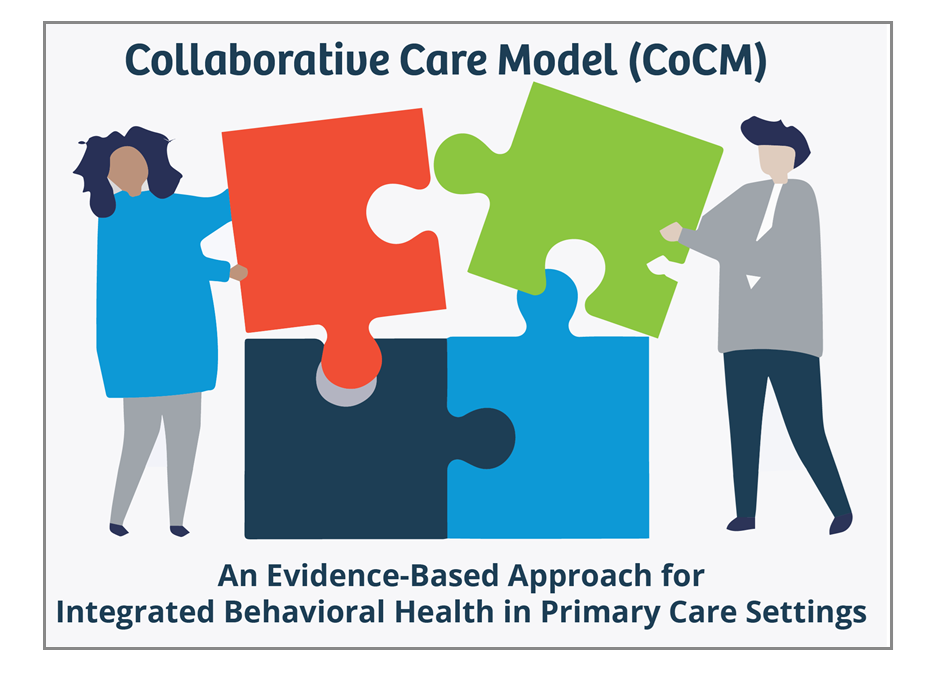
Are You Taking Advantage of Collaborative Care Model Training Series?
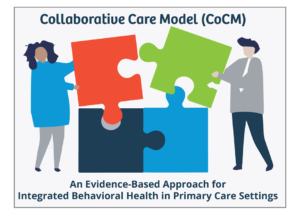
The North Carolina Department of Health and Human Services (DHHS) has partnered with NC AHEC to provide educational and practice-based support to primary care practices interested in implementing the Collaborative Care Model (CoCM) -- a team-based, interdisciplinary approach to deliver evidence-based diagnoses, treatment, and follow-up care for patients with mild to moderate behavioral health needs.
CoCM is an integrated modality that provides patients with medical and behavioral health care in a primary care setting. An increasing number of primary care settings are incorporating behavioral health services. Benefits of CoCM include better patient outcomes, improved patient and provider satisfaction, and reduction in health care costs. In addition, using CoCM may reduce health disparities in access to behavioral health. Most payors in North Carolina already cover the CoCM billing codes.
NC AHEC is offering CoCM virtual learning opportunities, including Education Modules designed for providers interested in learning about the CoCM. Currently, 15 modules are available, with additional modules being added regularly.
Modules currently available on demand include (listed in order of release date):
Module 15: Improving CoCM Quality Using Technology
Module 14: Collaborative Care in Perinatal Populations
Module 13: Diversity, Equity, and Inclusion in Collaborative Care: A Review of the Evidence in Minority Populations and Next Steps
Module 12: Collaborative Care Model in Substance Use Disorders
Module 11: Primary Care Provider Engagement
Module 10: Best Practices in Pediatric Collaborative Care
Module 9: Behavioral Health Care Manager (BHCM) Best Practices
Module 8: Best Practices for Collaborative Care Management Behavioral Health Care Manager
Module 7: Brief Therapeutic Interventions
Module 6: Billing the Codes and the General Business Model for Collaborative Care
Module 5: The Role of the Psychiatric Consultant in the Collaborative Care Model
Module 4: Collaborative Care Management for Primary Care Providers
Module 3: Putting Collaborative Care Principles into Practice: Planning for Clinical Practice Change
Module 2: Laying the Foundation for Collaborative Care Through Practice Transformation
Module 1: Collaborative Care Model (CoCM) Rationale and Evidence
View a collection of informercials to learn more about CoCM and how it’s being implemented in practices statewide!
Visit NC AHEC's Collaborative Care Model Webpage here.
Take advantage of this useful and helpful training opportunity today.
NC Health System Performs First-in-the-State Valve Replacement
For the first time in the state of North Carolina, the structural heart team at UNC Hospitals has performed a transcatheter tricuspid valve replacement in the clinical setting. The implant, which was only the 12th in the United States, is a revolutionary treatment for patients living with tricuspid valve regurgitation (TR), a common type of heart valve disease.
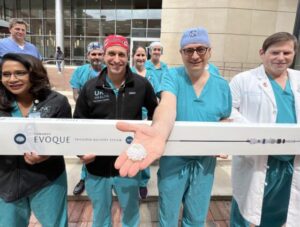 (Left to Right) Thelsa Thomas Weickert, MD; Matthew A. Cavender, MD, MPH, FACC;
John Vavalle, MD, MHS, FACC; and John S. Ikonomidis, MD, PhD.(image credit: UNC Health)
“We now have a percutaneous, minimally invasive way to fix tricuspid valve regurgitation and offer valve replacement without the need for open heart surgery,” said John Vavalle, MD, MHS, FACC, medical director of the Structural Heart Disease Program at UNC Hospitals and associate professor of medicine at the UNC School of Medicine. “It’s only at a place like UNC, where there is this spirit of collaboration and this desire to push the technology forward, that you can do this kind of work.”
Read the full story here.

Mark Your Calendar: 2024 Second Primary Election
To complete the state’s primary election cycle, a second primary (run-off election) will take place on May 14, 2024. The statewide ballot will include the following contests:
- Republican nomination for lieutenant governor:
- Hal Weatherman
- Jim O’Neill
- Republican nomination for state auditor:
- Jack Clark
- Dave Boliek
- Republican nomination for U.S. House District 13:
- Kelly Daughtry
- Brad Knott
County-level second primaries will also be held for
- Republican nomination for the South Point Township District on the Gaston County Board of Commissioners:
- Jim Bailey
- Ronnie Worley
- A third seat on the Orange County Schools Board of Education:
- Jennifer Moore
- Bonnie Hauser
All voters who live in the district for which a second primary is conducted and are registered with the political party of the candidates are eligible to vote in the second primary.
Unaffiliated voters who live in that district and either didn’t vote in the primary, or who voted the ballot of the party for which the second primary is being held, would also be eligible.
In counties where second primaries are held, new registration of voters is not permitted between the first and second primaries. Therefore, same-day voter registration is not available during early voting for the second primary. However, individuals who become eligible to vote between the primary and second primary and who are otherwise eligible to vote in the second primary may register and vote on the day of the second primary — May 14th.
Early voting for the May 14th second primary election begins Thursday, April 25, and ends at 3 p.m. on Saturday, May 11. Early voting sites and schedules are available on the State Board of Elections website at: Early Voting Site Search. A printable list of locations and voting hours is also available at: Early Voting Sites for the May 14, 2024 Election (PDF).
Key dates and deadlines for the 2024 second primary election in North Carolina:
- March 30, 2024: County boards of elections begin mailing absentee ballots to eligible voters who submitted an absentee ballot request form.
- April 25, 2024: In-person early voting begins.
- May 7, 2024: Absentee ballot request deadline (5 p.m.).*
- May 11, 2024: In-person early voting ends (3 p.m.).
- May 14, 2024: Election Day.
- May 14, 2024: Absentee ballot return deadline (7:30 p.m.).*
*Voter registration and absentee voting deadlines are different for military and overseas citizen voters.

Exciting Member Perk: Discount Subscription to Our State Magazine (with a bonus to NCMS!)
Get a discount on the premiere state magazine and a donation will be made to NCMS.
If you need another reason why it's good to be an NCMS member, this is it!
Click here to go to Our State Magazine. Don't forget to use promo code DSMDS