

US News 2024-2025 Best Hospitals Honor Roll Released, NC Hospital Near Top of List

America's Best Hospitals: the 2024-2025 Honor Roll and Overview
(US News) -- Duke University Hospital in Durham is on the Best Hospitals Honor Roll. It is nationally ranked in 11 adult and 10 pediatric specialties and rated high performing in 1 adult specialty and 19 procedures and conditions. It is a general medical and surgical facility. It is a teaching hospital. The evaluation of Duke University Hospital also includes data from Duke Children's Hospital & Health Center.

UNC Hospitals and UNC Health Rex ranked as top hospitals in North Carolina
UNC Hospitals in Chapel Hill is cited as the No. 2 hospital in the state and within the Triangle in U.S. News’ 2024-25 “Best Hospitals” report released today. UNC Health Rex in Raleigh is rated as the No. 4 hospital in the state and No. 3 in the Triangle region.
The Ear, Nose & Throat (ENT) specialty at UNC Hospitals is nationally ranked (No. 44). To be nationally ranked in an adult specialty, a facility must be rated among the top 50 hospitals in the nation for that discipline.
UNC Hospitals is also rated as “high performing” in five adult specialties including:
- Cancer
- Gastroenterology & GI Surgery
- Geriatrics
- Pulmonology & Lung Surgery
- Urology
CLICK HERE TO SEE FULL LIST.


CDC: Extreme Heat and Your Health
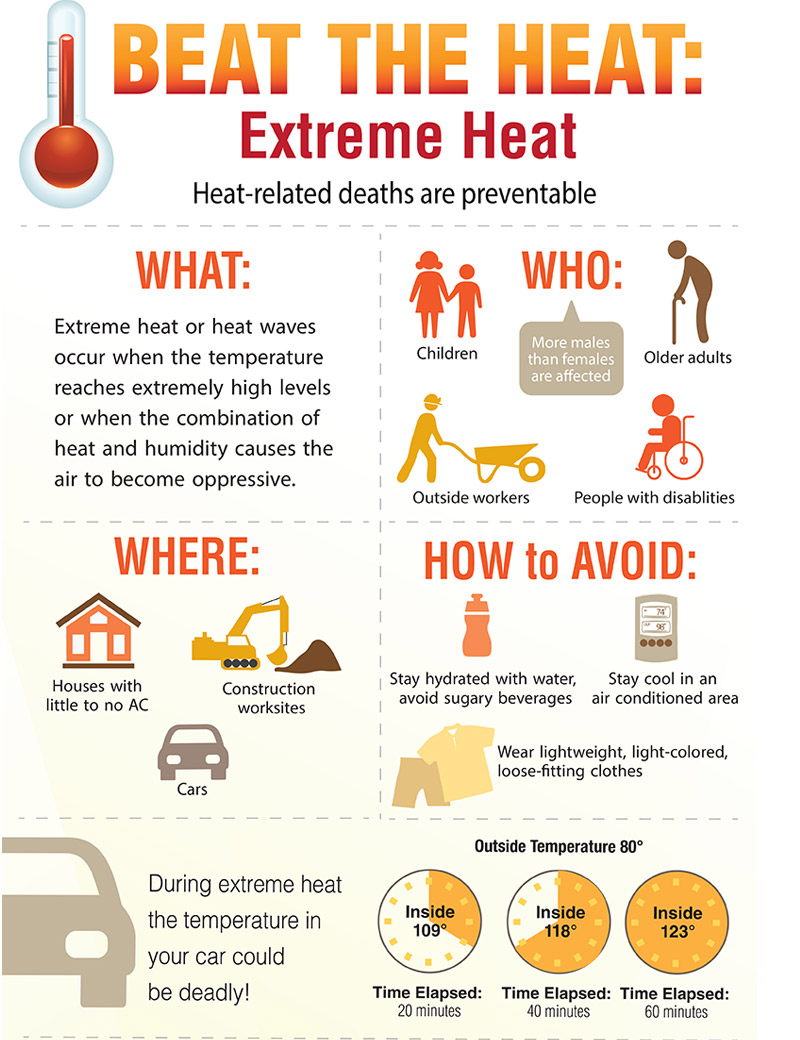
Heat related deaths and illnesses are preventable. Despite this fact, approximately 1,220 people in the United States are killed by extreme heat every year
What is extreme heat?
Spotlight

Extreme heat is defined as summertime temperatures that are much hotter and/or humid than average. Because some places are hotter than others, this depends on what’s considered average for a particular location at that time of year. Humid and muggy conditions can make it seem hotter than it really is.
Health effects

Know the signs and symptoms of heat-related illnesses.
Heat-related illnesses, like heat exhaustion or heat stroke, happen when the body is not able to properly cool itself. While the body normally cools itself by sweating, during extreme heat, this might not be enough. In these cases, a person's body temperature rises faster than it can cool itself down. This can cause damage to the brain and other vital organs.
Some factors that might increase your risk of developing a heat-related illness include:
- High levels of humidity
- Obesity
- Fever
- Dehydration
- Prescription drug use
- Heart disease
- Mental illness
- Poor circulation
- Sunburn
- Alcohol use
Who is at increased risk

Older adults, the very young, and people with mental illness and chronic diseases are at highest risk. However, even young and healthy people can be affected if they participate in strenuous physical activities during hot weather.
Summertime activity, whether on the playing field or the construction site, must be balanced with actions that help the body cool itself to prevent heat-related illness. Use this website to learn more on how to stay safe in the heat this summer, including how to prevent, recognize, and cope with heat-related illness.
Learn more:
Tips to stay safe

Protect yourself and others when it's hot outside by staying cool, staying hydrated, and staying informed. Learn additional tips for staying safe during extreme heat.
Learn more:

Duke Global Health Institute: More Boys Need HPV Vaccine

Why Aren’t More Boys Getting HPV Vaccines?
An emphasis on risks of the virus to women and girls may be helping drive lower rates of immunization among boys. That needs to change, says DGHI’s Nosayaba Osazuwa-Peters
(Duke Global Health, Alicia Banks) -- When his nine-year-old son went to a routine doctor’s appointment a few years ago, Nosayaba Osazuwa-Peters, Ph.D., expected that he would receive a vaccine for human papillomavirus (HPV). The vaccine, which protects against multiple forms of cancer caused by HPV, is recommended for pre-teen boys and girls. And can be given beginning at age nine.
Osazuwa-Peters, an associate professor of global health who studies some of the cancers caused by HPV, saw no reason to delay. But he was surprised when his son’s doctor said the vaccine could wait, since he was at low risk for HPV infection.
“I couldn’t wait for my son to receive the vaccine,” says Osazuwa-Peters, who is also in the Department of Head and Neck Surgery and Communication Sciences in the Duke School of Medicine. “And for him not to, I wasn’t happy about that.”
The encounter may also point to a larger issue – a lack of urgency in encouraging men and boys to be immunized against HPV. According to a March 2024 study co-authored by Osazuwa-Peters, adult women in the U.S. are three times as likely to have received at least one dose of the HPV vaccine as men. The gender gap also exists among demographic groups that have lower overall HPV vaccination rates, including some racial groups and adults with lower levels of education.
A significant factor in that gap, says Osazuwa-Peters, is the “feminization” of HPV as a public health issue. When HPV vaccines became available in 2006, they were initially only approved for girls. Even when vaccines were offered to boys in 2009, much of the messaging around HPV continued to focus on risks to women and girls, such as protection against cervical cancer. It’s one reason that today awareness of the benefits of HPV vaccines tend to be significantly higher among women than among men, Osazuwa-Peters and co-authors note.
While men have plenty of reasons to get the vaccine, including protecting their partners from cancer risks, Osazuwa-Peters’ is studying whether more direct appeals to the health benefits for men may help close the gender gap in HPV vaccinations.

“A lot of men object to the HPV vaccine and will say, ‘Why should I get this when it is for girls?’” he says. “It’s frustrating how the vaccine was marketed because it has contributed a lot to the negative perception of it.”
As the fourth leading cause of cancer among women, cervical cancer remains a significant threat, especially in low-income settings where access to HPV prevention and treatment is uneven. But untreated HPV infections, which are spread through sexual activity, can cause many forms of cancer that affect both men and women. For example, oral transmission of HPV can cause oropharyngeal cancer, which occurs in the mouth and throat. Incidence of this cancer has been rising in recent years, with three-quarters of cases in men, Osazuwa-Peters notes.
Osazuwa-Peters became interested in HPV prevention after seeing patients with oral cancers while practicing as a dentist in Nigeria more than a decade ago. He is now seeking funding to launch projects aimed at expanding HPV vaccine awareness and access among boys and men. He would like to see the vaccine offered not just in primary care offices, but through specialists such as ear, nose and throat doctors who can speak to the cancer risks of going unprotected.
But primary-care doctors also need to do more to dispel misconceptions about HPV vaccination, he says. The best time to receive an HPV vaccine is before a child becomes sexually active, he notes, adding that research shows there is no link between a child receiving the vaccine at an early age and becoming sexually active earlier.
“We know more about HPV now,” he says. “That’s why it’s important to increase awareness amongst providers. When they have a positive outlook on a vaccine, it won’t be a missed opportunity with patients.”

NCDHHS Launches New Toolkit to Share Disaster-Specific Mental Health Resources
Tips, guidance, and resources to support mental and emotional health before, during and after a disaster
(NC DHHS) -- Natural disasters and incidents of mass violence continue to impact individuals, families and communities. NCDHHS launched a new, multilingual Disaster and Behavioral Health Resources Communications Toolkit to provide communities with tips, guidance and resources to support mental and emotional health before, during and after a disaster.
"It’s important to remember that there is no right or wrong way to feel after a natural disaster. The emotional effects can happen immediately or later down the road," said NC Health and Human Services Secretary Kody H. Kinsley. "We want every North Carolinian to have access to the tools and support they need to cope in a healthy way, and to know how to find help now and in the future."
The new, multilingual Disaster and Behavioral Health Resources Communications Toolkit provides disaster-specific resources to support the needs of North Carolinians as well as ways to strengthen mental and emotional health. The toolkit includes fact sheets, social media posts and videos on how to find mental health resources nearby, online or by phone; navigate stressful events while living with a disability or as a caregiver; access care if someone struggles with substance use; learn safety guidance and more. Several materials are also available in Spanish, Mandarin and Arabic to inform and support more North Carolinians.
"Disasters are a part of life in North Carolina and can impact every community across the state," said Kelly Crosbie, MSW, LCSW, Director of the NCDHHS Division of Mental Health, Developmental Disabilities, and Substance Use Services. "June marks the start of hurricane season and a timely opportunity to share the many resources available to help North Carolinians stay connected, support their mental health and access care while navigating a disaster."
The toolkit is an important resource for educators, health care providers, caregivers, first responders, crisis response professionals and disaster volunteers to be aware of behavioral health resources and supports available in the community when responding to an emergency or natural disaster.
NCDHHS encourages North Carolinians to print or screenshot information from the toolkit for use in personal disaster preparation as well as recovery. The materials include general disaster tips and resources, in addition to mental health services like the 988 Suicide and Crisis Lifeline and Disaster Distress Helpline. Share the toolkit with families, friends and colleagues, and make a plan to stay in touch with your loved ones during a disaster.
While disasters can happen suddenly, it’s important for everyone to take steps now that will help reduce stress, strengthen mental health and prepare communities to navigate disaster recovery.
Visit ReadyNC.gov to learn more and help spread the word about the Disaster and Behavioral Health Resources Communications Toolkit.

Being Regular is Good For You, New Study Shows
'Staying Regular' Is Good for Good Health
(HealthDay, Dennis Thompson) -- Being regular is good for you, a new study shows.
Predictable bowel movements could be tied to your long-term health, allowing your body to absorb essential nutrients without producing harmful organ-damaging toxins, researchers found.
The “Goldilocks zone” of bowel movement frequency, once or twice a day, is associated with better health, results show.
That gives gut microbes enough time to digest dietary fiber, which they ferment into beneficial short-chain fatty acids, explained lead researcher Johannes Johnson-Martinez, a doctoral student with the Institute for Systems Biology in Seattle.
“After that, the ecosystem switches to fermentation of proteins, which produces several toxins that can make their way into the bloodstream,” Johnson-Martinez explained in an institute news release.
For the study, researchers analyzed medical and lifestyle data for more than 1,400 healthy adults, according to the study published July 16 in the journal Cell Reports Medicine.
These folks were divided into four groups based on bowel movement frequency -- constipation, low-normal, high-normal and diarrhea. The constipated moved their bowels once or twice a week, low-normal three to six times a week, and high-normal one to three times a day.
People with constipation and diarrhea tend to have higher levels of bacteria associated with toxic protein fermentation, results showed.
The toxins produced by protein fermentation can cause organ damage, the researchers added.
For example, a protein fermentation byproduct called indoxyl-sulfate is significantly associated with reduced kidney function, results show. Blood levels of that byproduct and another toxin called p-cresol-sulfate were elevated in people with constipation.
Meanwhile, other toxins associated with liver damage were higher in people with diarrhea.
“Chronic constipation has been associated with neurodegenerative disorders and with chronic kidney disease progression in patients with active disease,” said researcher Sean Gibbons, an associate professor with the Institute for Systems Biology.
“However, it has been unclear whether or not bowel movement abnormalities are early drivers of chronic disease and organ damage, or whether these retrospective associations in sick patients are merely a coincidence,” Gibbons added. “Here, in a generally healthy population, we show that constipation, in particular, is associated with blood levels of microbially derived toxins known to cause organ damage, prior to any disease diagnosis.”
Not surprisingly, people tend to be in the Goldilocks zone if they eat a fiber-rich diet, drink lots of water, and have regular exercise, researchers said.
Younger people, women and those with a lower BMI tend to have less frequent bowel movements, results show.
Mental health also can affect a person’s bowel movements, results show.
“Overall, this study shows how bowel movement frequency can influence all body systems, and how aberrant bowel movement frequency may be an important risk factor in the development of chronic diseases,” Gibbons said. “These insights could inform strategies for managing bowel movement frequency, even in healthy populations, to optimize health and wellness.”

New Trial: Magnetic Therapy Might Help Treat Bipolar Disorder

Powerful magnetic stimulation can help treat people with bipolar disorder
(HealthDay News, Dennis Thompson) -- Powerful magnetic stimulation can help treat people with bipolar disorder, according to results from a small trial.
The therapy, called accelerated intermittent theta burst stimulation, involves magnetic waves delivered to specific regions of the brain using an electromagnetic coil placed against the scalp.
This form of transcranial magnetic stimulation has already been approved by the U.S. Food and Drug Administration to treat major depressive disorder, researchers noted.
Now, this new study involving 24 depressed patients with treatment-resistant bipolar disorder has shown that the therapy also can ease bipolar symptoms.
The magnetic therapy "offers a new potential therapy for depressed patients with bipolar disorder who may not respond well to drugs or cannot tolerate their side effects while also significantly shortening the treatment window," said Dr. Yvette Sheline, director of the Center for Neuromodulation in Depression and Stress at the University of Pennsylvania Perelman School of Medicine.
People with bipolar disorder swing between severe depression and manic episodes marked by symptoms like uncontrollable racing thoughts, restlessness or feelings or euphoria, researchers said in background notes.
Current treatments for bipolar include mood-stabilizing drugs like lithium and talk therapy methods like cognitive behavioral therapy.
Transcranial magnetic stimulation uses a magnetic field to send an electric current to a targeted brain area, researchers said. It's thought that the stimulation alters brain wave patterns, leading to decreased depression symptoms.
For this study, the bipolar patients were randomly assigned to receive either real or sham magnetic therapy, with neither the patients nor the study team knowing who received active treatment.
The therapy was delivered for five days with 10 sessions per day, once an hour.
The average depression score in the group that received magnetic stimulation fell from 30 to 11, on a scale running from zero to 60, results show.
Those who received sham treatment showed little improvement, with a score of 28 before therapy and 25 after.
"This means that those who received active treatment had a substantial decrease in their depression symptoms compared to those who received sham stimulation," the researchers said in a university news release.
The results need to be replicated in larger studies involving more people, Sheline said.
The new study was published July 10, 2024, in the journal JAMA Psychiatry.
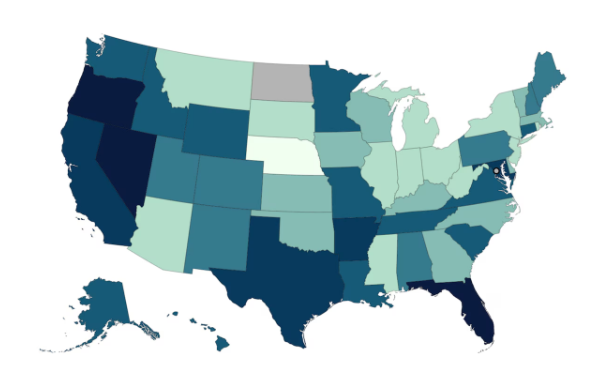
CDC: COVID Surge in 26 States, NC Remains Moderate
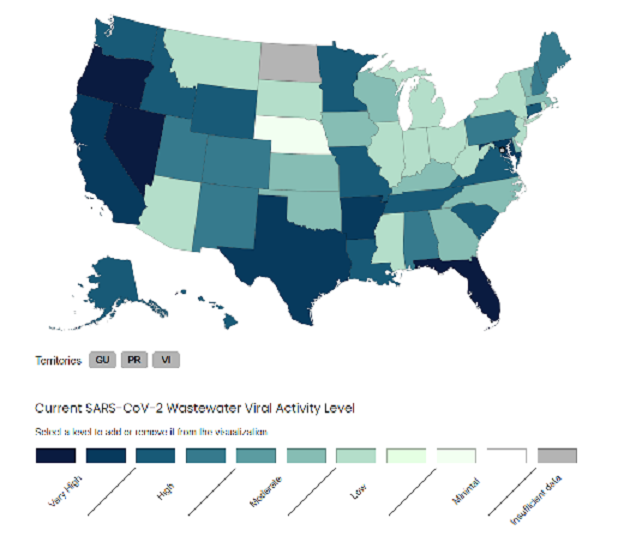
COVID surge grows as cases in 26 states now ‘very high’ and ‘high,’ CDC says
(Ryan Mancini) -- Cases of COVID-19 are growing across 45 states, as the Centers for Disease Control and Prevention said virus levels in 26 of those states are now “very high” or “high.” Across parts of the west, including in California, Nevada, Oregon and Texas, and states in the east like Arkansas, Florida and Maryland have seen cases reach “very high” levels as wastewater levels over the past month have risen.
No states are seeing a decline or likely decline in cases.
Hospitalizations and emergency room visits remain low despite the average number of emergency room visits being the highest that it has been since February, the agency said.
NC DHHS Respiratory Virus Summary Dashboard


Register Now! C.H.A.M.P: Carolina Hepatitis Academic Mentorship Program Virtual Orientation Bootcamp

C.H.A.M.P: Carolina Hepatitis Academic Mentorship Program - One-Day Virtual Orientation Bootcamp
July 26, 2024
8:00 AM - 4:00 PM
Virtual Event
The Carolina Hepatitis Academic Mentorship Program (C.H.A.M.P) mission is to improve the health of underserved communities in NC by building a primary care workforce with the expertise to manage and cure persons infected with hepatitis C virus (HCV).
Providers enrolled in C.H.A.M.P will receive specialty training in viral hepatitis so they can diagnose, care for, and cure persons infected with this disease. Providers will learn to utilize direct acting antivirals (DAAs) for curative therapy, prevent the transmission of HBV and HCV, and increase HBV vaccination.
By building a network and expanding access to clinical providers, C.H.A.M.P will remove barriers to care and work towards disease elimination.
Learn more and register here.

UNC Team: Migraine Pain Caused by Lack of Lymphatic System Drainage in Brain
UNC School of Medicine's Dept. of Cell Biology and Physiology Piece Together how CBRP Influences Lymphatic Vascular System

(UNC Health Newsroom) -- Migraine is a chronic and debilitating neurological condition affecting women 3 to 4 more times than men. Despite an estimated 1.1 billion people being impacted by the condition, the physiological underpinnings of migraine remain mysterious, but are highly studied.
For the first time, researchers from the UNC School of Medicine’s Department of Cell Biology and Physiology have pieced together how a small protein called calcitonin gene-related peptide (CGRP) influences the lymphatic vascular system, contributing to the pain during migraine attacks. Their results were published in the Journal of Clinical Investigation.
“Our study has highlighted the importance of the brain’s lymphatic system in the pathophysiology of migraine pain,” said Kathleen M. Caron, PhD, the Frederick L. Eldridge Distinguished Professor and chair of the Department of Cell Biology and Physiology and senior author on the study. “We found that migraine pain is influenced by altered interactions with immune cells and by CGRP preventing cerebrospinal fluid from draining out of the meningeal lymphatic vessels.”
CGRP, a small protein that is typically involved in pain transmission in neurons, is known to be elevated in the meninges, or the layers of tissues surrounding the brain, during migraine attacks. The team discovered that increases in CGRP levels also has a profound effect on the brain’s lymphatic vessels – a special system that facilitates the removal of cerebrospinal fluid and creates pathways for immune cells to patrol the protective covering of the brain.
To investigate how exactly CGRP influences the lymphatic system and contributes to migraine pain, the team of researchers performed a plethora of experiments in vitro and in vivo. Nate Nelson-Maney, a MD-PhD student in the Caron lab and first author on the paper, spearheaded these experiments.

Using mouse models that were immune to the effects of CGRP, they first confirmed that they experienced less pain and spent more time in a brightly lit chamber compared to those that were vulnerable to CGRP. Bright light is a painful stimulus for people experiencing migraine, and the ability to measure similar behaviors in mice validate the translational impact of the study.
Using cell culture techniques, they assessed how a specialized protein is spatially arranged between the individual cells that line the lymphatic vessels. The protein, called VE-Cadherin, helps keep lymphatic endothelial cells stuck together and controls how much fluid, like cerebrospinal fluid, can squeeze between lymphatic endothelial cells and leave the vessels.
Researchers found that lymphatic endothelial cells that have been treated with CGRP rearrange their VE-Cadherin proteins so that they are aligned like a zipper on a jacket, keeping a tight seal. This arrangement prevents fluid from passing between cells, reducing the permeability of these cell layers.
They validated this finding in meningeal lymphatic tissue of mouse models treated with nitroglycerin-induced migraine. When CGRP and a traceable dye were injected into the meningeal lymphatic vessels, they observed a significant reduction in the amount of cerebrospinal fluid exiting from the skull.

Future studies are needed to reveal further information about the existing relationships between migraine, CGRP, and meningeal lymphatic vessels. The research team will work to understand how cerebrospinal fluid drainage through the meningeal lymphatic vessels contributes to migraine in humans through studies with and without the use of the latest FDA-approved CGRP-targeting medications, such as Nurtec, Emgality, Ajovy, etc.
Although CGRP has been identified as the main culprit behind migraine-inducing changes to the lymphatic system, researchers do not fully understand the pathophysiology of migraine triggers and pain. More research is needed to understand how meningeal lymphatic vasculature and the hormone-related life stages of women, such as puberty, pregnancy, and menopause, play a role in producing migraine.
“Since lymphatic dysfunction also exhibits a strong prevalence in women, it is tempting to speculate that neurological disorders like migraine could be governed by sex differences in the meningeal lymphatic vasculature,” said Caron, who is also a member of the UNC Lineberger Comprehensive Cancer Center. “If this were true, then new therapeutic strategies or drug targets that enhance meningeal lymphatic and glymphatic flow in women would be desirable.”

New Study: Lifestyle Choices Responsible for 40 Percent of Cancers
Vaccination, behavior changes could prevent 40% of U.S. cancer cases, study finds
(UPI) -- Lifestyle choices such as smoking, drinking and other avoidable factors are responsible for 40% of cancers and about half of all U.S. cancer deaths in adults over age 30, new research published Thursday suggests.
A new study led by a team at the American Cancer Society found that 713,340 cancer cases and 262,120 cancer deaths in 2019 were caused by modifiable risk factors, including cigarette smoking, excess body weight, alcohol consumption, physical inactivity, diet and infections, the organization said in a news release.
Cigarette smoking was by far the leading risk factor, contributing to nearly 20% of all cancer cases and 30% of all cancer deaths, according to the study, which appears in the ACS's flagship journal, CA: A Cancer Journal for Clinicians.
"Despite considerable declines in smoking prevalence during the past few decades, the number of lung cancer deaths attributable to cigarette smoking in the United States is alarming," said lead author Dr. Farhad Islami, ACS senior scientific director for cancer disparity research.
"This finding underscores the importance of implementing comprehensive tobacco control policies in each state to promote smoking cessation, as well as heightened efforts to increase screening for early detection of lung cancer, when treatment could be more effective," Islami said.
Islami also called for interventions to help people maintain healthy body weight and diet, especially given the increasing incidence of several cancer types linked to excess body weight, particularly among young people, saying these actions could cut the number of cancer cases and deaths in the United States significantly.
The proportion and number of cancer cases and deaths attributable overall to risk factors seen as mutable was estimated for 30 cancer types (excluding non-melanoma skin cancers) using nationally representative data on cancer incidence and mortality and risk factor prevalence.
Risk factors included current or past smoking; secondhand smoke; excess body weight; alcohol consumption; consumption of red and processed meat; low consumption of fruits and vegetables, dietary fiber and calcium; physical inactivity; and sun exposure.
Also highlighted were seven viral infections: Epstein-Barr virus; Helicobacter pylori; hepatitis B; hepatitis C; human herpes virus-8 (Kaposi sarcoma herpesvirus); human immunodeficiency virus; and human papillomavirus.
Smoking had by far the highest proportion of cases attributable to risk factors in the population at almost 1 in 5 of a total of 1.78 million cancer cases -- or equivalent to 344,070 cases -- and was responsible for 56% of 368,600 potentially preventable cancers in men and 39.9% of 344,740 preventable cases in women.
Trailing some way behind were being overweight with a population attributable fraction of 7% was excess body weight; alcohol consumption at 5.4%; and UV radiation exposure and physical inactivity at 4.6% and 3.1%, respectively.
The study determined that all cervical and Kaposi sarcoma cancers were caused by elevated risk factors that had the potential to be modified, as well as more than 50% in 19 of the 30 cancer types at which researchers looked.
The percentages for skin melanomas and cancers of the lung, pharynx, trachea, esophagus and mouth were all above 85%. By contrast, the figure for ovarian cancer was just 4.9%.
However, lung cancer accounted for the most cancer attributable to risk factors among both sexes -- 104,410 cases in men and 97,250 cases in women.
With other cancers, there was a disparity among men and women, with men more prone to skin melanoma, 50,570 cases; colorectal cancer, 44,310 cases; and bladder cancer, 32,000 cases, while women had more breast cancer at 83,840 cases' corpus uteri, 35,790 cases; and colorectal, 34,130 cases.
"These findings show there is a continued need to increase equitable access to preventive health care and awareness about preventive measures," said senior author Dr. Ahmedin Jemal, ACS senior vice president for surveillance and health equity science.
"Effective vaccines are available for hepatitis B virus, which causes liver cancer and HPV, which can cause several cancer types, including cervical, other anogenital and oropharyngeal cancers,"
"Vaccination at the recommended time can substantially reduce the risk of chronic infection, and consequently, cancers associated with these viruses. HPV vaccination uptake in the United States is suboptimal."

NC Death Pronouncement & Certification: Who Can Sign?
Questions about who can sign a death certificate, who can pronounce death, or who can institute a do not resuscitate order?
Find it all in our new infographic!


Learning Opportunity: Documentation for Hierarchical Conditions
Documentation is Key for Hierarchical Condition Categories (HCCs) for Clinicians
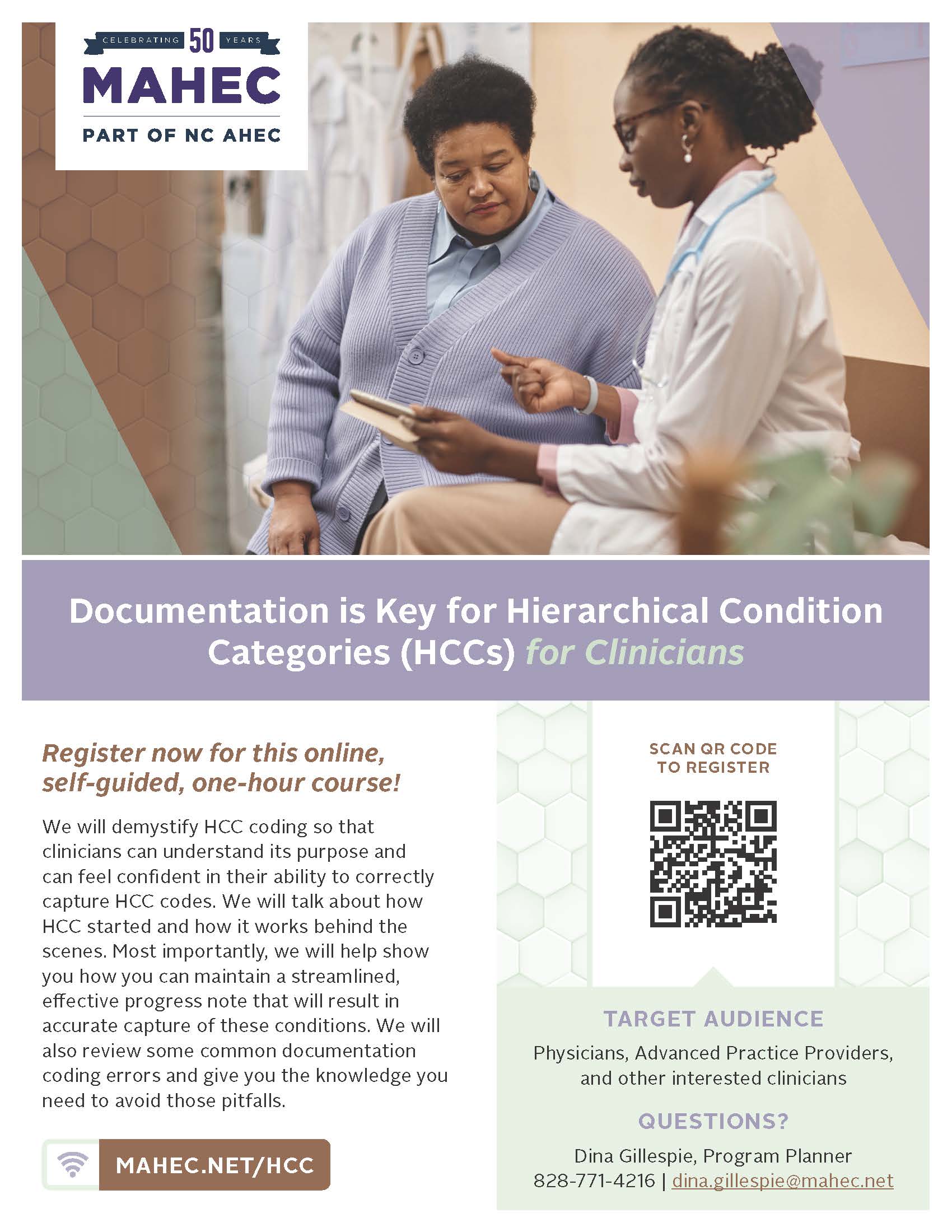
Documentation is Key for Hierarchical Condition Categories (HCCs) for Coders

Researchers Identify Potential Treatment for Angelman Syndrome

Angelman syndrome is a rare genetic disorder caused by mutations in the maternally-inherited UBE3A gene and characterized by poor muscle control, limited speech, epilepsy, and intellectual disabilities. Though there isn’t a cure for the condition, new research at the UNC School of Medicine is setting the stage for one.
Ben Philpot, PhD, the Kenan Distinguished Professor of Cell Biology and Physiology at the UNC School of Medicine and associate director of the UNC Neuroscience Center, and his lab have identified a small molecule that could be safe, non-invasively delivered, and capable of “turning on” the dormant paternally-inherited UBE3A gene copy brain-wide, which would lead to proper protein and cell function, amounting to a kind of gene therapy for individuals with Angelman syndrome.
“This compound we identified has shown to have excellent uptake in the developing brains of animal models,” said Philpot, who is a leading expert on Angelman syndrome and a member of UNC Lineberger Comprehensive Cancer Center. “We still have a lot of work to do before we could start a clinical trial, but this small molecule provides an excellent starting point for developing a safe and effective treatment for Angelman syndrome.”
For the full article, click here.

Helpful Guidance for Recreational Water Safety This Summer

As temperatures remain high, the North Carolina Department of Health and Human Services is encouraging residents to enjoy recreational waters safely and be aware of possible health risks, including harmful algal blooms. Certain infections are also more common during summer such as primary amebic meningoencephalitis (PAM), vibriosis and cryptosporidiosis.
"Our goal is to help North Carolinians lower their health risks while still having a great time in the water," said Dr. Kelly Kimple, Acting Director, NCDHHS Division of Public Health. "By following certain guidelines, we can minimize illness associated with harmful algae, bacteria and other risks, ensuring a healthier experience for all."
To help ensure a safe and enjoyable summer for you and your pets, NCDHHS recommends the following guidelines for recreational waters:
- Recognize Harmful Algal Blooms: Algal blooms can produce toxins harmful to humans and pets. They often appear as thick, green, blue-green or red scums on the water's surface or along the shoreline. Avoid contact with water and keep your pets away from these areas. To report an algal bloom, contact the nearest DEQ regional office or submit a report online.
- Avoid Suspicious Water Conditions: Be cautious if the water appears discolored, has a strong odor or contains visible debris. Such conditions may indicate poor water quality or possible bacterial contamination.
- Stay Updated on Water Quality Advisories: Stay informed about water quality advisories or warnings issued by local authorities for recreational waters. These advisories may include alerts about harmful algal blooms or bacterial contamination.
- Prevent Ingestion: Avoid swallowing water. Reduce your risk of illness by keeping your mouth closed and holding your nose shut or using a nose clip while swimming, particularly while jumping or diving into warm freshwater lakes, rivers and hot springs. Carry fresh water for your pets to drink and keep them hydrated throughout your water activities to discourage them from drinking or swallowing water while swimming.
- Rinse Off After Water Activities: After swimming, rinse yourself and your pets with clean, fresh water to remove any potential bacteria, algae or toxins that may cling to the skin or fur. This simple step can minimize health risks associated with waterborne contaminants.
- If you have an open wound, stay out of saltwater or brackish water: Cover your wound with a waterproof bandage if it could come into contact with coastal waters or raw seafood, its drippings or its juices. Immediately wash wounds after contact with these items.
- Monitor for Symptoms: Be alert for any symptoms you or your pets experience after water activities, such as skin irritations, gastrointestinal issues, respiratory problems or unusual behavior. If you or your pets exhibit any concerning symptoms, seek medical attention promptly.
For more information and additional resources on water safety, visit www.cdc.gov/healthy-swimming/about/index.html. More summer safety tips are also available on the NCDHHS Division of Public Health website at www.dph.ncdhhs.gov/blog/2023/05/25/summer-safety-tips-grilling-and-swimming and www.dph.ncdhhs.gov/blog/2023/06/28/beat-heat-7-tips-staying-cool.

NCMS Board Member Dr. Karen L. Smith Joins Governor to Celebrate More Than 500,000 Enrolled in Medicaid Expansion

More than half a million North Carolinians have now enrolled in Medicaid expansion since the program began seven months ago. Beneficiaries are now able get the quality health care they need at low cost. Governor Roy Cooper was joined by North Carolina Department of Health and Human Services Secretary Kody Kinsley, NCMS Board member Dr. Karen L. Smith MD, FAAFP, a family physician in Raeford and Verlina Lomick,CHW-IV, Director of Community Outreach & Advocacy for Kintegra Health and health care advocates to celebrate reaching this major milestone, which had originally been projected to take as long as two years.
"People across our state continue to feel the positive impact in their lives with access to affordable health care coverage," said Governor Roy Cooper. "They can now see a doctor, get preventative care, manage chronic conditions and get life-saving prescriptions without the burden of high premiums or co-pays. The North Carolina Department of Health and Human Services along with the many community partners supporting enrollment efforts have done a remarkable job to reach half a million North Carolinians in such a short amount of time, and we’ll keep working to enroll more people."
Since December 1, 2023, new Medicaid enrollees have filled more than 1.9 million new prescriptions for conditions like heart health, diabetes, seizures and other illnesses. Medicaid has also covered more than $28.6 million in claims for dental services since expansion began. And as of today, 503,967 North Carolinians have enrolled in Medicaid expansion.
The state will soon launch a Medicaid Expansion Service Utilization Dashboard to provide more insights into the health services new Medicaid enrollees use. The new dashboard will show monthly service trends since expansion launched in December 2023, including the number of people accessing doctor and dental visits, cancer screenings, behavioral health services and prescriptions. It will also provide metrics on the number of Medicaid expansion enrollees with chronic conditions like diabetes and hypertension. The dashboard will show service totals by county to support local efforts, including through local health departments and community-based organizations.
"This year, we have worked tirelessly with our partners to help newly eligible North Carolinians get covered by Medicaid fast and get them connected to care," said NC Health and Human Services Secretary Kody H. Kinsley. "Our new dashboard will showcase the positive impact of all the lives saved and peace of mind provided for North Carolinians by NC Medicaid."
People who did not qualify for Medicaid in the past may now be eligible, including those who are single, have higher incomes, and don’t have children or a disability. The North Carolina Department of Health and Human Services Medicaid expansion website provides information on eligibility, how to apply and where to find support. Individuals can also connect with state and local support teams to better understand their health care coverage options, complete Medicaid applications and navigate the enrollment process, as well as for help with language translation services. [source]

Deadline Monday for NC Professionals Health Program Board of Directors Applications

The NCMS has the opportunity to appoint 2 members to the NC Professionals Health Program (NCPHP) Board of Directors. Learn more about responsibilities of NCPHP Board members.
Since 1988, NCPHP has been dedicated to helping medical professionals experience a lifetime of change and return to health. NCPHP assists with recovery from substance use disorders and other conditions that could impair a clinician’s ability to safely provide care and services to their patients.
NCPHP originated as a physicians’ health committee of the North Carolina Medical Society (NCMS). In 1988, it was established as a formal program of the NCMS and written into the North Carolina General Statutes. To learn more about the important work of this organization, visit the NCPHP website.
Physicians interested in an NCPHP Board position should complete the application form and return it to Evan Simmons, esimmons@ncmedsoc.org by Monday, July 15. Interviews for the board openings will take place virtually at 6PM on Wednesday, August 14.
Current NCPHP Board Appointees and Terms:
Stephen J. Ezzo, MD
1/1/20 – 12/31/22, 1st term
1/1/23 – 12/31/25 2nd term
Jonathan Douglas (Doug) Jaffe, DO
1/1/22 – 12/31/24, 1st term
(Eligible for a 2nd term)
Vinay Saranga, MD
1/1/20 – 12/31/22, 1st term
1/1/23 – 12/31/25 2nd term
David L. Tolentino, DO
1/1/19 – 12/31/21, 1st term
1/1/22 – 12/31/24, 2nd term
Sarah W. Young, MD
1/1/23 – 12/31/25 1st term

New Fertility Drug Could Lead to Increase in Live Births After IVF
A trial of a new fertility drug has shown that it could improve the rate of embryo implantation during IVF and lead to a 7% increase in live births.
The pill, known as OXO-001, is designed to act directly on the lining of the womb to make it more receptive to the embryo being implanted. The findings raise hope for patients who have experienced repeated implantation failures during successive rounds of IVF.
“We are thrilled with the results of this trial, which highlight OXO-001’s potential to become the first therapeutic treatment to increase embryo implantation success, with a non-hormonal drug using a new mechanism of action, acting directly on the endometrium,” said Dr Ignasi Canals, chief scientific officer at Oxolife, the Spanish biotech company behind the trial, which is due to be presented at the European Society of Human Reproduction and Embryology’s 40th annual meeting in Amsterdam on Monday.
Read more on the findings here.
Political Pulse for July 12, 2024
The Legislative Short Session is over and the North Carolina Medical Society is celebrating some victories! In this Political Pulse, Randy Aldridge and John Thompson sit down to look at how the session ended and what comes next, as every legislator in NC hits the campaign trail.
You can read the article discussed in this video here.
View your NCMS Political Pulse.
https://youtu.be/xDmwBAzkHgY

The North Carolina Medical Society on the Pitch!

Uruguay and Columbia go head-to-head as NCMS cheers them on!
The Copa America semifinals in Charlotte saw a lot of drama on the field (a heated 1-0 win for Uruguay), in the stands (Uruguay players fighting Colombia supporters) and off the pitch (US coach Gregg Berhalter gets fired), BUT it was nothing but fun for the NCMS, the MEMA Board, and the Mid-Atlantic Emergency Physicians Board!
Bank of America Stadium was packed for the top men's quadrennial football tournament contested among national teams from South America. It is the oldest continental football competition and the third most watched in the world.
NCMS's Hannah Rice, Director of Legislative Affairs, and Toni Hill, Director of Membership and Engagement, joined MEMA President Dr. Tim Leitz and VP Dr. Steve Small with others to enjoy the action.
Check out these photos:




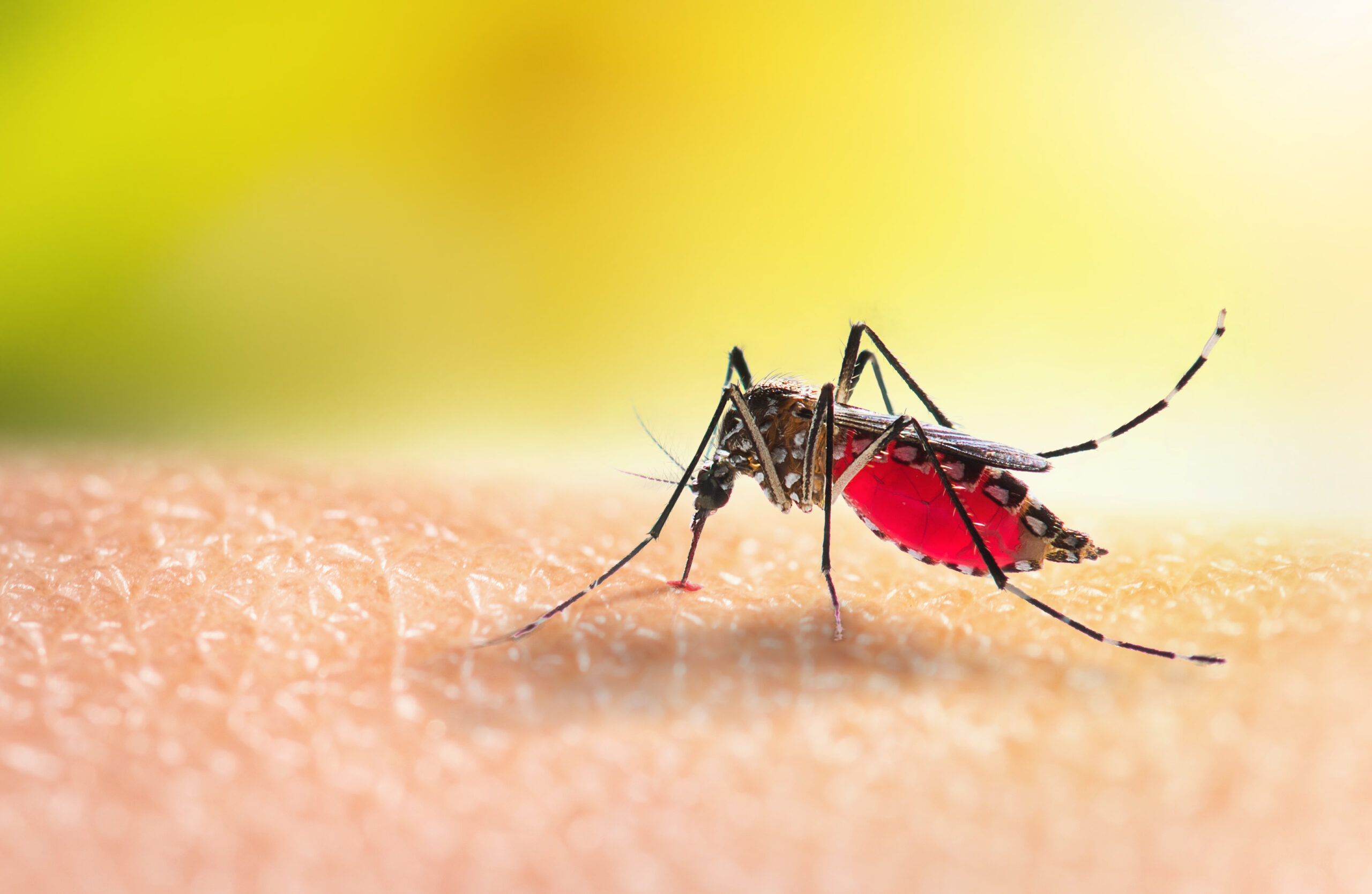
CDC Warns of Increased Risk of Dengue Virus Infections in the US
The Centers for Disease Control and Prevention (CDC) is issuing a Health Alert Network (HAN) Health Advisory to notify healthcare providers, public health authorities and the public of an increased risk of dengue virus (DENV) infections in the United States in 2024.
According to the CDC, in the setting of increased global and domestic incidence of dengue, healthcare providers should take steps including:
- Have increased suspicion of dengue among people with fever who have been in areas with frequent or continuous dengue transmission within 14 days before illness onset,
- Order appropriate diagnostic tests for acute DENV infection: reverse transcription polymerase chain reaction [RT-PCR] and IgM antibody tests, or non-structural protein 1 [NS1] antigen tests and IgM antibody tests,
- Ensure timely reporting of dengue cases to public health authorities, and
- Promote mosquito bite prevention measures among people living in or visiting areas with frequent or continuous dengue transmission.
Nearly 200 people have been infected with dengue in the states of New York and New Jersey so far this year, according to data from the Centers for Disease Control and Prevention. New York has reported 143 cases and New Jersey has reported 41.
Continue to CDC's full Health Alert here.

Call for AMPAC Board of Directors Applicants
The American Medical Association is currently soliciting applications to fill three vacancies on the AMPAC Board of Directors.
In 2024, two members of the AMPAC Board will reach maximum tenure and one member has resigned creating three vacancies. New members will be appointed by the AMA Board of Trustees at the September 2024 meeting. Members of the AMPAC Board serve a two-year term and may be eligible to serve three additional terms for a maximum tenure of eight years.
Applicants must submit the Board-approved application, a three-page (maximum) executive CV, and may submit one letter of recommendation. For additional information on the application process and to download the most current AMPAC application form (pdf), please visit our website.
All applicants must also complete a Conflict of Interest (COI) disclosure statement. This process has been automated by the AMA Office of the General Counsel, and a secure link will be emailed to each applicant. Application materials will not be considered until the COI disclosure has been completed.
Please submit AMPAC applications to bot@ama-assn.org no later than Thursday, August 15, 2024, 5:00 PM Central Time.

New Study Show Link Between Carpal Tunnel Syndrome and Stiff Heart Syndrome
According to a recent study, carpal tunnel syndrome might be an early sign of transthyretin amyloid cardiomyopathy (ATTR-CM), a type of cardiac amyloidosis known as “stiff heart syndrome.”
The research, published in Mayo Clinic Proceedings, found that patients with carpal tunnel syndrome had a higher prevalence of amyloid deposits in their tissue. The link was especially true for people having carpal tunnel release surgery.1 As a result, people with carpal tunnel have three times the risk of developing amyloidosis compared to those without carpal tunnel syndrome. They also have a 13% greater risk of heart failure.
Find the full article here.
New Accountable Care Organization Primary Care Flex Model Webinar
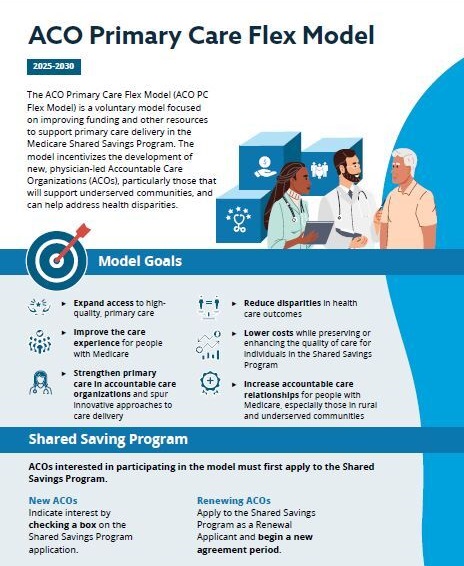
On July 17, AAFP, ACP and the AMA will host a live webinar with Centers for Medicare & Medicaid Services (CMS) Innovation Center staff for primary care physicians interested in participating in the new Accountable Care Organization Primary Care Flex Model (“ACO PC Flex”).
ACO PC Flex is a voluntary five-year model that will provide more predictable payments by testing primary care capitation within the Medicare Shared Savings Program (MSSP). ACOs that applied to the Shared Savings Program as either new or renewing ACOs must submit a supplemental ACO PC Flex application questionnaire by August 1, 2024. All participating primary care practice TINs with an ACO must participate.
During the webinar, ACO PC Flex Model leadership will:
- Overview key elements of the model and request for applications;
- Address frequently asked questions on common themes; and
- Participate in a live Q&A.
The webinar will take place on Wednesday July 17 from 7-8 pm ET.
Don’t miss this opportunity to engage directly with CMS staff. Register here.
For more information on the model, visit the request for applications or the CMS ACO PC FLEX Model webpage.

AMA STEPS Forward® Innovation Academy Launches New Learning Collaboratives
AMA STEPS Forward® Innovation Academy is launching two new, six-month learning collaboratives on optimizing the in-basket to reduce work burden and rethinking how organizations apply regulatory rules to clinical practice.
Each collaborative will convene dyads or triads of leadership representatives from multiple organizations to engage in a longitudinal shared learning experience.
The AMA STEPS Forward® Learning Collaboratives, part of the AMA STEPS Forward Innovation Academy, will help your organization improve in important areas of practice, including workflow, teamwork and clinician well-being. Physician leaders, drawing from dozens of evidence-based STEPS Forward resources, offer guided facilitation and expert solutions to advance your practice.
Learn more about the program here.
Limited space available.

Stay Alert! Medical Records Request Phishing Scam
CMS identified phishing scams for medical records. This may include scammers faxing fraudulent medical records requests to get you to send patient records in response; see example (PDF).
When you review any requests, look for signs of a scam, including:
- Directing you to send records to an unfamiliar fax number or address
- Referencing Medicare.gov or @Medicare (.gov)
- Indicating they need records to “update insurance accordingly”
A scam request may include:
- Poor grammar, misspellings, or strange wording
- Incorrect phone numbers
- Skewed or outdated logos
- Graphics that are cut and pasted
If you think you got a fraudulent or questionable request, work with your Medical Review Contractor to confirm if it’s real. Submit medical documentation through the Electronic Submission of Medical Documentation (esMD) system or CMS medical review contractor secure internet portals, when available.
Has your facility encountered this phishing scam?

Data Shows North Carolina's Birth Rate Declining
Census data reveals that the population of children under the age of four is declining in North Carolina
Recent census figures show that the average age of North Carolinians is continuing to increase, mostly due to a decline in the birth rate.
Data reveals that the number of children 4 and under is stagnant or declining in the Triad and High Country.
According to Nathan Dollar, director of Carolina Demography at the University of North Carolina at Chapel Hill, a drop in fertility is to blame. He says last year the state grew by about 140,000 people.
"But if you look at the components of that change, you can see that 91% of all growth at the state level was due to in-migration, net migration, and only 9% was due to natural change, or more births than deaths,” he says.
That’s reflected in the number of children 4 and under. In Watauga County, the number of kids in that range declined by almost 10 percent. Only three other counties in the state saw more significant drops.
Last year, the average age in North Carolina ticked up to 39.3. Dollar says that’s the highest it’s ever been. [source]

Exciting Member Perk: Discount Subscription to Our State Magazine (with a bonus to NCMS!)
Get a discount on the premiere state magazine and a donation will be made to NCMS.
If you need another reason why it's good to be an NCMS member, this is it!
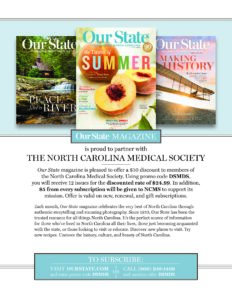
Click here to go to Our State Magazine. Don't forget to use promo code DSMDS

Strategies for Managing Toxicities of Oral Oncolytics

Strategies for Managing Toxicities of Oral Oncolytics
July 17, 2024
Oral oncolytics have revolutionized cancer care over the last two decades. Although they provide a more convenient & often more tolerable alternative to traditional chemotherapy agents, their unique mechanisms of action lead to a wide range of potential side effects.
In this CPP panel discussion, Aimee Faso, Bianka Patel, and Kevin Chen will discuss the considerations when managing side effects for patients receiving oral oncolytic treatments for various solid tumor and hematologic malignancies.
Learning Objectives
- Describe various oral oncolytics utilized in the treatment of hematologic and solid tumor malignancies
- Explain key considerations in the prescribing of oral oncolytics
- Develop a plan for toxicity management and monitoring for patients on oral oncolytics
Learn more about this free continuing education course here.
Download a sharable flyer here.

NCMS Member Named Chair-elect of AAMC Board of Directors
Dr. Michael Waldrum
Michael Waldrum, MD, MSc, MBA, ECU Health chief executive officer and dean of the Brody School of Medicine at East Carolina University, has been named chair-elect of the AAMC (Association of American Medical Colleges) 2024-25 Board of Directors. The incoming board’s term begins Nov. 12, 2024, and will end November 2025, after which Dr. Waldrum will assume the role of board chair.
Dr. Waldrum was named chief executive officer of ECU Health in 2015 and named dean of Brody in 2021. He previously served as president and CEO of The University of Arizona Health Network and as CEO of the University of Alabama Hospital at Birmingham. Dr. Waldrum is a specialist in critical care medicine and pulmonology and is trained in internal medicine. He received his medical degree from the University of Alabama at Birmingham School of Medicine and completed his residency at the Mayo Clinic in Minnesota.
Dr. Waldrum has served as chair of the AAMC’s Council of Teaching Hospitals and Health Systems (now called the Council of Academic Health System Executives) since 2022, where his unique rural health care perspective helped shape discussions around the complex issues facing rural communities across the nation and how academic medicine can help solve those challenges.
“I am extremely honored to serve as chair-elect of the prestigious AAMC Board of Directors, which has long been a powerful voice in academic medicine,” said Dr. Waldrum. “I look forward to continuing to work closely with highly respected academic health leaders from across the nation who are passionate about ensuring quality health care is available to all, including those living in rural communities. While there are certainly complex challenges facing health care nationally, the AAMC’s collective expertise helps chart new paths forward that improve the lives of many. It is humbling to be a part of this important work.”
The AAMC is a nonprofit association dedicated to improving the health of people everywhere through medical education, health care, medical research, and community collaborations. Its members are all 158 U.S. medical schools accredited by the Liaison Committee on Medical Education; 13 accredited Canadian medical schools; approximately 400 teaching hospitals and health systems, including Department of Veterans Affairs medical centers; and more than 70 academic societies. Through these institutions and organizations, the AAMC leads and serves America’s medical schools and teaching hospitals and the millions of individuals across academic medicine, including more than 193,000 full-time faculty members, 96,000 medical students, 153,000 resident physicians, and 60,000 graduate students and postdoctoral researchers in the biomedical sciences. Following a 2022 merger, the Alliance of Academic Health Centers and the Alliance of Academic Health Centers International broadened the AAMC’s U.S. membership and expanded its reach to international academic health centers. [source]

HIPAA Privacy Rule to Support Reproductive Healthcare Privacy
The Biden-Harris Administration, through the Office for Civil Rights (OCR) at the U.S. Department of Health & Human Services (HHS), has issued a Final Rule modifying the Health Insurance Portability and Accountability Act (HIPAA) Privacy Rule to enhance reproductive health care privacy. This action seeks to safeguard reproductive health care access and privacy along with bolstering patient-physician confidentiality.
The Final Rule fortifies privacy by prohibiting the use or disclosure of protected health information (PHI) related to reproductive health by covered entities (e.g., physicians, hospitals, health plans, health care clearinghouses) and their business associates. The Final Rule also permits covered entities to use or disclose PHI for non-prohibited purposes under the Privacy Rule.
Prohibited purposes include using PHI to: investigate any person for seeking, obtaining, providing, or facilitating lawful reproductive health care; to impose liability on any person for seeking, obtaining, providing, or facilitating lawful reproductive health care; and to identify any person for the purposes of investigation or liability.
To enforce the prohibition, the Final Rule mandates that covered entities obtain a signed attestation from requestors affirming that the PHI will not be used for prohibited purposes. This requirement applies to requests for PHI for health oversight activities, judicial and administrative proceedings, law enforcement purposes, and disclosures to coroners and medical examiners.
The Office of the National Coordinator for Health Information Technology (ONC) has confirmed that complying with OCR’s reproductive health regulations will not constitute information blocking. For example, if a request is made to a physician for reproductive health PHI, and the physician requests that an attestation be signed that the PHI will not be used for prohibited purposes and that attestation is not signed, is not complete, or cannot be relied on, a physician can withhold that PHI without being considered an information blocker.
The AMA has been urging both OCR and ONC to provide much needed education and resources to help physicians implement and comply with the regulations and to protect patient and physician information from misuse. In response to our requests, the administration developed the materials below.
Physicians must be in compliance with the Final Rule by December 23, 2024.
Below are several helpful resources provided by OCR. These include:
- Resources to help communicate with other clinicians and community members.
- A fact sheet summary of the rule.
- A recorded briefing by OCR staff reviewing the rule.
Model attestation for a requested use or disclosure of protected health information.

Today's the Last Day to Submit Applications for Pediatric Specialty Loan Repayment Program
Pediatric medical subspecialist physicians may be eligible to receive up to $100,000 in student loan repayment through HRSA’s Pediatric Specialty Loan Repayment Program.
Eligible clinicians providing pediatric medical subspecialty, pediatric surgical specialty, or child and adolescent mental and behavioral health care including substance use disorder (SUD) prevention and treatment services may apply to the Pediatric Specialty LRP.
The Pediatric Specialty Loan Repayment Program is accepting applications through July 9, 7:30 p.m. ET.
For eligibility, you must be:
- A United States citizen, national, or permanent resident
- Fully licensed or credentialed in an eligible discipline
- One of the following:
- A full-time employee or a clinician who has accepted a position located in at a Pediatric Specialty LRP-approved facility located in or serving a health professional shortage area (HPSA) or medically underserved area (MUA), or a medically underserved population (MUP)
- A health professional entering or receiving training in an accredited pediatric medical subspecialty, pediatric surgical specialty residency, or fellowship
For more detailed information, including how to apply, click here.

New Study: Blood Test Predicts Knee Osteoarthritis Years Before X-ray
Researchers at Duke Health have published a study showing knee osteoarthritis can be predicted in women with a blood test up to eight years before it can be detected by X-ray.
Osteoarthritis is a joint disease caused by a combination of cartilage wearing away, bone thickening and inflammation, and can cause debilitating pain for those affected.
Dr. Virginia Byers Kraus, a professor of rheumatology at the Duke University Medical Center, is the senior author on the study. She said the test works by detecting a unique immune response associated with osteoarthritis.
“It's actually telling about joint damage and very low-grade inflammation that's typical for osteoarthritis, that is identifying these at-risk people,” Kraus said.
While there isn’t a cure for osteoarthritis, preventative measures can slow progression of the disease. Kraus said implementing this blood test in a clinical setting would be more effective if it could be detected earlier.
“There's not as much change, not as much damage, the disability isn't there yet,” she said. “So, everybody in the field agrees that if you could treat it earlier, it could be much easier.”
While not yet available for clinical use, Kraus said the blood test could someday be used to screen people earlier in their lives and identify more people who would benefit from preventive interventions. [source]

It's HOT! Operation Fan Heat Relief Can Help Your Patients Stay Cool!
The North Carolina Department of Health and Human Services’ Division of Aging is partnering with the N.C. area agencies on aging and local service providers to distribute fans to eligible recipients through Operation Fan Heat Relief from May 1–October 31.
People 60 and older, as well as adults with disabilities, are eligible to sign up for assistance from May 1–Oct. 31 at local aging agencies across the state. Since 1986, the relief program has purchased fans for older adults and adults with disabilities, providing them with a more comfortable living environment and reducing heat-related illnesses.
The program is made possible by donations from Duke Energy Carolinas, Duke Energy Progress, Dominion and Valassis. Operation Fan Heat Relief allows regional area agencies on aging and local provider agencies to purchase fans for eligible individuals. Local provider agencies can also purchase a limited number of air conditioners based on a person’s specific health conditions.
Last year, the division received $86,000 in donations, allowing for the distribution of 3,097 fans and 21 air conditioners.
As individuals age and develop chronic medical conditions, they are less likely to sense and respond to changes in temperature, and they may also be taking medications that can worsen the impact of extreme heat. Operation Fan Heat Relief helps vulnerable adults at risk for heat-related illnesses stay safe during the summer.
In addition to applying for fans, people age 60 and older, as well as adults with disabilities, can take the following steps during high temperatures:
- Increase fluid intake
- Spend time in cool or air-conditioned environments regularly
- Reduce strenuous activity during the afternoon
- Speak with their physician before summer about how to stay safe while taking medication that can affect the body's ability to cool itself (e.g., high blood pressure medications)
For more details, individuals may contact their area agency on aging or the Division of Aging at 919-855-3400.
More information about Operation Fan and Heat Relief, including tips on preparing for extreme heat and a list of local agencies distributing fans, is available at www.ncdhhs.gov/divisions/aging/operation-fan-heat-relief.

UNC-CH School of Medicine Receives Grant to Improve Geriatric Care
The U.S. Department of Health and Human Services (HHS), through the Health Resources and Services Administration (HRSA), has announced an investment of more than $200 million to support improved care for older Americans. UNC-Chapel Hill was among the 42 recipients and has received $5M in funding.
The goal of the HRSA’s Geriatrics Workforce Enhancement Program is to train primary care physicians, nurse practitioners, and other health care clinicians to provide age-friendly and dementia-friendly care for older adults. Support for families and caregivers is also a focus of the program.
The initiative will integrate geriatric training into primary care to ensure that health care providers are prepared to identify and address the needs of older patients. The program will also advance HHS’ effort to fulfill the National Plan to Address Alzheimer’s Disease by helping build a workforce with the skills to provide high-quality care to people with dementia.

In Memoriam: NCMS Life Member Maurice Nickola Courie, MD
Maurice Nickola Courie, MD
January 10, 1933 - June 30, 2024
NCMS Life member Maurice Nickola Courie, MD, died Sunday, June 30.
He was 91 years old.
Dr. Maurice Nickola Courie, 91, died June 30 leaving a loving family, countless friends and thousands of babies he delivered in his obstetrics practice in Raleigh.
A 1959 graduate of Duke University, he was past president and an active member of the F. Bayard Carter Society of Obstetricians and Gynecologists. Among numerous committees and boards, he was a member of the Wake County and North Carolina medical societies, and was past OB-GYN chief and president of the medical staff at Rex Hospital. He began in private practice in Raleigh 1966 and retired in 2002.
Dr. Courie joined the NCMS in 1967.
The North Carolina Medical Society extends its deepest condolences.
Read Dr. McLendon's full obituary here.

New Procedure for Physician Assistant Transcripts

Effective July 1, 2024, NCTracks will be using the American Medical Association (AMA) website to obtain Physician Assistant Profiles (transcripts). If the PA has an AMA profile and it lists the provider's education, NCTracks will no longer be requesting a transcript.
Note: PA applications currently returned to providers for transcripts are also being reviewed. The application has been moved forward if education was confirmed using the AMA profile.

Your Feedback Needed to Improve the Medicaid Clinician Experience

NCMS's partners, Carolina Complete Health (CCH) and Carolina Complete Health Network (CCHN) will host their 2nd Annual Medicaid Managed Care Town Hall at the 2024 CPP Annual Meeting during NCMS LEAD Conference in November. In preparation for that session, we want to hear from clinicians across North Carolina who provide care to Medicaid enrollees.
Please share your experiences, challenges and successes, suggestions, and questions to help inform future programs, resources, opportunities, and collaborations that will improve health outcomes and enhance the overall care experience for Medicaid clinicians and enrollees.
All Medicaid clinicians are invited to complete this form, regardless of contract status with any of the PHPs.
Provide your feedback here.

Happy Birthday to Our Members Celebrating This Month!
Grab your party hats and noisemakers and let’s celebrate!
David S. Abernathy, MD
Sunil V. Abraham, MD
S. A. Abrons, MD
Olufunsho D. Adamolekun, DO
Tim E. Adamson, MD
Rustan O. Adcock, MD
Leon C. Adelman, MBA, MD, FACEP, FAAEM
Babar K. Afridi, DO
Monica D. Agarwal, MD
Richard E. Alexander, MD
Steven T. Alexander, MD
Ashley N. Allen, MD
David S. Allenger, MD
Kristin M. Alves, MD
Richard D. Anderson, MD
QuaratulAin Anwar, MD
James P. Aplington, MD
Arthur E. Apolinario, MD, MPH, FAAFP, CH
Victor Arahirwa, MD
Anuradha N. Arcot, MD
Prashanti Aryal, MD
Anthony Atala, MD
Elias E. Ayli, DO
Monazza Azam, MD
Brenda G. Baker, MD
Christopher R. Ball, MD
Daniel A. Bambini, MD
W. Bryson Bateman, Jr., MD
Melisa K. Bates, MD
Michael D. Bates, MD
Zanetta S. Batts, DO
David R. Beckham, MD
Sarah E. Beebe, MD
Rebecca A. E. Begley, MD
Andrey Belayev, MD
Jessica M. Belk, PA-C
Michael J. Bell, MD
Marie A. M. Belmonte, DO
Xaverie L. Benedict, DO
Mary H. Berg, MD
Seth A. Bernstein, MD
Timothy R. Bevis, MD
Shaily P. Bhatnagar, MD
Abhijeet R. Bhirud, MD
Daniel S. Biggerstaff, MD
Melinda A. Blietz, MD
William E. Bobo, MD
Jiselle M. Bock, MD
Matthew T. Boes, MD
Andrew M. Bohunicky, PA-C
Gideon J. Bollino, MD
Robert B. Boswell, MD
Scott A. Bovard, MD, FACS
Emily Jane H. Box, MD
Diana F. Bradley, MD
Adam C. Braithwaite, MD
Aaron J. Braunsteiner, MD
Jeffrey H. Breiner, MD
Charles B. Brett, MD
William W. Bridge, IV, MD
Laura D. Brown, MD, FACS
Michael D. Brown, MD
Morry D. Brown, MD, PhD
Ryan M. Brown, MD
Amy M. Bruton, MD
Halie S. Bryan, PA-C
Stephen E. Buie, MD, DLFAPA
Robert C. Buresh, DO
Margaret O. Burke, MD
Stuart H. Burri, MD
Andrew J. Butler, MD
Frederick C. Butler, Jr., MD
Elise Caceres-Mason, PA-C
Patrick T. Campbell, MD
Anthony J. Caprio, MD
Khary S. Carew, MD
Edgar S. Caro, MD
Cody G. Carpenter, MD
Daniel P. Carpenter, MD
Robert A. Cerwin, MD
Chitrabharathi Chandrasekaran, MD
Rhoda Y. Chang, MD
Christopher P. Chao, MD
Shana N. Chase, PA-C
William W. Cheatham, Jr., DO
Paul A. Cheifetz, MD
Earl M. Chester, MD
Alan W. Chiemprabha, MD
Vincent M. Chiodo, MD
Krista Civiletti, DO
Thomas V. Clancy, MD, FACS
Christian Clark, MD
David A. Clark, MD, FACS
Herbert W. Clegg, II, MD, FAAP
Tracey S. Cloninger, PA-C
Scott C. Cole, MD
S. Ray Coleman, MD, FAAP
Mary Ann Contogiannis, MD
Joseph W. Cook, MD
Wesley A. Cook, Jr., MD
J. Nathan Copeland, MD
William B. Costenbader, Jr., MD
Donald J. Costic, MD
Austin T. Cox, MD
Carlton A. Crain, PA-C
Richard D. Crane, MD
Thomas Craven, Jr., MD
William L. Crawford, Sr., MD
John R. Crouse, III, MD
Paul R. G. Cunningham, MD
Timothy P. Dailey, MD
Melissa J. D'Annibale, PA-C
Sunny R. Darji, MD
George A. Dasher, MD
Sara M. Daum, MD
Lisa M. David, PA-C
Jeffrey D. Davis, DO
Cedric R. Deang, MD, FACS
Brendan M. DeCenso, MD
Benjamin C. Degner, MD
Shari A. Del Do, MD
Rosemary E. DeLeon, MD
Robert J. Denton, MD
Christoph R. Diasio, MD, FAAP
Robert A. Dilorenzo, MD
Cyril J. Dizon, DO
Maureen D. Dollinger, MD
Kathleen A. Doman, MD
Jaclyn M. Dovico, MD
Richard J. Dwane, MD
Veronica A. Dziminski, PA-C
Anna B. Edhegard, MD
George J. Ellis, Jr., MD
Charles R. Epes, MD
Nurum F. Erdem, MD
James A. Fagan, MD
Steven R. Feldman, MD, PhD
Michelle M. Fillion, MD, FACS
Edward C. Fisher, Jr., MD
Matthew K. Flynn, MD
Lisa E. Fogel, MD
William F. Folds, MD
Jason A. Foltz, DO
Raetta B. Fountain, MD
Gene W. Freeman, MD
Kyla R. Freeman, MD
Gloria D. Frelix, MD
John W. French, MD
Robert R. Friedrichs, MD
Molly A. Furey, PA
Danielle R. Gallegos, MD
Alessia Gallo, PA-C
Gary B. Garison, MD
Winston J. Garris, MD
Melvin D. Gerald, MD
Benjamin T. German, MD
Nevil N. Ghodasara, MD
Rosa K. Gigliotti, MD
Ajmal M. Gilani, MD
Robert S. Gilgor, MD
Wanda L. Godfrey, MD
Raleigh K. Godsey, Jr., MD
William K. Goglin, Jr., MD
Swaroop S. Gonchikar, MD
Joel S. Goodwin, MD
Kristi D. Gordin, MD
Robert P. Gossett, MD
Kristin M. Gowin, MD, MSCE
Allen T. Grady, MD
Walter B. Greene, MD
David A. Gregg, MD
Chanda A. Griessel, MD
Grace E. Gronvold, PA-C
Philip M. Guilford, DO
Gordon Z. Guo, MD
Blaine P. Hall, MHS-CL, PA-C
Aimee H. Han, PA-C
Daniel W. Hankley, MD
Matthew D. Hannibal, MD
Olin L. Harbury, MD
Stephen P. Hardy, MD, FAAP
Larry O. Harper, MD
Christopher W. Harris, DO
William R. Harris, IV, MD
Eddie K. Hasty, MD
David M. Hatch, MD, MBA
R. Dax Hawkins, MD
Carl L. Haynes, Jr., MD
John L. Hazlehurst, MD
William B. Hebda, MD
Andrew Z. Heling, MD
Jefferson B. Helms, Jr., MD
Jennifer L. Helton, MD
Shaw C. Henderson, MD
Adam R. Henn, MD
Cyrus Heravi, MD
Brandon D. Herb, MD
R. McPhail Herring, Jr., MD
Willard G. Hession, MD
Matthew J. Heuton, MD
Sarah E. Hicks, PA-C
Hector J. Hidalgo, MD
Gerald K. Hill, MD
Michael M. Hirsch, MD, FACP
Shawn B. Hocker, MD
Dustin C. Hoffman, MD
Ross M. Hoffman, MD
Daniel E. Hogan, Jr., DO
Jason M. Holbrook, MD
Michael L. Holdeman, MD
Mark W. Hollo, PA-C
Jessica A. Hope, PA-C
Robert H. Hosea, MD
Christopher G. Houdek, DO
Brenna K. Houlihan, MD
Edwin Houng, MD
Erin G. Howard, PA-C
Donald D. Howe, MD
Frederick L. Howell, MD
J. Slade Hubbard, MD
Kenneth R. Huber, MD
Debera L. Huderly, MD
Elizabeth M. Hueman, MD
Jerry P. Huey, MD
Stephanie A. Hughes, DO
Kurt L. Hunsberger, MD
Michael B. Hussey, MD
Mary Helen A. Hutchinson, MD
Angela N. Hutzenbuhler, MD
William M. Isbell, MD
Bradley E. Jacobs, MD
Leslie Jacobson, MD
Evan W. James, MD
David L. Jaroszewski, MD
Carlton A. Jenkins, MD
Nolan C. Johnson, MD
Thomas L. Jolly, MD
E. Bruce Jones, MD
Gwendolyn R. Jones, MD
Michelle F. Jones, FAAFP, MD
Scott T. Josephs, MD
Deepa Kabirdas, MD
Humayun Kadir, MD
Frederic R. Kahl, MD
Nancy L. Keaton, MD
Cameron W. Keller, MD
Paul J. Kerner, MD
James L. Kesler, MD, FACS
Kenneth S. Keyes, MD
Laith W. S. Khoury, MD
W. Kirby Kilpatrick, Jr., MD
Jeremy I. Kim, MD
Emily M. King, PA-C
Jefferson B. Kiser, Jr., MD
Brian T. Klausner, MD
Kenneth L. Klein, MD
Alyson S. Knill, MD
Jeffrey K. Kobs, MD
Wayne C. Koontz, MD
Caroll D. Koscheski, MD
Sriyesh Krishnan, MD
John M. Lafferty, MD
Jeffrey S. LaFuria, PA-C
Michael J. Lalor, MD
Karah M. Lanier, MD
Michael D. Lauffenburger, MD
Michael T. Lavelle, MD
Dick R. Lavender, MD
Philip H. Lavine, MD
Samuel M. LeBauer, MD, MACP
Shiley A. Lechner, MD
Barry R. Lee, MD
K. Stuart Lee, MD
Michael D. Lehman, MD
Lyndsie L. Leinen, PA-C
Mark L. Lessne, MD
Allison Levi, MD
Christian T. Lige, MD
Richard V. Liles, Jr., MD
Wei-Chen Lin, MD
Donald F. Little, MD
Elizabeth G. Livingston, MD
Brittany C. Lloyd, MD
Adair Q. Locke, MD
Charlene R. Locklear, MD
Catherine R. Long, MD
Ronald M. Long, MD
Robert W. Lonon, Jr., MD
Clemenceau D. Lopes, MD
Edith M. Lopez, MD
Edward M. Lopez, II, DO
Christopher Lovick
Jonathan L. Lozevski, MD
Young Lu, MD
Robert E. Lubanski, Jr., MD
K. Jean Lucas, MD
Robert T. Lucas, Jr., MD
Mark L. Lukens, MD
Mark I. Macpherson, DO
Vinaya C. S. Maddukuri, MD
Eugene D. Maloney, MD
Patrick J. Maloney, MD
Anton T. Manasco, MD
John R. Mangum, MD
Richard H. Mann, MD
Sinthia Mannan, MD
Stephenie T. Manns, MD
Emily F. Marcinkowski, MD
Russell R. Margraf, MD
Eric M. Martin, MD
Siamak Marzbani, MD
Stephanie E. Mason, PA-C
Althea H. Massenburg, MD
Bushra Mastoor, MD
Philip D. Mayo, MD
Samantha D. Mayo, PA-C
Dakota D. McAuliffe, PA-C
Anya C. McBrayer, PA-C
James A. McCool, MD
Lauren K. McCormack, MD
Lewis H. McCurdy, III, MD
Elizabeth J. McDowell, PA-C
Michael H. McGraw, MD
Edward J. McGrory, Jr., MD
Donald R. McKinley, MD
Ashley McKinney, PA-C
Donald L. McLamb, Jr., MD
Michael G. McLaughlin, MD
Tonya S. McLeod, MD, MPH
Noelle T. McNaught, PA-C
John F. McQuade, III, MD
Isaias E. Melo-Lizardo, MD
David E. Melon, MD
Jon K. Melvin, MD
David Mendez, MD
Gina M. Menia, PA-C
Betsy S. Merrell, MD
James M. Merritt, MD
Rosa Y. Messer, MD
Angela M. Meyer, MD
Christopher G. Meyer, MD
Jared J. Meyer, MD
Ann E. Miller, MD
Mckenzie D. Mills, MD
Calvin H. Mitchell, MD
Julie A. Monaco, MD
Kent E. Moore, MD, DDS
Michael C. Moore, DO
Robert F. Mooring, III, PA-C
Marcia L. Moran, MD
H. Grady Morgan, Jr., MD
Kevin G. Morrison, PA-C
Albert R. Munn, III, MD
William A. Munn, PA-C
Warren E. Murray, Jr., MD
Matthew M. Musulin, MD
Veresa T. Myers, MD
Herbert L. Myles, Jr., MD
Shiny Narahari, MD
Samuel C. Newsome, MD
Dennis B. Nicks, MD
Gebreselassie Nida, MD
Lucybeth Nieves- Arriba, MD
Pouneh M. Nikrooz, MD
Sezmin S. Noorani, MD
Julia E. Norem, MD
Neelesh C. Nundkumar, MD
Benjamin R. Olinger, MD
Ryan M. Orgel, MD
Katie E. Ormond, PA
Ralph E. Oursler, III, MD
William B. Owen, Jr., MD
Claire R. Owens, PA-C
Lisa E. Pack, MD
Travis M. Palmer, MD
Michael D. Paloski, DO, MBA
Robert R. Panten, Jr., MD
Malcolm P. Parada, MD
Christopher D. Parks, MD
Chinna P. R. Parvata, MD
Mayur K. Patel, MD, Pharm. D
Vinay Patel, MD
Todd P. Peacock, MD
Francis S. Pecoraro, MD
David E. Peltzer, MD
Robert S. Perkins, MD
John E. R. Perry, III, MD, MS
Lloyd J. Peterson, MD
Carl S. Phipps, MD
Dustin R. Pierson, DO
Kelli C. Pitt, MD
Walter E. Pofahl, II, MD
Jason A. Poff, MD
Catherine J. Pointon, MD
Thomas D. Pope, MD
Clive F. Possinger, Jr., MD
Allison C. Posta, MD
William K. Poston, Jr., MD
Leo J. Potts, MD
Roshan S. Prabhu, MD
L. Andrew Prechtel, MD
Scott A. Prechter, MD
Philip C. Pretter, MD
Amanda E. Price, MD
James L. Price, III, MD
Megan E. Pruette, MD
Kelsey M. Quaile, PA-C
Nicole D. Quinlan, MD
Robert P. Quinn, MD
Arash Radparvar, MD
Jeevan B. Ramakrishnan, MD
Neil A. Ramquist, MD
Jeffrey T. Ramsey, DO
Ami R. Rao-Zawadzki, MD
Anne-Olivia A. Raulli, MD
Richard D. Redvanly, MD
Erin B. Reis, DO
Joshua A. Rheinbolt, MD
Dana M. Ribaudo, MD
Donald A. Ribeiro, MD
Kathleen M. Rice, MD
Bassam H. Rimawi, MD
David B. Rion, MD
Rueben N. Rivers, MD, FAAFP
Jason M. Roberts, MD
Charles A. Robinson, MD
Shaun B. Robinson, MD
Stephen C. Rochman, MD
Lucas B. Romine, MD
Amanda M. Rose, MD, FAAP
Richard J. Rosen, MD
Philip J. Rosenow, MD
Carolyn F. Ross, PA-C
James M. Ross, MD
John M. Ross, MD
Billy W. Royal, MD
John C. Rozier, Jr., MD
Elizabeth A. Rush, MD
John W. Rusher, MD, FAAP
Thomas N. Rusher, MD
Carl K. Rust, II, MD
Jason W. Ryan, MD
Sherry M. Ryter-Brown, MD
Stephiya Sabu
Neeraj Sachdeva, MD
James A. Salisbury, MD
Vinay P. Saranga, MD
John E. Scarff, Jr., MD
Andrew A. Schano, PA-C
Jessica B. Schavone, PA-C
Robert K. Schellenberg, MD
Kathryn E. Schlappi, PA
Robert J. Schmitz, MD
Andrew M. Schneider, MD
Lary A. Schulhof, MD
David M. Schultz, MD
John L. Schultz, MD
David I. Schulz, MD
Daniel L. Schwarz, MD
Ronald P. Schwarz, MD
Judith D. Sears, MD
Hope P. Seidel, MD
Stephen C. Seltzer, MD
Nicole M. Seminara-Zambrzycka, MD
Jamie L. B. Serrano, DO
Robert E. Sevier, MD
Heather M. Seymour, MD
Amna Shabbir, MD
Nirav P. Shah, MD
Shubi Shahida, MD
Dale R. Shaw, MD, FACR
Katherine N. Sherron, PA-C
Chen Shi, MD
Jafar M. Shick, MD
D. Brian Ellis Short, MD
William F. Shuford, Jr., MD
J. Lewis Sigmon, Jr., MD
Justin R. Sigmon, MD
Eric F. Silman, MD
Ranbir Singh, MD
Omatta M. Sirisena, MD
Andrew C. Slocum, PA-C
Ira Q. Smith, MD
Jeffrey K. Smith, MD
Karla R. Smith, MD
Marsha M. Smith, MD
Terri S. Smith, MD
Vincent C. Smith, MD
Arnold I. Snitz, MD
Graham E. Snyder, MD
James W. Snyder, MD, FACC
Matthew J. Snyder, MD
John A. Spiggle, MD
Adam F. Spitz, MD
Constantinos T. Spyris, MD
Stuart M. Squires, MD
Shannon M. Stacy, MD
Carolyn Steinhauser, PA-C
Robert B. Stevens, MD
Olivia Stevens Johnson, MD
Christina Stylianou
Brian D. Sullivan, DO
John S. Sullivan, MD
Benjamin D. Sutker, MD
Mary A. Taylor, PA-C
Anthony G. Thaxton, MD
James J. Thomas, MD
Taylor C. Thomas, PA-C
Sandeep K. Tiwari, MD
Leandra Tonweber, PA-C
Glen A. Toomayan, MD
Donald E. Toothman, MD
Matthew J. Torres, MD
Emily L. Townsend, PA-C
Douglas E. Trent, MD
John G. Tye, MD
Mary T. Tyson, MD
Padiwath C. Ung, MD
Rebecca D. Unger, PA-C
Bethany D. Vallangeon, MD
Dennis J. Van Zant, MD
Ying Vang, MD
George D. Veasy, MD
Joshua Vega, MD
Liliya P. Velet, MD
Tyler B. Vereen, MD
Thomas L. Walden, Jr., MD
Melanie P. Walker, MD
John M. Wallace, MD
Bradford B. Walters, MD, PhD, MBA
William H. Walton, II, MD
Joshua D. Waltonen, MD
Eric A. Wang, MD
Matthew R. Waters, MD
Jonathan M. Watts, MD
James P. Weaver, MD
Landon E. Weeks, MD
Samuel N. Wheatley, MD
Mack W. White, III, MD
Michael T. Whitehurst, PA-C
David S. Whittaker, Jr., MD
Laura M. Williams, PA-C
L. Dale Williams, MD, FACS, RVT
Randolph M. Williams, MD
Leah R. N. Willis, MD
Emily C. W. Willner, MD
Clarence L. Wilson, II, MD
Richard I. Wilson, MD
Mark L. Wood, MD
Rebecca L. Woodard Staskelunas, PA-C
Erin L. Wooten, MD
Li Xu, MD
Jane K. Ybanez, MD
Kendall W. Yokubaitis, MD
John A. Young, II, MD
Matthew M. Young, MD
Michael K. Yu, MD
Shuai Yuan, MD
Adam M. Zanation, MD
Michael N. Zarzar, MD
Michael J. Zellinger, MD
Carey M. Ziemer, MD
John E. Ziewacz, MD
Sherri A. Zimmerman, MD
David A. Zuckerman, PA-C

Register Now for this Important Webinar! Workplace Violence - CMS and JC Standards
Workplace violence has escalated over the past 15 years, especially in the health care arena. Providers and staff as well as family members and bystanders (including other health care providers) frequently experience this violence. In November 2022, the Centers for Medicare & Medicaid Services (CMS) issued a memo on workplace safety that addressed care in a safe environment.
On July 1, 2023, The Joint Commission’s (TJC) updated standards on workplace violence became effective. These standards included requirements for monitoring, reports, and investigations. This program will cover CMS standards for workplace safety and Emergency Preparedness standards, along with The Joint Commission’s Standards and Elements of Performance.
Learn more and register here.

NCDHHS Releases Statement on Expanding Coverage for Syphilis Testing
The North Carolina Department of Health and Human Services continues to respond to the recent increase in syphilis and congenital syphilis cases with NC Medicaid now covering point of care rapid testing for syphilis and HIV. This new coverage, effective January 1, 2024, allows Medicaid recipients to access rapid testing directly from their Medicaid-enrolled provider.
In response to this expanded testing coverage, State Health Director and NCDHHS Chief Medical Officer Dr. Elizabeth Cuervo Tilson released the following statement:
"We continue to address the increase in cases of syphilis and congenital syphilis across the state, which can lead to long-term health impacts and even infant deaths. The best way to reverse this concerning trend is for all sexually active adults to get tested. This new coverage by NC Medicaid demonstrates our commitment to ensuring all North Carolinians can receive the care they need when and where they need it. We encourage our beneficiaries and providers to take advantage of this point of care testing for both syphilis and HIV."
Please see the NC Medicaid provider bulletin for more information on coverage for syphilis and HIV point of care rapid testing. Prior actions to address the rise in syphilis include promoting access to treatment by increasing reimbursement rates for and expanding coverage of medications used to treat syphilis. Additionally, the NCDHHS provider resource page includes the latest case numbers and more information on how NCDHHS is continuing to address this important issue. [source]

Mark Your Calendar! Are You Ready for NCMS LEAD 2024? It's Our 175th Anniversary!

SAVE THE DATE
2024 Marks the 175th Anniversary of the
North Carolina Medical Society!
We're planning a sensational celebration in honor of this milestone occasion, and we want you to be a part of it!
November 1-2, 2024
Grandover Resort, Greensboro, NC
Get more details at www.ncms-lead.com.
Stay tuned for more information at www.ncmedsoc.org and watch your Morning Rounds newsletter for the latest details.

C.H.A.M.P: Carolina Hepatitis Academic Mentorship Program Virtual Orientation Bootcamp
C.H.A.M.P: Carolina Hepatitis Academic Mentorship Program - One-Day Virtual Orientation Bootcamp
July 26, 2024
8:00 AM - 4:00 PM
Virtual Event
The Carolina Hepatitis Academic Mentorship Program (C.H.A.M.P) mission is to improve the health of underserved communities in NC by building a primary care workforce with the expertise to manage and cure persons infected with hepatitis C virus (HCV).
Providers enrolled in C.H.A.M.P will receive specialty training in viral hepatitis so they can diagnose, care for, and cure persons infected with this disease. Providers will learn to utilize direct acting antivirals (DAAs) for curative therapy, prevent the transmission of HBV and HCV, and increase HBV vaccination.
By building a network and expanding access to clinical providers, C.H.A.M.P will remove barriers to care and work towards disease elimination.
Learn more and register here.

NCMS Wants You to Stay Safe this Fourth of July! Here Are a Few Tips on How.
Planning to celebrate with fireworks this Fourth of July? Grilling for family and/or friends? Here are a few tips to help you stay safe this Independence holiday!
Fireworks
- Never let children light fireworks or use sparklers unattended.
- Use fireworks in a clear area outdoors, away from dry leaves, people, pets, buildings, vehicles, overhead obstructions, or anything combustible.
- Be aware of windy or drought conditions that could alter the trajectory of fireworks or start fires.
- Have a bucket of water or hose around in case of an unexpected fire or firework “duds”.
- Never throw or point fireworks at anyone or ignite fireworks in a container.
- Stabilize fireworks on the ground before lighting, preferably on a fire-safe surface such as a cement pad or a driveway. Never light a firework in your hand.
- Only light one firework at a time, and then move back quickly to a safe location.
- Never carry fireworks in your pocket. Never place any part of your body over a firework while lighting its fuse.
- Don’t pick up or try to re-light a “dud” firework. Wait 20 minutes and then soak them in water.
- Douse all spent fireworks with water and then place them in a covered metal trash can away from buildings or combustibles until the next day.
- Never use fireworks while impaired by alcohol or drugs.
- Only purchase and use fireworks labeled for consumer (not professional) use.
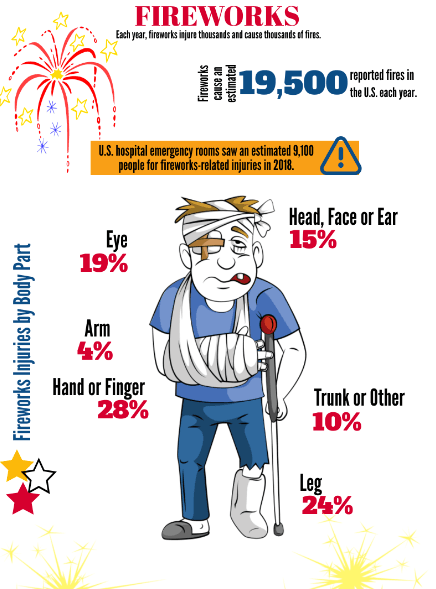 (image credit: Fuquay-Varina.org)
Grilling
- Propane and charcoal grills should only be used outdoors
- The grill should be placed far away from the home and deck railings
- Keep children and pets at least 10 feet away from the grill area
- Never leave your grill unattended and always open the gas grill lid before lighting it
- If using starter fluid, use only charcoal starter fluid. Never add charcoal fluid or any other flammable liquids to the fire. Keep charcoal fluid out of the reach of children
- When you are finished grilling, let the coals completely cool before disposing in a metal container
- If you smell gas while cooking, immediately get away from the grill and call the fire department. Do not move the grill [source]

Rural Family Medicine Residency Program Celebrates Graduation of First Cohort
ECU Health and the Brody School of Medicine at East Carolina University celebrated the graduation of the first ever cohort of resident physicians in the Rural Family Medicine Residency Program on June 30, before officially welcoming the latest class of resident physicians into the newly expanded program July 1, marking two important milestones in a program uniquely designed to help meet the academic rural health mission.
Launched in 2021, the Rural Family Medicine Residency Program provides recent medical school graduates interested in serving as family medicine physicians in rural communities first-hand experience in caring for patients in the kind of underserved settings they plan to practice in upon completion of their residency training.
Continue to the full article here.

Optimizing Physical Safety and Cyber Security for Health Centers Offering Gender-Affirming Care
Presented by Dr. Alex Keuroghlian, Dr. Chris Roby, and Bonnie Michelman, this webinar focuses on the current risks to those providing gender-affirming care and provide strategies for safeguarding facilities and employees from threats, violence, and unsafe behavior.
The faculty will discuss emergency preparedness as part of addressing the complex needs of health centers when ensuring physical safety and cyber security.
Access this timely recorded session here.
After viewing, consider completing the Optimizing Physical Safety and Cyber Security for Health Centers Offering Gender-Affirming Care Evaluation here.

Is this next for you? First US Hospital Offers Doctor Visit via Hologram
Texas hospital is reportedly 1st in US to use holograms for doctor-patient visits
(ABC News - Mary Kekatos) -- A Texas hospital could be the first in the United States to use a technology that allows doctors to visit patients via hologram.
Crescent Regional Hospital, located in Lancaster -- about 13 miles south of Dallas -- has installed "Holobox," a 3D system that projects a life-sized hologram of a doctor so that they can perform real-time consults with patients at a clinic 30 miles away.
Designed by Dutch company Holoconnects, the display is 86 inches tall and only requires electricity and internet to connect, according to the company.
The box has anti-glare glass and a transparent LCD screen for a life-size and realistic holographic display as well as hi-fi speakers and a multi-touch operating system, according to Holoconnects' website. The hologram features the image of people either in a pre-recorded video or in live real-time video.
"There's so much artificial intelligence, robotic technology, so many things," Crescent Regional Hospital CEO Raji Kumar told ABC affiliate WFAA in Dallas. "So, I'm super excited of being able to bring some of this technology to North Texas."
Steve Stirling, managing director of Holoconnects for North America, said the company developed the "Doctor-Patient Hologram Engagement System" so medical facilities and health care practitioners can engage with patients remotely.
"It has the potential to revolutionize the access and sense of relationship between patients and their healthcare professionals," Stirling told ABC News via email. "We can provide real-time, life-like access from distant locations which provide patients with access to levels of specialty care from anywhere in the world and also save doctors one of their most precious commodities -- time!"
He believes Crescent Regional is the first hospital in the U.S. with a technology like Holobox.
Kumar said the technology helps reduce doctors' travel time between Crescent Regional and the hospital's clinic in Farmers Branch, about 30 miles away.
Doctors can now speak to patients via hologram instead of driving between the hospital and clinic for pre-op, post-op or follow up appointments, according to WFAA.
"Our doctors on the north side of town don't have to drive 30 miles to see one of their patients," Kumar told WFAA. "They can just hop into the studio have the consult."
She plans to install more studios throughout the hospital and in doctors' offices so more physicians can do holographic visits. Kumar told WFAA she would also like to bring the technology to rural hospitals.
"I plan to give it as a service to rural hospitals," Kumar said. "To say, 'Hey, I've got all the specialists on board. I will give you the box, I'll take care of the camera setups for my specialists.'"
"I'm actually trying to do a mini box in a mobile van, so I could take it to underserved areas, okay, where there's no specialist help," she added.
Stirling said he is hoping more hospitals will follow suit and roll out similar hologram programs. Holoconnects is working to deploy the Holobox Mini, which has a 22-inch interactive touch-screen display and can more easily be transported.
"Doctor shortage areas are everywhere, and health care facilities are closing so if we can do anything to help make access to care and engagement with healthcare professionals more productive and satisfying to both patients and doctors, this will be a very satisfying result for us," he said.
Crescent Regional did not immediately reply to ABC News' request for comment.

NCMS Member Maria Sturchler Named Inpatient Palliative Medical Director of LCFL
Sturchler Promoted at Lower Cape Fear Lifecare
(WILMINGTON, NC) --- Lower Cape Fear LifeCare announced the advancement of Maria Sturchler to inpatient palliative medical director.
According to a news release, she oversees LCFL’s inpatient palliative medicine team working in partnership at Novant/NHRMC, which includes providers, RNs, social workers, and transitions coordinator. Sturchler joined Lower Cape Fear LifeCare’s palliative care team in October 2023
Palliative care is specialized medical care to relieve symptoms and stresses of illness for patients living with a serious illness.
Before joining LCFL, Sturchler served as an attending physician in the Department of Palliative Medicine at Scripps Health Medical Center, as medical director for a San Diego Hospice and as CEO/president of Sturchler MD Inc. She earned a bachelor’s degree in elementary education from Florida Atlantic University, according to the release.
Sturchler earned her master’s degree in mathematics education and doctorate in educational leadership from Nova Southeastern University in Florida. Sturchler also earned a bachelor’s degree in biological chemistry from Florida Atlantic University and Doctor of Medicine from Vanderbilt University School of Medicine, the release stated.
Sturchler is board-certified in emergency medicine and internal medicine–hospice and palliative medicine.
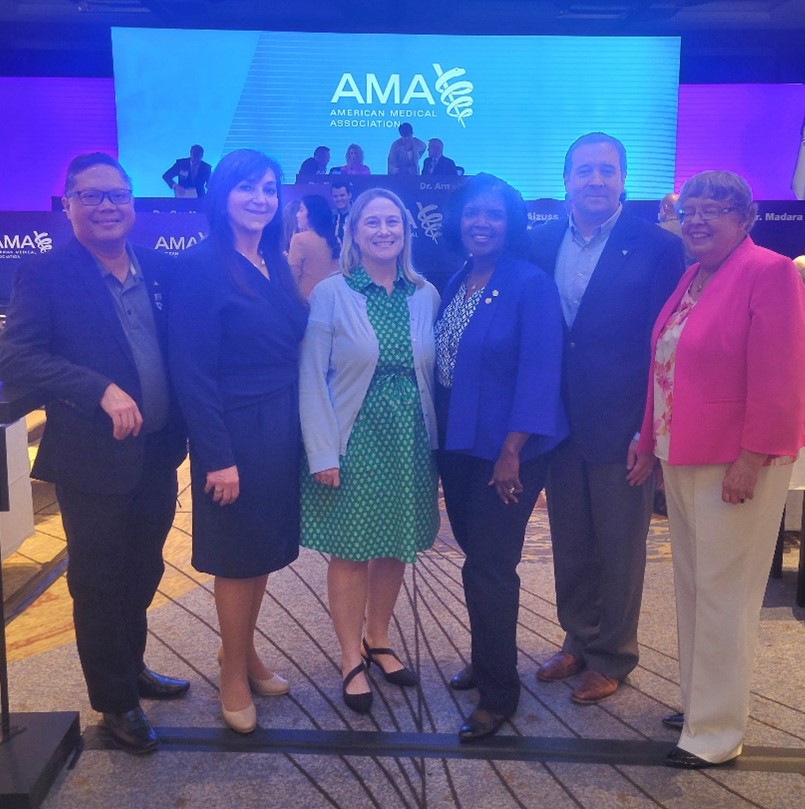
2024 AMA Annual Meeting - NC Delegation Report
2024 AMA Annual Meeting Report from the NCMS AMA Delegation
Your NCMS Delegation to the recent 2024 Annual Meeting of the AMA House of Delegates is pleased to report on its work on behalf of North Carolina at this semi-annual congress of physicians and medical students.
Download the full NC Delegation Report here.

Register Now! 8th Annual Dr. Suzanne Landis Geriatric Summit – Mobility Matters
8th Annual Dr. Suzanne Landis Geriatric Summit – Mobility Matters
Mountain Area Health Education Center
Blue Ridge Room
121 Hendersonville Road
Asheville, NC 28803-2868
Friday, November 1st, 2024
Join other healthcare and aging services professionals at this annual geriatric educational event. The focus this year will be on one of the "4Ms": Mobility (ensuring that older adults move safely every day to maintain function and do what matters) of an Age-Friendly Health System. This is planned to be a hybrid program -- participants can attend on-site at MAHEC in Asheville, NC, or via live webinar. If needed for COVID-19 safety, this program may have to pivot to a live webinar-only format.
Upon completion of this educational activity, participants will be able to:
- Review the Standing Strong NC Initiatives for mobility and falls prevention
- Discuss the relationship between mobility and osteoporosis
- Implement CDC's STEADI with client/patients
- Describe effective assessment, accessibility and mobility programs in home and community
- Discuss Advent's Age-Friendly Interdisciplinary Fall Prevention in Primary Care program
- Reflect on Elder Mobility and Fall Prevention in Tribal Communities
- Demonstrate Tai Chi to improve health and mobility
- Synthesize learning objectives for all sessions through interprofessional discussion of a case study
For more information, and how to register, click here.
Leadership Opportunity: NC Professionals Health Program Board of Directors
The NCMS has the opportunity to appoint 2 members to the NC Professionals Health Program (NCPHP) Board of Directors. Learn more about responsibilities of NCPHP Board members.
Since 1988, NCPHP has been dedicated to helping medical professionals experience a lifetime of change and return to health. NCPHP assists with recovery from substance use disorders and other conditions that could impair a clinician’s ability to safely provide care and services to their patients.
NCPHP originated as a physicians’ health committee of the North Carolina Medical Society (NCMS). In 1988, it was established as a formal program of the NCMS and written into the North Carolina General Statutes. To learn more about the important work of this organization, visit the NCPHP website.
Physicians interested in an NCPHP Board position should complete the application form and return it to Evan Simmons, esimmons@ncmedsoc.org by Monday, July 15. Interviews for the board openings will take place virtually at 6PM on Wednesday, August 14.
Current NCPHP Board Appointees and Terms:
Stephen J. Ezzo, MD
1/1/20 – 12/31/22, 1st term
1/1/23 – 12/31/25 2nd term
Jonathan Douglas (Doug) Jaffe, DO
1/1/22 – 12/31/24, 1st term
(Eligible for a 2nd term)
Vinay Saranga, MD
1/1/20 – 12/31/22, 1st term
1/1/23 – 12/31/25 2nd term
David L. Tolentino, DO
1/1/19 – 12/31/21, 1st term
1/1/22 – 12/31/24, 2nd term
Sarah W. Young, MD
1/1/23 – 12/31/25 1st term