
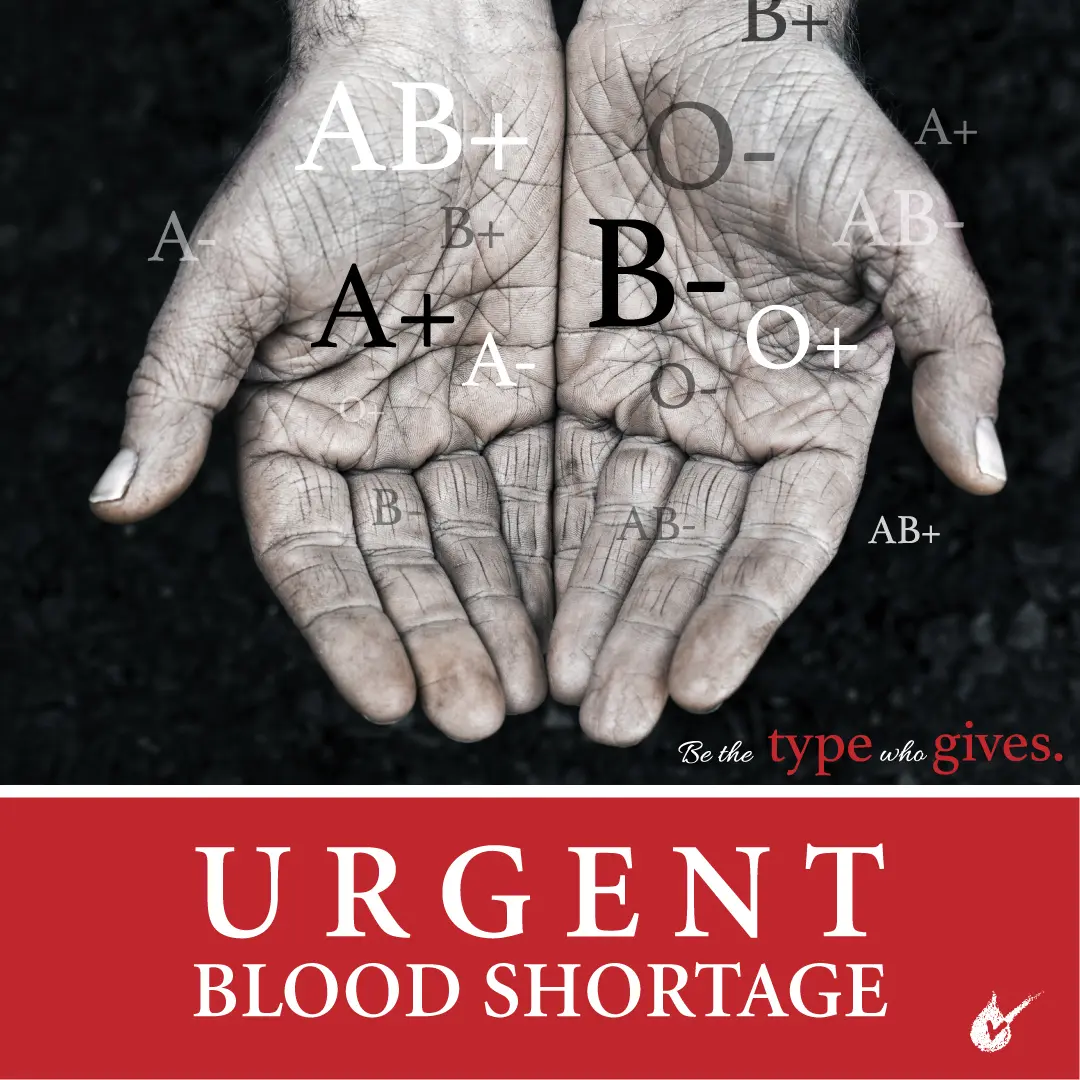
Cape Fear Valley Blood Donor Center in Urgent Need of Blood Donations
Cape Fear Valley Blood Donor Center is asking the public to step up and donate blood or platelets at its Fayetteville facility or one of several upcoming Cape Fear Valley mobile blood drives. Due to the summer lull in donations, especially with the Fourth of July holiday coming up, the Blood Donor Center says the public’s help is critical to maintain a local supply of blood and platelets for patients.
“People can call us to schedule an appointment to do a platelet donation, we have a lot of openings right now,” said Cape Fear Valley Blood Donor Center Manager Amy Fisher. “Platelets especially help cancer patients who are going through chemotherapy, so if you know someone who has cancer and wish you could do something to help, this would be a great action to take.”
Currently, all donors at the Cape Fear Valley Blood Donor Center are receiving a 60-minute game pass for Main Event in Fayetteville, while supplies last. Every donor is also entered into giveaway for one of three $500 Visa gift cards, which will be drawn randomly at the end of July. On Mondays, donors additionally receive one movie ticket along with the Main Event game certificate.
Cape Fear Valley Blood Donor Center is a community blood program dedicated to serve the needs of patients in Cumberland, Hoke, Harnett and Bladen counties through blood donation by individual donors, community organizations and businesses. The center is located at 3357 Village Drive, Fayetteville, in the Bordeaux Shopping Center. It is open for donations Monday through Friday from 7 a.m. to 5 p.m., and the third Saturday of each month from 8 a.m. to noon. The center will be closed on Thursday, July 4, for the holiday. There are also two blood mobiles out in the community for mobile blood drives.
During the school year, area schools often hold blood drives. Now that it is summer, however, other hosts for blood drives are needed! Businesses or organizations who would like to host a mobile blood drive should contact Kristyn Keefe at (910) 615-3306.
Below is a list of upcoming mobile blood drives:
- THE OFFICES OF VILLAGE GREEN: Wednesday, July 3, 10 a.m. to 2 p.m., 1900 Fordham Drive, Fayetteville
- HOME INSTEAD: Thursday, July 11, 11 a.m. to 2 p.m., 555 Executive Place, Fayetteville
- HAYMOUNT INSTITUTE FOR PSYCHOLOGICAL SERVICES: Wednesday, July 12, 10:30 a.m. to 1:30 p.m., 996 Helen St., Fayetteville
- ST. ANN CATHOLIC CHURCH: Thursday, July 13, 9 a.m. to Noon, 357 N. Cool Spring St., Fayetteville
[source]

End-Stage Renal Disease Prospective Payment System Proposed Rule

On June 27, 2024, the Centers for Medicare & Medicaid Services (CMS) issued a proposed rule to update payment rates and policies and includes requests for information under the End-Stage Renal Disease (ESRD) Prospective Payment System (PPS) for renal dialysis services furnished to Medicare beneficiaries on or after January 1, 2025. This rule also proposes an update to the acute kidney injury (AKI) dialysis payment rate for renal dialysis services furnished by ESRD facilities for calendar year (CY) 2025 and proposes to extend Medicare payment to dialysis in the home setting for beneficiaries with AKI. In addition, the rule provides information on how CMS will operationalize the inclusion of oral-only drugs in the ESRD PPS payment as of January 1, 2025. Furthermore, the rule proposes to update requirements for the ESRD Quality Incentive Program (QIP).
For CY 2025, CMS is proposing to increase the ESRD PPS base rate to $273.20, which would increase total payments to all ESRD facilities, both freestanding and hospital-based, by approximately 2.2%. The CY 2025 ESRD PPS proposed rule also includes a proposed change to the methodology for calculating the ESRD facility wage index, proposed changes to the Low-Volume Payment Adjustment (LVPA) methodology, and several proposed changes to the ESRD outlier policy.
Read the full release here.

Register Now! NCTracks July 2024 Provider Training
Registration is now open for the NCTracks July 2024 training courses.
The courses are virtual, via Zoom, and can be attended remotely from any location.
Courses offered this month include:
- Submitting a Prior Approval Private Duty Nurses (Several Sessions Available)
- Re-verification
- Submitting a Time Limit Override
- How to Submit a Professional Claim NEMT
For a detailed description of each course and enrollment instructions, click here.

AMA Survey on Prior Authorization Reinforces NCMS Commitment for Reform

AMA survey indicates prior authorization wreaks havoc on patient care
The American Medical Association surveyed 1,000 practicing physicians asking 40 questions on prior authorization and the results show what members of the North Carolina Medical Society are saying: Patient-Centered care is suffering because of barriers posed by prior auth.
One of the NCMS's highest advocacy priorities is to reform prior authorization in North Carolina and team members have been actively working on HB649, an Act to Ensure Timely and Clinically Sound Utilization Reviews and that Medical Decisions are Made by Health Care Providers. It was introduced in April, 2023. Read more about it here.
NCMS VP of Advocacy John Thompson says "Efforts to reform prior authorization in North Carolina focus on reducing administrative burdens and ensuring timely access to necessary medical care. By streamlining the approval process and enhancing transparency between healthcare providers and insurers, the goal is to improve patient outcomes and support efficient healthcare delivery. These reforms aim to balance the need for cost control with the imperative to provide prompt and effective treatment."
The AMA survey results are a detailed look at how prior auth is hurting patients. Some of the results are:
- Patient Harm—Nearly one in four physicians (24%) reported that prior authorization has led to a serious adverse event for a patient in their care, including hospitalization, permanent impairment, or death.
- Bad Outcomes—More than nine in 10 physicians (93%) reported that prior authorization has a negative impact on patient clinical outcomes.
- Delayed Care—More than nine in 10 physicians (94%) reported that prior authorization delays access to necessary care.
- Disrupted Care—More than three-fourths of physicians (78%) reported that patients abandon treatment due to authorization struggles with health insurers.
- Lost Workforce Productivity—More than half of physicians (53%) who cared for patients in the workforce reported that prior authorizations had impeded a patient’s job performance.
Prior authorization is also, according to the survey, leading to increasingly burdensome administrative issues and an adverse impact on physicians:

“Across the country, physicians see firsthand the dangerous, harmful—and sometimes deadly—consequences of prior authorization,” wrote AMA President Bruce A. Scott, M.D. in a viewpoint that accompanied the AMA survey. “Payers erect roadblocks and hurdles allegedly designed to save money for the health system and protect precious resources, but when patients and their doctors face care delays—or even give up and abandon necessary care—the result can actually be increased overall costs when worsening health conditions force patients to seek urgent or emergency treatment. Our patients are caught in the middle, twisting in the wind, while physicians fight for them, often with fax machines as our only available weapon.”
To read the full survey results and see the methodology behind the survey click here.
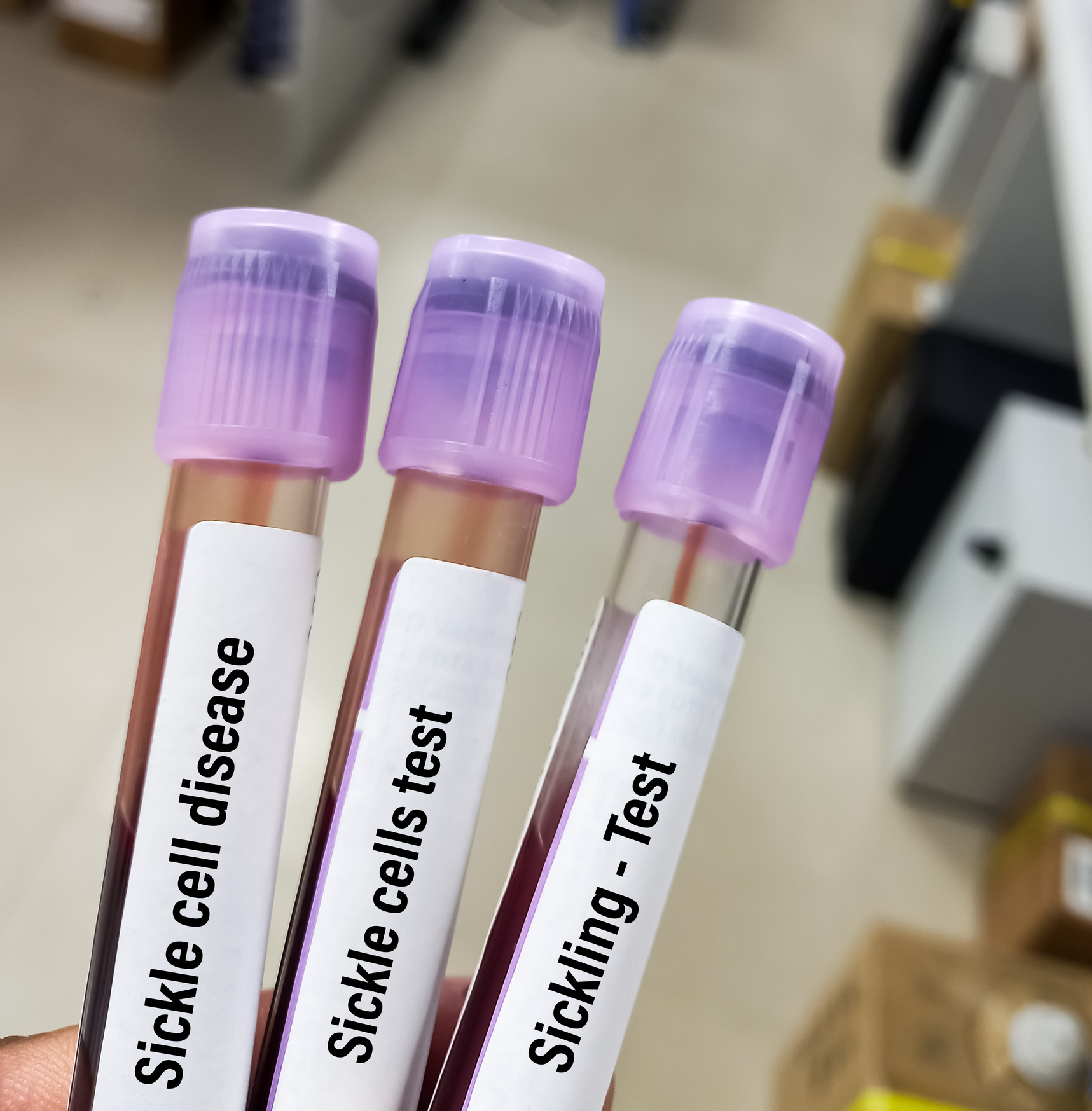
North Carolina Aims to Make Sickle Cell Gene Therapy More Accessible
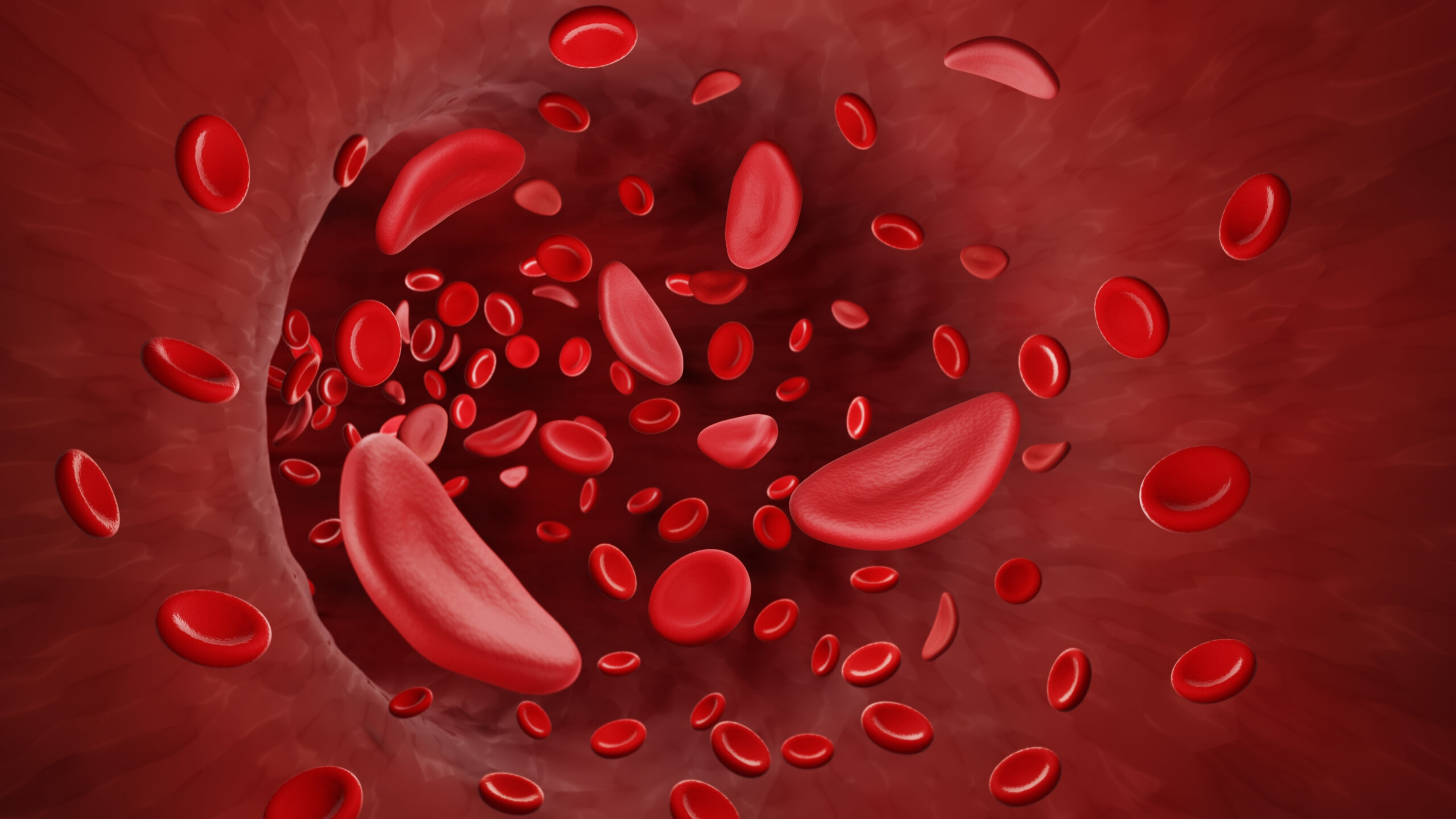
Currently, the new FDA approved gene therapy cure for the disease is more than $2 million.
The North Carolina Department of Health and Human Services (NCDHHS) will be applying for a new access model with Centers for Medicare & Medicaid Services (CMS) to make sickle cell gene therapy more accessible for North Carolinians.
CMS's Cell and Gene Therapy Access Model will first focus on people on Medicaid living with sickle cell disease -- an inherited blood disorder which leads to pain crises, hospitalizations, and health issues.
NCDHHS says around 6,800 North Carolinians have the disease, and 95% are Black, which parallels national numbers.
Continue to full article here.
NC Medicaid Launches Behavioral Health and Intellectual/Developmental Disabilities Tailored Plans
On Monday, July 1st, the North Carolina Department of Health and Human Services will launch its Behavioral Health and Intellectual/Developmental Disabilities Tailored Plans, a new kind of NC Medicaid Managed Care health plan.
"With Tailored Plans, we can invest in the health and well-being of more than 210,000 people by addressing their physical and behavioral health needs in one health plan," said NC Health and Human Services Secretary Kody H. Kinsley. "This is another critical milestone in our work to build a stronger, more outcomes-oriented and accessible behavioral health system for North Carolina."
People eligible for Tailored Plans include those covered by NC Medicaid who have a serious mental illness, a serious emotional disturbance, a severe substance use disorder, an intellectual or developmental disability or a traumatic brain injury. Tailored Plans cover services for physical care, prescription drugs, mental health, long-term services and supports and address unmet health-related resource needs.
"We have worked closely with all health plan partners to ensure they are ready to serve and support members as North Carolinians move to these new plans," said NC Medicaid Deputy Secretary Jay Ludlam. "On day one, members should be able to get access to the services and supports they need — whether it is physical health, behavioral health or access to the drugs that they need."
In April, the NC Medicaid Enrollment Broker mailed a letter to North Carolinians who are moving to Tailored Plans about next steps and how to choose a primary care provider. Individuals who did not pick a PCP by the May 15 deadline were assigned one, which they can change (without cause or for any reason) through Jan. 31, 2025. Individuals moved to Tailored Plans should have also received a welcome packet and new member health plan ID card from Alliance Health, Partners Health, Trillium Health or Vaya Total Care. If they did not receive a welcome packet but think they should be in a Tailored Plan, they can call the NC Medicaid Enrollment Broker at 833-870-5500 (TTY: 711 or RelayNC.com) for support.
To help people better navigate the transition, NCDHHS has published an accessible communications toolkit. The communication toolkit includes flyers, an explainer presentation, social media graphics and more. These resources are available in English and Spanish.
"It’s so important that all North Carolinians have the tools and resources they need to live healthy and fulfilling lives," said Kelly Crosbie, MSW, LCSW, Director of the NCDHHS Division of Mental Health, Developmental Disabilities, and Substance Use Services. "The Tailored Plan toolkit makes it easier than ever for individuals with mental health or substance use issues, an intellectual or developmental disability or a traumatic brain injury to navigate the transition to Tailored Plans and understand the services that are available to them."
Monday, July 1st, the NCDHHS Division of Mental Health, Developmental Disabilities, and Substance Use Services will host its monthly webinar, Side by Side with DMHDDSUS, to provide updates on the Tailored Plan launch. For more information, or to register as an attendee for this webinar, please visit the Side by Side meeting registration link.
For more information on Tailored Plans, visit Medicaid.nc.gov/tailored-plans. [source]

Breaking News: NCMS Coalition Leads BCBSNC to Rescind Coverage Change
(RALEIGH) -- One day after the North Carolina Medical Society announced it organized a coalition of more than 20 state organizations in opposition to a coverage change at Blue Cross Blue Shield NC, the policy has been rescinded.
On May 1, 2024, BCBSNC posted notification of a significant coverage change, saying the payor “will begin reimbursing evaluation and management services at fifty percent (50%) when performed by the same provider/group practice on the same day as a minor procedure.” The services in question are those that are reported with a Modifier 25 to indicate that a patient’s condition required a significant and separate evaluation and management (E/M) service on the same day as another procedure or service.
BCBSNC asserted that the payment reductions are based on “duplicate and overlapping professional practice expenses.”
The NCMS disagreed and, after hearing from members and practices across the state, mobilized 23 organizations and medical societies to push back on the cut. NCMS CEO Chip Baggett says, "our concern is always to protect the quality of patient care and the viability of professional practices."
On Thursday, BCBSNC communicated they would rescind the policy update indefinitely. They went on to say, "We are committed to partnering with you (the NCMS and other organizations) to ensure quality care and appropriate billing practices; while also working to make sure healthcare is affordable in North Carolina." NCMS appreciates the openness to dialogue and change that BCBS NC exhibited during this time.
Baggett adds that this victory puts the spotlight on the hard work of the NCMS. "Relationships matter," he says, "and without our relationships with members and other organizations in the state this would not have happened." He also praised the quick communications of everyone involved.
"This really demonstrates how a commitment to putting patients first works. Our core value of protecting the people of North Carolina has led us to this day. We are very happy to share in this victory and look forward to our continuing efforts with our members and partner agencies."
To read the full release from Blue Cross Blue Shield North Carolina click here.

NCMS Helps Halt Legislation to License Naturopaths in NC
(RALEIGH) -- The North Carolina Medical Society continues to win battles for the safety of patients in the state!
On Wednesday, members of the NCMS collaborated with members and other agencies to halt Senate Bill 607, the Regulatory Reform Act of 2024. If successful, it would have allowed the creation of a new board to license Naturopaths to practice in the state without appropriate regulation.
Through combined efforts, NCMS successfully ensured that North Carolina remains a safer place for patients. NCMS Vice President of Advocacy John Thompson says of the victory: "This helps the NCMS uphold the high standards of medical care that our community deserves."
The NCMS based is opposition on, among other things, the undefined and expansive scope of SB607. It would have allowed naturopaths to order diagnostic imaging (ultrasounds, CT scans, mammograms), laboratory tests, and utilize oral, nasal, auricular, ocular, rectal, vaginal, and transdermal routes of administration of substances. Additionally, the bill would allow naturopaths to prescribe any natural remedy similar in structure or function to natural sources.

CDC Updates RSV Vaccination Recommendation for Adults
The CDC updated its recommendation for the use of Respiratory Syncytial Virus (RSV) vaccines in people ages 60 and older. For this upcoming respiratory virus season, CDC recommends:
- Everyone ages 75 and older receive the RSV vaccine.
- People ages 60–74 who are at increased risk of severe RSV, meaning they have certain chronic medical conditions, such as lung or heart disease, or they live in nursing homes, receive the RSV vaccine.
This recommendation is for adults who did not get an RSV vaccine last year. The RSV vaccine is not currently an annual vaccine, meaning people do not need to get a dose every RSV season. Eligible adults can get an RSV vaccine at any time, but the best time to get vaccinated is in late summer and early fall before RSV usually starts to spread in communities.
Today’s updated recommendation for people 60 and older replaces the recommendation made last year to simplify RSV vaccine decision-making for clinicians and the public.
Immunizations were available last year for the first time to protect people at increased risk for severe RSV, including infants and young children, and people ages 60 and older. Today’s updated recommendation is based on analyses of RSV disease burden among people 60 and older, as well as RSV vaccine effectiveness and cost-effectiveness studies. Those studies included the first real-world data since RSV vaccines were recommended for people 60 and older.
Healthcare providers should recommend RSV vaccines to their eligible patients, as well as discuss what other vaccines they will need this fall to help prevent respiratory infections.
The following is attributable to CDC Director Dr. Mandy Cohen:
“The CDC has updated its RSV vaccination recommendation for older adults to prioritize those at highest risk for serious illness from RSV,” said Mandy Cohen, M.D., M.P.H. “People 75 or older, or between 60-74 with certain chronic health conditions or living in a nursing home should get one dose of the RSV vaccine to provide an extra layer of protection.” [source]

Semaglutide Shows Promise for Treatment of Alcohol Use Disorder
Christian Hendershot, PhD, associate professor of psychiatry and director of the Clinical and Translational Addiction Research Program at the UNC School of Medicine, recently presented early findings from the first completed randomized controlled trial of semaglutide in participants with alcohol use disorder (AUD).
The preliminary and unpublished findings, which were presented at the Research Society on Alcohol’s Annual Meeting, showed a reduction in heavy drinking and drinking quantity among those who were given semaglutide versus the placebo group.
“We believe these findings are promising and warrant further trials of GLP-1 receptor agonists in treatment-seeking participants with alcohol use disorder,” said Hendershot, who is also a member of the Bowles Center for Alcohols Studies at the UNC School of Medicine.
Semaglutide, a glucagon-like peptide-1 receptor agonist (GLP-1RA) was originally formulated to treat diabetes and has emerged as a weight loss drug. Anecdotal observations from patients have suggested the drug may also reduce alcohol and other substance cravings. This possibility is also consistent with numerous preclinical studies over the past decade, which led Hendershot and other groups to design early randomized clinical trials of GLP-1RAs in participants with AUD.
Participants in the Phase II randomized controlled trial were non-treatment-seeking volunteers who reported symptoms of alcohol use disorder. A total of 48 participants were randomized to medication or placebo groups. Participants assigned to the medication arm received the lower two clinical doses of semaglutide (0.25mg/week, 0.5mg/week) over approximately 2 months. The study was funded by the National Institute on Alcohol Abuse and Alcoholism (NIAAA).
Preliminary results from the trial indicate that those taking the medication experienced greater reductions in drinking quantity and heavy drinking more than those in the placebo group. Given the magnitude of the effects at relatively lower doses, it appears that semaglutide could have the potential to reduce drinking to a greater extent than existing medications. With 96% of those in the medication group finishing the study, researchers concluded that the drug was safe and well tolerated in this population.
Replication studies will be needed to further confirm the safety, tolerability, and efficacy of semaglutide at higher doses in this population, and to identify patient subgroups that are more or less responsive to GLP-1RAs.
Other UNC-based co-investigators on the study include Klara Klein, MD, PhD, assistant professor at the Department of Medicine’s Division of Endocrinology and Metabolism; Amanda Tow, MD, PhD, assistant professor in the Department of Psychiatry; and Robyn Jordan, MD, PhD, associate professor in the Department of Psychiatry and medical director of the UNC Addiction Medicine Program. [source]
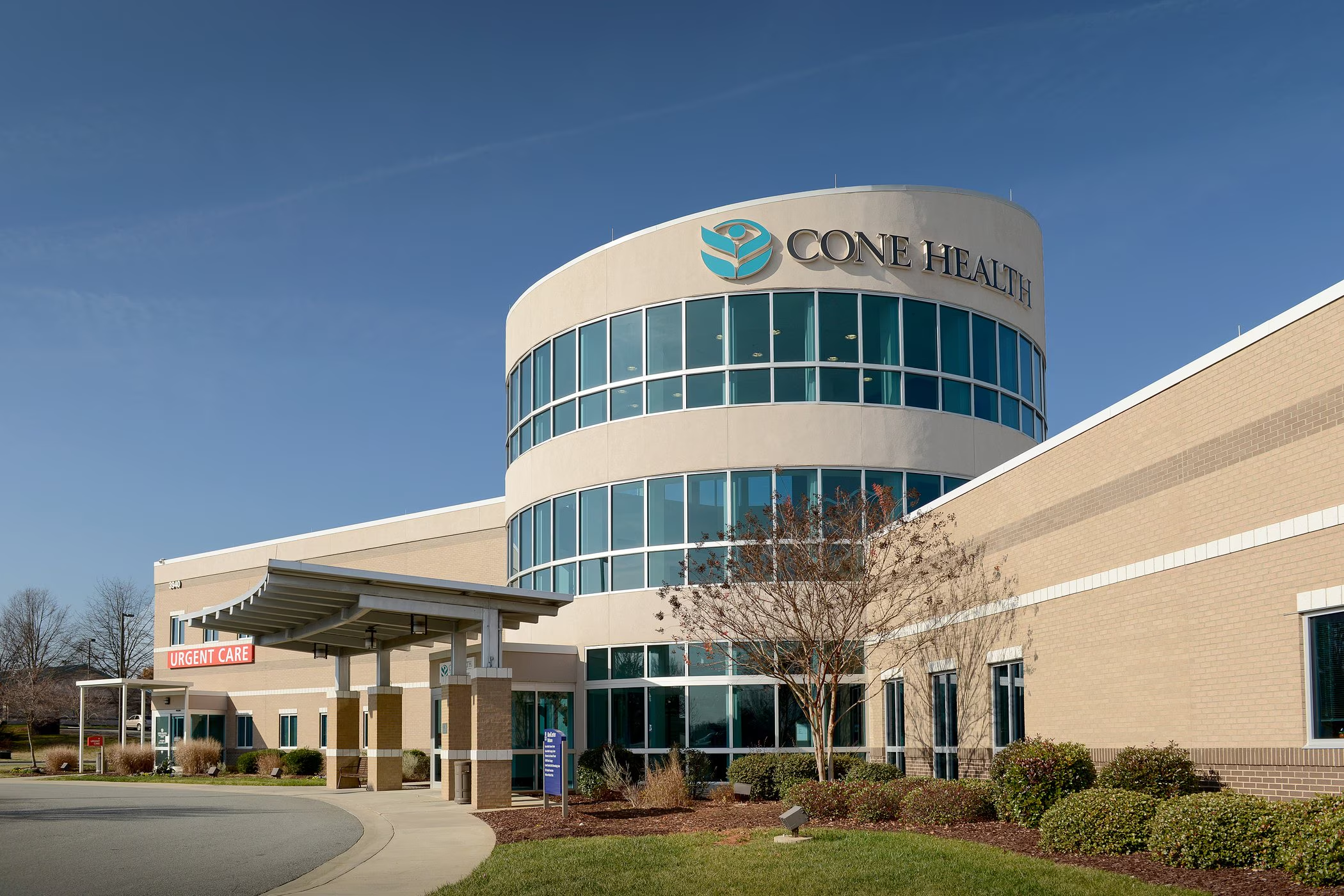
Risant Health to Acquire North Carolina Hospital System
Cone Health and Risant Health have signed a definitive agreement under which Cone Health will become part of Risant Health, pending regulatory approvals.
Risant Health is a nonprofit, charitable organization created by Kaiser Foundation Hospitals to bring together like-minded organizations, increase access to value-based care and coverage, and raise the bar for approaches that bring the best health outcomes.
“Cone Health’s impressive work for decades in moving value-based care forward aligns so well with Risant Health’s vision for the future of health care. Their longstanding success and deep commitment to providing high-quality care to North Carolina communities make them an ideal fit to become a part of Risant Health. We will work together to share our industry-leading expertise and innovation to expand access to value-based care to more people in the communities we serve,” said Risant Health CEO, Dr. Jaewon Ryu, JD.
Read the full news release here.

New Self-Measured Blood Pressure Monitoring Jumpstart Curriculum
The American Medical Association’s free curriculum can help implement and sustain evidence-based systematic self-measured blood pressure (SMBP) monitoring programs.
15 mini modules are divided into three sections: Fundamentals, Planning and Implementation, and Technology and Evaluation, and will help learners make actionable plans, engage key stakeholders, and work with patients toward healthier lives.
Learning Objectives
- Articulate the value of an SMBP program to health center leadership, care team members, patients, and community members
- Develop an adaptable and iterative SMBP program strategy
- Identify and prioritize what components are most crucial for successfully implementing an SMBP program
- Incorporate clinical knowledge of SMBP best practices and patient data into treatment plans
- Configure and manage an inventory of SMBP devices
Access the curriculum and learn more about the American Medical Association's EdHub here.

Only a Few Days Left to Participate! NC Medicaid Needs to Hear from Enrolled Providers.
All primary care and ob/gyn providers enrolled in the Medicaid program are asked to respond to the request you should have received to complete a satisfaction survey. Below is a notice from NC Medicaid announcing that the survey will remain open through June 30, 2024. If you received the survey notice, please be sure to respond. If you have not received the notice or no longer have access to it, please follow-up as indicated below.

A Message from NCTracks on Behalf of NC Medicaid
2024 Provider Experience Survey Extended to June 30
Participation in this survey is vital to understanding how primary care and Ob/Gyn providers experience and are satisfied with North Carolina’s Medicaid program and with each PHP. This survey aids in identifying areas for improvement with the intention of bettering PHP relationships with providers and reducing the administrative burdens of contracting with PHPs.
All practices and organizations that provide primary care and Ob/Gyn services should have received an email, in addition to a physical mail, invitation to participate in the survey in April or May of this year. For practices employed by a larger organization (e.g., UNC or Duke practices), the invitation would have gone to the organization central office. The survey will remain open until June 30, 2024.
Practices and organizations who have not received an invitation to participate or who no longer have the invitation, email csrl@unc.edu and indicate you would like to complete the Medicaid Survey and the name of the practice(s). Example verbiage: “I would like to complete the Medicaid Survey. Can you send me the link? My practice name is: XXXXX. Address is: XXXXX. Phone number: XXXXX.”

NCMS Leads Coalition Against BCBSNC Coverage Change
NCMS Issues Letter to BCBSNC on Behalf of More Than 20 State Organizations
On May 1, 2024 Blue Cross Blue Shield of North Carolina posted notification of a significant coverage change. According to the BCBSNC announcement, the payor “will begin reimbursing evaluation and management services at fifty percent (50%) when performed by the same provider/group practice on the same day as a minor procedure.” The services in question are those that are reported with a Modifier 25 to indicate that a patient's condition required a significant and separate evaluation and management (E/M) service on the same day as another procedure or service.
BCBSNC asserts that the payment reductions are based on “duplicate and overlapping professional practice expenses.”
The NCMS has heard from many members and practices across the state about the impact the new policy will have on patients and practice stability. The NCMS has pushed back on the reimbursement cuts and, along with many medical/specialty society partners, has issued a letter opposing the announced changes to the insurer’s Evaluation and Management Service policy. The Society is unified with our partner organizations in the collective opinion that policies that deny or reduce payment for E/M services reported with a Modifier 25 serve as a disincentive for physicians to provide unscheduled services, which may force patients to schedule multiple visits and jeopardizes quality patient care.
Further, it is the Medical Society’s contention that the process for establishing valuation for services provided includes adjustments to account for the alleged “overlap” and that any additional reduction in payment for services makes the reimbursement cut duplicative. The Society plans to meet with BCBSNC to further express concerns and seek a recension of the policy.
The letter with full list of co-signers:



Side-by-Side Webinar with NCDHHS' Mental Health Division
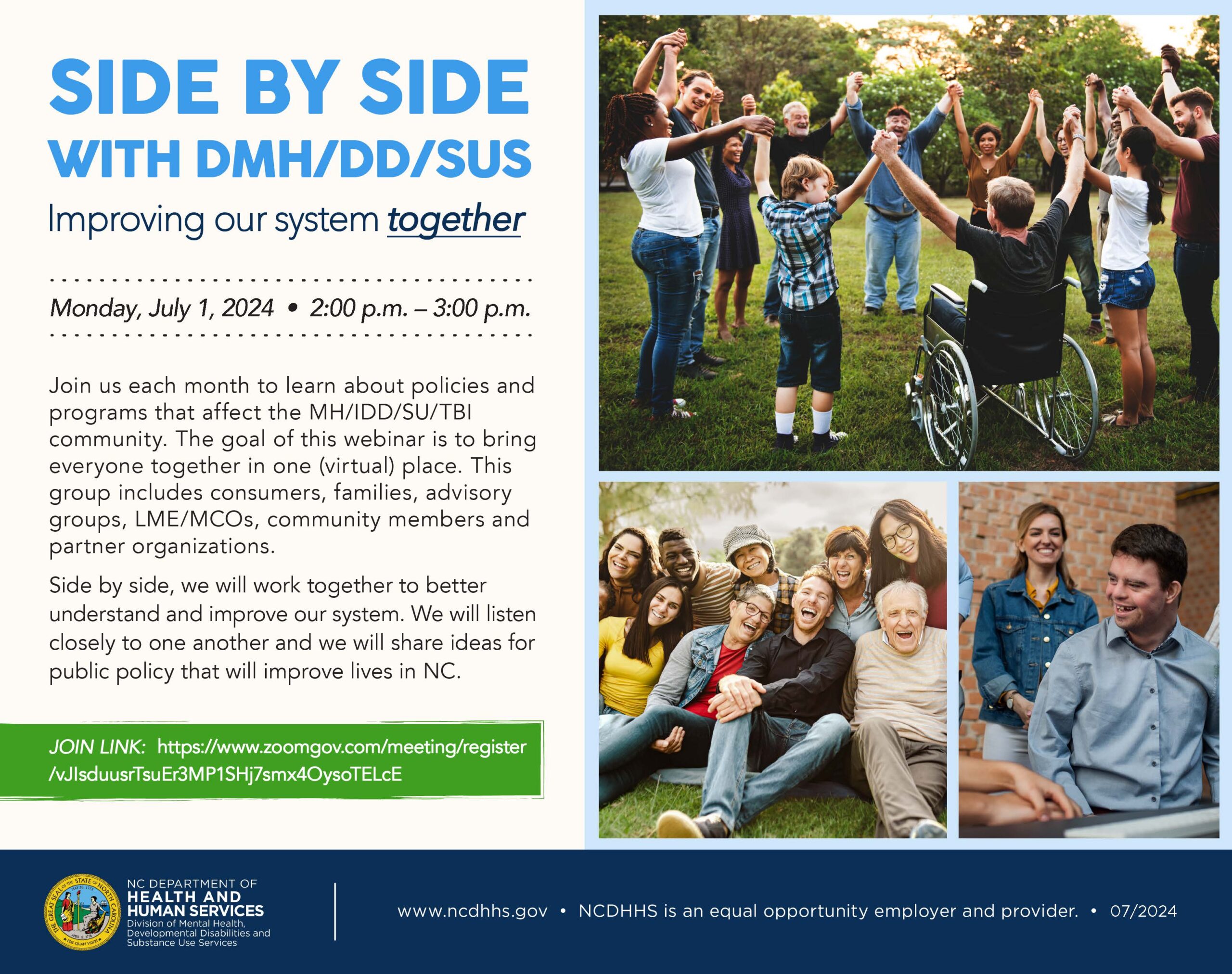
Join staff from NCDHHS' Division of Mental Health, Developmental Disabilities and Substance Use Services on July 1 at 2 p.m. to learn more about policies and programs that affect the Mental Health, Intellectual and Developmental Disabilities, Substance Use Services and Traumatic Brain Injury community.


Colorectal Cancer: Epidemiology, Risk Factors, and Screening Strategies - Live Webinar
Colorectal Cancer: Epidemiology, Risk Factors, and Screening Strategies

NCMS member Dr. Lisa Gangarosa will facilitate the upcoming live webinar Colorectal Cancer: Epidemiology, Risk Factors, and Screening Strategies on Wednesday, July 10.
This informative session will include an overview of epidemiologic trends in colorectal cancer (CRC) modifiable and non-modifiable risk factors for CRC, and screening strategies for CRC.
Learning Objectives
- To describe recent epidemiologic trends in colorectal cancer.
- To describe and differentiate between modifiable and non-modifiable risk factors for colorectal cancer.
- To list and discuss screening options for colorectal cancer.
Learn more and register here.
Download a sharable PDF flyer here.


NCMS Member Dr. Shelley Cathcart Featured in Spectrum News Story About Sunscreen
Dermatologists are worried about social media trends against the use of sunscreen
(Spectrum News, Kyleigh Panetta) -- Thursday is the first official day of summer and that often means more time spent outside in the sun. Some dermatologists are worried about social media trends urging people to stop using sunscreen.
(Full video link at bottom of this article)
Recent claims circulating online stem from the idea that sunscreen isn’t necessary. The posts claim sunscreen can block you from getting enough natural exposure to sunlight and that it contains potentially harmful ingredients.
Dr. Shelley Cathcart is a dermatologist at Blue Ridge Dermatology in Cary.
“I graduated from medical school in ’07, so I've been doing it a long time. And I love the skin just because it's the most visible, accessible organ,” Cathcart said.
Cathcart often spends time educating patients about sun protection.
“I always recommend at least a [SPF] 30. And because of sunscreen application errors, I often even say go ahead with a [SPF] 50,” Cathcart said.
She said the effects the sun can have on unprotected skin are facts backed by science.
“We know what a carcinogen the sun is. We know that UV radiation to your skin is going to damage your DNA. It's going to put you at an increased risk of skin cancers,” Cathcart said.
So Cathcart said she wasn’t expecting to see recent viral posts on social media telling people to stop using sunscreen.
“I’m surprised I'm going to have to come to sunscreen’s defense. I mean it's kind of gotten in hot water lately, surprising to me,” Cathcart said. “If anybody's ever missed a spot with their sunscreen, I think you know that it does work. It does deflect the sun's rays.”
Many posts online point to concerning ingredients and Cathcart said that’s understandable given past issues with some products.

“Avobenzone is fine but you can see on the front here it says ‘oxybenzone free’ and that’s one of the ingredients that has been linked potentially to being a hormone disrupter, so a lot of people prefer to avoid those kinds of sunscreens,” Cathcart said.
She also encourages people to wear clothes that cover your skin, as much as you comfortably can, and to spend time in the shade when possible. But even those precautions aren’t 100% effective.
“Seeking shade is often not enough. An SPF of about seven is what you can expect from a just a beach umbrella. So there's a lot of reflected sun. If you're out in it, you're still getting sun. It's better than nothing. I certainly do encourage my patients to seek shade, but it's not the whole story,” Cathcart said.
Cathcart also encourages people to use sun-protective clothing like hats and long-sleeved rash guards, in addition to seeking shade.
“Because sunscreens are not perfect products, they're not the whole story,” Cathcart said. “That's the thing, you can't miss apply [clothing]. You can't forget to reapply it. You know, clothing is so easy.”
Cathcart said people shouldn’t just stop using sunscreen, adding that like most things, it’s important to read the fine print.
“There have been some safety things that have come out in the past few years that do need to be addressed and paid attention to. So it's not without cause. We do need to pay attention to what we're putting on our bodies,” Cathcart said. “You do want to get some protection from sun, from UV radiation and from potential damage over time. Because I can tell you, I take off skin cancers from sun exposed skin all day and you don't want that complication at all.”
Cathcart also said lotion sunscreens are more effective.
If you do use spray sunscreen, make sure to rub it in, she said.
“I wish the sprays were good solutions, I really do, because they are so easy and I think we get a lot of better buy-in from patients about the sprays because they do feel easier. They feel better,” Cathcart said. “I really encourage people, at least for their first application, to do a lotion sunscreen because you know you're getting a better coverage, you're getting a thicker layer.”
Finally, make sure to reapply sunscreen at least every two hours.
Cathcart said another common misconception is that people with darker skin tones don’t need to use sunscreen. She said it’s true that some skin cancers are not as common among people with darker skin tones, but she adds that everyone can benefit from sun protection.
WATCH THE FULL INTERVIEW BY CLICKING HERE.
Leadership Opportunity: NC Professionals Health Program Board of Directors
The NCMS has the opportunity to appoint 2 members to the NC Professionals Health Program (NCPHP) Board of Directors. Learn more about responsibilities of NCPHP Board members.
Since 1988, NCPHP has been dedicated to helping medical professionals experience a lifetime of change and return to health. NCPHP assists with recovery from substance use disorders and other conditions that could impair a clinician’s ability to safely provide care and services to their patients.
NCPHP originated as a physicians’ health committee of the North Carolina Medical Society (NCMS). In 1988, it was established as a formal program of the NCMS and written into the North Carolina General Statutes. To learn more about the important work of this organization, visit the NCPHP website.
Physicians interested in an NCPHP Board position should complete the application form and return it to Evan Simmons, esimmons@ncmedsoc.org by Monday, July 15. Interviews for the board openings will take place virtually at 6PM on Wednesday, August 14.
Current NCPHP Board Appointees and Terms:
Stephen J. Ezzo, MD
1/1/20 – 12/31/22, 1st term
1/1/23 – 12/31/25 2nd term
Jonathan Douglas (Doug) Jaffe, DO
1/1/22 – 12/31/24, 1st term
(Eligible for a 2nd term)
Vinay Saranga, MD
1/1/20 – 12/31/22, 1st term
1/1/23 – 12/31/25 2nd term
David L. Tolentino, DO
1/1/19 – 12/31/21, 1st term
1/1/22 – 12/31/24, 2nd term
Sarah W. Young, MD
1/1/23 – 12/31/25 1st term

Stay Alert: Medical Records Request Phishing Scam
CMS identified phishing scams for medical records. This may include scammers faxing fraudulent medical records requests to get you to send patient records in response; see example (PDF).
When you review any requests, look for signs of a scam, including:
- Directing you to send records to an unfamiliar fax number or address
- Referencing Medicare.gov or @Medicare (.gov)
- Indicating they need records to “update insurance accordingly”
A scam request may include:
- Poor grammar, misspellings, or strange wording
- Incorrect phone numbers
- Skewed or outdated logos
- Graphics that are cut and pasted
If you think you got a fraudulent or questionable request, work with your Medical Review Contractor to confirm if it’s real. Submit medical documentation through the Electronic Submission of Medical Documentation (esMD) system or CMS medical review contractor secure internet portals, when available.

EPA Announces New Funding for North Carolina for Lead Testing in Schools
The U.S. Environmental Protection Agency (EPA) announced a new grant totaling more than $1 million to NCDHHS for lead testing in drinking water at some North Carolina schools and childcare centers.
NCDHHS will use this funding to continue implementing its program to test for lead contamination in drinking water at all licensed childcare centers, including Head Start/pre-Kindergarten programs in elementary schools.
The program works with childcare centers to provide education about lead and mitigation recommendations, and they have initiated a second round of follow-up testing to understand the changes in lead exposure over time.
Visit the Clean Classrooms for Carolina Kids website for more information on North Carolina’s lead testing in water and paint in school program and its funding page for recent grant funding.
Read the EPA news release here.

Save Lives This Summer with Operation Blood Drive

What: Operation Blood Drive
When: Thursday, June 27 | 10 am to 3 pm
Where: AdventHealth Hendersonville
100 Hospital Drive
Hendersonville, NC 28792
To ensure hospitals across the region have a sufficient blood supply through the Fourth of July holiday, AdventHealth, the American Red Cross, the Blood Connection (TBC), and WLOS-News 13 are partnering to sponsor the 37th annual Operation Blood Drive this Thursday, June 27.
The Blood Connection Mobile Donor Unit will be parked near the valet parking lot. All donors will receive $70 in TBC rewards to use toward e-gift cards.
To make an appointment, click here and enter sponsor code 9989.
Please note: Individuals can donate blood every 56 days. Donors must be 16 years or older and weigh more than 110 lbs. to donate. Sixteen-year-old donors are required to have written consent to donate blood. Before you donate blood, make sure that you drink plenty of water and eat a healthy meal. TBC Donor ID Card (preferred) or photo ID required to donate. Gift cards and other incentives are non-transferable.
Questions? Contact Victoria Dunkle at 828-687-5697 or atvictoria.noyes@adventhealth.com
Time is Running Out! NC Medicaid Needs to Hear from Enrolled Providers.
All primary care and ob/gyn providers enrolled in the Medicaid program are asked to respond to the request you should have received to complete a satisfaction survey. Below is a notice from NC Medicaid announcing that the survey will remain open through June 30, 2024. If you received the survey notice, please be sure to respond. If you have not received the notice or no longer have access to it, please follow-up as indicated below.
A Message from NCTracks on Behalf of NC Medicaid
2024 Provider Experience Survey Extended to June 30
Participation in this survey is vital to understanding how primary care and Ob/Gyn providers experience and are satisfied with North Carolina’s Medicaid program and with each PHP. This survey aids in identifying areas for improvement with the intention of bettering PHP relationships with providers and reducing the administrative burdens of contracting with PHPs.
All practices and organizations that provide primary care and Ob/Gyn services should have received an email, in addition to a physical mail, invitation to participate in the survey in April or May of this year. For practices employed by a larger organization (e.g., UNC or Duke practices), the invitation would have gone to the organization central office. The survey will remain open until June 30, 2024.
Practices and organizations who have not received an invitation to participate or who no longer have the invitation, email csrl@unc.edu and indicate you would like to complete the Medicaid Survey and the name of the practice(s). Example verbiage: “I would like to complete the Medicaid Survey. Can you send me the link? My practice name is: XXXXX. Address is: XXXXX. Phone number: XXXXX.”

Medical Marijuana Legislation Revived for Second Year in a Row
North Carolina Senate looks poised to pass legislation to legalize medical marijuana
(The North Carolina Medical Society Position on Cannabis included in this story)
The Compassionate Care Act is back in front of the North Carolina Senate, backed by powerful members of the chamber. If it happens, it will move to the House where it stalled last year.
If the legislation is successful it would make North Carolina the 38th state to legalize medicinal cannabis. It would be for residents who suffer from a narrow list of conditions, including cancer, epilepsy, and PTSD.
Bill sponsors say the proposal includes restrictions that would be among the tightest in the country. Sen. Michael Lee (R-District 7) says "In addition to providing support to those who are suffering from debilitating conditions, we also want to protect the general public and that's why you see the processes in place."
Senate Rules chairman Sen. Bill Rabon (R-District 8) introduced the legislation last year and credits cannabis with helping him through a near deadly battle with cancer.
The legislation is not guaranteed to pass the House, however, but is being supported by the medical marijuana industry which hired at least a dozen lobbyists this year.
The North Carolina Medical Society has spoken out in support of efforts to research the potential health benefits and adverse health effects of cannabis and cannabidiol products. Read the full statement on Cannabis from the NCMS here.

NCMS Member Invited Speaker at ACP Japan Chapter Scientific Session
NCMS member Marion McCrary MD, FACP, FAMWA, a member of Duke’s department of Medicine, division of General Internal Medicine, will be an invited speaker at the ACP Japan chapter Scientific Session, June 21-22, 2024, in Tokyo.
Dr. McCrary is the Governor for the North Carolina ACP chapter and also serves as an ACP Well-being Champion and Peer Coach. She will be speaking on the topics of Physician Well-being 2.0 in 2024 and Intentional Career Design and Development. In addition, she will serve as an ACP Global Ambassador and as a judge for the Kurokawa Abstract Competition.
Social Media is at it Again! NC Dermatologist Debunks This Current Trend.
Dermatologists are warning patients of all ages not to heed the advice of some trending social media clips claiming sunscreen increases cancer risk.
NCMS member and dermatologist Dr. Beth Goldstein speaks with WRAL about this dangerous social media trend.

$31.7 Billion Proposed State Budget Includes $9 Million to Increase Medicaid Reimbursements
Will Physicians See Medicaid Provider Rates Go Up in New NC Budget?
The North Carolina House of Representatives released a budget proposal June 17. In addition to raising salaries for state employees and adding funding for child care needs, the proposal also boosts Medicaid provider rates and enhances reimbursements for some psychiatric hospitals.
The North Carolina Medical Society find this encouraging, but it remains to be seen if the increase will be included in the Senate proposal.
Rose Hoban and Grace Vitaglione of NC Health News say the $31.7 billion proposal is the "House’s opening play in the annual tug-of-war between that chamber and the state Senate over whose priorities will be most reflected in the final budget document."
The House plan directs $9 million to increase Medicaid provider reimbursement rates for durable medical equipment, and $4 million for speech language and audiology therapy service. The plan also sweeps freestanding psychiatric hospitals into the healthcare access and stabilization program, which was rolled out last year as part of Medicaid expansion. The program provides increased Medicaid reimbursements for hospitals, but currently, only acute care hospitals are in the program. The enhanced payments would not apply to state-operated hospitals.

Spaces Still Available for 2024 AMPAC Campaign School

AMPAC is excited to announce that the 2024 Campaign School will be returning in-person July 25-28 at the AMA offices in Washington, DC and registration is now open!
Running an effective campaign can be the difference between winning and losing a race. That's why the Campaign School is designed to give you the skills and strategic approach you will need on the campaign trail. Our team of political experts will teach you everything you need to know to run a successful campaign. Under the direction of our lead trainers, participants will be broken into campaign staff teams to run a simulated congressional campaign using what they’ve learned during group sessions on strategy, vote targeting, social media, advertising and more.
Attendees may include physicians, spouses of physicians, residents and medical students and state medical society staff interested in becoming more involved in politics. Participants range from those attracted to grassroots efforts to those considering becoming a candidate for public office. No matter where you are in the process, you will develop a new understanding of how campaigns are run. As a graduate of the AMPAC program, candidates will rely on you to give them advice on strategy, message, and campaign plans.
Please note the following:
- The Candidate Workshop is open to AMA physician members, member spouses, residents, medical students and state medical society staff.
- Registration fee is $350 for AMA members and member spouses/$1000 for non-AMA members. This fee is waived for AMA residents and students; however, space is limited and the AMPAC Board will review and select four participants from the pool of qualified resident and student applicants.
- Faculty, materials, and all meals during the meeting are covered by the AMA. Participants are responsible for their registration fee, travel to/from Washington, DC and hotel accommodations (AMPAC staff will provide you with a list of nearby hotels within walking distance of the AMA offices).
- Participants will be required to bring a laptop or Wi-Fi enabled tablet with them.
Space is limited and the deadline to register is July 1 (or sooner if maximum capacity is reached).
Learn more about the 2024 AMPAC Campaign School and how to register here.
For additional information on the 2024 Campaign School, contact us at politicaleducation@ama-assn.org or (202) 789-7455.

NC Institution Gains "First in the World" Recognition

Atrium Health Sanger Heart & Vascular Institute has achieved a significant milestone in the treatment of chronic venous obstruction by becoming the first institution to successfully use the newly FDA-approved Duo venous stent system. This innovative, implantable medical device is designed to help patients with blocked veins by improving blood flow and reducing symptoms.
On June 11, Dr. Erin Murphy, a leading vascular surgeon and director of the venous and lymphatic program at Sanger Heart & Vascular Institute, performed the procedure in a new vascular catheterization lab at Atrium Health Pineville. Murphy, who played a pivotal role in the VIVID study leading to the device's FDA approval, successfully implanted the new venous stent system, marking a new chapter in the treatment of deep venous disease.
“Patients with this condition often experience severe pain, swelling and fatigue, which can significantly limit their daily activities and quality of life,” said Murphy. “The persistent symptoms and complications associated with venous occlusive disease can lead to substantial emotional and physical distress for patients.”
Chronic venous obstruction affects approximately 25 million people globally. It is a condition often resulting from venous thromboembolism – a blood clot formation in the veins. This disease is the third most common cardiovascular disorder and presents numerous complexities and mechanical challenges due to the unique demands of venous anatomy and obstructions.
This new venous stent system tackles the complex challenges of venous obstructions with its innovative dual-stent design. It includes two key parts: the hybrid and extend stents. The hybrid stent features a unique design with different zones that have specific mechanical properties, while the extend stent portion can be used alongside the hybrid for longer lesions. This system aims to lower the risk of stent fracture and corrosion, providing a reliable and flexible solution for managing venous obstructions.
“The innovative design of the system, with its ability to withstand the forces of compression and adapt to the curvature of the venous anatomy, addresses many of the limitations we faced with previous stents,” said Murphy. “This allows us to offer better outcomes for our patients suffering from this debilitating condition.”
The FDA approval of the Duo venous stent system is underpinned by the robust findings of the VIVID study – a global, prospective, multi-center clinical trial conducted in the United States and Poland. The study evaluated the safety and efficacy of the new venous stent system in treating nonmalignant iliofemoral occlusive disease across three patient populations: non-thrombotic iliac vein lesion (NIVL), post-thrombotic syndrome (PTS) and acute deep vein thrombosis (aDVT).
The VIVID study enrolled 162 subjects across 30 centers, including Sanger Heart & Vascular Institute, and achieved all its primary safety and efficacy performance goals. After 12 months, 90.2% of treated veins remained open and unobstructed, far surpassing the target goal of 77.3%. On the safety side, the stent system also performed exceptionally well, achieving a success rate of 98.7%, which significantly exceeded the goal of 89%.
The study assessed various aspects of quality of life and vein function, showing significant and sustained improvements for patients after 12 months. These improvements indicate that the treatment not only effectively addresses the medical condition but also enhances the overall well-being of the patients.
Sanger Heart & Vascular Institute remains a leader in vascular care, continuously achieving outstanding patient outcomes using advanced treatments and access to innovative clinical trials. With over 4,800 non-invasive intervention procedures performed since the program's inception, it has a remarkably low in-hospital mortality rate of 0.84%. Sanger’s dedication to improving patient care is further demonstrated by pioneering new procedures, including the venous stent system, as well as the first DETOUR procedure on the East Coast and the establishment of leading-edge facilities like a new vascular catheterization lab at Atrium Health Pineville.
“This milestone not only underscores our dedication to enhancing patient outcomes but also highlights our role as a leader in transforming cardiovascular care,” said Dr. Frank Arko, chief of vascular and endovascular surgery and co-director for the Center for Aortic Disease at Atrium Health Sanger Heart & Vascular Institute. “Through our ongoing efforts, we strive to improve the quality of life for patients dealing with vascular disease, reaffirming our position as a trusted name in advanced medical care.” [source]
Are You Ready for NCMS LEAD 2024? It's Our 175th Anniversary!
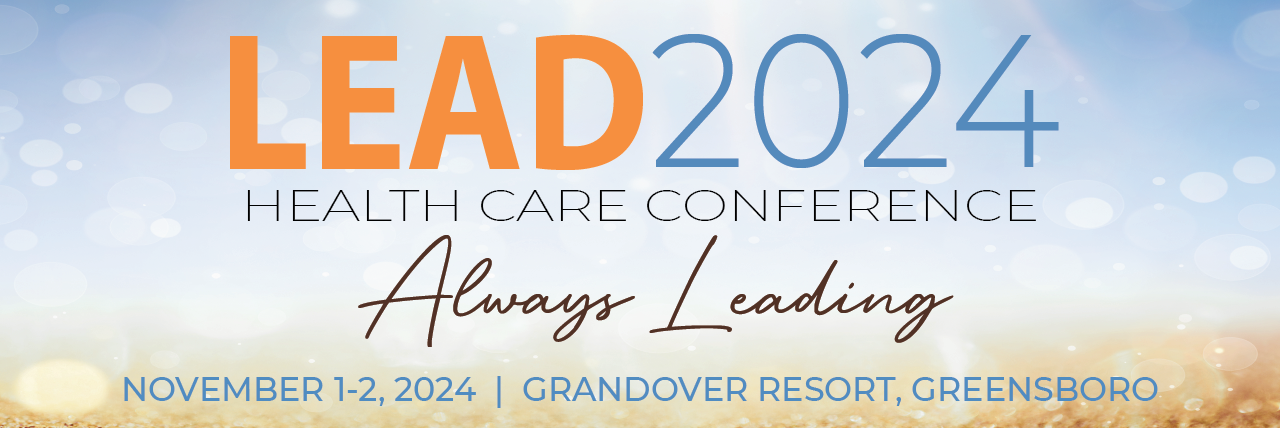
SAVE THE DATE
2024 Marks the 175th Anniversary of the
North Carolina Medical Society!
We're planning a sensational celebration in honor of this milestone occasion, and we want you to be a part of it!
November 1-2, 2024
Grandover Resort, Greensboro, NC
Get more details at www.ncms-lead.com.
Stay tuned for more information at www.ncmedsoc.org and watch your Morning Rounds newsletter for the latest details.


NCDHHS Launches Public Dashboard on Enrollment in NC Medicaid
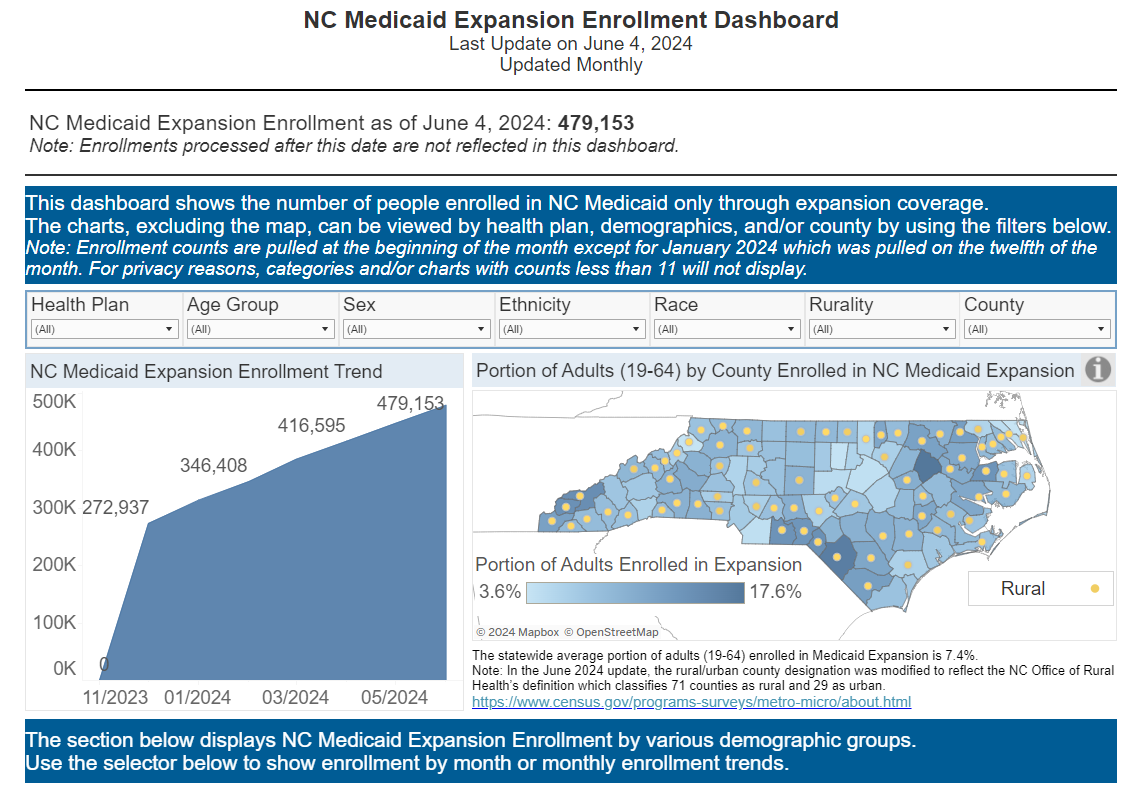
New Dashboard Tracks Monthly Enrollment in NC Medicaid
The North Carolina Department of Health and Human Services (NCDHHS) launched a new public dashboard in December 2023 to track monthly enrollment in NC Medicaid for people eligible through expansion. The NC Medicaid Expansion Enrollment Dashboard offers a detailed overview of enrollment trends in adults ages 19-64 who are newly eligible for full Medicaid health care coverage. The platform provides metrics such as enrollee demographic details and enrollment details by county, and highlights enrollment in NC Medicaid through expansion in rural counties. With the help of feedback from stakeholders, NCDHHS has updated the dashboard to reflect a new definition of “rural counties.”
The expansion dashboard uses the United States Office of Management and Budget classification of core based statistical area (CBSA) that categorizes the state’s population into two statistical areas: Metropolitan and Micropolitan. It then breaks it down further to classify counties as being Central or Outlying to those statistical areas. All counties in the Metropolitan category are classified as Urban. The updated version of the expansion dashboard classifies counties in the “Metropolitan – Outlying” category as Rural. This is consistent with the classification used by the NCDHHS Office of Rural Health (ORH). With this change, 71 counties in the state are now reflected as rural and 29 counties are reflected as urban. Previously, the dashboard categorized 54 counties in North Carolina as rural and 46 counties as urban.
The updated rural county definition is reflected in the June 2024 NC Medicaid Expansion Enrollment Dashboard. For comments or questions regarding the dashboard, please email Medicaid.Expansion.Dashboard@dhhs.nc.gov.

NCMS Members Named Best Spine Surgeons in America
Newsweek has released its annual list of the 150 best spine surgeons in the U.S. for 2024 and several NCMS members made the list!
A HUGE congratulations to these members:
- Gurvinder Deol, MD, Wakemed Hospital (Cary N.C.)
- E. Hunter Dyer, MD, Atrium Health Carolinas Medical Center (Charlotte, N.C.)
- Paul Kim, MD, Atrium Health Carolinas Medical Center (Charlotte, N.C.)
- Leo Spector, MD, Atrium Health Carolinas Medical Center (Charlotte, N.C.)
- John Thomas, MD, New Hanover Regional Medical Center (Wilmington, N.C.)
Newsweek compiled the ranking of surgeons using Medicare data that evaluated a quality-of-care rating by peers of each spine surgeon and a consideration of their American Board of Orthopaedic Surgery certifications.
The 150 leading spine surgeons recognized represent the 20 states with the highest numbers of practicing physicians.
View the full list here.


Measles: Stories from the Frontlines
Join the CDC and AMA on Thursday, June 27 at 2:00 pm ET (1:00 pm CT) for a panel discussion on preventing widespread measles exposure in health care settings in the upcoming webinar, “Measles: stories from the frontlines.”
The panel includes experts from the Pediatric Pandemic Network, American Nurses Association and American Academy of Pediatrics. They will share their experiences in:
- Caring for patients with measles
- Implementing effective infection prevention practices
- Enhancing awareness for triage personnel in emergency departments, outpatient clinics, and urgent care settings
Register and submit your questions in advance.
Don’t miss this important conversation. The webinar will be recorded if you cannot attend the live session.

NC Hospital Recognized as a Best Hospital for Cardiac Care
FirstHealth Moore Regional Hospital has been recognized by Money as one of the best hospitals for cardiac care in 2024.
This prestigious recognition underscores Moore Regional’s commitment to providing exceptional cardiac care to its patients and highlights the health system’s dedication to excellence in health care.
To determine the best hospitals for cardiac care, Money compiled and analyzed more than 125,000 data points. The list of best hospitals for cardiac care are those that stand out among all short-term, acute-care hospitals in the country and offer deep expertise based on data that reflects the overall experience of the cardiologists and other heart specialists who work at each hospital.
Additionally, the selection considers the hospital’s affiliation with the American College of Cardiology and their achievement of other awards, designations, and distinctions, as well as the hospital’s commitment to price transparency.
Peter Ellman, M.D., FACS, senior cardiovascular and thoracic surgeon at FirstHealth, expressed his pride in Moore Regional being named a top hospital in cardiac care.
"We are honored to be recognized by Money as a leader in cardiac care," said Dr. Ellman. "This recognition reflects our unwavering dedication to providing the highest quality care to our patients. Our team of highly skilled providers and staff work tirelessly to ensure that each patient receives the highest quality heart care."
William Harris, M.D., FSCAI, interventional cardiologist and medical director of cardiology for FirstHealth Physician Group, echoed Dr. Ellman’s sentiments.
"This award is a testament to the expertise and commitment of our entire cardiac care team," said Dr. Harris. "This recognition demonstrates our dedication to excellence in heart care. We remain committed to advancing cardiac health and delivering the best possible outcomes for our patients"[source]
Leadership Opportunity: NC Professionals Health Program Board of Directors
The NCMS has the opportunity to appoint 2 members to the NC Professionals Health Program (NCPHP) Board of Directors. Learn more about responsibilities of NCPHP Board members.
Since 1988, NCPHP has been dedicated to helping medical professionals experience a lifetime of change and return to health. NCPHP assists with recovery from substance use disorders and other conditions that could impair a clinician’s ability to safely provide care and services to their patients.
NCPHP originated as a physicians’ health committee of the North Carolina Medical Society (NCMS). In 1988, it was established as a formal program of the NCMS and written into the North Carolina General Statutes. To learn more about the important work of this organization, visit the NCPHP website.
Physicians interested in an NCPHP Board position should complete the application form and return it to Evan Simmons, esimmons@ncmedsoc.org by Monday, July 15. Interviews for the board openings will take place virtually at 6PM on Wednesday, August 14.
Current NCPHP Board Appointees and Terms:
Stephen J. Ezzo, MD
1/1/20 – 12/31/22, 1st term
1/1/23 – 12/31/25 2nd term
Jonathan Douglas (Doug) Jaffe, DO
1/1/22 – 12/31/24, 1st term
(Eligible for a 2nd term)
Vinay Saranga, MD
1/1/20 – 12/31/22, 1st term
1/1/23 – 12/31/25 2nd term
David L. Tolentino, DO
1/1/19 – 12/31/21, 1st term
1/1/22 – 12/31/24, 2nd term
Sarah W. Young, MD
1/1/23 – 12/31/25 1st term

NCMS Member Dr. Martin Palmeri Featured in Article on HCA in Barron's Magazine

HCA Acquired Mission Hospital in 2019, Dr. Martin Palmeri Speaks Out
(From Barron's Magazine, June 14, 2024, Catherine Dunn) -- When HCA Healthcare inked an agreement to buy the main hospital in Asheville, N.C., late in the summer of 2018, the stock popped 2%. But when nurse Molly Zenker first heard news of the possible sale, her heart sank.
Zenker had worked for HCA once before, at a hospital in Florida, one of the company’s largest markets. She says a stressful experience with bare-bones staffing made her question whether she could remain a nurse. “I was really just trying to put fires out all day,” she says. The picture looked brighter when she switched to a hospital where nurses were unionized, and later when she moved to Asheville in 2017 and found a job she loved at nonprofit Mission Hospital, close to her family. The work felt sustainable and focused on patient care.
Mission, a well-regarded hospital network in the Blue Ridge Mountains, also appealed to HCA. The company completed the deal for $1.5 billion—one of its biggest-ever acquisitions—in February 2019. HCA’s share price has marched upward since, increasing more than 140% in five years and easily outperforming the S&P 500 index
.
Nashville-based HCA is the country’s largest for-profit hospital operator, with 179 hospitals in 19 states. Across its territory, the company has honed a business model that delivers industry-leading profit margins. The stock has benefited as it acquired more hospitals around the country. At the same time, those acquisitions often brought significant staffing reductions at the hospitals, a Barron’s investigation shows.
Big Business
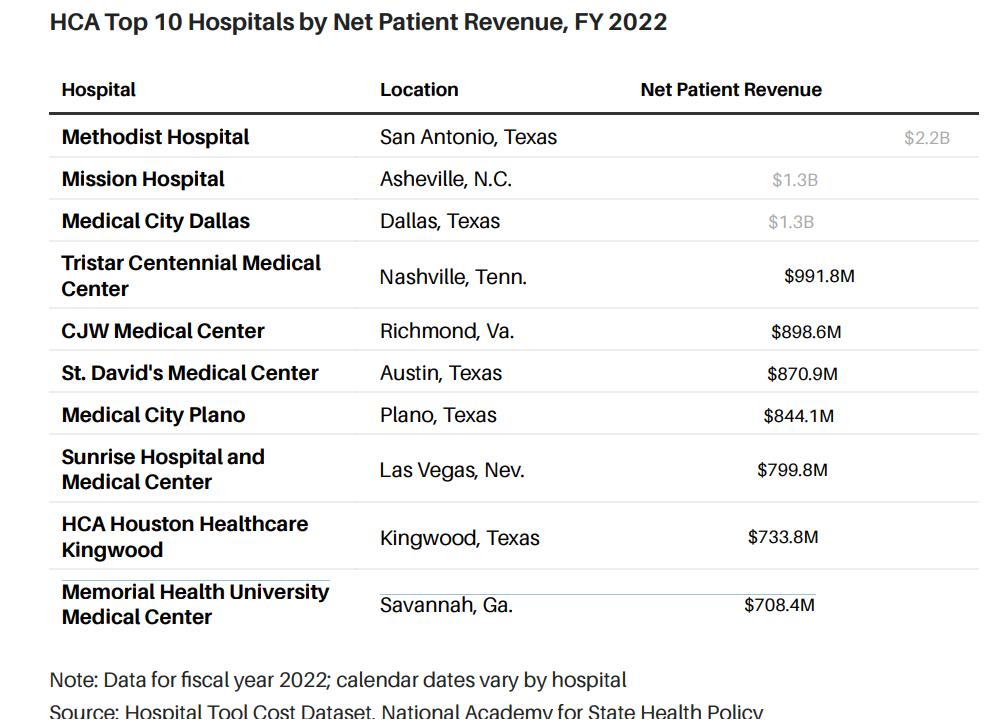
HCA owns 179 hospitals across 19 states. Mission, acquired in 2019, is now its second largest hospital by revenue.
At Mission, Zenker and other unionized nurses have publicly decried low staffing and stretched workloads. Dozens of physicians signed an open letter this past fall saying Mission’s quality was suffering under new ownership. The state attorney general filed a lawsuit in North Carolina Superior Court in December, accusing HCA of breaching patient care commitments agreed to during the sale.
The company is fighting the suit. “We are meeting, and in many cases exceeding, our obligations in the purchase agreement,” Harlow Sumerford, HCA’s director of media relations, told Barron’s in an email.
Late last year, inspectors linked four patient deaths to Mission’s failures in their assessment of hospital conditions. The Centers for Medicare and Medicaid Services issued a finding of “immediate jeopardy” that placed Mission’s federal funding at risk.
Regulators have accepted the hospital’s plans to correct problems, and state inspectors, on behalf of Medicare, revisited Mission in May. HCA says the issues have been resolved. “Mission Health continues to be recognized as one of the top hospitals in the country in third-party quality and patient safety ratings, including Health grades, which named Mission Hospital one of America’s 50 Best Hospitals,” Sumerford said.
Mission is the second-largest hospital in the HCA system by net patient revenue, generating nearly $1.3 billion in 2022, according to federal data. It’s one of more than a dozen hospitals that HCA acquired between 2017 and 2021. Barron’s examined 12 HCA acquisitions for which data are available, and found staffing decreased at two-thirds of the hospitals between the year of purchase and 2022.
HCA's Hospital Acquisitions
Patient care staffing has generally fallen at hospitals following their acquisition by HCA. Here's a look at 12 hospitals acquired by HCA since 2017 for which staffing data are available.

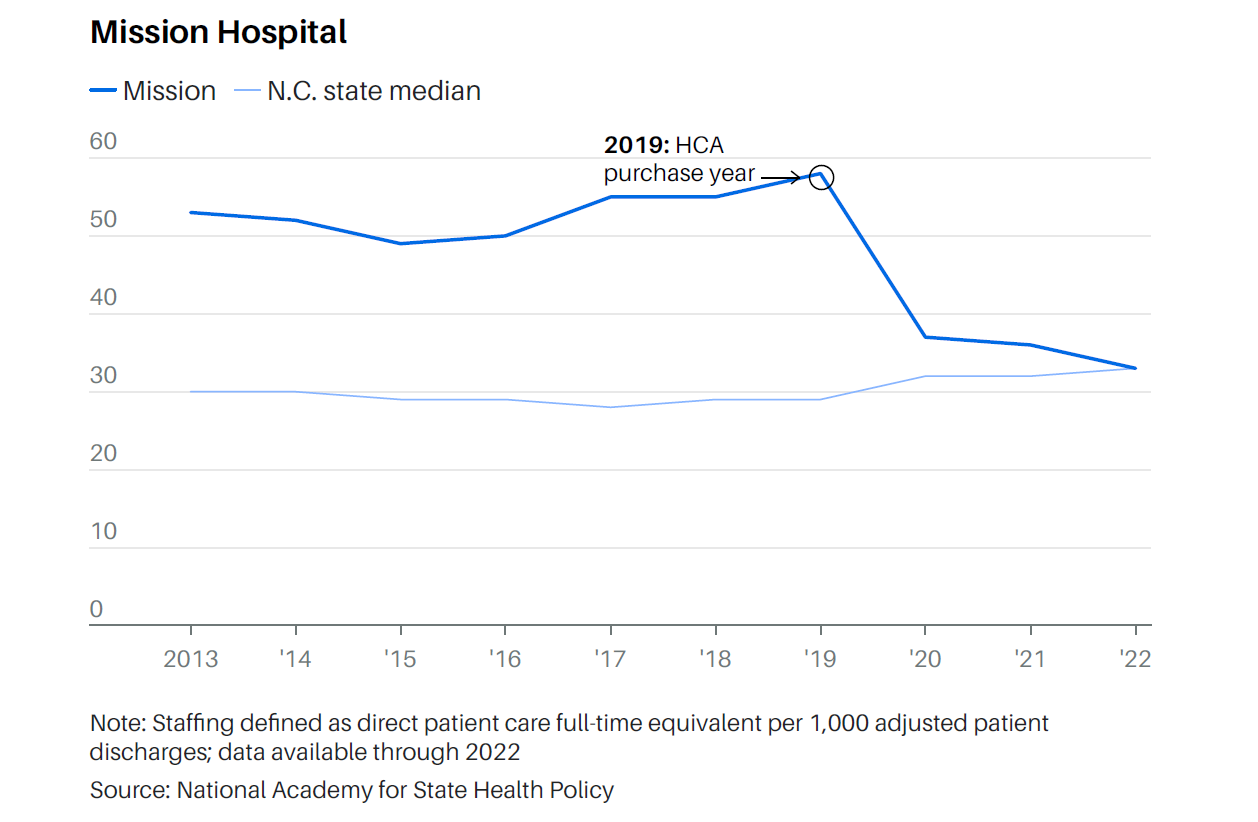
Within two years of HCA’s purchase, direct patient care staffing at Mission fell 36%, according to data from the National Academy for State Health Policy, a nonpartisan think tank. Hospitals that saw other steep staffing declines soon after HCA bought them include facilities in Rochester, N.H. (a 26% drop), Waycross, Ga. (a 22%drop), and Springfield, Tenn. (an 18% drop).
HCA’s staffing decreases contrast with state trends during the same period, according to Barron’s analysis. In New Hampshire and Tennessee, median staffing remained relatively flat, while in Georgia and North Carolina, median patient care staffing rose through 2022,the latest year for which data are available.
Staffing Declines
These four hospitals saw steep reductions in patient care staffing in the years following their acquisition by HCA.
Hospitals are still dealing with the pandemic legacy of staff turnover and higher labor costs—and nurse staffing is at the crux of the matter. Mission nurses are among thousands of unionized nurses across six states now in contract negotiations with 17 HCA hospitals.
While hospitals say there aren’t enough nurses to go around, unions maintain that deteriorating working conditions are keeping nurses away.
There’s little debate about the importance of nurses. Studies show that higher staffing levels are associated with better patient outcomes, including lower mortality rates and fewer injuries from falls during hospital stays. Still, regulations on nurse-to-patient ratios are few. California and Oregon are the only states that require minimum ratios throughout a hospital; just a handful of states set ratios in specific medical units like the ICU.
For this article, Barron’s used a hospital-cost tool managed by the National Academy for State Health Policy. The group pulls in federal Medicare data from hospitals to analyze staffing levels relative to patient volume. Its measure includes labor time for employees and contracted staff involved in patient care, such as physicians, nurses, and pharmacists. Such hospital reporting on staff and contract labor informs Medicare reimbursement rates.
HCA raised several objections to using the data to compare hospital staffing over time, or to other health systems. Sumerford, for instance, noted that Mission Hospital changed how it reported some contract labor in 2022.
“Medicare cost reports are not intended to be used for in-depth staffing analysis, so it is nearly impossible to do an apples to apples comparison between different years or different hospitals,” he said in an email.
“Despite the labor challenges all hospitals are facing, staffing at HCA Healthcare’s hospitals is safe, appropriate, in line with other community hospitals, and in compliance with applicable regulations,”Sumerford told Barron’s.
The company didn’t respond to questions about how it makes personnel decisions and whether it tracks its own hospital staffing levels. NASHP says the Medicare data are vital for policymakers, given that the largest portion of U.S. healthcare spending goes to hospitals.
“NASHP uses Medicare Cost Reports because they are publicly accessible, comprehensive annual reports completed and attested toby hospitals to provide factual cost information to the federal government,” says Maureen Hensley-Quinn, a senior director for the group. “We recognize the complexity across hospitals, but all Medicare Cost Reports are completed based on the same instructions, and data from these reports can offer insights into individual hospitals that are not easily accessible or available otherwise.”
While problems in Asheville have made the spotlight, federal regulators have flagged staffing problems and patient safety concerns at HCA facilities in several other states.
The Georgia hospital that HCA acquired in 2017—Memorial SatillaHealth—came under scrutiny during a 2022 inspection in whichregulators determined the facility “failed to ensure an adequatenumber of nursing staff” to provide care, records show. One nursedescribed staffing levels in the intensive care unit as “truly unsafe”given the demands of monitoring patients on ventilators or IV insulindrips, according to federal records. She told regulators that hercomplaint was “swept under the rug.”
Since 2022, two other HCA hospitals, one in Salem, Va., and one in Panama City, Fla., have also been flagged by Medicare officials for inadequate staffing, according to federal reports.
HCA says the issues at all three hospitals have been resolved.
Maximizing Profits
Tensions over for-profit medicine go back decades. But as the Covid-19 crisis mode recedes, healthcare ownership is attracting new scrutiny, particularly as players like HCA get bigger, while other ventures run into financial trouble. Steward Health Care System, an owner of 30 hospitals, recently filed for bankruptcy protection, a saga closely followed by The Wall Street Journal.
While HCA has produced strong returns for investors— Barron’s recommended the stock in December —a chorus of advocates say the company’s business model isn’t compatible with prioritizing patientcare.
State Sen. Julie Mayfield, a Democrat whose district encompasses Asheville, told Barron’s that her office regularly fields complaints from HCA patients. She’s at the forefront of a community push for improvements at Mission. Their fight has a larger resonance, she says:“ We are the poster child for the corporatization of medicine.”

Kerri Wilson, a nurse at Mission in Asheville, says the work nurses do to keep patients safe doesn’t necessarily translate as billable. “I thinkt hat’s why nursing gets kind of pushed aside,” she says. “It’s not a billable task for us to be able to take you to the bathroom.”
HCA was founded as Hospital Corporation of America in 1968 by investor Jack Massey and doctors Thomas Frist Sr. and Thomas Frist Jr., father and brother to former U.S. Senate Majority Leader William Frist.
HCA has twice gone private, most recently in 2006 through a leveraged buyout led by Bain Capital and KKR, among others. When the company relisted on the New York Stock Exchange in 2011, shares opened at $30 a piece. They now trade around $320.
Stellar Returns
HCA's stock is up 358% over the past seven years, a period in which the company has expanded its national footprint through multiple acquisitions.

In November, HCA held its first investor day in two decades. During the event on a Nashville stage, CEO Sam Hazen said the company had a “sacred responsibility” to patients, alongside accountability to shareholders: “And we believe that we can harmonize both objectives and accountabilities and ultimately produce value for both.”
The presentations touted the company’s clinical capabilities, including treating strokes, complex heart attacks, and burns. They also told a story of standout financial performance. One analyst in the audience, Kevin Fischbeck at BofA Securities, noted that HCA forecasts margins that are “consistently above what we think about peers being able to generate.”
Indeed, HCA tops industry competitors. Last year, HCA delivered a19.6% Ebitda margin, compared with 17.2% for Tenet Healthcare and 12.2% for Universal Health Services. Ebitda, or earnings before interest, taxes, depreciation, and amortization, is a commonly watched metric to track ongoing cashflows at a business.
Economies of Scale
HCA is the nation's largest for-profit hospital company. It also has industry-leading profit margins.

On a more traditional accounting basis, HCA also outperforms. Its net income margin, profit divided by revenue, was 8.1% last year, more than double that of Tenet.
At the investor day, company executives highlighted several drivers for HCA’s leading margins: scale that lowers administrative and fixed costs; management systems that help lower costs per patient day; and patient offerings that also enhance returns, whether that’s a specialized cardiac procedure or treatment for burn survivors.
HCA’s hospitals aren’t merely competing against other health systems; they are competing internally against one another. In November, the company showed analysts a systemwide dashboard to track more than 160 key performance indicators at each of its hospitals, which totaled 183 at the time.
Mike Marks, an HCA veteran who recently became the company’s chief financial officer, said that leaders at every one of its hospitals can check these metrics—in areas including labor management, human resources, and physician costs—to identify their hospital’s performance gaps. Marks put it this way during the investor day: “No one really wants to be 183, right?”
The company declined to provide Barron’s with a full list of the indicators used for the dashboard.
Trouble in Asheville
For nearly two decades, Mission Health operated as a state-sanctioned monopoly. A North Carolina law allowed Asheville’s two main hospitals to merge under one nonprofit owner in 1998. Over the years, Mission acquired several rural hospitals, as well. In exchange for this antitrust immunity, Mission was subject to state oversight and limits on margin growth. Then, in 2015, state legislators voted to repeal those supervisory measures. Three years later, HCA stepped in with an offer.
Many in and around Asheville would like to move on from HCA. In Brevard, N.C., home to a small rural hospital that’s part of Mission’s network, local leaders began documenting concerns about staffing levels and physician departures in 2020, a year after the sale.
Mayor Maureen Copelof, a former Navy captain, met with HCA’s chief executive in May 2022 and asked if the city could buy the hospital back; Hazen declined, she says. But the CEO offered to work more closely with the community, according to a letter memorializing the meeting, which Copelof shared with Barron’s. The agreement fell apart, she says, after Brevard sued HCA in a pending case that alleges HCA has abused its market position to charge predatory prices.
HCA has denied allegations of anticompetitive behavior. A federal judge denied the company’s motion to dismiss the suit in February.
Calls for change intensified this past fall, when dozens of doctors throughout the community signed an open letter stating that Mission’s quality of care deteriorated after the HCA acquisition.
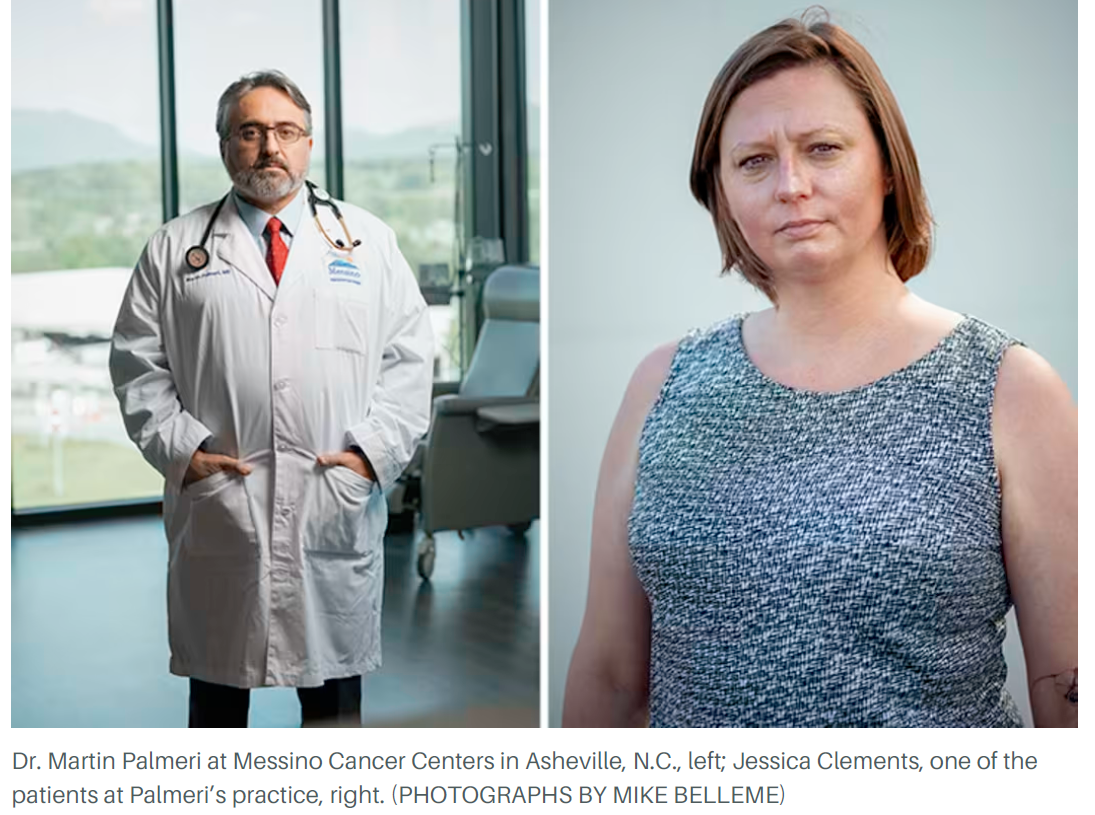
“I haven’t seen this degree of physician discontent, community discontent, to my knowledge, in any area of North Carolina,” says Dr. Martin Palmeri, an oncologist at Messino Cancer Centers. In 2019,following HCA’s purchase, he and his colleagues decided not to renew their physician service agreements with Mission and moved to new offices outside the hospital; physicians in the group continued to provide certain treatments at Mission until this past fall.
The practice determined it could no longer treat patients with complex blood cancers at Mission because of safety concerns related to insufficient nursing and pharmacy support.
One of the patients at Palmeri’s practice, Jessica Clements, worries about her healthcare options in the future. She was diagnosed with a type of leukemia in 2021 and initially received good treatment at Mission. But over time, she says she observed nurses in the cancer unit take on increased workloads. Now in remission, Clements fears a relapse because she’d have to drive hours to seek treatment elsewhere.
HCA’s dominance in the Asheville area leaves would-be patients with few choices for care. “If you’re having a heart attack or a stroke or a trauma issue, you have to go to Mission whether you like it or not,” says Karen Sanders, an RN patient advocate in private practice. She recommends that any patient who goes to Mission bring a friend or family member and document the experience.
The findings in the Medicare inspection report—made public in February by the Asheville Watchdog, a local news outlet—were “absolutely shocking,” Sanders says. One critically ill patient, a 48-year-old man diagnosed with bacterial meningitis, went into cardiac arrest after he was left unmonitored and his IV medication ran dry, regulators found.
“The hospital’s leadership failed to ensure a medical provider was responsible for monitoring and ensuring the delivery of care to patients presenting to the emergency department,” the report said.
Molly Zenker left Mission in 2021 after she said a patient fell to the floor because of inadequate staffing. She returned to the hospital last year. She is raising her children in Asheville, she told Barron’s, and she’s committed to making the hospital a better place for her friends and neighbors. ”It needs to be a good hospital,” she says. “That was really what brought me back.”

In Memoriam: NCMS Life Member William Woodard McLendon, M.D.
William Woodard McLendon, M.D.
October 29, 1930 - June 8, 2024
NCMS Life member Dr. William Woodard “Bill” McLendon died Saturday, June 8th.
He was 93 years old.
William Woodard "Bill" McLendon, MD, age 93, of Chapel Hill, NC, died June 8, 2024 after a short illness.
McLendon entered the University of North Carolina at Chapel Hill as an undergraduate in 1948. After his sophomore year he attended the Harvard College summer school in Cambridge. During his senior premed year, he was a student research assistant in the coagulation research laboratory of Kenneth M. Brinkhous, MD, who remained his mentor for many years. This medical laboratory experience inspired a career-long interest in the rapidly progressing new medical specialty of laboratory medicine, which uses the advances in basic medical sciences, automation, and computerization to provide physicians with timely and accurate diagnostic and therapeutic information for the care of their patients.
He was on the medical staff at the Moses H. Cone Memorial Hospital, Greensboro, NC, from 1963-73, where he established one of the first automated and computerized clinical laboratories in the country.
In 1973, UNC Medical Dean Christopher Fordham recruited him back to Chapel Hill, where he served as Professor of Pathology and Director of the Division of Laboratory Medicine in the UNC School of Medicine and as Director of the Hospital Laboratories at UNC Hospitals. After consolidating the various clinical laboratories into one hospital department, his group in 1984 implemented the hospital's first computerized clinical information system, which was an earlier version of today's comprehensive electronic medical records system.
Dr. McLendon joined the NCMS in 1963.
The North Carolina Medical Society extends its deepest condolences.
Read Dr. McLendon's full obituary here.

NIH Launches New Pilot that Integrates Clinical Research with Community-based Primary Care
The National Institutes of Health (NIH) is investing approximately $30 million in total over fiscal years 2024 and 2025 to pilot a national primary care research network that integrates clinical research with community-based primary care.
The new initiative called Communities Advancing Research Equity for Health – or CARE for Health – seeks to improve access to clinical research to inform medical care, particularly for those in communities historically underrepresented in clinical research or underserved in health care. Informed by the health needs of these communities, CARE for Health will help to grow an evidence base that contributes to improved patient outcomes, provide communities access to the best available scientific research and expand opportunities to participate in clinical trials and studies.
For more information, click here.

Share Your Story- Corporate Practice of Medicine
Please share your stories here on how corporate interventions in medicine have impacted you and your practice. This includes private equity acquisitions, noncompete agreements, management service organizations, and any business intervention that has impacted your ability to practice medicine.

North Carolina Courage Announces Partnership with EmergeOrtho
The North Carolina Courage has announced that EmergeOrtho will serve as the club’s official team physicians. The multiyear partnership will deliver comprehensive medical coverage to players, coaches, and staff, and will help amplify EmergeOrtho’s commitment to making a positive impact in the community.
“We are thrilled to embark on this promising partnership with EmergeOrtho. This collaboration is grounded in a shared commitment to enhance the well-being of our players. EmergeOrtho brings invaluable expertise and convenience to prioritize our players’ health, ensuring they receive top-tier medical care that fits their busy schedules. The health and wellness of our players is a top priority for us, and we’re proud to partner with a proven, full-service provider that values our club and athletes,” said Courage Chief Operating Officer Ralph Vuono.
“We are excited to partner with the NC Courage, a winning team in a professional sport that is exploding in popularity. As the official team physicians and orthopedic providers, we are confident we can help the NC Courage continue their success on the field just as our winning team at EmergeOrtho has helped patients in our communities for over 70 years live healthier, more active lives both on and off the field,” said Dr. David Musante, President, EmergeOrtho-Triangle Region.
EmergeOrtho is the largest physician-owned orthopedic practice in the state with upwards of 350 highly trained orthopedic physicians, specialists, and advanced practice providers. Their subspecialty orthopedic teams offer advanced expertise in conditions of the bones, muscles, and joints. EmergeOrtho has over 60 outpatient offices across 28+ counties in North Carolina, including 16 offices in 10 counties throughout the Triangle.
Last month, EmergeOrtho was also announced as the new front of kit partner for North Carolina FC and the official team physician, orthopedic urgent care, and physical therapy provider of both the NC Courage and North Carolina FC, as well as the official orthopedic provider of NCFC. [source]

Western Carolina Medical Society Names Executive Director
Asheville, NC — The Board of Directors of the Western Carolina Medical Society is pleased to announce that, after an extensive search, Karen Wallace-Meigs has been named Executive Director, effective June 3, 2024. Wallace-Meigs succeeds John Lewis, who served as Interim Executive Director.
The roots of WCMS date to 1885 and the organization currently serves as a professional society to more than 700 physicians and physician assistants throughout Western North Carolina while also operating philanthropic programs that expand access to healthcare.
Regarding Wallace-Meigs’ selection, Dr. Jennifer Abbott, Chair of the Board of Directors of WCMS notes, “We are confident Karen is the right person to lead WCMS at this time. She brings a strong organizational and financial skill set, excellent local and community knowledge, and most importantly, a commitment to our members, staff, and mission. We are excited to continue the legacy of WCMS and to grow our programs under her leadership.”
View the full announcement here.

Expansion of NC-STeP Increases Access to Youth Mental Health Services in the State
"I think the biggest thing is [NC-STeP-Peds] has absolutely just crushed the stigma barrier"
NC Youth now have better access to mental health services as part of the expansion of the North Carolina Statewide Telepsychiatry Program (NC-STeP), an initiative of East Carolina University’s Center for Telepsychiatry.
NC-STeP-Peds is funded by a $3.2 million investment from the United Health Foundation (UHF). It continues the foundation’s commitment to work with ECU to address mental health challenges in North Carolina and provide mental health care services to children and adolescents in rural and underserved parts of the state.
NCMS member Dr. Katie Lowry, a pediatrician at Robeson Pediatrics said being part of NC-STeP-Peds brings counseling and psychiatric care into her practice where children and their families are comfortable receiving health care.
“I think the biggest thing is [NC-STeP-Peds] has absolutely just crushed the stigma barrier,” Lowry said. “They’re receiving care in a place that they always receive their care. They don’t have to go to another facility. They don’t have to drive another hour. It’s right here for them, and that has been amazing for our patients.”
NCMS member Dr. Christian Lige, a pediatrician at Surf Pediatrics in Dare County, said NC-STeP-Peds provides more timely care and is an avenue for providing more collaborative care for his patients. Prior to NC-STeP-Peds, the number of patients needing access to mental health services was overwhelming.
“It’s really difficult to wait to see a psychiatrist for a year when a kid is struggling,” Lige said. “I’m hoping that with us talking with the psychiatrist, with our nursing staff and with the social worker, we’ll have a better picture of what’s going on with the patient.”
Find the full article here.
Free and Reimbursed Services, Products Available From NCDHHS to Help With Hearing Impaired, DeafBlind Patients
Listening Device, Support Service Provider, Training Included in Free Assistance
In 2019, the North Carolina Institute of Medicine partnered with the North Carolina Department of Health and Human Services, Division of Services for the Deaf and Hard of Hearing (DSDHH) to study access barriers in health care for Deaf, Hard of Hearing and DeafBlind individuals. One of the barriers identified in the report, is the cost to providers of communication access services (e.g., sign language interpreters, real-time captioning).
The Medicaid Communication Access service, created by DSDHH and the Division of Health Benefits, aims to address this barrier. Through this initiative, DSDHH will reimburse Medicaid-contracted providers for a variety of communication access services, such as sign language interpreters, Communication Access Real-time Translation (CART) services (human generated live captioning), and more. Additionally, DSDHH can provide at no cost:
- Pocketalker*: A personal sound amplification listening device that is a tool for communicating with hard of hearing individuals.
- Support Service Provider (SSP) services for DeafBlind patients. The SSP provides guidance and transportation services for DeafBlind individuals.
- Training and education to meet the needs of health care providers.
If you have provided communication access services for Deaf, Hard of Hearing and DeafBlind individuals in the past two years, we may be able to retroactively reimburse you for appointments that took place in an approved setting.
Registration
If you are already registered, please share this information through your network of health care providers. If you are not registered, please complete this online registration form (which takes about three minutes) and start benefiting from this new service!
DSDHH can accept registrations from most Medicaid-contracted health care providers that provide outpatient services outside of a hospital environment. Examples of settings covered by this program include doctor appointments, eye exams, in-home health care, hospice services, mental and behavior health, and many more!
For more information about this service, or to share feedback and suggestions on making this a success, please contact DSDHH Medicaid Communication Access Coordinator David Litman at DSDHH.Medicaid.CommAccess@dhhs.nc.gov or (984) 884-1093 and visit our Medicaid Communication Access Service webpage.
*Disclaimer: The NCMS and DSDHH do not promote or endorse a specific commercially available product mentioned in this article.
Extension for Open Negotiations Impacted by Change Healthcare Cybersecurity Incident


The Departments of Health and Human Services, Labor, and the Treasury (collectively, the Departments) are announcing a 120-calendar-day exception period for disputing parties impacted by the recent Change Healthcare cybersecurity incident to initiate open negotiation for impacted items or services, beginning 6/14/2024 and ending 10/12/2024.
The Departments are aware that Change Healthcare – a unit of UnitedHealth Group – was impacted by a cybersecurity incident in late February. The Departments recognize the impact this attack has had on health care operations across the country, including certain parties’ ability to initiate open negotiation, the initial stage of the Federal independent dispute resolution (IDR) process.
The Departments have received reports from providers, facilities, and providers of air ambulance services that they are unable to initiate open negotiation because they have not received necessary payment information or disclosures from plans or issuers due to disruptions to claims processing resulting from the Change Healthcare cybersecurity incident. In “FAQs About Affordable Care Act And Consolidated Appropriations Act, 2021 Implementation Part 55,” (FAQs Pt. 55) the Departments explained that if a plan or issuer fails to timely disclose the information it is required to with each initial payment or sending a notice of denial of payment[1], providers, facilities, and providers of air ambulance services may request an extension to initiate the Federal IDR process by emailing a request for extension due to extenuating circumstances to FederalIDRQuestions@cms.hhs.gov. However, the Departments recognize that payment for a very large volume of items and services was impacted by the Change Healthcare cybersecurity incident, making individual extension requests burdensome for disputing parties and for the Departments. Additionally, the Departments understand that it may be difficult to determine the date of initial payment or notice of denial of payment for an item or service impacted by the cybersecurity incident, as in some cases, disruptions to payment transmissions have made it difficult to match payments received to specific items or services furnished.
Therefore, the Departments are announcing that providers, facilities, and providers of air ambulance services whose ability to timely initiate open negotiation for any item or service furnished on or after January 1, 2024, was impacted by the Change Healthcare cybersecurity incident may choose to initiate open negotiation for such items or services at any point during the 120-calendar-day period following the publication of this notice, beginning 6/14/2024 and ending 10/12/2024, regardless of when the payment or notice of denial of payment and disclosures were transmitted. Providers, facilities, and providers of air ambulance services may take advantage of this exception period by attesting that their ability to initiate open negotiation timely for an item or service was impacted by the effects of the cybersecurity incident. The Departments have published an attestation that providers, facilities, and providers of air ambulance services must furnish to plans or issuers alongside the standard open negotiation initiation form, and that providers, facilities, and providers of air ambulance services initiating the federal IDR process must furnish to non-initiating plans and issuers and certified IDR entities alongside the standard IDR initiation form, in order to invoke this exception period. Parties seeking to invoke this exception do not need to request extensions individually via the Federal IDR Inbox, as outlined in FAQs Pt. 55.
IDR entities will be responsible for adjudicating, as part of their eligibility determination, any disagreement as to whether the initiating party is eligible to initiate open negotiation during this 120-day exception period. Non-initiating parties who believe disputes should not be eligible for this exception should provide documentation to support that assertion to initiating parties through open negotiation, as well as to certified IDR entities via the certified IDR entity selection process (see section 5.5 of Federal Independent Dispute Resolution (IDR) Process Guidance for Disputing Parties). The Departments will continue to monitor the progress toward the restoration of normal clearinghouse operations and will timely reevaluate whether it is necessary to provide additional time beyond the 120-calendar-day exception period, providing additional guidance as appropriate.
Questions can be directed to the Federal IDR Questions mailbox at FederalIDRQuestions@cms.hhs.gov.

Applications Open for Pediatric Specialty Loan Repayment Program
Pediatric medical subspecialist physicians may be eligible to receive up to $100,000 in student loan repayment through HRSA’s Pediatric Specialty Loan Repayment Program.
Eligible clinicians providing pediatric medical subspecialty, pediatric surgical specialty, or child and adolescent mental and behavioral health care including substance use disorder (SUD) prevention and treatment services may apply to the Pediatric Specialty LRP.
The Pediatric Specialty Loan Repayment Program is accepting applications through July 9, 7:30 p.m. ET.
For eligibility, you must be:
- A United States citizen, national, or permanent resident
- Fully licensed or credentialed in an eligible discipline
- One of the following:
- A full-time employee or a clinician who has accepted a position located in at a Pediatric Specialty LRP-approved facility located in or serving a health professional shortage area (HPSA) or medically underserved area (MUA), or a medically underserved population (MUP)
- A health professional entering or receiving training in an accredited pediatric medical subspecialty, pediatric surgical specialty residency, or fellowship
For more detailed information, including how to apply, click here.

NCMS Advocacy Celebrates at Legislative Reception
Advocacy Takes Center Stage at NCMS Legislative Reception
(RALEIGH) -- The North Carolina Medical Society continues to lead state physicians, PAs, residents, and students to new heights in advocating for the profession and for patients.
Following a full day of meetings with Representatives, Senators, and legislative staff members, more than 40 NCMS members met at the NCMS headquarters with even more lawmakers from across the state. The reception was a way to informally talk with colleagues and legislators. NCMS members were able to take what they learned that day and share it with people they wouldn't normally meet.
NCMS VP of Advocacy John Thompson says: "The remarkable turnout at the NCMS legislative reception was a resounding success, showcasing the engagement and commitment of our community towards impactful healthcare policies and advocacy."
On Wednesday, dozens of doctors, PAs, and students held more than 20 legislative visits. Thompson adds "their proactive engagement by interacting with numerous legislators throughout the event, amplified their voices for positive change in healthcare."





To read more about the 2024 NCMS White Coat Day click here.

Information for Your Patients Moving to Tailored Plans on July 1
Materials in English and Spanish for your patients
- NEW! How to request rides to Medicaid-covered medical appointments with a Tailored Plan (download here).
- NEW! How to know if a doctor is participating in your plan, and what to do if they are not (download here).
- NEW! Guide about 1915(i) home and community-based services (download here).
- NEW! Shareable content about Tailored Plans that can be shared on your social and digital channels (download here).
- What to do if your patient's Medicaid will move to a Tailored Plan (visit the page here).
- What your patient's can expect and the services covered on a Tailored Plan (visit the page here).

Researchers Discover Major Cause of Inflammatory Bowel Disease
UK Research Hinges on Gene Called ETS2
(NICENEWS.COM) -- In a study published June 5, U.K. researchers revealed they found a major cause of inflammatory bowel disease, the umbrella term for Crohn’s disease and ulcerative colitis. These autoimmune conditions are increasing in prevalence — they were estimated to affect 6.8 million people worldwide in 2017, up from 3.7 million in 1990 — making new discoveries about their origins all the more important.
Per a press release from the Francis Crick Institute in London, the research hinges on a gene called ETS2. The team found an “enhancer” section of the DNA that boosts ETS2, higher levels of which were correlated to a higher risk of IBD. Other genes that have previously been associated with the disease are also part of the ETS2 pathway, thus confirming the study results.
“What we have found is one of the very central pathways that goes wrong when people get inflammatory bowel disease and this has been something of a holy grail,” lead researcher James Lee told The Guardian. Crucially, he said the “exciting” finding could open the door for new therapies: “It tells us this is something we can treat.” Read about some of the potential treatments the scientists are exploring.

US Supreme Court Maintains Access to Mifepristone
Supreme Court Rejects Lawsuit Challenging FDA Approach to Regulating Mifepristone
(WASHINGTON, DC) -- The Supreme Court has rejected a lawsuit challenging the Food and Drug Administration’s approach to regulating the abortion pill mifepristone with a ruling that will continue to allow the pills to be mailed to patients without an in-person doctor’s visit.
The appeal was filed by anti-abortion doctors who said their practices have been affected because they must treat women who had complications from the drug.
The FDA and outside medical groups have stressed that mifepristone is safe. The doctors have faced scrutiny over whether they have been harmed in a way that gives them standing to sue.
Justice Brett Kavanaugh wrote the opinion for a unanimous court. The court ruled that the doctors and anti-abortion groups that had challenged access to the drug did not have standing to sue. Though technical, the court’s reasoning is important because it might encourage other mifepristone challenges in the future.
“We recognize that many citizens, including the plaintiff doctors here, have sincere concerns about and objections to others using mifepristone and obtaining abortions,” Kavanaugh wrote. “But citizens and doctors do not have standing to sue simply because others are allowed to engage in certain activities – at least without the plaintiffs demonstrating how they would be injured by the government’s alleged under-regulation of others.”
More than 6 million people have used mifepristone since 2000. Mifepristone blocks the hormone progesterone and primes the uterus to respond to the contraction-causing effect of a second drug, misoprostol. The two-drug regimen has been used to end a pregnancy through 10 weeks gestation.
Health care providers have said that if mifepristone is no longer available or is too hard to obtain, they would switch to using only misoprostol, which is somewhat less effective in ending pregnancies.
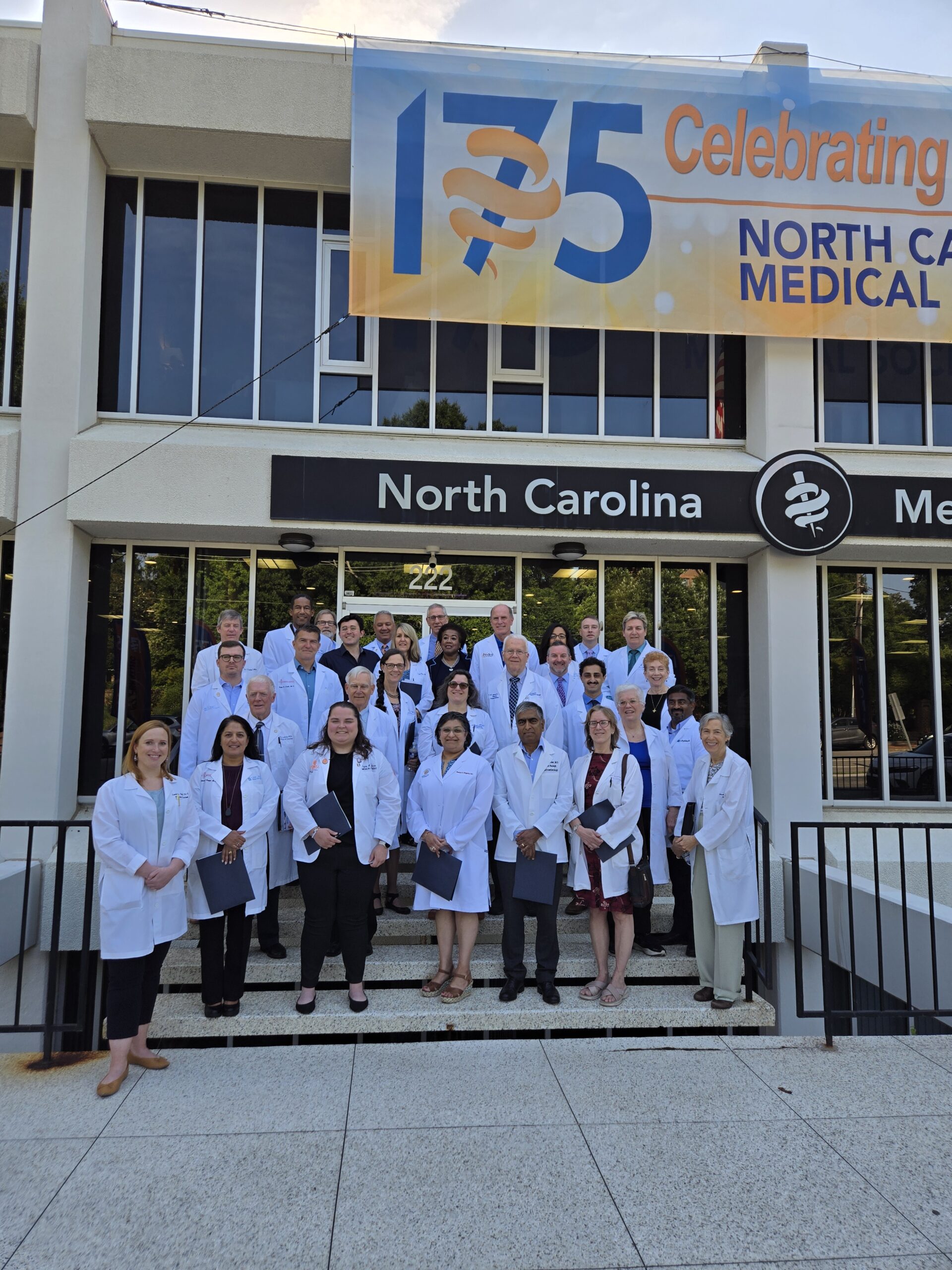
NCMS Members Flood NC General Assembly with White Coats!
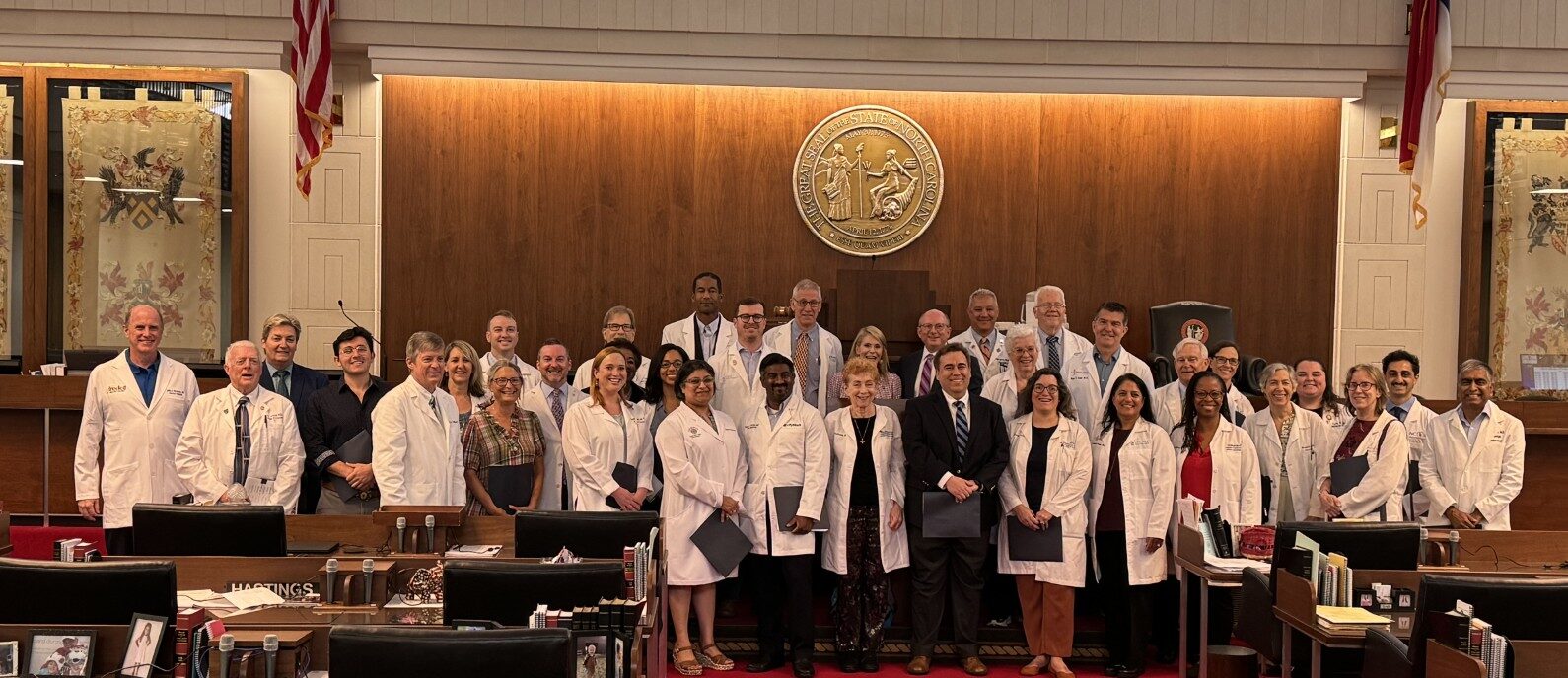
Empowered members power change at the NCMS White Coat Day
RALEIGH - Wednesday morning saw clear skies and a sea of white coats as the North Carolina Medical Society sent over 30 members to the General Assembly ready to meet legislators.
The day began with a legislative briefing by NCMS VP of Advocacy John Thompson and Health Policy Manager Emma Kate Burns. They led the group through talking points on Prior Authorization, the Health Care Flexibility Act, modernizing Medicaid provider rates, and other topics likely to come up during their meetings with legislators. The group also learned tips for interacting with legislators and were prepped for the hectic day ahead.
The next stop was the North Carolina General Assembly and a presentation by NCMS members, Rep. Timothy Reeder, MD and Rep. Kristin Baker, MD. Reeder and Baker told the group about their roles in North Carolina government and offered more insight into how meetings were going to go throughout the day.
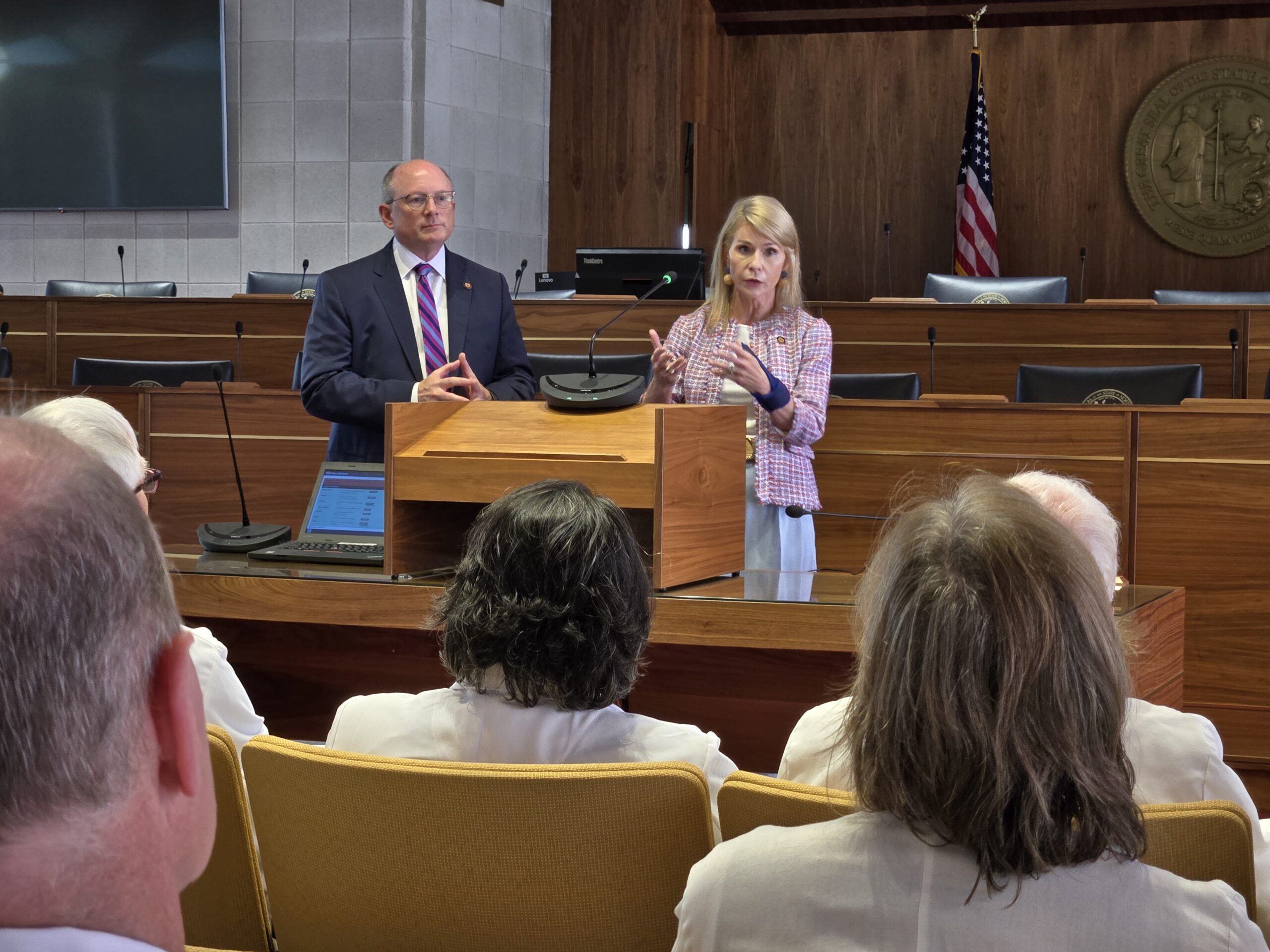
After that the group went to assigned meetings with Senators and Representatives throughout the buildings. Some key meetings included Rep. John Bell, Rep. Destin Hall, Sen. Dan Blue, Sen. Phil Berger, and House Speaker Rep. Tim Moore. Each meeting included a NCMS staff member and 4 - 6 members in white coats. John Thompson says "the meetings are an amazing way to bring together these lawmakers with the people who have the most knowledge of these complicated issues. White Coat Day is an important tool the NCMS has to effect change for our members and the people of North Carolina."

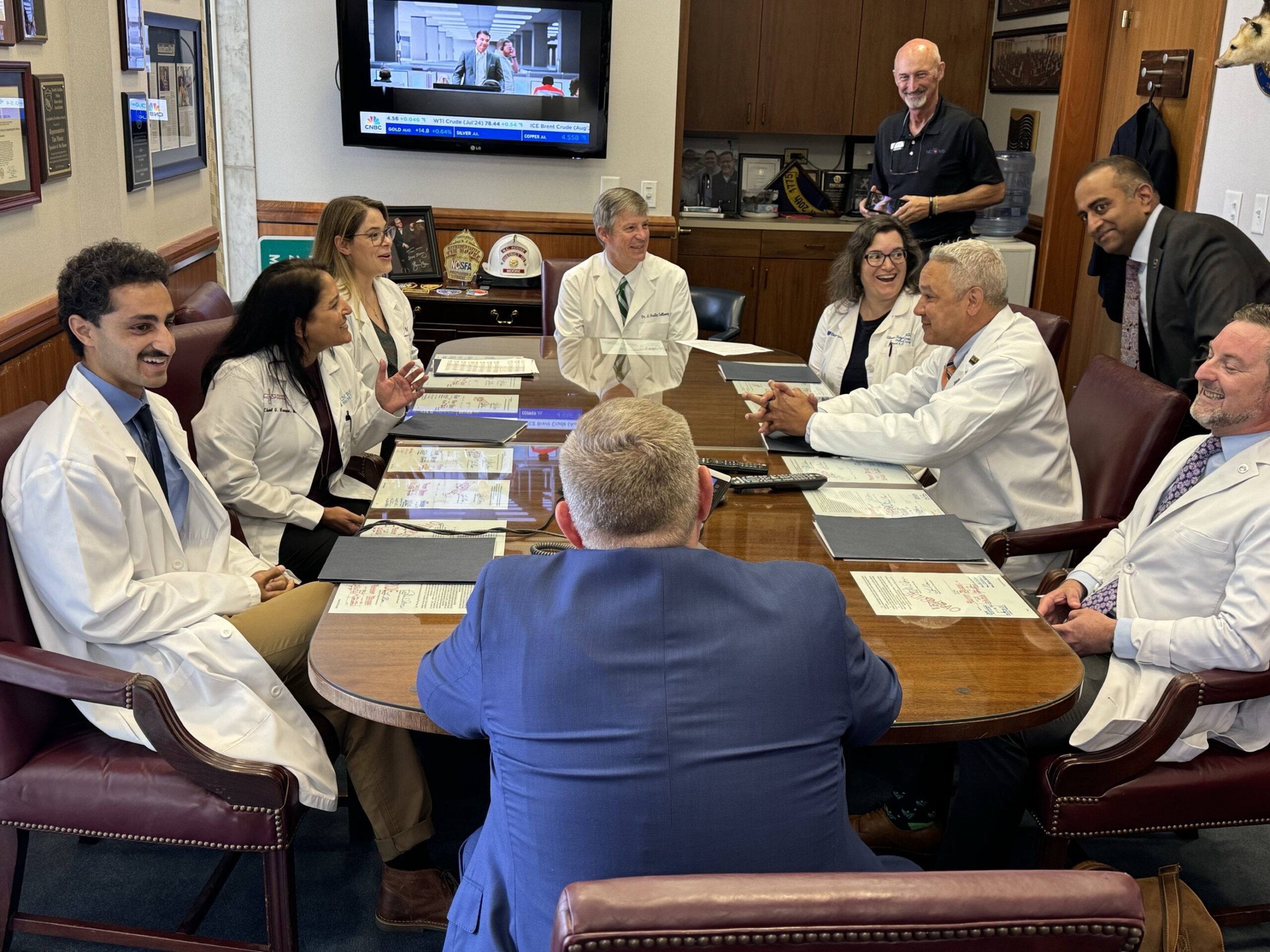
Invigorated and excited members then returned to the NCMS headquarters for a break that included lunch and a presentation from NC DHHS Secretary Kody Kinsley. While Kinsley talked about the importance of involvement by physicians and PAs in the legislative process, he also announced that enrollment in the newly expanded Medicaid program in NC has topped 486,000 people.
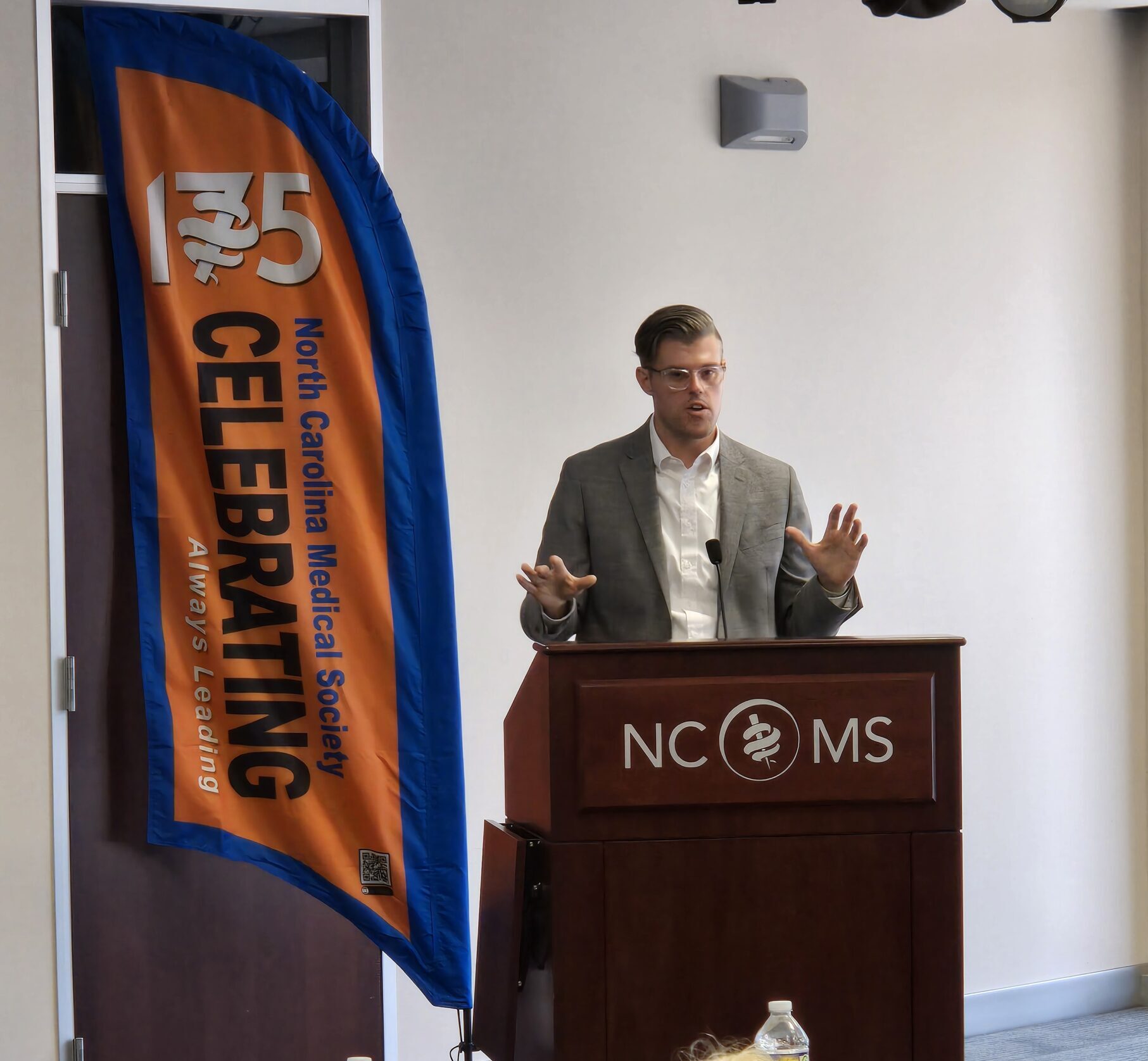
Members finished off the day with more meetings at the legislative building and many took time to record messages about their day in Raleigh!
The day continued with more meetings at the Legislature with Rep. Garland Pierce, Rep. Allen Buansi, Sen. Michael Lee, and Sen. Paul Lowe, Jr. It ended with a recognition on the House floor from Rep. Timothy Moore, MD.
Here are two of the handouts our teams were working from.
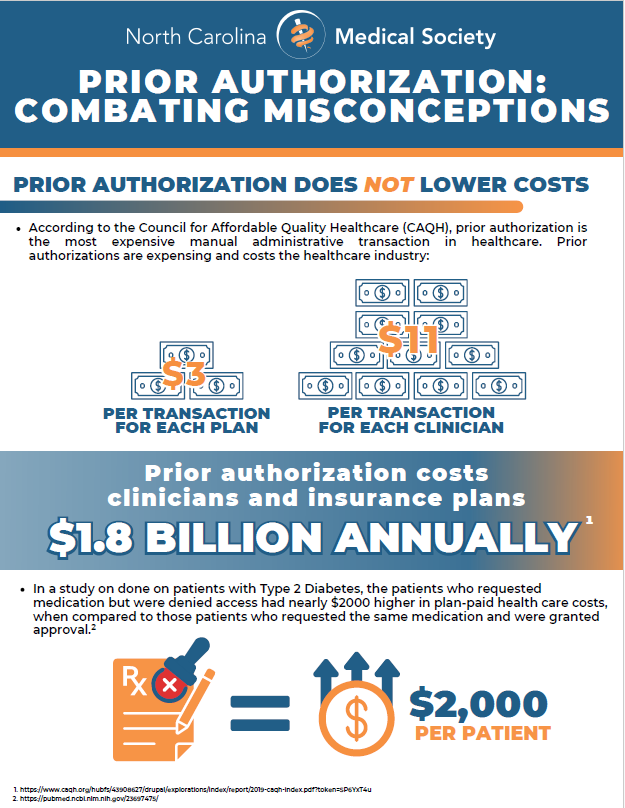
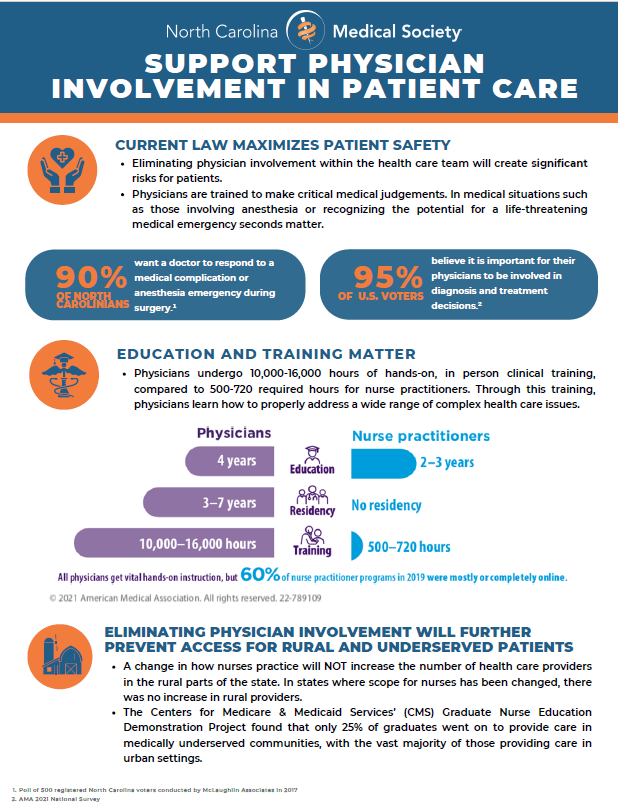
NC Medicaid Needs to Hear from Enrolled Providers
All primary care and ob/gyn providers enrolled in the Medicaid program are asked to respond to the request you should have received to complete a satisfaction survey. Below is a notice from NC Medicaid announcing that the survey will remain open through June 30, 2024. If you received the survey notice, please be sure to respond. If you have not received the notice or no longer have access to it, please follow-up as indicated below.
A Message from NCTracks on Behalf of NC Medicaid
2024 Provider Experience Survey Extended to June 30
Participation in this survey is vital to understanding how primary care and Ob/Gyn providers experience and are satisfied with North Carolina’s Medicaid program and with each PHP. This survey aids in identifying areas for improvement with the intention of bettering PHP relationships with providers and reducing the administrative burdens of contracting with PHPs.
All practices and organizations that provide primary care and Ob/Gyn services should have received an email, in addition to a physical mail, invitation to participate in the survey in April or May of this year. For practices employed by a larger organization (e.g., UNC or Duke practices), the invitation would have gone to the organization central office. The survey will remain open until June 30, 2024.
Practices and organizations who have not received an invitation to participate or who no longer have the invitation, email csrl@unc.edu and indicate you would like to complete the Medicaid Survey and the name of the practice(s). Example verbiage: “I would like to complete the Medicaid Survey. Can you send me the link? My practice name is: XXXXX. Address is: XXXXX. Phone number: XXXXX.”