

NCDHHS Updating Provider Enrollment and Data Management System Components of NCTracks
The North Carolina Department of Health and Human Services (NCDHHS) will be replacing the current provider enrollment and data management system components of NCTracks with a centralized Provider Data Management/Credentialing Verification Organization (PDM/CVO) solution. The solution will meet National Committee for Quality Assurance (NCQA) standards and enhance provider credentialing through centralized CVO features that include a Credentialing Committee and delegated enrollment and credentialing.
NCDHHS awarded a contract to Optum for the design, development and implementation of the PDM/CVO. To allow for additional time to test the system and ensure that providers and NCDHHS payers experience a seamless transition to the new solution, the PDM/CVO launch is now anticipated in 2026.
Upon launch, the PDM/CVO solution will:
- Consolidate all provider data to create an accurate directory for credentialing and health plan enrollment functions, reducing administrative redundancy for providers.
- Simplify enrollment, data maintenance and revalidation processes.
- Facilitate centralized credentialing on behalf of NCDHHS payers and health plans.
- Potentially mitigate reimbursement errors caused by outdated provider data.
- Allow for delegated enrollment and credentialing with hospitals and large health care systems where enrollment and credentialing activities are completed by the delegated entity for limited risk providers.
- Align North Carolina’s credentialing process with NCQA standards.
- Establish a representative centralized Credentialing Committee with multi-payers.
In preparation for the transition to the new PDM/CVO, providers are encouraged to:
- Maintain an accurate provider record. Reviewing all provider records and correcting outdated information is essential to ensure data from NCTracks provider records is accurately transferred to the new system.
- Stay informed. Review the NC Medicaid Provider webpage often and read all new NC Medicaid bulletins.
- Participate in educational opportunities. Respond to opportunities to learn more about the PDM/CVO, including participating in webinars and other events, to be fully prepared for the new system.
- Express interest in User Acceptance Testing (UAT). User Acceptance Testing (UAT) is expected to take place beginning in mid-2025 and will be a great opportunity for providers to test the system and offer their valuable insight into this transition. If you or members of your organization are interested in participating in UAT, please email medicaid.pdmcvo.stakeholderengagement@dhhs.nc.gov.
For the most up-to-date provider information including fact sheets and other applicable resources, please visit the NC Medicaid Provider Data Management / Credentialing Verification Organization webpage.


It's Heating Up Outside! With Help from Operation Fan Heat Relief, Your Patients Could Stay Cool this Summer!
The North Carolina Department of Health and Human Services’ Division of Aging is partnering with the N.C. area agencies on aging and local service providers to distribute fans to eligible recipients through Operation Fan Heat Relief from May 1–Oct. 31.
People 60 and older, as well as adults with disabilities, are eligible to sign up for assistance from May 1–Oct. 31 at local aging agencies across the state. Since 1986, the relief program has purchased fans for older adults and adults with disabilities, providing them with a more comfortable living environment and reducing heat-related illnesses.
The program is made possible by donations from Duke Energy Carolinas, Duke Energy Progress, Dominion and Valassis. Operation Fan Heat Relief allows regional area agencies on aging and local provider agencies to purchase fans for eligible individuals. Local provider agencies can also purchase a limited number of air conditioners based on a person’s specific health conditions.
Last year, the division received $86,000 in donations, allowing for the distribution of 3,097 fans and 21 air conditioners.
As individuals age and develop chronic medical conditions, they are less likely to sense and respond to changes in temperature, and they may also be taking medications that can worsen the impact of extreme heat. Operation Fan Heat Relief helps vulnerable adults at risk for heat-related illnesses stay safe during the summer.
In addition to applying for fans, people age 60 and older, as well as adults with disabilities, can take the following steps during high temperatures:
- Increase fluid intake
- Spend time in cool or air-conditioned environments regularly
- Reduce strenuous activity during the afternoon
- Speak with their physician before summer about how to stay safe while taking medication that can affect the body's ability to cool itself (e.g., high blood pressure medications)
For more details, individuals may contact their area agency on aging or the Division of Aging at 919-855-3400.
More information about Operation Fan and Heat Relief, including tips on preparing for extreme heat and a list of local agencies distributing fans, is available at www.ncdhhs.gov/divisions/aging/operation-fan-heat-relief.

NCMS 2024 NCMS Photo Contest is Waiting for You! But Hurry, Submissions Close Soon!





Photo submissions are currently being accepted for 2024!
Now in its 16th year, the NCMS Photo Contest is an annual tradition that has gained national recognition, and we want you to be a part of it! Submissions are currently being accepted for the 2024 contest. Think you have the perfect picture to send in?
Check out the rules here.
We've already received several breathtaking submissions! Keep them coming!
Deadline to submit is Friday, June 14, 2024





Political Pulse for June 14, 2024
Political Pulse Part Two
The burden of Prior Authorization is leading to suicidal thoughts in
NC physicians.
Can the current legislature fix it?
Ron Howrigon of Fulcrum Strategies joins Randy Aldridge and John Thompson for part two of a talk on how badly Prior Authorization is impacting North Carolina healthcare. The increase in administrative work PA creates and the time it keeps clinicians from patients is leading to burnout, suicidal ideation, and a potential worsening of the workforce shortage in the coming years. Possible options for correcting PA are discussed in this issue of Political Pulse.
For more on how the North Carolina Medical Society is addressing this issue click here.
View Political Pulse Part One here.
https://youtu.be/yhq8Y2Kxam4

NCMS Past President Dr. Timothy Reeder, VP John Thompson Featured in Story on Assaults on Healthcare Workers
WRAL investigation includes Dr. Timothy Reeder and NCMS VP of Advocacy John Thompson
(RALEIGH, Ali Ingersoll) -- Dr. Jennifer Casaletto dreamed about working in an emergency department for years.
"I have the opportunity to treat everyone," she said, her face lighting up when talking about her career. "That opportunity of sharing in folk's stories and being able to be with them on many of their worst days, is what we trained to do."
However, she never thought she would have to be trained to respond to them on their worst days and that she could be put in harm’s way by trying to keep others healthy and safe.
"I almost view the verbal threats and someone throwing urine or cursing at me as something that is a part of the job," said Casaletto, who is also the former president of the North Carolina College of Emergency Physicians. "And I know it shouldn't be that way."
WRAL Investigates found felony assaults against health care workers jumped 7.5% between 2022 and 2023, according to court records. A nationwide survey of emergency physicians shows one-fourth of the respondents report being assaulted regularly.
Casalleto said during her first seven years, she only experienced that sort of violence and disrespect twice. But within the last 15 to 20, she experiences it each month. The emergency department physician says it is one of the top reasons why nurses and doctors are leaving the field.
"I think that that's really just a reflector of what's going on in society, sadly," Casaletto said.
In an effort to curb the violence, North Carolina hospitals with emergency departments will be required by law to have armed security around the clock, unless they get an exemption.
"It's a perfect storm in the hospital," said John Thompson, the Vice President of Advocacy for the North Carolina Medical Society. "We want our doctors and nurses to be able to work in a safe as environment as possible."
State Rep. Timothy Reeder, R-Pitt, who is a physician, proposed the change. He was working Monday in the emergency room, so he wasn't available for comment.
Casaletto says it seems as if all major hospitals are on board with the change. She said that events like threats - both to her and to the campus - take away from patient care.
"I think that you're more on edge," she said. "But it is more than that.
"You're used to distractions. You're also used to be taken away to respond to an urgent trauma issue. This is not just a task interruption. This is an interruption that stays with you and certainly would color the rest of the shift."
See the full story here.
NCMS Delegation Attend, Featured at 2024 AMA Annual House of Delegates Meeting
NCMS Members Featured on Panels and in AMA Promotions
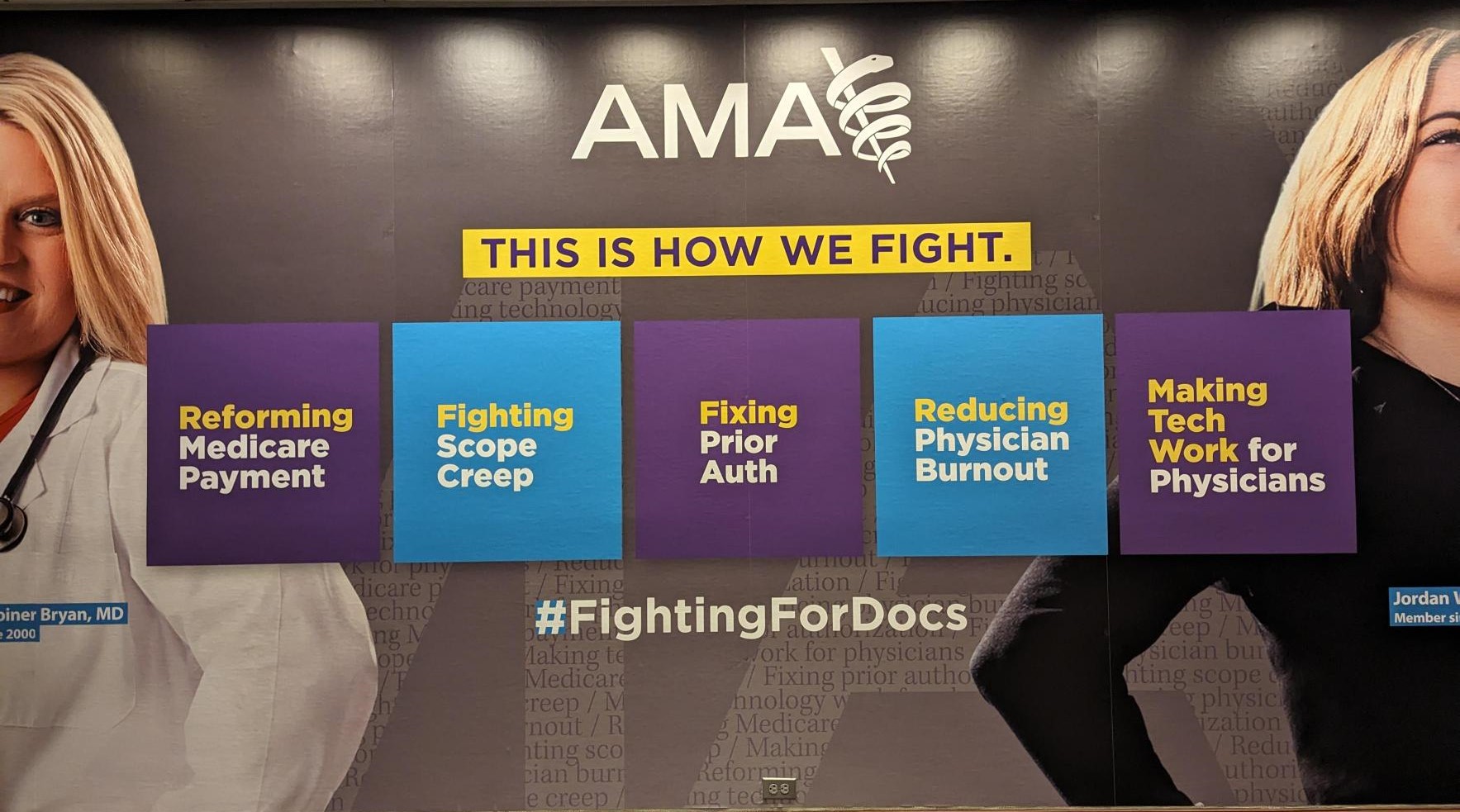
(CHICAGO) -- Members and staff of the North Carolina Medical Society traveled to Chicago for the 2024 Annual Meeting of the AMA House of Delegates. Members Dr. Justin Hurie from Winston-Salem and Dr. Rebecca Hayes from Charlotte were both included in presentations. Dr. Hurie spoke in the Reference Committee on behalf of the NCMS delegation and Dr. Hayes represented NCMS at the South East Delegation breakfast.


NCMS board member Dr. Karen Smith and former NCMS President Dr. Arthur Apolinario are both featured in AMA promotional videos. You can see them here:
https://youtu.be/Wre3H3o6940
https://youtu.be/sIonjSmBfaE
https://youtu.be/NVhyi-Q6n5k
The North Carolina delegation also spent time deliberating resolutions and attending the final address of AMA President Dr. Jesse Ehrenfeld.


The conference ends Wednesday. Look for a full report from the NCMS delegation on actions by the AMA House of Delegates coming soon.
Combination Flu/COVID-19 Vaccine Shows Promise in Late-Stage Trial

Moderna said its combination vaccine targeting Covid and the flu was more effective than existing standalone shots for those viruses in a late-stage trial

(CNBC) -- Moderna on Monday said its combination vaccine that targets both Covid-19 and the flu was more effective than existing standalone shots for those viruses in a late-stage trial.
The biotech company is the first to release positive phase three data on a Covid and flu combination shot, giving it a potential lead over rival vaccine makers Pfizer and Novavax.
Moderna, Pfizer and Novavax have said that combination shots will simplify how people can protect themselves against respiratory viruses that typically surge around the same time of the year. The added convenience is critical as fewer Americans roll up their sleeves to get vaccinated against Covid.
Bancel added that combination shots could reduce the burden of respiratory viruses on pharmacists and the broader U.S. health-care system, which has been grappling with a labor shortage that has many workers stretched thin.
Moderna’s messenger RNA combination shot, called mRNA-1083, is made up of both the company’s vaccine candidate for seasonal influenza and a newer, “next-generation” version of its Covid shot. Both of those experimental vaccines – mRNA-1010 and mRNA-1283 – have shown positive results in separate phase three trials.
The ongoing late-stage trial on mRNA-1083 examined the combination shot in 8,000 patients.
In both age groups, a single dose of Moderna’s combination vaccine produced “statistically significantly higher” immune responses against three strains of influenza and the Covid omicron variant XBB.1.5.
Moderna said the safety of the combination shot, along with how well patients could tolerate it, was acceptable. The most common side effects were injection site pain, fatigue, muscle pain and headache. The majority of those effects were mild to moderate in severity.
Moderna is also developing a combination shot targeting the flu and RSV, and another vaccine targeting all three respiratory viruses: Covid, flu and RSV.
Meanwhile, Pfizer and BioNTech also are studying a vaccine that targets both Covid and the flu in a late-stage trial. Novavax is developing a combination for those viruses as well, but its Covid shot uses protein-based technology.

FDA Advisers Endorse Eli Lilly’s Early-Stage Alzheimer’s Drug Donanemab
Independent advisers to FDA vote to endorse monoclonal antibody
(CNN) -- On Monday, a panel of independent advisers to the US Food and Drug Administration voted to endorse Eli Lilly’s drug donanemab, a monoclonal antibody designed to slow the progression of early symptomatic Alzheimer’s disease, agreeing that it was safe and effective.
One in three older Americans dies with Alzheimer’s disease or another form of dementia, according to the Alzheimer’s Association, killing more people than prostate and breast cancer combined.
Donanemab works by helping the body remove amyloid plaque buildups in the brain that are a hallmark of Alzheimer’s disease. These plaques are harmful deposits that can form in the brain as people age. Removing the plaque seems to slow down the brain changes that seem to happen with Alzheimer’s.
As the drug enters the brain it binds to the amyloid plaques and its presence catches the attention of the immune system that facilitates the plaque removal.
There is no cure and there is still no drug to prevent the development of Alzheimer’s, but donanemab and Leqembi, another drug that is already on the market made by Eisai and Biogen, has been shown to slow the progression of the disease in its early stages.
Lilly told the FDA’s Peripheral and Central Nervous System Drugs Advisory Committee that its data from late-stage clinical research showed “highly meaningful results” for patients who took donanemab, with a 37% lower risk of progression of the disease over a year and a half compared to patients who got the placebo.
Serious adverse events were “generally comparable” among all the groups in the trials, and were infrequent, Lilly told the committee, occurring in only 2% of patients. The patients on donanemab had a slightly higher mortality rate — 2%, compared with 1.7% in the placebo arm of the trial.
Three people died while taking the drug after developing ARIA, or micro-hemorrhages known as amyloid-related imaging abnormalities.
In trials of Leqembi, the drug that’s already on the market, some patients experienced ARIA, but it was at a lower rate than seen in the donanemab trial. Leqembi has also been tied to patient deaths.
Since most donanemab patients who experienced problems with ARIA did so in the first six weeks of the trial, Lilly told the committee that it added another MRI to the trial to look for the problem before giving the patient a second infusion. The aim would be to detect patients with asymptomatic ARIA. If it was detected, providers would pause treatment so it could resolve and not become more serious or symptomatic.
Looking at these results from the late-stage clinical trials, the FDA committee voted on two specific questions and discussed three other main topics.
The committee voted an unanimous “yes” to the questions of whether the data showed that the drug is effective for the treatment of Alzheimer’s disease and whether the benefits of the drug outweighed the risks in the treatment of Alzheimer’s in the population enrolled in the clinical trials.
The FDA will take the committee’s advice into consideration as it decides whether to greenlight the drug.
Committee member Dr. Dean Follmann, assistant director for Biostatistics at the National Institute of Allergy and Infectious Diseases, said he voted yes because the evidence “was strong and consistent across subgroups.”
In voting yes, Sarah Dolan, the acting consumer representative on the committee and a consultant with the Critical Path Institute in Tucson, Arizona, said she was pleased with the outcome of the research.
“There’s a huge unmet medical need here that hopefully can be addressed,” Dolan said.
Committee member Dr. Kathleen Poston, the director of Stanford Movement Disorders Center, said she voted yes believing there was a benefit to the drug, “as long as the risks are being monitored.”
The trials only included patients that had low-medium levels of tau, a protein that can become abnormal and contribute to the disease. Lilly excluded patients that had no or very low tau because the study wouldn’t follow the patients long enough to see if the drug made a difference. They also excluded people with high amounts of tau. The committee had some concern about extrapolating the results to a subset of patients with other levels of tau; they wanted to see more data.
The majority of the committee also wasn’t comfortable with the FDA requiring a tau PET test to determine if a patient was eligible to take the drug since the test is not widely available and would make it difficult for some people to get the drug.
Before the votes, Dr. Reisa Sperling, a professor in neurology at Harvard Medical School told the committee that without treatments, the growing number of people with Alzheimer’s could become a serious threat to the country.
“We’re doing such a good job at keeping people alive longer, we are creating a public health emergency if we don’t find a way to stave off this disease,” Sperling said.
In the meantime, Lilly said it is working on additional Alzheimer’s treatments.
“Recognizing the enormous burden this disease carries, we take the responsibility of bringing a well characterized disease modifying therapy to patients very seriously,” Dr. David Hyman, chief medical officer with Eli Lilly and Company told the committee.
Lilly views donanemab as “an important but ultimately incremental” step in the treatment of Alzheimer’s disease. Ultimately, Hyman said Lilly would like to develop a drug that would treat the disease before someone even starts to show symptoms and are working on such a drug.
“Patients deserve more, and we continue to work on additional approaches to address this disease,” Hyman said.
After the meeting, Lilly said it was happy with the committee’s positive vote.
“We are pleased with the committee’s unanimous recognition of donanemab’s positive benefit-risk profile,” said Mark Mintun, Eli Lilly’s group vice president of neuroscience research and development in a news release. “We look forward to bringing this treatment option to patients.”
The Alzheimer’s Association had urged the committee to recommend approval of donanemab, welcomed the committee’s unanimous vote in favor of the drug.
“A future with more approved Alzheimer’s treatments is a tremendous advancement for people eligible for these drugs,” said Dr. Joanne Pike, Alzheimer’s Association President and CEO. “Progress with treatment is happening.”
USAgainstAlzheimer’s, a national nonprofit, that testified in favor of the drug during the public comment period in the meeting said that there is an urgency and a “massive unmet need” for Alzheimer’s treatments.
“If approved by the FDA, donanemab would be the second drug on the market to help people in the early stages of Alzheimer’s live a better quality of life for a longer period of time, while providing patients and their doctors with another option for their treatment plans,” said chair and co-founder George Vradenburg. “We are grateful to the advisory committee for its endorsement of this promising treatment.”

There's Still Time! Meet Legislators from Both Sides of the Aisle at the NCMS Legislative Reception!
Meet YOUR lawmakers at the
NCMS Legislative Reception June 12th!
On Wednesday, June 12, the North Carolina Medical Society will welcome legislators from both sides of the aisle to our 2024 NCMS Legislative Reception, including Rep. Kristin Baker, Rep. Timothy Reeder, Rep. Larry Potts, Senators Todd Johnson and Jay Chaudhuri, and many others.
The NCMS Legislative Reception has a host of legislators and staff members ready to talk with you about the issues YOU think are important. June 12th is the chance for you to be empowered and to power change. Register now for the most important advocacy event of the year.
If you want to enhance your visibility, plan to come early that morning for our White Coat Day, one of our largest gatherings of physicians and PAs to date! The NCMS is planning to flood the General Assembly with white coats to remind Senators and Representatives of the power we have to influence change.
We'd love to see you at both! View the agenda for the day, which includes breakfast, meetings with legislators, lunch with NCDHHS Secretary Kody Kinsley, and the Legislative Reception to round out the event.

$50 for members; $75 for non-members; free for students and residents.

Summer is Approaching! So Is This Threat from Lone Star Ticks.
Health officials say tick activity can increase during the summer.
Ahead of summer's approach, the Centers for Disease Control and Prevention (CDC) has issued a warning about the lone star tick and alpha-gal syndrome.
According to the CDC, alpha-gal syndrome is a serious and life-threatening allergic reaction that appears in mammals after a tick bite. Once a person is bitten, they can have symptoms appear after eating red meat or if they're exposed to other products made from mammals.
The lone star tick (Amblyomma americanum) is widely distributed in the eastern, southeastern, and south-central United States. A. americanum is a very aggressive tick that bites humans. The adult female is distinguished by a white dot or “lone star” on her back. The nymph and adult females most frequently bite humans and transmit disease.
The most updated CDC data set for alpha-gal syndrome cases shows North Carolina is one of the states with the highest prevalence of suspected cases between January 2017 to December 2022.
Learn more about the foods that trigger alpha-gal syndrome and symptoms to look for here.
Could Your Patients Benefit from these Statewide Mobile Free Pharmacy Events?
The Mobile Free Pharmacy provides adults and children who are low-income and in need with free over the counter medicine. Medicine such as aspirin, children’s cough syrup, allergy medicine and vitamins are just a few items given to families who need assistance.
Most events now have pre-ordering available online. However, NC MedAssist and affiliated Mobile Free Pharmacy sponsors reserve the right to limit online orders for each event, so please order early. Once online ordering is closed, individuals can still come to the event to receive pre-made bags.
Here are the upcoming locations happening in June:
- Gaston County (June 14)
- Beaufort County (June 14)
- Edgecombe County (June 21)
- Harnett County (June 28)
Click here for more information.

NC Health System Receives State-of-the-art Robotic Knee Surgery Technology
FirstHealth of the Carolinas recently received state-of-the-art robotic knee surgery technology called the ROSA Knee System at Moore Regional Hospital, enhancing the experience and outcomes of total knee replacement procedures.
With this advanced technology, patients can benefit from precise and personalized surgical solutions, marking a significant milestone in joint replacement surgery.
Zimmer Biomet’s ROSA Knee System brings together robotic technology with industry-leading knee implants to help surgeons personalize surgical procedures for their patients. The procedure is a robotically assisted surgical system designed to help perform total knee replacement surgery. It includes features to assist with bone resections and assessing the state of soft tissues in order to facilitate implant positioning intraoperatively. Data provided by the system assists with complex decision-making and enables surgeons to use computer and software technology to control and move surgical instruments, allowing for greater precision and flexibility during procedures.
Find the full article on this significant advancement here.

Register Now for this Important Webinar: Workplace Violence - CMS and JC Standards
Workplace violence has escalated over the past 15 years, especially in the health care arena. Providers and staff as well as family members and bystanders (including other health care providers) frequently experience this violence. In November 2022, the Centers for Medicare & Medicaid Services (CMS) issued a memo on workplace safety that addressed care in a safe environment.
On July 1, 2023, The Joint Commission’s (TJC) updated standards on workplace violence became effective. These standards included requirements for monitoring, reports, and investigations. This program will cover CMS standards for workplace safety and Emergency Preparedness standards, along with The Joint Commission’s Standards and Elements of Performance.
Learn more and register here.

NCDHHS Implements Flexibilities to Ease Administrative Burden at Tailored Plan Launch
Ahead of the launch of the Behavioral Health Intellectual/Developmental Disabilities (I/DDs) Tailored Plans on July 1, 2024, NCDHHS has implemented the following policy flexibilities to ease provider administrative burden at launch and ensure beneficiaries receive uninterrupted care:
- Medical Prior Authorizations (PAs): Tailored Plans are required to implement strategies to minimize disruption of benefits at Tailored Plan launch specifically related to PAs. Between July 1, 2024, and Sept. 30, 2024, Tailored Plans will not deny covered services if the request meets medical necessity criteria in the following two scenarios:a.) provider fails to submit PA prior to the service being provided and submits PA after the date of service.
b.) provider submits for retroactive PA.*This exception does not apply to concurrent reviews for inpatient hospitalizations, which should still occur during this time period. This flexibility applies to both in-network and out-of-network providers. Tailored Plans must also honor existing medical PAs for physical and behavioral health services for 91 days after Tailored Plan launch or until the expiration/completion of a PA, whichever occurs first.Starting on October 1, 2024, Tailored Plans may deny payment for services, which require prior authorization if the provider did not obtain authorization before delivering the service, except in cases of retro eligibility. - Pharmacy PAs: For pharmacy PAs between July 1, 2024, and Sept. 30, 2024, Tailored Plans will honor existing pharmacy PAs (from NC Medicaid Direct and other health plans) for the life of the PA and will consider previous PA and current drug therapy as necessary, when making coverage determinations. This flexibility applies to both in-network and out-of-network providers.
- Out of Network Provider Rates: Between July 1, 2024, and September 30, 2024, in addition to out of network requirements found in the Department’s Transition of Care policy, Tailored Plans must also pay for services for Medicaid-eligible nonparticipating/out of network providers equal to those of in network providers for 91 days after Tailored Plan launch. Medically necessary services for physical and behavioral health will be reimbursed at 100% of the NC Medicaid fee-for-service rate for both in- and out- of network providers.Starting on October 1, 2024, out-of-network providers with whom the Tailored Plan has made a good faith effort to contract will be reimbursed at no more than 90% of the Medicaid fee-for-service rate. Note: Out of network providers must still be enrolled in NC Medicaid to be reimbursed by the Tailored Plan.
- Out of Network Providers Follow In-Network PA Rules: Between July 1, 2024, and January 31, 2025, Tailored Plans will permit uncontracted, out-of-network providers enrolled in NC Medicaid to follow in-network provider prior authorization rules. Starting on February 1, 2025, out-of-network providers must seek authorizations for all services.
- Primary Care Provider (PCP) Changes: Between July 1, 2024, and January 31, 2025, Tailored Plan members may change their PCP for any reason.
In addition to the above requirements, Tailored Plans are required to support transitioning beneficiaries who are currently being treated by providers. Therefore, Tailored Plans will also:
- Honor existing and active medical PAs on file with NC Medicaid Direct or another health plan for services covered by the health plan for the first seven months after launch, through January 31, 2025, or until the end of the authorization period, whichever occurs first.
- Not deny claims for the first seven months after launch, though January 31, 2025, for covered services if the request meets medical necessity criteria and will authorize services for Medicaid-enrolled out-of-network providers equal to that of in-network providers until end of episode of care or seven months, whichever is less.
- Please Note: Extended transition periods may apply for circumstances covered in N.C. Gen. Stat. § 58-67-88(d), (e), (f), and (g).
- Honor a PA from their original health plan for the life of the authorization by their new health plan for a beneficiary who transitions between health plans after July 1, 2024.
The Department expects all providers to continue to provide all necessary care to beneficiaries throughout this transition, including but not limited to maintaining scheduled medical care for beneficiaries.
The Department expects Tailored Plans and providers to continue to work in good faith to finalize contracts so that Tailored Plans have adequate networks to care for their members.
NC Medicaid remains committed to working with provider and health plan partners to verify services are paid for without undue burden to beneficiaries and providers during this transition. If providers experience issues during this transition period, they can reach out to the Medicaid Provider Ombudsman at Medicaid.ProviderOmbudsman@dhhs.nc.gov or 919-527-6666.
Leadership Opportunity: NC Professionals Health Program Board of Directors

The NCMS has the opportunity to appoint 2 members to the NC Professionals Health Program (NCPHP) Board of Directors. Learn more about responsibilities of NCPHP Board members.
Since 1988, NCPHP has been dedicated to helping medical professionals experience a lifetime of change and return to health. NCPHP assists with recovery from substance use disorders and other conditions that could impair a clinician’s ability to safely provide care and services to their patients.
NCPHP originated as a physicians’ health committee of the North Carolina Medical Society (NCMS). In 1988, it was established as a formal program of the NCMS and written into the North Carolina General Statutes. To learn more about the important work of this organization, visit the NCPHP website.
Physicians interested in an NCPHP Board position should complete the application form and return it to Evan Simmons, esimmons@ncmedsoc.org by Monday, July 15. Interviews for the board openings will take place virtually at 6PM on Wednesday, August 14.
Current NCPHP Board Appointees and Terms:
Stephen J. Ezzo, MD
1/1/20 – 12/31/22, 1st term
1/1/23 – 12/31/25 2nd term
Jonathan Douglas (Doug) Jaffe, DO
1/1/22 – 12/31/24, 1st term
(Eligible for a 2nd term)
Vinay Saranga, MD
1/1/20 – 12/31/22, 1st term
1/1/23 – 12/31/25 2nd term
David L. Tolentino, DO
1/1/19 – 12/31/21, 1st term
1/1/22 – 12/31/24, 2nd term
Sarah W. Young, MD
1/1/23 – 12/31/25 1st term

Study Finds Popular Sweetener Linked to Heart Attack and Stroke
A new study found a low-calorie sweetener called xylitol, used in many low-sugar foods and products such as gum and toothpaste, may be linked to nearly twice the risk of heart attacks, stroke and death in people who consume the highest levels of the common sweetener.
Researchers found xylitol may cause blood platelets to clot more readily. Clots can break off and travel to the heart, triggering a heart attack, or to the brain, triggering a stroke.
Xylitol is as sweet as sugar with less than half the calories. It's often used in sugarless gum, breath mints, toothpaste, mouthwash, cough syrup and chewable vitamins. It is frequently added in larger quantities to candy, baked goods, cake mixes, barbecue sauces, ketchup, peanut butter, puddings, pancake syrup and more.
The World Health Organization warned consumers in 2023 to avoid artificial sweeteners for weight loss, and has called for additional research on the long-term toxicity of low- and no-calorie sweeteners, the study says.
The full article is available here.

Don't Miss the Next Collaborative Care Model Learning Collaborative!

Collaborative Care Model (CoCM) Provider
Learning Collaborative
Caseload Management/Relapse Prevention Plan
June 20, 2024
12:30 - 1:30 p.m. | Location: Livestream Webinar
The Collaborative Care Model (CoCM) is an integrated modality that provides patients with medical and behavioral health care in a primary care setting. The CoCM Learning Collaborative sessions will highlight collaborative care team integration and the role of the CoCM Behavioral Health Care Manager for practices new to the model and those established with implementing CoCM.
Objectives:
- Participants will be able to describe the principles of the Collaborative Care Model (CoCM).
- Participants will be able to identify key concepts and team member roles/responsibilities for effective implementation of CoCM.
- Participants will be able to explain the value and evidence for measurement-based, treatment to target CoCM care.
- Participants will be able to discuss the contributing factors to successful Collaborative Care implementation.
Target Audience:
These Learning Collaboratives are for primary care providers, behavioral health professionals, and anyone else who has implemented or is considering the Collaborative Care Model (CoCM) for integrating behavioral health in a primary care setting. Independent primary care practices, FQHC’s, and rural health clinics may find this collaborative especially helpful for meeting some of the behavioral health needs of their patients.
Past Webinars:
January 18, 2024
Overview of CoCM Model/Role of PCP
February 15, 2024
Role of the Psychiatric Consultant/Systematic Caseload Review
March 21, 2024
Role of BH Care Manager/Registry Tracking
April 18, 2024
CoCM Billing
May 16, 2024
Communicating about CoCM Across the Care Team

Registration is required
Download the PDF here.
For Additional information about the model please click this link.
Questions? Contact LaShawnna Andrews, MSM, Director, Continuing Professional Development IPE at (910) 678-7319 or Lashawnna.Andrews@sr-ahec.org
Mark Your Calendar! Saving Time: Practice Innovation Boot Camp
This two-day, in-person, interactive boot camp equips attendees with the time-saving tools and strategies needed to reform their organizations and enhance professional satisfaction. Learn how to maximize team-based care, optimize the EHR, eliminate unnecessary work, and free up more time to focus on what matters most – patient care.
Gain proven tools to implement in the following areas:
- Getting rid of stupid stuff
- De-implementation (STOP this and START that)
- Debunking regulatory myths
- EHR inbox optimization
- Team-based care practice fundamentals
- Building bridges between clinicians and administrators
- Reducing barriers to taking PTO
- Making the business case to leadership
Limited space, available, so register soon to secure your spot. Learn more.
AMA members save 40%!

New Bill Could Allow Physician Assistants to Practice Across State Lines in NC
Physician assistants could practice across state lines under a bill moving in the North Carolina House. The legislation would make North Carolina the latest state to join a compact agreement. The agreement means that physician assistants will be able to practice here with licenses from other states.
Representative Erin Pare from the 37th District south of Raleigh is the bill's sponsor. She says it could help North Carolina attract more medical providers.
"And this really helps people who relocate frequently like military spouses. The benefit of licensure to the state, of course, is workforce development, collaboration with other states and consumer access to physicians assistant practitioners," she said.
The bill passed its first committee hearing Tuesday. [source]

NC Health System Working to Close Black Maternal Health Care Gap

North Carolina health care system is working to close the gap on health disparities when it comes to Black maternal health. A Winston-Salem-area OBGYN said there are policies and training in place to make sure patients are seen and heard.
Dr. Jaleema Speaks is an OBGYN and lead women's physician for Novant Health at the Forsyth Medical Center.
“I love women's health, and I think the spectrum of all types of care that we're able to provide when women are, they're most excited and feel the most vulnerable. And that longitudinal relationship in someone's wellness is what I value the most about my job,” Speaks said.
Her passion for cultivating healthy relationships with her patients is why she and other providers say they are working to improve health outcomes and close health care gaps.
Continue to the full article here.
NC Hospital First in State to Place New Below-The-Knee Stent
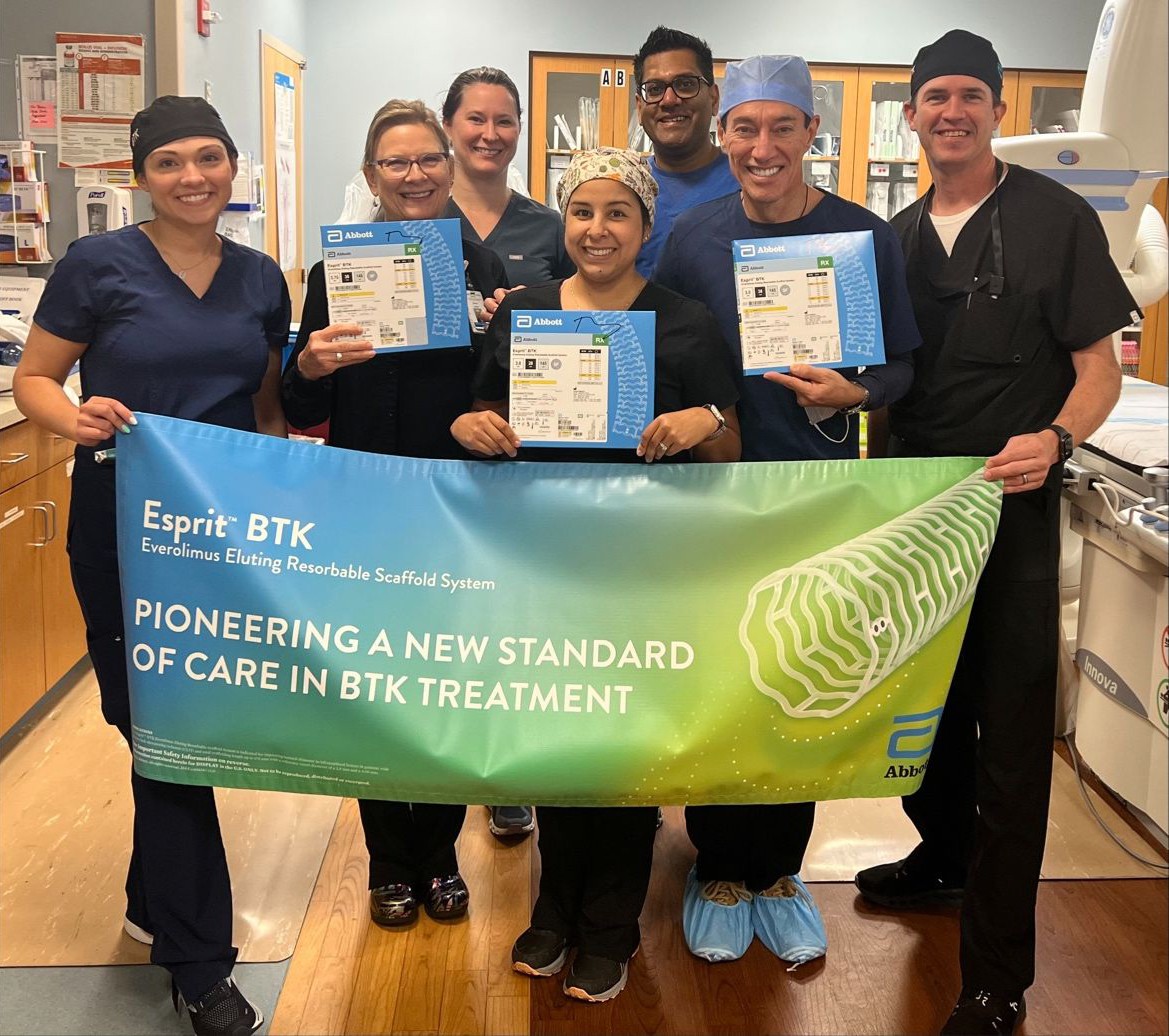
Central Carolina Hospital (CCH) has become the first hospital in North Carolina to place a new type of stent below the knee for patients with chronic limb-threatening ischemia (CLTI).
The procedure was performed by Rajiv Swamy, MD, Chief of Medicine and interventional cardiologist at CCH, using a new below-the-knee stent scaffolding system developed by Abbott Laboratories. CCH is one of a few national sites where the procedure is being done.
“This new stent is a tremendous advancement for patients with chronic limb-threatening ischemia, or CLTI,” Dr. Swamy said. “CLTI is a serious condition caused by lack of blood flow and oxygen to the limbs. Although it is rare, uncontrolled peripheral artery disease can lead to CLTI.”
Read the full article here.

Researchers Study Link Between Vigorous Exercise, Cognition, High-Risk Hypertension Patients
People with high blood pressure have a higher risk of cognitive impairment, including dementia, but a new study from researchers at Wake Forest University School of Medicine suggests that engaging in vigorous physical activity more than once a week can lower that risk.
The findings appear online in Alzheimer’s & Dementia: The Journal of the Alzheimer’s Association.
“We know that physical exercise offers many benefits, including lowering blood pressure, improving heart health and potentially delaying cognitive decline,” said Richard Kazibwe, M.D., assistant professor of internal medicine at Wake Forest University School of Medicine and lead author of the study. “However, the amount and the intensity of exercise needed to preserve cognition is unknown.”
Learn more about the findings here.
Political Pulse for June 7, 2024
Political Pulse Part 1 - Prior Authorization is dangerous for patients.
Ron Howrigon of Fulcrum Strategies joins Randy Aldridge and John Thompson to discuss the real-life threat to North Carolinians posed by the current Prior Authorization laws. The conversation covers why PA is a problem and a threat, why evidence-based treatments are seemingly ignored, and the burden of PA on NCMS members. In this two-part series, Thompson and Howrigon go into detail on the problems of PA in North Carolina and in part two, talk about the impact on clinicians and possible solutions.
For more on how the North Carolina Medical Society is addressing this issue click here.
https://youtu.be/ONXptnEX7Kc
Enjoy this week’s Political Pulse! And don’t forget to register now for the June 12 White Coat Day and Legislative Reception!
Meet Legislators from Both Sides of the Aisle at the NCMS Legislative Reception!
Meet YOUR lawmakers at the
NCMS Legislative Reception June 12th!
On Wednesday, June 12, the North Carolina Medical Society will welcome legislators from both sides of the aisle to our 2024 NCMS Legislative Reception, including Rep. Kristin Baker, Rep. Timothy Reeder, Rep. Larry Potts, Senators Todd Johnson and Jay Chaudhuri, and many others.
The NCMS Legislative Reception has a host of legislators and staff members ready to talk with you about the issues YOU think are important. June 12th is the chance for you to be empowered and to power change. Register now for the most important advocacy event of the year.
If you want to enhance your visibility, plan to come early that morning for our White Coat Day, one of our largest gatherings of physicians and PAs to date! The NCMS is planning to flood the General Assembly with white coats to remind Senators and Representatives of the power we have to influence change.
We'd love to see you at both! View the agenda for the day, which includes breakfast, meetings with legislators, lunch with NCDHHS Secretary Kody Kinsley, and the Legislative Reception to round out the event.
$50 for members; $75 for non-members; free for students and residents.

NCMB's Call for Physician and PA Candidates Closing Soon

Applicants are needed for two physician seats, one physician assistant (PA) seat and one nurse practitioner (NP) seat on the North Carolina Medical Board for terms beginning November 1.
All positions must be filled by the process set down in statute (N.C. Gen. Stat. 90-2 and 90-3), which requires interested parties to apply via the Review Panel for the North Carolina Medical Board. The Review Panel is an independent body that nominates candidates for consideration by Governor Roy Cooper. By law, the Review Panel must nominate two candidates for each open seat.
One physician seat and both advanced practice provider seats are currently occupied by individuals who are eligible for reappointment. However, incumbents must apply for reappointment via the normal application process.
Applications will be accepted online through 4:45 p.m. on Thursday, June 27.
For more information visit this website.
The Review Panel will consider only physicians (MDs or DOs), PAs and NPs who hold active, unrestricted NC medical licenses. Applicants must be actively providing patient care at least part time and must have no history of disciplinary action within the past five years.

Don't Miss Friday's Shaping Access to Reproductive Health Care Webinar
Shaping Access to Reproductive Health Care:
Financing and Delivery Systems
June 7, 2024 | 12-1:30 p.m. ET
June 12, 2024 | 12-1:30 p.m. ET
The National Academies Standing Committee on Reproductive Health, Equity, and Society will organize a two-part public webinar series to explore the ways in which public and private financing, institutions, and systems shape access to comprehensive reproductive health care.
Part one (June 7) will focus on the coverage and limitations of public and private reproductive health care financing, the relationship between financing mechanisms and equitable access to reproductive health care, and strategies to increase access to comprehensive reproductive health care services in the United States.
Part two (June 12) will focus on the influence of public and private institutions and systems on access to and delivery of reproductive health care services.

New NC Food Program is Ensuring Your Smallest Patients Stay Fed This Summer
North Carolina will receive around $120 million in federal benefits to feed over a million school children in North Carolina this summer. The first benefits from the SUN Bucks program will begin to be issued to eligible families across the state next week.
"Summer can be a hard time for children who rely on our public schools for a healthy school breakfast and lunch," said Governor Cooper. "Nearly one in six North Carolina children face food insecurity at home and this effort helps make sure they get the nutritious food they need."
North Carolina is one of only three states in the Food and Nutrition Services Southeast Region to take advantage of the new USDA program. The purpose of SUN Bucks, also referred to as Summer EBT, is to provide food assistance to school-aged children and help bridge the financial gap for families during the summer months.
Learn more about this cross-sector collaboration here.

2024 AMPAC Campaign School Now Open for Registration

AMPAC is excited to announce that the 2024 Campaign School will be returning in-person July 25-28 at the AMA offices in Washington, DC and registration is now open!
Running an effective campaign can be the difference between winning and losing a race. That's why the Campaign School is designed to give you the skills and strategic approach you will need on the campaign trail. Our team of political experts will teach you everything you need to know to run a successful campaign. Under the direction of our lead trainers, participants will be broken into campaign staff teams to run a simulated congressional campaign using what they’ve learned during group sessions on strategy, vote targeting, social media, advertising and more.
Attendees may include physicians, spouses of physicians, residents and medical students and state medical society staff interested in becoming more involved in politics. Participants range from those attracted to grassroots efforts to those considering becoming a candidate for public office. No matter where you are in the process, you will develop a new understanding of how campaigns are run. As a graduate of the AMPAC program, candidates will rely on you to give them advice on strategy, message, and campaign plans.
Please note the following:
- The Candidate Workshop is open to AMA physician members, member spouses, residents, medical students and state medical society staff.
- Registration fee is $350 for AMA members and member spouses/$1000 for non-AMA members. This fee is waived for AMA residents and students; however, space is limited and the AMPAC Board will review and select four participants from the pool of qualified resident and student applicants.
- Faculty, materials, and all meals during the meeting are covered by the AMA. Participants are responsible for their registration fee, travel to/from Washington, DC and hotel accommodations (AMPAC staff will provide you with a list of nearby hotels within walking distance of the AMA offices).
- Participants will be required to bring a laptop or Wi-Fi enabled tablet with them.
Space is limited and the deadline to register is July 1 (or sooner if maximum capacity is reached).
Learn more about the 2024 AMPAC Campaign School and how to register here.
For additional information on the 2024 Campaign School, contact us at politicaleducation@ama-assn.org or (202) 789-7455.
NCMS 2024 NCMS Photo Contest is Waiting for You!
Photo submissions are currently being accepted for 2024!
Now in its 16th year, the NCMS Photo Contest is an annual tradition that has gained national recognition, and we want you to be a part of it! Submissions are currently being accepted for the 2024 contest. Think you have the perfect picture to send in?
Check out the rules here.
We've already received several breathtaking submissions! Keep them coming!
Deadline to submit is Friday, June 14, 2024

L’Oréal Creating Synthetic Skin That Mimics the Real Thing, Could Aid Wound and Burn Studies

Bioprinted skin that can actually 'feel'
KEY POINTS
-
-
- At the Viva Technology conference in Paris, L’Oreal showed off demonstrations of “bioprinting,” technology that can 3D print humanlike skin, in action.
- The firm has been using this tech for several years to test new makeups on synthetic skin in its lab rather than animals.
- L’Oreal says it is also working with startups and research institutions to develop bioprinted skin that can actually “feel.”
-
More and more, beauty companies are offering innovative makeup and skin care products. L’Oréal, however, is taking its efforts to another level by creating a new skin. Yep, you read that right. At the Viva Tech conference in Paris last month, the cosmetics giant revealed that it’s developing a synthetic skin that has the ability to “feel” like real human skin — but is actually 3D-printed.
In a press release, the brand, which teamed up with researchers at the University of Oregon, explained the invention emulates the diversity of real skin, and can show certain conditions (like eczema and acne) as well as injury healing and tanning. They plan to incorporate sensors that will allow the material to provide feedback, mimicking how humans feel. So aside from offering a route for improved and more ethical product testing, the synthetic skin could incite “transformative changes” for studying wound and burn healing.
“There are so many diseases and injuries in the world that aren’t being solved, so having an extra tool to try to tackle these is really valuable,” researcher Paul Dalton, who invented the 3D-printing technique that makes the synthetic skin possible, said in a statement. Guive Balooch, head of L’Oréal’s tech incubator, added to CNBC: “This is going to be a revolution.”
Too Much! Prior Authorization is Costly, Time Consuming for Clinicians Across North Carolina
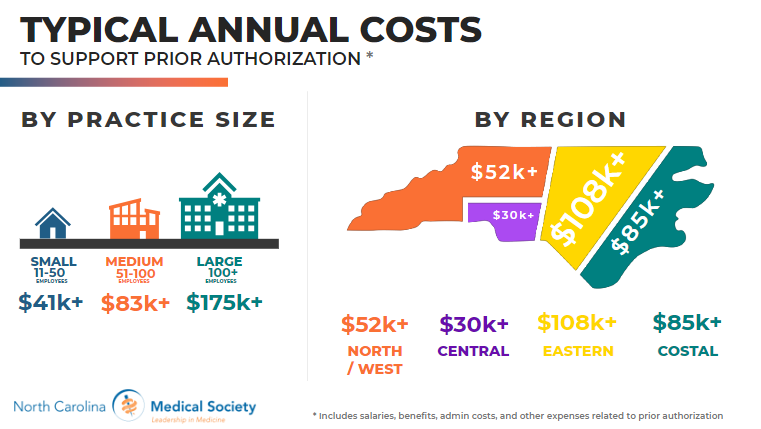
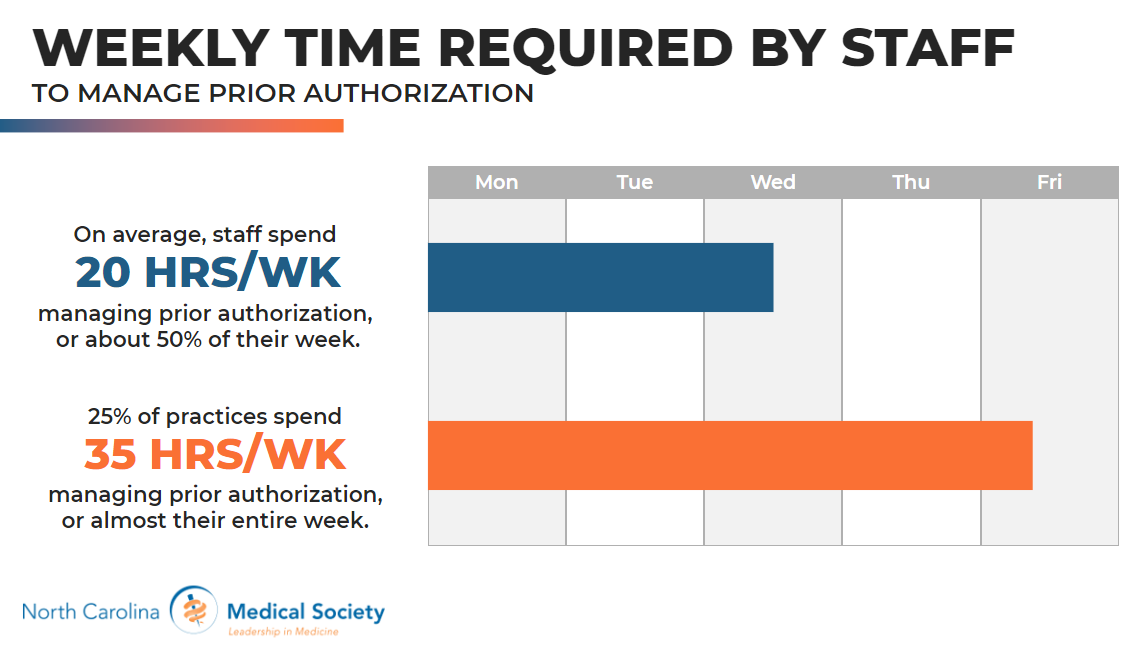
RALEIGH -- The North Carolina Medical Society conducted a survey on the costs and burden to clinicians of Prior Authorization. The results show costs to small, medium, and large practices and break down the costs by region. It further breaks down the amount of time required by staff to manage Prior Authorization and how most clinicians believe they could take on more patients if the burden of Prior Auth was reduced.
NCMS CEO Chip Baggett says, "Just imagine the impact on healthcare in North Carolina if our existing clinicians were each able to add 40 new patients a week. It could open up a new era in accessibility for many of the state's underserved areas."

Violence in the Healthcare Workplace
This single data point was like a punch to the gut ...
Nearly one in three medical professionals who responded to a recent North Carolina Medical Board licensee survey reported they had either witnessed or been involved in a violent incident with patients in the last year.
In this episode of MedBoard Matters, host, Jean Fisher Brinkley talks with NCMS Past President Representative Timothy Reeder, MD who was the primary sponsor of a bill, now a law, called the Hospital Violence Protection Act.

... a grim reminder of the high-stakes, high-stress environment licensees work in.

Your Feedback Needed to Improve the Medicaid Clinician Experience
NCMS's partners, Carolina Complete Health (CCH) and Carolina Complete Health Network (CCHN) will host their 2nd Annual Medicaid Managed Care Town Hall at the 2024 CPP Annual Meeting during NCMS LEAD Conference in November. In preparation for that session, we want to hear from clinicians across North Carolina who provide care to Medicaid enrollees.
Please share your experiences, challenges and successes, suggestions, and questions to help inform future programs, resources, opportunities, and collaborations that will improve health outcomes and enhance the overall care experience for Medicaid clinicians and enrollees.
All Medicaid clinicians are invited to complete this form, regardless of contract status with any of the PHPs.
Provide your feedback here.

NC Matters: Serious Mental Illness in the Perinatal Period
This online self-paced learning course will discuss best practices for supporting pregnant and postpartum patients who experience serious mental illness.
Topics reviewed will include symptomology and treatment options, along with practical strategies for primary care and obstetric providers. The intersection of serious mental illness and health equity will also be explored, considering issues such as family planning, working with historically marginalized populations, and providing care for patients who have experienced trauma.

Jeff Bezos Group Sending $30M to N.C. State for Food Protein Studies

Bezos Center for Sustainable Protein at NCSU will also involve NC A&T, UNC-P, Duke, and Forsyth Tech
(Business NC, David Mildenberg) -- A group led by Amazon founder Jeff Bezos is giving $30 million over five years to NC State University to help create healthy food products that will be plant-based or use fermentation and animal cells.
The Bezos Center for Sustainable Protein at the Raleigh University will create a manufacturing hub for proteins that are environmentally friendly, healthy, tasty and affordable, according to a university press release.
Bezos started his Earth Fund with $10 billion to address climate-change challenges. It has committed $100 million to establish open-access research and development centers focused on sustainable protein.
“As a land-grant university in a state with significant animal agriculture, NC State is uniquely positioned to help shape the future of sustainable food production,” said Chancellor Randy Woodson in a statement He said the effort can help “feed a growing world population in an economically and environmentally sustainable way.
The state legislature’s funding of the Food Innovation Lab in Kannapolis and new facilities in the College of Engineering have made NC State incredibly competitive for this grant.”
NC State said N.C. A&T State University, UNC Pembroke, Duke University, and Forsyth Tech Community College in Winston-Salem will be involved in the project tied to research and workforce development. About 20 industry partners will also take part in the center for technology transfer and student internships.
Bezos is among the five wealthiest persons in the world with a net worth topping $200 billion. He founded Amazon in 1994 and stepped down as CEO in 2021.
He sold Amazon shares valued at $4 billion in February. His ex-wife, MacKenzie Scott, has received massive publicity for donation more than $12 billion over the past five years to more than 1,200 nonprofit groups.

FDA Considering Approval of MDMA for PTSD

Decadeslong Effort Could Move Psychedelic Drugs into Mainstream
(AP - Matthew Perrone) -- Federal health regulators are questioning the safety and evidence behind the first bid to use MDMA, the mind-altering club drug, as a treatment for PTSD, part of a decadeslong effort by advocates to move psychedelic drugs into the medical mainstream.
The Food and Drug Administration posted its initial review of the drug Friday, ahead of a meeting of outside advisers who could help decide whether MDMA — currently illegal under federal law — becomes the first drug of its kind to win U.S. approval as a medication.
In their assessment, FDA scientists said that patients who received MDMA and talk therapy showed “rapid, clinically meaningful, durable improvements in their PTSD symptoms.” But they also called the research “challenging to interpret,” and questioned how long the benefits might last.
They said it’s difficult to know how much of the improvement came from MDMA versus simply undergoing intensive therapy, and also raised several safety concerns, including MDMA’s heart risks and potential for abuse.
The outside experts will take a nonbinding vote on the drug’s overall benefits and risks during Tuesday’s meeting. The FDA will make the final decision, likely in August.
Antidepressants are now the only FDA-approved drugs for post-traumatic stress disorder, which is closely linked to depression, anxiety and suicidal thinking and is more prevalent among women and veterans.
MDMA, also known as ecstasy or molly, is the first in a series of psychedelics that are expected to be reviewed by the FDA in coming years. It’s part of a resurgence of research into the potential of psychedelics for hard-to-treat conditions like depression, addiction and anxiety. MDMA’s main effect is triggering feelings of intimacy, connection and euphoria.
Companies are studying MDMA, psilocybin, LSD and other mind-expanding drugs for numerous mental health problems.
Until recently, psychedelic research was mainly funded by a handful of nonprofit advocacy groups, including Multidisciplinary Association for Psychedelic Studies, or MAPS. The company seeking approval for MDMA, Lykos Therapeutics, is essentially a corporate spinoff of MAPS, which conducted all the studies submitted for FDA review.
In two studies, patients received MDMA as part of an intensive, four-month course of talk therapy lasting more than a dozen sessions, only three of which involved taking the drug. The drug is thought to help patients come to terms with their trauma and let go of disturbing thoughts and memories.
The approach was studied in nearly 195 adults with moderate-to-severe PTSD who were randomly assigned to undergo the therapy with MDMA or with a dummy pill. Following treatment, patients who received MDMA had significantly lower PTSD scores and were more likely to be in remission.
But FDA reviewers noted that the vast majority of patients correctly guessed whether they had received MDMA or a dummy pill, making it “nearly impossible” to maintain the so-called “blinded” objectivity considered essential for high-quality drug research. The agency also questioned how long the drug’s benefits might last. The studies tracked some patients for up to two years, but reviewers noted that about a quarter of patients quickly dropped out of the follow-up study, limiting the usefulness of the results.
The most common side effects of MDMA included headache, nausea, muscle tightness and decreased appetite. More serious issues included heart palpitations and elevated blood pressure, which FDA reviewers said had the “potential to trigger” life-threatening heart problems.
They also raised concerns about the potential for patients to abuse MDMA, which functions similarly to amphetamines and other stimulants.
While MDMA would be a first-of-a-kind approval, U.S. doctors and the FDA itself have already laid some of the groundwork for working with drugs that can cause intense, psychological experiences.
Hundreds of clinics across the U.S. already offer ketamine — the powerful anesthetic sometimes used as a party drug — to treat a host of ailments, including depression, anxiety, chronic pain and PTSD. The FDA has only formally approved the drug for use during surgery, but its availability allows doctors to prescribe it “off-label” for various mental and physical ailments.
In 2019, the FDA approved Johnson & Johnson’s proprietary form of the drug, Spravato, a nasal spray that treats severe depression. Similar to ketamine, the drug is offered at doctor’s offices and clinics where patients usually spend several hours reclining in a chair.
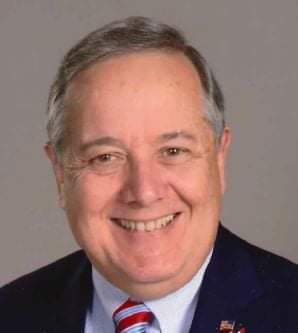
2024 NCMS Candidate Series - Mark Hollo, PA-C

2024 NCMS Candidate Series Featuring Mark Hollo, PA-C
The 2024 North Carolina Medical Society Candidate Series has an exclusive interview with retired PA Mark Hollo, who is running for North Carolina Senate District 45.
In this episode, Hollo talks about rural access to healthcare, Medicaid expansion, Prior Authorization, and the future of healthcare in North Carolina.
All candidates who are members of NCMS and are running for either state or federal office have been extended invitations to articulate their perspectives on these crucial subjects. Stay tuned for forthcoming interviews with other candidates leading up to the November election.
See the full interview with Mr. Hollo here:
https://youtu.be/7DjJRg6GcS8

Don't Miss Wednesday's DOCMS Meeting: The Criminal Legal System, Incarceration and Health Disparities

Join DOCMS at the University Club!
Wednesday, June 5, 2024 | 6:00pm - 8:00pm
University Club, 3100 Tower Boulevard, Suite 1700 - Durham, NC 27707
AGENDA:
- 6:00pm- 6:30pm – Socializing & Housekeeping
- 6:30pm- 7:30pm – Dinner & Guest Speakers
- 7:30pm- 7:45pm – Q&A
- 7:45pm- 8:00pm – DOCMS 2024 Business
“The Criminal Legal System, Incarceration and Health Disparities.”
Speakers:
Evan Ashkin, MD | Professor of Family Medicine UNC Chapel Hill and founder of the North Carolina Formerly Incarcerated Transition (FIT) Program

Dr. Evan Ashkin is a professor of Family Medicine at the University of North Carolina at Chapel Hill. His work is focused on addressing health disparities and gaps in care for marginalized populations. Dr. Ashkin founded the North Carolina Formerly Incarcerated Transition (FIT) Program in 2017 to help address the absence of linkages to care for people released from incarceration with chronic disease, mental illness and/or substance use disorder. The FIT Program now operates in 7 counties across North Carolina. Dr Ashkin also directs the North Carolina Technical Assistance Center, supporting programs for people at risk for incarceration and overdose.
Tommy Green | FIT Program Community Health Worker

Tommy Green, hailing from Oxford, North Carolina, overcame an 11-year, 8-month sentence at 22 years old. Emerging from North Carolina's toughest prisons, he transitioned from freelance security to Assistant Operations Manager of a $20 million company. Now, as Lead Community Health Worker for NC Formerly Incarcerated Transition Program and Program Manager for Orange County Health Department, Tommy is also an Adjunct UNC Family Medicine Instructor, co-owns Success While In Transition INC, and co-directs a nonprofit called Wounded Healers. His impactful work, is featured in the Washington Post, Health Affairs, and other local media, focuses on supporting post-incarceration transition and aiding substance abuse recovery.
1 CME Credit is available! Click here for how to claim your credit.
DOCMS Members & Prospective Members - FREE to attend
Guests - $25 to attend (will be collected at meeting site)
Register Now! Shaping Access to Reproductive Health Care
Shaping Access to Reproductive Health Care:
Financing and Delivery Systems
June 7, 2024 | 12-1:30 p.m. ET
June 12, 2024 | 12-1:30 p.m. ET
The National Academies Standing Committee on Reproductive Health, Equity, and Society will organize a two-part public webinar series to explore the ways in which public and private financing, institutions, and systems shape access to comprehensive reproductive health care.
Part one (June 7) will focus on the coverage and limitations of public and private reproductive health care financing, the relationship between financing mechanisms and equitable access to reproductive health care, and strategies to increase access to comprehensive reproductive health care services in the United States.
Part two (June 12) will focus on the influence of public and private institutions and systems on access to and delivery of reproductive health care services.

Automated Tool Anticipates Hospital Disease Outbreaks
Outbreaks at hospitals are a common and costly issue—an estimated one in every 31 hospitalized patients in the US has at least one hospital-acquired infection at any given time, costing healthcare systems “billions of dollars” annually, according to the US Department of Health and Human Services.
Researchers from the CDC, Harvard Pilgrim Health Care Institute, HCA Healthcare, and the University of California, Irvine Health have developed an automated tool that can anticipate hospital disease outbreaks.
The tool can help medical professionals anticipate outbreaks of hundreds of pathogens and is meant to be an “early warning system” for hospitals, according to a CDC-funded study.
The researchers found that the tool had helped achieve a 64% reduction in the size of potential outbreaks in a pre-pandemic clinical trial (dubbed the Cluster trial) involving 82 HCA-owned hospitals across 16 states.
Find the full article here.

Happy Birthday to Our Members Celebrating This Month!
Grab your party hats and noisemakers and let’s celebrate!
Ana R. Abaroa Salvatierra, MD
Scott M. Abernathy, MD
Nicole Abinanti-Kotula, MD
Dina S. N. Ahmad, MD
T. Rupert Ainsley, Jr., MD, FACP
Reece Linden T. Alkire, DO
Alexandra A. Allaun, PA
Matthew C. Alleman, MD
R. D. Almkuist, II, MD
Hussam Alsarraf, MD, MS
Radhalakshmi D. Aluru, MD
Daniel E. Anderson, MD
Ruth K. Anderson, MD
W. Banks Anderson, Jr., MD
Aimee R. Andrews, MD
Lucy M. Angle, PA-C
Francis C. Aniekwensi, MD
Katherine L. Armstrong, MD
Gretchen S. Arnoczy, MD
Rana A. Asfour, PA-C
Susheel V. Atree, MD
Nadir M. Attiah, MD
Leslie W. Baker, MD
Richard J. Baltaro, MD, PhD
Aaron L. Barnard, PA-C
Kristen A. Barrantes, PA-C
Samantha D. Barrett, PA-C
Andrew C. H. Barton, MD
Amy R. Baruch, MD
James F. Barwick, Jr., MD
Ted A. Bauman, MD
Bethany E. Beasley, MD
Karen L. Belvin, PA-C
Mark A. Bernat, MD, JD
Alex D. Bibbey, MD
Robert H. Bilbro, MD
Gerald R. Binion, MD
Ganesh Bissram, MD
Thomas L. Blackstone, MD, FAAP
Veita J. Bland, MD
Danielle M. Bliss, MD
Amy L. Blumenthal, MD, FACOG
Stacey A. Blyth, MD
Helen H. Bosse, MD
Benjamin P. Boudreaux, MD
Laura M. Bowen, MD
Alec D. Bower, DO
Deanna M. Boyette, MD
William T. Bradford, MD
George L. Bradley, Jr., DO, FAAFP
Judy Ann M. Brangman, MD
Ray M. Braquet, MD
Eric P. Brestel, MD
John G. Briggs, Jr., MD
Peter R. Bronec, MD
Adam P. Brown, MD
Michael W. J. Brown, MD
Samantha T. Brown, PA-C
Jeffrey Browne, MD
Robert A. Brownstein, MD
Kevin F. Bruning, PA-C
Michelle R. Bucknor, MD, MBA
Mushtaq A. Bukhari, MD
Timothy P. Bukowski, MD, FACS, FAAP
Kaleigh L. Burke, MD
W. Rowell Burleson, MD
Steven J. Burnham, MD
Royce A. Burns, MD
Victor W. Bustard, MD
Darius K. Byramji, MD
Joseph B. Callahan, MD
Nathan H. Calloway, MD
Sean T. Canale, MD, FACS
Ian L. Cannon, MD
Paul V. Caporossi, MD
D. Spencer Carney, MD
Raymond M. Carroll, MD
Michael J. Casale, MD
Steven L. Case, MD
Robert C. Chadderdon, MD
Moreblessings R. Chakanyuka, MD, FAAP
William P. Chalfant, MD
Donald V. Chamblee, MD
Erin E. Chaney, MD
Simon W. Chao, MD
Don C. Chaplin, MD
Stephanie A. Chase, MD
Yin J. Chen, MD
Anika S. Cherry, MD
Joshua K. Cho, MD
David A. Ciaccia, DO
Jason M. Ciapponi, PA-C
Jerfi D. Cicin, DO
Edgardo J. Cintron Diaz, MD
David C. Clark, Jr., MD
Richard L. Clark, MD
D. Keith Clarke, MD
Dennis M. Clemens, MD
Jonathan D. Clemente, MD
Brittany C. Clemmons, PA-C
Ashley P. Clower, MD
Yank D. Coble, Jr., MD
Neal R. Cole, PA-C
Gordon D. Coleman, MD
Karrie A. Comstock, PA-C
Charles A. Cook, MD
William B. Corkey, MD
Jeffrey L. Coston, DO
Joshua K. Cox, MD
Nicholas R. Crews, MD
Pamela J. Culp, MD
Claire A. Cunniff, MD
Kathryn A. Cziraky, MD
Stephen M. Dahlstedt, MD
Thomas M. Dalton, MD
Richard T. Z. Dalyai, MD
Anthony M. Daniels, MD
Joanna M. Dauber, DO
James F. Davidson, IV, MD
Delina J. Davis-Cooley, PA-C
Richard H. Dean, MD
Kristopher W. Decker, PA-C
Brian S. DeLay, MD
Daniel L. DeLo, MD
Colby B. Dendy, MD
T. Craig Derian, MD
Alisha T. DeTroye, PA-C
Andrea K. Dickerson, MD
Sarah A. Djali, PA-C
Patricia C. Doerr, MD
Mary A. Dooley, MD, MPH
Trevor J. Doolittle, PA-C
Bradford D. Drury, MD
Robert T. Duffey, MD
Robert L. Dufour, MD
James P. Dugan, MD
Eldon S. Dummit, Jr., MD
William M. Dunlap, MD
David R. Duralia, MD
Suzanne E. Eaton-Jones, MD
Bryan T. Edwards, PA-C
Inga Edwin, MD
Dennis G. Egnatz, MD, FACOEM
Robert R. Ehinger, MD
Lisa A. Emrich, MD
Matthew A. Engelbrecht, MD
Betsy M. English, MD
Kristi L. English-Brown, MD
Silverio C. Enojado, Jr., MD
Kimberly M. Erickson, MD
Guirguis A. Eskandar, DO
Keivan Ettefagh, MD
A. Ray Evans, MD
Matthew G. Ewend, MD
Joseph S. Farmer, IV, PA-C
Richard W. Farnum, II, MD
Stephen L. Farris, MD
Kenneth A. Fath, MD
Justin P. Favaro, MD, PhD
Michael Favorito, MD
Ronald A. Fazio, PA-C
Samantha L. Feldmeyer, PA-C
Eric K. Fitzcharles, MD
James E. Fleischli, MD
David Fleischman, MD, FACS
Lawrence M. Fleishman, MD
Bethany S. Flinchum, PA-C
Russell P. A. Ford, MD
Constance C. Foreman, MD
Leslie F. Fort-Barrie, MD
John T. Foster, MD
Kathleen M. Foster, MD, FACOG
Hannah E. Fratantuono, PA-C
David W. Frazier, MD
L. Davis Frederick, III, MD
Ronald M. Friedman, MD
Jeffrey I. Frohock, Jr., MD
Elizabeth Fuller, PA
Joel L. Gallagher, MD
Roy P. Gallinger, MD
Harry A. Gallis, MD
Lee Ann Garner, MD
April L. Gay, MD
Emile L. Gebel, MD
William M. Geideman, MD
Matthew J. Gerber, MD
Edward R. Gerrard, MD
Richard D. Goldner, MD
Ishwar H. Gopichand, MD
LaLonda M. Graham, MD
Lisa M. Grana, MD
Deborah G. Grant, PA-C
Christa L. Gray, MD
Carrie L. Green, PA-C
John L. Green, MD
Kevin W. Greene, PA-C
Gregory T. Greenwood, MD
Robert S. Greenwood, MD, FAAP, FAAN
Greg L. Griewe, MD
Davida J. Griffin, PA-C
J. Laird Griffin, MD
Nicholas E. Grivas, MD
Richard H. Gross, MD
Guy J. Guarino, MD
Ananda R. Gurram, MD
Sanford D. Guttler, MD
Michele A. Haber, MD
William E. Hall, MD
Matthew J. Hallman, MD
George W. Hamby, MD
Nancy L. Hancock, MD, MPH
Cherissa C. Hanson, MD, FAAP
John S. Hanson, MD
J. Robinson Harper, Jr., MD, FACC
Jessica B. Harrell, MD
Amy U. Harrelson, PA-C
Timothy E. Harris, MD
Patrick R. L. Hayes, MD
Donald V. Heck, MD
Todd E. Helton, MD, PhD
Robert A. Henderson, MD
Jill L. Hendra, DO
Ryan M. Hendricker, MD
Andrew A. Hendricks, MD
Alexia M. Hernandez-Soria, MD
C. Dana Hershey, Jr., MD
Jacqueline M. Hicks, DO
Sean T. Hicks, PA-C
James E. Hill, Jr., PA-C, MEd
Kristina A. Hines, DO
Carl W. Hoffman, MD
George A. Howard, III, MD
Eric R. Howell, MD
Duncan B. Hughes, MD
Darrin R. Hursey, MD
Charles H. Hutchins, MD
Robert P. Hutchins, MD
Aidevo S. Igbide, MD
Andrew N. Illobre, PA-C
Taylor T. Irvin, PA
Matthew Isaacs, MD
Mark G. Jablonski, MD
Laura L. Jacimore, MD
James W. Jacobs, MD
Nicole Jacobs, MD
Sanjay B. Jagannath, MD
Haddy M. Jarmakani, DO
Thomas J. Jaski, MD
Sharrah E. Jenkins, MD
Jisha John, MD
Dakota C. Johnson, MD
David S. Johnson, MD, FAAP
Eric V. Johnson, MD
Thomas M. Johnson, MD
Scott R. Johnston, MD
Daniel B. Jones, MD
David T. Jones, MD
Shayna D. Jones, MD
Barbara M. Jordan, MD
R. Stephen Joyner, MD
Jeffrey C. Kafer, MD
Russel R. Kahmke, MD
Radhika Kalisetti, MD
Alice L. Kamil, MD
Karen A. Kartheiser, MD, FAAP
Philip D. Kath, MD
Peter J. Kauffman, PA-C, BS
Lisa G. Keeton, MD
Thomas B. Kelso, II, MD, PhD
Darin N. Kennedy, MD
Jacqueline F. Kerkow, MD
George W. Kernodle, Jr., MD, FACR, FACP
Sarah T. Kerr, PA-C
Imad Khan, DO
Parviz Khoshnevis, MD
George G. Kim, MD
Peter M. Kindschuh, MD
Walter L. King, Sr., MD
William W. King, MD
David J. Kirby, MD
Stephen M. Kirkland, MD
Margaret A. Kirkley, MD
Keith P. Kittelberger, MD
David I. Klumpar, MD
Stephen D. Knowlton, MD
Kalavathi Kolappa, MD
Gordon G. Koltis, MD
Meghana Konanur, MD
Hervy B. Kornegay, Jr., MD
Brian R. Kosobucki, MD
David C. Kowalski, MD
Micah H. Krempasky, MD
Emily S. Kuchinos, PA-C
Marshall A. Kuremsky, MD
Brian S. Kuszyk, MD, FACR
Robert Lacin, MD
William H. Lagarde, MD, FAAP
Elizabeth A. H. Lahti, MD
James R. Lakey, MD
Sanjiv S. Lakhia, DO
Jeremy R. Landvater, MD
Delano R. Lang, Jr., MD
Charles W. Lapp, MD
Tracy H. Lathrop, MD
Craig T. Lauder, DO
Linda W. Lawrence, MD
Ellen T. Lawson, MD
Kathryn E. Leet, PA-C
Eric M. LeFebvre, MD
Bruce A. Leonard, MD
Ryan T. Li, MD
Xiaohuan Li, MD
Edward G. Lilly, III, MD
David O. Lincoln, MD
Karin S. Linthicum, MD
Joseph O. Lizotte, PA
Heather A. Loesch, MD
Lloyd D. Lohr, MD
William E. Long, MD, CCD
Justin P. Loucks, PA-C
Barbara A. Lowry, MD
Shantae L. Lucas, MD
John J. Lund, MD
Michael J. Lund, MD
Joel Lutterman, MD
Benjamin J. Lyles, MD
William W. MacDonald, MD
Yvonne Mack, MD
Ragini T. Madan, MD
Michael J. Maggitti, MD
Laura K. Magnuson, MD
Larry D. Mann, MD, FAAP
Mark D. Marchand, MD
Mark J. Marchese, MD
Albert W. Marr, MD
David F. Martin, MD
Kirk J. Matthews, Jr., MD
Ralph J. Maxy, MD, FAAOS
Andrea R. Mazzoni, MD
Andrew D. McBride, MD
Olivia J. McCallum, MD, FACOG
Clement L. McCaskill, DO
Mary H. McConnell, MD
Robert H. McConville, Jr., MD
Thomas M. McCutchen, Jr., MD
Shelly McElhanon, PA-C
Denis M. McGillicuddy, MD
Matthew J. McGirt, MD
Daniel McKearney, PA-C
Stephen E. McKim, MD
Charles A. McLaughlin, III, MD
Jonathan O. McLean, MD, FACC
Walter C. McLean, Jr., MD
Michelle M. McMoon, PA-C, PhD
Elena B. McNeill, MD
John H. Meier, MD
Hannah I. Messer, MD
Louise D. Metz, MD
Martin B. Meyerson, MD
Jeffrey A. Michelson, MD
Paul A. Midkiff, MD
Tarra W. Millender, MD
Andrew C. Miller, II, MD
David C. Miller, MD
D. Edmond Miller, MD
Justin A. Miller, MD
Andrew J. Mincey, MD
Michael F. Minozzi, III, MD
Karin R. Minter, MD, MPH, FAAP
Thomas B. Mobley, III, MD
Jahan J. Mohiuddin, MD
Mary Frances Moody, MD
Joseph O. Moore, MD
Stephen C. Moore, MD
Joseph C. Moran, MD
Chris E. Morgan, MD
Vicki M. Morris, MD
Sarah A. Morton, PA-C
Malana K. Moshesh, MD
T. Scott Mouser, MD
William F. Mullis, MD
John C. Mundy, MD
Felix R. Muniz, MD
John B. Murphy, Jr., MD
Cody A. Myrick, PA-C
Luiz Nascimento, MD
Patricia K. Naslund, MD
Walter E. Neal, Jr., MD
Venkat Rama Krishna R. Neelagiri, MD
Saroj Neupane, MD
Charles J. Niemeyer, MD
Douglas A. Nigbor, MD
J. Gray Norris, MD
Adrienne M. Novey, PA-C
Richmond K. Nuamah, MD
Ashley N. Oladipo, MD
H. Newland Oldham, Jr., MD
William G. Orrison, MD
Kaitlin C. Osbourn, PA-C
Lewis J. Overton, MD
Winifred A. Owumi, MD
Michael A. Papagikos, MD
Gwenevere C. Parker, MD
Delip V. Patel, MD
Ketan A. Patel, MD
Pavan A. Patel, MD
Raj N. Patel, MD, MS
Roopen R. Patel, MD
Swapnesh M. Patel, MD
Dwayne E. Patterson, MD
F. M. Simmons Patterson, Jr., MD, FACC, FACP
Meryl A. Paul, MD
Larry A. Pearce, MD
Coryell J. Perez, MD
Jonathan D. Perry, MD
Brandon M. Peters, MD
Drew C. Peterson, MD
Frank W. Petraglia, MD
Ashok P. Pillai, MD
Christine F. Piller, MD
Gregory T. Pleasants, MD
James F. Plowden, MD
Dana C. Point, MD
Gerald L. Points, II, MD
Sujani Poonuru, MD
Glen E. Powell, II, MD
Sanjay K. Premakumar, MD
Courtney M. Prim, PA-C
Amelia Pugh-Wilson, MD
Liana Puscas, MD, MHS
Dominic S. Putala, DO
John V. Puthenveetil, MD
Jerald D. Pyles, MD
Robert P. Quarles, MD
Jeffrey J. Ralston, DO
Lorena O. Ramos, PA-C
Anshul M. Rao, MD
Innanje R. Rao, MD, FACC
Misha Raza, PA-C
Christopher S. Reavill, MD
S. L. Record, Jr., MD
Deepa Reddy, MD
Indira Reddy, MD
Timothy J. Reeder, MD, MPH, FACEP
Donald B. Reibel, MD
Richard B. Reiling, MD, FACS
Robert A. Renjel, MD
Mark H. Rescino, PA-C
Bradley H. Restel, MD
Theodore B. Rheney, Jr., MD
Alleen D. Richards, MD
Gaa O. Richardson, MD
George W. Riddick, Jr., MD
William A. Rieck, Jr., DO
Clifford R. Riester, MD
Sarah J. Ro Ellis, MD
Gail M. Robinson, MD
John M. Robinson, DO
Michael D. Rodman, MD
Chantel S. Roedner, MD
Corianne D. Rogers, MD
Garrett L. Rogers, MD
John C. Rossitch, MD
Duncan P. Rougier-Chapman, MD
Stephen H. Royal, MD, FACC
Brandon S. Rubens, MD
Tinsley W. Rucker, MD
Katherine M. Ruiz González, MD
Jerome Ruskin, MD
Walter R. Sabiston, MD
Satinder P. S. Saini, MD, FACP
Russell A. Salton, III, MD
Bryan M. Saltzman, MD
W. Ray Samuels, MD
Daniel J. Sanza, PA-C
Jay F. Saunders, MD
Michael T. Scannell, MD
Yolanda V. Scarlett, MD
Priscille Schettini, MD
Robert E. Schneider, MD
Elizabeth J. Scott, MD
Michele L. Scott, MD
Kayla J. Scudder, PA-C
Soma Sengupta, MD
Andrew J. Sewalish, PA-C
James L. Seward, MD
Donald T. Shafer, MD
Meera U. Shah, PA-C, MSPAS
Daniel M. Shapiro, MD
Scott B. Shawen, MD
Kirstin A. Shepperson, PA-C
Shailesh C. Shirolkar, MD
Ruchi Shrestha, MD
Ethan Shroll, MD
Michael A. Sieracki, PA-C
Harold R. Silberman, MD
H. Paul Singh, MD
Chirapa Sinthusek, MD
Lee Ann B. Skladan, MD, FAAP
Sanjeev Slehria, MD
Catherine M. Sloop, MD
John A. Smid, MD
Jane S. Smith, MD
John R. Smith, Jr., MD
Mark D. Smith, MD
Robert L. Smith, MD
Roger E. Smith, MD
Stephen B. Smith, MD
Brian C. Sninsky, MD
Elizabeth A. Snow, MD
John J. Soltys, MD
Peeter A. Soosaar, MD
Margaret K. Sparks, MD
James D. Spivey, MD
Bryan D. Springer, MD
Robyn L. Stacy-Humphries, MD
James E. Stanislaw, MD
Tabitha B. Staradumsky, PA
Michael J. Steger, PA
Hunter S. Stolldorf, MD
P. Gale Stone, MD
Charles W. Stout, MD
Kyle W. Strader, MD
David E. Strom, MD
Matthew L. Strupp, PA-C
Dennis O. Stuart, MD
Leslie S. Suchar, PA
Anna N. P. Sullivan, PA-C
Robert J. Sullivan, Jr., MD, MPH
William G. Sullivan, MD
Ronald F. Sural, MD
Beth E. Susi, MD, FACP
Laddeus L. Sutton, MD, FACC
Michael F. Sweeney, MD
Charles F. Sydnor, MD
Jeja B. Syeda, MD
Julia K. Taber, MD
Lori A. Tackman, MD
J. R. Tamisiea, MD
Kristopher A. Tantillo, MD
Ashley H. Tapscott, DO
David M. Tarter, MD
Lloyd J. Taylor, PA-C
Zachary R. Taylor, MD
Bala Gangadhara R. Thatigotla, MD
Jonathan G. Thomas, MD
Michael J. Thomas, MD, PhD, FACE, ECNU
Jason W. W. Thomason, MD
R. Bradley Thomason, III, MD, FACS
Amy L. Thompson, PA-C
Gwennaelle C. M. Thompson, PA-C
John A. Thompson, Jr., MD
Stephen R. Tibbels, MD
Paul J. Tobben, MD
Kaitlin M. Torres, PA-C
Steven L. Tracy, MD
Douglas R. Trocinski, MD
Kristen M. Trulear-Jackson, MD
Bair E. Tsytsik, MD
Donna M. Tuccero, MD
John W. Tucker, PA-C
Melissa Turner, PA-C
Ronald VanDerNoord, MD
Jonas J. Varaly, DO
Dwan Q. Varner, MD
Sameer Vemuri, MD
Susan Vettichira, MD
Ian A. Villanueva, MD
Harold D. Wackerle, MD
Jeffrey M. Waldman, MD
Michelle D. Wall, PA-C
Terry W. Wallace, MD
John T. Ward, MD
Robert J. Ward, MD
David R. Warden, IV, MD
Harrill G. Washburn, Jr., MD
Brady C. Way, MD
Kenneth D. Weeks, III, MD
Bradley K. Weisner, MD
Danielle L. Wellman, MD
David M. Wells, MD
Stephen R. Wells, MD
Adam C. Wenzlik, MD
Gary V. Wertman, II, DO
Robert S. Westrol, MD
Evan N. Wheeler, DO
Clifford R. Wheeless, III, MD
Richard L. White, Jr., MD
C. Phillip Whitworth, MD
William J. Wiggs, Jr., MD
Benjamin S. Wiles, DO
Randall N. Willard, MD
Elliott F. Williams, MD
Jack D. Williams, MD
Kasey L. Williams, PA-C
Kayla M. Williams, MD
Sonya E. Williams, MD
N. Alford Wilson, MD
Russell C. Wilson, MD
Jodi M. Winkel, MD
L. Dale Withers, MD
Sydnor T. Withers, Jr., MD
Brian S. Wood, MD
Sally D. Wood, MD
Brandon K. Woodard, MD
Paige C. Woodham, MD
Leon F. Woodruff, Jr., MD
John J. Wrenn, MD
Stephanie E. Wu, MD
Jeremy G. Yates, DO
Edward B. Yellig, MD
Peter R. Young, MD
W. Lee Young, III, MD
John Zannis, MD
Jessica Zhang, MD
Richard L. Zhang, MD
Adam J. Zolotor, DrPH, MD

Carolina Complete Health Institutes High Dollar Pre-Payment Review for Inpatient Claims

Effective August 1, 2024, Carolina Complete Health will institute high dollar pre-payment review requirements for hospital inpatient claims with a header or total billed amount greater than $250k.
Beginning August 1, 2024, any hospital inpatient claim billed to Carolina Complete Health greater than $250k will be subject to a pre-payment review.
What to expect:
- Proactive submission of itemized bill: For any hospital inpatient claim greater than $250k, please include an itemized bill along with the claim submission.
- If an itemized bill is not included with the original claim, it will cause delay and/or partial payment.
If you have questions, please contact your Provider Engagement Administrator. If you need your Provider Engagement Administrator's contact information, please email ProviderEngagement@cch-network.com
It's Heating Up Outside! Operation Fan Heat Relief Can Help Your Patients Stay Cool!
The North Carolina Department of Health and Human Services’ Division of Aging is partnering with the N.C. area agencies on aging and local service providers to distribute fans to eligible recipients through Operation Fan Heat Relief from May 1–Oct. 31.
People 60 and older, as well as adults with disabilities, are eligible to sign up for assistance from May 1–Oct. 31 at local aging agencies across the state. Since 1986, the relief program has purchased fans for older adults and adults with disabilities, providing them with a more comfortable living environment and reducing heat-related illnesses.
The program is made possible by donations from Duke Energy Carolinas, Duke Energy Progress, Dominion and Valassis. Operation Fan Heat Relief allows regional area agencies on aging and local provider agencies to purchase fans for eligible individuals. Local provider agencies can also purchase a limited number of air conditioners based on a person’s specific health conditions.
Last year, the division received $86,000 in donations, allowing for the distribution of 3,097 fans and 21 air conditioners.
As individuals age and develop chronic medical conditions, they are less likely to sense and respond to changes in temperature, and they may also be taking medications that can worsen the impact of extreme heat. Operation Fan Heat Relief helps vulnerable adults at risk for heat-related illnesses stay safe during the summer.
In addition to applying for fans, people age 60 and older, as well as adults with disabilities, can take the following steps during high temperatures:
- Increase fluid intake
- Spend time in cool or air-conditioned environments regularly
- Reduce strenuous activity during the afternoon
- Speak with their physician before summer about how to stay safe while taking medication that can affect the body's ability to cool itself (e.g., high blood pressure medications)
For more details, individuals may contact their area agency on aging or the Division of Aging at 919-855-3400.
More information about Operation Fan and Heat Relief, including tips on preparing for extreme heat and a list of local agencies distributing fans, is available at www.ncdhhs.gov/divisions/aging/operation-fan-heat-relief.

New Findings Suggest Introducing Peanuts in Infancy Prevents Peanut Allergy into Adolescence
New findings from a study sponsored and co-funded by the National Institutes of Health’s National Institute of Allergy and Infectious Diseases (NIAID), provide conclusive evidence that achieving long-term prevention of peanut allergy is possible through early allergen consumption. The results were published in the journal NEJM Evidence.
Feeding children peanut products regularly from infancy to age 5 years reduced the rate of peanut allergy in adolescence by 71%, even when the children ate or avoided peanut products as desired for many years.
“Today’s findings should reinforce parents’ and caregivers’ confidence that feeding their young children peanut products beginning in infancy according to established guidelines can provide lasting protection from peanut allergy,” said NIAID Director Jeanne Marrazzo, M.D., M.P.H. “If widely implemented, this safe, simple strategy could prevent tens of thousands of cases of peanut allergy among the 3.6 million children born in the United States each year.”
Read more on these findings here.

CMS Adds MIPS EUC Hardship Option
Due to the ongoing efforts by the AMA, CMS has added an option to cite the cyberattack when requesting the 2024 Merit-based Incentive Payment System (MIPS) Extreme and Uncontrollable Circumstances (EUC) hardship exception.
To account for the increased number of physicians that have been impacted by a cyberattack this year, CMS has specifically added a drop-down tab in the application to indicate the EUC is due to the Change cyberattack. When in the EUC portal, physicians should select the event type as “ransom/malware”. Once a physician clicks on the event type “ransom/malware” a drop-down box will appear asking whether the event pertains to the Change Healthcare Cyberattack. Reference page 8 in the 2024 MIPS EUC Application User Guide for more details. The 2024 MIPS EUC portal is now open, and physicians have until December 31, 2024, to file a hardship application and avoid a 2026 MIPS negative payment adjustment.
When applying for a hardship, physicians have the option to request reweighting of up to four MIPS categories. Reweighting of all performance categories will result in avoiding a MIPS penalty of up to -9 percent in 2026. As a reminder, if a physician or group submits data, it will override the hardship exception and the physician or group may be scored.
Don't Miss AMA's Medicare Physician Payment Mid-Year Update
Register now for this Advocacy Insights webinar on June 4 at Noon CT to hear about the latest AMA efforts on Medicare physician payment reform: what’s happening on Capitol Hill, how the AMA’s grassroots campaign is raising the volume, and what to expect on the regulatory side—particularly as the proposed rule for the 2025 Medicare physician fee schedule is expected later this summer.
Speakers include:
- Margaret Garikes, vice president, Federal Affairs, AMA
- Rob Jordan, vice president, Political Affairs, AMA
- Jason Marino, director, Congressional Affairs, AMA
Moderated by Jesse M. Ehrenfeld, MD, MPH, president, American Medical Association
Mark Your Calendar! Substance Use Disorder Medication Assisted Treatment and Recovery Event
Download the full-version pdf with registration information here.

UNC Health Championship Tees Off Today!
Raleigh's Premier Golf & Hospitality Event Returns!
(Axios Raleigh, UNC Health) -- The UNC Health Championship presented by Stitch, formerly Rex Hospital Open, has a new venue at Raleigh Country Club and more exciting ways to watch the Korn Ferry Tour players chase their dream.
The UNC Health Championship has become one of the region's premier golf tournaments, attracting up-and-coming pro golfers and local favorites every year.
- Proceeds from the tournament go toward funding a new children's hospital in the Triangle.
What to know: The opening round begins tomorrow and will come to a close on Sunday. Grounds tickets start at $40.
- Former UNC basketball coach Roy Williams is the chairman of the tournament this year and will play in the pro-am.
- The tournament will recognize the late Raleigh golfer Grayson Murray, who died by suicide last week, and place green ribbons around the course for Mental Health Awareness Month.
Several players with local ties will be competing, including:
- Raleigh natives and former UNC players Ryan Gerard and Carter Jenkins
- Raleigh native Doc Redman
- Campbell University alum Pontus Nyholm and Brett McLamb, who played at both Campbell and N.C. State
- Ryan Blaum, a Duke alum who lives in Durham
- David Ford, a rising senior at UNC.
2024 Physician Compensation Report lists NC City as a Metro Area With Highest Compensation
Average Physician Compensation Up Nearly 6 Percent
Between 2022 and 2023, the average compensation for U.S. physicians increased nearly 6% (5.9%), rebounding from a slight decline of 2.4% in the previous year. Physicians in the San Jose metropolitan area experienced one of the most significant surges in compensation, with an annual growth rate of 13.5%. This sizable increase propelled San Jose from being the fourth-highest metro area in average physician compensation in 2022 to claiming the number-one spot in 2023.
Notably, all ten of the metropolitan areas with the lowest average physician compensation in 2023 saw growth last year, with growth rates exceeding 10% in Baltimore, Providence, and Virginia Beach.


To read the full report click here.

COVID Vaccine Program for Uninsured Ending Soon
A federal program providing free COVID-19 vaccines to uninsured and underinsured adults is shutting down this summer, before the fall rollout of updated vaccines to fight against the latest variants.
The Centers for Disease Control and Prevention (CDC) said its Bridge Access Program will end in August because of a lack of funding. The program has provided more than 1.4 million free COVID-19 vaccines since it launched in September 2023 at a cost of more than $1 billion.
Continue to the full article here.