

Early Voting in NC Starts Today

Early voting starts Thursday, General Election is Tuesday, November 5
During the early voting period, voters may cast a ballot at any early voting site in their county. This is different than Election Day, when registered voters must vote at their assigned polling place. During the early voting period, eligible individuals may also register to vote and vote at the same time (see Same-Day Registration below).
For an overview of North Carolina’s current elections, visit Upcoming Election.
Early Voting Dates and Sites
- The in-person early voting period for the 2024 general election:
- Begins Thursday, Oct. 17, 2024.
- Ends 3 p.m. Saturday, Nov. 2, 2024.
- The general election is on Tuesday, Nov. 5, 2024.
- Find early voting sites and schedules in your county: Early Voting Site Search.
- Locations and voting hours are also available here: Early Voting Sites for the Nov. 5, 2024 General Election (PDF).
Unsure if You Are Registered?
Find out if you are registered to vote by entering your information into the Voter Search.
Don’t Forget Your Photo ID
North Carolina voters will be asked to show photo ID when they check in to vote. Learn more: Voter ID.
Same-Day Registration
When you check in to vote at an early voting site, you may update your name or address within the same county if necessary. Individuals who are not registered to vote in a county may register and immediately vote at that same site. This process is called “same-day registration.” Find more information at Register in Person During Early Voting. Although same-day registration is available for voters during early voting, same-day registration is not available for most voters on Election Day.
Your Sample Ballot
To view sample ballots, registered voters must enter their information into the Voter Search and navigate to “Your Sample Ballot.” Voters can practice making selections with the accessible sample ballot: “Option 4” at the NC Absentee Ballot Portal.
Note: Sample ballots for each election are only available once finalized.
By-Mail Absentee Ballot Drop-Off
Voters who receive an absentee ballot by mail may deliver their ballot to their county board of elections office or to an election official at an early voting site during any time that site is open for voting. Ballots will be kept securely and delivered to the county board of elections for processing.
Voting Equipment
Curious which equipment will be at your voting site? Check the interactive map and table: Early Voting Equipment by County.
Voter Assistance and Curbside Voting
Any voter who qualifies for assistance may ask for help at their polling place under Assistance to voters (N.C.G.S. § 163-166.8). To find more information, visit Help for Voters with Disabilities. Curbside voting is available for eligible individuals. For more information, see Curbside Voting.
After You Vote
You can find out whether your vote counted in the “Your Absentee Ballot” section of the Voter Search database. Under North Carolina law, all early votes — by-mail or in-person — are considered absentee votes. Your ballot status also will show up in the “Voter History” section as soon as your county completes the post-election process of assigning voter history to your record. This may take up to a few weeks after Election Day.
Learn more about NCMS member candidates here.

Disruptions in Availability of Peritoneal Dialysis and Intravenous Solutions from Baxter International Facility in North Carolina

The Centers for Disease Control and Prevention (CDC) is issuing this Health Alert Network (HAN) Health Advisory to inform healthcare providers, pharmacists, healthcare facility administrators, and state, tribal, local, and territorial health departments of a supply disruption of peritoneal dialysis (PD) and intravenous (IV) solutions from the Baxter International’s North Cove facility in North Carolina, due to Hurricane Helene. The supply disruption may impact patient care and require adjustments to the clinical management of patients. Healthcare providers, pharmacists, healthcare facility administrators, and state, tribal, local, and territorial health departments, regardless of supply chain disruptions, should immediately assess their supply and develop plans and mitigation strategies to reduce the impact on patient care.
Read the full official CDC HEALTH ADVISORY here.

FTC Increases Premerger Notification Requirements Despite Objections
The Federal Trade Commission finalized changes to a rule that will require healthcare companies to provide more information to regulators ahead of merger and acquisition deals.
The agency said the changes that will improve the ability of the FTC and Antitrust Division of the U.S. Department of Justice (DOJ) to detect illegal mergers and acquisitions prior to consummation.
"The final rule requires additional information that is necessary to determine which deals require an in-depth antitrust investigation," the FTC said in a press release.
Learn more about the premerger notification requirements here.
As You Head to the Polls, Learn More About the NCMS Member Candidates
Early Voting Available Until November 2
The North Carolina Medical Society has interviewed several member candidates on issue important to members. Click here to find out what they have to say.
Unsure if You Are Registered?
Find out if you are registered to vote by entering your information into the Voter Search.
Don’t Forget Your Photo ID
North Carolina voters will be asked to show photo ID when they check in to vote. Learn more: Voter ID.
Same-Day Registration
When you check in to vote at an early voting site, you may update your name or address within the same county if necessary. Individuals who are not registered to vote in a county may register and immediately vote at that same site. This process is called “same-day registration.” Find more information at Register in Person During Early Voting. Although same-day registration is available for voters during early voting, same-day registration is not available for most voters on Election Day.
Note: Same-day registration at early voting sites is not available during second primaries. However, individuals who become eligible to vote between the primary and second primary and who are otherwise eligible to vote in the second primary may register and vote on the day of the second primary.
Your Sample Ballot
To view sample ballots, registered voters must enter their information into the Voter Search and navigate to “Your Sample Ballot.” Voters can practice making selections with the accessible sample ballot: “Option 4” at the N.C. Absentee Ballot Portal.
Note: Sample ballots for each election are only available once finalized.
By-Mail Absentee Ballot Drop-Off
Voters who receive an absentee ballot by mail may deliver their ballot to their county board of elections office or to an election official at an early voting site during any time that site is open for voting. Ballots will be kept securely and delivered to the county board of elections for processing.
Voting Equipment
Curious which equipment will be at your voting site? Check the interactive map and table: Early Voting Equipment by County.
Voter Assistance and Curbside Voting
Any voter who qualifies for assistance may ask for help at their polling place under Assistance to voters. N.C.G.S. § 163-166.8. To find more information, visit Help for Voters with Disabilities. Curbside voting is available for eligible individuals. For more information, see Curbside Voting.
After You Vote
You can find out whether your vote counted in the “Your Absentee Ballot” section of the Voter Search database. Under North Carolina law, all early votes — by-mail or in-person — are considered absentee votes. Your ballot status also will show up in the “Voter History” section as soon as your county completes the post-election process of assigning voter history to your record. This may take up to a few weeks after Election Day.
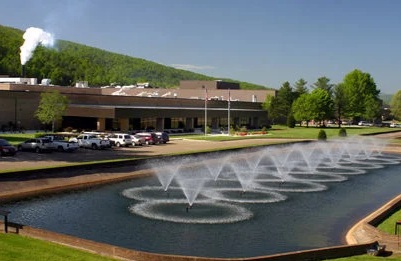
ICYMI: Baxter Imports IV Fluids as Hurricane Helene Triggers U.S. Shortage
Baxter International began shipments of intravenous products to the United States from two international facilities last week, it said on Monday, as it works to bring a hurricane-hit plant in North Carolina back online amid a shortage of the essential medical product.
The medical device maker also received the U.S. Food and Drug Administration's clearance on October 9 to temporarily import products from five facilities in Canada, China, Ireland, and the UK, and was working to secure authorization for more sites amid a nationwide shortage following flooding of the plant by Hurricane Helene late last month.
On Monday, Baxter said its current priority is deep cleaning the facility and assessing the status of all equipment and production lines.
The Marion, North Carolina, site makes 60% of the nation's supply of IV fluids and peritoneal dialysis solutions, amounting to 1.5 million bags daily, according to the American Hospital Association.
A shortage of IV fluids, which provide nutrients to the body or replenish fluids lost due to injury or illness, has forced hospitals to curtail elective procedures.
While the flooding has disrupted the production of peritoneal dialysis solutions, the company said it is actively delivering supplies to patients.
"We do not yet have a timeline for when we expect production to be fully restored to pre-hurricane levels," the company said, while urging conservation of both IV and peritoneal dialysis solutions.
The company last week said it plans to restart its plant in phases and aims to meet 90% to 100% of customer needs by the end of the year. [source]

Western Carolina Medical Society Executive Director Talks Aftermath of Hurricane Helene


Karen Wallace-Meigs Describes First Frightful Days Following Hurricane Helene
“Worst thing I have ever seen. I am absolutely fine, but there is a lot of survivor's guilt. “
Karen Wallace-Meigs was only on the job as the Executive Director of the Western North Carolina Medical Society for five months when the remnants of Hurricane Helene tore across the Southeast and destroyed much North Carolina's beloved western counties. The impact was both tragic and heartfelt.


With the number of people still missing in North Carolina near 100, Wallace-Meigs' days are not getting any easier.
She describes the first few days as harrowing and filled with uncertainty.
“I’ve never had less communications in my life. You really didn’t know what was happening because of a lack of news. No water, power, internet, cell service.” She also shares that traveling was out of the question because road conditions were unknown, and she was unsure of the full extent of the damage.
After a few days, however, WCMS began to regain its footing. The first thing was to get in touch with her staff, some of whom were as far away as Canada. Her newsletter editor is in South Carolina and estimates it will be a year or more before she can return home.
"We are still getting it out!"
Wallace-Meigs says they are definitely back in working mode and the newsletter will return. WCMS also has the largest interpreter network in Western North Carolina and the need for interpreters is greater than ever. "The interpreter network is ready to go" she says and WCMS will be working as hard as possible to put the right interpreters in place for the foreseeable future.
One of the first things Wallace-Meigs worked on was finding places for people to go when they were discharged from hospitals. "People just didn't have a home to go to anymore!" WCMS has been putting retired physicians together with any area churches that have electricity and water to take in people when they leave the hospital. "They have to have a place to recover," she says, "or else they will never get well. What happens next is still to be determined."
"It is about to get cold, and I am not sure what that will mean."
The need for water is well known from reports throughout the region, but Wallace-Meigs says that there will soon be a desperate need for warm clothing, bedding, and shelter. "It will soon be too cold here to stay in a home with no electricity." She says people also forget that losing your home means you lose things like your eyeglasses and your canes. "Durable equipment is going to be something we will need soon as well," she says.
"Don't forget us."
When asked what she wants the people of North Carolina to know, Wallace-Meigs says “Don’t forget us. We’re here, and we’ll be here struggling for a long time. We are resilient, but we need you beside us.”
To help the people of Western North Carolina with a financial donation to the NCMS Disaster Relief Fund click here.

NCMS Recognizes NCMS Disaster Relief Fund Contributors
A heartfelt THANK YOU to these individuals and organizations for their contribution to the NCMS Disaster Relief Fund. Your generous donation is far more than just a financial contribution; it’s a lifeline for the many affected by Hurricane Helene, and vital in providing support to healthcare professionals and communities impacted by this disaster.
We invite you to spread the word about the NCMS Disaster Relief Fund and stay engaged with us as we work together to help restore our Western North Carolina neighbors.
We are grateful to have you in our community!
- Ian D. Archibald, MD
- Preecha Bhotiwihok, MD, MPH
- John W. Black, MD
- Anonymous
- Gay M. Bowman
- Georgi N. Brockway, MD
- Michael T. Brohawn
- Anonymous
- Carolina Complete Health Network
- Sharon M. Foster, MD, FAAP
- Donna C. Graves, MD
- M. Mark Hester, MD
- Suneya G. Hogarty, DO
- Marius J. Ilario, MD
- Linda W. Lawrence, MD
- Douglas S. McFarlane, MD
- Mark B. Moeller, MD
- Anonymous
- Raleigh Orthopaedic Clinic, PA
- Timothy J. Reeder, MD, MPH, FACEP
- Alan J. Rosenbaum, MD
- Anonymous
- Marshall Z. Schwartz, MD
- Douglas D. Sheets, MD, FACOG
- W. Alan Skipper, CAE
- Jennifer K. Stoddard, MD
- STUSQU, PLLC
- Lisa W. H. Thompson, MD
- Cheryl L. Walker-McGill, MD, MBA
- Craig E. Webb, MHS, PA-C
- Johnathan D. Williams, MD
- Anonymous
- Idil Aktan, MD
- R. D. Almkuist, II, MD
- American Board of Pediatrics Inc
- Caroline D. Ames, MD, FACS
- James H. Antoszyk, MD
- Joy Avery
- Timothy M. Beittel, MD
- Anonymous
- Anonymous
- Cedar Mount Behavioral Health, PA
- Center For Pain Management, PLLC
- Melissa M. Coale, MD
- Anonymous
- Kim D. Dansie, MD
- Jackie M. Davis-Jones
- Jessica F. Doerrler, PA
- Patricia Duncan
- Peter A. Eweje, MD
- Mark W. Featherston, MD
- Anonymous
- Joanne M. Fruth, MD
- Lisa M. Gangarosa, MD
- Highland Medical Associates
- Anonymous
- Joseph P. Hunstad, MD, FACS
- Kitsie Jones
- Christopher P. Jordan, MD
- Kerry Kendall
- Eugenie M. Komives, MD, FAAFP
- Ted R. Kunstling, MD, FCCP
- Andrew S. Lamb, MD
- Keith LaScalea, MD
- Anonymous
- Elizabeth G. Livingston, MD
- Anonymous
- Laura L. Martinez, MD
- Darlyne Menscer, MD
- Ashley Newton
- J. Thomas Newton, MD
- Carolyn O'Conor, MD
- Michael K. Patrick, MD
- Patricia Petrick, MD
- Emily Rayes-Prince, MD
- Anonymous
- Corianne D. Rogers, MD
- Nimesh B. Shah, MD
- Kristen M. Shipherd
- Maria J. Small, MD
- Anonymous
- Michol Stanzione, DO
- Steele Creek Dermatology
- Al Steren, MD and Diane Snyder Steren, MD
- Martha Strange, MD
- Thomas M. Swantkowski, MD, AGAF, FACG
- Marian L. Swinker, MD, MPH
- Christopher L. Tebbit, MD
- Monecia Thomas, PhD
- Dimitri G. Trembath, MD
- Michael J. Utecht, MD, FACEP
- Lynnea Villanova, MD
- Bonnie E. Wagner, PA-C
- Rebecca Y. Weinshilboum, DO
- Carl J. Westcott, MD
- Thomas R. White, MD
- Anonymous
- Women's HealthCare Consultant PC
- Nagarjuna Yerra, MD
- Michael Bartiss, MD / Family Eye Care of the Carolinas
- David Boone, MD
- Carolina Complete Health
- Karl Chiang, MD
- John Chretien, MD
- Anonymous
- Kelly Fedoriw, MD
- Carolyn Ferree, MD
- Alison Gardner, MD
- John Goldfield, MHS, PA-C
- Akilah Grimes, MD
- Sandra Jackson / Eastern Pediatrics
- Matthew Katz, MS / MCK Health Strategies
- Melissa Kenny
- Donna McGee, MD
- Larry Napolitano, Jr., MD
- Michael P. Reddy-Miller, MD
- Anonymous
- Andrew Pasternak, MD
- Antonio Ramirez, MD
- Beth Remhof
- Jennifer Root, MD
- Richard Savage, MD
- Anonymous
- Soma Sengupta, MD
- Nimesh Shah / Noble Hospitality Investment
- Amanda Trimpey, MD, MPH, FACOEM
- Yunxiang Zhu, MD
*Please note: List reflects donations received through Tuesday, October 15.
Study: Thousands of Cancer Cases Went Undiagnosed in Covid Pandemic
When the U.S. health care system pivoted to meet Covid-19 in 2020, routine health visits and screenings where many cancer cases would have been caught didn’t happen. It wasn’t ideal, but many health experts thought that as the country opened back up, screenings would help “catch up” to these missed cases. A new paper published Monday in JAMA Network Open suggests that didn’t happen as quickly as experts had hoped.
Instead, the new analysis suggests that cancer diagnoses recovered to pre-pandemic levels by the end of 2021 — but didn’t make up for any of the lost cases from earlier in the pandemic. That leaves a troubling mystery for epidemiologists, as it means experts still don’t know what happened with the roughly 130,000 cancer cases that were missed in 2020.
Continue to full article here.

North Carolina Ranks 10th Worst State for Healthcare Access
North Carolina is the 10th worst state for healthcare access, according to a study from Forbes Advisor.
According to Forbes Advisor, North Carolina has the:
- Fifth-lowest number of nurse practitioners per 10,000 residents (4.3).
- Eighth-highest average premium for employees with single coverage through employer-provided health insurance ($1,847 annually).
- 10th-highest percentage of residents who lack health insurance coverage (9.3%).
- 10th-highest average deductible for employees with single coverage through employer-provided health insurance ($2,247 annually).
North Carolina employers also cover the sixth-lowest percentage of employees’ annual health insurance premiums (76% for employees with single coverage), according to Forbes Advisor.
The study says North Carolina has a strong need for more qualified healthcare professionals.
Rounding out the worst states for healthcare access in the study are Utah at No. 1, Nevada at No. 2, Texas at No. 3, Arizona at No. 4, Georgia at No. 5, South Carolina at No. 6, Indiana at No. 7, Wyoming at No. 8 and Idaho at No. 9. [source]

Examining Critical Mental Health Issues Across the Reproductive Life Cycle
Examining Critical Mental Health Issues Across the Reproductive Life Cycle
October 23, 2024 | 1 - 2:30 p.m. ET
The National Academies Standing Committee on Reproductive Health, Equity, and Society will host a public webinar to explore mental health issues that individuals face across the reproductive life cycle, including issues around sexual education, sexual coercion, and violence.
Speakers, including researchers and practitioners, will touch upon social determinants of health, misinformation, and access to care for marginalized communities, among other topics. Discussions will also include identifying potential contextual and systemic solutions to address these issues. Learn more on the event page.
Speakers include:
- Elizabeth Miller, MD, PhD, FSAHM, Professor of Pediatrics, Public Health and Clinical and Translational Science, University of Pittsburgh
- Inger Burnett-Zeigler, PhD, Associate Professor of Psychiatry and Behavioral Sciences, Northwestern University Feinberg School of Medicine
- M. Antonia Biggs, PhD, Associate Professor and social psychologist at ANSIRH, Bixby Center for Global Reproductive Health, University of California San Francisco
- Ruth Shim, MD, MPH, Luke & Grace Kim Professor in Cultural Psychiatry and Professor of Clinical Psychiatry, Associate Dean of Diverse and Inclusive Education, University of California Davis
Moderator:
Katherine L. Wisner, MD, MS, Professor of Psychiatry and Behavioral Sciences and Pediatrics and Associate Chief, Prenatal Mental Health, Developing Brain Institute, Children’s National Hospital, Washington DC; Professor of Obstetrics and Gynecology, George Washington University School of Medicine and Health Sciences
Merit-based Incentive Payment System Automatic EUC Policy Applied to MIPS Eligible Clinicians Following Hurricanes Helene and Francine
The U.S. Department of Health and Human Services (HHS) Secretary Becerra recently released a letter to healthcare leaders and stakeholders on the impacts of Hurricane Helene, which can be found on the HHS website.
In response to Hurricanes Helene and Francine, the Centers for Medicare & Medicaid Services (CMS) has determined that the MIPS automatic EUC policy will apply to MIPS eligible clinicians in the following designated affected counties of Florida, Georgia, North Carolina, South Carolina, Tennessee, and Louisiana:
- HHS Public Health Emergency (PHE) declaration
- Hurricane Helene: Florida, Georgia, North Carolina, South Carolina, and Tennessee
- Hurricane Francine: Louisiana
- Federal Emergency Management Agency (FEMA) disaster declaration
- Hurricane Helene: DR-4828-FL, DR-4830-GA, DR-4827-NC, DR-4829-SC, and DR-4832-TN
- Hurricane Francine: FEMA-4817-DR
MIPS eligible clinicians in these areas will be automatically identified and have all 4 performance categories reweighted to 0% during the data submission period for the 2024 performance period (January 2 to March 31, 2025). This will result in a score equal to the performance threshold, and they'll receive a neutral payment adjustment for the 2026 MIPS payment year.
However, if MIPS eligible clinicians in these areas submit data on 2 or more performance categories, they’ll be scored on those performance categories and receive a 2026 MIPS payment adjustment based on their 2024 MIPS final score.
NOTE: The MIPS automatic EUC policy doesn’t apply to MIPS eligible clinicians participating in MIPS as a group, subgroup, virtual group, or Alternative Payment Model (APM) Entity. However, groups, virtual groups, and APM Entities can request reweighting through the EUC Exception application. Subgroups will inherit any reweighting approved for their affiliated group; they can’t request reweighting independent of their affiliated group’s status.
For More Information
Please reference the MIPS EUC Exception section on the Quality Payment Program Exception Applications webpage.

Western North Carolina Residents Can Apply for Help Buying Food
Residents in 25 western counties and the Eastern Band of Cherokee Indians impacted by Hurricane Helene can apply for help buying food through the Disaster Supplemental Nutrition Assistance Program (D-SNAP) which will begin on October 18, 2024, the North Carolina Department of Health and Human Services announced. D-SNAP is open to individuals and households not currently receiving Food and Nutrition Services benefits who were impacted by Hurricane Helene. NCDHHS estimates more than 150,000 people will apply for up to $120 million in D-SNAP benefits.
"We are making up to $120 million available to more than 150,000 individuals to buy food for their families — an essential step on the road to recovery from the devastation of Hurricane Helene," said N.C. Health and Human Services Secretary Kody H. Kinsley. "We are committed to using every tool to support the recovery of our friends, families, and fellow North Carolinians in western NC — now and for the long haul."
NCDHHS received federal approval to begin phase one of the program from the U.S. Department of Agriculture beginning on October 18, 2024. People can start applying for assistance three days before the program starts during online pre-registration beginning Oct. 15 and will have seven days from the start of the program to apply. The application period will close on October 24, 2024.
Eligible households will be notified within three days of completing the application and receive a one-time benefit on a special debit card (called an Electronic Benefits Transfer, or EBT card) to help buy food. The exact amount will depend on household size, income and disaster losses. While there are income eligibility standards, a number of considerations are taken into account. Individuals above these limits may still be eligible dependent on disaster expenses, so we encourage everyone who needs support to purchase food to begin their application by calling the DSNAP Virtual Call Center at 1-844-453-1117.
The benefits are good for up to nine months. Benefit cards will be available for pick up at the D-SNAP locations in each county or you can get the EBT card mailed to you overnight at the address you specify on your application.
Continue to full press release here.
HRSA: Extension of Public Health Emergency Telehealth Guidance for Non-current Health Center Patients
Message from HRSA:
We’ve extended the expiration date for our guidance on using telehealth for people who are not current health center patients. You can find the updated telehealth FAQ in the Health Center Program Compliance FAQs.
We initially posted this FAQ during the COVID-19 Public Health Emergency and extended last year’s expiration date. The FAQ's telehealth guidance is now in effect until we issue the final new policy or until December 31, 2025, whichever comes first.
We anticipate releasing the draft Health Center Program Scope of Project Policy Manual for public comment this fall. The manual will include a chapter on telehealth. We will announce the release broadly — we truly value your feedback.
Register Now! How to Protect Your Practice and Patients from Cybersecurity Threats

How to Protect Your Practice and Patients from Cybersecurity Threats
Friday, October 18
12:30 p.m. Central Time/1:30 p.m. Eastern Time
After the Change Healthcare cyberattack earlier this year, cybersecurity has become a central concern for physicians and patients alike. Attend this AMA Advocacy Insights webinar to learn about how to implement appropriate cybersecurity measures to protect your practice as well as your patients against the cybersecurity challenges of today. Also hear about advocacy that is underway to strengthen cybersecurity systems and provide support to physician practices for enhancing their cyberhygiene.
MODERATOR
- Michael Suk, MD, JD, MPH, MBA, chair, AMA Board of Trustees
SPEAKERS
- Christian Dameff, MD, Department of Emergency Medicine, School of Medicine, University of California, San Diego
- Greg Garcia, executive director for cybersecurity, Health Sector Coordinating Council
If you are unable to attend live, a recording of the presentation will be emailed out to all registrants.

If you are unable to attend live, a recording of the presentation will be emailed out to all registrants.
Disaster Relief Applications for Health Care Professionals Not Currently Enrolled as an NC Medicaid Provider
The NC Department of Health and Human Services is committed to ensuring continued access to care for NC Medicaid beneficiaries, as well as reimbursement to qualified providers for services rendered, in good faith, throughout the period of impacts from Hurricane Helene, retroactively from September 25, 2024, through December 31, 2024, (unless otherwise communicated by DHHS).
- The Centers for Medicare & Medicaid Services (CMS) granted approval effective October 1, 2024, for DHHS to implement a temporary, expedited enrollment process for health care professionals to become an NC Medicaid provider due to a natural disaster. This process is not for providers who regularly see NC Medicaid beneficiaries.
Health care professionals who will be rendering services to NC Medicaid beneficiaries due to Hurricane Helene can complete and submit an application through the NCTracks Provider Portal. Please refer to the disaster provider enrollment job aid Disaster Relief Provider Enrollment Application Job Aid (PRV703) located under Quick Links on the NCTracks Provider Enrollment home page for necessary instructions to complete the temporary disaster provider enrollment application. Be sure to review the job aid before starting to complete the application, as several preliminary steps are necessary.
Providers must indicate the application is for Disaster Relief by answering “Yes” to the Disaster Relief enrollment question on the Online Application page of the application.
Note: This is not for providers who see NC Medicaid beneficiaries on a regular basis.
Please review North Carolina Medicaid Provider Enrollment Disaster Relief and Waiver or Modification of Requirements Under Section 1135 of the Social Security Act from the Secretary of Health and Human Services for additional information.
Information about Governor Cooper’s Declaration of a State of Emergency can be found at Governor Cooper Declares State of Emergency Ahead of Hurricane Helene.
Contact
- NCTracks Call Center: 800-688-6696
- Provider Ombudsman: 866-304-7062, Medicaid.ProviderOmbudsman@dhhs.nc.gov
Reminder: Nominating and Leadership Development Committee Issues Final Slate of Nominees
The North Carolina Medical Society (NCMS) Nominating and Leadership Development Committee (NLDC) issues the final slate of candidates. Under the NCMS’ governance structure, online voting for the candidates will begin on Monday, October 14, 2024, and continue until midnight on Wednesday, October 30, 2024. Paper ballots will also be available to those who need them.
The following slate of nominees was selected by the Nominating and Leadership Development Committee:
NCMS Board of Directors
- President Elect: Carl Westcott, MD
- Region 1 Representative: Claude Jarrett, MD
- At-Large Member: Jugta Kahai, MD
- At-Large Member: C. Labron Chambers, Jr., MD
NC American Medical Association Delegation
- AMA Delegate: E. Rebecca Hayes, MD
- AMA Delegate: Karen Smith, MD
- AMA Delegate: Royce Syracuse, MD
- AMA Delegate: Arthur Apolinario, MD
Nominating and Leadership Development Committee
- NLDC Region 1: Joe Navejar, MD
- NLDC Region 1: Sherry Ikalowych, MD
- NLDC Region 2: Hans Arora, MD
- NLDC Region 3: Katie Borders, MD
- NLDC Region 3: Sankalp Puri, MD
- NLDC Region 3: Mary Knox, MD
- NLDC Region 4: Benjamin Deschner, MD
- NLDC Region 4: Shannon Dowler, MD
- NLDC Region 4: Eric Luk, MD
UNC Health Appalachian: Caring for Your Emotional Health After Hurricane Helene
Grief hangs heavy in the air after Hurricane Helene. We’ve experienced an overwhelming and profound sense of loss. It’s a feeling so crippling, it is hard to put into words. Familiar faces are displaced or still missing, and our towns have been transformed into reminders of what once was. We ask ourselves; how can we possibly move on from this? In the wake of Hurricane Helene, we are left with a mix of emotions – grief, anger, confusion, and even guilt.
The sudden shift can feel so isolating, as though the rest of the world and state has moved on, and yet we are still here, trying to process what has happened. We are left to assess the damage, pick up the pieces, and navigate this emotional toll. During this time, we encourage you to care for your mental and emotional health the best that you can – because you can’t help take care of others if you do not take of yourself. Here are some tips to care for your emotional health:
Allow yourself to grieve
Feel all the feels. Just as you would after any loss, grieve for what you’ve lost. There is no right way to do it, and there’s certainly no timeline. Sometimes, reactions to traumatic events like this appear immediately after the chaos, surfacing in the form of anxiety or shock. Other times, they can linger, emerging days, weeks, or even months later, as the weight of the experience settles in.
Cry if you need to. Yell if you want to. All these feelings are a natural response to trauma, and you have permission to feel and express them. Grief is a complicated journey. One moment, you might find yourself smiling at a memory, and the next, you’re overcome by sadness. Acknowledge these feelings – they are simply a reflection of the love we hold for what we’ve lost.
Moving forward, together
Seek support from family, friends, or community groups who understand what you’ve gone through. Share your story, listen to theirs, and hug someone. Continue to reach out and support one another – through connection, compassion, and our beautiful community spirit, we will heal. Together, we can weather any storm that comes our way.
Establish a routine
In times of chaos, establishing a loose daily routine can provide a sense of normalcy. Start your day with a morning routine and small, manageable tasks that can set the tone for the day. For example, try waking up around the same time each day, even if you’re relying on natural light to greet you. Or try spending a moment each day in quiet reflection or gratitude. Consider writing down what you are grateful for, no matter how small. This practice can help shift your mindset and pull you out of a funk.
Seek professional help
Seeking help from a mental health professional can provide a safe space to process these feelings. Therapists are trained to help individuals navigate the emotional aftermath of disasters like Hurricane Helene. They can offer coping strategies, support, and a listening ear during a time when you may feel the need for connection the most.
For instance, if you’ve lost your job due to the storm, a therapist can help you work through the stress and uncertainty about your future. They can assist in reframing your perspective, helping you focus on the small steps you can take each day to move forward.
Find joy in the small things
As you navigate your grief, remember that it’s okay to find moments of joy amidst the loss and sadness. Maybe it’s the hot shower you took at your neighbor’s house because you are still without power, or the warmth of the sun on your face as you step outside, or perhaps it’s a text from a friend from long ago checking in on you – these moments can coexist with your feelings of loss. Allowing yourself to experience joy doesn’t diminish your grief.
Just as the physical rebuilding of our community will take time, so does emotional healing. Be kind to yourself, be gentle, and stay safe.
If you are experiencing feelings of loss and depression, know that you are not alone. There are trained professionals from the Disaster Distress Hotline who want to talk and who are ready to assist you at 800-985-5990. [source]

Join CEO Chip Baggett at the Next NCMS Regional Meeting!
Are You Feeling More Like a Factory Line Worker Than a Health Care Professional?
Join North Carolina Medical Society members and staff to learn ways that NCMS is working to put YOU back in health care decision making!
WakeMed - Andrews Center for Medical Education
3000 New Bern Avenue
Raleigh, NC 27610
(Parking maps will be sent to attendees who register)
Wednesday, October 23rd
6-8pm
Here's what you can expect:
- An overview from Chip Baggett, NCMS, CEO on ways NCMS is fighting for physicians and PAs
- Time for You to share solutions, concerns, and ask questions
- Complimentary drinks, food and socializing with your colleagues
REGISTER NOW
Physicians, PAs, Residents, and Students
You do not need to be a member to register.
Questions? Contact Toni Hill, thill@ncmedsoc.org.
NCMS Foundation Establishing Preceptor Hubs Across North Carolina
The NC Medical Society Foundation is establishing preceptor hubs across the state!
A preceptor hub is a collaborative of medical practices in a similar geographic area that provides the experiential part of the medical school curriculum by helping students gain clinical knowledge by caring for real patients. The benefits of joining a hub: educational loan repayments, practice consulting, executive education, and innovation grants.
If you are precepting or are interested in precepting medical and/ or APP students, we are interested in speaking with you. Contact Franklin Walker (fwalker@ncmedsoc.org) for more information.

NCMS Corporate Practice of Medicine Draft Policy Feedback
The North Carolina Medical Society's (NCMS) Policy Committee is charged with developing policies that align with the NCMS Mission and the NCMS Guiding Principles.
This committee recently came together to create a policy addressing corporate practice of medicine in North Carolina. This policy will serve as an effective tool to guide and support NCMS advocacy efforts addressing physician and patient protections in this space.
The NCMS Policy Committee invites you to review the draft policy and share your feedback here. The form will close Thursday, October 31st.

Novant Health Deploys Mobile Care Resources to Western North Carolina

In continuation of its widespread efforts to support communities across Western North Carolina, Novant Health has now deployed a mobile clinic and pharmacy to A.C. Reynolds High School in Asheville, North Carolina, which is part of FEMA’s comfort care station effort.
Beginning Friday, October 11, Novant Health will have a community care cruiser on-site to offer urgent care services, including connections to obstetric and pediatric care, as well as a mobile pharmacy. These medical resources will be available to all patients at no cost. Services will be available each day from 9 a.m. to 5 p.m. at 1 Rocket Dr. in Asheville.
This deployment includes physicians, advanced practice providers, pharmacists, and other clinical and nonclinical team member volunteers from Novant Health.
"Our teams have been on the ground in these communities and have seen the challenges people are facing to gain access to care,” said Dr. Pam Oliver, executive vice president and chief medical officer, Novant Health. “We are committed to offering as much support and as many resources as possible, and we will continue to partner with communities across Western North Carolina to identify ways Novant Health can assist.”
The efforts build on the health system’s ongoing response, which includes:
- Offering virtual care services at no cost for Western North Carolina residents. Virtual care offers treatment 24/7 for conditions such as fever, COVID, cold and flu, ear infections, shortness of breath, rash and common skin conditions, back pain and urinary tract infections. Virtual care should not be used for emergency care. Those experiencing a medical emergency should call 911.
- Opening a shelter in Buncombe County in partnership with the local Red Cross for those affected by the storm. The shelter, at 1815 Hendersonville Road in Asheville, provides power, water, food and a place to sleep. For shelter details, visit RedCross.org/Shelters.
In addition to on-the-ground efforts, Novant Health is also caring for those displaced by Hurricane Helene. Patients who have evacuated from Western North Carolina to a Novant Health service area can make an appointment by visiting NovantHealth.org/doctor or calling 855-875-8310. [source]

Restaurants Impacted by Hurricane Helene Can Apply to Operate Under Emergency Operations Plans
The North Carolina Department of Health and Human Services and local health departments are working with restaurants and food establishments impacted by Hurricane Helene to help them reopen and feed their communities. Local and state public health staff are working to help them reopen safely while infrastructure continues to be repaired or rebuilt in western North Carolina counties.
“Restaurants are deeply rooted in the communities they serve, and we are working closely with businesses and local health departments to get them back open safely as soon as possible,” said NCDHHS State Environmental Health Director Larry Michael.
Restaurants who lack their usual sources of power, drinking water and wastewater treatment can reopen through an Emergency Operations Plan developed with their local health department. More than 70 restaurants’ Emergency Operations Plans have been approved as of October 9, 2024, in addition to those approved at the local level.
Restaurants may need to limit or simplify their menu based on the amount of water available; they may need to switch to take-out service only; or they may need to obtain a porta-potty. Other important elements include:
- Water is coming from an approved source, such as the municipal water system, an approved and tested community well or water supply company or bottled water. If a water storage truck, tank or other container is used, it should be designed for potable water.
- Water for employee handwashing is provided.
- A toilet or porta-potty for employees and customers is available if the restaurant is open for seated customers. If using flushing toilets, either gray water or other non-potable water must be available to flush them.
A flyer with elements of an approved Emergency Operations Plan for Restaurants is available online. Many counties in the impacted area are reporting that a majority of food establishments are open, including Ashe, Catawba, Jackson, Lincoln, Watauga and Wilkes counties.
For more information about Hurricane Helene and resources available for people who are impacted, please go to ncdhhs.gov/helene and ncdps.gov/helene. [source]

NCDHHS Urges Well and Septic Safety Following Hurricane Helene
The North Carolina Department of Health and Human Services is urging western North Carolinians who rely on a private well for their drinking water and were impacted by Hurricane Helene to continue to use bottled, boiled or treated water until private wells can be disinfected and tested for dangerous bacteria. Safety measures and precautions are also needed for septic systems that have been impacted by the storm before returning to use.
More than 300,000 people in or near flood-impacted areas in western North Carolina are estimated to rely on private wells, and the number on septic systems is estimated to be slightly higher. People in flood and storm-impacted areas should have their private wells and septic systems inspected and repaired if damaged. Wells should be disinfected and tested after repairs to ensure water safety, while septic systems should be inspected to confirm they are functioning properly. These steps are essential to help keep individuals and their families safe following the storm.
North Carolinians who lost access to water or septic through a private well or damaged septic system as a result of Hurricane Helene may be eligible for FEMA assistance. Visit disasterassistance.gov or call 800-621-3362 to apply for FEMA disaster assistance and learn about other resources available to help you and your family recover from the storm.
Safety Measures for Private Wells
Excessive rain and flooding can cause water in private wells to become contaminated, meaning the water can make people sick if it is consumed. People with medical conditions can be particularly susceptible to severe illness or even death related to dangerous bacteria from contaminated wells.
After a flood, your private well must be assessed for damage, disinfected and tested. It is critical that people do not drink or use water from a private well that has been damaged or flooded until it has been properly disinfected and tested after the storm. Potentially contaminated water should not be used for drinking, washing and preparing food, making ice, preparing baby formula, washing dishes, brushing teeth or washing hands. Use an alternative water source until testing confirms contamination is no longer detected in your water. Alternative sources include bottled water, a source you know isn't contaminated or boiling your water for at least one minute before use.
Follow these steps to assess your well:
- Wait to turn on electricity. Do not turn on the electricity to your pump until flood waters recede.
- Check your well for damage. If your well is damaged, contact a licensed well driller for assistance. You can search for well contractors in your county at Find Certified Well Contractors.
- Disinfect your well. If you are able to determine your well is not damaged, and you already have the necessary disinfection materials on-hand, you can disinfect your well to prepare it to be tested. Use the NCDHHS instructions on How to Disinfect Your Well After a Flood for assistance.
- If you do not have disinfectant supplies or have questions about disinfecting your well, contact your local health department for assistance.
- Test your well. Because you cannot see, taste or smell bacterial contamination in your well, it is imperative to have the water tested after disinfection to determine whether it is safe for use.
- The North Carolina State Laboratory of Public Health provides free testing available through local health departments.
- If you live near animal feeding operations, agricultural fields where pesticides are applied or industrial chemical factories, you should talk with your local health department about additional testing, especially if you smell fuel or chemicals in your water.
- Interpret your results. Your local health department or testing lab will provide the water testing results back to the well owner as quickly as possible. If you need help interpreting your results, you can use the online Be Well Informed tool (select North Carolina) or contact the NCDHHS Occupational and Environmental Epidemiology Branch at 919-707-5900 or oeeb@dhhs.nc.gov.
In response to Hurricane Helene, the NC State Laboratory of Public Health and NCDHHS Environmental Health Section are working to provide both disinfection and sampling kits at Point of Distribution locations across Western North Carolina. More details will be announced soon.
Safety Measures for Septic Systems
Your septic system can also pose a public health risk after a flood or storm because of sewage back up, dangerous gases or contaminated wastewater. It is important to keep your family, especially children and pets, away from areas affected by sewage or wastewater to reduce the risk of disease.
If your property was affected by flooding or damage from Hurricane Helene, follow these steps to protect your septic system and your health:
- If your property has been flooded, do not use the plumbing system while the septic tank is still under water.
- Look for signs that your septic system may have been damaged, such as soil settling around the septic tank or drain field, septic system components that have moved or surfaced, or sewage backup into your home or wastewater on the ground.
- Do not use your plumbing system if sewage water has backed up into your home and avoid contact with any sewage from a septic tank that is not operating.
- Avoid putting floodwater or disinfectants into the system as these can cause further damage. Instead, contact your local health department if your system requires repairs.
- Have your septic system inspected by a certified wastewater system inspector after a flood or if you suspect storm-related damage. You can call the NC Onsite Wastewater Contractors and Inspectors Certification Board at 336-202-3126 to find a certified inspector near you.
- Before restoring power to the system, ensure your electrical and system components are working properly. Check the electrical system for any damage, clean the effluent filter or screen, and determine whether your septic tank needs to be pumped by a licensed professional before coming back online.
- For assistance or additional information on repairing or constructing a septic tank system, contact your county health department.
If your flood or storm-impacted septic system has caused sewage to back up into your home, take precautions while cleaning the area to avoid exposure or direct contact with the debris. Wear rubber gloves, boots, and eye protection while cleaning and disinfecting the area. See the NCDHHS after the flood flyer for additional information about safety measures to help keep yourself and your family safe when cleaning up after a flood. More Hurricane Helene resources are available at ncdhhs.gov/helene. [source]
Financial Support Available for Providers Impacted by Hurricane Helene
NC Medicaid and the health plans are committed to supporting providers impacted by the devastating effects of Hurricane Helene. The following financial supports may be available to providers, even if they are unable to submit claims or perform services:
- Hardship Advances: all health plans have processes to make hardship advances for providers unable to meet financial obligations.
- Stabilization Payments: health plans have the flexibility to make stabilization payments to support provider sustainability and beneficiary access.
- Retainer Payments for Home and Community-Based Services (HCBS): NC Medicaid is seeking authority to make retainer payments for 1915(c) waiver services to support certain HCBS providers maintaining staff and capacity, even if service delivery is temporarily interrupted.
Providers in need of financial supports should work directly with health plans to learn what supports each plan is offering and their associated process(es).
Access Health Plan Contact Information here.
Update: Administration, Baxter Officials Provide Updates on IV Solution Supplies
Baxter establishes dedicated email address for hospitals to contact for supply issues
On a call today hosted by Department of Health and Human Services Secretary Xavier Becerra, officials from the federal government and Baxter provided updates on the ongoing efforts to address the IV solution supply disruptions caused by the temporary closure of a Baxter manufacturing plant in North Carolina.
Among other highlights:
- Baxter officials announced that they have set up a dedicated email address that will be active on Friday, October 11 that hospitals can use to contact the company with questions related to the IV solution situation, particularly if they are in dire need of product. The email address is hurricanehelenesupport@baxter.com.
- Baxter officials said they would provide updates about the situation on their dedicated webpage on Mondays and Thursdays.
- Baxter acknowledged that last week direct customers received 40% allocation of the various products, but that distributors were given a 10% allocation because Baxter was aware many distributors had additional product in storage that could be distributed. Baxter announced that going forward, distributors would receive the same allocation as direct customers.
Read the Special Bulletin in its entirety here.
Medicaid Managed Care Back Porch Chat: Hurricane Helene Response and Recovery Updates
Back Porch Chat: Hurricane Helene Response and Recovery Updates
Thursday, October 17
4:00 PM
This Back Porch Chat will share Hurricane Helene response and recovery effort updates from NCDHHS and NC Emergency Management, including updates on the current work around flexibilities.
The webinar will be hosted by Jay Ludlam, Deputy Secretary of NC Medicaid; Jonathan Kappler, Deputy Secretary for External Affairs and Chief of Staff; and Dr. Janelle White, Chief Medical Officer of NC Medicaid.
NC Legislative Update 10-11-24
|
|

|
|
|
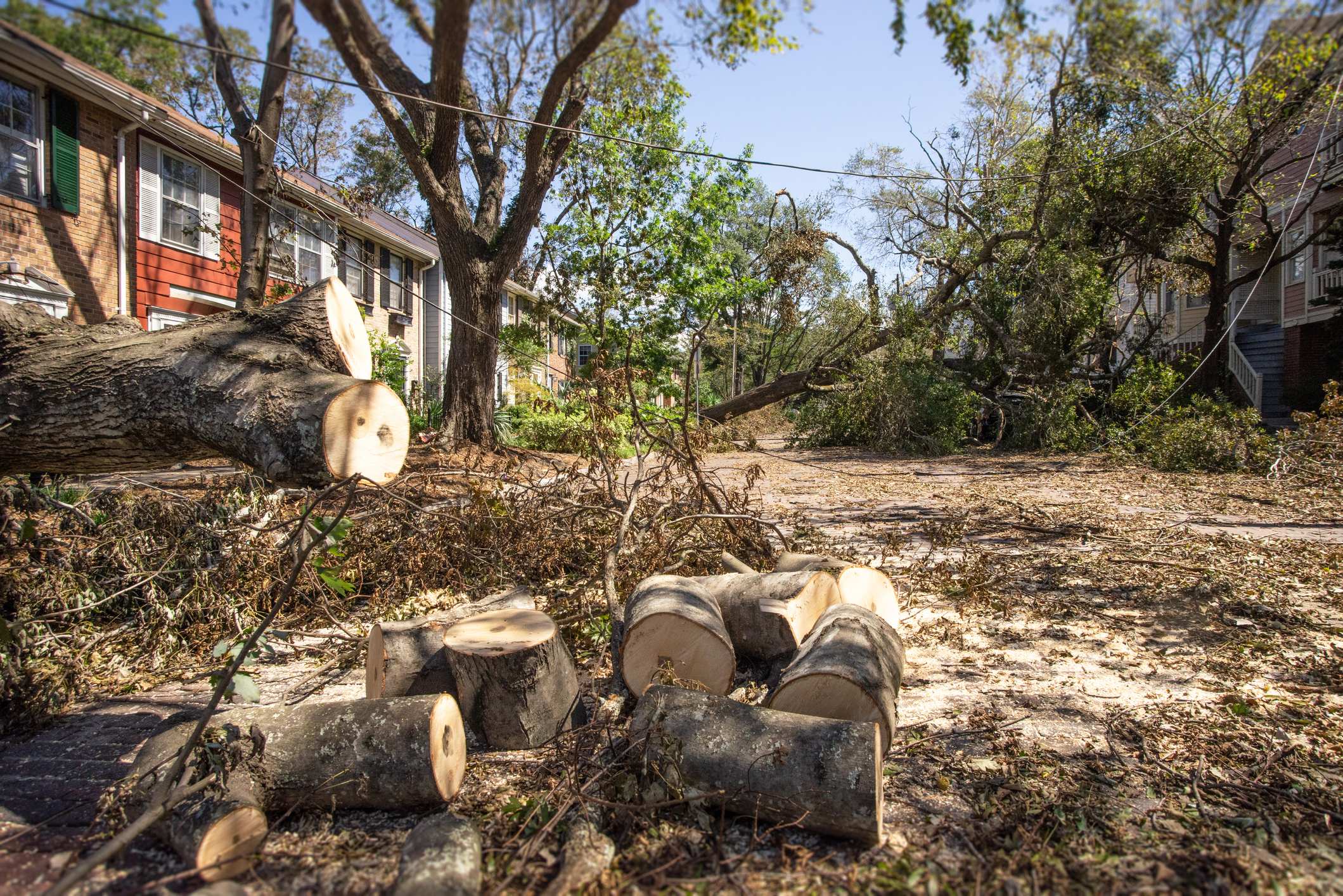
Cleanup Crisis Hotline for Western North Carolina
WNC residents can receive free services like cutting fallen trees, tarping roofs and mitigating mold with the help of Crisis Cleanup by calling 844-965-1386. The hotline is open through Friday, October 11, and can connect people with volunteers from local relief organizations, community groups and the faith-based community who may be able to assist.

Behavioral Health Resources Available for People Impacted by Hurricane Helene
“You are not alone, there is always someone to call and someone to respond if you need help with your mental or behavioral health ... ”
Whether directly or indirectly, millions of people in North Carolina have been impacted by Hurricane Helene. Natural disasters are traumatic for individuals, families and communities, and there is no right or wrong way to feel. After a hurricane, it’s even more important to get mental health support if you believe you or a loved one may need help, and to stay in contact with family and friends as soon as your access to communications is restored.
"You are not alone, there is always someone to call and someone to respond if you need help with your mental or behavioral health," said NC Health and Human Services Secretary Kody H. Kinsley. "Hurricane Helene brought catastrophic damage that will be felt immediately and for weeks, months and years to come. We are committed to helping those who are impacted right now, and for the long haul."
The following resources are always available if you or a loved one need help immediately:
- The national Disaster Distress Helpline, 1-800-985-5990, is a 24/7, 365-day-a-year resource dedicated to providing immediate crisis counseling for people impacted by a natural disaster or emergency. Help is available in English and Spanish. Deaf and Hard of Hearing ASL callers can call or text through their preferred Relay provider.
- Help is also available to anyone, anytime in English or Spanish through a call, text or chat to 988. Learn more at 988Lifeline.org. The person who answers your call is a trained counselor and can provide immediate support.
- The statewide Peer Warmline, 1-855-PEERS NC (855-733-7762), is staffed 24/7 by Peer Support Specialists who offer non-clinical support and resources to those in crisis. Peers are people living in recovery with mental illness and/or substance use disorder who provide support through the lens of personal lived experience.
- For first responders and volunteers, it’s important to take care of yourself while you take care of others. For stress, emotional fatigue, a mental health crisis or just someone to talk to, call Hope4NC Helpline at 1-855-587-3463 for free, confidential, 24/7 support.
- The Disability Disaster Hotline, 800-626-4959, provides information, referrals and guidance to people with disabilities and their families during disasters. Help is available 24/7.
- People who are uninsured or have Medicaid can also call the crisis line of the Local Management Entity/Managed Care Organization in their region:
- Partners: 1-833-353-2093 (serves western region)
- Vaya Health: 1-800-849-6127 (serves western region)
- Alliance: 1-877-223-4617
- Trillium: 1-888-302-0738
There are also resources available for people impacted by Hurricane Helene who are experiencing a crisis and need a safe place for care, as well as those have a mental health diagnosis or substance use disorder.
Mental Health Crisis Care
Community Crisis centers (facility-based crisis) are starting to re-open. Community Crisis & Detox Centers open as of Thursday, Oct. 10, 2024:
- The Balsam Center, Haywood County – Open
- Foothills Regional Treatment Center, Caldwell County – Open
- Neil Dobbins Center and C3356 BHUC, Buncombe County – Closed
- Caiyalynn Burrell Child Crisis Center, Buncombe County – Closed
- Synergy Recovery, Wilkes County - Open
Walk-in Clinics
People can walk into a clinic for mental health or substance use care the same way urgent care clinics help people with immediate physical health needs. Walk-in Mental Health centers are open in more than two dozen counties that may have been impacted by Hurricane Helene. You can view a list of walk-in clinics that are open here: Hurricane Recovery Resources – Vaya Health.
Mobile Crisis Response
Mobile Crisis teams are operating throughout the disaster area. Mobile Crisis teams can send trained clinicians to a home, community, or shelter to respond to an urgent need. To get connected with a mobile crisis team, you can call Vaya Health at 1-800-849-6127 and they will respond to you as soon as possible depending on your location.
For the most up to date info on Behavioral Health resources in the area, please reach out to Vaya Health’s Behavioral Health Crisis Line at 1-800-849-6127.
Opioid Treatment Available
All Opioid Treatment Programs in the storm-impacted region are currently open. If you need to find a program, there is a real-time map with location, contact information and hours of operation available at thecentralregistry.com/map. Programs are working with emergency shelters, and all shelters have overdose rescue medications on-hand to provide emergency assistance to shelter residents if needed.
Behavioral Health Shelter Support
Most emergency shelters also have a behavioral health clinician and mental health services available onsite to support people currently residing in the shelter until they are able to return home or secure temporary housing. If additional supports, are needed, shelter staff can reach out to Vaya Health at 1-800-849-6127.
Connections App
The North Carolina Department of Health and Human Services is using the Connections App to make evidence-based support for mental health and substance use recovery available to anyone in Western North Carolina. It is free and confidential. Enroll at signup.connectionsapp.com to receive services like 24/7 peer support, virtual meetings and access to an online community of people in recovery from substance use. Whether you’re in treatment, have a provider, or are seeking support for the first time, the Connections App can help support you. Watch a short video to learn more.
Access to Medication
For people who take regular medications for anxiety, depression, or any other mental health needs, it is important to maintain your regular medication schedule as much as possible. With some exceptions, the Emergency Prescription Assistance Program enables pharmacists to dispense a one-time emergency supply of up to 90 days of a prescribed medication when they are unable to reach the prescribing medical provider, and a one-time emergency refill of up to a 30-day supply.
Visit www.ncbop.org/emergencyoperatingpharmacieshelene to locate a pharmacy that is open and operating in Western North Carolina.
Medicaid Flexibilities
Temporary flexibilities for people on NC Medicaid are in place to make it easier for people with intellectual and developmental disabilities and traumatic brain injury to continue to receive services and avoid care disruptions related to the hurricane. Detailed information on these flexibilities and all the services they cover can be found in the Oct. 4 press release, Additional Temporary Flexibilities in Place for Medicaid Beneficiaries Due to Hurricane Helene Devastation.
NCDHHS will continue to work with local, state and federal partners to ensure the people and families in communities impacted by Hurricane Helene have access to both the physical and mental health services they need to recover from the storm.
Whether people need help right away after the hurricane, or later on as recovery continues, it’s never too early or too late to ask for support. Please reach out as help is always available to those who need it. [source]

It's Almost Time to Cast the Vote for Your NCMS Leadership!
November elections are just around the corner! But before you cast your ballot for POTUS, there’s an important vote happening right here at the North Carolina Medical Society (NCMS)! Polls will open soon for the election of NCMS officers and representatives.
Don’t miss your chance to make your voice heard in shaping the future of healthcare in our state!
You will receive your ballot by email (please contact us at ncms@ncmedsoc.org if you need a paper ballot), so be sure to add Intelliscan Inc. to your email contacts list. This is the third-party vendor that will be conducting the election. Starting Monday, October 14th, begin watching your email and spam filters for a message from NCMS@intelliscanvotes.com with the subject line “2024 NCMS Election”. This will be your formal ballot.
All NCMS members are eligible to vote for your society’s leaders. Voting will close on Wednesday, October 30th at midnight, and election results will be announced at the Annual Business meeting on Saturday, November 2nd at Noon at the Grandover Hotel in Greensboro.

NCMGMA Salary & Benefits Survey Now Open
| 2024 NCMGMA Salary & Benefits Survey is Open 75% Completion Grants Complimentary Data Access |
| Complete your survey by November 21st |
| This comprehensive study is designed to bring our members the information they need to see trends specific to the healthcare industry, and provide comparative information your organization can use to assist in making crucial business decisions.
REMEMBER! If you participated last year, you can copy last year's data into this year's survey, effectively reducing the time it takes to complete the survey. |
| Data collection is now open through Thursday, November 21st. |
| Access to the Site |
|
| Survey Information |
|
| Questions |
| If you have any questions about the 2024 Salary & Benefits Survey, please contact the NCMGMA offices at info@ncmgm.org. |

Gov. Roy Cooper's Latest on Helene as Others Finally Get Access to Hardest Hit Areas of WNC
Gov. Roy Cooper vowed Wednesday that the state government will continue to provide the resources Western North Carolina communities need to recover from Tropical Storm Helene. “This is a true all-hands-on-deck moment,” Cooper said. In a wide-ranging briefing, officials touched on a number of topics related to the Helene response. Notably, Cooper called out the effects of wide-reaching disinformation that has been spreading in Helene’s wake; FEMA Administrator Deanne Criswell vowed to keep significant assets in North Carolina even as the agency responds to Hurricane Milton’s impending landfall in Florida; and Cooper called for direct assistance for small businesses impacted by the storm.
Other State Leaders Flocking to WNC to Assess Damage, Response
Where once were surging floodwaters, now elected representatives from both the federal and state level are pouring into Western North Carolina and Haywood County, touring damaged areas, talking to local officials about needs and thanking first responders for their service to their communities.
North Carolina Gov. Roy Cooper, with FEMA Administrator Deanna Criswell in tow, continued his multi-day western swing on Oct. 4, making stops in Haywood and Jackson Counties. On Oct. 8, Sen. Thom Tillis visited the same complex Cooper had a few days before, saying he was pleased with the overall response by FEMA. Mark Pless, Haywood County’s Republican representative in the General Assembly, said that House Speaker Tim Moore, R-Cleveland, met with leaders in Canton on Oct. 4, delivering supplies and moving onto Clyde, Waynesville and the Crabtree Fire Department before joining the mayors of Hot Springs and Marshall in Madison County, which Pless also represents. Rep. Destin Hall, R-Caldwell, and Rep. Karl Gillespie, R-Macon, accompanied Pless to Marshall and Hot Springs again on Oct. 6.
NC Lawmakers Pass $273M Helene Relief Bill with Voting Changes to More Counties

Describe it as a down payment on aid and a way to help hard-hit counties
RALEIGH, N.C. (AP, Gary Robertson) — North Carolina legislators completed an initial $273 million relief package Wednesday to help spur recovery from Hurricane Helene, describing it as a down payment on aid and a way to help hard-hit counties gain more flexibility in holding elections already underway.
The legislation, which was approved unanimously in the House and Senate, comes less than two weeks after the catastrophic flooding from the storm’s historic rainfall in the North Carolina mountains.
Over half of the 238 confirmed Helene-related deaths in Southeastern states in Helene’s path occurred in North Carolina, a presidential battleground state where absentee voting has already begun.
Tens of thousands of electricity customers in the region remain without power and some people, including residents of Asheville, still lack running water. The voice of legislators from the ravaged region cracked with emotion when talking about the heavy blows dealt by Helene.
“I want to thank you for putting your first seeds into the ground,” said Sen. Ralph Hise, a Republican from Mitchell County, where he said the local water system is “unsalvageable” and otherwise would take years to replace. “We’ve never seen devastation like this before.”
Republican legislative leaders who helped craft the measure with input from Democratic Gov. Roy Cooper’s administration and election officials emphasized repeatedly that more legislation and funds would come soon. Lawmakers have also agreed to return Oct. 24 for more action, rather than wait until mid-November for an already scheduled session. They acknowledged the effort would take months and years to complete.
“The recovery that is going to have to be done is going to be something that is a Herculean task, but it is something that we will get done,” House Speaker Tim Moore said.
Nearly all the money in the bill — $250 million — is earmarked for state agencies to meet the federal government’s match for state and local disaster assistance programs. State government currently has $4.75 billion set aside in a “rainy-day” fund and $733 million in a disaster response reserve. Other pots of money could be tapped if needed.
The governor was expected to sign the legislation. “I appreciate the efforts of the legislature today to pass a bill to aid these communities,” Cooper said at a Helene recovery briefing at the state Emergency Operations Center in Raleigh.
The bill also includes specifics to ensure teachers and cafeteria workers in public schools closed in Helene’s aftermath get paid. Fees for people to replace lost driver’s licenses and identification cards are getting waived, as are some highway repair and open storm debris burn permitting requirements.
The bill also largely follows rule alterations for conducting elections and turning in ballots that were approved unanimously earlier this week by the State Board of Elections. But lawmakers decided to expand the alterations from 13 of the state’s 100 counties approved by the board to 25 counties — in keeping with the scope of the federal disaster declaration, Senate leader Phil Berger said.
The storm’s flooding has severely damaged some voting sites, making replacements necessary. Early in-person voting is held Oct. 17 through Nov. 2.
The legislation allows voters registered in the 25 counties, for example, to request an absentee ballot in person up until the day before Election Day. These voters also would have more ways to drop off those absentee ballots, including any open early voting site or county election office in any of the 100 counties, as well as at the State Board of Elections office in Raleigh. That goes beyond the additional options approved by the state board. Such ballots still must be turned in by 7:30 p.m. on Election Day to be counted.
Republican presidential candidate Donald Trump’s campaign sent out a news release late Tuesday suggesting 10 changes so displaced voters “don’t lose their right to participate in this important election.” Most of the ideas are contained in the legislation, although one appears absent.
Overall, the region affected by the election changes has historically favored Republican candidates, although Asheville and surrounding Buncombe County is considered a Democratic stronghold.
Sen. Paul Newton, a Cabarrus County Republican and Senate elections committee co-chairman, emphasized the changes in the bill were nearly all based on the board’s bipartisan order earlier in the week, and that many entities provided input to staff.
“We just saw the level of devastation and knew we had to make changes for anybody to have a chance of voting in these elections,” Newton said. “That would be true no matter whether it’s red or blue.”
In floor debate, Democratic and Republican mountain legislators described the destruction they’ve witnessed in their districts. They spoke gratefully about acts of heroism and assistance from outside the region, including convoys of supplies.
GOP Rep. Jennifer Balkcom, who with others helped open a Henderson County aid distribution warehouse, said mountain people are strong and resilient.
“But people are still needing help even though they don’t ask for it,” Balkcom said, adding the legislation is “a start to help get people what they need.”
CMS on Beneficiaries Medical Equipment and Supplies Replacement
The Centers for Medicare & Medicaid Services (CMS) will permit individuals with Medicare who have lost or realized damage to their durable medical equipment, prosthetics, orthotics, and supplies as a result of the hurricane to receive replacements of such items and services. This will help to ensure beneficiaries can continue to access the needed medical equipment and supplies they rely on each day. People with Medicare can contact 1-800-MEDICARE (1-800-633-4227) for assistance.

Hurricane Helene Frequently Asked Questions

After Helene: Answers to Some of Your Questions
Updated 10/16/24, 3:40 pm
The North Carolina Medical Society is continuing to update information for our members and people across North Carolina with the latest on Hurricane Helene disaster recovery continues. Here is a list of Frequently Asked Questions.
- I need to let state agencies know the status of my practice.
- Click here for the NCMS Impact Survey and the NCMB Practice Status Form. Both MUST BE SUBMITTED AS SOON AS POSSIBLE.
- If you know someone without internet access you can fill out the form for them or have them call the NCMS at 919-833-3836.
- I need financial support. What are my options?
- roviders in need of financial supports should work directly with the health plans to learn what supports each plan is offering and their associated process(es).
Contact Information
- Alliance Health alliancehealthplan.org/provider-updates/hardship-payment-requests-2
Provider support: 855-759-9700 - AmeriHealth Caritas North Carolina amerihealthcaritasnc.com
Provider support: 888-738-0004 - Carolina Complete Health carolinacompletehealth.com
Provider support: 833-552-3876 - Healthy Blue healthybluenc.com/north-carolina/home.html
Provider support: 844-594-5072 - Partners partnersbhm.org/tailoredplan/providers/providerconnect
Provider support: 877-398-4145 - Trillium ncinno.org
Provider support: 855-250-1539 - United Healthcare Community Plans of North Carolina uhccommunityplan.com/nc/medicaid/medicaid-uhc-community-plan
Provider support 800-638-3302 - Vaya Health https://providers.vayahealth.com/helene-recovery/
Provider Support Line: 866-990-9712 - WellCare of North Carolina wellcare.com/nc
Provider support 866-799-5318 - NC Medicaid Direct To request a hardship advance, contact the Medicaid Provider Ombudsman Medicaid.ProviderOmbudsman@dhhs.nc.gov or 866-304-7062
Information on the flexibilities in place for Hurricane Helene can be found on the NC Medicaid Bulletins webpage.
Visit the NC Medicaid Hurricane Helene Virtual Bulletin Board for information and resources for NC Medicaid beneficiaries and families impacted by Hurricane Helene.
- Alliance Health alliancehealthplan.org/provider-updates/hardship-payment-requests-2
- roviders in need of financial supports should work directly with the health plans to learn what supports each plan is offering and their associated process(es).
- I have an emergency or need rescue. What can I do?
- Call 911 for any emergencies. While some 911 centers are down in western NC, their calls are being routed to other counties in central and eastern NC.
- I have undocumented patients. Can they stay in shelters?
- If a person needs to stay in a shelter, get emergency supplies or needs other types of disaster relief, legal action will NOT be taken. If someone tries to enforce immigration law, report it: DHS.gov/file-civil-rights-complaint.
- My bilingual staff can't work right now. How can I help my Spanish-speaking patients?
- They can reach out to Línea de Salud NC, a free, Spanish-language Health Hotline, at 1-844-438-6827.
- Mental health resources are also available. Call the Disaster Distress Helpline at 1-800-985-5990. Press 2 to get help in Spanish.
- I have questions about food, shelter, roadways, or need other general non-emergency information. Who can I call?
- You may call 211 for any non-emergency related questions.
- I cannot stay at home and need shelter. Where can I find out what to do?
- Visit ReadyNC.Gov for sheltering information and follow your local government’s social media and website for more information.
- My business or home is damaged. Who can I email?
- Residents with questions about the recovery process or Individual Assistance may email IARecovery@ncdps.gov.
- Who do I contact in my county for the latest information?
- NCDPS list of county resources is available by clicking here.
- My practice is open, but we can't access medical records.
- NCHealthConnex can help find information for displaced patients.
- My patients need medicine. Where are open pharmacies?
- The NC Board of Pharmacy is updating it's list of operating pharmacies in Western NC. Click here for the most up to date list.
- Who do I contact at Division of Emergency Management?
- The NC Division of Emergency Management has divided the state into three branches. Click here of contact names and information.
- I have Blue Cross NC and need clarification on how it is handling Prior Authorization, telehealth, and appeals
- Blue Cross NC is deferring Prior Auth for all acute inpatient admissions and emergency services. Read full statement here.
- Blue Cross NC telehealth audio only reimbursable at 100 percent. Details here.
- Blue Cross NC extends timeframe for post-service provider appeals. Read full statement here.
- I use the State Health Plan, but don't know how to get information.
- The State Health Plan has released a list of resources for those impacted by Helene. Click here for full list.
- When will I know what recovery programs are available?
- This will be announced following the damage assessment process with local governments. Determinations are not a rapid process as the disaster assessments take time to ensure accuracy, which can benefit North Carolinians by activating further resources.
- I need help with clean-up!
- Yes, you can contact Crisis Clean Up at 910-218-1569 and they can potentially assist with connecting you with volunteer organizations in your area that can be a resource.
- What roads are open and closed right now?
- Visit DriveNC.Gov for the most up-to-date information on roadway conditions from the North Carolina Department of Transportation. You can also follow your local government’s social media pages or websites for updated information on roadway conditions.
- The election is days away and I'm afraid I won't be able to vote.
- A bipartisan state board has approved measures to help WNC voters. Your vote is your voice.
- I need to transfer a patient from Western NC hospitals impacted by Helene.
- Enter the patient here: https://nc.readyop.com/fs/4dDL/830f or contact 919-937-7112.
- How do I access shelters that manage individuals requiring non-acute medical care by physicians, nurses, etc..
- I have Medicare. Who do I contact for lost or damaged durable medical equipment, prosthetics, orthotics, and supplies?
- Contact 1-800-MEDICARE (1-800-633-4227) for assistance.
- How do I help my patients obtain and maintain access to critical life-saving services such as dialysis?
- CMS activated the Kidney Community Emergency Response (KCER) program and working with End-Stage Renal Disease (ESRD) Network 6 (Georgia, North Carolina) and Network 7 (Florida), which is responsible under a contract with CMS for assessing the status of dialysis facilities in potentially impacted areas of the impacted states. Visit the Kidney Community Emergency Response (KCER) program website: kcercoalition.com/ Contact: The ESRD Network 6 (Georgia, North Carolina) toll-free hotline is 1-800- 524-7139 and ESRD Network 7 (Florida) toll-free hotline is 1-800-826-3773.
- I'm a NC physician/PA. How do I get information about Limited Emergency License in North Carolina?
- NCMEDBOARD.ORG
- I'm an out-of-state physician/PA and do not currently have a license in North Carolina. How do I obtain a temporary licensure under the emergency policy?
- Visit: www.ncmedboard.org/disaster
- I'm a physician/PA with a full North Carolina license. Am I able to volunteer without obtaining a volunteer license?
- Physicians and physician assistants with a full North Carolina license are able to volunteer without obtaining a volunteer license. Note that PAs who provide volunteer medical services DO need a supervising physician per NC law.
- I have patients who need help buying food. Who should they contact.
- Visit this page here.
- What should I know about Well and Septic Safety following Hurricane Helene?
- Visit the page here.
The NCMS will continue to update this page as more information becomes available.
Centers for Medicare and Medicaid Services Activates Kidney Community Emergency Response Program
The Centers for Medicare and Medicaid Services is helping people obtain and maintain access to critical life-saving services by activating the Kidney Community Emergency Response (KCER) program and working with End-Stage Renal Disease (ESRD) Network 6 (Georgia, North Carolina) and Network 7 (Florida), which is responsible under a contract with CMS for assessing the status of dialysis facilities in potentially impacted areas of the impacted states.
The ESRD Network 6 (Georgia, North Carolina) toll-free hotline is 1-800- 524-7139 and ESRD Network 7 (Florida) toll-free hotline is 1-800-826-3773.
Additional information is available on the KCER website at: kcercoalition.com/

CPT Code Set Keeps Pace with Health Care Technology, Innovation
New health care innovations and technologies are emerging rapidly, and the Current Procedural Terminology (CPT®) 2025 code set will help physicians keep pace with this quickly evolving landscape with the release of its new edition which contains 420 updates for 2025.
Published by the AMA, the CPT code set is often described as the “language of medicine,” and the more than 11,000 CPT codes in use today serve as the standardized terminology for communicating the use of medical, surgical and diagnostic services across health care. These codes are also the foundation for how health care procedures are tracked, reimbursed and studied.
Descriptors attached to the codes are incorporated into medical documents, insurance forms, price sheets and patient portals and serve as important resources for many hospitals, health plans and medical offices.
“The latest updates to the CPT code set reflect advancements in contemporary clinical practice and ensures the code set fulfills its vital role as the trusted universal language of medicine,” said AMA President Bruce A. Scott, MD, a private practice otolaryngologist in Louisville, Kentucky.
The 420 updates contained in the CPT 2025 code set include 270 new codes, 112 deletions and 38 revisions. These changes reflect the expansion into new areas of medicine—as the highest proportion of new codes (37%) involve proprietary laboratory analyses and most of these are related to novel genetic testing.
Category III CPT codes, which are temporary and used for emerging technologies, services and procedures, accounted for 30% of the new codes.
Continue to full article here.
Critical Update from SBA on Helene Recovery Resources. Webinar 10/10/24

Webinar: SBA Resources for All Businesses Impacted by Helene
A critical update with the U.S. Small Business Administration on Resources for Helene Recovery
Around 25% of businesses fail after a disaster. To ensure North Carolina businesses get the timely answers they need, the NC Chamber is hosting a complimentary webinar on Thursday, Oct. 10: “SBA Resources for All Businesses Impacted by Helene.”
Every business (any size) within the declared areas, private nonprofit organization, or resident affected by Helene can apply online or at the opened Business Recovery Centers (BRCs) managed by SBA or Disaster Recovery Centers (DRCs) managed by FEMA. A full list of counties in the declared areas is at the bottom of this email.
It’s helpful to start this process immediately. You do not have to wait for insurance coverage determinations or claims denials to apply for SBA programs. The application filing deadline for physical damage is Wednesday, Nov. 27 and economic injury is Monday, June 30.
This programming is offered on a complimentary basis to all. Please share it with anyone in your network who might benefit from SBA resources.
Counties Eligible for Relief
The disaster declaration covers Alexander, Alleghany, Ashe, Avery, Buncombe, Burke, Caldwell, Catawba, Clay, Cleveland, Gaston, Haywood, Henderson, Jackson, Lincoln, Macon, Madison, McDowell, Mitchell, Polk, Rutherford, Transylvania, Watauga, Wilkes, and Yancey counties and The Eastern Band of the Cherokee Indians in North Carolina which are eligible for both Physical and Economic Injury Disaster Loans from the SBA.
Small businesses and most private nonprofit organizations in the following adjacent counties are eligible to apply only for SBA Economic Injury Disaster Loans (EIDLs): Cherokee, Graham, Iredell, Mecklenburg, Surry, Swain and Yadkin in North Carolina; Rabun, Towns and Union in Georgia; Cherokee, Greenville, Oconee, Pickens, Spartanburg, and York in South Carolina; Carter, Cocke, Greene, Johnson, Sevier, and Unicoi in Tennessee; and Grayson in Virginia.
Agenda
Thursday, October 10
| 11:00 am | Welcome and Introductions |
| 11:05 am | Presentation: Overview and Update |
| 11:40 am | Q&A |
State Lawmakers Meeting Today to Pass a $273 Million Disaster Relief Bill for WNC
The current balance of the state’s rainy day fund is $4.75 billion
State lawmakers will meet in Raleigh Wednesday to pass a $273 million disaster relief bill to help western North Carolina communities devastated by Hurricane Helene last month.
The bill they’ll take up Wednesday is House Bill 149, an unrelated measure that was already in conference committee. They’ll strip out the contents and replace it with their relief package. Because H149 is a conference report, it will require only one vote in each chamber, and no amendments can be made to it. The state will get funding help from the federal government, but it also has plenty of money set aside to work with. According to the state controller’s office, the current balance of the state’s rainy day fund is $4.75 billion. The state also has $733 million in an emergency response and disaster reserve account, giving lawmakers nearly $5.5 billion in immediately available funding.
The state also has an array of other reserve funds totaling more than $3 billion. Those other reserve funds are earmarked for specific purposes, like Medicaid cost overruns or information technology, but are available if needed.
NC Health and Human Services Secretary Kody H. Kinsley Joins Governor Roy Cooper to Survey Damage in Mitchell and Yancey Counties
NC Health and Human Services Secretary Kody H. Kinsley toured Mitchell and Yancey counties with Governor Roy Cooper on Tuesday, surveying storm damage, meeting with community members and thanking first responders at the Burnsville and Spruce Pine fire departments. The trip concluded with a visit to Sibelco Quartz Mine, a top employer of Mitchell County with about 500 employees. While speaking with members of the media, the Secretary shared updates from the department’s work in collaboration with local, state and federal partners to get the needed care and resources to the hundreds of thousands of people impacted by Hurricane Helene.
It is a top priority for the department to quickly get food, water and baby formula to impacted areas in Western North Carolina.
- 30,000 gallons of water distributed to Mitchell County and nearly 25,000 gallons to Yancey County.
- 95,000 meals ready to eat distributed in Mitchell County and 55,000 meals ready to eat distributed in Yancey County.
- Eight pallets (between 120 – 144 cases of formula per pallet) of formula via the National Guard to 34 feeding sites across the impacted Western NC counties.
- Formula shipped directly to multiple counties, including Mitchell and Yancey.
- Diaper Bank of NC is making daily trips by trucks, mules and ATVs to deliver formula and infant supplies to 16 of the impacted counties in Western North Carolina.
The department is working closely with federal partners to ensure people have access to food.
- People across North Carolina can use their EBT cards to purchase hot foods.
- People in 23 counties were automatically reimbursed for 70% of their monthly benefit to replace lost food. This is $24million in replacement benefits to more than 200,000 people in North Carolina.
- Out of the 1,645 retailers that accept EBT cards in 25 counties in the west, at least 1,259 (77%) were able to run EBT transactions this past Saturday and Sunday.
However, there are a large number of retailers in Mitchell and Yancey counties still not able to accept EBT cards, and we are working with partners to get more of those retailers back online.
We are working to ensure communities have access to medical care, support and life-saving medication.
- A Community Medical Care Site in Burnsville (Yancey County) is being set up with ambulances, medications and medical supplies on site.
- 229 pharmacies are open in the impacted counites and EBCI Tribal area with federal disaster declaration. Each county and the EBCI Tribal area have at least one pharmacy open and filling prescriptions.
- All shelters have mental health counselors on site and are stocked with Naloxone for people in need of treatment for opioid overdose.
- All 27 opioid treatment programs in the Western region are already re-open and folks can go to any one of them to get their treatment doses. They do not need to go to the one they usually go to.
- NCDHHS is filling Benadryl and epinephrine injections requests through hospitals, emergency medical personnel and doctors who are seeing a significant number of people showing up with insect stings.
- The department has been concerned about oxygen supplies and has worked with multiple vendors, federal agencies and neighboring states to source supplies. Two refill stations have been set up; one in Mocksville and another in Brevard.
We understand the emotional and mental toll that a crisis like this can take and want to make sure people have access to mental health supports. We’ve ramped up staffing at the 988 Suicide and Crisis Lifeline. People in immediate crisis or contemplating self-harm should not hesitate to call. For everyone impacted by Hurricane Helene, the Disaster Distress Hotline is ready to take your call at 1-800-985-5990. [source]
Hurricane Helene Mental Health Support Resources
The impact of Hurricane Helene is felt far beyond the physical devastation. The emotional toll has left many individuals and communities grappling with anxiety, loss, and uncertainty. Below are vital mental health support resources available for those affected by Helene.
- 988 Lifeline: 988 Lifeline – If you need emotional support, reach out to the national mental health hotline: 988.
- Peer Warmline: Get Support – You’re never alone. | Promise Resource Network
- Disaster Distress Helpline: Hurricane Helene – Partners Health Management (partnersbhm.org)
- Help for Helpers Hope4NC website: Hope4NC Helpline | NCDHHS or by phone 1-855-587-3463 to provide mental health support for first responders and volunteers working on our Hurricane Helene disaster response
- Disaster Distress Hotline: For everyone, we have the Substance Abuse and Mental Health Services Administration (SAMHSA) disaster distress hotline: 1-800-985-5990. This service provides support, listening, and resources specializing in post-disaster trauma.
- Support for First Responders: We are deploying mental health clinicians for all first responders and have launched the Hope4NC hotline for them at 1-855-587-3463.
- Counselors at Shelters: Mental health counselors are available at shelters, stocked with naloxone, and have access to methadone. You can find shelters here: Shelters.
- Opioid Treatment Programs: All opioid treatment programs in the region are open, and individuals can receive their treatment doses at any location, not just their usual one. Treatment options can be found here: Treatment Locations.
- Vaya Health Resources: Vaya Health has compiled a comprehensive list of providers addressing urgent needs. Vaya’s 24/7 line is 1-800-849-6127, and the resource list is available here: Vaya Resources. Please note that lists walk-in clinics in each community that are open and available to provide services to members in distress.
Urgent! NCMS and NCMB Impact Surveys Needed for Western North Carolina Practices
NCMS CEO Chip Baggett on the importance of completing these two surveys
The North Carolina Medical Society (NCMS) is working closely with the North Carolina Office of Emergency Services to assess the condition of medical practices in Western North Carolina. Two critical surveys are available on the NCMS website, and it’s essential that all healthcare facilities affected by Hurricane Helene complete them.
We understand that many offices are still without power, internet, or phone service. If you're receiving this message and can contact other physicians in the area, please help by ensuring they submit this important information.
The NCMS is the sole organization collecting this data, which will lead to faster and more efficient relief efforts for you, your colleagues, and your community.
You may fill out these forms as often as needed as your situation evolves.
Click here for access to the NCMS Practice Impact Survey.
Click here for access to the NCMB Practice Status Form.
BOTH SURVEYS MUST BE COMPLETED AND SUBMITTED SEPARATELY

Helene Relief & Recovery Updates for Pharmacy Practitioners
The Board of Pharmacy has exercised its authority under G.S. 90-85.25(a) to waive certain requirements of the North Carolina Pharmacy Practice Act to facilitate the provision of patient care during a declared emergency. The Board’s emergency waiver is now in effect and is found here. That waiver allows pharmacists who hold a license in good standing in another state to practice in North Carolina during the period of the declared emergency. NABP has established an emergency Verify credential that out-of-state pharmacists wishing to practice in North Carolina during the Helene emergency may obtain without cost. Instructions for obtaining an emergency Verify credential are found here.
An out-of-state pharmacist must obtain an emergency Verify credential to practicing during the emergency. Once obtained, no further communication with the Board is needed. The Board will maintain a list of out-of-state pharmacists holding the emergency Verify credential here. [source]
Statewide Initiative to Promote Diabetes Prevention Efforts by Leveraging Physician Champions

A statewide effort to support diabetes prevention efforts with a physician champion initiative resulted in increased physician outreach, patient identification resources, and referrals to the National Diabetes Prevention Program, suggesting this work with physician champions can be further translated and applied to other states’ prevention efforts.

To increase referrals to the Centers for Disease Control and Prevention’s (CDC) evidence-based National Diabetes Prevention Program (DPP) in North Carolina, the American Medical Association (AMA) and the North Carolina Medical Society (NCMS) tried a novel tactic, a grassroots influence campaign driven by a team of hand-picked physician champions. A new study, “A Statewide Physician Champion Initiative to Prevent Diabetes: Lessons Learned from North Carolina,” details the successes and challenges of this effort as well as lessons learned.
The National DPP lifestyle change programs were developed by the CDC in partnership with public and private organizations to build a delivery system to target type 2 diabetes prevention in adults with prediabetes. The program is built on evidence-based research that clearly demonstrates that intensive lifestyle change focused on healthy eating, physical activity, and stress reduction is the most effective intervention for preventing the onset of diabetes.
The initiative- Diabetes Free NC, sought to enroll 5,000 patients in the National DPP between January 2020 and January 2023 and was successful thanks to the financial support provided by AMA and NCMS and close coordination between those organizations and the champions. The physician champions led efforts in educating other physicians in peer-to-peer settings to increase referrals to the program and dispatched within their communities to raise awareness about diabetes treatment and diagnosis.
The six physician champions selected for the initiative were all board-certified primary care physicians specializing in family medicine, internal medicine, or geriatrics who held current or previous leadership roles and had an existing relationship with NCMS. Champions were chosen not just for their clinical expertise but also for their ability to be leaders, advocates, coalition-builders, and presenters.
Once selected, champions went through orientation training and received quarterly coaching from AMA team members to review evidence and guidelines and receive feedback on key messages to use with a physician audience. An important aspect of the program was clearly defining the roles and responsibilities expected of the champions and remaining in constant contact with the support teams from AMA and NCMS.
The champion’s responsibilities included supporting diabetes prevention awareness efforts and disseminating clinical content. They served as ambassadors for the program in their health care organizations and community while attending events and conferences where they could speak to peers and decision-makers. Champions participated in events such as a panel discussion at the virtual CPP Annual Meeting/Lifestyle Medicine Summit, and East Carolina University Family Medicine Grand Rounds and gave a presentation at the North Carolina Ophthalmology Annual Meeting. Champions were encouraged to leverage any opportunity to connect with and educate other physicians and community leaders. They established relationships with church leaders and YMCA coaches, conducted physician-led educational sessions in a community dinner series, and partnered with the local YMCA and health clinics to hold a diabetes prevention event that included blood glucose testing with referrals to the YMCA diabetes program for those who qualified, and a healthy cooking class sponsored by a local nonprofit organization. Champions kept in regular contact with AMA and NCMS leadership to share updates on their activity and progress.
Champions leveraged social media and gave interviews for articles from AMA news, NCMS Morning Rounds and some local newspapers in Fayetteville, NC, which were then highlighted in email campaigns directed at primary care physicians. All champions promoted the removal of barriers to care and encouraged more funding opportunities to increase physician engagement in diabetes prevention efforts.
Successes reported by the physician champions include increased awareness of prediabetes through outreach and clinical education. It also enabled collaborations with community-based organizations, adopting shared learnings and best practices, and availability of statewide referral platforms that aided champions in engaging peers. Overall, there was an increase in prediabetes identification and management, which led to increased referrals to the National DPP. Program success would not have been possible without leveraging the NCMS member network to build a grassroots awareness campaign, which was then supported by the AMA.
The approach and strategies outlined in “A Statewide Physician Champion Initiative to Prevent Diabetes: Lessons Learned from North Carolina” can be used to promote other public health initiatives as it has proven to be very effective in raising awareness and increasing treatment uptake. This effort proved effective, so much so that the AMA is using a similar strategy to promote its state-based efforts to increase prevalence and coverage of Self Measured Blood Pressure programs.
Acknowledgments:
I would like to gratefully acknowledge all the co-authors of this study, colleagues at NCMS, and the physician champions who participated in this initiative with their respective organizations. A special thanks to Valerie Lapointe for her assistance with the blog post.
Author Profile

- Dr. Tamkeen Khan is a Senior Economist for the American Medical Association's 'Improving Health Outcomes' strategic focus area. Dr. Khan's research focuses on the economics of chronic disease and her work helps establish a strong evidence base for cardiovascular disease prevention. Dr. Khan holds PhD in Economics from the University of Illinois at Chicago.
Hurricane Helene: Fact vs. Rumor
There are many false reports and misinformation being shared on social media about the response to Hurricane Helene
The NC Department of Public Safety has issued the following report after countless false reports and misinformation has spread across the state:
The public should get information about storm response and impacts from trusted sources like the State Emergency Response Team, National Weather Service, and other federal, state, county and local government sites. Be aware that Artificial Intelligence or AI-generated images are being circulated on social media that do not depict conditions on the ground.
Do your part to the stop the spread of rumors by doing three easy things:
- Find trusted sources of information.
- Share information from trusted sources.
- Discourage others from sharing information from unverified sources and question where information is coming from.
Stop the Spread of Misinformation
QUESTION: I saw a rumor shared on social media about Hurricane Helene response. Should I share it?
FACT: False information is being widely shared on social media channels, including AI-generated content and images. Nefarious actors and those with ill intent may be taking advantage of this situation by spreading false information. The public is encouraged to find trusted sources of information; share information from those trusted sources; and to discourage others from sharing information from unverified sources.
RUMOR: The state and federal government are doing nothing to respond to the ongoing disaster in Western North Carolina.
FACT: The NC State Emergency Response Team, which includes local, state, federal and military partners, along with power and cell phone agencies, private businesses and volunteer organizations, is working around the clock to save lives and provide humanitarian relief to Western North Carolina residents. This is a coordinated effort aimed at saving lives and to speed recovery for residents, businesses and municipalities in the impacted areas.
RUMOR: Checkpoints are being established and donations and volunteers are being turned away from Western North Carolina.
FACT: Roadways in Western North Carolina are still dangerous and impassible in many places. A recent landslide shows the potential for more serious incidents. In some areas, traffic is being rerouted to maintain availability of roadways for emergency response, coordinated disaster relief efforts and local traffic.
RUMOR: The state is discouraging donations in the wake of Hurricane Helene. Physical donations are being confiscated by state and federal officials.
FACT: The state is encouraging financial donations to the North Carolina Disaster Relief Fund at www.nc.gov/donate, or to a NC Volunteer Organization Active in Disaster. A list of these organizations can be found at www.ncvoad.org/members. The state is working with these organizations to stand up logistical operations to coordinate the collection and distribution of countless physical donations from across the state and country. Donations are not being confiscated by state and federal officials.
RUMOR: The state and federal government are discouraging volunteerism in Western North Carolina.
FACT: Coordinated volunteer disaster relief efforts are needed in Western North Carolina. We strongly encourage neighbors to continue helping neighbors in impacted areas. Those wishing to volunteer should register at www.nc.gov/volunteer in order to be connected with a NC Volunteer Organization Active in Helene response. Please do not self-deploy to Western North Carolina unless you are working with an organization already providing services on the ground.
RUMOR: The FAA is restricting access to the airspace for Helene rescue and recovery operations.
FACT: The FAA is not restricting access for recovery operations. The FAA is coordinating closely with state and local officials to make sure everyone is operating safely in very crowded and congested airspace. Learn more.
RUMOR: FEMA is operating and controlling airports in western North Carolina.
FACT: FEMA is not controlling any airports in western North Carolina. Airport Managers and Airport Sponsors are the legal entities in charge of operating airports, even in Helene response. FEMA staff may be present at airports as they deploy supplies and stage for Helene response. Airports are critical for accessing impacted NC communities for response and recovery efforts for partners including FEMA.
There are many false reports and misinformation being shared on social media about the response to Hurricane Helene. Additional reliable information regarding Helene can be found at www.ncdps.gov/helene.
En español haga clic aqui

Two American Scientists Win Nobel Prize for Discovery of microRNA
STOCKHOLM (AP, Daniel Niemann, Mike Corder, Maria Cheng) — Two scientists won the Nobel Prize in physiology or medicine on Monday for their discovery of microRNA, tiny bits of genetic material that serve as on and off switches inside cells that help control what the cells do and when they do it.
If scientists can better understand how they work and how to manipulate them, it could one day lead to powerful treatments for diseases like cancer.
The work by Americans Victor Ambros and Gary Ruvkun is “proving to be fundamentally important for how organisms develop and function,” according to a panel that awarded the prize in Stockholm.
Ambros and Ruvkun were initially interested in genes that control the timing of different genetic developments, ensuring that cell types develop at the right time.
Their discovery ultimately “revealed a new dimension to gene regulation, essential for all complex life forms,” the panel said.
What is the Nobel Prize for?
RNA is best known for carrying instructions for how to make proteins from DNA in the nucleus of the cell to tiny cellular factories that actually build the proteins. MicroRNA does not make proteins, but helps to control what cells are doing, including switching on and off critical genes that make proteins.
Last year’s Nobel for medicine went to scientists who discovered how to manipulate one of those types of RNA, known as messenger RNA or mRNA, now used to make vaccines for COVID-19.
Ambros’ and Ruvkun’s revolutionary discovery was initially made in worms; they set out to identify why some kinds of cells didn’t develop in two mutant strains of worms commonly used as a research model in science.
“Their groundbreaking discovery revealed a completely new principle of gene regulation that turned out to be essential for multicellular organisms, including humans,” according to the citation explaining the importance of their work.
That mechanism has been at work for hundreds of millions of years and has enabled evolution of complex organisms, it said.
Ambros, currently a professor of natural science at the University of Massachusetts Medical School, performed the research at Harvard University. Ruvkun’s research was performed at Massachusetts General Hospital and Harvard Medical School, where he’s a professor of genetics.
Why does microRNA matter?
The study of microRNA has opened up approaches to treating diseases like cancer because it helps regulate how genes work in our cells, said Dr. Claire Fletcher, a lecturer in molecular oncology at Imperial College London.
Fletcher said there were two main areas where microRNA could be helpful: in developing drugs to treat diseases and in serving as possible indicators of diseases, by tracking microRNA levels in the body.
“If we take the example of cancer, we’ll have a particular gene working overtime, it might be mutated and working in overdrive,” said Fletcher. She said scientists might one day be able to use microRNA to stop such effects.
Eric Miska, a geneticist at Cambridge University, said the discovery by Ambros and Ruvkun came as a complete surprise, overturning what scientists had long understood about how cells work.
Their discovery of microRNA shocked many scientists, Miska said, explaining that such small bits of genetic material had never been seen before. The tiny fragments of RNA — the human genome has at least 800 — were later found to play critical roles in how our bodies develop.
Miska said there is ongoing work on the role of microRNA in infectious diseases like hepatitis and that it might also be helpful in treating neurological diseases.
Fletcher said the most advanced studies to date are reviewing how microRNA approaches might help treat skin cancer, but no drugs have yet been approved. She predicted that might happen in the coming years, adding that most treatments at the moment target cell proteins.
“If we can intervene at the microRNA level, it opens up a whole new way of us developing medicines,” she said.
How did Gary Ruvkun and Victor Ambros react?
The phone call from the Nobel panel is often a surprise, but there are certain signs that recipients and their families pick up on.
“Well, when a phone rings at 4:30 in the morning. ... It never happens here,” Ruvkun said.
“Natasha actually answered it,” Ruvkun added, referring to his wife. “And she goes: ‘He has a Swedish accent.’”
It took a little longer to rouse Ambros.
“Somebody called my son, who called my wife as my phone was downstairs,” he said.
Ruvkun knew immediately the impact the award would have on his life.
“Well, I just kept repeating in my mind, this changes everything because you know, the Nobel is just mythic in how it transforms the life of people who are selected,” Ruvkun said. “The Nobel Prize is a recognition that’s sort of 100 times as much press and celebration as any other award. So, it’s not part of a continuum. It’s a quantum leap.”
Going to pick up his award in December will be the third time he has been to a Nobel Prize ceremony in Stockholm after attending to watch his mentor Robert Horvitz receive the 2002 award and then his buddy Jack Szostak, who won in 2009.
“There’s a trip coming up. It will be the third, possibly the best,” Ruvkun said.
Ambros said he didn’t expect the award as he felt that the Nobel committee has already singled out RNA in the 2006 prize that went to his friends Andrew Fire and Craig Mello.
“It represents the recognition of how wonderful and unexpected discoveries come from a curiosity in basic science financed by taxpayer money. It’s a vitally important, probably the most important message, that this investment really pays off,” he said.
Last year, the Nobel Prize in physiology or medicine went to Hungarian-American Katalin Karikó and American Drew Weissman for discoveries that enabled the creation of mRNA vaccines against COVID-19 that were critical in slowing the pandemic.
The prize carries a cash award of 11 million Swedish kronor ($1 million) from a bequest left by the prize’s creator, Swedish inventor Alfred Nobel.
Nobel announcements continue with the physics prize on Tuesday, chemistry on Wednesday and literature on Thursday. The Nobel Peace Prize will be announced Friday and the Nobel Memorial Prize in Economic Sciences on Oct. 14.
Bipartisan State Board Unanimously Approves Measures to Help WNC Voters
Long list of measures aim to help Helene victims vote in 2024 election
The bipartisan State Board of Elections on Monday unanimously approved a long list of emergency measures to help Helene victims vote in the 2024 election and ensure election officials can provide accessible, safe, and secure voting options for residents of Western North Carolina. Read the final, signed resolution (PDF).
The 5-0 vote of Democrats and Republicans on the State Board came after extensive planning by the State Board in coordination with county election officials, public safety and emergency management officials, and the U.S. Postal Service. Watch recording of the State Board meeting (MP4).
The measures will apply to the following 13 counties, where infrastructure, accessibility to voting sites, and postal services remain severely disrupted after Helene:
- Ashe
- Avery
- Buncombe
- Haywood
- Henderson
- Madison
- McDowell
- Mitchell
- Polk
- Rutherford
- Transylvania
- Watauga
- Yancey
The provisions are also designed to help North Carolina voters living temporarily elsewhere inside or outside of the state or in disaster shelters to be able to vote. They also allow county boards of elections in the 13 counties the flexibility to modify early voting and Election Day voting sites and recruit additional poll workers to best accommodate their voters based on local conditions. And they allow election officials to continue to work with federal and state partners to provide election-related aid to the disaster counties, including temporary voting facilities and restrooms, generators, and other needs.
The emergency measures also include ways to get information about voting to voters housed in shelters and to western North Carolina in general. They were carefully crafted to avoid any detrimental effect on the integrity of the election or the security of ballots.
“These measures were put in place to ensure the victims of Helene can vote in the upcoming election and provide election officials in the hardest hit areas the tools they need to conduct a secure election under extraordinarily difficult conditions,” said Karen Brinson Bell, executive director of the North Carolina State Board of Elections. “Just like the people of western North Carolina, election officials are resilient. We are determined to get the job done for our neighbors and friends in western North Carolina.”
Measures approved by the State Board do all the following and more in the 13 counties:
- In-person voting:
- Facilitate in-person early voting by allowing county boards of elections to modify their approved early voting sites, days, and hours through a bipartisan, majority vote.
- Allow county boards to modify Election Day polling places by bipartisan, majority vote. This provision also allows county boards of elections, with the approval of the State Board executive director, to open a polling place in another county, provided that materials, tabulators and voting processes are kept separate for each precinct’s voters at that location.
- Allow county boards — by bipartisan, majority vote — to set up their board of elections office to permit any voter in the county to vote at that site, in the event voters are unable to get to their Election Day precinct voting site or are unsure of their voting location. Some county offices may also serve as an early voting site, which allows any voter of the county to vote during the early voting period.
- Absentee voting:
- Allow voters to request and receive an absentee ballot in person at their county board of elections office up until Nov. 4 — the day before the election. As always, the voter or voter’s near relative or legal guardian is required to complete an absentee request form with the required personal information for the voter, and that information must be verified by the county board as with any absentee request.
- Allow voters to drop off completed absentee ballots at Election Day polling places operated by the voters’ county board by 7:30 p.m. on Election Day.
- Allow voters or their near relatives or legal guardians to hand-deliver completed absentee ballots to another county board of elections in North Carolina or the State Board of Elections office, as long as the ballot is received by 7:30 p.m. on Election Day. The county or State Board then would ensure that those ballots are delivered to each voter’s county board of elections by Nov. 14 — the day before county canvass — to be counted. A log and chain of custody will be maintained to secure these ballots.
- Poll worker recruitment and assignment:
- Allow county boards – by bipartisan, majority vote – to appoint election officials who are registered to vote in other N.C. counties, to appoint emergency Election Day assistants and assign them to a precinct, and to reassign poll workers to different locations than their original assignment to ensure sufficient knowledge and expertise at each voting site.
- Multipartisan Assistance Teams (MATs):
- Allow county boards — by bipartisan, majority vote — to schedule Multipartisan Assistance Teams to assist with absentee ballot requests and absentee voting at disaster shelters and other places where disaster relief is provided to the public. These teams may receive and deliver to county boards completed absentee ballot envelopes for voters.
- Coordination with emergency officials:
- Ensure the State Board continues its ongoing coordination with the N.C. Division of Emergency Management to provide election-related aid to the disaster counties, including temporary voting facilities, generators, temporary restrooms, and other needs.
State law (Emergency powers (N.C.G.S. § 163-27.1)) authorizes the State Board to exercise emergency powers to conduct an election where the normal schedule is disrupted by a natural disaster.
In approving the resolution, the State Board found that Tropical Storm Helene created an unprecedented natural disaster for Western North Carolina that disrupted and continues to disrupt the schedule of the general election. The storm has taken many lives, severely damaged public and private property, and caused significant and lasting disruptions to essential utility services and systems, including power, internet, cell service, water, and transportation.
For comprehensive information on Voting After Helene, go to ncsbe.gov/Helene.
CDC: Health Officials To Begin Screening Some Travelers for Marburg Virus
No confirmed cases of Marburg virus disease outside of Rawanda yet
The CDC announced Monday that health officials will soon start screening travelers from Rwanda to the US for Marburg virus. There are no confirmed cases of Marburg virus disease — a rare but deadly hemorrhagic disease similar to Ebola — outside of Rwanda, and officials have said that the current risk to the US is low. However, the Department of Health and Human Services said the CDC will begin public health entry screening next week in an effort to reduce the risk of the importation and spread of cases. As of Monday, there have been 56 confirmed cases of Marburg in Rwanda, with 36 people in isolation and treatment, and 12 deaths, according to the Ministry of Health. Many of the cases are in health care workers, the CDC says.

NCIR Unavailable Monday from 9 - 11pm
Due to maintenance, the North Carolina Immunization Registry (NCIR) will be unavailable from 9:00PM - 11:00PM on Monday, October 7, 2024.
- Please use your contingency policy to document any doses administered during this time, so you are able to enter them into the NCIR at a later time.
- If needed, in the NCIR menu under Reports, there is a "new client form" available for both Adults and Children that can be printed out and/or saved prior to downtime and used for documenting administered doses.
- Documents will be shared on LHD call
- Printed copies are distributed with vaccine orders that are delivered, not shipped
Note, Some LHD are not yet able to access the internet or NCIR. This message is for those who are using NCIR.
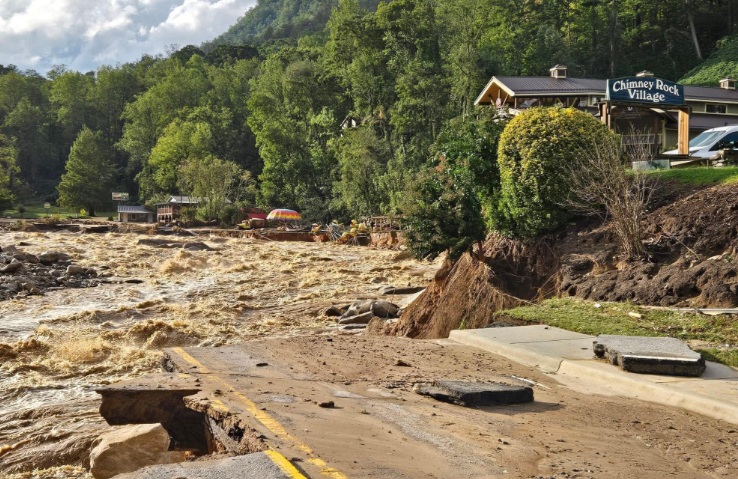
Helene Relief Efforts Stats-to-Date
As relief efforts continue in Western North Carolina there is a lot of misinformation and untrue statistics being disseminated. Here are some facts you should know.
- 1,440+ air rescues to date
- 515 emergency personnel with 95 fire engines
- 717 EMS personal with 350 ambulances
- 1475 state activated National Guard
- 400 active-duty soldiers in region
- 500 active-duty soldiers enroute to support
- 50 rotary wing assets (21 from EMAC)
- 22 shelters operational with 915 occupants & 102 pets
- FEMA Assistance:
- 83,000 registered
- $27m in disbursements to date
(updated 10/05/24)