

NCMS Member Performs First Dual Chamber Leadless Pacemaker System in Wake County
NCMS member Dr. Hemant Solomon with WakeMed Heart & Vascular - Cardiology recently performed Wake County’s first procedure to implant Abbott’s AVEIR™ DR, the world’s first dual chamber leadless pacemaker system.
Approved by the FDA in June 2023, Abbott’s AVEIR DR is roughly one-tenth the size of a traditional pacemaker and provides a new minimally invasive option for patients who require pacing in two chambers of the heart. Primarily used for people with slow or irregular heart rhythms, the Abbott AVEIR DR uses innovative technology to wirelessly communicate and make sure the heart stays on beat.
Unlike traditional pacemakers, leadless devices are implanted directly into the heart through a minimally invasive procedure and eliminate the need for cardiac leads. This reduces exposure to potential lead and pocket-related complications and offers a less restrictive and shorter recovery period for patients.
Congratulations to Dr. Solomon and the WakeMed Cary Hospital Heart & Vascular Labs team!
For more information about WakeMed Heart & Vascular services, visit www.wakemed.org/hearts. [source]


The General Election Is Today!

During the early voting period, voters may cast a ballot at any early voting site in their county. This is different than Election Day, when registered voters must vote at their assigned polling place. During the early voting period, eligible individuals may also register to vote and vote at the same time (see Same-Day Registration below).
For an overview of North Carolina’s current elections, visit Upcoming Election.
The general election is on Tuesday, November 5, 2024.
Unsure if You Are Registered?
Find out if you are registered to vote by entering your information into the Voter Search.
Don’t Forget Your Photo ID
North Carolina voters will be asked to show photo ID when they check in to vote. Learn more: Voter ID.
Same-Day Registration
Although same-day registration is available for voters during early voting, same-day registration is not available for most voters on Election Day.
Your Sample Ballot
To view sample ballots, registered voters must enter their information into the Voter Search and navigate to “Your Sample Ballot.” Voters can practice making selections with the accessible sample ballot: “Option 4” at the NC Absentee Ballot Portal.
Note: Sample ballots for each election are only available once finalized.
By-Mail Absentee Ballot Drop-Off
Voters who receive an absentee ballot by mail may deliver their ballot to their county board of elections office or to an election official at an early voting site during any time that site is open for voting. Ballots will be kept securely and delivered to the county board of elections for processing.
Voting Equipment
Curious which equipment will be at your voting site? Check the interactive map and table: Early Voting Equipment by County.
Voter Assistance and Curbside Voting
Any voter who qualifies for assistance may ask for help at their polling place under Assistance to voters (N.C.G.S. § 163-166.8). To find more information, visit Help for Voters with Disabilities. Curbside voting is available for eligible individuals. For more information, see Curbside Voting.
After You Vote
You can find out whether your vote counted in the “Your Absentee Ballot” section of the Voter Search database. Under North Carolina law, all early votes — by-mail or in-person — are considered absentee votes. Your ballot status also will show up in the “Voter History” section as soon as your county completes the post-election process of assigning voter history to your record. This may take up to a few weeks after Election Day.
Learn about NCMS member candidates here.

Workplace Safety: Creating a Culture of Care and Respect - Live Webinar
Workplace Safety: Creating a Culture of Care and Respect
Wednesday, November 6
12:00 – 1:00 PM EST/EDT
In this webinar, Paul Perryman, MSN, MS, RN, NE-BC and Catherine Capp, MSN, RN, ANP-BC aims to define workplace violence and its impact in the healthcare setting. During this session, regulatory standards to address workplace violence will be reviewed as well as proactive strategies to reduce the risk of workplace violence and raise awareness on the incidence of workplace violence in the hospital setting.
Learning Objectives
- Describe the scope of workplace violence
- Define workplace violence and differentiate its domains
- Describe one proactive strategy to prevent workplace violence
- Identify institutional strategies to raise awareness on workplace violence

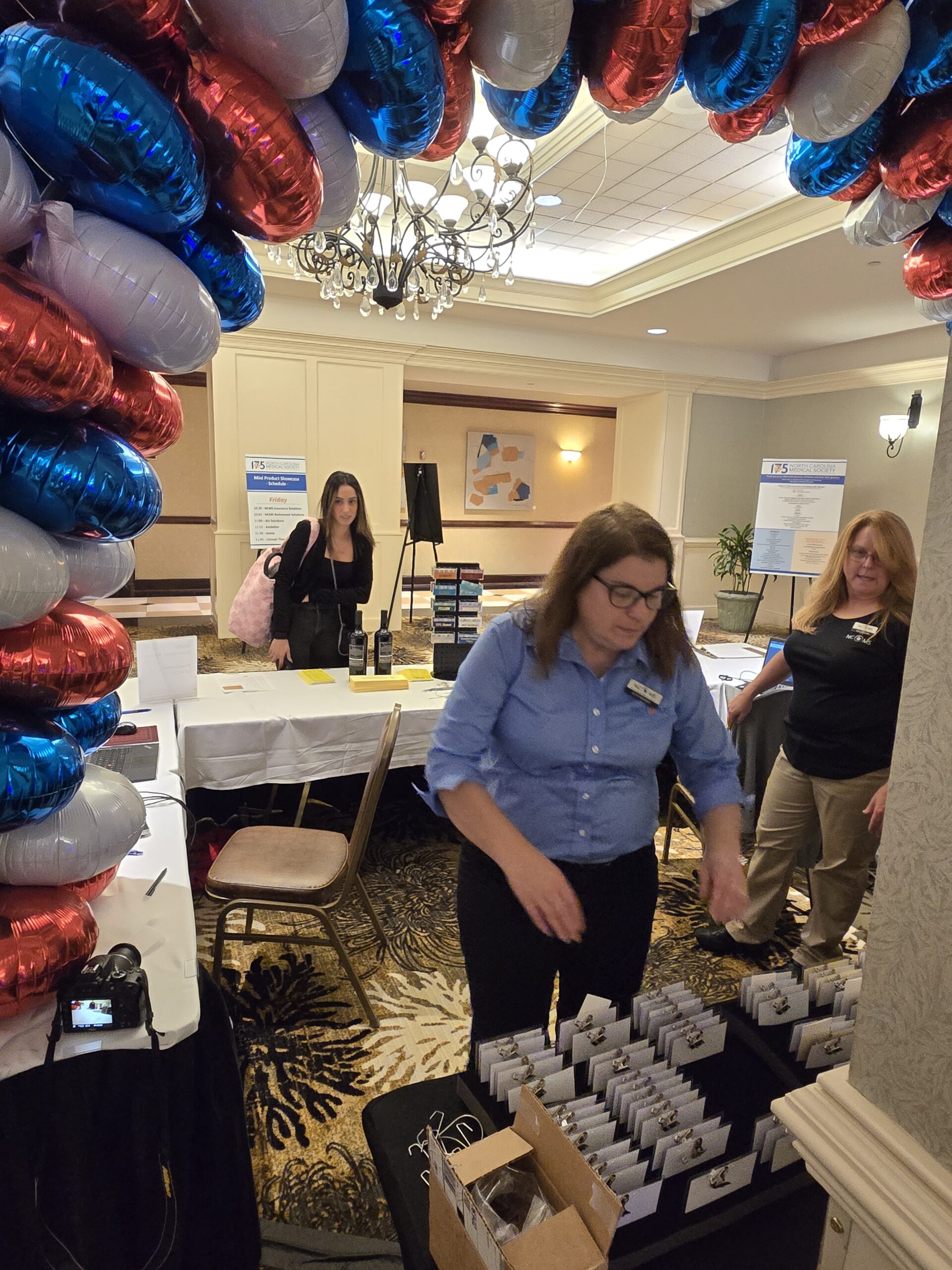
Registration is a Breeze at 2024 LEAD Conference in Greensboro

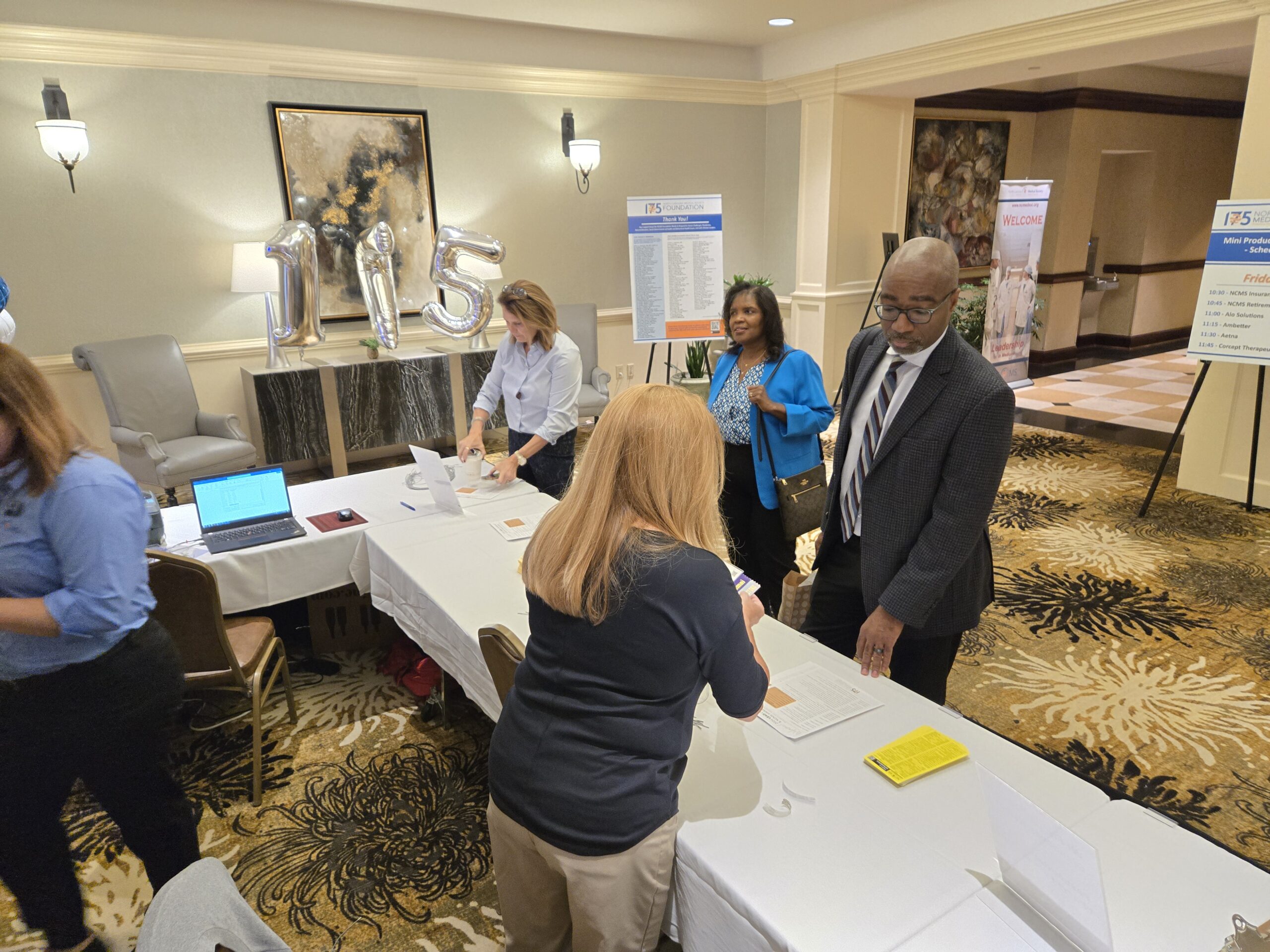
Day one of the 2024 LEAD Conference kicked off with Kelly Wilson and Beth Remhoff manning the registration booth. Once registered, attendees proceeded to the Practice Solutions Hall after seeing the NCMS History Hall.
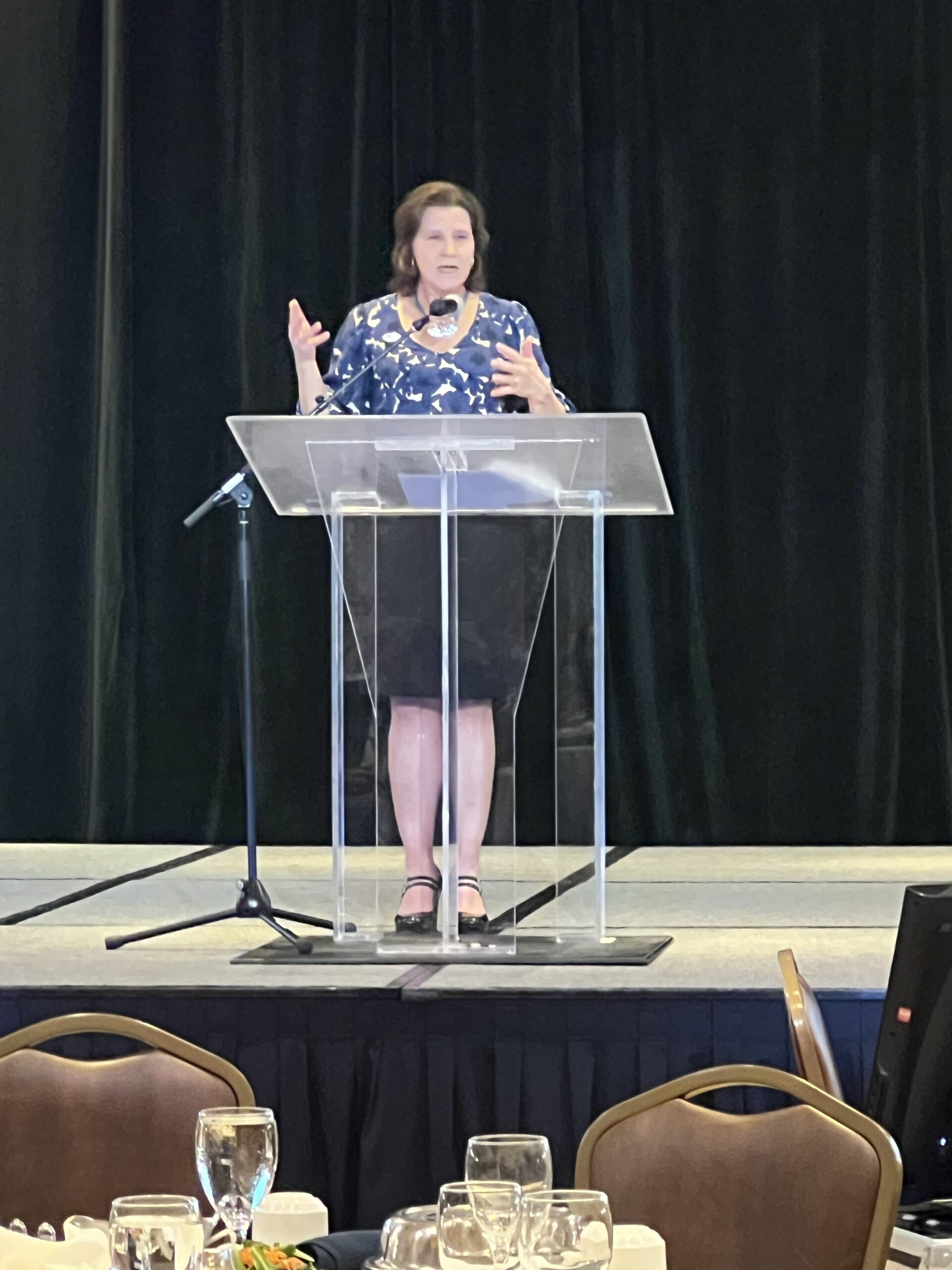


NCMS LEAD Exhibitors Make 2024 Event Amazing Time for Attendees


This is a selection of some of the vendors at 2024 LEAD Conference! Thanks to all of the people who helped make this an amazing event!



$200 Million in FEMA Grants Approved in North Carolina
Image credit: Santiago Ochoa/WFDD
A month after Helene ravaged much of western North Carolina, teams from the Federal Emergency Management Agency are still going door to door and connecting impacted residents to emergency financial aid.
In Watauga, Ashe and Avery counties, FEMA has approved just over $19 million worth of disaster grants for a total of 12,480 households.
According to Shirley Tracey, a FEMA spokesperson, over $200 million has been distributed to 121,000 households across all affected areas in North Carolina.
Though what aid from FEMA looks like will change as the months pass, Tracey added that the agency’s disaster assistance workers will continue signing residents up for disaster grants.
"Putting the money in people’s pockets is really a major step forward in the recovery process," Tracey said. "It’s one step, it’s not the entire thing, but it is certainly a major step to jumpstart the recovery for homeowners and for renters."
Tracey said as the first month post-Helene comes to a close, the federal agency is working to move the 3,700 families placed in short-term rentals and hotels into a more stable living situation.
Those affected can also visit disasterassistance.gov, download the FEMA app, call 1-800-621-FEMA or visit one of their county's FEMA disaster recovery centers to apply for federal assistance. [source]

Happy Birthday to Our Members Celebrating This Month!
Grab your party hats and noisemakers and let’s celebrate!
Moses Y. Aboagye-Kumi, MD
Jeffrey E. Abrams, MD
Richard W. Adams, MD
Puneet Agarwal, MD
Masoud Ahdieh, MD
Diana M. Alexandru, DO
Elizabeth Allen, MD
Joanne B. Allen, MD
Carrie D. Alspaugh, MD
Frank V. Aluisio, MD
Elaina G. Alzaibak
Paul N. Andrews, MD
Robert A. Appert, MD
Aman Arora, MD
John H. Arrington, III, MD
Caudrean L. Avery-Benjamin, MD
Gillian A. Aylward, MD
Saiyyed O. Aziem, DO
Mirela Bacevac, MD
Aaron H. Baer, MD
Marty A. Baker, MD
Scott M. Baker, MD
Eulalia C. Barajas-Graham, PA
Daniel H. Barco, MD
Spencer K. Barrett, MD
Thomas D. Batchelor, Jr., PA-C
Daren M. Beam, MD
Mark E. Beamer, MD
Thomas L. Beardsley, MD
Jeremy M. Belch, MD, MPH
William T. Benesky, Jr., PA-C
Sanford P. Benjamin, MD
Thomas N. Bernard, III, MD
Duncan E. Berry, MD
Bruce H. Berryhill, MD
Charles S. Betts, MD
Raymond J. Biersbach, MD
Kyle S. Bingham, MD
Courtney R. Bitzer, PA-C
James N. Blackerby, MD
Joseph C. Boals, IV, MD, FAAP
Paul V. Bobryshev, MD
Hayley M. Boisseau, PA-C
Lindsay C. Boole, MD
Eduardo Borja Lascurain, MD
Gregory A. Bortoff, MD
Katay C. Bouttamy, DO
Cynthia Bowers-Lee, MD, FACEP
Michael H. Bowman, PhD, MD, FAAN
Robert E. Boykin, MD
H. Ezell Branham, Jr., MD
Eric T. Breiter, MD
Michael W. Brennan, MD
William Z. Bridges, Jr., MD
Clyde L. Brooks, Jr., MD
Paul E. Brown, MD
Rhett L. Brown, MD
Robert L. Brownlow, Jr., MD
Nicole Buddenbaum
Leamor D. Buenaseda, MD
Nigel A. Buist, MD
Larry T. Burch, MD
Rachel M. Burch, MD
William J. Burchfield, MD
Jordan M. Burner, MD
Richard R. Burris, Jr., MD
Mark A. Burt, MD
Harry G. Burton, III, MD
Shannon J. Bybee-Driscoll, MD
Vernon D. Byrd, MD
Kyle L. Cabbell, MD
Milagros P. Cailing, MD
David S. Caldwell, MD
Harold H. Cameron, MD
Angelo C. Cammarata, MD
Elizabeth A. Campbell, MD
Woodward Cannon, MD
Manuel E. Cantillo, DO
Christa J. Canto, PA-C
Marc A. Caragea, DO
L. Keely Carlisle, MD
Sally L. Carpenter, MD
P. Sean Carroll, PA-C
Robert W. Carter, MD
Robin L. Casey, MD
Amy L. Cassidy, MD
Francisco A. Castillos, III, MD
John Catanzaro, MD
Amanda N. Centner, PA-C
Serena M. Chacko, MD
Christina M. Chaconas, MD
Kenneth H. Chambers, MD
Malini Fonseka Chandra Serharan, MD
Kirk L. Charles, MD, FACS
Sameer N. Chawla, MD
James X. Chen, MD
Cherry Chevy, MD
John Cho, MD
Bradley T. Christoph, DO
William M. Clark, MD
George H. Clarke, MD
Charles H. Classen, Jr., MD
Kevin E. Coates, MD
Linda I. Collazo-Batista, MD
Nicole A. Collins, MD
Joseph L. Colosimo, II, MD
Joseph C. Contento, MD
Grayson D. Coon, MD
Ryan J. Cooper, MD
Rick J. Cornella, MD
Carey G. Cottle, Jr., MD
John C. Council, Jr., MD
China G. Cox, MD
Matthew Crabtree, DO
Nathan K. Craig, DO
Jack L. Crain, MD
John L. Crawford, III, MD
Maria E. Crespo, DO
Elizabeth D. Cressy, MD
Michael Creta, DO
Thomas D. Crowder, MD
Asantewaa B. Crumpler, MD
Julian C. Culton, MD
Andrew B. Cutler, MD
Tabitha L. Dabkowski, PA-C
Raj M. Dalsania, MD
Sembua S. Danieli, MD
Michael Dasso, MD
Nailesh D. Dave, MD
Gregory B. Davis, MD
William H. Davis, PA
J. C. B. Dean, MD
Arturo D. DeLeon, MD
Kiersten S. Derby, MD, MPH, FAAP
Benjamin W. Deschner, MD
Shirish D. Devasthali, MD
Robert G. Deyton, Jr., MD
Jennifer R. DiStefano, PA-C, MPAS
George H. Dornblazer, MD
Jamie Doster McIntyre, MD
Kevin G. Dover, MD
Amelia F. Drake, MD
Melinda J. DuBose, MD
Charles H. Duckett, MD
Gary P. Dupuy, MD
William F. Durland, Jr., MD
Kimberly R. Edwards, MD, MS, FAAD
Patrick S. Edwards, MD
Kurt J. Ehlert, MD
Returi P. R. Elkins-Williams, MD
Jessica D. Ely, PA-C
Daniel M. Entwistle, MD, FAAP
J. McDonald Ernest, III, MD
Sarah M. Escott, MD
Tracy L. Eskra, MD, MBA
Frank W. Farrell, Jr., MD
Cecil M. Farrington, Jr., MD
Alan B. Fein, MD
Todd A. Feltz, PA-C
Andrea S. Fernandez, MD
Carol A. Filomena, MD
Terence J. Fleming, MD
Jonathan Flescher, MD
Elizabeth N. Fojtik, MD
Maggie E. Foster, PA-C
William W. Foster, MD
JacQuetta M. Foushee, MD
Chelsea E. Fowler, DO
Amy W. Fox, MD
Sabina P. Francis, MD
Robert W. Fraser, III, MD
M. Gena Frederick, MD
Natalee S. French, MD, FAAP
Robert C. Frere, MD, FAAN
John R. Fry, MD
Glenn E. Fusonie, MD
Kathleen A. Gallagher, MD
T. Ryan Gallaher, MD
Jagadeesh R. Ganji, MD, FACC
Erika G. Gantt, MD
Jerome B. Gardner, MD
Richard Gellar, MD
Donald D. Getz, MD
David B. Gilbert, MD
Kathryn F. Glenn, MD
Joseph L. Godfrey, MD
Michael J. Goebel, MD
Ugo Goetzl, MD, FAAN
Phillip J. Goldstein, MD
Stephen C. Gooding, MD
Kathleen G. Gordon, MD
Ronald G. Gore, MD
Ernesto J. F. Graham, MD
Christopher C. Gratian, MD
Frank R. Graybeal, Jr., MD, FACR
Shayne Greenberg, MD, MSc
Nicole G. Greyshock, MD
Ormond D. Grice, MD
Ericka C. Griffin, MD
Raymond R. Groller, MD
Marc P. Guerra, MD
Mark A. Guirguis, DO
Gregory G. Gunsten, MD, FAAP
Gool K. Gupta, MD
Nitin Gupta, MD
pankaj gupta, MD, FACS
Sachin K. Gupta, MD
Andrew K. Gustavson, PA-C
Gary A. Haakenson, MD
Nizar Habal, MD, FACS
Zeina A. Haddad, MD
James B. Hall, MD, FACOG, FACS
Alfred W. Hamer, Jr., MD
William F. Hancock, Jr., MD
L. Robert Hanrahan, Jr., MD
Hunter A. Hardaway, PA-C
Joshua L. Hardison, MD
R. Paul Harris, MD
Frank N. H. Harrison, Jr., MD
William F. Harriss, MD
Charul G. Haugan, MD
Richard I. Hayes, MD
Andrew T. Healy, MD
Jeffrey J. Henefeld, PA
Alyssa K. Henson, DO
Sherry J. Hinson, PA-C
Charles R. Hoidal, MD
Derrick J. Hoover, MD
George C. Hughes, IV, MD
Julia T. Hughes, MD
Jordan C. Humphrey, MD
Karen C. Hunt, MD
Zehra Husain-Syed, MD
Georgina D. D. Ishak, PA-C
Travis H. Jackson, MD
Selina L. James, MD
Peter J. Jarosak, MD
Claudius D. B. Jarrett, MD
Brian L. Jerby, MD, FACS, FASCRS
James E. Jewell, MD
Soma S. Johnkutty, MD
Robert B. Johnson, MD
Jennifer Johnson Holley, PA-C
David S. Jones, MD
Mary M. Jones, MD
Perry E. Jones, MD
Jennifer F. Jordan, MD
Tom Jose, MD
Jugta Kahai, MD, FAAP
Neelima Kamineni, MD
David J. Kammer, MD
Gordon C. Kammire, MD
Kelly D. Kamp, MD
Matthew G. Kanaan, DO, MS
Akanksha S. Kashyap, MD
Nicolas-George Katsantonis, MD
Jeffrey A. Katz, PA-C
Marc S. Katz, PA-C
Mark A. Katz, MD
Justin R. Kauk, MD
Amarpreet Kaur, MD
Rebecca E. Keiffer, MD
Brendan P. Kelley, MD
Michael J. Kelley, MD
Andrea M. Kelly, PA-C
Susan L. Kennedy, MD
Jean B. F. Kenny, MD
Kevin J. Kerlin, MD
Kendra E. Kesty, MD
Shaukat A. Khan, MD
Pamina S. Kim, MD
George D. Kimberly, MD
Houston M. Kimbrough, Jr., MD
Bradley M. King, MD
Michael B. King, MD, FACC
Stephen C. King, MD
Michael B. Kodroff, MD
Daniel N. Koehler, DO
David J. Koenig, MD
Phillip M. Kostelic, MD
Sage P. Kramer, MD
Johanna E. Kreafle, MD
George H. Krebs, Jr., MD
Brian A. Krenzel, MD
Steven P. Kubicki, MD
Satish K. Kumar, MD
James E. Kurz, MD
Michael A. Lach, DO
David C. Lachman, MD
Andrew P. Lange, MD
Adam D. Langenbrunner, MD
Jocelyn E. LaRocque, DO
Richard E. Lassiter, MD
Aimee M. Lawson, PA-C
Alicia H. Lazeski, MD
Yeonhee Lee, MD
Catherine C. Legrande, PA-C
Laurie LeMauviel, DO
Michael R. Leone, MD
Robert H. Lester, MD
David D. Lewis, MD
Heather K. Lewis, MD
Zachary A. Lindsey, MD
David Ling, MD
A. Stanley Link, Jr., MD
Daniel J. Linn, MD
W. A. Litzenberger, MD
Joseph T. Liverman, MD
David F. Locascio, MD
Choomsang Lohavichan, MD
Verachai Lohavichan, MD
Marchi V. Lopez-Linus, MD
Michael R. Love, PA-C
Jonathan C. Lowry, MD
Joy S. Lowry, MD, FAAP
Miha S. Lucas, MD
Alvin J. Lue, MD
Evelyn M. Lyles, MD
Jennifer M. Mabry, MD
Scott A. MacDiarmid, MD
Christopher R. Madden, MD
Christian E. Magura, MD
Rafat Mahmood, MD
Shailesh S. Male, MD
Anna M. Malysz Oyola, DO
Stanley R. Mandel, MD
P. Prasad Manne, MD
Christopher R. Mantyh, MD
Howard F. Marks, Jr., MD
David A. Martin, Jr., MD
Jeffrey B. Martin, PA-C
Habib A. Masood, MD, FACP
Christopher W. Mattern, MD
Mark A. Mattioli, MD
Gary E. Mauldin, MD
John E. McAuliffe, MD
Ryan N. McCarter, MD
Hannah M. McCloskey, MD
Patrick J. McConville, MD
Bobby K. McCullen, Jr., MD
Stacey L. McDonald, PA-C
Christopher M. McDowell, DO
Steven J. McEldowney, MD
William F. McGuirt, Sr., MD
Adam B. McKenzie, DO
Warren W. McMurry, MD, FACS
D. Clinton McNabb, MD
Jesse N. McNiel, MD
John F. Mearns, DO
Lloyd C. Meeks, MD
Gwenesta B. Melton, MD
Michele L. Mercer, MD
Eric M. Meredith, MD
Richard H. Merrill, MD
James M. Mertesdorf, MD
David R. Messerly, MD
Margaret C. Metts, MD
David D. Meyer, MD, MBA
William F. Milam, MD
Carolyn A. Miller, MD
Jacqueline H. Mims, MD
Stanley G. Minor, MD
Gregory C. Mitro, MD
Robert L. Mittl, Jr., MD
Simone P. Montoya, MD
Brittany A. Moore, PA-C
Stephen I. Moore, III, MD
Ana V. Morais, MD
Elizabeth B. Moran, MD
Mark W. Morgan, MD
Stephanie E. Morgan, MD
Kenny J. Morris, MD
Peter J. Morris, MD, MPH
Crystal D. Mosteller Hopson, PA-C
George W. Mozingo, III, MD
Clarisse S. Muenyi, MD
Amit M. Mukhia, MD
Brian E. Munro, MD
Christina E. Murray, MD
Evelyn E. Murray, DO
Gina M. Murray, MD
Ryan P. Murray, MD
Thomas P. Mutton, MD
Susan G. Myers, MD
Menaka M. Nadar, MD
C. Hughes Napper, MD
Richard Natale, II, MD
Lee Ann Naylor, MD
J. Thomas Newton, MD
Brett C. Niblack, MD
William P. Nixon, Jr., MD
H. B. Noah, MD
Andrew M. Norris, MD
H. T. Norris, MD
Joseph A. Noto, MD
Joseph F. Nutz, Jr., MD
Dustin W. O'Keefe, MD
Eric L. Olson, MD
John S. O'Malley, MD
Todd J. Oswald, MD
Adam C. Ottley, MD
Gaylon V. Owens, MD
Sakine Ozyurt, MD
MaryEllen D. Pace, MD
Kristen R. Page, MD
Gaurang Palikh, MD, FAAN
James F. Palombaro, MD
Brittney T. Panella, PA
Clarito M. Pang, MD
Anup H. Parikh, MD
Ashesh S. Parikh, MD
Seth T. Parker, MD
Walter T. Parkerson, MD
James A. Pascale, MD
George W. Paschal, III, MD
Mary L. Passannante, PA-C
Ashish B. Patel, MD
Hetal P. Patel, MD
Jitendra K. Patel, MD
Kalpesh G. Patel, MD
Ashwin A. Patkar, MD
H. Clifton Patterson, MD
Jaime Pedraza, MD
William B. Pemberton, MD
Sarah Peters, MD
Eric W. Peterson, MD
Amanda J. Pettibone-Pond, MD
Rebecca E. Pettigrew, PA-C
John K. Petty, MD
Christina R. Peyton, MD
Marc A. Pilato, MD
Maria D. Pincus, MD, FAAP
Jesse C. Pittard, MD
Sean Ploof, MD
Nicholas G. Plundo, DO
Tereza Poghosyan, MD
Jeffrey M. Potter, MD
Alexandra N. Powell, MD
Stephen H. Powell, MD
Donna L. Prather, MD
Ian S. Pratt, MD
Crystal M. Pressley, MD
Thomas B. Price, MD
Kelly A. Pring, MD
Raeford T. Pugh, MD
Evan M. Pushchak, MD
Shelby K. Pushchak, MD
Misbah U. Qadir, MD, FACP
Richard D. Ramos, MD
Maria Rana, DO
Cecil H. Rand, Jr., MD
Melissa H. Ratliff, MD
Carl E. Ravin, MD
Bradley H. Reddick, MD
Keshavpal G. Reddy, MD
Kevin J. Reese, MD
Mary Ann Reeves, MD
David E. Rentz, MD, MPH
Gregory B. Reynolds, MD
John O. Reynolds, Jr., MD
Audrey C. Rhee, MD
Brian B. Rhodes, MD
Alfred L. Rhyne, III, MD
Lindsey N. Rice, PA-C
James C. Riley, MD
David A. Rinehart, MD
Ahren C. F. Rittershaus, MD
Jessica N. Rittler, PA-C
John D. Roberson II, MD
Benjamin S. Robey, MD
William L. Robinson, MD
Danielle B. Rocchio, MD
J. Gardiner R. Roddey, MD
John T. Roper, MD
Daniel T. Rose, MD
Vincent J. Rossi, MD, MBA
Todd J. Roth, MD
Jonathan S. Rubens, MD, FACEP
Roger B. Russell, MD
Sean C. Russell, PA-C
Lori D. Russell-Smith, MD
Edmund J. Rutherford, MD
Robert K. Sackmann, MD
Joseph J. Salfity, MD
Carolyn M. Sampson, MD
Gurinder P. S. Sandhu, MD
Devdutta G. Sangvai, MD, MBA, FAAFP
Joshua W. Sawyer, MD
Drew D. Schnyder, MD
Nicholas R. Schoenbachler, MD
Jared N. Schwartz, MD, PhD
Kevin S. Scully, MD
Stephen R. Seal, MD
Jennifer L. Seddon, MD
Jay C. Sellers, MD
Karen Sennewald, MD
Dipen R. Shah, MD
Nimesh B. Shah, MD
Joseph C. Shanahan, MD, FACR
Nael Shanti, MD
Mark T. Shapiro, MD, FAAO
Arsha Sharma
Melissa J. Shelton, PA-C
Ajay Shreenath, MD
Tracy A. Shuford, PA-C
Leslie Sierra-Renten, MD
W. Reginald Sigmon, Jr., MD
Manmohan Singh, MD
Brian A. Singleton, MD
B. Todd Smith, MD
Danielle E. Smith, DO
Scott L. Smith, MD
Vynedra A. Smith, MD
Tamas Soos, MD
Jacob B. Sooter, PA-C
Davey B. Stallings, MD
Karrie A. Stansfield, MD, FAAP
Paul B. Starling, MD
Craig H. Steffee, MD
Tiffany Stephens, PA-C
Kristine C. Stevens, PA-C
Jessica K. Stewart, MD
Lori D. Stiegemeier, DO
Taylor H. Stroud, MD
Roy E. Strowd, III, MD
Allston J. Stubbs, Jr., MD
Erin H. Stubbs, MD
Jennifer L. Sumner, MD
David K. Sutton, MD
William R. Sutton, MD
David W. Swayne, MD
Brian J. Swinteck, MD
Darden C. Swords, MD
James J. Szabo, MD
Kayla J. Szolek, DO
Paula E. Szypko, MD
Charles V. Taft, MD
Leonard J. Tananis, Jr., MD
Teerath P. Tanpitukpongse, MD
Velma V. Taormina, MD, FACOG
Wallace C. Tarry, MD
Za'Vette M. Tatum-Kodzai, MD
Joshua Tayloe, MD
Marshall C. Taylor, MD
Melinda Taylor, MD, FAAP
William C. Taylor, MD
Wendy L. Taylor Book, MD
Anand Tewari, MD
Sandya Thimmappa-Cohen, MD
James M. Thomas, MD, FACS
Jessica G. Thomas, PA-C
Emily H. Thompson, MD
Brittain H. Tulbert, MD
Lindsey H. Tyler, MD
Joseph J. Urash, DO, FAOCD
Val Pierre Vallat, MD
Robert A. van der Vaart, MD
Jan A. van Ravesteyn, MD
Elizabeth F. Vandergriff, MD
Harold M. Vandersea, MD
Steven A. Vernali, MD
Maria J. S. Villena, MD
Neil C. Vining, MD
Andrew R. S. Vinson, MD
Emily L. Voynovich Parrella, PA-C
Matthew J. Vreeland, MD
Eugene H. P. Wade, MD
David T. Walker, MD
Cheryl L. Walker-McGill, MD, MBA
James G. Wall, MD
Mark J. Warburton, MD
Scott A. Washburn, MD
Pearlie B. Watkins, III, MD
Bradley A. Watling, MD
Patrick Watterson, PA-C
Paul R. Weaver, DO
LaShawn A. Weaver-Lee, MD
William W. Webb, Jr., MD
Leah M. G. Webster, DO
Spencer G. Weig, MD
Scott M. Wein, MD
Thaddeus C. West, III, MD
Alan S. Wheeler, PA-C
Benjamin J. White, MD
Arthur W. Whitehurst, MD
Lelan F. Whitmire, MD
Joseph G. Wiater, MD
Steven F. Wiegand, MD
Tammie F. Wiley, MD
Stanley A. Wilkins, Jr., MD
Ernest C. Williams, MD
Joseph E. Williamson, MD
Stephen E. Willis, MD
Jonathan W. Winter, MD
S. Bradley Winter, MD
Donald B. Winters, MD, FAAP
Mary L. Wisniewski, MD
Kenneth A. Wolfson, MD
John M. Wooten, MD
Glenn T. Yamagata, MD
Marguerite M. Yao, MD, MPH
Siegfried C. Yeh, MD
Garret P. Young, MD
James R. Young, MD
John E. Yurko, MD
Veronica P. Zachry, MD
MaryShell B. Zaffino, MD
Bradley R. Zagol, MD
Jeffrey S. Zaidman, MD
Leonardo M. Zara, MD
Mark K. Zeller, MD
Andrew J. Zerkle, MD
Jinyu Zhang, MD
Yunxiang Zhu, MD
Michael D. Zimmerman, DO
Taylor J. Zuber, MD

Let's Get Social! Join NCMS November 14th at Rosecomb Beer Garden in Cary.

Relax and build community with NCMS!
Physicians, PAs, Residents & Students
Bring your colleagues, family, and friends!
Drinks and snacks will be provided!
November 14
6:00 pm-8:00 pm
Rosecomb Beer Garden, Cary
1143 Parkside Main St.
Cary, NC 27519

REGISTER NOW!
If you cannot register at the above link, or need more information, please contact Toni Hill, thill@ncmedsoc.org.

Pneumococcal Vaccine Recommended for People 50 and Older
U.S. health officials recommended that people 50 and older get a shot against bacteria that can cause pneumonia and other dangerous illnesses.
The recommendation was made by a scientific advisory panel and then accepted by the Centers for Disease Control and Prevention. The decision lowered — from 65 — the minimum recommended age for older adults to get the shot.
“Now is a great time to get vaccinated against pneumococcal disease in preparation for the winter respiratory season,” CDC Director Dr. Mandy Cohen said in a statement Wednesday night.
The advisory committee voted 14-1 to make the change during a meeting earlier in the day in Atlanta. The guidance is widely heeded by doctors and prompts health insurers to pay for recommended shots.
Pneumococcal shot recommendations are sometimes called the most complicated vaccination guidance that the government issues. The CDC currently recommends shots for children younger than 5 and adults 65 or older, as long as they have never been vaccinated against pneumococcal disease. Officials also recommend the shots for children and adults at increased risk for pneumococcal disease, such as those with diabetes, chronic liver disease or a weakened immune system.
Lean more about the recommendations here.

NCMS Recognizes NCMS Disaster Relief Fund Contributors
A heartfelt THANK YOU to these individuals and organizations for their contribution to the NCMS Disaster Relief Fund. Your generous donation is far more than just a financial contribution; it’s a lifeline for the many affected by Hurricane Helene, and vital in providing support to healthcare professionals and communities impacted by this disaster.
We invite you to spread the word about the NCMS Disaster Relief Fund and stay engaged with us as we work together to help restore our Western North Carolina neighbors.
We are grateful to have you in our community!
- Amar M. Amaresh, MD
- Edwin C. Bartlett, Sr., MD
- Deanna M. Boyette, MD
- Edwin K. Burkett, MD
- Cobb County (GA) Medical Society
- John A. Fagg, MD
- Barbara Hodde
- Martha G. Peck, MD
- Gary Price, MD
- Eugene E. Wright, Jr., MD
- Kathy F. Wright
- Curi
- Anonymous
- Christopher T. Grubb, MD
- Lyndon K. Jordan, III, MD, FACR
- Katie Lowry, MD, MPH
- Laura J. Luckadoo, MD
- Robeson Pediatrics
- Kirby Sheridan
- Catherine L. Sotir, MD
- Vinod C. Vallabh, MD
- Ian D. Archibald, MD
- Preecha Bhotiwihok, MD, MPH
- John W. Black, MD
- Anonymous
- Gay M. Bowman
- Georgi N. Brockway, MD
- Michael T. Brohawn
- Anonymous
- Carolina Complete Health Network
- Sharon M. Foster, MD, FAAP
- Donna C. Graves, MD
- M. Mark Hester, MD
- Suneya G. Hogarty, DO
- Marius J. Ilario, MD
- Linda W. Lawrence, MD
- Douglas S. McFarlane, MD
- Mark B. Moeller, MD
- Anonymous
- Raleigh Orthopaedic Clinic, PA
- Timothy J. Reeder, MD, MPH, FACEP
- Alan J. Rosenbaum, MD
- Anonymous
- Marshall Z. Schwartz, MD
- Douglas D. Sheets, MD, FACOG
- W. Alan Skipper, CAE
- Jennifer K. Stoddard, MD
- STUSQU, PLLC
- Lisa W. H. Thompson, MD
- Cheryl L. Walker-McGill, MD, MBA
- Craig E. Webb, MHS, PA-C
- Johnathan D. Williams, MD
- Anonymous
- Idil Aktan, MD
- R. D. Almkuist, II, MD
- American Board of Pediatrics Inc
- Caroline D. Ames, MD, FACS
- James H. Antoszyk, MD
- Joy Avery
- Timothy M. Beittel, MD
- Anonymous
- Anonymous
- Cedar Mount Behavioral Health, PA
- Center For Pain Management, PLLC
- Melissa M. Coale, MD
- Anonymous
- Kim D. Dansie, MD
- Jackie M. Davis-Jones
- Jessica F. Doerrler, PA
- Patricia Duncan
- Peter A. Eweje, MD
- Mark W. Featherston, MD
- Anonymous
- Joanne M. Fruth, MD
- Lisa M. Gangarosa, MD
- Highland Medical Associates
- Anonymous
- Joseph P. Hunstad, MD, FACS
- Kitsie Jones
- Christopher P. Jordan, MD
- Kerry Kendall
- Eugenie M. Komives, MD, FAAFP
- Ted R. Kunstling, MD, FCCP
- Andrew S. Lamb, MD
- Keith LaScalea, MD
- Anonymous
- Elizabeth G. Livingston, MD
- Anonymous
- Laura L. Martinez, MD
- Darlyne Menscer, MD
- Ashley Newton
- J. Thomas Newton, MD
- Carolyn O'Conor, MD
- Michael K. Patrick, MD
- Patricia Petrick, MD
- Emily Rayes-Prince, MD
- Anonymous
- Corianne D. Rogers, MD
- Nimesh B. Shah, MD
- Kristen M. Shipherd
- Maria J. Small, MD
- Anonymous
- Michol Stanzione, DO
- Steele Creek Dermatology
- Al Steren, MD and Diane Snyder Steren, MD
- Martha Strange, MD
- Thomas M. Swantkowski, MD, AGAF, FACG
- Marian L. Swinker, MD, MPH
- Christopher L. Tebbit, MD
- Monecia Thomas, PhD
- Dimitri G. Trembath, MD
- Michael J. Utecht, MD, FACEP
- Lynnea Villanova, MD
- Bonnie E. Wagner, PA-C
- Rebecca Y. Weinshilboum, DO
- Carl J. Westcott, MD
- Thomas R. White, MD
- Anonymous
- Women's HealthCare Consultant PC
- Nagarjuna Yerra, MD
- Michael Bartiss, MD / Family Eye Care of the Carolinas
- David Boone, MD
- Carolina Complete Health
- Karl Chiang, MD
- John Chretien, MD
- Anonymous
- Kelly Fedoriw, MD
- Carolyn Ferree, MD
- Alison Gardner, MD
- John Goldfield, MHS, PA-C
- Akilah Grimes, MD
- Sandra Jackson / Eastern Pediatrics
- Matthew Katz, MS / MCK Health Strategies
- Melissa Kenny
- Donna McGee, MD
- Larry Napolitano, Jr., MD
- Michael P. Reddy-Miller, MD
- Anonymous
- Andrew Pasternak, MD
- Antonio Ramirez, MD
- Beth Remhof
- Jennifer Root, MD
- Richard Savage, MD
- Anonymous
- Soma Sengupta, MD
- Nimesh Shah / Noble Hospitality Investment
- Amanda Trimpey, MD, MPH, FACOEM
- Yunxiang Zhu, MD
*Please note: List reflects donations received through Tuesday, October 22.
Reminder: Disaster Relief Applications for Health Care Professionals Not Currently Enrolled as an NC Medicaid Provider
The NC Department of Health and Human Services is committed to ensuring continued access to care for NC Medicaid beneficiaries, as well as reimbursement to qualified providers for services rendered, in good faith, throughout the period of impacts from Hurricane Helene, retroactively from Sept. 25, 2024, through Dec. 31, 2024, (unless otherwise communicated by DHHS).
- The Centers for Medicare & Medicaid Services (CMS) granted approval effective October 1, 2024, for DHHS to implement a temporary, expedited enrollment process for health care professionals to become an NC Medicaid provider due to a natural disaster. This process is not for providers who regularly see NC Medicaid beneficiaries.
Health care professionals who will be rendering services to NC Medicaid beneficiaries due to Hurricane Helene can complete and submit an application through the NCTracks Provider Portal. Please refer to the disaster provider enrollment job aid Disaster Relief Provider Enrollment Application Job Aid (PRV703) located under Quick Links on the NCTracks Provider Enrollment home page for necessary instructions to complete the temporary disaster provider enrollment application. Be sure to review the job aid before starting to complete the application, as several preliminary steps are necessary.
Providers must indicate the application is for Disaster Relief by answering “Yes” to the Disaster Relief enrollment question on the Online Application page of the application.
Note: This is not for providers who see NC Medicaid beneficiaries on a regular basis.
Please review North Carolina Medicaid Provider Enrollment Disaster Relief and Waiver or Modification of Requirements Under Section 1135 of the Social Security Act from the Secretary of Health and Human Services for additional information.
Information about Governor Cooper’s Declaration of a State of Emergency can be found at Governor Cooper Declares State of Emergency Ahead of Hurricane Helene.
Contact
- NCTracks Call Center: 800-688-6696
- Provider Ombudsman: 866-304-7062
Medicaid.ProviderOmbudsman@dhhs.nc.gov

$5 Million Investment Announced to Expand Access to Behavioral Health Care in Primary Care Offices
The North Carolina Department of Health and Human Services announces $5 million to help providers build capacity and implement the Collaborative Care Model in primary care offices across the state. Through the Collaborative Care Model, primary care providers work with an integrated behavioral health case manager and a psychiatric consultant to monitor and treat patients for mild to moderate behavioral health conditions. The need for integrated medical and behavioral health care is greater than ever as rates of anxiety and depression have substantially increased following the COVID-19 pandemic.
"Too many individuals with mental health and substance use disorders delay the care they need because they struggle finding a provider," said NC Health and Human Services Secretary Kody H. Kinsley. "Collaborative Care can serve more people earlier by supporting primary care providers in reaching people at the onset of behavioral health symptoms."
Collaborative Care is covered by NC Medicaid, Medicare and most commercial insurance plans in North Carolina, helping to break down barriers that separate how physical and behavioral health services are delivered and paid for. Patients are able to receive services through a provider, and in a setting, they already know and trust, which gives them easier access to the care they need. Collaborative Care improves patient outcomes, reduces health care costs and reduces stigma related to mental health and substance use disorders.
NCDHHS’ investment is designed to help with the startup costs of implementing Collaborative Care, particularly for primary care providers in rural or high-need areas that have limited access to behavioral health services. The department is partnering with Community Care of North Carolina (CCNC) to select eligible provider applications and distribute funding to approximately 100 providers across the state.
As of Oct. 10, providers can apply for up to $50,000 per site to help with hiring and start-up costs. Primary care practices are encouraged to apply and can find more information through CCNC’s dedicated Collaborative Care website. Efforts will be made to ensure primary care practices in western North Carolina impacted by Hurricane Helene will have an opportunity to apply for inclusion in the program, even if they are unable to apply for funds at this time.
"The need is greater than ever before," said Dr. Carrie Brown, Chief Psychiatrist for NCDHHS. "From 2019 to 2021, the percentage of Americans reporting symptoms of anxiety and depression nearly quadrupled, from 11% to 41%. The Collaborative Care partnership between primary care and psychiatrists is one example of the department’s efforts to increase access to behavioral health care for those who need it as we focus on whole-person health."
Nationally, the Collaborative Care Model is a strategic response to the shortage of mental health care professionals across the country. Recent data show more than 123 million people in the U.S. live in a Federally Designated Mental Health Professional shortage area, including one in four North Carolina counties. In North Carolina, a recent study finds there are 28 counties without a practicing psychiatrist, and it can take weeks or even months to get an appointment with a mental health provider.
With the Collaborative Care Model, a behavioral health care manager is embedded within a primary care office and, through consultation with a psychiatrist, helps the primary care physician implement evidence-based interventions for patients who screen positive for targeted behavioral health conditions. In this model, one psychiatrist can reach far more North Carolinians with mild to moderate behavioral health needs than they could directly provide care for through traditional behavioral health services.
"Through this partnership with primary care professionals, we are working to create a more accessible mental healthcare system," said Kelly Crosbie, MSW, LCSW, Director of the NCDHHS Division of Mental Health, Developmental Disabilities, and Substance Use Services. "This ensures our community receives the mental health care they need and deserve, in a setting where they are most comfortable."
The $5 million investment in capacity building is made possible by the NC General Assembly through the signing bonus North Carolina received from the federal government when it approved Medicaid Expansion. The investment builds on the department’s strategic work to enhance access to the Collaborative Care Model, which has already resulted in a nearly 100% increase in utilization among NC Medicaid primary care providers between April 2023 and May 2024.
NC Medicaid, in coordination with key stakeholders, has led a statewide effort over the past two years to align requirements and reimbursement for Collaborative Care across payors, increase NC Medicaid reimbursement for behavioral health services to 120% of Medicare rates and remove copays for Medicaid beneficiaries. Additionally, NC Medicaid has provided training and technical assistance to support model implementation through Area Health Education Centers, connected interested primary care practices with psychiatric consultants, and created a customized Collaborative Care registry for providers through CCNC. These efforts are outlined in detail in a white paper published by NC Medicaid in December 2023.
NCDHHS’ investment in the Collaborative Care Model is part of a broader commitment to build an integrated behavioral health system in North Carolina. The NC General Assembly last year allocated a historic $835 million to strengthen the behavioral health system, and millions of North Carolinians are already benefiting from the sweeping, systemic improvements these funds are making for their health, well-being and day-to-day lives. More information is available in the NCDHHS Transforming North Carolina’s Behavioral Health System white paper. [source]

Starlink Assistance for Facilities Impacted by Helene
NCDHHS may be in a position to assist practices with securing Starlink and is seeking your input about practices in the Hurricane impacted counties that need Starlink. DHHS will use your information to link Starlink resources with practices.
Please share the following information with Nicole Fields-Pierre, MPA, NCCM, Community Health Program Manager, Office of Rural Health at Nicole.Fields-Pierre@dhhs.nc.gov:
- County
- Practice/clinic name
- Specialty
- Address
- Point of contact: name, cell phone number, email addresses
How Communities Impacted by Hurricanes Helene and Milton Are Celebrating Halloween

Helene and Milton Can't Keep the Halloween Spirit from Happening!
(Time, Chantelle Lee) -- Krista Gamble and her family love Halloween. But this year, as her community in Asheville, North Carolina, was still dealing with the aftermath of Hurricane Helene—a category 4 storm that ravaged the city last month—she wanted to make sure that families in the area would be able to enjoy the holiday.
“It’s traumatizing a lot of the things some of these kids have seen or learned,” Gamble says about Helene. “It’s important to let these kids still be kids; they’ve had a tough month.”
Helene reached Florida on Sept. 26 and tore through the Southeast. The storm devastated western North Carolina—almost half of deaths due to Helene were in North Carolina, and 42 were in Buncombe County where Asheville is located, according to The Associated Press. Less than two weeks later, Hurricane Milton made landfall in Florida as a Category 3 hurricane, wreaking havoc on communities that had just begun to recover from Helene. Officials are still calculating the damage from the two storms, but it’s estimated to cost tens of billions of dollars.
Gamble says she and her family were fortunate that they only had minimal flooding in their basement, but they were left without power and running water for a couple weeks after Helene hit. Gamble says much of Asheville is still under a boil water notice as of Tuesday. But as the community has embarked on rebuilding and cleanup efforts, people like Gamble have also been coming together to help each other find moments of levity—like by celebrating Halloween.
North Carolina celebrates Halloween despite Helene
After Helene, Gamble started collecting donations of Halloween costumes and ended up bringing about 150 of them to a local community space in Asheville, which held a free fall festival on Oct. 27 that included face painting, candy, and a costume drive. Gamble was one of several people who organized costume donations or Halloween events for kids and families.
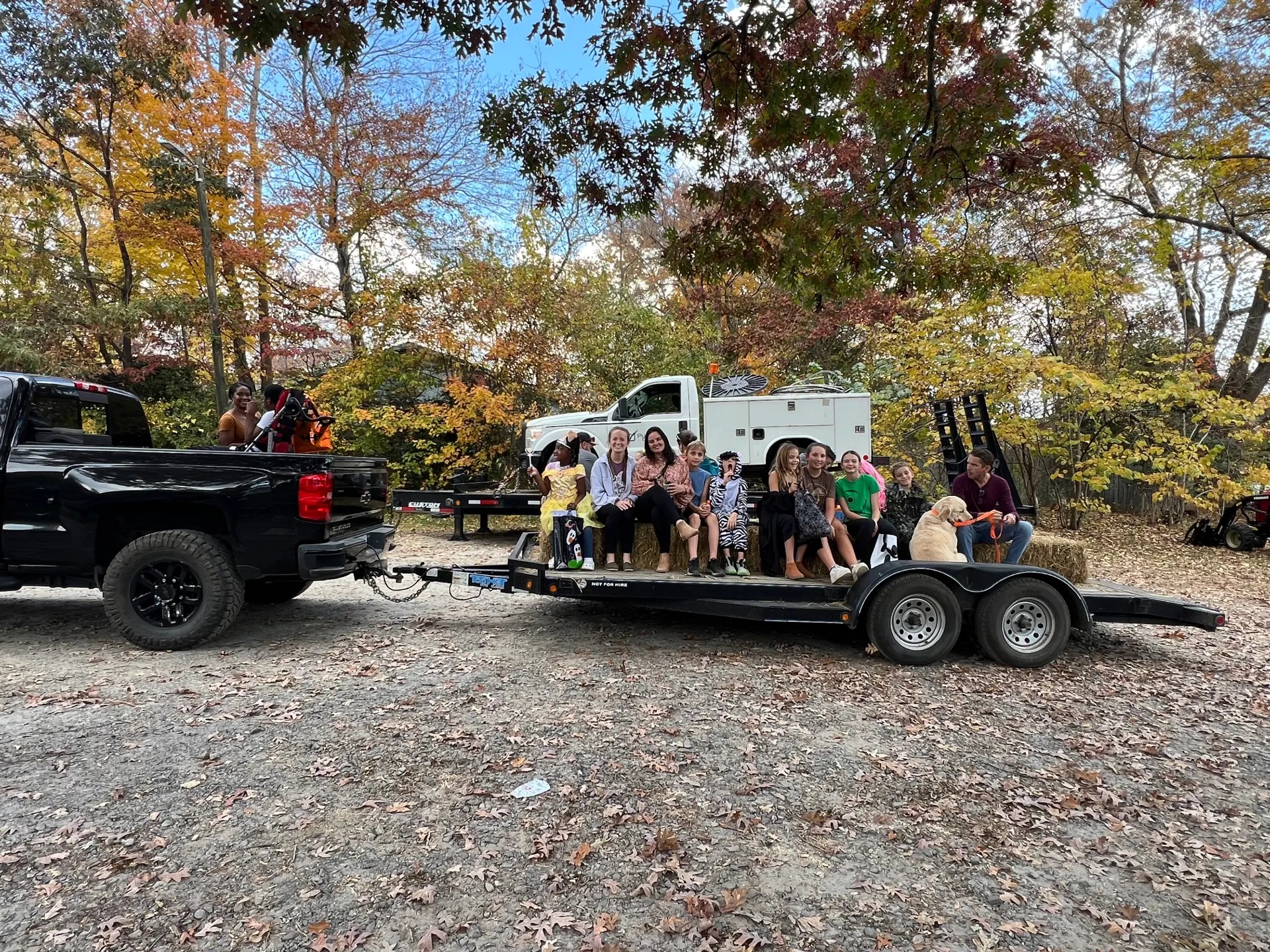
Nearby, the Monte Vista Hotel and a local restaurant, Goldfinch, hosted its first-ever fall festival on Oct. 26, which included a Trunk or Treat, hayride, and even therapy horses, among other activities. There were also about 400 costume donations for people to choose from. Everything offered at the event was donated from in and out-of-state. The hotel, located in Black Mountain, had been providing free meals to people in the days after Helene hit, and has been housing people whose properties were damaged in the storm and qualify as survivors with the Federal Emergency Management Agency (FEMA). FEMA has been providing assistance and coordinating relief efforts to states—like North Carolina—that were impacted by Helene.

But still, hotel staff wanted to do more.
“None of us, I think, thought this was going to last as long as it has in our little town,” says Chloe Greene, the hotel’s assistant general manager. Black Mountain, like Asheville, was one of many communities devastated by Helene—the storm brought severe flooding and damaged numerous properties in the area. Black Mountain is also still under a boil water notice as of Tuesday, according to Greene.
“We just wanted to provide relief for parents that were worrying about so much,” says Ken Floyd, the hotel’s general manager. He says nearly 1,500 people attended the event.
“We gave out about 200 plus pounds of candy. And to see the kids’ faces light up when they got to pick out their costume…” Floyd adds. “People got to sit down, relax, eat some food, and watch their kids just have a great time and that’s really … what it was all about.”
Read More: How You Can Help Hurricane Helene Victims
Morgen Stanzler, like Gamble, wanted to collect costume donations to help out the Black Mountain community, where she and her family own a second home. After Helene, she started collecting decoration kits for the Monte Vista Hotel’s Trunk or Treat and costumes for the festival’s costume drive.
“I love this place so much,” Stanzler says. “In the wake of a tragedy like this, I can’t rebuild roads, there’s not too much I can do. … [But I wanted to help] the community to just find a little bit of joy in the middle of something that’s really devastating.”
After back-to-back storms, Floridians come together
Soon after Helene ripped through Florida, residents had to start preparing for another storm: Hurricane Milton. Officials issued evacuation orders for millions of people in the Tampa area. While not as severe as meteorologists had expected it to be, Milton brought more destruction to the state—tornadoes hit parts of the state, and the storm flooded neighborhoods and downed trees.
In the aftermath of Milton, Karen Aucoin—who owns an event and wedding venue in Largo, Florida in the Tampa Bay area—decided to move forward with her business’ annual Halloween event. Studio 131, has hosted it the past few years, and this year’s event featured a Trunk or Treat, vendor market, and a haunted manor at its event venue space on Oct. 13. Most of the event was free; the haunted manor had a $5 fee, but Aucoin says they waived it for people who didn’t have it. Between 100-200 people came to the event, Aucoin estimates. Studio 131 has also been working with local organizations to collect donations for people who were affected by the hurricanes.
“I just knew, no matter what, we have to do something really good for the community—give everybody a sense of normalcy,” Aucoin says.
In-Person Early Voting Ends Saturday!
In-Person Early Voting Ends Saturday, November 2nd!
During the early voting period, voters may cast a ballot at any early voting site in their county. This is different than Election Day, when registered voters must vote at their assigned polling place. During the early voting period, eligible individuals may also register to vote and vote at the same time (see Same-Day Registration below).
For an overview of North Carolina’s current elections, visit Upcoming Election.
Early Voting Dates and Sites
- The in-person early voting period for the 2024 general election:
- Began Thursday, October 17, 2024.
- Ends 3 p.m. Saturday, November 2, 2024.
- The general election is on Tuesday, November 5, 2024.
- Find early voting sites and schedules in your county: Early Voting Site Search.
- Locations and voting hours are also available here: Early Voting Sites for the Nov. 5, 2024 General Election (PDF).
Unsure if You Are Registered?
Find out if you are registered to vote by entering your information into the Voter Search.
Don’t Forget Your Photo ID
North Carolina voters will be asked to show photo ID when they check in to vote. Learn more: Voter ID.
Same-Day Registration
When you check in to vote at an early voting site, you may update your name or address within the same county if necessary. Individuals who are not registered to vote in a county may register and immediately vote at that same site. This process is called “same-day registration.” Find more information at Register in Person During Early Voting. Although same-day registration is available for voters during early voting, same-day registration is not available for most voters on Election Day.
Your Sample Ballot
To view sample ballots, registered voters must enter their information into the Voter Search and navigate to “Your Sample Ballot.” Voters can practice making selections with the accessible sample ballot: “Option 4” at the NC Absentee Ballot Portal.
Note: Sample ballots for each election are only available once finalized.
By-Mail Absentee Ballot Drop-Off
Voters who receive an absentee ballot by mail may deliver their ballot to their county board of elections office or to an election official at an early voting site during any time that site is open for voting. Ballots will be kept securely and delivered to the county board of elections for processing.
Voting Equipment
Curious which equipment will be at your voting site? Check the interactive map and table: Early Voting Equipment by County.
Voter Assistance and Curbside Voting
Any voter who qualifies for assistance may ask for help at their polling place under Assistance to voters (N.C.G.S. § 163-166.8). To find more information, visit Help for Voters with Disabilities. Curbside voting is available for eligible individuals. For more information, see Curbside Voting.
After You Vote
You can find out whether your vote counted in the “Your Absentee Ballot” section of the Voter Search database. Under North Carolina law, all early votes — by-mail or in-person — are considered absentee votes. Your ballot status also will show up in the “Voter History” section as soon as your county completes the post-election process of assigning voter history to your record. This may take up to a few weeks after Election Day.
Learn about NCMS member candidates here.

Grant Opportunity: Primary and Preventive Care for Vulnerable, Underserved, and Medically Indigent Patients
These grant funds, supported through the North Carolina General Assembly, are for assuring access to primary and preventive care to meet the health needs of vulnerable, underserved and medically indigent patients, with emphasis on providing primary and preventative medical services to uninsured or medically indigent patients. An important component of this work is to strengthen the safety net through increased levels of collaboration and integration of services to meet and sustain the needs of those served more effectively. When an eligible primary care medical home safety net organization provides integrated care, grant funding may also support dental, pharmacy, maternal, and behavioral health services.
Primary care safety net organizations that currently provide primary and preventive health care for underserved and medically indigent patients in North Carolina are eligible to apply for this funding to pay for patient care through encounter-based reimbursement (Track A) or through reimbursement for eligible expenses (Track B). Telehealth services and equipment are eligible expenses in both tracks. Applicants must select ONE track.
Learn more here.

Retainer Payments for Home and Community-Based Service Providers Impacted by Hurricane Helene

Home and Community-Based Service (HCBS) providers may be eligible to receive retainer payments for employed Direct Care Workers (DCWs) who are unable to deliver HCBS services under an active, approved service plan to one or more Medicaid beneficiaries due the impacts of Hurricane Helene. These retainer payments are for DCWs as defined in 42 C.F.R. § 441.302(k)(1)(ii) and 42 C.F.R. § 441.311(e)(1)(ii) and are intended to help maintain the NC Medicaid provider network.
Eligibility Criteria
To receive retainer payment, qualifying providers and their DCW(s) must comply with terms set out in the attestation along with the following:
- Home and community-based service (HCBS) provider delivering one of the following services:
- 1915 (c) Community Alternatives Program for Children (CAP/C) Waiver
- 1915 (c) Community Alternatives Program for Adults (CAP/DA) Waiver
- 1915 (c) Innovations Waiver
- Specific 1915(i) services
- Community Living and Supports
- Supported Employment
- Individuals Placement and Supports
- Individuals and Transitional Supports
- Home Health
- Personal Care Services (PCS)
- Private Duty Nursing (PDN)
- Provider’s employed DCW(s) is unable to provide services under an active, approved service plan due to the impacts of Hurricane Helene
- Provider’s employed DCW(s) or member receiving HCBS services has a physical address within a FEMA declared disaster individual assistance county
- Retainer payments are limited to hours/services under a service plan approved prior to Sept. 25, 2024
- Retainer payments are limited to no more than one (1) 30-day billing period per DCW and Member that is unable to be served
- Providers must complete and upload the required attestation
Providers must retain the required DCW attestation for each DCW for which a retainer payment is requested.
To receive retainer payments, providers will initially submit an attestation and collect attestations from their DCWs. Once a completed attestation has been submitted, providers may request a retainer payment by submitting claims using the process described below to the Managed Care plan with whom the Member unable to receive services is enrolled or to NCTracks based on eligibility of the Member unable to receive services. The following sections provide additional information on the process.
Continue to full release here.

Baxter Announces Expiration Dating Extensions for Certain Products Related to IV Solutions Disruption

As part of its efforts to mitigate the disruption to the supply of IV solutions after Hurricane Helene temporarily closed its North Cove, N.C., manufacturing plant, Baxter said Monday that it is now authorized by the Food and Drug Administration (FDA) to extend the use date of some products to provide a 24-month expiration from the manufacture date without relabeling the products.
Please see the Baxter document that contains the full list of Baxter product codes, lot/serial numbers, labeled expiration dates, and extended expiration dates. The extended expiration dates apply only to product codes manufactured prior to September 30, 2024.
Read more in the Special Bulletin released from the American Hospital Association here.
New Shingles Treatment May Reduce Eye Pain and Vision Loss
Long-Term, Low-Dose Antiviral Treatment Benefits Patients with Eye Disease & Pain from Shingles
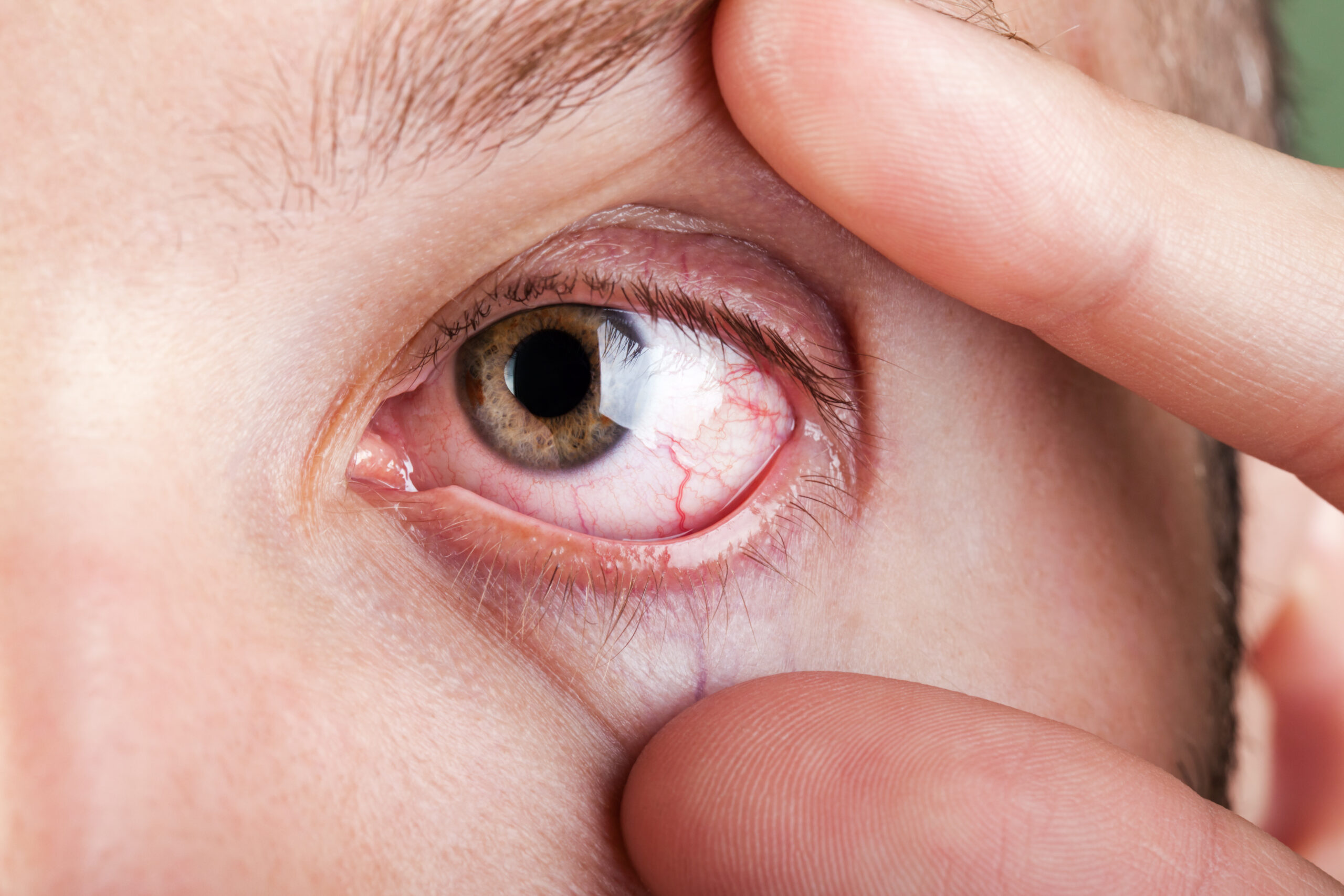
Anyone who has had chickenpox can get shingles, and it can lead to debilitating and long-lasting vision loss for the 8% of sufferers whose virus affects a particular nerve that supplies the eyes. Now for what you came here for — the good news: Such symptoms may soon be alleviated thanks to a new treatment plan dubbed a “possible breakthrough” by CBS News.
In a multiyear study, a long-term, low-dose antiviral treatment was found to help reduce the risk of damaging and often painful periods of inflammation and infection around the eye. Study participants who took antivirals for a full year saw a 26% reduction in their risk of new or worsening eye disease at 18 months, and they were less likely to have multiple disease flare-ups compared to those who received a placebo.
The current treatment is typically a 7-10 day course of an antiviral. “We explored longer-term treatment because, while the standard approach has been shown to reduce the chances for chronic eye disease, it still leaves many suffering from it,” said lead study author Elisabeth J. Cohen, who herself has damaged vision as a result of the shingles virus.
Read full report here.

Register Now! NCTracks November 2024 Provider Training Schedule
Registration is now open for the NCTracks November 2024 training courses.
The courses are virtual, via Zoom, and can be attended remotely from any location.
Courses offered this month include:
- New Office Administrator
- Submitting a Time Limit Override
- Submitting a Dental/Ortho Claim
- ES User Role_Abbreviated MCRs_Upload Documents
- Submitting a Professional Claim
- Prior Approval Institutional
Click here for more information on course schedule and access to zoom links.

Register Now! Exploring Recent Data: Pfizer Medical Affairs Updates on COVID-19 from ACIP and More
Exploring Recent Data: Pfizer Medical Affairs Updates on COVID-19 from ACIP and More
Thursday, 14 November 2024: 12:00 pm – 12:30 pm ET
Speaker:
Rajeev M. Nepal
US Medical Director, Pfizer mRNA Vaccines, Medical and Scientific Affairs
The Pfizer Vaccines US Medical Affairs Team invites you to attend an educational webinar series titled Translating mRNA which is focused on providing education on COVID-19 and vaccination.
The webinar series is designed to communicate scientific information which may include recent study results to inform healthcare providers regarding Pfizer and BioNTech's COVID-19 vaccines.
The webinar series will include a live question-and-answer session with Pfizer medical experts.
Intended Audience: US healthcare professionals including but not limited to physicians, nurse practitioners, pharmacists, and physician assistants.

CDC: Walking Pneumonia Surging Among Kids
Children who have coughs that go on for weeks may have a type of walking pneumonia that’s been surging in the US this year, and they may need a different antibiotic regimen to treat it, infectious disease experts say.
“It’s very much been on our radar since early summer, when we started to see a remarkable increase in the number of kids with pneumonia who seemed to have this particular type of pneumonia,” said Dr. Buddy Creech, a pediatric infectious disease specialist at Vanderbilt University Medical Center.
Creech says that on the same day in August, four Nashville-area pediatricians reached out to him to ask why so many kids were coughing in the summertime. These doctors wanted advice, he says, because their go-to antibiotic for pneumonia – amoxicillin – didn’t seem to be working in these cases.
Continue reading this story here.

🎉It's New Member Monday!🎉
Join us in welcoming these new members to the North Carolina Medical Society!
- Tanya E. Anim, MD
- Ilya Boykov
- Taylor S. Corum, PA-C
- Callie R. Faust, PA
- Robyn Guo
- Hunter A. Hardaway, PA-C
- Rama K. Kethineni, MD
- Kenyn L. Koop, MD
- Crystal M. Mackie, MD
- Chad J. Michel, PA-C
- John S. Muus, MD
- Stephen A. Naymick, II, DO
- Emily E. Propst, PA-C
- Zachary Schrank
- Amanda A. Scott, MD
- Hyoungjun Sim
- Rebecca Sullenger
- Robin S. Tanner, MD
- Nina Westcott
- Marcus Wilson, DO
- James B. S. Wise, MD
We are thrilled to have you!

NC House and Senate Pass Second Round of Hurricane Relief Funding

SB 743 Transfers $604 million from Rainy Day Fund to assist part of state in long-term recovery efforts
The North Carolina General Assembly returned on Thursday to quickly pass another round of funding needed for Western North Carolina as the region continues to recover from the devastating hurricane that hit last month. SB 743: The Disaster Recovery Act of 2024—Part II transfers $604 million from the state’s Rainy Day Fund to assist that part of the state in their long-term recovery efforts.
“This will be a long recovery, and the legislature will not lose sight of rebuilding the region and fixing the damage,” said Senate President Pro Tem Phil Berger (R-Rockingham). “Our second relief package puts the General Assembly’s total commitment so far at almost $900 million, and that will only grow as we continue to evaluate and repair the damage.”
Highlights from the legislation include the following:
Economic Development
- Allots $5 million to the Economic Development Partnership of North Carolina to advertise and encourage tourism in Western North Carolina;
- Exempts the local-match requirement temporarily for Job Development Investment Grants (JDIG) in impacted areas.
Education
- Appropriates a total of $101.7 million for education, which includes funding for K-12 schools, the UNC System and the state’s community college system;
- Allocates $50 million in K-12 school repairs and $5 million in increased mental health support for K-12 schools;
- Provides $16.5 million for emergency scholarship grants for students at impacted community colleges, UNC System schools and private colleges, along with $5.5 million to cover spring tuition for UNC-Asheville students and $5 million to cover spring tuition for community college students in the area.
Environment
- Provides $139 million to the Department of Environmental Quality (DEQ), including $100 million to be distributed to local governments through bridge loans for water and wastewater repair.
Residents’ Assistance
- Secures $9 million for utility assistance to individuals impacted by the hurricane;
- Allocates $10 million to provide weatherization services to impacted homeowners.
Small Businesses
- Allots $50 million for bridge loans to businesses impacted by the hurricane, with applicants able to qualify for up to $100,000.
Transportation
- Requires the Division of Motor Vehicles (DMV) to extend emission inspection licenses in disaster areas.
On Thursday afternoon, both chambers adopted the conference report to SB 743 by unanimous vote, with a 108-0 vote in the House and 46-0 in the Senate. A copy of the bill text for SB 743 can be found here, and a copy of the committee report can be found here.
Speaker of the House Tim Moore (R-Cleveland) stated that the General Assembly is expected to take up another hurricane relief bill during the November session and that there could be additional legislation proposed in December’s session. “Everything right now is so preliminary. For example, we don’t know what percentage of the damages are going to be covered by insurance. We don’t know exactly how the federal match is going to work,” said Speaker Moore. “If the state goes ahead and just front loads a bunch of money, and were to drain the account, you could actually forfeit the ability to get some federal match.”
During the one-day session, the House and Senate also passed SB 132: Early Voting Sites/Helene Counties, which authorizes additional in-person early voting sites for 13 counties impacted by Hurricane Helene.
Governor Cooper’s Hurricane Relief Budget Recommendation
One day prior to the General Assembly releasing its hurricane relief funding bill, Governor Roy Cooper and State Budget Director Kristin Walker unveiled their recommended hurricane relief and recovery funding package. The Cooper Administration’s recommendation proposed $3.9 billion in state funding to rebuild critical infrastructure, homes, businesses, farms, schools and universities damaged by the hurricane.
The Governor called his package a “down payment on Western North Carolina’s future.” He further remarked, “This proposal, built on the assessment of damages sustained and lessons learned from past storms, would give Western North Carolina a jump start on recovery.”
Governor Cooper and his team estimated the total cost from the hurricane’s damage as being $53.6 billion. His budget director asserted that the federal government would cover about $13.6 billion in estimated damages and insurance or other private sector funding would total approximately $6.3 billion, which would leave $33.8 billion left unfunded.
Key provisions from the Governor’s package include:
- $650 million for the region’s economy, with $475 allocated for a Helene Business Recovery Grant Program;
- $650 million for housing, with $325 to start rebuilding homes though a Homeowner Recovery Program;
- $578 million for utilities and natural resources, with half of this funding going towards a federal dollar match;
- $282 million for education, with $100 million for capital needs and $50 million for student support needs.
- $422 million for agriculture, with $250 million for grants to farmers for losses to crops, livestock and infrastructure;
- $252 million for Health and Human Services, including $43 million for increased mental health services.
A copy of the Governor Cooper and the Office of State Budget and Management’s full budget recommendation can be found here.
This week Governor Roy Cooper also released a memo laying out the state’s response and recovery efforts, in conjunction with federal, local and non-profit partners, to the deadliest tropical storm in North Carolina’s history. It includes the Governor’s actions, progress from state government agencies and utilities, volunteer efforts and National Guard response, FEMA assistance and other updates. A copy of the memo from the Governor’s Office can be found here.
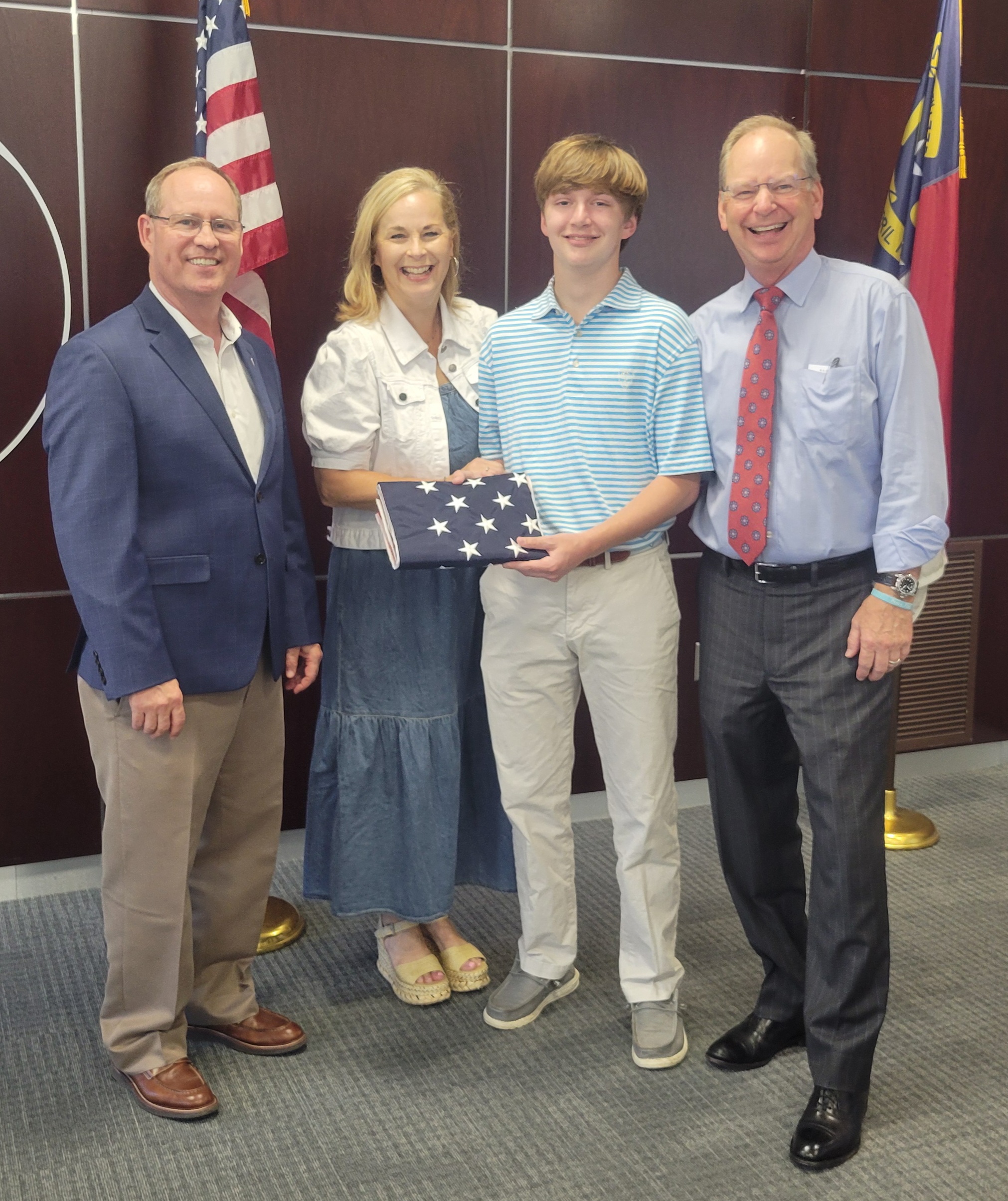
NCMS in Action: Rep. Greg Murphy Gives US Capitol Building Flag to Eagle Scout Son of NCMS Board Member
Eagle Scout Britton Ferrell Receives Flag from Rep. Greg Murphy
RALEIGH -- On Thursday, Congressman Dr. Greg Murphy presented a flag to Britton Ferrell, son of NCMS Board member Dr. Bill Ferrell. Britton recently attained the level of Eagle Scout, the highest rank in the Boy Scouts of America's Scouts BSA program.
The flag flew over the United States Capital Building on October 13, 2024.
The Eagle Scout rank is a life-long achievement that's highly sought after by leaders in business, college, military, and community service. Only about 6 percent of all Scouts BSA members earn Eagle. Britton earned his after recently completing his community service project.

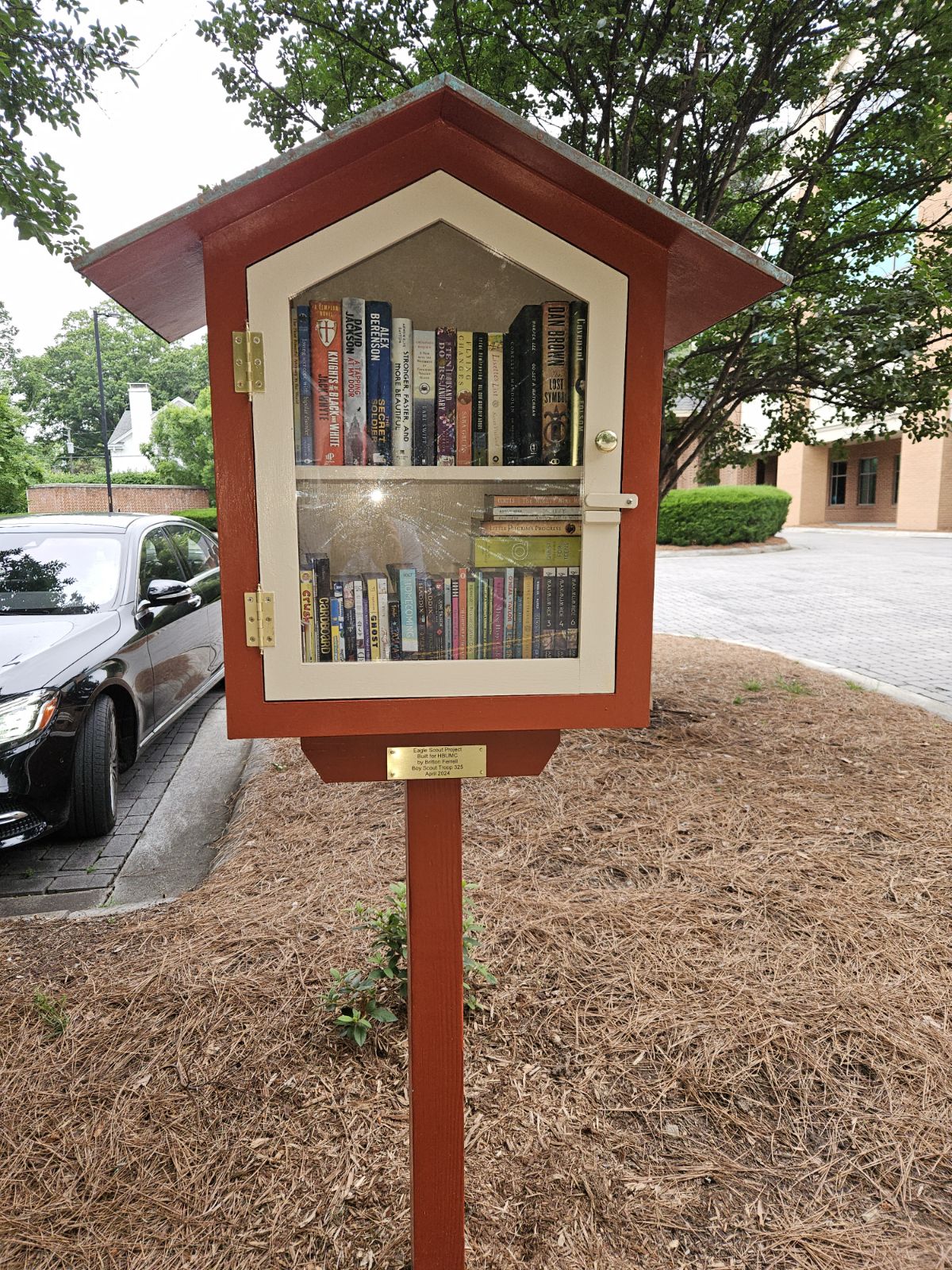
Britton is from Troop 325 in Raleigh and completed his Eagle Scout board of review in June. His Eagle Scout Project was constructing and installing a little library at Hayes Barton Methodist Church in Raleigh.
His 13 Point of the Scout Law: A Scout is COMMITTED. Britton is the 49th Eagle Scout of North Star District for 2024.
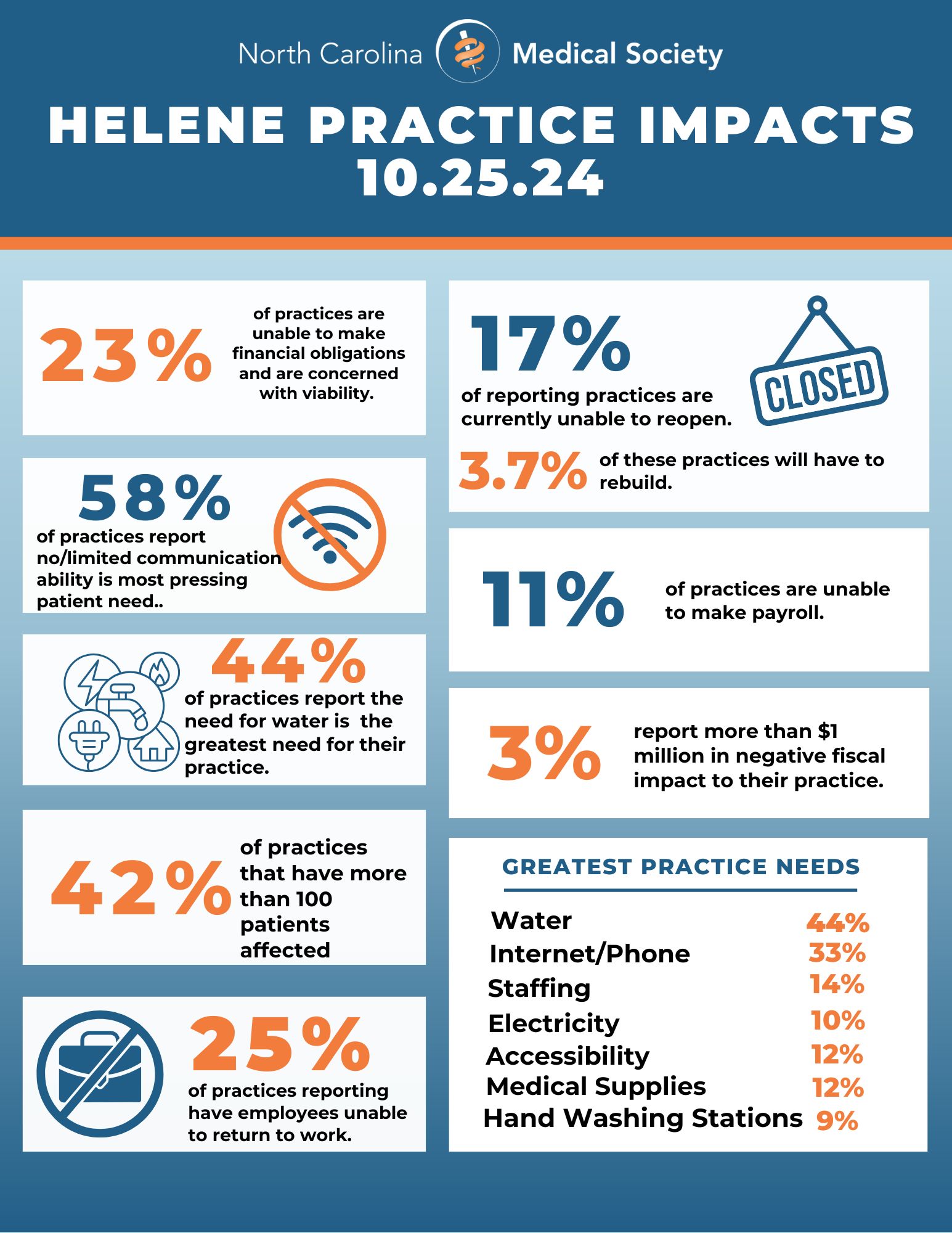
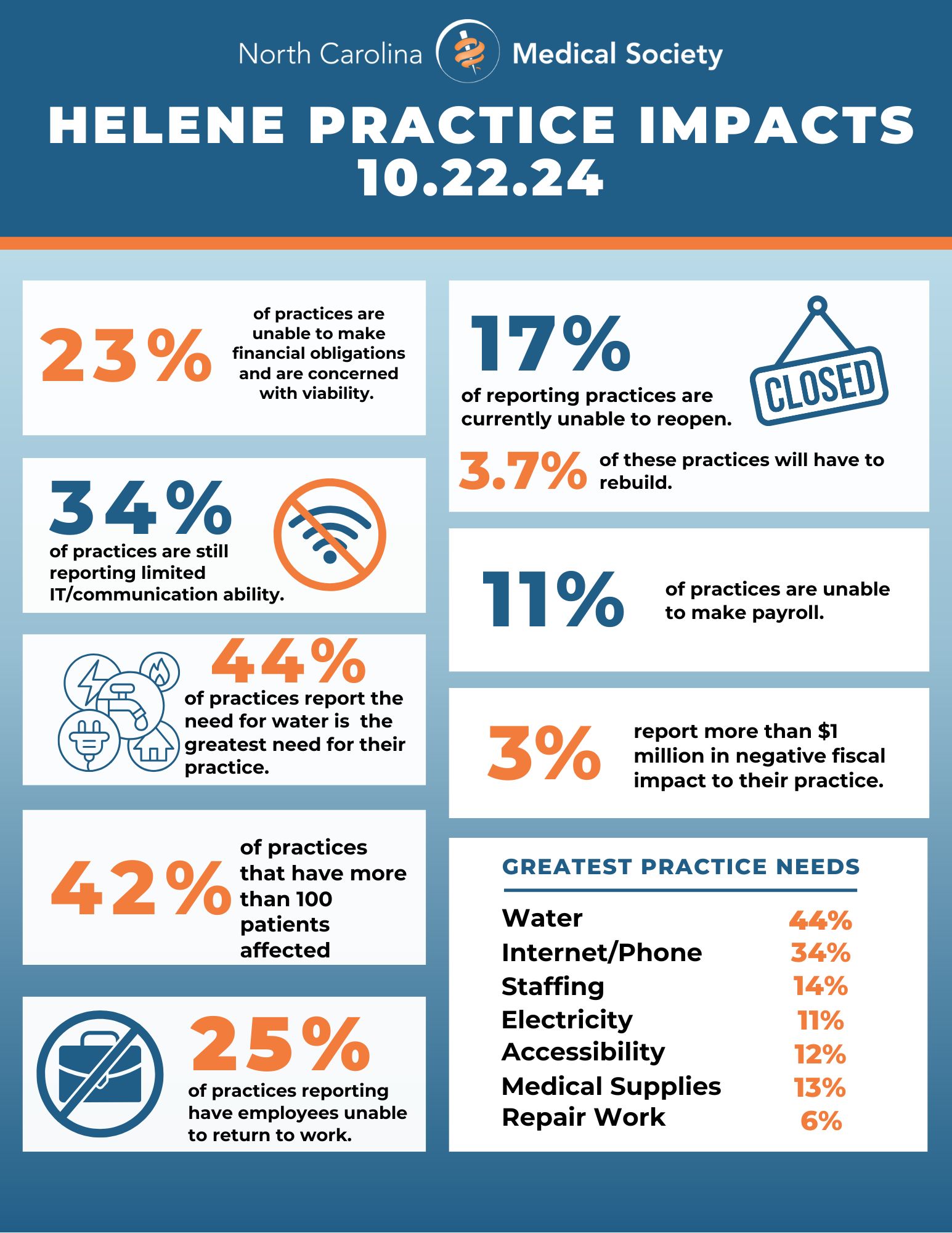
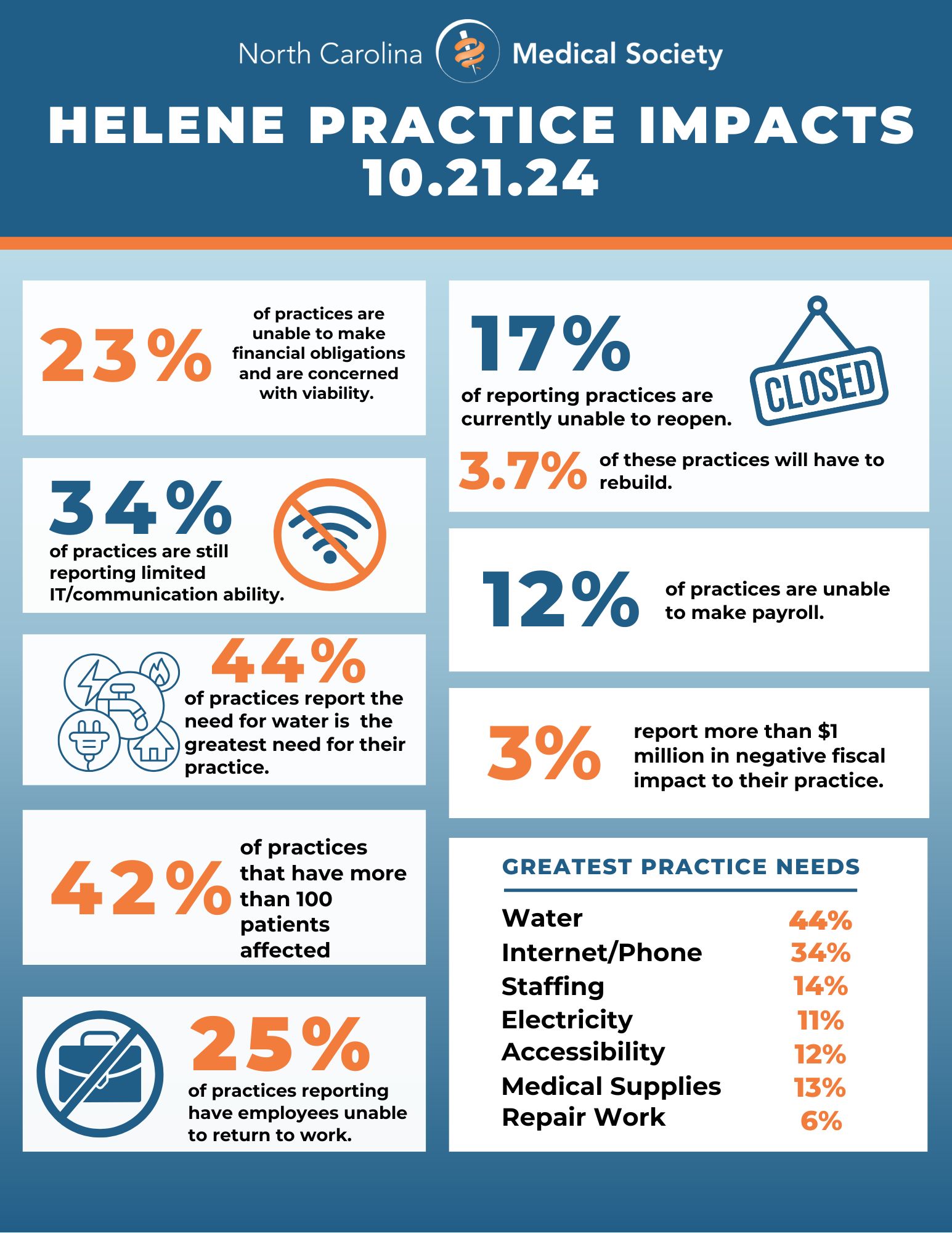
NCMS Practice Impact Survey Results 10/25/24
The North Carolina Medical Society is working closely with the North Carolina Office of Emergency Services to assess the condition of medical practices in Western North Carolina. The data we receive from our members and others in the healthcare community will help direct vital resources where they are needed most.
NCMS will update you daily on our initial findings. Here is the report for 10/25/24:

NCMS Recognizes NCMS Disaster Relief Fund Contributors
A heartfelt THANK YOU to these individuals and organizations for their contribution to the NCMS Disaster Relief Fund. Your generous donation is far more than just a financial contribution; it’s a lifeline for the many affected by Hurricane Helene, and vital in providing support to healthcare professionals and communities impacted by this disaster.
We invite you to spread the word about the NCMS Disaster Relief Fund and stay engaged with us as we work together to help restore our Western North Carolina neighbors.
We are grateful to have you in our community!
- Curi
- Anonymous
- Christopher T. Grubb, MD
- Lyndon K. Jordan, III, MD, FACR
- Katie Lowry, MD, MPH
- Laura J. Luckadoo, MD
- Robeson Pediatrics
- Kirby Sheridan
- Catherine L. Sotir, MD
- Vinod C. Vallabh, MD
- Ian D. Archibald, MD
- Preecha Bhotiwihok, MD, MPH
- John W. Black, MD
- Anonymous
- Gay M. Bowman
- Georgi N. Brockway, MD
- Michael T. Brohawn
- Anonymous
- Carolina Complete Health Network
- Sharon M. Foster, MD, FAAP
- Donna C. Graves, MD
- M. Mark Hester, MD
- Suneya G. Hogarty, DO
- Marius J. Ilario, MD
- Linda W. Lawrence, MD
- Douglas S. McFarlane, MD
- Mark B. Moeller, MD
- Anonymous
- Raleigh Orthopaedic Clinic, PA
- Timothy J. Reeder, MD, MPH, FACEP
- Alan J. Rosenbaum, MD
- Anonymous
- Marshall Z. Schwartz, MD
- Douglas D. Sheets, MD, FACOG
- W. Alan Skipper, CAE
- Jennifer K. Stoddard, MD
- STUSQU, PLLC
- Lisa W. H. Thompson, MD
- Cheryl L. Walker-McGill, MD, MBA
- Craig E. Webb, MHS, PA-C
- Johnathan D. Williams, MD
- Anonymous
- Idil Aktan, MD
- R. D. Almkuist, II, MD
- American Board of Pediatrics Inc
- Caroline D. Ames, MD, FACS
- James H. Antoszyk, MD
- Joy Avery
- Timothy M. Beittel, MD
- Anonymous
- Anonymous
- Cedar Mount Behavioral Health, PA
- Center For Pain Management, PLLC
- Melissa M. Coale, MD
- Anonymous
- Kim D. Dansie, MD
- Jackie M. Davis-Jones
- Jessica F. Doerrler, PA
- Patricia Duncan
- Peter A. Eweje, MD
- Mark W. Featherston, MD
- Anonymous
- Joanne M. Fruth, MD
- Lisa M. Gangarosa, MD
- Highland Medical Associates
- Anonymous
- Joseph P. Hunstad, MD, FACS
- Kitsie Jones
- Christopher P. Jordan, MD
- Kerry Kendall
- Eugenie M. Komives, MD, FAAFP
- Ted R. Kunstling, MD, FCCP
- Andrew S. Lamb, MD
- Keith LaScalea, MD
- Anonymous
- Elizabeth G. Livingston, MD
- Anonymous
- Laura L. Martinez, MD
- Darlyne Menscer, MD
- Ashley Newton
- J. Thomas Newton, MD
- Carolyn O'Conor, MD
- Michael K. Patrick, MD
- Patricia Petrick, MD
- Emily Rayes-Prince, MD
- Anonymous
- Corianne D. Rogers, MD
- Nimesh B. Shah, MD
- Kristen M. Shipherd
- Maria J. Small, MD
- Anonymous
- Michol Stanzione, DO
- Steele Creek Dermatology
- Al Steren, MD and Diane Snyder Steren, MD
- Martha Strange, MD
- Thomas M. Swantkowski, MD, AGAF, FACG
- Marian L. Swinker, MD, MPH
- Christopher L. Tebbit, MD
- Monecia Thomas, PhD
- Dimitri G. Trembath, MD
- Michael J. Utecht, MD, FACEP
- Lynnea Villanova, MD
- Bonnie E. Wagner, PA-C
- Rebecca Y. Weinshilboum, DO
- Carl J. Westcott, MD
- Thomas R. White, MD
- Anonymous
- Women's HealthCare Consultant PC
- Nagarjuna Yerra, MD
- Michael Bartiss, MD / Family Eye Care of the Carolinas
- David Boone, MD
- Carolina Complete Health
- Karl Chiang, MD
- John Chretien, MD
- Anonymous
- Kelly Fedoriw, MD
- Carolyn Ferree, MD
- Alison Gardner, MD
- John Goldfield, MHS, PA-C
- Akilah Grimes, MD
- Sandra Jackson / Eastern Pediatrics
- Matthew Katz, MS / MCK Health Strategies
- Melissa Kenny
- Donna McGee, MD
- Larry Napolitano, Jr., MD
- Michael P. Reddy-Miller, MD
- Anonymous
- Andrew Pasternak, MD
- Antonio Ramirez, MD
- Beth Remhof
- Jennifer Root, MD
- Richard Savage, MD
- Anonymous
- Soma Sengupta, MD
- Nimesh Shah / Noble Hospitality Investment
- Amanda Trimpey, MD, MPH, FACOEM
- Yunxiang Zhu, MD
*Please note: List reflects donations received through Tuesday, October 22.
Health Officials Recommend People 50 and Older Get Pneumococcal Vaccine
U.S. health officials recommended that people 50 and older get a shot against bacteria that can cause pneumonia and other dangerous illnesses.
The recommendation was made by a scientific advisory panel and then accepted by the Centers for Disease Control and Prevention. The decision lowered — from 65 — the minimum recommended age for older adults to get the shot.
“Now is a great time to get vaccinated against pneumococcal disease in preparation for the winter respiratory season,” CDC Director Dr. Mandy Cohen said in a statement Wednesday night.
The advisory committee voted 14-1 to make the change during a meeting earlier in the day in Atlanta. The guidance is widely heeded by doctors and prompts health insurers to pay for recommended shots.
Pneumococcal shot recommendations are sometimes called the most complicated vaccination guidance that the government issues. The CDC currently recommends shots for children younger than 5 and adults 65 or older, as long as they have never been vaccinated against pneumococcal disease. Officials also recommend the shots for children and adults at increased risk for pneumococcal disease, such as those with diabetes, chronic liver disease or a weakened immune system.
Lean more about the recommendations here.
NCMS in Action! Board Member Dr. Karen Smith Addresses State Health Plan Trustees on Prior Auth
"Reforming prior authorization practices of insurers is a top priority for the North Carolina Medical Society." - Dr. Karen Smith
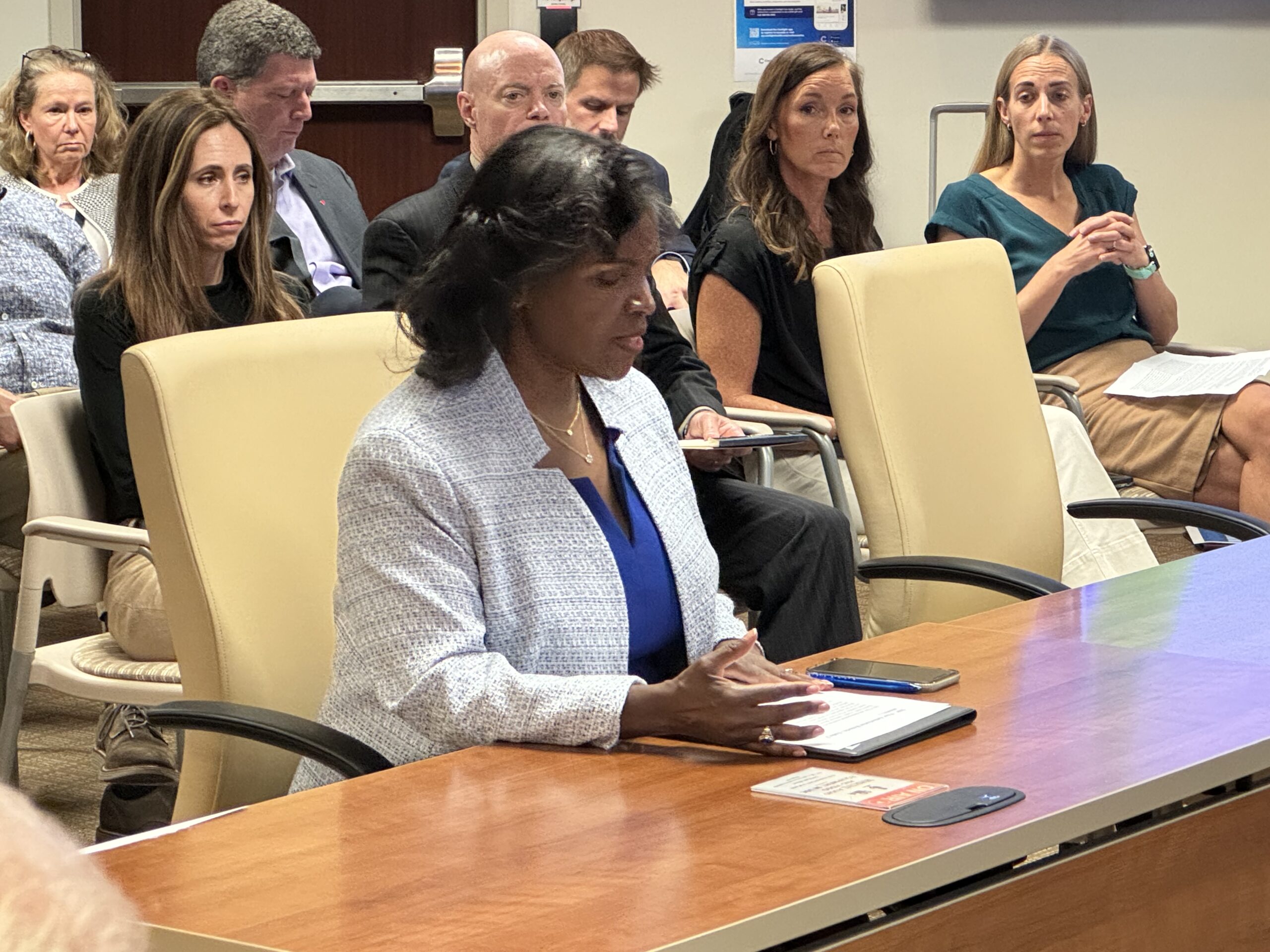
RALEIGH -- The State Health Plan Board of Trustees met Thursday in Raleigh. At the meeting, North Carolina Medical Society Board of Directors member Dr. Karen Smith presented on behalf of NCMS on prior authorization reform.
 "Two decades ago, we fought against these abusive practices, and unfortunately," Smith said, "they have resurfaced in a new form."
Smith thanked the Board for requesting an analysis of prior authorization, which she says can deprive both employers and employees of coverage they have already paid for.
She encouraged the Board to act on behalf of the nearly 9,000 members of the NCMS to take swift, decisive steps to adopt comprehensive reforms, akin to those outlined in House Bill 649: Ensure Timely/Clinically Sound Utilization Review. This bill passed the North Carolina House of Representatives with unanimous support and is based on proven, effective models used by the American Medical Association and states that have successfully tackled these issues.
Here are the common-sense reforms recommended to the Board:
- Requiring insurers to make utilization review requirements and restrictions transparent, easily understood, accessible to the public, and updated annually based upon clinical standards.
- Mandating that insurers communicate with the treating physician and patients prior to denying any recommended care.
- Requiring that the physician reviewing denied care be licensed in North Carolina, have the same or similar credentials as the treating physician, and have experience treating patients similar to the one filing the appeal.
- Ensuring timely decisions based on the urgency of the required care.
- Addressing continuity of care and retrospective denials, concerns highlighted in your presentation, which we commend Segal for recommending.
Smith added that "physicians across the state have shared alarming stories about how prior authorization has negatively impacted their patients’ health. The current process used by insurers often causes unnecessary delays in treatment, leading some patients to abandon life-saving care."
Smith also pointed to statistics from the American Medical Association that say physicians and their clinical teams spend an average of 13 hours per week -- nearly two business days -- on prior authorizations, time that could be spent on actual patient care.
Also speaking on behalf of prior authorization reform was Greg Griggs, EVP of the NC Academy of Family Physicians. He added to the voice of physicians and PAs saying "the time for reform is now."
See a portion of her comments at the meeting below.
https://www.youtube.com/watch?v=7-dw6a1hVs4

CDC Updates COVID Vaccine Recommendations for Older Americans
CDC Director Mandy Cohen endorsed the CDC Advisory Committee on Immunization Practices' (ACIP) recommendation for people 65 years and older and those who are moderately or severely immunocompromised to receive a second dose of 2024-2025 COVID-19 vaccine six months after their first dose. These updated recommendations also allow for flexibility for additional doses (i.e., three or more) for those who are moderately or severely immunocompromised, in consultation with their healthcare provider (a strategy known as shared clinical decision making).
The recommendation acknowledges the increased risk of severe disease from COVID-19 in older adults and those who are immunocompromised, along with the currently available data on vaccine effectiveness and year-round circulation of COVID-19. The recommendation also provides clarity to healthcare providers on how many doses should be given per year to people who are moderately or severely immunocompromised and is meant to increase coverage of this second dose for that group.
Data continues to confirm the importance of vaccination to protect those most at risk for severe outcomes of COVID-19. Receiving recommended 2024-2025 COVID-19 vaccines can restore and enhance protection against the virus variants currently responsible for most infections and hospitalizations in the United States. COVID-19 vaccination also reduces the chance of suffering the effects of Long COVID, which can develop during or following acute infection and last for an extended duration.
CDC and ACIP will continue to monitor COVID-19 vaccine safety and effectiveness. CDC continues to recommend that everyone stay up to date on their COVID-19 vaccines, especially people ages 65 years and older and those with weakened immune systems.
For more information on updated COVID-19 vaccines visit: Coronavirus Disease 2019 (COVID-19) | CDC.
The following statement is attributable to CDC Director Dr. Mandy Cohen:
"This vote allows people to make the best decisions possible to keep themselves and their loved ones safe from COVID-19. CDC will continue to educate the public on how and when to get their updated vaccinations so they can risk less severe illness and do more of what they love." [source]
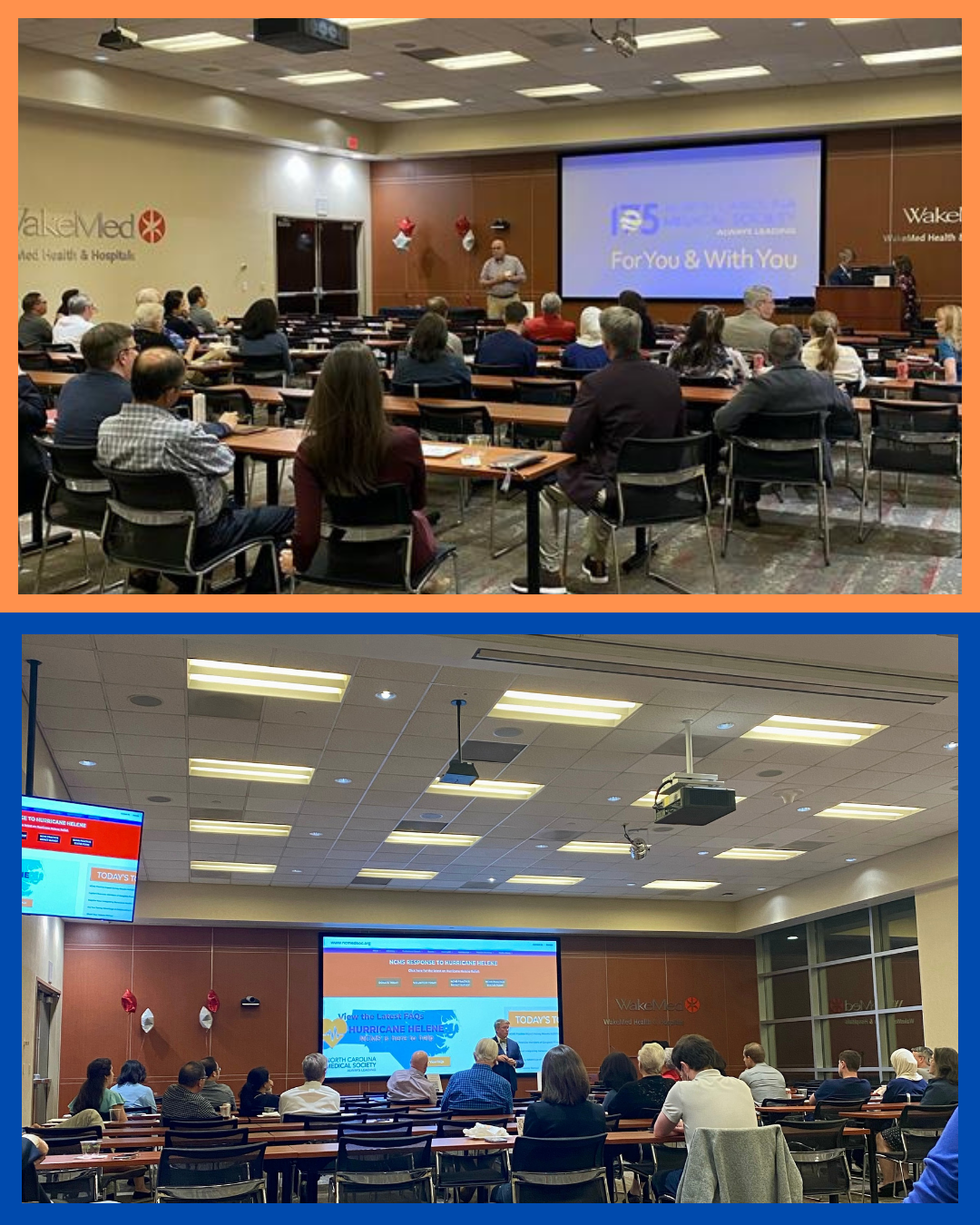
NCMS Regional Meeting a Huge Success!
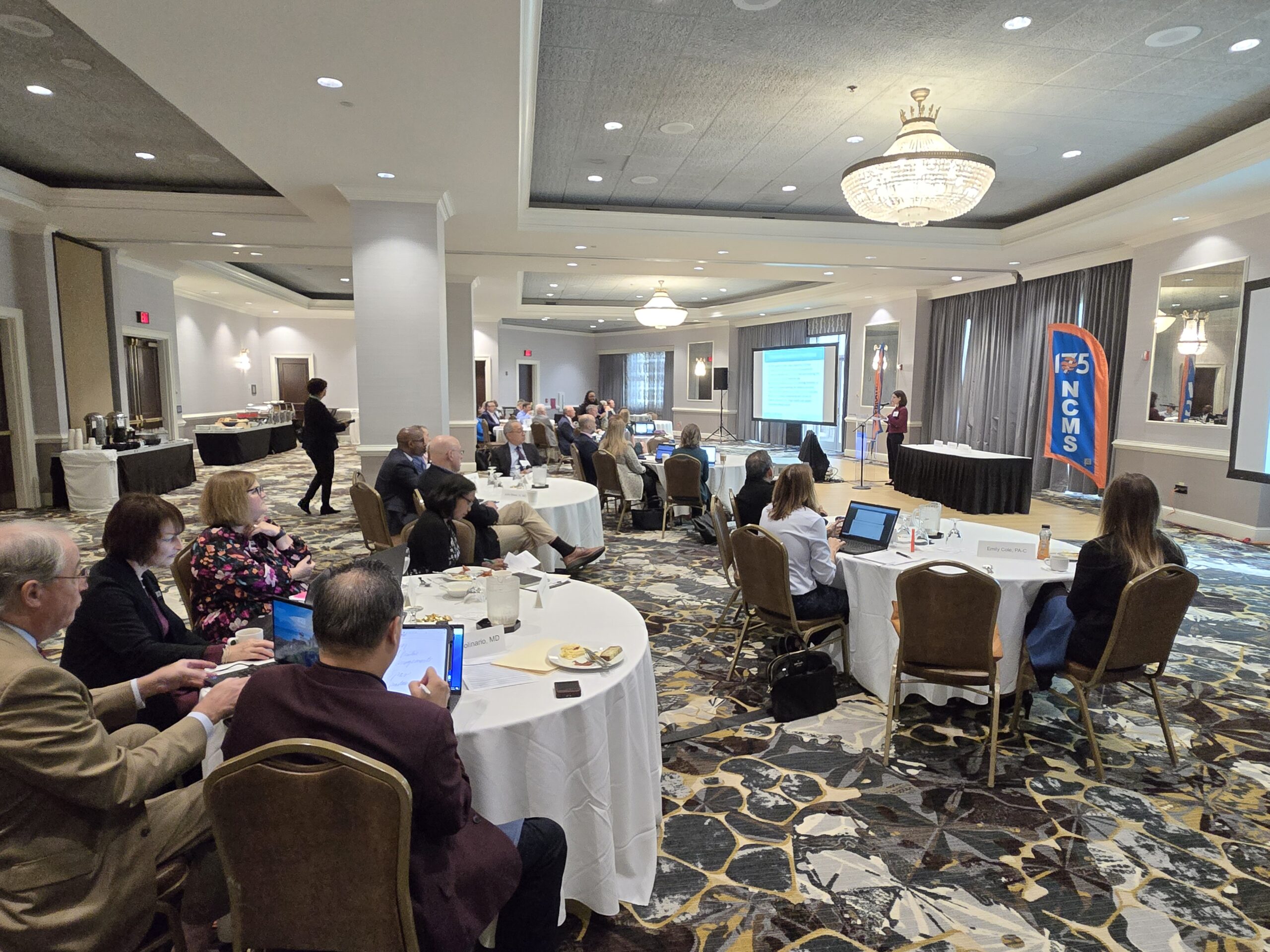
Thank you to everyone who attended the NCMS Regional Meeting on Wednesday, October 23rd, at WakeMed's Andrews Center for Medical Education.
We kicked things off with NCMS President-elect Dr. John Meier, who emphasized the importance of getting involved in shaping the future of healthcare.
CEO Chip Baggett shared key updates on NCMS priorities and our ongoing efforts in the aftermath of Hurricane Helene. He also opened the floor to questions.
It was fantastic to see both members and non-members come together to share insights and network with colleagues from across the state.
Keep an eye on your Morning Rounds for updates on our next Regional Meeting. We can't wait to see you there!


Novant Health Recognized for Promoting Clinician Well-being and Reducing Burnout
Novant Health has earned bronze level recognition from the American Medical Association (AMA) as a Joy in Medicine health organization. The prestigious distinction is granted to organizations across the country that meet the rigorous criteria of the Joy in Medicine Health System Recognition Program and are national leaders in prioritizing proven efforts to enhance the well-being and professional fulfillment of physicians and advanced practice providers (APP). Novant Health is one of three health systems recognized in North Carolina.
“This recognition from the AMA affirms our work to prioritize our physicians’ and APP’s well-being so they can thrive both personally and professionally,” said Dr. Navin Bhojwani, senior vice president, Novant Health Medical Group Clinical Operations. “Our physicians and APPs are essential to the remarkable care we provide our patients. Ensuring they have a voice at every level of the organization – from our clinics to the C-suite – is crucial. I’m proud that our teams have been proactive in developing programs and initiatives that reduce burnout and ultimately ensure our clinicians can have a fulfilling career while providing the best possible care for their patients.”
After peaking during the COVID-19 pandemic, the physician burnout rate has dipped under 50% for the first time in four years, according to AMA survey data.
“Physicians are humans caring for other human beings, strained by factors beyond their control and challenged by the enormous expectations placed on them to continuously deliver high quality, compassionate care. There is no doubt change is needed, but what needs to change is not the doctors,” said AMA President Bruce A. Scott, M.D. “A national movement is gaining momentum to transform health care work systems and fix the root causes of physician burnout. Health organizations that have earned the AMA’s Joy in Medicine recognition are leading this movement with bold visions for redesigned clinical systems to foster professional well-being and support quality care.”
Novant Health has had programs in place to support physicians and APPs and reduce burnout for more than a decade, including:
- The Novant Health Leadership Development Program, which has been in place since 2013, has been completed by thousands of Novant Health physicians, advanced practice providers, nurses and leaders. The program focuses on wellness, resiliency and leadership, and is supplemented with a mentoring program and teams that focus on addressing obstacles to experiencing joy and fulfillment practicing medicine.
- A dedicated initiative to reduce the administrative burden associated with providing care. This program is built around direct feedback from physicians and advanced practice providers and has led to a reduction in nearly 75 million clicks in the electronic health record, saving 105,000 hours (or about 12 years) of work.
- Residency opportunities to build the physician pipeline and train the next generation of providers, including family medicine, general surgery, internal medicine and OB-GYN. Novant Health also has two UNC School of Medicine Branch campuses in Charlotte and in Wilmington where third- and fourth-year medical students can complete their rotations, as well as a partnership with Cambell University’s School of Osteopathic Medicine for medical school rotations. Novant Health’s first APP pipeline is currently in development to strengthen the pipeline for advanced practitioners as well.
Since its inception in 2019, the AMA Joy in Medicine Health System Recognition Program has recognized more than 100 organizations across the country. In 2024, a total of 62 health systems nationwide earned recognition with documented efforts to reduce system-level drivers of work-related burnout and demonstrated competencies in commitment, assessment, leadership, efficiency of practice environment, teamwork and support. These 2024 organizations join a strong cohort of currently recognized organizations from the 2023 program. [source]

The 2024 NCMS Golden Stethoscope Award Winners Are...
Meet the Winners at the NCMS Golden Stethoscope Awards Dinner November 2
Region 1 - Charin L. Hanlon, MD, FACP,

Dr. Charin Hanlon was nominated by Ryan Barclay, the Director of Graduate Medical Education Novant/New Hanover Regional Medical Center in Wilmington.
Here is Dr. Hanlon's nomination essay:
Dr. Charin Hanlon has dedicated her life to the pursuit of excellence in medicine. She is dual certified in Psychiatry and Internal Medicine and is a driver of innovation in medical education at our institution and within the community. She thrives on interprofessional collaboration to better support our patient population. Dr. Hanlon has held many roles including being the former president of the New Hanover County Medical Society, Director of Internal Medicine Residency Program and has most recently been promoted to the Designated Institutional Official for Graduate Medical Education in the coastal region. She has organized and led many initiatives including physician wellness committees, exploration of a new cardiac fellowship, and brought one of the only sickle cell clinics in the area to her practice. She is always striving to raise the bar for our medical education team. Her leadership has led to better access to medical care for patients and improved training opportunities for the next generation of practicing physicians.
Dr. Hanlon is the Designated Institutional Official for Graduate Medical Education at Novant/NHRMC
Region 2 - Christine Khandelwal, DO
 Dr. Christine Khandelwal was nominated by Nanette Lavoie-Vaughan, DNP, APN, CGCP
Here is Dr. Khandelwal's nomination essay:
It is with great honor I would like to nominate my colleague, Dr. Christine Khandelwal, to be recognized for the North Carolina Medical Society Golden Stethoscope Award. Whether it is in her teaching, clinical work, or leadership skills, Dr. Khandelwal is an inspirational leader who develops innovative ways to care for patients in our communities while also training the future workforce in geriatrics and palliative medicine.
I have known and worked with Dr. Khandelwal for the past two years in our community-based geriatric and palliative care practice, Transitions LifeCare, before she took a faculty position at Campbell University College of Osteopathic Medicine (CUSOM) the past year. As I retire, it would be remiss of me not to have Dr. Khandelwal recognized by her peers as the inspirational physician leader she is within our community.
Dr. Khandelwal’s ability to navigate complex healthcare systems and advocate for systemic changes has been a testament to her exceptional leadership skills and unwavering commitment to excellence. Dr. Khandelwal has been a pivotal figure within the Wake Med Hospital Systems and surrounding communities, where her contributions have significantly advanced her mission to provide exemplary care for older adults and those with serious illnesses. Dr. Khandelwal was able to develop a palliative care program in the Wake Med Hospitals for the past ten years. The success of this team is attributed to Dr. Khandelwal’s inspiring leadership to elevate her team’s abilities and vision of success in caring for patients they serve. Due to this successful practice model, Dr. Khandelwal is currently developing a new palliative care service in the rural, undeserved region of Harnett County.
Dr. Khandelwal has also been a driving force in the community, spearheading numerous initiatives aimed at improving the health and well-being of our aging population. Her leadership in community health through the development of novel care models has bridged gaps in care and enhanced the quality of life for countless individuals. For example, Dr. Khandelwal developed a new model of care with a regional nephrology practice to improve care for patients with advanced kidney disease. This community-based, nephrology and palliative care partnership is the first of its kind in our state.
Additionally, Dr. Khandelwal developed an outpatient Comprehensive Geriatric Clinic with Wake Med. She has consistently demonstrated extraordinary leadership by creating collaborations with interprofessional teams, including a partnership with community-based neurology service to ensure timely patient care. As a testament to the quality care Dr. Khandelwal provides for her patients and their families, a grateful family recently contributed to the Wake Med Foundation's Geriatrics Program to support other patients and families. This generous contribution highlights the profound impact of Dr. Khandelwal's dedication and the trust she inspires in those she serves.
As a Professor of Family Medicine at CUSOM, Dr. Khandelwal provides her expertise in training students in managing patients with serious illnesses and at the end of life. Dr. Khandelwal has developed an Interprofessional, End-of-Life Care Simulation experience, emphasizing a trauma-informed pedagogical approach. Recognizing the potential risk of secondary traumatization and retraumatization with death and dying, Dr. Khandelwal has prioritized student safety in all her educational programs. The success of this program has led to invitations for Dr. Khandelwal to present her trauma-informed curricula at regional, state, and national conferences.
Dr. Khandelwal is an exemplary physician whose contributions to geriatric and palliative medicine have been both profound and far-reaching. Her unwavering dedication to all our patients, learners, and community makes Dr. Khandelwal a truly deserving candidate for the NCMS Golden Stethoscope Award. Thank you for considering my nomination of Dr. Christine Khandelwal for this prestigious award.
Dr. Khandelwal is currently building the geriatric and palliative care program at Campbell University.
Region 3 - Dr. Jennifer Stoddard, MD
 Dr. Jennifer Stoddard was nominated by Dr. Karen Smith, MD
Here is Dr. Stoddard's nomination essay:
Dr. Jennifer Stoddard is a champion for physician initiatives. I have the honor of working with her for many years on projects which not only improve quality and access of care for our communities but also insure Physician workforce stability. She is very much aware of the business of medicine and the impact on independent practice but also realizes the importance of working in collaboration with systems mutual benefit of Physicians, Physician assistants, practices but most of all patients we care for in our office settings.
She is admired for recognizing the work of the North Carolina Medical Society and the role Moore County plays in the strength of the Sandhills region of our state. Her organizational efforts insure the voice of the region is at the table as healthcare decisions are made which impact the Physician and practice of medicine.
Her awareness of the need to emphasize Physician Well-being as so many new models and initiatives are introduced further requiring more tasks to be completed in the exam room and raising the risk for burn-out and how to optimize wellness strategies is timely.
Her compassionate professionalism is appreciated across all specialties as her focus is on you the physician or the provider beyond that of your specialty organization.
I enjoy the downtime with Jennifer because it usually means good time, great conversation, realistic, and leaving the venue empowered to return to the daily practice of medicine.
It is a honor to recognize her efforts as an example of a doctor who truly represents the profession of medicine.
Dr. Stoddard is a nephrologist in Pinehurst.
Region 4 - Dr. Mohan Thakuri, MD
 Dr. Mohan Thakuri was nominated by Dr. Martin Palmeri, MD, DO
Here is Dr. Thakuri's nomination essay:
Dr. Mohan Thakuri has been the foundation of malignant hematology care in Western North Carolina. Over the last 15 years, he has helped to grow and develop a complex malignant hematology program at Mission Hospital. Dr. Thakuri was a lead physician at Cancer Care of Western North Carolina. At the peak of the program, Mission hospital was performing over 40 induction therapies for acute leukemia patients as well as a robust population of patients getting high dose Methotrexate for CNS lymphoma. In 2019 when HCA took over Mission Hospital, there were serious concerns about the future of complex malignant hematology care in Western North Carolina. Dr. Thakuri was a vocal champion for oncology patients as well as the inpatient oncology nurses. During this transition, Cancer Care of Western North Carolina disbanded. Dr. Thakuri was a key leader in forming Messino Cancer Centers which allowed for sustained and uninterrupted oncology care in Western North Carolina.
During this HCA transition, many highly qualified oncology nurses quit and they were replaced with enthusiastic but inexperienced nursing graduates. Dr. Thakuri never refused an opportunity to provided teaching and education to these new nurses to help get them up to speed. As time passed and ongoing failures on the part of HCA led to further deterioration of inpatient oncology services (despite significant investment on the part of the doctors of Messino Cancer Centers to bolster Mission's program), Dr. Thakuri had the wherewithal to recognize the fact that we should not be providing complex hematology care at Mission hospital. For any doctor who is passionate about their craft, this is an exceeding hard decision. He has subsequently helped to coordinate having these patients transferred to our regional academic centers and continues to support these patients when their care can be resumed locally.
Dr. Thakuri has also been a dedicated rural oncologist. He has been a staple in Franklin for over 10 years. His leadership and care has helped to grow regional rural oncology care.
Over the years, I have seen many of Dr. Thakuri's patients both in the community setting as well as when I cover for him in the hospital. His patients have a deep appreciation for his care. Dr. Thakuri has announced his retirement at the end of the year and there has been a wave of patients sharing their gratitude and thanks for the care he has provided. He will be deeply missed by his patients.
If I had to summarize Dr. Thakuri, he is tender and thoughtful when it comes to his patients. He is a tough and tenacious advocate for oncology care in Western North Carolina. He does not accept or ever settle for mediocrity.
Dr. Thakuri is recently retired and is currently spending a month hiking Kathmandu.
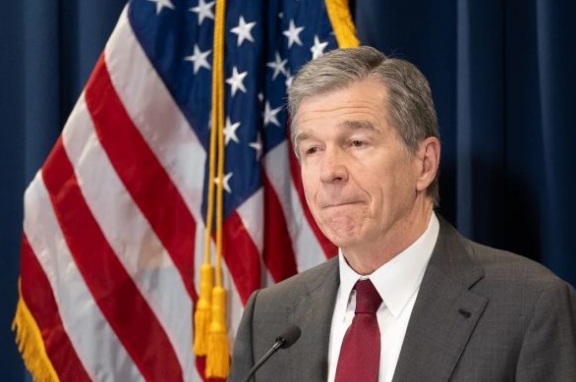
Gov. Roy Cooper Proposes $3.9 Billion to Spur Hurricane Helene Relief and Recovery
Initial Damage Assessments from Hurricane Helene Total $53 Billion, More Than Three Times Greater Than Hurricane Florence
RALEIGH -- Less than a month after Hurricane Helene hit Western North Carolina, Governor Roy Cooper today shared a state budget recommendation to help rebuild stronger to withstand future storms. Governor Cooper recommends an initial $3.9 billion package to begin rebuilding critical infrastructure, homes, businesses, schools, and farms damaged during the storm.
“Helene is the deadliest and most damaging storm ever to hit North Carolina,“ said Governor Cooper. “This storm left a trail of destruction in our beautiful mountains that we will not soon forget, but I know the people of Western North Carolina are determined to build back better than ever. These initial funds are a good start, but the staggering amount of damage shows we are very much on the front end of this recovery effort.”
Initial damage estimates are $53 billion, roughly three times Hurricane Florence estimates in 2018 and the largest in state history. A strong recovery will require significant investments by private insurers as well as the federal, state and local governments. Large scale disasters fueled by climate change in recent years have shown the challenges and enormous costs of recovery as well as the need to ensure structures are hardened are they are rebuilt to withstand future storms. Successful recoveries require significant early investments to ensure communities have the tools to fully rebuild.
Economy
The economic devastation from Hurricane Helene is unparalleled. Thousands of businesses in the region suffered damages leaving business owners and workers suffering. The Governor’s funding package includes $650 million to address economic losses and physical damage for non-agricultural businesses and non-profit organizations. This would include a revival of the pandemic-era Business Recovery Grant Program, which helped North Carolina’s economy recover faster than the national average. Governor Cooper has already increased unemployment insurance benefits through an executive order with a bipartisan and unanimous vote of the Council of State.
Housing
The Governor’s budget recommendation includes $650 million to address physical damage to residential structures and cost of housing assistance. These investments would jumpstart permanent housing construction in advance of potential federal funds, which can take months or years to be approved.
Utilities and Natural Resources
Critical and high-risk infrastructure was damaged across the region, including water and sewer systems in multiple communities and power generation facilities. Much of this infrastructure is in geographically isolated locations and challenging to reach, slowing restoration of services to communities. The Governor’s funding package includes $578 million to address the physical damage and cleanup of energy, water, waste clean-up, telecommunications, dams and other infrastructure.
Transportation
Hurricane Helene severely impacted approximately 5,000 miles of state-maintained roads across the affected area in Western North Carolina, including several major national interstates and critical transportation corridors. The proposed funding package includes $55 million to address physical damage and state revenue implications of the transportation infrastructure damage.
Agriculture
The funding package includes $422 million to address physical damage and business disruption for agricultural enterprises. This storm caused significant damage to hundreds of thousands of acres of agricultural land and hundreds of structures.
Recovering From Additional Recent Disasters
As North Carolina is still recovering from other recent natural disasters, Governor Cooper’s proposed budget includes $420 million for needs related to PTC-8, Tropical Storm Debby, and funds to complete homeowner assistance for Hurricanes Florence and Matthew.
The full Budget Recommendation can be found here.
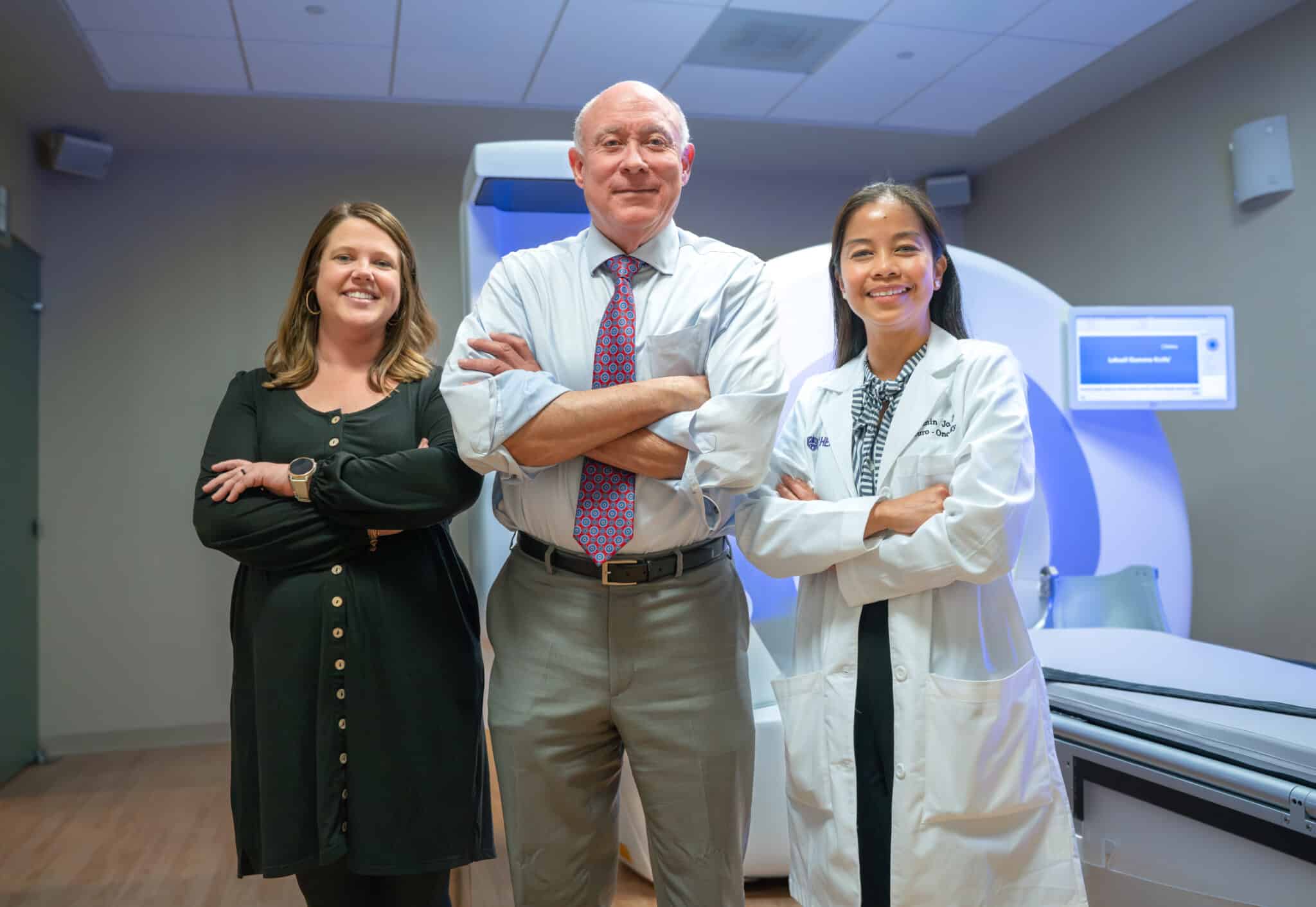
ECU Health Medical Center Earns Gold Seal of Approval® for Brain Tumor Care
ECU Health Medical Center has earned The Joint Commission’s Gold Seal of Approval® Certification for brain tumor care, recognizing the program’s ongoing dedication to delivering safe, high-quality patient care. According to The Joint Commission, the Gold Seal is a symbol of quality that recognizes health care organizations that provide comprehensive care for patients with brain tumors.
“This recognition from The Joint Commission is a testament to the incredible neuro-oncological expertise, technology and research available here at ECU Health Medical Center,” said Jay Briley, president, ECU Health Medical Center. “It is immensely humbling to witness the incredible efforts that take place within the walls of the hospital every single day to further our understanding of brain tumors and brain tumor treatment. We could not be more proud of every team member who helped receive this prestigious certification.”
ECU Health Medical Center underwent a rigorous onsite review in July. During the visit, the Joint Commission reviewer evaluated compliance with related certification standards including compliances with consensus-based national standards, effective integration of evidence-based clinical practice guidelines to manage and optimize care, and organization of approach to performance measurement and performance improvement, including data collection and analysis. Joint Commission standards are developed in consultation with health care experts and providers, measurement experts and patients. The reviewers also conducted onsite observations and interviews.
Continue reading about this honor here.

Grandover Resort is FULLY BOOKED! But Don't Fret Because We've Got You Covered!
Space at the Grandover is FULLY BOOKED!
But don't worry, we have acquired overflow rooms at the Sheraton Greensboro at Four Seasons.
Reserve your room online: NC Medical Society Grandover Overflow - Start your reservation (passkey.com) or call the Sheraton directly at 888-236-2427.
Sheraton Greensboro at Four Seasons
3121 West Gate City Boulevard
Greensboro, NC 27407

Feeling Anxious About the Election? Here's How to Cope
Election Day is almost here. If you're feeling stressed, here is some help.
(KatieCouricMedia, Tess Bonn) -- Election Day is just around the corner — and the race to the finish line has been anything but predictable. Unfortunately for our blood pressure, it’s looking like it’ll be a nail-biter till the bitter end. Polls show that former President Trump and Vice President Kamala Harris are locked in a dead heat. And while Republicans and Democrats are as divided as ever, many of us all share a common emotional reality: election anxiety.
Some people are so worried about the impending outcome that they’ve put their lives on hold — even delaying weddings and avoiding buying a house. Others are losing sleep: Nearly half (46 percent) of respondents to a new American Academy of Sleep Medicine survey reported not getting enough rest due to anxiety surrounding the 2024 election.
“When you feel like something is out of your control, that can make you feel more stressed, anxious, and worried,” says therapist Colleen Marshall, a chief clinical officer at the mental health organization Two Chairs. “This is especially true when it comes to elections.”
It’s important not to conflate feeling anxious (a natural and normal emotion) with a mental health issue. “Anxiety can be defined as a reaction to stress that’s more temporary, whereas an anxiety disorder results in anxiety that persists or recurs, interfering with day-to-day life,” explains psychologist Scott Lyons. “It’s important to recognize that feeling anxious about elections is a common experience, but if you find that it is drastically affecting your daily life, it might be worth seeking professional help.”
If you’re experiencing periodic bouts of apprehension about possible election outcomes, here are some practical tips for managing those emotions as we head into November.
Set limits around news consumption
While staying informed about what’s happening in the world is healthy, reading too much about the election can harm your overall well-being. In fact, research has shown that more political news consumption — especially via polarizing platforms like Twitter and TikTok — is correlated with higher levels of anxiety. So if you’re prone to panic, setting limits for yourself is essential.
“Anxiety often happens when we feel out of control, so setting boundaries around media consumption is one way to regain control and avoid becoming overwhelmed,” Lyons tells us.
So what does this look like in practice? For some, this may mean watching the news for only an hour each day, while others prefer setting aside 30 minutes in the mornings or evenings to scroll the headlines to stay on top of the issues they care about most. There’s no right or wrong way to go about it — the limits will depend on your day-to-day habits. “Set a boundary that feels right to you,” Marshall says.
But Marshall acknowledges that setting boundaries can be tricky at times, especially if someone doesn’t have the same ones as you, so communication is vital. “In my house, if someone is watching the news all the time, I might go outside for a walk instead,” she says. “Or I might talk to that family member about only keeping the news on during certain hours of the day.”
Focus on sparking positive interactions
During this stressful time, navigating relationships with those who might not share your views can be even more challenging than usual.
Lyons recommends focusing on “constructive conversations and activities that foster understanding rather than deepening divisions.” In other words, you don’t have to get to the bottom of every disagreement — consider staying on the surface or finding common ground where possible.
Avoiding political talk altogether, even with family and friends, might be a good idea. But Marshall advises communicating that expectation to your loved ones, especially before spending time together.
“We have lots of beliefs around setting boundaries that are just not helpful, when really, what we all need in our lives is just to be clear about what we need to be and to feel safe in relationships,” she says.
Don’t forget about self-care
The constant barrage of news and heated discussions can make us forget our basic needs. Simple things like sleep, exercise, and a healthy diet can help a lot more than you’d think.
“If you sleep, eat, and exercise well, you physically feel better — and mental health is similar,” explains Marshall.
Even small acts of self-care can have a major impact. The National Institute of Mental Health says incorporating a daily 30-minute walk can boost your mood and overall health. But don’t be discouraged if you can’t get it all at once — because even limited amounts of self-care add up.
There are plenty of other relaxing activities you can do. If a long bath or a good book helps calm your nerves, lean into that. Just try to stick to low-stress hobbies — maybe table that scarf you’ve been struggling to knit for a post-election project.
An opportunity for personal growth?
Election anxiety can also be an opportunity to grow and become more resilient. Our experts agree that the healthier habits we build now can sustain us no matter the outcome in November.
“If we approach it mindfully, election anxiety can indeed be an opportunity for personal growth. It can help us develop better stress management techniques, improve our ability to think critically, and engage in constructive dialogue when faced with different viewpoints,” says Lyons. “In a larger sense, whenever we can calm ourselves in the face of anxiety, we experience growth and teach our nervous systems that we are safe. The more we flex this muscle, the more we build our resilience in the face of uncertainty.”

Buncombe County Revises Death Total From Hurricane Helene
Sheriff's office data reduces death toll
(Associated Press) -- The North Carolina county that is home to Asheville overcounted deaths caused by Hurricane Helene by as many as 30, according to a statement Tuesday from its sheriff's office and data from the state, significantly reducing the death toll from the historic storm. Buncombe County officials, who previously reported 72 deaths, are now deferring to a state tally of 42 deaths for the county. Meanwhile, some areas in Florida have seen a recent increase in confirmed cases of flesh-eating bacteria following the devastating hurricanes Helene and Milton, according to state health department data. Health officials issued a statement urging residents to remain vigilant and avoid floodwaters where the Vibrio vulnificus bacteria can multiply rapidly.
On Tuesday, the Buncombe County Sheriff’s office acknowledged in a statement that the number of deaths in the county was lower than the number it provided. The statement, attributed to Public Information Officer Christina Esmay, cited factors ranging from updated causes of death to communication challenges after the storm knocked out cell service and electricity in multiple mountain counties.
“In the early aftermath of Hurricane Helene all deaths were being classified as storm related and from Buncombe County. However, as the days progressed BCSO was able to identify who had passed away due to the hurricane, who was in fact from Buncombe County, and who passed away from other causes,” the statement said. “Compounded with the lack of consistent communication, due to widespread outages, the Buncombe County fatality number that was initially provided to Sheriff Miller has decreased.”
The sheriff’s office did not provide additional information on how they arrived at their tally, and spokesman Matt Marshall said any other questions about how deaths have been investigated and counted should be sent to state officials. In response to a request to interview the sheriff, Marshall said he would look into his availability.
Another county, Henderson, had previously reported two more local deaths than the state, but said on Tuesday that it agrees with the state’s number.
The Office of the Chief Medical Examiner in Raleigh typically reviews weather deaths and makes a ruling on cause before reporting numbers through state officials, a process it has used in past storms for years. But in the chaos following Helene, a number of counties reported fatality numbers independently of the state. The state’s tally has gradually increased through Tuesday, but the climb has slowed as bodies have been examined.
State Department of Health and Human Services spokesperson Kelly Haight Connor said in an email Tuesday that all examinations are complete for storm-related deaths, but she wouldn’t rule out additions if other cases emerge. The state reported 96 deaths from Helene statewide on Tuesday.
The AP had tallied at least 246 total deaths across multiple states due to Helene through Monday, including 128 in North Carolina, based on data from the state and counties, including Henderson and Buncombe. With the disclosure from Buncombe County that its number was inflated, the AP has adopted the state’s total of 96, so the news organization’s multistate tally now stands at 214.
Imported IV Fluid Hits US as Shortage Continues
The first IV fluids imported from Baxter facilities in other countries reached the U.S. on Saturday
(Axios, Maya Goldman) -- IV fluids from as far away as China are being imported to the U.S. to alleviate nationwide shortages stemming from hurricane damage to a key manufacturing plant in North Carolina.
Why it matters: Hospitals now have 50% more IV fluid available to them than immediately after Hurricane Helene swamped Baxter International's North Cove manufacturing site in Marion, North Carolina, per the Health and Human Services Department. But health providers expect shortages to last weeks longer.
State of play: The first IV fluids imported from Baxter facilities in other countries reached the U.S. on Saturday, HHS said.
- The Food and Drug Administration has authorized temporary importation from Baxter plants in Canada, China, Ireland and the U.K., the company said. Baxter is working with the FDA to authorize imports from its other international sites.
- Baxter, in partnership with HHS's Administration for Strategic Preparedness and Response, expects to deliver nearly 18,000 tons of products from Europe and Asia by the end of the year.
- The FDA has also added more IV solutions to the drug shortage list, which allows for the distribution of compounded substances
Meanwhile, pre-hurricane staffing levels will resume at Baxter's North Carolina plant this week, the company said on Monday.
- The more than 2,500 employees will work alongside more than 1,000 contractors who are helping bring the facility back up to speed. But the company does not yet have a timeline for when pre-hurricane production levels will be restored.
- Progress on restoring the physical facilities "has exceeded our expectations in many respects," the company wrote in its Monday memo.
Yes, but: Hospitals are preparing to weather IV fluid shortages for a while longer.
- The Indiana Hospital Association said it could take weeks for hospitals to get their allocated IV fluids, despite importations and Baxter's North Carolina facility ramp-up.
- Oregon Health & Science University interim CEO Joe Ness told his board of directors last week that the the acute shortage could last as long as six more weeks, Oregon Public Broadcasting reported.
- "We're managing through it, but it is very tough. It does remind us of COVID days," Ness told the board.

Capitol Chronicle: Members of Congress Press Leadership on Medicare Payment Cut

Members of Congress Press Leadership on Medicare Payment Cut
Last week, 233 members of the House of Representatives, led by Rep. Greg Murphy, MD, asked House Speaker Mike Johnson and Minority Leader Hakeem Jeffries to avert the anticipated 2.8% cut in the Medicare Physician Fee Schedule for 2025. Additionally, they urged, 1) action on enact reforms to statutory budget neutrality requirements and 2) physician payment updates reflective of inflationary pressures.
This letter of urgency comes after several months of advocacy by the NC Medical Society and partner organizations in an effort to avoid a fifth year of consecutive Medicare payment cuts. The letter calls for greater certainty and stability for clinicians serving Medicare beneficiaries as the proposed cut by CMS would jeopardize access to care.
North Carolina members of Congress have committed to working with House and Senate leadership to pass bipartisan legislation before the close of the 118th Congress, but the clock is ticking and there is uncertainty about what the post-election session will yield. Have you reached out to your House and Senate members to alert them to what another Medicare payment cut will mean to your practice and to your patients? If you’d like to do so, please respond to this column (askipper@ncmedsoc.org) to help raise the volume on Capitol Hill.
Your engagement matters.
Do you know your state and federal legislators? More importantly, do your legislators know you?
The NCMS can help you connect with policy makers as a constituent and advocate!

Register Now! Integrating Behavioral Health into Non-Primary Care Settings Webinar.
Integrating Behavioral Health into Non-Primary Care Settings
Thursday, October 31, 2024
12:00 PM Central Daylight Time/1:00 PM Eastern Time
While much of the focus to date has been on enabling integrated behavioral health care within primary care settings, there continues to be a huge need for more timely, equitable access to whole-person care in other specialty care settings – including both cardiology and oncology. In this live event with the American College of Cardiology (ACC) and the American Society of Clinical Oncology (ASCO), hear how their organizational members are enhancing patient care through behavioral health integration (BHI). Glean insights from these two organizations on actionable strategies for recognizing and addressing these needs within their specialties and what they think the future of BHI looks like. Physician experts will also cover the importance of BHI within these care settings, particularly as it relates to the interplay between relevant chronic care conditions and behavioral health conditions.
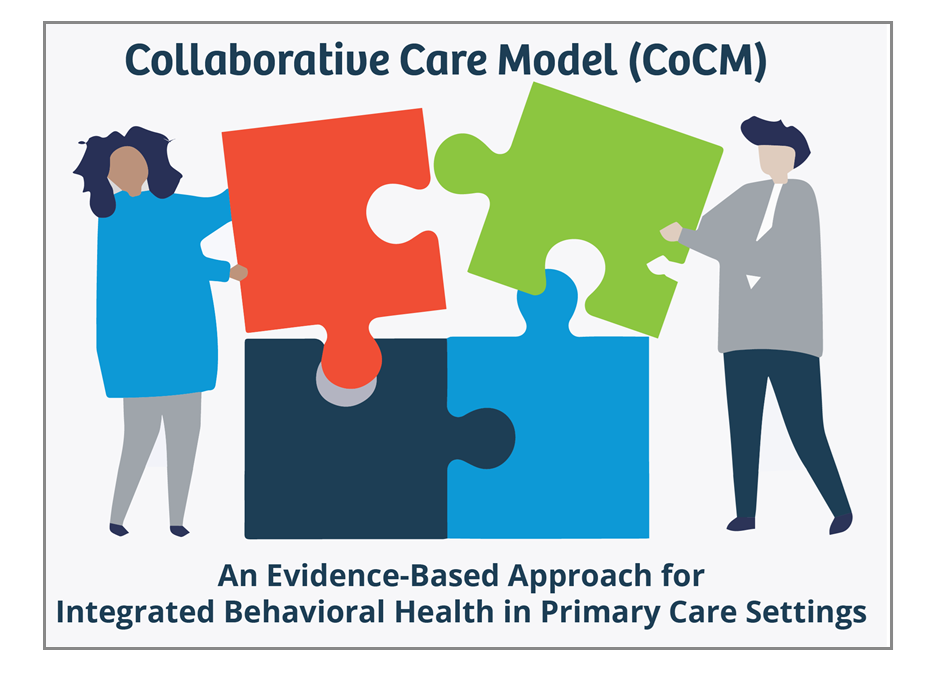
Are You Taking Advantage of Collaborative Care Model Training Series?
The North Carolina Department of Health and Human Services (DHHS) has partnered with NC AHEC to provide educational and practice-based support to primary care practices interested in implementing the Collaborative Care Model (CoCM) -- a team-based, interdisciplinary approach to deliver evidence-based diagnoses, treatment, and follow-up care for patients with mild to moderate behavioral health needs.
CoCM is an integrated modality that provides patients with medical and behavioral health care in a primary care setting. An increasing number of primary care settings are incorporating behavioral health services. Benefits of CoCM include better patient outcomes, improved patient and provider satisfaction, and reduction in health care costs. In addition, using CoCM may reduce health disparities in access to behavioral health. Most payors in North Carolina already cover the CoCM billing codes.
NC AHEC is offering CoCM virtual learning opportunities, including Education Modules designed for providers interested in learning about the CoCM. Currently, 15 modules are available, with additional modules being added regularly.
Modules currently available on demand include (listed in order of release date):
Module 15: Improving CoCM Quality Using Technology
Module 14: Collaborative Care in Perinatal Populations
Module 13: Diversity, Equity, and Inclusion in Collaborative Care: A Review of the Evidence in Minority Populations and Next Steps
Module 12: Collaborative Care Model in Substance Use Disorders
Module 11: Primary Care Provider Engagement
Module 10: Best Practices in Pediatric Collaborative Care
Module 9: Behavioral Health Care Manager (BHCM) Best Practices
Module 8: Best Practices for Collaborative Care Management Behavioral Health Care Manager
Module 7: Brief Therapeutic Interventions
Module 6: Billing the Codes and the General Business Model for Collaborative Care
Module 5: The Role of the Psychiatric Consultant in the Collaborative Care Model
Module 4: Collaborative Care Management for Primary Care Providers
Module 3: Putting Collaborative Care Principles into Practice: Planning for Clinical Practice Change
Module 2: Laying the Foundation for Collaborative Care Through Practice Transformation
Module 1: Collaborative Care Model (CoCM) Rationale and Evidence
View a collection of informercials to learn more about CoCM and how it’s being implemented in practices statewide!
Visit NC AHEC's Collaborative Care Model Webpage here.
Take advantage of this useful and helpful training opportunity today.


Share Your Helene Stories!

The North Carolina Medical Society invite you to share your Hurricane Helene stories. It can be through a photo that captures the storm’s aftermath, a video of your community coming together to help neighbors, or a personal story you want/need to share.
Please send your submissions to Randy Aldridge at RAldridge@ncmedsoc.org.
Thank you for sharing your experience with us!

Starlink Assistance for Facilities Impacted by Helene
NCDHHS may be in a position to assist practices with securing Starlink and is seeking your input about practices in the Hurricane impacted counties that need Starlink. DHHS will use your information to link Starlink resources with practices.
Please share the following information with Nicole Fields-Pierre, MPA, NCCM, Community Health Program Manager, Office of Rural Health at Nicole.Fields-Pierre@dhhs.nc.gov:
- County
- Practice/clinic name
- Specialty
- Address
- Point of contact: name, cell phone number, email addresses

Influenza Vaccine and Reimbursement Guidelines for 2024-2025 for NC Medicaid
NC Immunization Program/Vaccines for Children (NCIP/VFC)
Under NC Immunization Program/Vaccines for Children (NCIP/VFC) guidelines, the NC Division of Public Health (DPH) Immunization Branch distributes all childhood vaccines that are recommended by the Advisory Committee on Immunization Practices (ACIP) to local health departments, Federally Qualified Health Centers (FQHC), Rural Health Clinics (RHC), hospitals and private providers.
For the 2024-2025 influenza season, NCIP/VFC influenza vaccines are available at no charge to providers for children six months through 18 years of age who are eligible for the VFC program, according to the NCIP coverage criteria. The current NCIP coverage criteria and definitions of VFC categories can be found on DPH’s Immunization Branch web page.
For providers interested in enrolling in the VFC program, information can be found on the CDC information page and the NC DPH website.
Eligible VFC children include ALL Medicaid beneficiaries (through 18 years of age).
For VFC/NCIP vaccines administered to VFC-eligible children, providers must report only the vaccine code(s) with $0.00. Providers may bill NC Medicaid for the administration fee for Medicaid.
Providers who administer privately purchased vaccines to VFC eligible beneficiaries will NOT be reimbursed for the vaccine and cannot bill the beneficiary for that cost. Only the administration fee(s) will be reimbursed.
Providers must purchase vaccines for beneficiaries who are not VFC-eligible. For Medicaid-eligible beneficiaries aged 19 years and older, purchased vaccine and administration costs may be billed to NC Medicaid, according to the guidelines stated in Tables 2 and 3 below. To determine who is eligible for NCIP influenza and other vaccines, visit DPH’s Immunization Branch web page.
For providers interested in enrolling in the VFC program, information can be found on the CDC information page and the NC DPH website.
Eligible VFC children include ALL Medicaid beneficiaries (through 18 years of age).
Continue to full bulletin here.

NCDHHS Urges Safety Measures for Heating Homes in Western NC as Temperatures Drop
As cooler weather arrives in Western North Carolina, the NC Department of Health and Human Services urges individuals, families and communities impacted by Hurricane Helene to take safety precautions when heating homes, buildings or other enclosed spaces.
Using gas or wood-burning heat sources without proper safety measures can lead to carbon monoxide poisoning and other hazards, especially if fuel sources or appliances have been damaged by the storm.
Safe Practices for Wood-Burning Stoves
Properly installed, correctly used wood-burning appliances should generate very little smoke. If you regularly see or smell smoke, you may have a problem. Take the following steps to reduce smoke inside and outside your home:
- What NOT to burn: Do not burn household trash (including cardboard, plastics, foam, magazines, boxes and wrappers), coated wood, painted wood, pressure-treated wood, driftwood, plywood, particle board, wood with any glue on it, wet or green wood, rotted wood, moldy wood, asbestos, rubber, manure or animal remains. These materials can release toxic or harmful chemicals when burned and may also damage your stove.
- What to burn: Try to burn mainly dry, split, well-seasoned wood. Properly seasoned wood is darker, weighs less and sounds hollow when hit against another piece of wood. You can also use branches, sticks or limbs from fallen trees that are off the ground. Do not use wet or green wood.
- Use a starter: Start fires with newspaper, dry kindling or all-natural fire starters. Never start a fire in a wood-burning stove with gasoline, kerosene or charcoal starter.
- Keep flammable items away: Maintain a safe distance between stoves and items like curtains, furniture, newspapers, books or paper. Regularly remove ashes into a covered, metal container, and store the container outdoors on a nonflammable surface.
- Keep the fire hot and door closed: For most appliances, a smoldering fire is not safe or efficient. Build a hot fire and keep the doors of your wood-burning appliance closed unless loading or stoking the live fire. Harmful chemicals, like carbon monoxide, can be released into your home through an open stove door.
- Keep a fire extinguisher handy: In case of a fire, have a fire extinguisher, fire blanket or ample sand or water on-hand to put it out before it can spread.
Safe Practices for Generators and Fuel-Burning Heat Sources
In previous hurricanes in North Carolina, people have died from carbon monoxide poisoning caused by generators running indoors. Carbon monoxide is an odorless, colorless gas produced whenever fuel is burned. In an enclosed space, such as a home, garage, car or camper, carbon monoxide can build up to deadly levels quickly.
High levels of carbon monoxide can be deadly within minutes. Carbon monoxide poisoning can be fatal to anyone, especially children, pregnant women, older adults and those with chronic illness. People who are sleeping can die from carbon monoxide poisoning without ever becoming aware of their symptoms.
Anyone testing or using a generator or other fuel burning device during should take proper safety precautions, including the following:
- Do not use gasoline-powered tools or engines in enclosed or partially enclosed spaces. Use them outdoors at least 20 feet from all doors, windows and air vents.
- Do not use charcoal grills or propane stoves indoors, even in a fireplace.
- Never use the kitchen stove or other gas appliances to heat your home.
- Do not idle your car, truck or other vehicle in the garage, even if the garage door to the outside is open. Fumes can build up quickly in the garage and living area of your home.
- Keep rooms well ventilated.
- Read and follow all instructions that accompany fuel-burning devices. Use the proper fuel and make sure there is enough air for ventilation and fuel burning.
Even low levels of carbon monoxide can cause dizziness, fatigue, nausea, headaches, confusion or fainting. If you are experiencing these symptoms, get to fresh air immediately and seek medical attention as soon as possible.
For additional questions on how to safely use woodstoves and generators and prevent carbon monoxide poisoning, contact the Occupational and Environmental Epidemiology Branch, NC Division of Public Health, NCDHHS, at 919-707-5900. For more information about Hurricane Helene and resources available for people who are impacted, please go to ncdhhs.gov/helene and ncdps.gov/helene. [source]