

North Carolina Medical Board Activates Limited Emergency License in Response to NC State of Emergency Order

Hurricane Helene has had a devastating impact on communities in Western North Carolina. In response to the Governor’s State of Emergency orders, the North Carolina Medical Board has activated the Limited Emergency License to help facilitate medical professionals volunteering their time and skills to help communities in need.
Physicians and physician assistants with a full North Carolina license are able to volunteer without obtaining a volunteer license. Note that PAs who provide volunteer medical services DO need a supervising physician per NC law. Licensees should check in with the NC Department of Public Safety’s Hurricane Helene relief page for volunteer needs before arriving in the region. Under no circumstances should volunteers self-report to any location to participate in relief efforts.
Visit Volunteer NC to sign up for disaster volunteer opportunities.
For out of state physicians and PAs that do not currently have a license in North Carolina, there are two easy pathways to temporary licensure under the emergency policy. Visit www.ncmedboard.org/disaster for more information.
Additional links of interest:
Western NC Devastated by Helene, NCMS Responds With Outreach for Volunteers, Special Donations


Department of Health and Human Services Adjusts Certificate of Need Cost Thresholds
The North Carolina Department of Health and Human Services (DHHS) has announced new cost threshold amounts for the Certificate of Need (CON) program. This adjustment, mandated by G.S. §131E-176, reflects a 2.98% increase based on the Medical Care Index (MCI) of the Consumer Price Index as published by the U.S. Department of Labor.
Effective immediately, the updated thresholds will impact the development of diagnostic centers, new institutional health services, and the acquisition of major medical and replacement equipment.
The new cost thresholds are as follows:
New Institutional Health Service: $4,119,200
Diagnostic Centers: $3,089,400
Major Medical Equipment: $2,059,600
Replacement Equipment: $3,089,400
Health officials emphasize that these adjustments are crucial for keeping pace with inflationary pressures in the healthcare sector. Stakeholders are encouraged to review the new thresholds to understand how they may impact future projects and investments in healthcare infrastructure.
For further details, healthcare providers and interested parties can contact the Division of Health Service Regulation within the DHHS.

NC Medicaid Updates: Key COVID-19 Changes
Key COVID-19 Changes went into effective on October 1. These changes relate to the coverage, cost sharing and reimbursement for COVID-19 related products and treatment and applies to NC Medicaid Direct and NC Medicaid Managed Care health plans unless noted otherwise.
COVID-19 Vaccines Administration Reimbursement
The rates for COVID-19 vaccine administration will revert to the vaccine administration rates in effect for all other vaccines listed on the appropriate fee schedules. As of Oct. 1, 2024, COVID-19 vaccine administration claims with revenue code 0771 will no longer reimburse at the $65 vaccine administration rate. For more information, review the COVID-19 Vaccines Reimbursement section of the Medicaid Bulletin, SPECIAL BULLETIN COVID-19 #268: COVID-19 Testing, Vaccination and Counseling Coverage After the Federal Public Health Emergency.
The hospital COVID-19 Vaccine MAB Admin and COVID-19 Vaccine MAB Admin fee schedules will be end-dated effective September 30, 2024.
Updates to the NC Medicaid Fee Schedules will be posted to the NC Medicaid Fee Schedules by October 1, 2024.
COVID-19 Vaccine Counseling Coverage
Additional changes beginning October 1, 2024, include the end of coverage for CPT 99401 for COVID-19 vaccine counseling and the addition of coverage of “stand-alone” vaccine counseling codes G0310, G0312 and G0315.Providers should use codes G0310, G0312, and G0315 for vaccine counseling when the vaccine is not administered on the same date of service.
NC Medicaid’s Early and Periodic Screening, Diagnosis and Treatment (EPSDT) CPT code 90460 for face-to-face counseling with the patient and family by the physician or qualified health care professional during the administration of a vaccine must be billed with the EP modifier. One unit is billed for each vaccine for which counseling is provided. CPT code 90460 is an immunization administration code, which includes counseling. It is not an add-on “counseling” code.
For more information on vaccine guidance for children, review the Health Check Program Guide, available on the NCTracks Provider Policies, Manuals, Guidelines and Forms page under Provider Policies, Manuals and Guidelines.
COVID-19 vaccines should continue to be provided to children in alignment with the Advisory Committee on Immunization Practices (ACIP) Child and Adolescent Immunization Schedule.
For more information is available in the COVID-19 Vaccine Counseling Coverage section of the Medicaid Bulletin, SPECIAL BULLETIN COVID-19 #268: COVID-19 Testing, Vaccination and Counseling Coverage After the Federal Public Health Emergency.
Over-the-Counter Tests for Home Use Coverage for COVID-19
Coverage for point-of-sale (POS) billing for FDA-authorized over the counter (OTC) COVID-19 tests dispensed for use by NC Medicaid beneficiaries, with full coverage, in a home setting ends September 30, 2024.
The Department of Health and Human Services (NCDHHS) partnered with more than 270 local organizations statewide, called Community Access Points, to distribute free COVID-19 at-home tests in their communities. Individuals can use this website to find COVID-19 home tests for pickup near them. Individuals should call a community access point before going to pick up a test to make sure tests are available. Locations may choose to limit the number of tests available per person, per day. Individuals must be 14 years or older to pick up free at-home tests. An ID is not required.
NC Medicaid continues to cover Nucleic Acid Amplification Test (NAAT) panels (testing 3-5 targets) after October 1, 2024. Providers can leverage CPT 0240U (SARS-CoV-2, influenza A, influenza B) and CPT 0241U (SARS-CoV-2, influenza A, influenza B, RSV).
Guidance on pharmacy POS coverage is available on the Outpatient Pharmacy Services page under OTC COVID 19 Tests for Home Use. The end date for this coverage (September 30, 2024) was previously communicated in the Medicaid Bulletin, SPECIAL BULLETIN COVID-19 #268: COVID-19 Testing, Vaccination and Counseling Coverage After the Federal Public Health Emergency.
Copays and Mandatory Coverage for COVID-19 Related Treatment
NC Medicaid will reinstate cost-sharing (i.e., copays) for COVID-19 related treatments (including treatment of conditions that may seriously complicate the treatment of COVID-19) on October 1, 2024. When applicable, beneficiaries will be responsible for copays for medications and outpatient specialized therapies (i.e., audiology, occupational therapy, physical therapy, respiratory therapy and speech therapy).
The limits listed in the Clinical Coverage Policy 10A will be enforced for individuals ages 21 and older who are seeking treatment due to COVID-19 beginning October 1, 2024.
See the Medicaid Bulletin, SPECIAL BULLETIN COVID-19 #259: Mandatory Coverage of COVID-19-Related Treatment Under the American Rescue Plan Act of 2021 (UPDATE) for additional information.
COVID-19 Testing Coverage for Beneficiaries with Family Planning Medicaid
NC Medicaid will no longer cover COVID-19 testing for Family Planning (MAFDN) beneficiaries through the NC Medicaid Optional COVID-19 Testing Program after September 30, 2024.
Additional information is available in the Medicaid Bulletin, SPECIAL BULLETIN COVID-19 #156: Clinical Policy 1E-7, Family Planning Services, COVID-19 Lab Testing for MAFDN Beneficiaries.
Contact
For questions related to NC Medicaid Managed Care, contact the health plans for more information. For questions related to NC Medicaid Managed Care, contact the health plans for more information. Contact information is available on the Health Plan Contacts and Resources webpage.
For questions related to NC Medicaid Direct, contact the NCTracks Call Center at 800-688-6696.

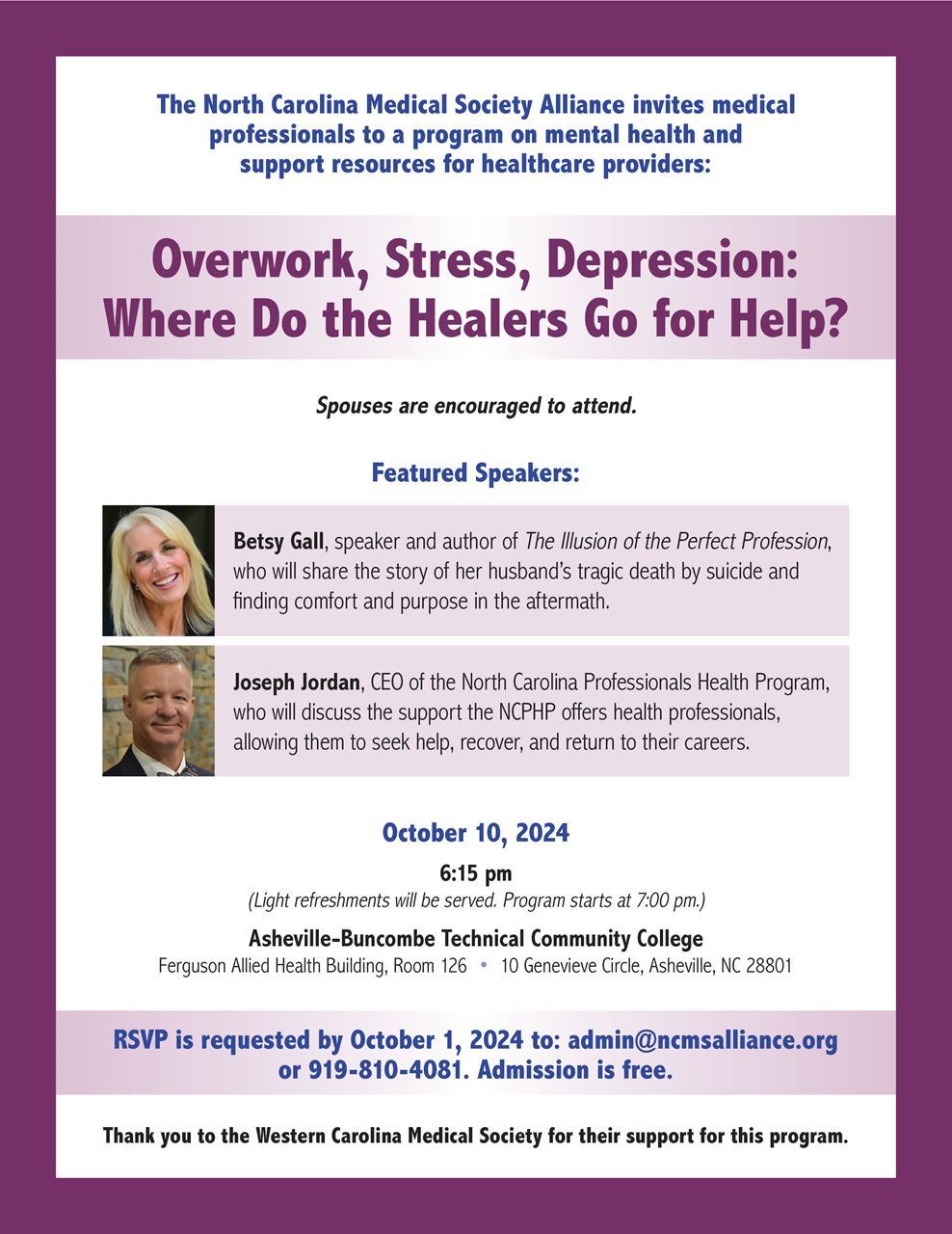
CANCELLED: Overwork, Stress, Depression: Where Do the Healers Go for Help?

Mark your calendar for an important program on mental health and support resources for healthcare providers.
Overwork, Stress, Depression: Where Do the Healers Go for Help?
Thursday, October 10 at 6:15pm
RSVP by October 1 to admin@ncmsalliance.org or 919-810-4081

NCTracks: Avoid Common Errors in Required Enrollment Documents

NCTracks is seeing an increase in provider applications being returned due to incomplete uploaded documentation and is asking that all providers ensure the uploaded documents meet the requirements to avoid further delays.
- If you are notified to provide an explanation for a work history gap, please ensure the explanation is signed by the provider and dated within the past 6 months.
- If you are required to upload an explanation of an exclusion/sanction question response, please ensure the explanation is signed by the individual attached to the exclusion/sanction or the Office Administrator AND is dated within the past 6 month.
- If you are required to complete a DEA Designation Form, please ensure the form is signed by the provider, includes the reference ID, includes the provider’s printed name, and is dated.
- If you are required to complete a NC Medicaid Non-Emergency Medical Transportation (NEMT) Provider/Broker Attestation Form, please ensure the form is signed by the Office Administrator, includes the printed name of the OA, and is dated within the past 6 months.
- If you are required to complete a NC Medicaid Community Behavioral Health Taxonomy 251S00000X Provider Attestation Form, please ensure the form includes the provider name, NPI, and Reference ID of the application AND is signed by the Office Administrator, includes the printed name of the OA, and is dated within the past 6 months.
- If you are required to complete a NC Medicaid Speech Language Pathologist Taxonomy 235Z00000X Provider Attestation Form, please ensure the form includes the provider name, NPI, and Reference ID of the application AND is signed by the provider, includes the printed name of the provider, and is dated within the past 6 months.

POSTPONED-NCDHHS Fireside Chat and Tele-Town Hall: Understanding Seasonal Vaccines and Respiratory Health In North Carolina
UPDATE:

The NCDHHS Livestream Fireside Chat and Tele-Town Hall: Understanding Seasonal Vaccines and Respiratory Health In North Carolina scheduled for Thursday, October 3, 2024, has been postponed due to impacts of Hurricane Helene across the state, especially the severe impacts in western North Carolina.
When this event has been rescheduled, we will communicate the new date.
The North Carolina Department of Health and Human Services encourages those who can get their vaccines at this time to do so.
The 2024-2025 respiratory virus season is here and everyone ages 6 months and up is due for their flu shot and COVID-19 vaccine. Seasonal vaccines are the best to way to prevent people from experiencing severe cases of flu and COVID-19, especially for those who are at a higher risk of complications from the viruses. This includes people who are under 5, 65 and older, pregnant and/or living with chronic medical conditions.
In addition to flu and COVID-19 vaccines, RSV vaccines are also now available for older adults and those who are pregnant. Some babies and children under two may also need to receive an immunization to help build protection against RSV. It’s important for individuals of all ages to be up to date on all recommended vaccines.
The North Carolina Department of Health and Human Services will host a live fireside chat and tele-town hall on Thursday, October 3, from 6 to 7 p.m., to discuss how seasonal vaccines, including flu, COVID-19 and RSV, help protect communities against severe illness, hospitalization and long-term health complications. The event will be moderated by Elizabeth Cuervo Tilson, M.D., NCDHHS’ State Health Director and Chief Medical Officer.
The 2024-2025 respiratory virus season is here and everyone ages 6 months and up is due for their flu shot and COVID-19 vaccine. Seasonal vaccines are the best to way to prevent people from experiencing severe cases of flu and COVID-19, especially for those who are at a higher risk of complications from the viruses. This includes people who are under 5, 65 and older, pregnant and/or living with chronic medical conditions. Last year, 95% of people in the United States hospitalized due to COVID-19 had not had the most recent COVID vaccine, and people who skipped their flu shot were twice as likely to need medical help for the flu.
Fireside chat and tele-town hall panelists will discuss the following:
- How to get your seasonal flu and COVID-19 vaccines
- What to know about RSV protection, including respiratory syncytial virus (RSV) vaccines
- Ways to find a health provider near you and access care
- Steps to protect yourself and your household against seasonal illness
- How to access free vaccines for children
During the 2023-2024 respiratory season, North Carolina experienced its highest number of pediatric flu deaths (16) since public health reporting began in 2004, with 81% of the flu deaths occurring in children who did not get a flu shot last year.
In addition to flu and COVID-19 vaccines, RSV vaccines are also now available for older adults and those who are pregnant. Some babies and children under two may also need to receive an immunization to help build protection against RSV. It’s important for individuals of all ages to be up to date on all recommended vaccines before enjoying seasonal activities, sporting events or celebrations with loved ones.
Everyone should test for COVID-19 right away if they feel sick or have symptoms to help prevent the virus from spreading to others around them. Free, at-home COVID-19 tests are available at more than 300 local organizations statewide. To find free tests near you visit MySpot.nc.gov/tests.
The fireside chat will stream live from the NCDHHS Facebook and YouTube accounts, where viewers can submit questions. The event also includes a tele-town hall, which invites people by phone to listen in and submit questions. People can dial into the event by calling 855-756-7520 Ext. 111990#.
Visit MySpot.nc.gov for information, guidance and resources on seasonal vaccines and how they support respiratory health.

Happy Birthday to Our Members Celebrating This Month!
Grab your party hats and noisemakers and let’s celebrate!
John L. Abernethy, Jr., MD, PhD
Robert M. Adams, IV, MD
Feyisayo A. Adeyina, MD
Achankeng Afiadata, MD
Adil H. M. Ahmed, MD
Kamal S. Ajam, MD
Jamie H. R. Aldridge, PA
Uzma Ali, MD
Zulfiqar Ali, MD
Gilbert R. Alligood, Jr., MD
Peter D. Almirall, MD
Charles M. Almond, MD
George J. Alter, MD
Theresa C. Amerson, MD
J. Robert Anderson, MD
Pooja J. Apte, MD
Sasan S. Araghi, MD
Joshua L. Arnold, MD
Gerald M. Aronoff, MD
Philip Asenso, MD
Trevor C. Austin, MD
Michael J. Azrak, MD
Claxton A. Baer, MD, PhD
D. B. Baird, MD
Matthew G. Baker, PA-C
Scott W. Baker, MD
David O. B. Bala, MD
Marquiez D. Ballard, PA-C
Surekha Bantumilli, MD
David W. Barry, MD
Derrick A. Bass, PA-C
Michael P. Battaglino, MD
Carmen J. V. Beamon, MD, MPH
Stacey B. Bean, MD
Ann Y. Becker, MD
Ross J. Bellavia, MD
Charles P. Benfield, MD
W. Tyson Bennett, MD, FACC, FACP
Jill L. Benson, MD
Thomas W. Benton, MD
Jerry C. Bernstein, MD, FAAP
David R. Bierman, MD
Gary L. Biesecker, MD, FACS
Sukanto Biswas, MD
Billy G. Black, MD
Charles W. Blount, Jr., MD
James D. Bobbitt, MD
Casey E. Bohl, MD
Paul Bolin, Jr., MD
R. Randal Bollinger, MD, PhD
Jeremy J. Bonkowske, MD
Alexandra H. Boster, DO
Carol B. Bounajim, MD
Josie B. Bowen, MD, FACEP
W. Scott Bowie, MD
James F. Bowman, MD
Dale W. Boyd, Jr., MD
Michael Bradshaw, MD
James D. Branch, MD
Teresa S. Bratton, MD
Bradley C. Brenton, MD
Thomas D. Bresley, MD
Thomas E. Brewington, Jr., MD, JD
Don C. Bright, MD
Mary D. Broga, MD, FAAP
Jennifer A. Brooks, PA-C
Chamaine R. Brooks-Locklear, MD
Thomas M. Brosnan, MD
Delores E. Brown, MD
Elizabeth D. Brown, MD
J. Dale BRowne, MD
Charles W. Bryan, MD
John H. Buck, MD
Manuel E. Bulauitan, MD
Julia A. Bulkeley, MD
Eithne T. Burke, MD
Timothy A. Burke, MD
Walter Woodrow Burns, Jr., MD
Craig M. Burnworth, MD
Edwin R. Cadet, MD
Molly S. Calabria, PA
A. Barry Campbell, MD
Stephen J. Capps, MD
C. Bradley Carlson, MD
Richard K. Carmona, MD
Marc R. Carruth, MD
Lawrence S. Carter, Jr., MD
Thomas E. Castelloe, MD
Stephanie A. Cernuto, PA-C
J. Kenneth Chance, MD
Kerry E. Chandler, MD
Cynamon K. Chawla, MD
Firas Chazli, MD
C. Frank Chen, MD
Nirav Chiniwalla, MD
Autumn C. Chisenhall, DO
Nathan Christie, MD
Tara L. Chronister, MD
Jeffrey A. Clarke, PA
Olivia M. Clelland, PA-C
Kelly M. Clifford, MD
W. Gerald Cochran, MD
Max W. Cohen, MD
Devon J. Cole, MD
Patrick M. Connor, MD
Anna J. Conterato, MD
Scott L. Cornella, MD
Thomas P. Cornwall, MD
Daniel T. Cotter, MD
Benjamin L. Coulter, MD
Mary L. Courrege, MD
Christopher D. Covington, DO
Andrew J. Cowder, MD
Kathryn H. Cox, MD
John T. Crawford, MD
Harry D. Crews, MD
Laddie M. Crisp, Jr., MD
Julie A. Czech, MD
Kunal S. Dalal, MD
Christopher T. Daley, MD
Nicole M. D'Andrea, MD, MPH, FACOG
Robert D'Angelo, MD
Walter E. Daniel, MD
David M. Dare, MD
Leroy S. Darkes, MD
Deborah H. Davis, MD
Keith E. Davis, MD, FACC, FACP
Michael E. Davis, MD
Samuel P. Davis, III, MD
Thomas R. Davis, MD
Katyucia de Macedo Rodrigues, MD
Thomas W. deBeck, MD
LaShauna R. Deese, MD
R. Prasad DeGala, MD
Larry C. Dekle, MD
Megan A. DeMariano, MD
Erin N. Dennis, MD
Briana W. Denton, PA-C
Todd M. Derreberry, MD
Nilay V. Desai, MD, FACE
Ronald W. Digby, MD
John H. Dilworth, MD
Dobrinka V. Dimitrova Koutleva, MD
S. Shripad Dongre, MD
S. Trevor Downs, PA-C
Adam N. Drechsler, MD
John E. Drew, MD
Logan S. D'Souza, MD
Sara O. DuMond, MD
Todd H. Duncan, MD
Andrea M. DuPont, MD, FACEP
Suzanne E. Dvergsten, MD
Robert R. Earnest, MD, FAAP
John Stewart G. Edmunds, MD
Bradley S. Ellison, MD
Scott C. Elston, MD
Courtney N. Enos, PA-C
Carrie A. Enright, PA-C
Celia B. Entwistle, MD, FACEP
C. Allan Eure, MD
J. Holt Evans, MD
James C. Fahl, MD
Amanda L. Faulkner, MD
David E. K. Feldman, MD
Nathan P. Fergus, MD
Ashley M. Ferguson, MD
Michael O. Ferguson, MD
Lynne C. Fiscus, MD, MPH
Jessica M. Fisher, MD
T. Sledge Floyd, Jr., MD
Philip B. Fontenot, MD
Clayton J. Foret, MD
Robert M. Foster, MD
Tanaya P. Foster, PA-C
Barry I. Freedman, MD
Preston H. Gada, MD
Louis A. Gagliano, MD
Paul G. Galentine, III, MD
Jeffrey Michael B. Galvin, MD
W. Ray Gammon, MD
Lisa M. Gangarosa, MD
Ronald L. Garber, MD
Gilbert J. Garcia, Jr., MD
Brian P. Garvin, MD
Christopher P. Garwacki, MD
R. Glenn Gaston, MD
Paige L. Gausmann, MD
Laura C. Gay, MD
Robert M. Gay, MD
Alfred E. Geissele, MD
Richard W. Geldmeier, MD
Elizabeth J. Geller, MD
Ryan D. Gentry, MD
Ellen L. C. Ghodke, MD
Gregory R. Gibbons, MD
David E. Gibson, MD
Thomas V. Giguiere, MD
Mary G. F. Gilliland, MD
Keely B. Godwin, MD
Anya L. Golkowski Barron, MD
Paul A. N. Gordon, MD
Emily Gosser, MD
Manish Goyal, MD
Soledad C. Griffin, MD
James G. Groce, MD
Stephanie A. Grotzke, MD
Jessica M. Gruenberg, MD
Carmelo Gullotto, MD
Anna B. Gulyn, MD
Sandeepkumar J. Gupta, MD
Bhavna K. Gvalani, PA-C
William D. Hage, MD
Warner L. Hall, Jr., MD
Blake M. Hampton, MD
Frank T. Hannah, MD
Meredith M. Hardeman, PA
Kathleen W. Harknett, MD
David K. Harper, MD
Wayne L. Harper, MD
Charles W. Harris, MD
James M. Harris, MD
Jason R. Harris, MD
Anastasia Hastie, PA-C
Chester C. Haworth, Jr., MD
William C. Hayes, Jr., MD
Hubert B. Haywood, III, MD, FACP, FIDSA
Michael N. Heacock, MD
Paul J. Healy, MD
James R. Hedgepeth, MD, FAAP
Edward A. Hedrick, MPAS, PA-C
Jeanette H. Hemp, MD
Thomas F. Henley, MD
Georgia A. Hennessy, MD
W. D. Henrichs, MD
Melissa A. Hession, MD
Darrell E. Hester, MD
David A. Hester, MD
Frederick A. Hewett, II, MD, FAAP
Caitlin M. Higgins, MD
Michael D. Hightower, MD
Andrew U. Hines, MD
Byron J. Hoffman, Jr., MD, MACP
Colleen M. Holden, PA-C
Jennifer L. Holmes, MD
Jeffrey A. Huang, MD
Syed H. Hussaini, MD
Saba Ijaz
William F. Ingram, III, MD
Arin L. Isenstein, MD
Harold N. Jacklin, MD
Binil M. Jacob, MD
Shaundreal D. Jamison, MD
William A. Jarrett, MD, FACS
Kenneth L. Johnson, MD
Curtis B. Johnsrude, MD
Colin D. Jones, MD
Drew A. Jones, MD
Jeffrey D. Jones, MD
John R. Jones, MD
Venkata R. Jonnalagadda, MD, FAPA
Ryan M. Jordan, DO
Damilola O. Joseph, MD
Donald G. Joyce, MD
Carmin M. Kalorin, MD
Robert E. Kanich, MD
Zakiya S. Karim, MD
William S. Kaufman, MD
Catherine M. Kelly, MD
Todd L. Kelly, MD
Brian H. Keogh, Jr., MD
Valery M. Kepley, PA-C
Harold B. Kernodle, Jr., MD
Alex M. Kesler, MD
Saleen Khan, MD
Larry S. Kilby, MD
Mary J. Kirby, MD
Sidney E. Kirkley, MD
Joseph W. Kittinger, III, MD
Michelle E. Klawiter-Benton, MD
George Klein, MD
Aaron D. Kline, MD
Michael W. Klinkner, MD
L. A. Koman, MD
William L. Kozel, MD
Ernest N. Kraybill, MD
Ted R. Kunstling, MD, FCCP
Richard W. Kurzmann, MD
Jeffrey T. Kuwahara, MD
Anthony J. Kwon, MD
Kimberly Kylstra, MD
Khoa V. D. Lam, MD
Jeffrey A. Lamphere, PA-C
Charley W. Lane, PA-C
John G. Langhenry, IV, MD
Bruce B. Latham, MD, FACP, FACE
Michael R. Lawless, MD
John R. Leaton, DO
James M. Lee, MD
Rebecca C. Lee, MD
Tae J. Lee, MD
Baxter C. J. Leonard, MD, FAAFP
William F. Lestini, MD
Stuart J. Levin, MD
Peter M. Levitin, MD
Caroline M. Lewis, DO
Timothy E. Lietz, MD, FACEP
David M. Lingle, MD
Mark D. Lins, MD
James C. Little, Jr., MD
Gandhari Loomis, DO
John G. Looney, MD
Robert R. Lopez, MD
James M. Love, MD
Kent V. Lucas, MD
Stephen D. Lucey, MD
John B. Lykes, MD
Christine L. Macomber, MD
Joshua C. Macomber, MD, FACC
Robert P. Majors, Jr., MD
Heidi C. M. Mangelsdorf, MD
James T. Mann, III, MD
James R. Manning, III, MD
Tanying Mao, MD
Susan L. Marra, PA-C
Charles T. Marston, Jr., MD
Richard W. Martin, MD
John L. Masonis, MD
Clinton E. Massey, MD
Tushar Mathur, MD
David C. Matthews, MD
John Matzko, MD
Richard J. Max, MD
James A. McAlister, Jr., MD
Greig V. McAvoy, MD
Joseph G. McCabe, DO
Lauren E. McDowell-Jacobs, MD
Patrick S. McElgunn, MD, MBA
James S. McFadden, MD
Douglas S. McFarlane, MD
Jacquelyn A. McGill, MD
Murphy F. McGirt, Jr., MD
Patricia L. McHale, MD
John W. McKay, MD
Patrick J. McLane
Netasha S. McLawhorn, MD
Michele H. McMillan, MD, FAAP
David J. McMullen, DO
S. Dean McPhail, MD
Michael J. McWilliams, MD
Joseph W. Melamed, MD
Morton Meltzer, MD
Rukmini Menon, MD
Mindy L. N. Merritt, MD
Terry M. Messer, MD
Pradeep Mettu, MD
Alissa K. Meyerhoffer
Muna R. Mian, MD
Kai Miao, MD
Kenneth J. Michau, II, MD
Adam R. Militana, MD
Emily M. Miller, MD
Philip R. Miller, MD
Leanne F. Minnick, PA-C
Mohit Mody, MD
Kathleen F. R. Montanez, MD
Richard E. Moon, MD
Christopher B. Mooney, PA-C
Melissa K. Moore, MD
Robert B. Moore, MD
Leon M. Morrison, MD
Robert G. Moser, MD
Michael P. Moulton, MD
Patrick S. Mullen, MD
Kristen M. Mundy, PA-C
Martin J. Murphy, MD
Jason A. Mutch, MD
Jyothi C. Nannapaneni, MD
Francis A. Neelon, MD
Matthew A. Neill, MD
Christopher G. Nelson, MD
Marc H. Nesi, MD
Dale A. Newton, MD
Brooke P. Nguyen, MD
Gunjan Nigam, MD
James M. North, MD
Sean P. O'Brien, MD
Imelda N. Odibo, MD, FACOG
Kenneth G. Olsen, MD
Michael A. Olympio, MD
Brian M. Opalacz, DO
Toni C. Oxendine, MD
Michelle L. Page, MD
Jeffress G. Palmer, MD
Robert M. Palmer, MD
Laurie S. Panzer, PA-C
Rohan M. Parekh, PA-C
Amrita Parikh-DeSai, MD
Nuri Park
Bill J. Parker, MD
David W. Parker, II, DDS, MD
R. Lamar Parker, Jr., MD
Jerome P. Parnell, II, MD
Marshal R. Parsons, MD
Jacek J. Paszkowiak, MD
Ravenne A. Patel, MD
Sachin B. Patel, MD
Shital M. Patel, MD
Susanj S. Patel, MD
Jerry E. Patterson, MD
C. Charese Pelham, MD
Marcus A. Pelucio, MD
Prabhakar D. Pendse, MD
Philip S. Perdue, Jr., MD
Lenin J. Peters, MD
John L. Peterson, MD
Louis W. Pettygrove, PA-C
Jacob W. Phillips, DO
Edward M. Pickens, MD
Eduardo A. Piqueras, MD
Eric W. Pittman, MD
Matej Polomsky, MD
Henry A. Pool, MD
William L. Porfilio, MD
Charles R. Port, DO
Thomas L. Presson, Jr., MD
Ronald A. Preston, MD
Douglas C. Privette, MD
Ronald J. Prucha, Jr., MD
Richard W. Puschinsky, MD
Meghan K. Pyle, MD
Katharine A. Pyron, MD
Aamer A. Qureshi, MD
Abu-Ahmed Z. Rahman, MD, FACP
Michael G. Rallis, MD
E. Allison Ramsey, MD
Tom S. Rand, MD
Stewart F. Rasmussen, MD
Patrick M. Reames, MD
Michael A. Reardon, MD
Marshall S. Redding, MD
Monica B. Reddy, MD
Kara A. Regan, MD
Robert L. Reid, MD
David A. Rendleman, III, MD
James M. Rhyne, MD
Karol A. Richards, MD
John C. Rickabaugh, MD
Miriam E. Ridley, MD
Waldemar L. Riefkohl, MD
Craig A. Rineer, MD
Eric C. Ringwalt, MD
George E. Rinker, MD
Janet L. Rippel, PA-C
April M. Risinger, PA-C
Teresa Ro, MD
John G. Roach, III, MD
Karen Y. Robinson, MD, FAAP
Laurian S. Roediger, MD
Ryan C. Romano, DO
Brandon S. Rorie, PA-C
J. Carson Rounds, MD
J. Lawrence Rouse, III, MD
Brandon P. Roy, MD
Michael R. Ruffolo, MD
Jeffrey W. Runge, MD, FACEP
Tim E. Ryan, MD
Samy R. Saad, MD
Frank Sabiston, Jr., MD
Jeffrey C. Sabolovic, MD, FACOG
George H. Salama, MD
Richard Sanchez, MD
Susan C. Sanders, MD
Jos R. Santz, I, MD
Thomas R. Saullo, MD
Charles D. Scheil, MD
John L. Scheitler, MD
Irvin G. Scherer, MD
Neil E. Scheurich, MD
Jessica N. Schloesser, DO
Jeffrey S. Schmidt, MD
Andrew M. Schulman, MD
Lindsey K. Seaver, PA-C
Paul B. Segebarth, MD
Monica A. Selak, MD
Andrew T. Selfe, PA-C
Scott D. Sexton, MD
Charnette H. Shade, MD
Rickin A. Shah, MD
Nasfat Shehadeh, MD
John D. Shepherd, MD
James D. Shumate, DO
Sufia Siddique, MD
Adeel M. Siddiqui, MD
C. Van Sikes, III, MD
William J. Simons, MD
Ronald W. Singer, MD
Vishavpreet Singh, MD
Jay A. Singleton, DO
Anthony F. Skalak, MD
Anita M. Skariah, DO
Scott C. Sledge, MD
Anne B. Smith, MD
Ellison L. Smith, MD
Ernest T. Smith, PA-C
Karen L. Smith, MD, FAAFP
Whitman E. Smith, Jr., MD
William T. Smith, MD
Douglas J. Snyder, MD
Clinton R. Soriano, MD
Babatunde S. Sotunde, MD, MBA, FAAP
Mark O. Speight, MD
Joel F. Spragins, MD
Robert K. Stack, MD
John A. Stahl, MD
J. Andrea Staneata, MD
John H. Stanley, Jr., MD
Rodney J. Stanley, MD
Charles E. Stoddard, III, MD
Bradley J. Stoneking, MD
Christian J. Streck, MD
Leah R. Strickland, MD
Sanjeda Sultana, MD
Helena G. Summers, MD
Brian A. Sumner, MD
Sever C. Surdulescu, MD
Steven M. Sutherland, MD
Gregory M. Swank, MD, FACS
Brooks W. Taber, MD
Juman Takeddin, MD
David E. Tart, MD
David T. Tayloe, III, MD, FAAP
Blucher E. Taylor, MD
Richard L. Taylor, MD
Trevor M. Taylor, MD
Kimberly R. Telford, DO
S. Eldora Haworth Terrell, MD
T. Eugene Terrell, MD
Andrew M. Terzian, MD
Debra J. Tetreault, MD
Zsuzsanna P. Therien, MD
Dimitri M. Thomas, MD
Henry C. Thomason, Jr., MD
Allie Y. Thompson, PA-C
Lisa W. H. Thompson, MD
Lindsey N. Thornton, DO
Thomas G. Thurston, III, MD
George M. Tosky, MD
James L. Toussaint, MD
Charles E. Trado, MD
Henry W. Traylor, Jr., MD
James M. Tsahakis, MD
Alex Y. C. Tse, MD
Matthew K. Tsuei, MD, FACS
Mary Catherine Turner, MD, FACP, FAAP
Pamela A. Turpin, PA-C
Marili Uno Witt, MD
Michael J. Utecht, MD, FACEP
Henry W. Van Gils, PA-C
Fred H. Van Nynatten, MD
Mark D. Van Poppel, MD
John H. Vance, MD
Shona S. P. Varghese, MD
Bradley K. Vaughn, MD
Kinga M. Vereczkey, MD
John D. Vrnak, PA-C
Phuong-Mai J. T. Vu, MD
Scott D. Wait, MD
Phillip J. Walker, MD
Caron Warnsby, MD
Thomas L. Warren, MD
Ronald P. Waterer, MD
Jerry L. Watson, MD
Seth F. Weaver, II, MD
Dakota R. Webster, PA
Rebecca Y. Weinshilboum, DO
Alexandra Weir
Michael S. Weizman, MD
Brittany L. West, PA-C
Mark J. Whalen, MD
Anthony H. Wheeler, MD
James H. Whicker, MD
Thomas H. White, MD
Carey C. Williams, MD
Daniel M. Williams, MD
Emily C. Williamson, MD
Warren L. Williamson, MD
Larry F. Willis, MD
Paul A. Willman, DO
Brett L. Wilson, MD
Lisa K. Wilson, MD
Robert B. Wilson, II, MD
James V. Winkley, MD
Christopher A. Winter, MD
Benjamin M. Wooster, MD
Melissa R. Wooten, MD
Matthew Wrench, DO
David O. Wright, MD
Makram A. Yassa, MD
Pavan K. Yerramsetty, MD
Ming Yin, MD, PhD
Andrew S. T. Yoon, PA-C
Stuart B. Zeilender, MD
Stephanie V. Zeller, MD
Matthew L. Zettl, MD
Jason D. Zook, MD
David A. Zvara, MD

Duke Resources for Those Affected by Hurricane Helene
Duke Health has deployed its Duke State Medical Assistance Team to the mountains of North Carolina as a part of a coordinated state emergency services response. It is also supporting multiple Duke-affiliated hospitals in the North Carolina mountains, where many communities and some college campuses including the University of North Carolina Asheville lost power and are flooded.
“We have students at Duke from communities across the Carolinas, Tennessee, Georgia and Florida affected by this massive storm, and we know they are suffering,” said Mary Pat McMahon, vice provost and vice president of student affairs. “We are contacting students through DukeReach to make sure we are giving them the support they need.”
Here are some of the cost-free support services the university provides to help Duke students, faculty and staff cope during natural disasters and other times of need:
For Students
- DukeReach provides comprehensive outreach services to identify and support students in managing all aspects of well-being. DukeReach works closely with DISC around matters impacting international students and with academic deans and other campus resources to ensure a coordinated response to student concerns. If you are concerned about a student's health or behavior, and your concern is not considered an emergency, please submit a DukeReach report.
- Blue Devils Care offers Duke students 24/7, no-cost mental health support as well as scheduled counseling for common issues and concerns. All services are provided virtually.
- Counseling and Psychological Services (CAPS) is a service for undergraduate, graduate and professional students that provides short-term individual and group counseling, couples counseling and more. It also offers a multitude of resources and referrals to help you cope during stressful or difficult times.
- Duke’s identity and cultural centers, including DISC and the LIFE office, provide education, advocacy and support for Duke students, including students with extended families living outside the United States.
- Duke Chapel and Religious Life at Duke offer a wide range of student supports, whether or not you are connected to a religious tradition. Visit their website to connect with leaders from any of Duke’s diverse faith groups, all of whom are experienced in offering emotional and spiritual care to college-age students.
- DukeLine is an anonymous, text-message platform where undergraduate students can take concerns about anxiety, conflict, identity struggles, financial stress and other topics to a peer coach who is also a Duke undergraduate students. Students can text (984) 230-4888 on evenings and weekends to reach a peer coach. Coaches are volunteers who have been trained to listen to concerns and help students find additional support and research at Duke and beyond.
For Faculty and Staff
- Personal Assistance Service is the faculty and employee assistance program that offers assessment, short-term counseling and referrals to help resolve a range of personal, work and family problems. PAS services are available free of charge to Duke faculty and staff, and their immediate family members.
For Faculty, Staff and Students
- International Emergency Response resources provide immediate assistance when health and safety are at risk abroad, including 24/7 support from International SOS and, for employees, CIGNA Medical Benefits Abroad.
- The Office of Institutional Equity addresses concerns and complaints about harassment and discrimination, and can provide support with changes to academic, living, transportation, and working situations.

NC Medicaid Temporary Flexibilities Due to Hurricane Helene
NC Medicaid Direct and NC Medicaid Managed Care will reimburse providers for medically necessary drugs and services, and equipment and supplies, provided during the Hurricane Helene emergency without prior authorization (PA) starting September 26, 2024, through October 2, 2024, (unless otherwise communicated by DHHS).
Medical documentation must support medical necessity. In addition, beneficiaries who have been evacuated out-of-state (OOS), voluntarily or involuntarily, can receive medically necessary services and/or care if needed and NC Medicaid Direct and NC Medicaid Managed Care will reimburse the OOS provider without PA. OOS providers must enroll as NC Medicaid providers, and may use an abbreviated OOS Lite enrollment process on the NCTracks Provider Enrollment webpage if full enrollment is not desired.
Providers are encouraged to obtain a PA if it is possible to do so (and normally required for the service). All claims are subject to audit.
Medication PA overrides due to Hurricane Helene
NC Medicaid enrolled pharmacy providers have been approved to override PA requirements starting September 26, 2024, through October 2, 2024, (unless otherwise communicated by DHHS). This override of PA is being allowed to ensure that all Medicaid beneficiaries have access to necessary medications.
Read the full NC Medicaid provider bulletin detailing additional flexibilities here.

2024 Public Health Emergency for NC in Response to Hurricane Helene: Limited Waiver of HIPAA Sanctions and Penalties During a Declared Emergency
Severe disasters impose additional challenges on health care providers. Often questions arise about the ability of entities covered by the HIPAA regulations to share individuals’ health information, including with friends and family, public health officials, and emergency personnel. As summarized in more detail below, the HIPAA Privacy Rule allows patient information to be shared to assist in disaster relief efforts, and to assist patients in receiving the care they need. In addition, while the HIPAA Privacy Rule is not suspended during a public health or other emergency, the Secretary of HHS may waive certain provisions of the Privacy Rule under section 1135(b)(7) of the Social Security Act.
President Joseph R. Biden, Jr. has declared that an emergency exists in the state of North Carolina and Secretary Xavier Becerra has declared a public health emergency to address the health impacts caused by Hurricane Helene. Under these circumstances, the Secretary has also exercised the authority to waive sanctions and penalties against a covered hospital that does not comply with the following provisions of the HIPAA Privacy Rule:
- the requirements to obtain a patient's agreement to speak with family members or friends involved in the patient’s care. See 45 CFR 164.510(b).
- the requirement to honor a request to opt out of the facility directory. See 45 CFR 164.510(a).
- the requirement to distribute a notice of privacy practices. See 45 CFR 164.520.
- the patient's right to request privacy restrictions. See 45 CFR 164.522(a).
- the patient's right to request confidential communications. See 45 CFR 164.522(b).
When the Secretary issues such a waiver, it only applies: (1) in the emergency area and for the emergency period identified in the public health emergency declaration; (2) to hospitals that have instituted a disaster protocol; and (3) for up to 72 hours from the time the hospital implements its disaster protocol. When the Presidential or Secretarial declaration terminates, a hospital must then comply with all the requirements of the Privacy Rule for any patient still under its care, even if 72 hours has not elapsed since implementation of its disaster protocol.
Continue to the full bulletin on HIPAA Privacy and Disclosures in Emergency Situations here.
Additional Resources:
- The Declarations of a Public Health Emergency (PHE) may be found at: https://aspr.hhs.gov/legal/PHE/Pages/default.aspx
- Please view the Waiver or Modification of Requirements under Section 1135 of the Social Security Act at: https://aspr.hhs.gov/legal/1135-Waivers
- For information about how the HIPAA Privacy Rule applies in a public health emergency, visit the OCR’S HIPAA Emergency Preparedness, Planning, and Response page (www.hhs.gov/hipaa/for-professionals/special-topics/emergency-preparedness/index.html) or you may use the HIPAA Disclosures for Emergency Preparedness Decision Tool (www.hhs.gov/hipaa/for-professionals/special-topics/emergency-preparedness/decision-tool-overview/index.html).
- For information and resources for emergency responders/officials to help ensure individuals have equal access to emergency services, including language access and effective communication, please see this checklist for emergency responders: HHS OCR Emergency Preparedness Checklist for Ensuring Language Access and Effective Communication (www.hhs.gov/sites/default/files/lang-access-and-effective-comm-checklist-for-emergency-responders.pdf).
- For information about emergency requirements for long-term care facilities, visit the CMS Emergency Preparedness Rule page (www.cms.gov/Medicare/Provider-Enrollment-and-Certification/SurveyCertEmergPrep/Emergency-Prep-Rule.html)
* People using assistive technology may not be able to fully access the information in this file. For assistance, contact the HHS Office for Civil Rights at (800) 368-1019, TDD toll-free: (800) 537-7697, or by emailing OCRMail@hhs.gov.
DISCLAIMER: These guidance documents are not a final agency action, do not legally bind persons or entities outside the Federal government, and may be rescinded or modified in the Department’s discretion. Noncompliance with any voluntary standards (e.g., recommended practices) contained in these documents will not, in itself, result in any enforcement action.

North Carolina State Laboratory of Public Health: Hurricane Helene and Newborn Screening
In response to the impacts of Hurricane Helene, the North Carolina State Laboratory of Public Health (NCSLPH) is working with its overnight courier, United Parcel Service (UPS), to identify disruptions in DBS specimen transport services and with the State’s Emergency Operation Center (SEOC) to identify DBS specimen transportation resources for those impacted facilities. If a healthcare facility has DBS specimen transport needs, please communicate that request to the SEOC through your local emergency management.
Newborn screening is a critical public health service that needs to continue during this emergency response. Babies born at storm-impacted healthcare facilities should still have newborn screening dried blood spot (DBS) specimens collected 24 to 48 hours after birth or prior to discharge, if before 24 hours of age. If a newborn screening specimen was not collected or newborn screening results are unable to be located due to the inclement weather, please collect a newborn screening specimen and send to NCSLPH as soon as possible.
Please ensure all delayed DBS specimens are stored in a secure, dry environment at ambient temperature until transportation resources are available. The NCSLPH Newborn Screening Laboratory can be reached at slph.nbs@dhhs.nc.gov or through NCSLPH Customer Service at 919-733-3937.

NCDHHS Fireside Chat and Tele-Town Hall: Understanding Seasonal Vaccines and Respiratory Health In North Carolina
The North Carolina Department of Health and Human Services will host a live fireside chat and tele-town hall on Thursday, October 3, from 6 to 7 p.m., to discuss how seasonal vaccines, including flu, COVID-19 and RSV, help protect communities against severe illness, hospitalization and long-term health complications. The event will be moderated by Elizabeth Cuervo Tilson, M.D., NCDHHS’ State Health Director and Chief Medical Officer.
The 2024-2025 respiratory virus season is here and everyone ages 6 months and up is due for their flu shot and COVID-19 vaccine. Seasonal vaccines are the best to way to prevent people from experiencing severe cases of flu and COVID-19, especially for those who are at a higher risk of complications from the viruses. This includes people who are under 5, 65 and older, pregnant and/or living with chronic medical conditions. Last year, 95% of people in the United States hospitalized due to COVID-19 had not had the most recent COVID vaccine, and people who skipped their flu shot were twice as likely to need medical help for the flu.
Fireside chat and tele-town hall panelists will discuss the following:
- How to get your seasonal flu and COVID-19 vaccines
- What to know about RSV protection, including respiratory syncytial virus (RSV) vaccines
- Ways to find a health provider near you and access care
- Steps to protect yourself and your household against seasonal illness
- How to access free vaccines for children
During the 2023-2024 respiratory season, North Carolina experienced its highest number of pediatric flu deaths (16) since public health reporting began in 2004, with 81% of the flu deaths occurring in children who did not get a flu shot last year.
In addition to flu and COVID-19 vaccines, RSV vaccines are also now available for older adults and those who are pregnant. Some babies and children under two may also need to receive an immunization to help build protection against RSV. It’s important for individuals of all ages to be up to date on all recommended vaccines before enjoying seasonal activities, sporting events or celebrations with loved ones.
Everyone should test for COVID-19 right away if they feel sick or have symptoms to help prevent the virus from spreading to others around them. Free, at-home COVID-19 tests are available at more than 300 local organizations statewide. To find free tests near you visit MySpot.nc.gov/tests.
The fireside chat will stream live from the NCDHHS Facebook and YouTube accounts, where viewers can submit questions. The event also includes a tele-town hall, which invites people by phone to listen in and submit questions. People can dial into the event by calling 855-756-7520 Ext. 111990#.
Visit MySpot.nc.gov for information, guidance and resources on seasonal vaccines and how they support respiratory health.

No-Cost COVID-19 Tests Now Available Through Mail Again
People in the US can now order more free Covid-19 tests from the federal government as the country heads into respiratory virus season with high levels of the coronavirus already circulating.
Each household is eligible to receive four at-home test kits, which can be requested from COVIDTests.gov. They’ll be shipped for free through the US Postal Service.
This is the program’s seventh round of distribution, which has delivered more than 900 million free tests directly to US residents since it started in the winter of 2021, according to the US Department of Health and Human Services.
The rapid antigen tests take about 30 minutes to give results. This next set of tests will be able to detect currently circulating variants and can be used for testing in people who have Covid-19 symptoms and those who don’t, as well as in those who are up-to-date on their Covid-19 vaccination and those who aren’t.
“Reopening this popular program is the latest step by the Biden-Harris Administration to ensure that over-the-counter COVID-19 tests are available to all who want them this fall and winter,” HHS Assistant Secretary for Preparedness and Response Dawn O’Connell said in a statement. “Before you visit with your family and friends this holiday season, take a quick test and help keep them safe from COVID-19.”
The available tests also include an option with features that make it more accessible for people with disabilities affecting dexterity or vision to use. More information about ordering these tests is available at ACL.gov/AccessibleTests.
Continue to the full article here.

Wild Raccoons Rabies Vaccine Initiative Begins Soon in Western North Carolina

The North Carolina Department of Health and Human Services is working in partnership with the U.S. Department of Agriculture’s Wildlife Services to prevent and eliminate the spread of rabies. Beginning next week, Wildlife Services will be distributing the annual oral rabies vaccine for wild raccoons in Western North Carolina.
To ensure the public can safely enjoy the outdoors, NCDHHS and Wildlife Services are using the latest science and technology to vaccinate the raccoon population. Starting October 4, baits containing the oral rabies vaccine will be distributed by both aerial operations and by vehicles in Alleghany, Ashe, Buncombe, Cherokee, Clay, Graham, Haywood, Henderson, Jackson, Madison, Macon, Mitchell, Swain, Transylvania, Wilkes and Yancey counties.
"We encourage people to maintain safe distances from wild animals and ensure their pets are vaccinated against rabies," said NCDHHS State Public Health Veterinarian Emily Herring, DVM. "Through both the oral rabies vaccination program and the vigilance of pet owners, we can work to prevent the spread of this deadly infection."
The baits — consisting of a sachet or plastic packet — contain an oral vaccine that vaccinates animals against the rabies virus when consumed. To attract raccoons, the packets are sprinkled with a fishmeal coating or encased inside hard fishmeal–polymer blocks about the size of a matchbox. When the raccoon bites into a bait, the vaccine packet is punctured, allowing the vaccine to enter the animal’s mouth, stimulating the raccoon’s immune system to produce antibodies to fight the disease. This protects the animal from becoming infected with rabies.
Intact baits will not harm people, pets or wildlife. The following precautions have been issued by USDA Wildlife Services if you or your pets encounter a bait:
- If you or your pet find a bait, leave it where you found it unless it is on your lawn, driveway or other area unlikely to attract raccoons in which case you can move the bait to an area of thicker cover where raccoons are more likely to find it and pets are less likely to encounter it.
- Wear gloves or use a towel when you pick up bait. While there is no harm in touching undamaged baits, they have a strong fishmeal smell.
- Eating the baits won’t harm your pet but consuming several baits might temporarily upset your pet’s stomach.
- Do not try to remove an oral rabies vaccine packet from your pet’s mouth, as you could be bitten.
- Instruct children to leave baits alone. If a bait is ingested by a child or adult, call 1-866-4-USDA-WS (1-866-487-3297). NCDHHS has never received a report of a human ingesting a bait packet.
- Wash your hands thoroughly with soap and water if there is any chance the vaccine packet has ruptured.
- A warning label on each bait advises people not to touch the bait and contains the rabies information line telephone number.
- Broken or ruptured baits are ineffective and should be disposed of by using gloves to place the bait in a bag and then into a regular trash bin. Anyone who comes in contact with the bait’s liquid vaccine should thoroughly wash their hands using soap and water and call the phone number listed on the bait or their local health department for further instructions and referral.
September 28 was World Rabies Day, which aims to raise awareness about this viral disease. In North Carolina rabies is most commonly found in wild animals, which poses a threat to both people and their domestic animals that may encounter wildlife. This disease is almost always fatal in mammals, including people, once symptoms develop. Increasing the number of vaccinated animals in the population helps establish a buffer to stop the spread of the disease to other wildlife, pets and people.
While the oral rabies vaccine is safe for domestic dogs and cats, it is only approved for use in vaccinating wildlife. Annual rabies vaccinations for your pets should be administered by a veterinarian. In North Carolina, domestic pets must be vaccinated against rabies by four months of age and routinely thereafter in accordance with state law.
Wildlife Services appreciates the assistance of the public by reporting strange acting animals to local animal control offices or to Wildlife Services toll-free at 1-866-4-USDA-WS (1-866-487-3297).
The distribution of these vaccines is expected to be completed by late October, depending on weather and other extenuating factors. Once the vaccines have been distributed, Wildlife Services will continue to monitor the status of raccoons and locations of rabies-positive animals. The most current positive raccoon rabies cases have been located along the eastern edge of the vaccination zone.
Information about the National Rabies Management Program can be found on the USDA website.
For additional general information on rabies, visit the CDC rabies webpage.

Capitol Chronicle: Mark Your Calendar! Join the NCMS on Capitol Hill for the 2025 National Advocacy Conference

Join the NCMS on Capitol Hill!
2025 National Advocacy Conference
The AMA’s National Advocacy Conference is scheduled for February 10-12, 2025. This yearly event offers an opportunity for personal involvement in the health policy debate on Capitol Hill. We need increased NCMS member engagement with our members of Congress, so mark your calendar and stay tuned for forthcoming details.
2025 National Advocacy Conference
Save the date and plan join us for our return to Capitol Hill.
February 10-12, 2025 / Washington, DC
Join us as we advocate for your patients and your profession on . . .
Prior Authorization Relief
Medicare Payment Reform
Workforce Shortage Solutions
Physician Wellness
Mark your calendar! Registration details and additional information coming soon.
Your engagement matters!
Do you know your state and federal legislators? More importantly, do your legislators know you?
The NCMS can help you connect with policy makers as a constituent and advocate!


Register Now! Bridging the Gap Between Hypertension and Obesity Treatment: A Clinical Practice Statement
Bridging the Gap Between Hypertension and Obesity Treatment: A Clinical Practice Statement
Thursday, October 17th
11:00 – 12:00pm CT/12:00 – 1:00pm ET

Join this discussion on the intersection of hypertension and obesity treatment, two chronic health challenges that frequently coexist and complicate patient care. Over 70% of individuals with hypertension also have an elevated BMI or obesity. Hypertension is a major risk factor for cardiovascular disease, which is the leading cause of mortality among patients with both hypertension and obesity. Understanding the interplay between these conditions is crucial to providing appropriate treatment.
 Dr. Harold Bays
Dr. Kate Kirley, Director of Chronic Disease Prevention, AMA, talks with Dr. Harold Bays, the Chief Science Officer at Obesity Medicine Association, who will share key insights into the intersection of hypertension and obesity, standards of care, and what providers and care teams can do to address this issue.
Learning objectives:
- Recognize standards of care for patients with hypertension and obesity including proper diagnoses of hypertension and obesity
- Describe the intersections of clinical treatment and management of hypertension and obesity, including:
- Nutritional intervention
- Physical activity
- Behavior modification
- Medical therapy (medications, bariatric surgery)
- Apply recommended treatment strategies for patients with hypertension and obesity
Click here for CME and Accreditation Information
NC Medicaid: Policy Flexibilities for Behavioral Health and Intellectual/Developmental Disabilities Tailored Plans Extended
NC Medicaid implemented several policy flexibilities at the launch of Tailored Plans to ease the administrative burden on providers and to ensure members receive uninterrupted care during the transition to Tailored Plans. This included relaxing medical and pharmacy prior authorization (PA) requirements and implementing flexibilities for out-of-network provider rates and PA rules.
To ensure continuous care for members during the transition to Tailored Plans and to reduce provider burden, the Department is extending certain policy flexibilities originally scheduled to expire September 30, 2024. The transition period for these flexibilities will continue until January 31, 2025. The extension impacts the following flexibilities:
Medical PAs
Between July 1, 2024, and January 31, 2025, Tailored Plans are expected to cover services if a PA request meets medical necessity criteria in the following situations:
- A provider fails to submit PA prior to the service being provided and submits PA after the date of service; or
- A provider submits for retroactive PA.
*This exception does not apply to concurrent reviews for inpatient hospitalizations, which should still occur during this time.
Pharmacy PAs
For pharmacy PAs between July 1, 2024, and January 31, 2025, Tailored Plans are expected to honor existing pharmacy PAs (from NC Medicaid Direct and other health plans) for the life of the PA and to consider previous PA and current drug therapy as necessary, when making coverage determinations. This flexibility applies to both in-network and out-of-network providers.
Out-of-Network Provider Rates
In addition to out-of-network requirements found in the Department’s Transition of Care policy, Tailored Plans are expected to cover and reimburse for services for Medicaid-eligible nonparticipating/out-of-network providers equal to those of in-network providers for a period of 214 days after Tailored Plan launch (through January 31, 2025). Medically necessary services for physical and behavioral health will be reimbursed at 100% of the NC Medicaid fee-for-service rate for both in and out-of-network providers during this period.
Note: Out-of-network providers must be enrolled in NC Medicaid to be reimbursed by the Tailored Plan.
Out-of-Network Providers Follow In-Network PA Rules
Between July 1, 2024, and May 31, 2025, Tailored Plans are expected to honor prior authorizations submitted by out-of-network providers enrolled in NC Medicaid that meet in-network provider prior authorization rules. Starting June 1, 2025, out-of-network providers must seek authorizations for all services and be approved to provide services to be reimbursed for those services.
Additional details about each Tailored Plan’s PA requirements are available at:
Members can still change their PCP for any reason an unlimited number of times through January 31, 2025.
The Department expects Tailored Plans and providers to continue to work in good faith to finalize contracts so Tailored Plans have adequate networks to care for their members.
NC Medicaid is committed to working with providers and health plans to verify services are reimbursed without undue burden to members or providers during the transition.
Contact
For questions related to NC Medicaid Managed Care, contact the health plans for more information. Contact information is available on the Health Plan Contacts and Resources webpage.
Providers can also reach out to the Provider Ombudsman at Medicaid.ProviderOmbudsman@dhhs.nc.gov or 866-304-7062.
Record Number of Licensure Boards and Hospitals Take Action to Prevent Suicide for the Healthcare Workforce
RECORD NUMBER OF LICENSURE BOARDS AND HOSPITALS TAKE ACTION TO PREVENT SUICIDE FOR THE HEALTHCARE WORKFORCE
This week, the ALL IN: Wellbeing First for Healthcare coalition, led by the Dr. Lorna Breen Heroes’ Foundation, announced significant progress made in effort to prevent suicide and better support the mental health of healthcare workers. A record number of licensure boards and hospitals have removed invasive mental health questions from licensing and credentialing applications that prevent health workers from seeking mental health support and increase the risk of suicide. This collective effort is positively benefiting more than 1.1 million licensed and 115,000 credentialed health workers nationwide. Read the full press release.
Wellbeing First Champions for Licensing
As of September 1, 2024, 1 dental licensure board, 29 medical licensure boards, and 4 nursing licensure boards verified their licensing applications do not include intrusive mental health questions—benefiting more than 1.1 million licensed health workers.
Wellbeing First Champions for Credentialing
As of September 1, 2024, 375 hospitals (up from 75 last year) verified their credentialing applications do not include intrusive mental health questions—benefiting more than 115,000 credentialed health workers. Also, 1 insurance company (PacificSource Health Plans) verified their credentialing applications. Additionally, Jackson and Coker Locums Tenens and Envision Healthcare verified their internal applications and forms—benefiting 17,300 health workers.
Click here to view the State-of-the-States interactive map.
North Carolina is contributing to this progress through ALL IN: Caring for North Carolina’s Caregivers, a statewide initiative with the North Carolina Clinician and Physician Retention and Well-being (NCCPRW) Consortium and the Dr. Lorna Breen Heroes’ Foundation (DLBHF). Most recently, the North Carolina Department of Insurance (NCDOI) revised its Uniform Credentialing Application, ensuring it no longer includes intrusive mental health questions or stigmatizing language. This update enables hospitals and healthcare organizations across the state that use the NCDOI application to move forward with auditing and changing their applications, fostering a more supportive environment for those who care for us all.

NCMS Member Dr. Jeffrey Beecher Comments on New Leading-edge Brain Cancer Technology
Novant Health New Hanover Regional Medical Center has announced a significant advancement in cancer treatment with the successful implantation of a GammaTile, a targeted radiation therapy for brain tumors.
GammaTile is surgically implanted inside the brain, revolutionizing the way tumors are targeted and treated. Each GammaTile, which is approximately the size of a postage stamp, delivers a precise, focused dose of radiation, limiting impact to nearby healthy brain tissue.
“To be able to offer this technology to our patients is a big milestone for New Hanover Regional Medical Center,” said NCMS member Dr. Jeffrey Beecher, a neurosurgeon at Novant Health Neurosciences Institute in Wilmington. “This is yet another way we are ensuring patients have access to leading-edge technology right in their backyard. The collaboration between our neurosurgery and radiation oncology teams helps us to provide southeastern North Carolina with quality, advanced care.”
For many patients, GammaTile’s focused delivery minimizes side effects, including hair loss. The radioactivity decays over time, and its collagen tiles ultimately dissolve.
“For patients who have received prior external beam radiation, additional courses of radiation are not always an option,” said Dr. Tiffany Morgan, a radiation oncologist at the Novant Health Zimmer Cancer Institute. “To be able to offer our patients a more focused, safe and effective approach to treating their brain cancer is incredible. There is hope for patients with recurrent tumors, and we are proud to be able to help them with this technology.”
Brain cancer patients will be assessed and must meet criteria for its use by their provider. Novant Health New Hanover Regional Medical Center is excited to see how GammaTile will help treat their future brain cancer patients. [source]

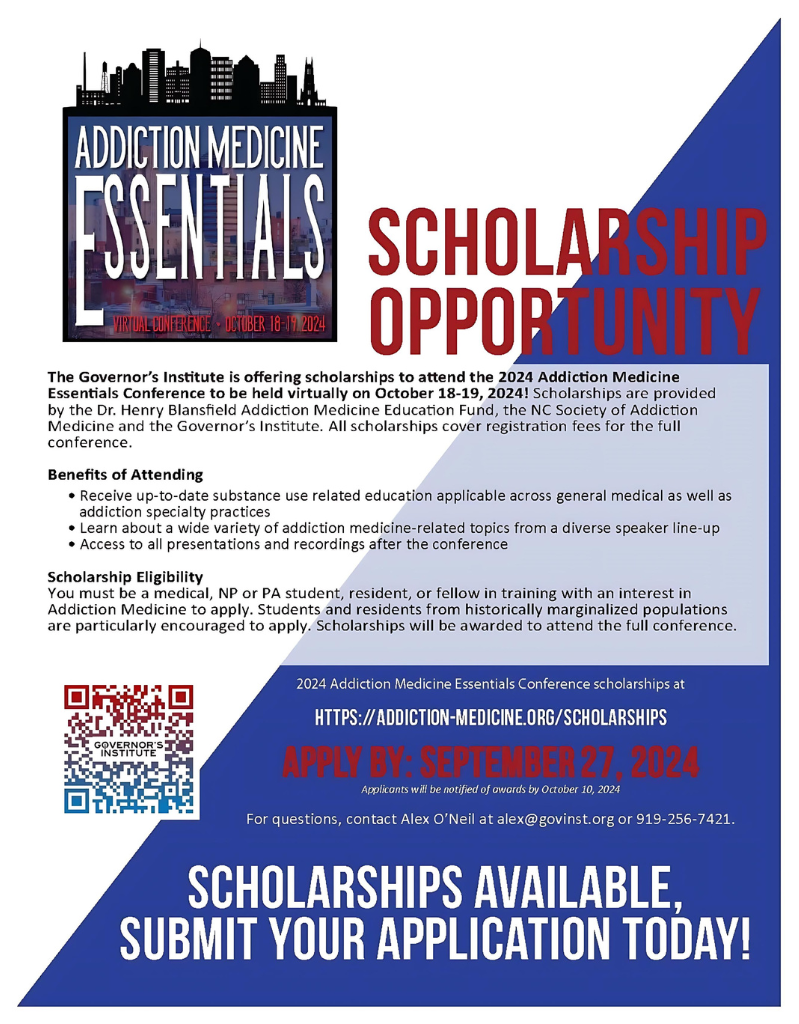
TOMORROW is the Last Day to Submit Your Application for the Addiction Medicine Scholarship
The Governor’s Institute offers a limited number of scholarships to attend the Addiction Medicine Conference (Spring) or Addiction Medicine Essentials (Fall).
By attending these events, physician, nurse practitioner, or physician assistant students or residents, who are training in North Carolina with an interest in Addiction Medicine will have the opportunity to receive up-to-date substance use related education, applicable across general medical as well as addiction specialty practices and learn from the experts during didactic lectures on a wide range of addiction medicine related topics.

ADDITIONAL LINKS OF INTEREST
Register Now! 2024 Addiction Medicine Essentials Virtual Conference

If Disaster Strikes! What to do if you are Impacted by a Hurricane or Tropical Storm

Is Your Practice Ready to Face a Hurricane?
North Carolina is in the middle of Hurricane Season and the path of hurricane Helene has portions of the state facing strong winds, heavy rains, possible tornadoes, and potential flooding. A disaster can overwhelm an office practice, causing physical damage such as shattered windows, flood debris, power outages, disrupted telephone service, computer and technology system outages, unsafe drinking water, patient record destruction, medication exposure to temperature and humidity extremes, contaminated instruments and supplies, and building structure failure.
Clinicians may be forced to relocate their practices quickly―sometimes permanently―or move scheduled procedures to different facilities. For public safety, practices may be forced to close for days or even weeks. These disruptions can be catastrophic to the delivery of essential healthcare services to patients and, potentially, to the long-term financial well-being of the office and the individual providers.
If Disaster Strikes
Communication
- Stay current on emergency directives from state and local governmental disaster relief and recovery entities. Consider registering for text message, social media, and email alerts.
- Contact staff immediately to determine return-to-work time frames as permitted.
- Implement virtual staff briefings at the beginning and end of each day.
- Create temporary telephone, fax, and answering services if necessary.
- Notify external vendors and business associates about your practice interruption and targeted resumption of operation.
- Establish patient telephone triage. (Find more information in our article “Telephone Triage and Medical Advice Protocols.”)
- Establish telehealth services as capabilities permit. (For more information, see our article “Top Seven Tips for Telehealth.”)
- Implement temporary controls to ensure HIPAA compliance.
Patient records
- Determine and document the extent of damage to, or loss of, electronic and paper patient records and filing systems.
- Attempt to restore all damaged charts and relevant business records, and document inventory findings.
- Check the websites of your state licensing board and federal agencies, such as HHS and CMS, for specific guidance pertaining to lost or damaged records.
- Reconstruct lost charts at the next patient encounter and include a notation that the record is a re-creation.
- Date and initial all late entries and duplicate information in context of recovery efforts.
- Document all efforts to restore and protect existing records.
- Contact your insurance carrier for restorative services and/or claim procedures.
- Reestablish a filing system and temporary storage if necessary.
- Obtain legal guidance for patient notification during recovery efforts.
- Guidelines for maintaining HIPAA compliance. The U.S. Department of Health and Human Services (HHS) provides protected health information guidance for planning and response to emergency situations (see Emergency Situations: Preparedness, Planning, and Response). Although the HIPAA Privacy Rule is not suspended during a natural disaster or other type of emergency, the HHS Secretary may waive certain provisions of the Privacy Rule (see “Is the Privacy Rule suspended during a national or public health emergency?”). The Office of Civil Rights may also issue notifications of temporary enforcement discretion. (For example, see the HHS notifications related to HIPAA and COVID-19.)
- Copies of certificates of insurance for your professional malpractice coverage and all product lines (such as general liability, cybersecurity, and employment practices) or instructions for contacting your agents or insurers directly to obtain proof of coverage and policy terms. These documents will be necessary if you are forced to temporarily relocate your practice or convert your delivery of care to a virtual format.
Computers and systems
- Contact computer service vendors to ensure the integrity and recovery of your systems.
- Inventory and document damage to hardware and software.
- Verify insurance coverage for repair or replacement costs and losses.
- Evaluate applicable warranties and consider contracting with an information technology restoration service.
- Reestablish filing systems and internal programs.
- Ensure data backup and periodically test compliance.
Office building
- Notify the building owner and your property insurance company regarding damage.
- Review inspection reports for identified damage and the schedule for repairs, and determine what impact the findings have on practice operations.
- Take appropriate measures regarding mold growth and removal if the building has suffered water or flood damage.
- Flush hot and cold water lines for 10 minutes if the building has been vacant for a week or more.
- Create an inventory of all equipment and medications that may have been exposed to water, extremes in temperature, or other contaminants. Repair, replace, or discard damaged items appropriately.
Practice and rehearse the plan’s protocols at least twice a year with all professional, administrative, and clerical staff, and participate in a community-based drill, if available. Address any areas that need improvement. An effective disaster preparedness plan will help ensure patient and staff safety and keep your practice focused on delivering care during an emergency.
The North Carolina Department of Public Safety has prepared a NC Hurricane Guide. It has tips for you and your family in the event of imminent tropical impacts. Here is a guide for you to use at home:
NCDPS North Carolina Hurricane Guide
NCDHHS has also put together a list of resources so you can be best prepared for the Atlantic Hurricane Season:
NCDHHS Disaster Preparation and Recovery Guide
To track any tropical disturbance, the NOAA National Hurricane Center has a website to keep you up to date:
National Hurricane Center Tracking Center

Join Us for a Well-being Virtual Event! Before Burnout: Thriving as a Clinician Without Losing Yourself.
Before Burnout: Thriving as a Clinician Without Losing Yourself
October 22, 2024 | 12-1 PM EST
Presenter
Amna Shabbir, MD, NBC-HWC, CPC
Burnout is an overused word and a very real phenomenon. Please join us for a talk validating your struggles and offering potential tangible strategies to help prevent and mitigate burnout.
About the Speaker:
Dr. Amna Shabbir is a National Board-Certified Wellness and Master Certified Life Coach, and a Geriatrician - Internist. She passionately supports clinicians in navigating the challenges of life after medical training so they can excel professionally and personally. She fiercely advocates for Mental Health access for healthcare workers and is a proud Dr. Lorna Breen Heroes Foundation Ambassador and Member of the NC Clinician & Physician Retention & Well-being Consortium (NCCPRW). Dr. Shabbir is the Founder of the Early Career Physicians Institute and Amna Shabbir Wellness Coaching. She is also a proud Super Mom to two young girls.
NCTracks: Names on Re-verification Applications MUST Match NPPES, License, Accreditation, and/or Certification
The provider name listed on applications for re-verification must match their legal name, name on the NPPES Registry, and their name on any license, certification, and/or accreditation. This includes middle names. If the middle name is listed on NPPES and/or license, certification, and/or accreditation, then it must be included in the application.
Providers can check their listed NPPES name at: https://npiregistry.cms.hhs.gov/search
For providers re-enrolling or submitting re-verification applications:
If the name does not match, do NOT submit the application. Instead send an email to NCTracksprovider@nctracks.com with required documentation attached. See chart on this page for more information about required documentation.
Register Now! The State of the U.S. Biomedical Research
The State of the U.S. Biomedical and Health
Research Enterprise:
Strategies for Achieving a Healthier America
REPORT RELEASE EVENT
Tuesday, October 1, 2024
1 - 2:45 PM
Webinar
The U.S. biomedical research enterprise contributes significantly to the nation’s health and economy. An NAM committee conducted a thorough review to determine whether the enterprise can continue to lead globally and address our population’s health needs in the face of complex challenges. This report presents the results of that review and lays out strategies to reimagine and reinvigorate the biomedical research enterprise before a moment of crisis.
In this webinar hosted by NAM President Victor J. Dzau, a panel of committee members will present an overview of the report followed by a discussion with national leaders in biomedical research.
Learn more and register to attend here.

Whooping Cough Cases on the Rise in Western North Carolina
Just like in the spring, pertussis – more commonly known as whooping cough – cases are on the rise in Buncombe County and all across the state, according to the latest data from the Centers for Disease Control.
On September 24, Buncombe County Health and Human Services issued a public health alert in response to a multi-school outbreak of whooping cough spreading across the county. Currently, 18 cases have been confirmed since August 12, Buncombe County Health and Human Services reported, and many cases are still under investigation.
Whooping cough is a highly contagious respiratory infection that spreads through coughs and sneezes. Often, early symptoms are mild, like a common cold, and can include the following:
- Runny nose
- Low fever
- Sneezing
- Mild cough
According to the CDC, symptoms after one to two weeks can quickly worsen and last for months. They include bad coughing attacks that may lead to the following:
- A "whoop" sound
- Vomiting
- Problems breathing
- Difficulty sleeping
- Extreme tiredness
Continue to the full article here.
ADDITIONAL LINKS OF INTEREST
Cases of Whooping Cough Spiking in US, Especially Among Unvaccinated Teens
Capitol Chronicle: Fix Medicare Payment! North Carolina Dermatologists Take Message to Congress.
Capitol Chronicle: Fix Medicare Payment! North Carolina Dermatologists Take Message to Congress.
The American Academy of Dermatology Association held its 2024 Legislative Conference over the dates of September 8-10. The event drew attendees from across the country to add emphasis to the medical profession’s advocacy priorities. The top-of-list issue taken to Capitol Hill was Medicare physician payment reform. Specific messages included:
- Avert the 2.8% cut in Medicare physician payment scheduled for January 1, 2025.
- Enact legislation to update the Medicare physician payment structure that includes annual inflationary adjustment.
- Enact legislation to alleviate the obstacle presented by “budget neutrality” in setting Medicare physician reimbursement.
- Pass the Safe Step Act to relieve the inappropriate barriers to patients receiving the care they deserve.
Attendees included:
Shelley Cathcart, MD
Blue Ridge Dermatology Associates
Raleigh, NC
Kim Edhegard, II, MD
President-Elect / NC Dermatology Association
Foothills Family Dermatology
Morganton, NC
Dhwani Mehta, MD
Secretary-Treasurer / NC Dermatology Association
Dermatology Group of the Carolinas
Concord, NC
Alan Skipper, CAE
Vice President, External Affairs
NC Medical Society / Raleigh, NC
The group visited the offices of all 16 of North Carolina’s members of the US House and US Senate.
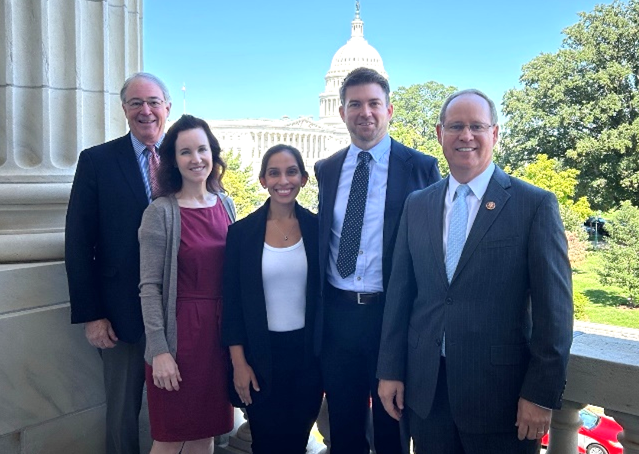

The day on Capitol Hill included a meeting with Rep./Dr. Greg Murphy
Do you know your state and federal legislators? More importantly, do your legislators know you?
The NCMS can help you connect with policy makers as a constituent and advocate!

NCMS Member Dr. Phillip Stetler Appointed to UNC Health Rockingham Hospital Board of Directors

The UNC Health Rockingham Board of Directors recently welcomed Phillip Stetler, DO, as a new member. Dr. Stetler is an orthopedic surgeon at UNC Orthopedics and Sports Medicine in Eden. He has a special interest in total joint replacement, sports medicine, trauma and fracture care.
“The Board has been impressed with Dr. Stetler since he joined our team at UNC Health Rockingham,” said Board of Directors Chair Jeffrey Parris. “His approach to treating the whole patient and understanding of our rural health system makes him a great addition to the board.”
Dr. Stetler brings not only his passion for healing the entire person, but also a strong desire to provide care for patients in rural areas. He hopes to bring this same perspective to the hospital board when considering how to best provide care and services to those whose needs bring them to UNC Health Rockingham for treatment.
“I am passionate about overall community health efforts, especially now that I’m back close to home,” said Stetler. “By serving on the UNC Health Rockingham Board of Directors, I hope to extend my ability to help beyond the practice and into the hospital and community to advocate for all patients at UNC Health Rockingham. I look forward to sharing perspectives gained from growing up with rural medicine in my home in tandem with my medical experiences.”
Dr. Stetler attended medical school at the Edward Via College of Osteopathic Medicine and completed his residency in orthopedic surgery at Mercy St. Vincent Medical Center in Ohio. Following his residency, Dr. Stetler completed a fellowship with Johns Hopkins Hospital focusing on shoulder and elbow orthopedics. He joined the UNC Orthopedics and Sports Medicine in Eden practice in February 2022. [source]

Mammography Reporting Now Requires Breast Density Assessment

A new FDA requirement went into effect on Tuesday, September 10, requiring all mammography reports and result letters sent to patients in the United States to include an assessment of breast density.
The FDA issued a final rule on March 10, 2023, to amend the Mammography Quality Standards Act (MQSA) regulations (“2023 MQSA Final Rule”). Enforcement of the MQSA regulations as amended by the 2023 MQSA Final Rule began on September 10, 2024. Facilities subject to the MQSA, must now comply with all applicable requirements, including the breast density notification.
Access the 2023 MQSA Final Rule in its entirety at Federal Register: Mammography Quality Standards Act.
During a facility’s annual MQSA inspection, inspectors will review documentation that relates to whether the facility is meeting the requirements of the MQSA. As of September 10, 2024, the MQSA regulations have certain additional requirements, including:
Mammography Reports
- Name and location of the facility performing the exam, (at a minimum the city, State, ZIP code, and telephone number).
- An overall final assessment of findings, classified into one of the following categories:
- Negative
- Benign
- Probably Benign
- Suspicious
- Highly Suggestive of Malignancy
- Known-Biopsy-Proven Malignancy
- Post-Procedure Mammogram for Marker Placement.
- In cases where no final assessment category can be assigned due to incomplete work-up, the report should indicate:
- Incomplete: Need additional imaging evaluation
- Incomplete: Need prior mammograms for comparison.
- An overall assessment of breast density, classified in one of the following categories:
- "The breasts are almost entirely fatty."
- "There are scattered areas of fibroglandular density."
- "The breasts are heterogeneously dense, which may obscure small masses."
- "The breasts are extremely dense, which lowers the sensitivity of mammography."
For more information and the list of additional requirements, click here.
Join NCMGMA and NCMSF for the Next Lunch & Learn Webinar

NCMGMA – NCMSF Lunch & Learn Webinar
2024 Legislative Landscape
Tuesday, October 8, 2024 | 12:00 PM - 1:00 PM EST | Zoom
Join us on October 8th for this Lunch & Learn Webinar in which the NC Medical Society’s Director of Legislative Affairs will be discussing the current political landscape in North Carolina in regard to the profession of medicine.
Webinar Speaker

Hannah Rice
NCMS - Director, Legislative Affairs
Hannah was born in Wilmington, North Carolina and earned her BA in History and minors in Political Science and Criminal Justice from UNC Charlotte. During her undergraduate career, Hannah worked on a Governor’s campaign, interned for a United States Congressman, and interned for a public health initiative in Cabarrus County, Smart Girls Know. Since graduating, she has worked in various fundraising roles as the Political Fundraising Manager for the North Carolina REALTORS® and Distinguished Events Coordinator for the American Cancer Society. In her free time, Hannah enjoys reading, trying new restaurants, watching baseball or football, and traveling with her husband and dog.
This webinar is free, but you must be registered to attend.
Space is limited so register early! After you register, you will receive an emailed confirmation with webinar and phone-in instructions. Please check your spam/junk folder if you do not see the confirmation email after you register.
Questions
Please contact rthompson@ncmedsoc.org

Addiction Medicine CME Series Helps You Meet Updated DEA Requirements

The North Carolina Medical Board and Wake AHEC, in collaboration with the North Carolina Medical Society and the Addiction Medicine Fellowship program at UNC School of Medicine, have developed an eight-hour CME series that meets the training requirement established by the federal Drug Enforcement Administration (DEA).
This Addiction Medicine Series offers education on a variety of key topics in addiction medicine, including the impacts of stigma, integrating addiction treatment in the primary care setting, and treatment of substance use in special populations.
Here is the full list of classes available in the series:
1. The End of a Bygone Era: Removal of the X-waiver Next Steps in Buprenorphine Prescribing
2. Addiction In Primary Care
3. Responding to Pediatric Substance Use
4. Treating Chronic Pain and Addictions
5. Understanding the Impacts of Stigma: Substance Use Disorder
6. Addiction and Mental Illness
7. The Impact of Stigma and Bias on Substance Use Disorder Diagnosis and Treatment
8. Current State of MOUD Access
Learn more, including how to register, here.
Your Feedback Needed: Help Improve the Medicaid Clinician Experience
NCMS's partners, Carolina Complete Health (CCH) and Carolina Complete Health Network (CCHN) will host their 2nd Annual Medicaid Managed Care Town Hall at the 2024 CPP Annual Meeting during NCMS LEAD Conference in November. In preparation for that session, we want to hear from clinicians across North Carolina who provide care to Medicaid enrollees.
Please share your experiences, challenges and successes, suggestions, and questions to help inform future programs, resources, opportunities, and collaborations that will improve health outcomes and enhance the overall care experience for Medicaid clinicians and enrollees.
All Medicaid clinicians are invited to complete this form, regardless of contract status with any of the PHPs.
Provide your feedback here.

NCMGMA Fall Conference Starts Wednesday! There's Still Time to Register.
The NCMGMA Fall Conference begins Wednesday, 9/25 thru Friday, 9/27.
Get Inspired!
Join NCMGMA in Winston-Salem! This year's event offers mentoring takeaways from Laurie Baedke, NC's financial health from Treasurer Dale Folwell, leadership inspiration from Tim Hebert, agile leadership training from Shane McKenzie, regulatory updates from Jason Newton, CMPE motivation from Todd Pittman, relationship best practices with Nelson Santiago, HR optimization from Kristine Sims, and cybersecurity insights from Javier Young.
Make plans to attend!
Learn more here to see all that this year's conference has to offer.

Biden-Harris Administration Announces Nearly $9 Million Investment in Rural Health Care in North Carolina
9/23/24: Notice from U.S. Department of Health and Human Services, Health Resources and Services Administration
New funding will launch substance use disorder treatment services in rural communities.
Today, the Health Resources and Services Administration (HRSA), an agency of the U.S. Department of Health and Human Services (HHS), announced nearly $9 million to support health care services in rural North Carolina. The funding will launch new opioid treatment and recovery services in rural communities. HRSA Administrator Carole Johnson announced the awards at an event in Wilson, North Carolina.
The Biden-Harris Administration has taken numerous actions to support rural communities’ health including by investing in training physicians in rural communities, providing loan repayment to primary care providers in return for practicing in high need rural areas, and supporting health care delivery through rural community health centers.
Today, the Administration is taking another series of vital steps to strengthen health care services in rural communities, with an emphasis on key priorities like behavioral health and expanding access to services.
“The Biden-Harris Administration believes health care should be available to everyone regardless of where they live. That’s why we are investing heavily in rural communities, which have historically lacked resources and access to health services” said HHS Secretary Xavier Becerra. “The awards announced today support rural hospitals and address acute challenges related to substance use and maternal health.”
“At the Health Resources and Services Administration, we know that where you live should not determine your access to or the quality of the care that you receive,” said HRSA Administrator Carole Johnson. “And, we are taking action to deliver for rural families by supporting high-quality substance use disorder treatment and by helping rural hospitals continue to serve their communities.”
Many rural communities face challenges accessing essential health care services. Smaller populations, longer travel distances, and other barriers can make health care services difficult for rural residents to access and hard for facilities like rural hospitals to remain viable.
Today’s announcement includes the following HRSA investments:
- Launching and expanding substance use disorder treatment, recovery, and social support services in rural communities: HRSA is awarding nearly $9 million over four years to three organizations to create new or expand existing access points for treatment and recovery services, support the behavioral health workforce, and collaborate with social services to ensure coordinated care and sustainable impact in rural communities.
Name City State Fiscal Year 2024 Award Amount Total Funding (Years 1-4) Wilson County Substance Abuse Coalition Wilson NC $749,389 $2,999,536 United Way of Rutherford County, Inc. Forest City NC $750,000 $3,000,000 Integrated Care of Greater Hickory Inc. Hickory NC $750,000 $3,000,000
For more information on HRSA’s rural health grants and programs, visit https://www.hrsa.gov/rural-health.

Experts Are Keeping a Close Eye on a New Covid Variant
What to know about XEC.
(KatieCouricMedia, Rachel Uda) -- Yet another strain of Covid-19 has emerged — and experts believe it may soon become the dominant version of the virus here in the U.S. Here’s what you need to know about XEC, its potential to drive a winter wave, and how you can stock up on free coronavirus tests.
What is the XEC variant?
The summer may have belonged to the so-called FLiRT variants, but experts think that XEC is poised to take over. The subvariant is a recombinant or hybrid of two earlier forms of the virus — KS.1.1 and KP.3.3 — which both belong to the Omicron family.
XEC was first detected in June in Berlin, and has since spread throughout Germany, France, Denmark, and Netherlands, according to a data scientist who’s been tracking the variant’s spread. And although it appears to be moving quickly across Europe, the World Health Organization hasn’t yet classified it as a variant.
Where has XEC spread?
Currently, XEC has been detected in at least 25 states, according to data from global virus database GISAID. Those states are: Arizona, California, Colorado, Delaware, Florida, Hawaii, Illinois, Iowa, Maryland, Massachusetts, Michigan, Nebraska, Nevada, New Jersey, New York, North Carolina, Ohio, Pennsylvania, Rhode Island, South Carolina, South Dakota, Texas, Utah, Virginia, and Washington.
But the number of domestic XEC cases is still quite low — so low it hasn’t even been added to the Centers for Disease Control and Prevention’s Covid-19 tracker. (In order for it to be included, a lineage must make up at least 1 percent of cases nationally.) Currently, the strain causing most Covid cases in the U.S. is KP.3.1.1, which some scientists have called “DeFLuQE.”
Why are experts watching XEC?
Even though it’s not widespread at the moment, scientists have been watching XEC because of its quick rise in Germany. “We often use what happens in Europe as a good indication of what might happen here,” epidemiologist Joëlla W. Adams tells USA Today.
Eric Topol, MD, director of the Scripps Research Translational Institute in La Jolla, tells the Los Angeles Times that he believes “XEC is definitely taking charge.”
“That does appear to be the next variant,” he says. “But it’s months off from getting into high levels.”
However, other experts seem skeptical, and think another strain — one more closely related to KP.3.1.1 that’s spread widely through some countries — is a more likely successor, CBS reports.
Will the vaccines be effective against XEC?
The updated vaccines released earlier this month were designed to protect against the KP.2 strain, which is part of the FLiRT family. That means the shot should be highly effective against the most common strains now — like KP.3.1.1 — but probably less so against XEC, Dr. Topol says.
He tells the Los Angeles Times that the difference between what the new shot is formulated for and XEC is “pretty substantial…and we’ll see how it plays out.”
Still, any booster will help bolster your immunity, he says. And the CDC told CBS that it anticipates the vaccines “will continue to work against all circulating variants.”
How to get free Covid tests
Whether it’s XEC or some other version of Covid, CDC modelers believe the U.S. will experience an uptick this winter, with cases peaking in mid-January. Fortunately, you should soon be able to order free Covid-19 tests. A spokesperson for the U.S. Health and Human Services agency told the Associated Press that Americans will be able to request four free nasal swab tests this month by visiting COVIDTests.gov. However, the online portal is not yet up and running and the agency did not say exactly when ordering will begin.

FDA Approves Nasal Flu Vaccine for At-Home Use

The FluMist vaccine will remain available from prescribers as an in-office treatment. (photo: AstraZeneca)
The F.D.A. authorized AstraZeneca’s treatment to be given outside a health care setting, although it will still need a prescription.
(New York Times, Christina Jewett) -- The Food and Drug Administration on Friday authorized at-home use of FluMist, opening the door for needle-shy people to have easy access to a nasal spray vaccine that is potentially lifesaving.
The approval will allow, for the first time, an alternative to the annual flu shot that parents and caregivers can give to children and that adults can use on their own outside of a health-care setting. It would still require a prescription and is expected to be available from an online pharmacy next fall.
AstraZeneca, which makes the treatment, said it would start a FluMist Home website, where people can fill out a questionnaire that will be reviewed by a pharmacist before the treatment is shipped to a person’s home. The mist will remain available from prescribers as an in-office treatment. The current out-of-pocket cost for a dose is about $35 to $45, but may be less depending on insurance coverage.
“Today’s approval of the first influenza vaccine for self- or caregiver-administration provides a new option for receiving a safe and effective seasonal influenza vaccine potentially with greater convenience, flexibility and accessibility for individuals and families,” said Dr. Peter Marks, director of the F.D.A.’s vaccine center, which authorized the at-home option.
The agency required the company to study whether its instructions were clear and whether at-home administration was feasible. The agency concluded that it was, but advised caregivers to give the spray to those who are 2 to 17 years old.
The flu takes a steep toll that varies greatly from year to year, according to an F.D.A. summary of data from the Centers for Disease Control and Prevention. From 2010 through 2023, hospitalizations have ranged from 100,000 to 700,000 each year, and from about 4,900 to 51,000 people have died.
FluMist was first approved by the F.D.A. in 2003 for people ages 5 to 49; since 2007, it has been authorized for people as young as 2 years old. The spray contains a weakened form of live flu virus that is applied inside the nose.
According to the C.D.C., the nasal spray has largely been found to be as effective as the shot, except for children in 2009, a year of particularly high levels of flu cases. Since then, the formula of the spray has changed, according to the agency, which said studies outside the United States found it to have similar efficacy to the shot.
Dr. Abraar Karan, a Stanford infectious disease doctor, said he saw a lot of flu patients in urgent care. He added that many said they had meant to get a vaccine, but found that the major challenge was basic logistics: making an appointment, missing work and building in time to feel tired or achy after receiving the vaccine.
He said the new approval would ideally go a long way toward preventing more flu cases.
“A lot of it is actually just reducing those logistical barriers,” Dr. Karan said. “And so an at-home platform, I think, will increase uptake, and that will increase uptake quickly, which is really the key before the season starts picking up.”
Learning Opportunity: HIPAA Privacy and Security Training

This online, self-paced HIPAA Privacy and Security Training course will provide information on understanding the law and developing best practices within your office to ensure compliance. The course is not a complete summary covering every aspect of HIPAA, which is intended for educational purposes only and does not constitute legal advice. Consult an attorney if legal advice is needed. After completing this training course, the knowledge surrounding HIPAA and protecting patient information will provide confidence.
The objectives for this course include:
- Understand HIPAA’s privacy and security rules and how they relate to your job and patients.
- Understand the types of health information
- How to protect patient's health information
- Prevent intentional and unintentional disclosures of patient information and what to do in case of a breach.
- Understand what rights the patient has under the law.
- Helpful cybersecurity practical tips to use at work and home
For more information, including how to register, click here.
Lower Cape Fear LifeCare Opening First Free-standing Palliative Medical Clinic in Southeastern NC
Lower Cape Fear LifeCare Will Open Doors in Wilmington on October 1
Lower Cape Fear LifeCare is opening the first free-standing palliative medicine clinic in southeastern North Carolina. LifeCare Center for Palliative Medicine will provide expert support for people with serious illness and be located at 2250 Shipyard Blvd., Wilmington, NC in Barclay Common dining, shopping and office complex at the intersection of Independence and Shipyard Blvd. The clinic will open its doors to patients on Oct. 1, 2024, and will serve patients from local healthcare providers including Novant Health Zimmer Cancer Institute, Novant Health physician clinics as well as patients from other area physicians.
Palliative medicine is specialized medical care for people living with serious illnesses. The goal is to provide patients with relief from the symptoms and the stress of illnesses such as heart disease, COPD, cancer, renal and liver disease, dementia, Parkinson’s, and ALS. Palliative medicine can be provided together with curative treatment for a serious illness.
"As oncologists, we work hand in hand with our palliative care colleagues who provide expertise on pain and symptom management and add an extra layer of support for people living with cancer," Dr. Lindsey Buckingham, a gynecologic oncologist with Novant Health Zimmer Cancer Institute, said. "Both patients and families benefit from the involvement of both oncology and palliative care."
Palliative medicine improves quality of life for patients and their families by managing the pain, symptoms and stresses of the illness while receiving ongoing curative treatments. It also supports and improves coordination of care by working in partnership with a patient’s current doctor. It assists patients and their loved ones with discussions about goals of care and provides information and support on advance care planning. A palliative medicine team works with patients to help with physical and psychosocial needs such as pain, nausea, vomiting, breathing difficulties, fatigue, confusion, and depression.
“We’re proud and delighted to offer our community the first free-standing palliative medicine clinic in southeastern North Carolina,” Gwen Whitley, president and CEO said. “This is truly a significant step in providing life impacting care to people and families living with serious illnesses. We are thankful to be able to make this move with the support of Novant Health, who previously housed the clinic in its Zimmer Cancer Institute. Having outgrown that space and with the increasing demand for such care from other local providers for their patients, we are opening this dedicated space to serve those in our region. We look forward to providing palliative medicine in the clinic as well as appointments through telehealth, in private homes, assisted and skilled nursing facilities, and by continuing our in-patient palliative care partnerships with regional hospitals.”
Lower Cape Fear LifeCare has been providing palliative medicine to people in our region for more than three decades. It is the longest operating nonprofit hospice care provider in southeastern North Carolina and the second largest hospice provider in the state. Each year it provides more than one million dollars in care and services to people in the communities it serves.
Lower Cape Fear LifeCare is a nonprofit organization dedicated to providing access to the highest quality LifeCare, education, and supportive services to our patients, their families, and the communities we serve. For more information, visit lifecare.org.
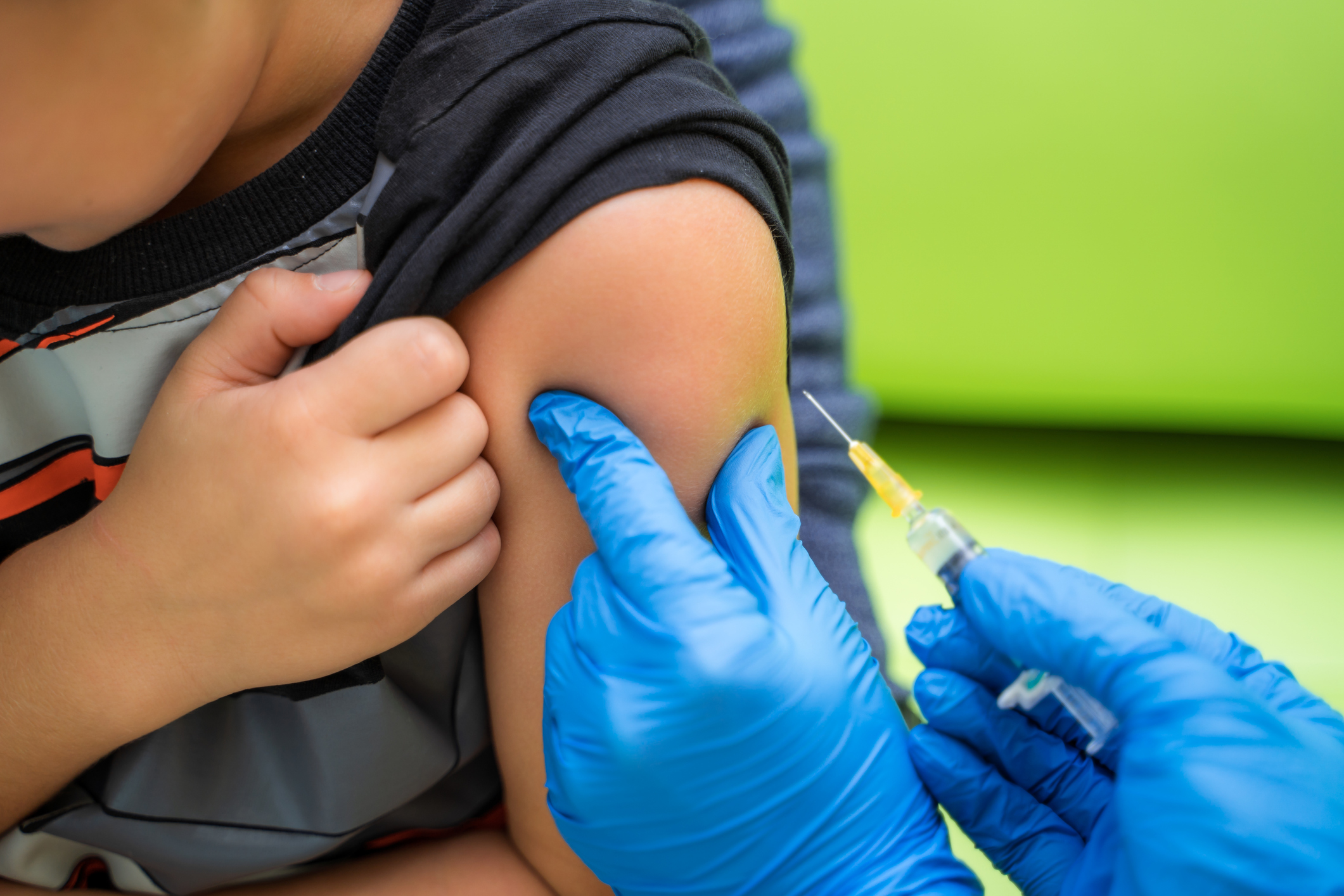
Cases of Whooping Cough Spiking in US, Especially Among Unvaccinated Teens
The U.S. is experiencing more than four times as many whooping cough cases compared with last year — a spike that some experts attribute to post-pandemic vaccine fatigue.
“With the increase in vaccine hesitancy that has been going on since the Covid-19 pandemic, we’re seeing outbreaks occurring in kids who are not vaccinated,” said Dr. Tina Tan, president-elect of the Infectious Diseases Society of America.
On Thursday, the Centers for Disease Control and Prevention said that 14,569 cases of whooping cough had been reported so far in 2024. That’s a significant increase over last year’s total of 3,475 cases.
According to a CDC spokesperson, preliminary cases reported so far this year are the highest since 2014.
The bacterial illness is officially called pertussis but is often referred to as “whooping cough” because of the sound people — especially babies — make when trying to get enough oxygen despite ongoing coughing fits.
Doctors said the newly reported numbers are likely a vast underestimate of the true spread of the highly contagious respiratory infection.
“For every case of whooping cough we find, there’s probably 10 of them out there that didn’t come to medical attention,” said Dr. Jim Conway, a pediatrician and infectious disease expert at UW Health in Madison, Wisconsin.
Doctors at Duke University School of Medicine in North Carolina and Children’s National Hospital in Washington, D.C., told NBC News that they hadn’t seen any recent cases of whooping cough. Georgia saw an uptick in whooping cough cases over the summer, said Dr. Andi Shane, division chief of pediatric infectious diseases at Children’s Healthcare of Atlanta, but that’s since declined.
Continue to the full article here.
For more on whooping cough (pertussis), visit cdc.gov/pertussis.

7 Proven Strategies to Conquer Board Exam Anxiety for Physicians
NCMS and North Carolina Clinician and Physician Retention and Wellbeing (NCCPRW) Consortium member Amna Shabbir, MD, NBC-HWC, CPC, Founder and CEO of Amna Shabbir Wellness Coaching LLC and the Early Career Physicians Institute, shares valuable tips for physicians preparing for board exams. Read her insightful article here.

New Report: US Spends Most, but Ranks Last in Health Compared to Other High-Income Nations
Australia Has Highest Overall Score
(CBS Health Watch, Sara Moniuszko) -- Americans, despite spending the most on healthcare, are the sickest and die the youngest compared with nine other high-income nations, according to a new report.
The report, released Thursday by independent research group The Commonwealth Fund, found the United States has the worst-performing health care system overall despite spending the most of any nation in the study.
Using data from World Health Organization and more since the onset of the pandemic in 2020, the study looked at five key health care measures, including health equity, access to care, care process, administrative efficiency and health outcomes.
Here's how the countries ranked based on overall score:
1. Australia
2. Netherlands
3. United Kingdom
4. New Zealand
5. France
6. Sweden
7. Canada
8. Switzerland
9. Germany
10. United States
"Differences in overall performance between most countries are relatively small, but the only clear outlier is the U.S., where health system performance is dramatically lower," the report states.
In addition to ranking last overall, the U.S. also ranked lowest for specific health measures including access to care to health outcomes. Australia and the Netherlands, the two countries with the highest overall rankings, also have the lowest health care spending while the U.S. spends the most among the group.
"When it comes to life expectancy and avoidable deaths, the U.S. comes in last," the report's news release noted.
But, all countries have strengths and weaknesses despite their overall rankings.
"No country is at the top or bottom on all areas of performance. Even the top-ranked country — Australia — does less well, for example, on measures of access to care and care process. And even the U.S., with the lowest-ranked health system, ranks second in the care process domain," the report states.
Now Available! 2024 Survey of America’s Current and Future Physicians. A Crucial Guide for Understanding, Addressing, and Supporting Physicians, Residents, and Medical Students.

2024 Survey of America’s Current and Future Physicians serves as a crucial guide for understanding, addressing, and supporting physicians, residents, and medical students nationwide.
The Physicians Foundation’s 2024 Survey of America’s Current and Future Physicians focuses on the state of physicians, residents, and medical students’ wellbeing, as well as the conditions in physician practice environments—offering essential solutions to improve both.
Key Findings from the Report:
The overall state of wellbeing for current physicians remains low.
- Six in 10 physicians and residents, and seven in 10 medical students reported often experiencing burnout
- More than half of physicians know of a physician who has ever considered, attempted, or died by suicide
With private equity and healthcare consolidation exacerbating the issue.
- Seven in 10 physicians and medical students, and at least six in 10 residents agree that consolidation is having a negative impact on patient access to high-quality, cost-efficient care
- According to physicians, negative impacts of mergers/acquisitions include job satisfaction (50%), quality of patient care (36%), independent medical judgment (35%) and patient healthcare costs (30%)
Current and future physicians need solutions that prioritize physician wellbeing and perspectives.
- Safeguards for consolidation identified by physicians, residents and medical students include preserving physician autonomy (90%), maintaining patient standards (87%), increasing transparency and disclosure (86%) and assessing long-term impact (84%)
- Additionally, 79% of physicians and 87% of residents found the reduction of administrative burdens to be helpful
- Furthermore, 71% of residents and 59% of students found change or removal of medical licensure questions that stigmatize accessing behavioral health care to be helpful
Click here to visit the survey homepage and download the full report.
About The Physicians Foundation
The Physicians Foundation is a nonprofit seeking to advance the work of practicing physicians and help them facilitate the delivery of high-quality health care to patients. As the U.S. health care system continues to evolve, The Physicians Foundation is steadfast in strengthening the physician-patient relationship, supporting medical practices' sustainability and helping physicians navigate the changing health care system. The Physicians Foundation pursues its mission through research, education and innovative grant making that improves physician wellbeing, strengthens physician leadership, addresses drivers of health and lifts physician perspectives. For more information, visit www.physiciansfoundation.org.
About the Physicians Foundation's 2024 Survey of America's Current and Future Physicians
Each year, the Physicians Foundation assesses physician sentiment surrounding the practice environment and patient care, so we can understand where things stand and drive change to enhance physician practice and improve patient health outcomes. In 2024, the survey was conducted online among U.S. physicians, medical residents and clerkship/clinical rotation medical students, who were derived from Medscape's proprietary database. The survey was fielded from June 17 through July 16, 2024.

Join DOCMS for Cultivating Care for Migrant and Seasonal Agricultural Workers in North Carolina

Join DOCMS at the University Club!
"Cultivating Care for Migrant and Seasonal Agricultural Workers in North Carolina"
Wednesday, October 9, 2024 | 6:00pm - 8:00pm
University Club
3100 Tower Boulevard, Suite 1700
Durham, NC 27707
AGENDA:
• 6:00pm- 6:30pm – Socializing & Housekeeping
• 6:30pm- 7:30pm – Dinner & Guest Speaker
• 7:30pm- 7:45pm – Q&A
• 7:45pm- 8:00pm – DOCMS 2024 Business
Speaker:
Modjulie Moore, MD| Assistant Professor of Family Medicine at UNC School of Medicine. Current Medical Director for the NCDHHS Farmworker Health Program.

Modjulie Moore, MD is a family medicine physician with University of North Carolina’s Family Medicine Residency program. She completed her residency training at Greater Lawrence Family Medicine Residency in Lawrence, Massachusetts. Her medical training was focused on providing care for the Latine community. Following her residency training, she worked as a family physician ensuring comprehensive care to all patients within a federally qualified health center in rural eastern North Carolina. She was able to work collaboratively with community outreach workers in helping to provide needed care to the farmworker community.
Dr. Moore’s medical Spanish knowledge and her cultural awareness provided an invaluable resource to the counties served by the community health center network. Following her experience in rural medicine, Dr. Moore transitioned to her current role at UNC Family Medicine Residency program. She currently serves as a teacher and mentor to the residents and medical students. She brings to her patients and learners a perspective that highlights the importance of understanding community needs and providing a culturally engaging response.
Within her role on faculty at UNC, she provides care at the Orange County Health Department and the UNC Family Medicine Center. She also serves as the medical director of the NC DHHS Office of Rural Health’s Farmworker Health Program. Her career continues to build upon her passion for caring for our most vulnerable populations. Her role as medical director of NC FHP allows her to incorporate valuable lessons learned from work in rural health, community engagement, and the Latine community.
1 CME Credit is available! Click here for how to claim your credit.
DOCMS Members & Prospective Members - FREE to attend
Guests - $25 to attend (will be collected at meeting site)
Physicians on the Brink: Suicidal Ideation in NC

Physician suicide is a longstanding issue, with doctors contemplating ending their own lives as frequently as non-physicians. However, a recent survey of North Carolina doctors indicates the problem may be more severe than previously understood. Join Jean Fisher Brinkley and Dr. Joe Jordan, CEO of the North Carolina Professionals Health Program, as they discuss the alarming findings from NCPHP's recent Suicidal Ideation Survey and explore solutions to address this critical issue.

Hosts and Guests
Jean Fisher Brinkley

Communications Director, North Carolina Medical Board
Jean Fisher Brinkley is NCMB’s Communications Director, a role that involves developing and overseeing production of communications materials and strategies needed to enhance public and professional awareness and understanding of the Board and its mission. She joined NCMB in 2008, after an 11-year career in newspaper journalism, most of it dedicated to reporting on medicine, health policy and the business aspects of health care.
Brinkley earned a bachelor’s degree in English from Mills College in Oakland, CA, and a master’s degree in journalism from the University of California, Berkeley. She lives in Raleigh with her husband and two daughters.
You can reach Jean at podcast@ncmedboard.org
Joseph P. Jordan, PhD

Chief Executive Officer, North Carolina Professionals Health Program
Dr. Jordan brings more than 25 years of experience in the areas of substance abuse and mental health disorders to his role as NCPHP’s Chief Executive Officer. Prior to assuming this role in 2016, he worked at NCPHP for nine years, first as the Clinical Director before taking on the position of Executive Director.
Before joining NCPHP, Dr. Jordan was the Ethics Officer and Director of Special Projects for The National Board for Certified Counselors, served as clinical director for a long-term residential program, and provided emergency psychiatric evaluation services while completing his graduate degrees. Dr. Jordan has previously served on state and national committees and boards devoted to the study, development, and refinement of the field of substance abuse counseling. He earned his undergraduate degree in Psychology and graduate degrees in Counseling and Counseling Education from the University of North Carolina at Greensboro.
You can reach Dr. Jordan at: jjordan@ncphp.org
References
QPR stands for Question, Persuade, and Refer — the 3 simple steps anyone can learn to help save a life from suicide. Find a variety of online training modules available at the QPR Institute.
Resources
Need Help Immediately?
Dial 911 or contact the National Suicide Prevention Lifeline by dialing 988 or 1-800-273-8255 or visit them online.
Help in North Carolina
NCPHP | North Carolina Physicians Health Program (NCPHP)
220 Horizon Drive
Suite 201
Raleigh, NC 27615-4928
Email info@ncphp.org
Call (919) 870-4480
National Resources
- Physician Support Line (Free, Confidential & Anonymous) Psychiatrists helping physician and medical student colleagues navigate the many intersections of their personal and professional lives. Call 1-888-409-0141.

New Episode! NCMS Member Dr. Shannon Dowler Talks STI's and more - Part 2
Season 4 of the Addiction Medicine Podcast continues with Part 2 of the series on Sexually Transmitted Infections (STI).
Part 1 dove into how the term ‘infection’ can reduce stigma, encourage testing, and emphasize the importance of regular screenings. Also discussed were current trends, cultural trends, health inequities, and the role of healthcare providers in STI care.
Part 2 is packed with expert tips that will make you rethink how you approach sexual health and harm reduction.
Explore:
- The must-know screening guidelines for ALL patients?
- How new meds like PrEP and Doxy PEP are changing prevention?
- Why partner treatment is a game-changer in fighting reinfection?
Returning for this important conversation are Dr. Shannon Dowler, a board-certified family physician with a national reputation in health policy, public health, and sexual health, and Dr. Amy Marietta, board-certified in family medicine and addiction medicine.
Dr. Dowler is currently Deputy Director in the Mecklenburg County STI Clinic while Dr. Marietta serves as the Medical Director of MAHEC’s Project CARA, a comprehensive perinatal substance use treatment program in Asheville, North Carolina.

ADDITIONAL LINKS OF INTEREST:
Listen Now! NCMS Member Dr. Shannon Dowler Talks STI's and more. (Part 1)

US Overdose Deaths Plummet, UNC Dr. Analyzes Data
NPR: Data Shows Overdose Deaths Nationwide are Falling for First Time in Decades
(NPR, Brian Mann) -- For the first time in decades, public health data shows a sudden and hopeful drop in drug overdose deaths across the U.S.
"This is exciting," said Dr. Nora Volkow, head of the National Institute On Drug Abuse [NIDA], the federal laboratory charged with studying addiction. "This looks real. This looks very, very real."
National surveys compiled by the Centers for Disease Control and Prevention already show an unprecedented decline in drug deaths of roughly 10.6 percent. That's a huge reversal from recent years when fatal overdoses regularly increased by double-digit percentages.
Some researchers believe the data will show an even larger decline in drug deaths when federal surveys are updated to reflect improvements being seen at the state level, especially in the eastern U.S.
"In the states that have the most rapid data collection systems, we’re seeing declines of twenty percent, thirty percent," said Dr. Nabarun Dasgupta, an expert on street drugs at the University of North Carolina.
According to Dasgupta's analysis, which has sparked discussion among addiction and drug policy experts, the drop in state-level mortality numbers corresponds with similar steep declines in emergency room visits linked to overdoses.

Dasgupta was one of the first researchers to detect the trend. He believes the national decline in street drug deaths is now at least 15 percent and could mean as many as 20,000 fewer fatalities per year.
"Today, I have so much hope"
After years of wrenching drug deaths that seemed all but unstoppable, some researchers, front-line addiction workers, members of law enforcement, and people using street drugs voiced caution about the apparent trend.
Roughly 100,000 deaths are still occurring per year. Street drug cocktails including fentanyl, methamphetamines, xylazine and other synthetic chemicals are more poisonous than ever.
"I think we have to be careful when we get optimistic and see a slight drop in overdose deaths," said Dan Salter, who heads a federal drug interdiction program in the Atlanta-Carolinas region. "The last thing we want to do is spike the ball."
But most public health experts and some people living with addiction told NPR they believe catastrophic increases in drug deaths, which began in 2019, have ended, at least for now. Many said a widespread, meaningful shift appears underway.
"Some of us have learned to deal with the overdoses a lot better," said Kevin Donaldson, who uses fentanyl and xylazine on the street in Burlington, Vermont.

According to Donaldson, many people using fentanyl now carry naloxone, a medication that reverses most opioid overdoses. He said his friends also use street drugs with others nearby, ready to offer aid and support when overdoses occur.
He believes these changes - a response to the increasingly toxic street drug supply - mean more people like himself are surviving.
Gupta called for more funding for addiction treatment and healthcare services, especially in Black and Native American communities where overdose deaths remain catastrophically high.
"There is no way we're going to beat this epidemic by not focusing on communities that are often marginalized, underserved and communities of color," Gupta said.
But even some researchers who support wider public health and harm reduction programs said it's unlikely those efforts alone are causing such a sudden decline in drug deaths.
"We don't have anything that would predict this magnitude of effect this quickly," said Dasgupta, the researcher at North Carolina University, who described the reversal as hopeful and also mysterious.
Addiction experts pointed to a number of possible factors, other than public health strategies, that could be contributing to the drop in fatal overdoses, including the changing make-up of the street drug supply.

Fentanyl may be harder to find and less pure in some areas because of law enforcement efforts targeting Mexican drug cartels.
The chemical xylazine is also being mixed with fentanyl by drug gangs. While toxic in humans, causing lesions and other serious long-term health problems, xylazine may delay the onset of withdrawal symptoms in some users. Dasgupta said it's possible that means people are taking fewer potentially lethal doses of fentanyl per day.
Other experts pointed to the end of the COVID pandemic, combined with the high number of people who have already died from drug overdoses, as possible causes of the abrupt change.
Dr. Daniel Ciccarone, a physician and addiction researcher at the University of California San Francisco, said a debate is already underway over what triggered the improvement and what might happen next.
"This is where we're all going to differ. Everyone is going to come out and claim that what they did is what caused the decline," he said.
But Ciccarone agreed that for now, the improvements appear real: "What makes it fascinating is the speed at which it's happening."
"Overdose deaths in Ohio are down 31 percent"
Indeed, in many states in the eastern and central U.S. where improvements are largest, the sudden drop in drug deaths stunned some observers who lived through the darkest days of the fentanyl overdose crisis.
"This year overdose deaths [in Ohio] are down 31 percent," said Dennis Couchon, a harm reduction activist. "The deaths were just plummeting. The data has never moved like this."
"While the mortality data for 2024 is incomplete and subject to change, Ohio is now in the ninth consecutive month of a historic and unexpected drop in overdose deaths," said the organization Harm Reduction Ohio in a statement.
Missouri is seeing a similar trend that appears to be accelerating. After dropping by 10 percent last year, preliminary data shows drug deaths in the state have now fallen roughly 34 percent in the second quarter of 2024.
"It absolutely seems things are going in the right direction, and it's something we should feel pleased about," said Dr. Rachel Winograd, director of addiction science at the University of Missouri St. Louis, who also noted that drug deaths remain too high.
"It feels wonderful and great," said Dr. Mark Levine, head of the Vermont Health Department. "We need encouraging data like this and it will help sustain all of us who are actively involved in trying to have an impact here."
Levine, too, said there's still "plenty of work left to do."
Some survivors of the overdose crisis said while the situation on the streets remains grim for many people, they believe the public health response is keeping more people alive.
Eric Breeyear, who lives in a recovery shelter called Good Samaritan Haven in Barre, Vermont, said he was given naloxone repeatedly after experiencing fentanyl overdoses.

In recovery for roughly a year, Breeyear takes a prescription medication called suboxone to reduce opioid-fentanyl cravings.
He told NPR there is "probably a 100 percent chance" he would have died without the medical help that is now far more widely available.
"I'm happy people's lives are being saved, but on every street I see somebody in the middle of an overdose that could potentially be fatal," Breeyear said.
He said being revived after repeated overdoses isn't enough. He wants more done to help people in severe addiction heal and enter recovery, as he has done.

Dasgupta, the researcher at the University of North Carolina, agreed more needs to be done to help people in addiction recover when they're ready.
But he said keeping more people alive is a crucial first step that seemed impossible only a year ago.
"A fifteen or twenty percent [drop in deaths] is a really big number, an enormous impact," he said, calling for more research to determine how to keep the trend going.
"If interventions are what's driving this decline, then let's double down on those interventions."
ADDITIONAL READING
Questions About Opioid Settlement
CDC Guidelines for Prescribing Opioids

Researchers Discover New Blood Group System - MAL
The discovery of a new blood group, MAL, has solved a 50- year-old mystery. Researchers from NHS Blood and Transplant (Bristol), NHSBT’s International Blood Group Reference Laboratory (IBGRL) and the University of Bristol identified the genetic background of the previously known but mysterious AnWj blood group antigen. The findings allow identification and treatment of rare patients lacking this blood group.
Blood is complex and matching across groups can be lifesaving.
(University of Bristol, 9/16/24) -- Some people can lack this blood group due to the effect of illness, but the rare inherited form of the AnWj-negative phenotype has only been found in a handful of individuals – though due to this discovery it will now be easier to find others in the future.
The two best known blood group systems are ABO and Rh but blood is more complex and matching across the other groups can be lifesaving.
If people who are AnWj-negative receive AnWj-positive blood they could have a transfusion reaction, and this research allows development of new genotyping tests for detecting such rare individuals and reducing the risk of transfusion-associated complications.
The AnWj antigen – an antigen is a surface marker - was discovered in 1972 but its genetic background was unknown until now.(3) The new research, to be published by Blood, the journal of the American Society of Hematology, and now available online in pre-print, establishes a new blood group system (MAL), the 47th ever to be discovered, as home to the AnWj antigen.
The research team established that AnWj is carried on the Mal protein. More than 99.9% of people are AnWj-positive, and such individuals were shown to express full-length Mal protein on their red cells, which was not present on the cells of AnWj-negative individuals. The team identified homozygous deletions in the MAL gene associated with the inherited AnWj-negative phenotype.
The most common reason for being AnWj-negative is due to suffering from a hematological disorder or some types of cancer which suppress antigen expression (4). Only a very small number of people are AnWj-negative due to a genetic cause. There were five genetically AnWj negative individuals in the study including a family of Arab-Israelis.(5) The blood tested included a sample given by a lady in 2015 who was the first AnWj negative person to be discovered in the 1970s.
The research team used whole exome sequencing – the genetic sequencing of all DNA that encodes proteins – to show that these rare inherited cases were caused by homozygous DNA sequence deletions in the MAL gene, which codes for Mal protein.
Proof that Mal is responsible for binding of AnWj antibodies isolated from these rare patients was provided by experiments showing the appearance of specific reactivity with cells in which researchers introduced the normal MAL gene but not the mutant gene.
Louise Tilley, Senior Research Scientist, IBGRL Red Cell Reference at NHS Blood and Transplant, said: “The genetic background of AnWj has been a mystery for more than 50 years, and one which I personally have been trying to resolve for almost 20 years of my career. It represents a huge achievement, and the culmination of a long team effort, to finally establish this new blood group system and be able to offer the best care to rare, but important, patients.
“The work was difficult because the genetic cases are very rare. We would not have achieved this without exome sequencing, as the gene we identified wasn’t an obvious candidate and little is known about Mal protein in red cells. Proving our findings was challenging, and we appreciate the help of all our collaborators, and the patients, without whom we would not have got to this point.”
Ash Toye, Professor of Cell Biology in the School of Biochemistry and Director of the NIHR Blood and Transplant Research Unit in red cell products at the University of Bristol, said: “It’s really exciting we were able use our ability to manipulate gene expression in the developing blood cells to help confirm the identity of the AnWj blood group, which has been an outstanding puzzle for half a century. This development will help identify these rare donors and help patients in the future.”
Nicole Thornton, Head of IBGRL Red Cell Reference at NHS Blood and Transplant, said: “Resolving the genetic basis for AnWj has been one of our most challenging projects.
“There is so much work that goes into proving that a gene does actually encode a blood group antigen, but it is what we are passionate about, making these discoveries for the benefit of rare patients around the world.
“Now genotyping tests can be designed to identify genetically AnWj-negative patients and donors. Such tests can be added to the existing genotyping platforms.”
Dr Tim Satchwell, Senior Lecturer at UWE Bristol, who contributed to the study whilst a Research Fellow at the University of Bristol, said: “Mal is a very small protein with some interesting properties which made it difficult to identify and meant we needed to pursue multiple lines of investigation to accumulate the proof we needed to establish this blood group system. Being able to combine our expertise to finally achieve this has brought the whole team a lot of satisfaction.”
Paper
'Deletions in the MAL gene result in loss of Mal protein, defining the rare inherited AnWj-negative blood group phenotype' by Louise A TilleyAshley Mark ToyeTimothy J SatchwellNicole M Thornton et al. in Blood
Further information
- Donate blood and find out your ABO and rhesus blood types via www.blood.co.uk
- The research was led by NHS Blood and Transplant led the work, through its International Blood Group Reference Laboratory in Bristol. Research partners included the School of Biochemistry at the University of Bristol, the Apheresis Institute at Rabin Medical Centre in Israel, Magen David Adom National Blood Services in Israel, the NIHR Blood and Transplant Research Unit in Genomics to Enhance Microbiology Screening, the Clinical Biotechnology Centre at NHS Blood and Transplant, and the National Institute for Health Research (NIHR) Blood and Transplant Research Unit in Red Blood Cell Products.
- Blood groups are complex. The two best known blood group systems are ABO and Rh. Within each blood group, red cells can carry surface markers called antigens. For example, within the ABO blood group system, there are the A and B antigens – people with A have the A antigen, people with B have the B antigen, people with AB blood have both and people with O have neither. There are now 47 recognised blood group systems together containing more than 360 recognized blood antigens.
- AnWj is named after the first people who made the antibody (Anton and Wj).
- The disorders suppress Mal and make patients AnWj-negative, unless they have the rare inherited form (MAL deletion). The inherited AnWj-negative people are healthy.
- The first family discovered with the inherited form are Arab-Israeli and there are other cases from this region. However the ethnicity of all cases is not known and it is not yet known if the blood type is more common in any ethnicity.

NCDHHS Releases New Health Disparities Analysis Report, Highlights Opportunities for Improvement

The North Carolina Department of Health and Human Services today published the 2024 Health Disparities Analysis Report. The report offers a comprehensive view of the effects of health disparities on health outcomes across North Carolina and highlights opportunities for improvement and action.
"Every North Carolinian should have the opportunity to live a healthy life, but a health system that fails some, fails us all," said NC Health and Human Services Secretary Kody H. Kinsley. "While Medicaid expansion and recent investments in behavioral health are critical pieces of this work, we must be intentional in uncovering and addressing the health gaps that exist for different communities."
The Health Disparities Analysis Report focuses on six key topic areas: health care access; chronic disease mental health, substance use, suicide and violence prevention; communicable disease; social drivers of health; and health across the lifespan. The report uses in-depth data to identify and analyze disparities across multiple population groups such as race and ethnicity, disability status and age. It also highlights corresponding strategies that can be used to address identified discrepancies between these groups.
"Reducing health disparities experienced by populations which have been historically marginalized is a huge task that requires partners from every single sector coming together to act," said NCDHHS Deputy Secretary for Health Equity and Chief Health Equity Officer Debra Farrington. "Health disparities are shaped by historical, social, political and other underlying factors, and the first step toward reducing these gaps is to understand their root causes. This report is a critical document that allows our department and our partners to focus on the most severe disparities and strategically plan actions to reduce or eliminate them going forward."
The release of this report builds upon other key accomplishments and NCDHHS initiatives related to advance fair opportunities for health ensuring every North Carolinian has access to the care they need, when and where they need it. In 2023 North Carolina began Medicaid Expansion, which will provide life-changing health care access to more than 600,000 uninsured and under-insured North Carolinians over the next two years. The department also celebrated a historic $835 million investment in behavioral health, focusing on crisis care, children and families and people involved in the justice system. Most recently, NCDHHS launched a Community and Partner Engagement Initiative, which amplifies the impact of engaging community members and partner organizations within NCDHHS systems, services, programs and policies.
To read the full report, visit the Office of Health Equity’s data webpage. If you or your organization is interested in getting involved with NCDHHS’ work to address health disparities, visit ncdhhs.gov/GetInvolved.
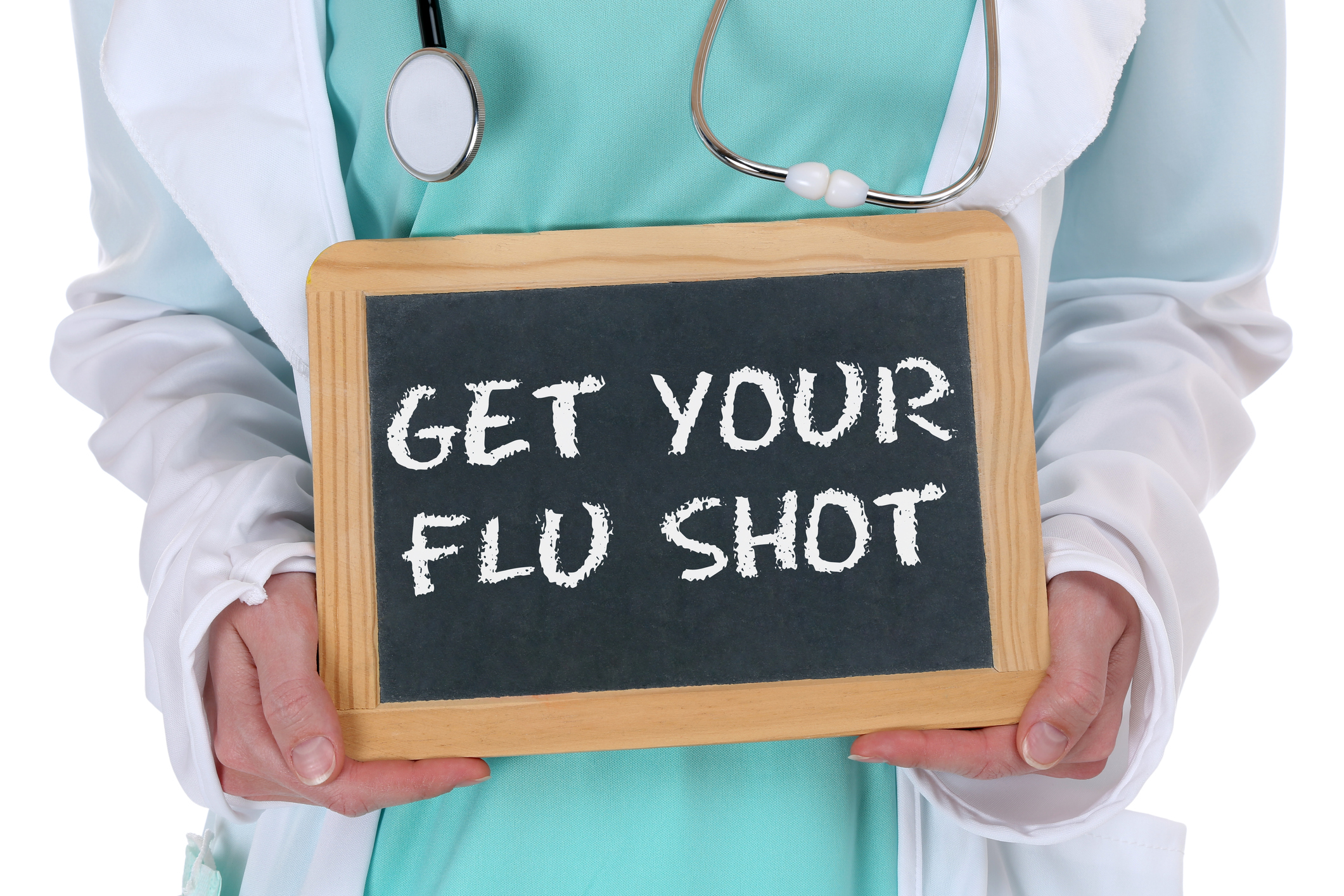
NCDHHS Encourages North Carolinians to Get Vaccinated Against Flu, COVID-19
The North Carolina Department of Health and Human Services (NCDHHS) is encouraging everyone 6-months and older to get their seasonal flu shot and COVID-19 vaccine. Vaccines are the best way to protect yourself and your loved ones from serious illness, hospitalization and long-term health complications from viruses. Both vaccines have been updated for the new flu and COVID-19 virus strains that will continue to spread this fall and winter.
Flu shots are now available; and different types of COVID-19 vaccines are available this fall to protect against the new strains of the virus during the 2024-2025 respiratory season, including the Novavax protein-based COVID-19 vaccine, which was authorized by the U.S. Food and Drug Administration for individuals 12 and older. This authorization follows recent authorizations of updated mRNA COVID-19 vaccines for individuals 6-months and older produced by Moderna and Pfizer.
"It’s important to make a plan now, at the start of the respiratory season, to protect yourself and your loved ones," said Dr. Elizabeth Cuervo Tilson, State Health Director and NCDHHS Chief Medical Officer. "We encourage everyone to talk with a health care provider about all recommended vaccines. Get vaccinated to avoid missing work and enjoy fall activities, sports and gatherings with friends and family. Getting vaccinated also provides increased protection against long term health implications of getting really sick."
The respiratory syncytial virus (RSV) also spreads in the fall and winter and can lead to severe illness in older adults, young children and those with underlying medical conditions. Nearly a third of North Carolinians are at risk for RSV. People should talk to their doctors about whether RSV protection may also be needed for them or their child.
"Routine, seasonal vaccines for flu and COVID-19 ensure individuals and families are protected each year," said Dr. Zack Moore, State Epidemiologist. "These vaccines are safe, effective and make a big difference, especially for those at a higher risk of complications — adults 65 and older, children under 5, people who are pregnant or those living with certain medical conditions like asthma, diabetes and heart disease."
Providers and pharmacies are encouraged to order flu, COVID-19 and RSV vaccines to ensure they are available for their patients and community.
Children who are insured by Medicaid or are uninsured or underinsured can get vaccines at no cost through the Vaccines for Children (VFC) program. Most health insurance plans, including Medicaid, will cover flu, COVID-19 and RSV vaccines for children and eligible adults. Free COVID-19 vaccines will also be available for those who need them at local health departments, Federally Qualified Health Centers (FQHCs) and rural health centers. Resources are available to help provide free vaccines to uninsured or underinsured adults. Individuals can:
- Text their zip code to 438829 or visit Vaccines.gov
- Call 1-800-232-0233 (TTY 1-888-720-7489)
- Contact a local health department: ncdhhs.gov/LHD
- Find a Federally Qualified Health Center (FQHC): findahealthcenter.hrsa.gov
- Reach out to a Rural Health Center
Flu, COVID-19 and RSV vaccines can be given at the same time, usually without an appointment, to help people get vaccinated quickly and easily.
Early treatment with an antiviral drug can also help prevent flu and COVID-19 infections from becoming more serious. Antiviral treatment works best if started soon after symptoms begin.
Other precautions you can take to protect against the spread of flu, COVID-19 and other viruses include:
- Staying home when you are sick, until you have been fever free for at least 24 hours
- Washing your hands frequently, preferably with soap and water
- Covering your coughs and sneezes with a tissue and then discarding the tissue promptly
Visit MySpot.nc.gov or Vaccines.gov for guidance, information and resources about flu, COVID-19 and RSV vaccines.

Learning Opportunity - Private Practice Simple Solutions: Virtual Assistants (Part one)
Private Practice Simple Solutions: Virtual Assistants (Part one)
Tuesday, October 8, 2024
10:00 AM CT/11:00 AM ET
Each eight-week Private Practice Simple Solutions learning collaborative addresses one topic area important to private practices and begins with a webinar of pre-recorded content presented by subject matter experts.
Following the kick-off webinar, an asynchronous discussion board offers weekly prompts for participants that encourage interaction with peers and questions for the experts to address. Midway through the learning collaborative, participants attend a live Q&A on the topic that will inform the direction of the discussion prompts for the remainder of the session.
Part 1 kicks off with a webinar followed by weekly asynchronous discussion prompts leading up to part 2. Topics addressed include patient engagement platforms, digital workflows for communication, and how to involve your patient community when making practice changes such as moving to value-based care or improving the revenue cycle.
Speaker

Carolynn Francavilla, MD, FOMA, DABOM, CEO, Green Mountain Partners for Health
Carolynn Francavilla, MD is Board Certified in Family Medicine and a Diplomate of the American Board of Obesity Medicine. She owns and operates Green Mountain Partners for Health and Colorado Weight Care in Denver, Colorado. Dr. Francavilla is the Chair of the AMA's Private Practice Physician Section.
Dr. Francavilla is a nationally recognized obesity expert, lecturing to clinicians on the topic obesity as well as teaching through her own platform HelpYourPatientsLoseWeight.com. She also hosts The Doctor Francavilla Show a podcast about weight and health and the founder of GLP Strong. She serves on the Obesity Medicine Association Board of Trustees and was awarded the Dr. Vernon B. Astler Award for dedicated service and support of OMA in 2017. Dr. Francavilla is an Assistant Professor at Rocky Vista University.
Reminder: NCTracks Multi-Factor Authentication Updates
In accordance with the North Carolina Identity Management (NCID) Citizen Identity Project, NCTracks is changing the User Login process and implementing Multi-Factor Authentication (MFA) updates. Please complete the following steps to update NCID profile:
These instructions are for Individual and Business users only, not Local and State Government users.
- Login to the MyNCID portal at https://myncid.nc.gov/ with your NCID Username and Password.
- You will see the Profile Information page upon successful login.
- Click on the MFA tab on your profile page.
- Click on the ADD ENROLLMENT button on the bottom right.
- A pop-up window will appear prompting you to choose an MFA method. Please note that office phone extensions are not supported.
- Follow the onscreen prompts to add your chosen MFA method.
For detailed instructions, including images of each step, refer to the NCID User Guide for MFA.
Important Note: Providers who do not currently use MFA will not be impacted at this time. MFA updates will be implemented through a phased approach. Until that time, your current login method will continue to work. However, you are being asked to update your profile to ensure a seamless transition to the new MFA method. You will receive further communication when your MFA is to be updated.
If you are an Individual or Business User who currently uses MFA, these updates will impact you on Sept. 15, 2024. Once these updates are implemented you are no longer required to access and maintain MFA using https://mfaportal.nc.gov/nctracksmfa/login.aspx. All profiles, including MFA, will be managed through https://myncid.nc.gov/ after implementation.
If you encounter issues during login or authentication, please contact the Department of Information Technology (DIT) helpdesk at 919-754-6000 or 800-722-3946 then select Option 1.
For more information and training videos, visit the NCID Citizen Identity Project | NCDIT training page.