

Study: Blood Tests Allow 30-year Estimates of Women's Cardio Risks
"This is good for patients first and foremost, but it is also important information for (manufacturers of) cholesterol lowering drugs, anti-inflammatory drugs, and lipoprotein(a)lowering drugs - the implications for therapy are broad," said study leader Dr. Paul Ridker of Brigham and Women’s Hospital in Boston.


Your Feedback Needed: Help Improve the Medicaid Clinician Experience

NCMS's partners, Carolina Complete Health (CCH) and Carolina Complete Health Network (CCHN) will host their 2nd Annual Medicaid Managed Care Town Hall at the 2024 CPP Annual Meeting during NCMS LEAD Conference in November. In preparation for that session, we want to hear from clinicians across North Carolina who provide care to Medicaid enrollees.
Please share your experiences, challenges and successes, suggestions, and questions to help inform future programs, resources, opportunities, and collaborations that will improve health outcomes and enhance the overall care experience for Medicaid clinicians and enrollees.
All Medicaid clinicians are invited to complete this form, regardless of contract status with any of the PHPs.
Provide your feedback here.

Study: No Increased Risk of Mental Health Issues with Semaglutide Use
Taking the weight loss medication semaglutide did not increase the risk of depressive symptoms, suicidal thoughts, or suicidal behavior in persons without known major mental health disorders, according to a new study led by researchers from the Perelman School of Medicine at the University of Pennsylvania published in JAMA Internal Medicine.
Both the Food and Drug Administration (FDA) and the European Medicines Agency are actively monitoring the psychiatric safety of semaglutide and similar medications after post-marketing surveillance reports of depression, suicidal thoughts (ideation), and suicidal behavior in patients taking the drugs for the management of type 2 diabetes or obesity.
Semaglutide has emerged as a significant advancement in the field of weight management. Initially developed as a treatment for type 2 diabetes, the drug gained widespread attention after clinical trials showed it reduced baseline body weight by approximately 10–15%. Weekly injectable medications like semaglutide have become a popular option for health care providers to prescribe for patients.
As many as 5 million Americans were prescribed semaglutide in 2023, with nearly four in ten taking it for weight management.
The new study, led by Thomas Wadden, Ph.D., a professor of Psychology in Psychiatry and the former director of Penn's Center for Weight and Eating Disorders, analyzed data from over 3,500 participants across four major clinical trials. Researchers examined data from the Semaglutide Treatment Effect in People with obesity (STEP) trials—STEP 1, 2, 3, and 5. These studies were crucial in gaining approval from the FDA to use semaglutide 2.4 mg for obesity.
"The STEP trials provide strong evidence that semaglutide 2.4 mg reduces body weight and improves numerous health complications associated with obesity. Our new analyses provide assurance that the medication, when taken by individuals who are free of significant mental health concerns, does not increase the risk of depression, suicidal thoughts, or suicidal behavior," Wadden said.
He noted, however, that further study is needed of the psychiatric safety of semaglutide 2.4 mg when used by persons with current major depressive disorder, other serious mental illness (such as schizophrenia), or a history of suicide attempt. Individuals with such conditions were not included in the STEP trials.
The study examined changes in depressive symptoms using the Patient Health Questionnaire-9 (PHQ-9) and assessed suicidal ideation and behavior using the Columbia Suicide Severity Rating Scale.
Across the 68-week STEP 1–3 trials, semaglutide-treated participants, as compared to those who received placebo, did not show an increased risk of developing moderately severe symptoms of depression or of suicidal thoughts or behavior. Similar findings were observed in the 104-week STEP 5 study.
Examining all four STEP trials, researchers found that 1% or fewer of participants reported suicidal ideation or behavior during treatment, with no differences between semaglutide 2.4 mg and placebo.
Moreover, only 2.8% of the semaglutide-treated participants, versus 4.1% of those who received placebo, reported levels of depression at some point during treatment that required evaluation by a mental health professional. These rates are consistent with the risk of significant depression in the general population.
"It is certainly possible that individuals with overweight or obesity who take semaglutide may experience depressive symptoms or suicidal ideation or behavior, but the data suggest that persons not taking semaglutide—in the placebo group in this study—are equally likely to experience these conditions," said Gregory Brown, Ph.D., a study co-author and Director of the Penn Center for the Prevention of Suicide at the Perelman School of Medicine.
Wadden and Brown noted that their study's findings for semaglutide are consistent with results of the FDA's most recent analysis of post-marketing surveillance data for this class of medications which did not find "evidence that use of these medicines causes suicidal thoughts or actions." [source]

Register Now! 2024 National Healthy Aging Symposium
National Healthy Aging Symposium: Innovation Across the Age-Friendly Ecosystem
Thursday, September 26
1:00-5:00 p.m. ET
The Office of Disease Prevention and Health Promotion and Trust for America’s Health will host the National Healthy Aging Symposium: Innovation Across the Age-Friendly Ecosystem.
The Symposium will explore successful innovations that have been developed to improve older adult health and well-being and will build upon the successful and ongoing collaborations between aging services and public health that began at the first National Healthy Aging Summit and Workshop in 2015.
Policy makers, researchers, and professionals from across sectors will share their perspectives on important topics related to healthy aging through a series of panels covering topics like caregiving, social engagement, housing, transportation, brain health, and workforce.


NC Medicaid Offering Free Tailored Care Management Service
In July, NCDHHS launched Tailored Plans, a new kind of NC Medicaid Managed Care health plan for approximately 210,000 Medicaid beneficiaries with a serious mental illness, serious emotional disturbance, severe substance use disorder, intellectual/developmental disability or traumatic brain injury.
Tailored Care Management is a free service that pairs members with an expert to help with their healthcare needs, substance use disorder treatment and recovery services, mental well-being and other goals like finding a job.
With Tailored Care Management, eligible members can get personalized help from a Tailored Care Manager who guides them through the healthcare system or assists with basic needs like food and transportation. Visit Tailored Care Management toolkit in English and Spanish to find presentations, flyers, social media graphics, email templates, answers to frequently asked questions and more.
For more information about Tailored Plans, go to the NCDHHS website.

Investment Expands NC Child Treatment Program and Strengthen Behavioral Health Services for Children
The North Carolina Department of Health and Human Services announced a $4.5 million investment in the NC Child Treatment Program, a statewide initiative to train mental health providers in trauma-informed treatment models for children with complex behavioral health needs. NCDHHS is investing to expand access to proven behavioral health treatments so young people and their families receive the support they need sooner, and in the communities where they live and learn.
The investment is part of the department’s ongoing efforts to strengthen the child behavioral health workforce and build a continuum of services to improve outcomes for children and families.
"As we work to transform the child behavioral health system in North Carolina, we’re not only investing to increase access to services but to improve the quality of treatment available to children and families," said NC Health and Human Services Secretary Kody H. Kinsley. "We’re training more clinicians statewide to provide effective, evidence-based treatment with high standards so that children have access to the best possible care in their communities."
The NC Child Treatment Program trains mental health professionals and community agencies in a range of evidence-based treatment models shown to prevent the escalation of behavioral health symptoms by providing effective, timely and trauma-informed intervention. Demonstrated outcomes of treatment include a reduction in symptoms related to depression, suicidal thoughts, post-traumatic stress and other behavioral challenges.
In the first year of this investment, the number of clinicians and community agencies trained in existing and new clinical models through the program will increase by 96%.
"We have amazing caregivers and community professionals in our state who are committed to supporting our youth," said NCDHHS Director of Child and Family Strategy Hanaleah Levy Hoberman. "This is especially important when a young person experiences a behavioral health challenge that may otherwise prevent them from succeeding at home, in school or in their community. That’s why we’re investing to expand treatments that work with families and schools along with the child."
The NC Child Treatment Program is part of the Center for Child and Family Health (CCFH), which specializes in treating and preventing child traumatic stress and is a key partner in NCDHHS’ work to expand access to trauma-informed services. The department is contracting with CCFH to introduce new models into the program’s training curriculum and to extend the program to rural and underserved communities for more equitable access to services across the state.
"The North Carolina Child Treatment Program has been at the heart of the work of CCFH since 2014," said Robert Murphy, Ph.D., Executive Director of CCFH. "The investment of $4.5 million from NCDHHS will ensure that many more children and families, especially children living in rural areas of our state, will have access to cutting-edge treatments. Effectively transforming the lives of children and families served by the NC CTP trained clinicians."
NCDHHS’ investment focus includes the following models, in addition to other select evidence-based treatments effective for children and families:
- Trauma-Focused Cognitive Behavioral Therapy (TF-CBT) – A trauma-informed intervention for youth experiencing symptoms or behavioral challenges related to trauma, with active involvement from the child’s caregiver(s) to support long-term family healing.
- Cognitive Behavioral Interview for Trauma in Schools (CBITS) – A school-based service to address symptoms of traumatic stress for elementary through high school students.
- Cognitive Processing Therapy (CPT) – A tailored treatment for teenagers and caregivers navigating the impact of trauma and post-traumatic stress, often provided in an outpatient setting to help children remain at home or return home quickly.
- Problematic Sexual Behavior Cognitive Behavioral Therapy (PSB-CBT) – Group or family therapy that addresses a child’s difficulty recognizing socially acceptable boundaries for physical or sexual behavior. Most participants are successfully treated through outpatient services, avoiding the need for out-of-home placement.
In addition to training, CCFH will use the funding to provide enhanced consultation for agencies and clinicians to ensure fidelity to evidence-based models. The organization also offers implementation guidance on best practices for evidence-based treatments, helping ensure providers can maintain high quality of practice and services.
NCDHHS’ investment in the NC Child Treatment Program is part of a broader commitment to build an integrated behavioral health system for children in North Carolina. Of the historic $835 million allocated for behavioral health in the 2023 state budget, $80 million is dedicated to improving outcomes for children with complex behavioral health needs and their families. The department continues to invest in a spectrum of services — in homes, schools, communities and residential settings — that expand equitable access to high-quality, trauma-informed, family-centered care.
To help families and care managers find and access behavioral health services, CCFH maintains a statewide roster of NC Child Treatment Program providers. To access the roster and learn more about the program’s therapy models, visit ncchildtreatmentprogram.org.

Happy Birthday to Our Members Celebrating This Month!
Grab your party hats and noisemakers and let’s celebrate!
Sandra M. Abda, MD
James C. Abell, MD
Nicole M. Abello, DO
Patricia L. Adams, MD
Samuel B. Adkins, III, MD
Tehmina Adnan, MD
Vijay K. Agarwal, MD
Robert N. Agnello, DO
Mark D. Aldous, MD
Yousif Z. Alkadhi, MD
John R. Allbert, MD
Angela M. Allen, MD
William G. Allen, MD
Arghavan Almony, MD
Shehabaldin M. H. A. Alqalyoobi, MD
Joseph M. Alvarez, MD
Yashika Amin, MD
Kenneth A. Anderson, Jr., PA-C
George C. Andrinopoulos, MD
Hans C. Arora, MD, PhD
Kavita S. Arora, MD
Pradeep S. Arumugham, MD
Philip E. Ashburn, MD
Sarah Elizabeth W. Atkins, MD, MPH, FAAP
J. Spencer Atwater, Jr., MD
Frederick D. Austin, III, MD
Kirsten H. Avery, MD
Fadi S. Azer, MD
Rocky E. Bacelieri, MD
George T. Bailey, MD
Kristin D. Baker, MD
Matthew F. Baldwin, MD
Bailey S. Balentine, DO
Ricardo G. Baler, MD
A. Rodman Barber, MD
Brad P. Barnes, MD
Sydney F. C. Barnwell, MD
Caroline M. Barrett, MD
Rickey Baskett, Jr., MD
Zane K. Basrawala, MD
Charles R. Beasley, MD
Eric W. Beck, MD
Aileen Beckham, MD
Keith G. Begelman, MD
Carol R. Bell, MD
William B. Bell, MD
Lindsey M. Bellamy, DO
Larry F. Berman, MD
J. Lorraine Birdsong, MD
F. Alice Bishopric, MD
Cary F. Bizzell, MD
John A. Black, MD
Cameron T. Blackman, MD
Robert G. Blair, Jr., MD
Wendy S. Blair, PA-C
Kenneth R. Blanton, PA
Timothy A. Bleckley, MD
Alexander V. Boiwka, MD
Karl E. Bolstad, MD
Kenneth R. Bonfield, MD
Sherif B. Botros, MD
John E. Bourgeois, MD
Michael L. Bowen, MD
Jack W. Bowling, Jr., MD
Patrick Box, MD
Gray T. Boyette, MD
Stephen M. Bracewell, MD
Heather C. Braithwaite, MD
Chadwick R. Brasington, MD
Samantha L. Breen, DO
David C. Brendle, DO
Anthony C. Breuer, MD
Brian K. Brighton, MD
Dahari D. Brooks, MD
David A. Browder, MD
William E. Brown, MD, FACOG
Jon M. Bruce, MD, FACS, FASMBS
Clayton H. Bryan, MD
W. Blair Bryan, MD
Bethany L. Buie, PA-C
Rebecca A. Burbridge, MD
Jennie L. Byrne, PhD, MD, DFAPA
Arthur M. Calabretta, MD
David L. Call, MD
Donald B. Campbell, MD
Grant L. Campbell, MD
John K. Campbell, MD, PT
Antonio M. Carbonell, MD
Kelly A. Carney, MD
Marjorie B. Carr, MD
Sarah E. Carr, MD
Philips J. Carter, MD
L. Franklin Cashwell, Jr., MD
Vincent P. Castellano, MD
Brian J. Caveney, MD, JD, MPH
Stephen G. Cecil, MD
Rajat Chander, MD
Joe T. Chandler, MD
Geoffrey S. Chapman, MD
Timothy L. Chase, MD
Alexander W. Chasnis, MD
Priyank Chaudhary, MD
Christopher H. Chay, MD
Paul R. Chelminski, MD, MPH
Tong Y. Chen, MD
Sendhil K. Cheran, MD
Charles O. Chrysler, MD
Octavio Cieza, MD
Christine M. Ciszek, PA-C
Daniel L. Clarke-Pearson, MD, FACOG, FACS
Elizabeth B. Cleland-Roberts, MD
Michael G. Cloutier, MD
Edmund J. Cody, MD
Jason A. Coffey, MD
Wendy K. Coin, MD
F. Farrell Collins, Jr., MD, FACP
R. Andrew Collins, MD
Lawrence E. Colvin, Jr., PA-C
Jason T. Cook, MD
Lyndsay Cooper
John D. Corey, MD
Francis C. Corrigan, MD
Robert M. Cortina, MD
Billie F. Cosgrove, MD
Ronnie L. Cox, MD
Paul E. Craft, PA-C
Bert J. Crain, MD
James D. Crandall, MD
C. Marston Crawford, MD, FAAP
Dorwyn W. Croom, II, MD
Joseph Cruz, DO
Deepak Cuddapah, MD
Earl Cummings, PA
Ravi R. Dalal, MD
Kimberly A. Dao, MD
James L. Darsie, MD
Ivan David, MD
Vartan A. Davidian, Jr., MD
Dwight D. Davidson, MD
John E. Davis, MD
John S. Davis, MD
Leon D. Davis, MD
Jordan N. De Lay, PA-C
John R. Deans, MD
Andrew R. Deibler, MD
Geoffrey D. DeLeary, MD
Rebecca A. Demorest, MD
Steven H. Dennis, MD
Douglas H. DeSantis, MD
Donald G. Detweiler, MD
James E. DeVente, MD
Bruce M. Distell, MD
Emily A. Diznoff, MD
Katherine D'Orsi Williams, PA-C
Laura B. M. Dosier, MD
Arthur E. Douglas, Jr., MD
Denise E. Duff, MD
Christopher J. Dunatov, MD
David N. DuPuy, MD
Cecil T. Durham, Jr., MD
John R. Dykers, Jr., MD
Thomas S. Dziedzic, MD
James M. Edwards, MD
Palmer Edwards, MD, DFAPA
Yasser J. El-Abd, MD
John N. Ellis, MD
Eric T. Emerson, MD, FACS
James J. Epperly, Jr., DO
Rachel A. Erickson, DO
Darlene M. Esper, MD
Kelly R. Esposito, MD
Carrie A. Fales, MD
Peter F. Farmer, MD
Victoria O. Fashakin, MD
Carolina E. Fasola, MD
Gary J. Fischer, MD
Duane D. Fitch, MD
David P. Fitzgerald, MD
Henry A. Fleishman, MD
Stephen B. Fleishman, MD
Howard Floch, MD
Andrea C. Foiles, MD
Katie E. Fontaine, PA-C
Jonathan L. Forbes, DO
Mark D. Foster, MD
Vickie Fowler, MD
James F. Fraser, MD
Richard E. Frazier, MD
S. Mitchell Freedman, MD, FAAN
Mala A. Freeman-Kwaku, MD
Kevin M. French, MD
R. Everett Frerichs, MD, FAAP
Scott M. Frieary, DO
Michael D. Fried, MD
Douglas I. Friedman, MD
Jerry K. Froedge, MD, FAAP
Robert E. Gaddy, Jr., MD
Manasi Gahlot, MD
Judson P. Garbarino, MD
Ryan M. Garcia, MD
Garth J. Garramone, DO
Dana L. Garrett, MD
Debra J. Gazzuolo, MD
Peter A. Gentling, MD
John B. Gentry, MD
Zachariah Gerger, MD
Manisha Ghimire, MD
James S. Gibbs, MD
Brett J. Gilbert, MD
Brent R. Gill, MD
Brooks W. Gilmore, MD
Christopher A. Gilmore, MD
Thomas M. Ginn, MD
David L. Glenn, Jr., MD
Tapan N. Godiwala, MD
Raj Gondalia, MD
Margaret E. Goodwin, MD, FAAP
Lakshmi Gordon, MD
Raghavender Gotur, MD
Arthur L. Graff, MD
R. Eugene Granger, MD
Kelsey R. Graven, DO
Taylor W. Green, PA-C
Michael W. Grier, MD
Daniel Gutman, MD
Joseph F. Hakas, Jr., MD, FACC
James L. Hamby, MD
Crystal B. Hammons, DO
Emily A. Hannon, MD
Harriet N. Hansell, MD
Marie N. Hardy, MD, FAAD
Brent T. Harkrider, MD
Stewart J. Harley, MD
Revella B. Harmon, MD, MPH
John M. Harrelson, MD
James W. Harris, Jr., MD
Amanda R. Hart, PA
Jessica L. Hart, MD, FAAP
Lisa M. Hartman, MD
John F. Hartness, Jr., MD
Christopher C. Hasty, MD
W. Benjamin Hatcher, MD
Henry C. Hawthorne, Jr., MD
Renee P. Haynesworth, MD
Ansley M. Heath, PA-C
Nathan W. Heath, PA
Samuel A. Heathcote, Sr., MD
Joel A. Hedlund, MD
James F. Hedrick, MD
Mark R. Hedrick, MD
William W. Hedrick, MD
Peter W. Heetderks, MD
Timothy J. Heffron, MD
Melissa A. Helman, MD
Martin M. Henegar, MD
John T. Henley, Jr., MD
John H. Herring, MD
William A. Herring, Jr., MD
Lloyd M. Higgins, MD
Lacy C. Hobgood, MD, FACP
Lauren M. Hodges, MD
Edward W. Hoehn-Saric, MD
James B. Hoer, MD
Suneya G. Hogarty, DO
Chad A. Holder, MD
John C. Holder, MD
W. Claude Hollingsworth, MD
James H. Holmes, IV, MD
Henry D. Holt, MD
Thomas E. Hooper, MD, FACP
Marbry B. Hopkins, III, MD
Kirk A. Howard, MD
Jennifer G. Hudson, MD
Joshua R. Hughes, MD
Kaissar S. Ibrahim, MD
Adam A. Ingraffea, MD
Alexandra B. Inyang, MD
Todd A. Irwin, MD
Latonja M. Ivery, MD
Peter W. Jaber, MD
Ashwin Jain, MD
Andrew M. Jakubowicz, MD
Arvind N. Jariwala, MD
Wayne T. Jarman, MD, FACS
Stanleigh E. Jenkins, Jr., MD
Charles S. Jere, MD
Harriman H. Jett, MD
Donald C. Johnson, MD
John H. Johnson, MD
Kaddijatou S. Johnson, PA-C
Rachel M. Johnson, MD
William M. Johnstone, Jr., MD, JD, MBA
Robert H. Johr, MD
Charles W. Jones, MD
Mary E. Jones, MD
George L. Jordan, III, DO
Cristian A. Jurau, MD
J. Marc Kadyk, MD
Lisa M. Kafer, MD, FAAP
Rajdeep S. Kanwar, MD
Ulf L. Karlsson, MD
Mark A. Kasari, MD
Deepakta Kaur, DO
Hailu M. Kebede, PA-C
Katherine Keck, MD
J. W. Keeling, MD
Claire A. Kelleher, MD
Siva S. Ketha, MD
Faisal M. Khan, MD
Saad S. Khan, MD
Atul Khanna, MD
Jefferson K. Kilpatrick, MD
Paul K. Kim, MD
Brandon S. Kinneman, PA-C
Rex A. Kiteley, II, MD
F. A. Koontz, MD
Lawrence D. Krabill, MD
Alex R. Kroft, PA-C
Daniel P. Krontz, MD
Eric F. Kuehn, MD
Gregory M. Kurkis, MD
Adam J. Lake, MD
Andrew S. Lamb, MD
Christian J. Lambertsen, Jr., MD
Charles G. Lampley, IV, MD
John A. Lang, III, MD
Marianna G. Law, MD
Richard M. Leighton, DO
Evan M. Leitz, MD
Melissa L. Lemnah, PA-C
Philip G. Leone, MD
Peter L. Leuchtmann, MD
Felicia Levine, PA-C
Andrew J. Lewis, Jr., MD
Clifford T. Lewis, MD
Richard S. Lewis, MD
Stacey Lindo-Ukata, MD
Frederick C. N. Littleton, Jr., MD
Tyler P. Litton, MD
Michael S. Loboda, MD
Robert J. Logel, MD
John A. Lowery, MD
Chancy G. Lucas, MD
Wayne B. Lucas, MD
George B. Lutman, MD
Surendrapal S. Mac, MD
Katherine T. MacDonald, MD
Murthy V. S. Madduri, MD
Christopher J. Magryta, MD
Michelle M. Maher, MD
Nicholas H. Mai, MD
Rachel H. Main, PA-C
Lindsay R. H. Maitland, MD, FAAP
Julie E. Manly, MD
Charles H. Mann, MD
Courtney H. Mann, MD
Theodore B. Manny, Jr., MD
Kevin K. Manocha, MD
Lisa I. Mansur, MD
James T. Marino, MD
Anne T. Martinelli, MD
Sameer Mathur, MD
Curtis J. Matthews, Jr., MD
Eric E. Maur, MD
Taylor E. Maxwell, PA-C
Sharidan J. Maxwell Hill, MD
C. Douglas Maynard, MD
Ryan K. McBeth, MD
Robert B. McBride, Jr., MD
Ryan S. McComb, MD
Elizabeth A. McCool, PA-C
W. Jason McDaniel, Jr., MD
Christopher N. McDaniels, MD
Kara A. M. McElligott Park, MD, MPH
Michael L. McGehee, MD
L. Scott McGinnis, III, MD
Erin K. McGloin Shanahan, MD
Patrick L. McKenzie, MD
Ryan L. McKimmie, MD
Tracey M. McKinzie, PA-C, MPAS
C. Scott McLanahan, MD
Christopher W. McQuinn, MD
Thomas J. Meakem, III, MD
Miriam Medero-Eng, MD
William D. Medina, MD
Bettina B. Meekins, MD
Paul D. Mehlhop, MD
Todd D. Meisinger, MD
Radha V. Menon, MD
Darlyne Menscer, MD
Jay W. Meredith, MD
Margaret C. Merrick, MD, FAAP
Michael S. Merrill, MD
David K. Mertz, MD, FAAP
Keri D. Metcalf, MD
Mark R. Mikles, MD
Erik J. Miles, MD
Henry S. Miller, Jr., MD
Farhaan R. Mir, MD
Sanjib P. Mohanty, MD
Daniel J. Mollin, Jr., MD
William M. Monroe, MD
Kelley O. Montoya, MD
George H. Moore, Jr., MD
Richard S. Moore, Jr., MD
Frank H. Moretz, MD
Lynne R. Morgan, MD
Aundrin Moss
Daniel J. Motuz, MD
Joseph P. Mullen, III, MD
Kimberly C. Munro, MD
Richard S. Myers, MD
Larry A. Napolitano, Jr., MD
Nirmala Narasimha, MD
John A. Narron, III, MD
Adnan Nasir, MD
Joe Navejar, IV, DO
John W. Neal, VI, MD
Shelileah R. Newman, MD
William H. Newman, MD
Phillip N. Nguyen, MD
Julia M. Niemi, PA-C
Gary S. Niess, MD, FACC
Ronald A. Noe, DO
Michael E. Norins, MD
Michelle R. Nzuna, DO
Lyndsay A. Oancea, MD
Joseph G. O'Brien, MD
Shelly B. Odom, Jr., MD
Laura N. Okolie, PA-C
Arnold C. Olegario, MD
Fred W. Ortmann, IV, MD
Barry S. Ostrow, MD
William J. Panzo, PA-C
Jonathan M. Parish, MD
James A. Partridge, MD
Barry R. Pate, MD
Anooj D. Patel, MD
Neha Patel, DO
Niyati S. Patel, DO
Shreyang H. Patel, MD
Sunny H. Patel, MD
Swetang M. Patel, MD
Tirth V. Patel, MD
Marissa Patterson
Laura G. Patwa, MD
Nicholas P. Pediaditakis, MD
Sara Perez, PA-C
Jennifer A. Perkins, PA-C
John F. Perrin, MD, FACEP
Joseph W. Ponzi, MD
Karla M. Pou, MD
Dustin C. Powell, MD
LeVonne G. Powell-Tillman, MD
James P. Pressly, MD
Mary E. Price, MD
Robert E. Price, Jr., MD
Camilla A. Proctor, MD
George H. Provosty, MD
Jeremy W. Pyle, MD, FACS
Kiera A. Quinn, PA-C
Amy H. Radzom, DO
Florian J. Ragaz, MD
Robert J. Raible, Jr., MD
Sujatha Raman, MD
Lakshman Rao, MD
Heather R. Ratcliffe, PA-C
Elizabeth M. Rattle, PA-C
Christopher Z. Rayala, MD
Elizabeth C. Reichard, MD
Patricia A. Reichert, DO
Evan R. Restelli, DO
Evan J. Rey, DO
Janelle A. Rhyne, MD, MACP
Alexandra C. Rice, MD
Cynthia W. Richards, MD
David J. Rickard, DO
Stephanie L. Riggins, MD
Syed A. R. Rizvi, MD
John P. Roberson, MD
Ketarah C. Robinson, MD
Timothy M. Robinson, MD
Jim A. Rogers, MD
A. Silvia Ross, MD
Robert E. Ross, Jr., MD
Stephen E. Rostan, MD
Richard E. Roux, MD
Marie S. Rowe, MD, FACOG
Eugene F. Russell, II, MD
Steven M. Russo, DO
Darryl A. Sandidge, PA-C
Justin D. Sargent, DO
Sarah Ann M. Saunders, PA-C
Charles J. Sawyer, III, MD
John R. Scagnelli, MD
Brian P. Scannell, MD
Julie H. Schopps, MD
Joseph J. Schreiber, MD
Jodi Schwab, MD
John L. Scott, MD
Brent W. Seifert, MD
Frank T. Shafer, MD
Dhirenkumar N. Shah, MD, FACC
Erika R. Shah, MD
Priyavadan M. Shah, MD, FACC
Cynthia Shahan, MD
Azra P. Shaikh, MD
Deepti Sharma, MD
Robert A. Sharpe, MD
Michael R. Shaughnessy, MD
Douglas D. Sheets, MD, FACOG
Scott B. Shepard, PA-C
M. Trevor Shick, MD
William R. Shipley, MD
Edwin H. Shoaf, Jr., MD
Christopher J. Shuman, MD
Jason A. Silva, MD
Ashima Singal, MD
Nadine B. Skinner, MD, FAAFP
Collin D. Smith, DO
E. Travis Smith, Jr., MD
Ginger E. Smith, PA-C
Lyman S. Smith, MD
Lynn K. Smith, MD
Rebecca J. Smith, DO
Stephen R. Smith, PA-C
Alexander J. Snyder, MD
John M. Solic, MD
J. Kim Song, MD
James R. Spears, MD
Thomas R. Spruill, MD
George Stamataros, DO
Malcolm T. Stark, Jr., MD
Eric N. Stashko, MD
Jeffrey P. Stein, MD
Henry L. Stephenson, Jr., MD
Shane B. Sterling, MD
E. Walker Stevens, Jr., MD
P. Lindsay Stevenson, MD
Robert I. Steward, MD
Todd I. Stone, PA-C
Phillip E. Stover, MD
Srikar R. Sudini, MD
Thomas E. Sumner, MD
Royce R. Syracuse, MD
John P. Taliaferro, MD
Knox R. Tate, MD
Julian R. Taylor, MD
Christopher L. Tebbit, MD
Michael R. Tedrow, DO
Charles H. Tegeler, IV, MD
Fredrick A. Teixeira, MD
Charles C. Thomas, II, MD, FACRO
Megan R. Thomas, MD
Willard R. Thompson, Jr., MD
Roger Z. Thurman, MD
Karen G. Todd, MD
Stuart K. Todd, MD
David E. D. Tolentino, DO, FACOI
S. Susan Torres, MD
Erron J. Towns, MD, FAAP
Brent A. Townsend, MD
Victoria Trapanotto, DO
G. Earl Trevathan, Jr.
Michael D. Tripp, MD
Andre K. S. Tse, MD
Theodore Tsomides, MD, PhD
Rita M. Tucker, MD
Rosemary H. Tulloh, MD
Chad A. Turner, PA-C
Daniel R. van Rooyen
Indira M. Varia, MD
Alison D. Vasan, MD
Allin C. Vesa, MD
Carrie H. Vice, MD
Sean P. Wagner, MD
Earl W. Walker, Jr., MD
Karen J. Walter, MD, FAAP
Jeffrey T. Waltz, MD
Walter J. Wardell, MD
Craig A. Warner, MD
Susan C. Watson, MD
R. Randolph Weast, MD
Richard T. Weisenburger, DO
Steven T. Welch, MD
Adam H. Wells, MD
John S. Welsh, Jr., MD
Sean S. Wentworth, MD
Aaron A. Westphal, MD
Joseph D. Whisnant, Jr., MD
Shea T. Whittaker, PA-C
Grace K. Wilcox, DO
David M. Williams, III, MD
Johnathan D. Williams, MD
Joseph D. Williams, DO
Meghan B. Williams, MD
Robert C. Williams, Jr., MD, FACS
Rufus D. Williams, Jr., MPAS, PA-C
Linda L. Willis, MD
Julian D. Willoughby, MD
John E. Wise, MD
Joanna B. Wisotsky, PA-C
Kurt P. Wohlrab, MD
Karen E. Wood, MD
Warden L. Woodard, III, MD
LaToya N. Woods, DO
Hannah E. Woriax, MD
Michael A. Worobel, DO
Andrew C. Wu, MD
Robert T. Wyker, MD
Amber C. Yarrison, PA-C
Kimberly B. Yates, MD
Zahra H. Younes, MD
Sarah W. Young, MD
Roland M. Zahn, MD
William M. Zban, MD, FACEP
Julia Zhu, PA-C
Eugenia F. Zimmerman, MD
Robert E. Zipf, Jr., MD

NCMS Project VBOT Celebrates Growing Impact in Rural Areas, Gains Treatment Partners, Gathers Support from NC Lawmakers Tillis and Murphy
Sen. Thom Tillis, Congressman Greg Murphy show support for Project VBOT
Triad Behavioral Resources, The Recovery Platform, iPill, OpiAID, Select Lab Partners, and Nexalin all join as VBOT Treatment Partners
The North Carolina Medical Society developed Project VBOT was showcased Wednesday at a meeting that brought together leaders from the world of technology, healthcare, law enforcement, and NC government. NCMS Vice President of Solutions Franklin Walker was on hand to talk about how the Virtual-Based Opioid Treatment (VBOT) program can help communities fight the opioid crisis.
It was a chance to also introduce the VBOT Treatment Partners

Project VBOT is supported by US Senator Thom Tillis and NCMS member Congressman Greg Murphy. Of the roundtable discussion, Congressman Murphy said:
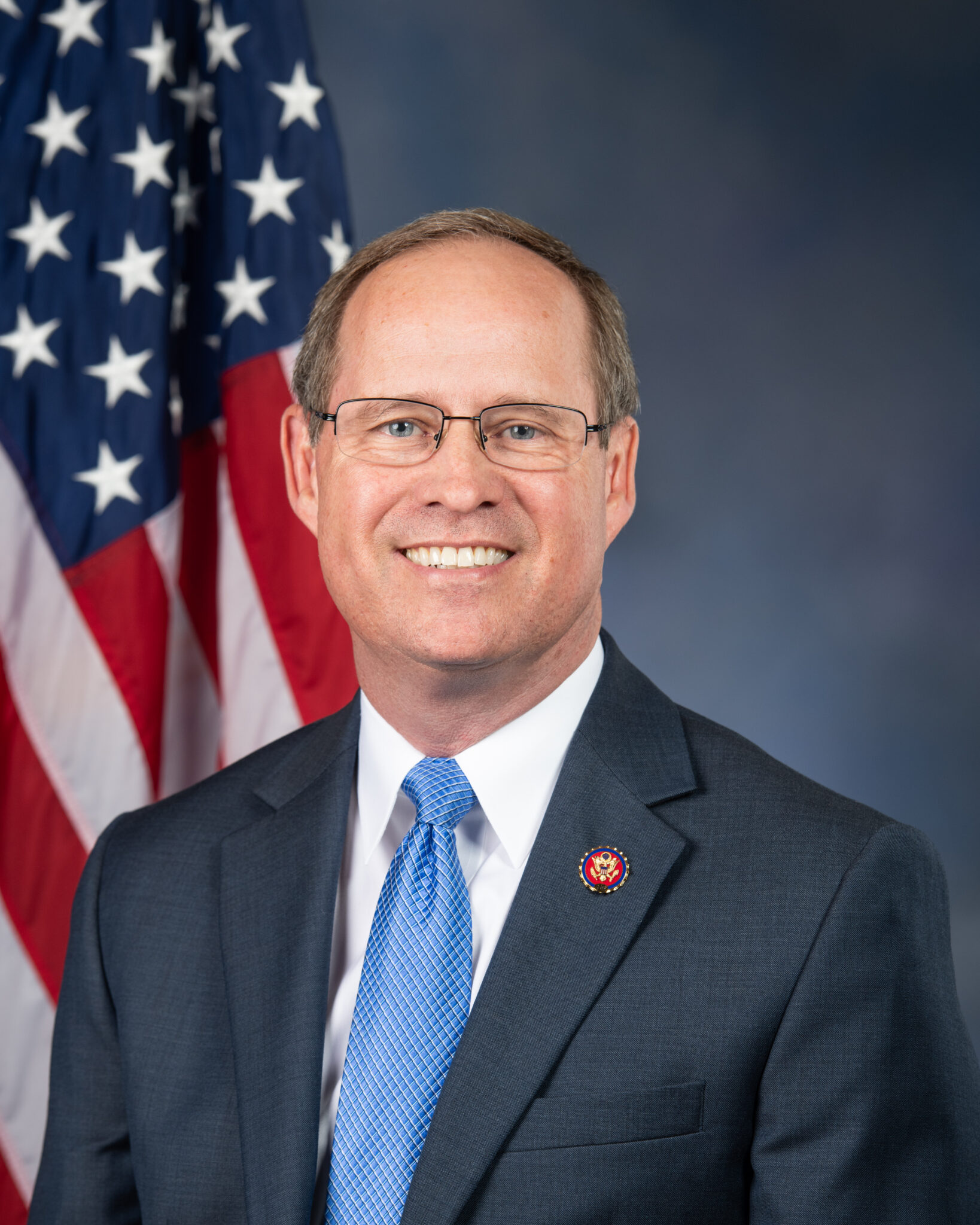
"I'm grateful to have had the opportunity to discuss the devastating impact of the opioid crisis and strategies to protect our communities here in Eastern North Carolina," said Congressman Greg Murphy, M.D. "In 2023, 112,000 fatal overdoses occurred in America, and fueling this crisis is the flow of synthetic opioids into our country. These powerful and dangerous drugs are coming from China and flowing into our country through our southern border. We must make sure there are resources available to help those with addiction, and we cripple the ability of illicit drug manufacturers and cartels from bringing it into our country. I appreciate the leadership of Carteret Health Care in tackling this issue and providing a blueprint for other health care providers to replicate."
"Our coalition, Breaking Barriers, is committed to helping those struggling with opioid use disorder overcome addiction by providing a transformational approach to treatment – a virtual-based treatment model," said Pete Gratale, Chairman of Breaking Barriers and CEO of The Recovery Platform. "We are so thankful for our partners across North Carolina who have helped bring this life-saving treatment model to struggling families, and we look to expand these efforts and initiatives like the Carteret County PORT Program and their amazing results. We continue to be especially grateful to Dr. Murphy, who has worked tirelessly especially for those in America’s veterans community, for his commitment to ensuring access to treatment."
"North Carolina’s veterans, many of whom live in rural communities across our state, simply struggle to access care," said Franklin Walker, VP of the North Carolina Medical Society Foundation. "New virtual treatment options are now available in these communities, following successful pilots conducted with the North Carolina Medical Society Foundation. Dr. Murphy, a long-time member of the North Carolina Medical Society, leads on the VA Committee to help drive new treatment options and expand treatment access for our veterans – his leadership is absolutely fundamental to ensuring America’s heroes receive the care they deserve."
"Keeping Carteret County families safe starts with helping those struggling with addiction," said Sheriff Asa Buck, Carteret County. "We are excited to utilize virtual treatment models offered through Project VBOT as a tool to help support those in the criminal justice system return to their communities, on a pathway to recovery – a truly transformational approach."
The event was also covered by WCTI news. Click on the image below to see.

Here is a list of the participants:


Walker has been working on Project VBOT and other programs from the NCMS for years and says "The North Carolina Medical Society takes its commitment to the health of North Carolinians very seriously. This is an additional way we continue our work across the state."
To read more about Project VBOT click here.

2024-2025 Flu Vaccine Recommendation

CDC recommends everyone 6 months of age and older, with rare exceptions, receive an updated 2024-2025 flu vaccine to reduce the risk of influenza and its potentially serious complications this fall and winter. CDC encourages providers to begin their influenza vaccination planning efforts now and to vaccinate patients as indicated once 2024-2025 influenza vaccines become available.
Most people need only one dose of the flu vaccine each season. While CDC recommends flu vaccination as long as influenza viruses are circulating, September and October remain the best times for most people to get vaccinated. Flu vaccination in July and August is not recommended for most people, but there are several considerations regarding vaccination during those months for specific groups:
- Pregnant people who are in their third trimester can get a flu vaccine in July or August to protect their babies from flu after birth, when they are too young to get vaccinated.
- Children who need two doses of the flu vaccine should get their first dose of vaccine as soon as it becomes available. The second dose should be given at least four weeks after the first.
- Vaccination in July or August can be considered for children who have health care visits during those months if there might not be another opportunity to vaccinate them.
- For adults (especially those 65 years old and older) and pregnant people in the first and second trimester, vaccination in July and August should be avoided unless it won’t be possible to vaccinate in September or October.
Updated 2024-2025 flu vaccines will all be trivalent and will protect against an H1N1, H3N2 and a B/Victoria lineage virus. The composition of this season’s vaccine compared to last has been updated with a new influenza A(H3N2) virus.
For more information on updated COVID-19 vaccines visit: Coronavirus Disease 2019 (COVID-19) | CDC. For more information on updated flu vaccines visit: Seasonal Flu Vaccines | CDC.
The following statement is attributable to CDC Director Dr. Mandy Cohen:
“Our top recommendation for protecting yourself and your loved ones from respiratory illness is to get vaccinated,” said Mandy Cohen, M.D., M.P.H. “Make a plan now for you and your family to get both updated flu and COVID vaccines this fall, ahead of the respiratory virus season.”
Visit the CDC website for more information.

Newly Approved Medical Technology Treats Blocked Stents
Newly approved medical technology offered at Atrium Health has helped a local man get back on his feet after a stent in his artery was blocked by scar tissue.
Stan Ciepcielinski is grateful for time with his grandkids, which is something he didn’t think he would be alive to see 10 years ago. “Back then I had three grandchildren,” he told Channel 9. “Now, I have eight, and I get to enjoy them all the time now.”
Things went wrong when he was hiking the Great Wall of China during a business trip.
“I got up on the wall and couldn’t breathe,” Ciepcielinski said. And the chest pains didn’t go away even after he got home. He went to Atrium Health and after many tests, doctors told him he had congestive heart failure. “They just said, ‘You need a new heart,’” he said. “It was totally a surprise. I thought they were going to give me some more medication.”
Ciepcielinski was lucky enough to receive a new heart eight days after he was put on the transplant list. He gets evaluated every two years, and in June, a stent in his artery was blocked by scar tissue. The narrowing of the artery slowed blood flow to and from his heart in a condition known as in-stent restenosis.
Dr. Nyal Borges at Atrium Health said in-stent restenosis is common with stent patients and now there’s an easy treatment. “We have a big opportunity to help a lot of patients,” Borges said.
The FDA approved new technology this summer that is offered at Atrium Health. It uses a medicated balloon that coats stents.
“It actually chemically changes what is happening in the artery, prevents scar tissue from forming and the chemicals that are produced to heal that scar are no longer made,” the doctor said.
Ciepcielinski said he was home the same afternoon as the procedure and back to normal after two days. He’s back to running marathons and spending quality time with his eight grandkids. “It’s just a huge step forward and it’s so exciting, he said. “Especially for people like me … I needed this technology to keep me alive.”
[source]

What You Should Know About Mosquito-spread Virus Triple E
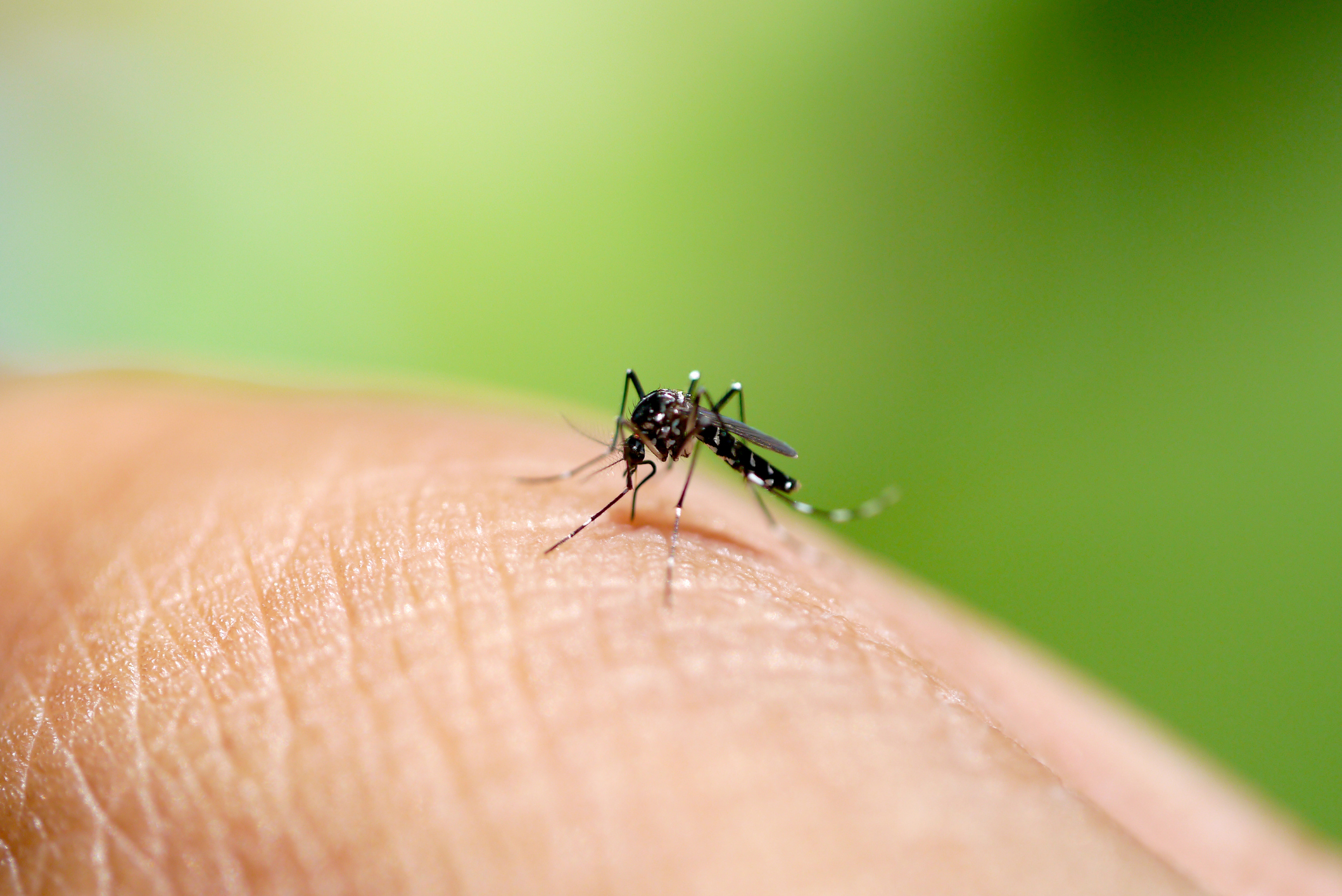
Eastern equine encephalitis (EEE or Triple E) virus is transmitted by the bite of infected mosquitoes. It can cause serious illness in people as well as horses, donkeys, emus and ostriches. Although uncommon in people, Triple E is one of the most severe mosquito-transmitted diseases in both horses and humans in the United States. Approximately a third of people who become ill with Triple E die. Many people who survive Triple E suffer from long term brain damage. Those under age 15 and over age 50 are at greatest risk of developing severe disease. From 2003 to 2020, 12 human cases of Triple E were reported in North Carolina, with infections occurring from July through December.
In North Carolina, Triple E virus is most commonly detected in the eastern part of the state, where the virus is normally passed between wild birds and mosquitoes. The mosquito species that is the main carrier of Triple E spends most of its time in freshwater swamps and almost exclusively bites birds rather than horses and humans.
People can protect themselves from Triple E by preventing mosquito bites. Consistent use of effective mosquito repellents during the months when they are active is important. A second method is mosquito control efforts, especially in areas near freshwater swamps. There is no vaccine to protect humans from Triple E, and no cure once a human is infected. Treatment is limited to managing the symptoms of the disease.
Autumn is also the time of year when most cases of other mosquito borne viral illnesses are reported, such as West Nile virus and La Crosse virus infections. To prevent mosquito-borne illness, NCDHHS’ Division of Public Health encourages people to practice the “3 Ds”:
- Dress – Wear loose, light-colored clothing that covers your skin.
- Defend – When the potential exists for exposure to mosquitoes, repellents containing DEET (N,N-diethyl-meta-toluamide) are recommended. Picaridin and oil of lemon eucalyptus are other repellent options. Learn more about insect repellent options.
- Drainage – Check around your home to rid of standing water, which is where mosquitoes can lay their eggs.
Most people infected with eastern equine encephalitis don’t develop symptoms, but some can come down with fever or swelling of the brain and about one third of people infected die. There have been three cases of eastern equine encephalitis in the U.S. this year, according to the U.S. Centers for Disease Control and Prevention, one each in Massachusetts, New Jersey, and Vermont. The worst year for the disease was 2019, with 38 cases.
If you have specific questions pertaining to Triple E in humans, please contact the Communicable Disease Branch at 919-733-3419.
For questions about Triple E in horses, please consult your veterinarian or the North Carolina Department of Agriculture and Consumer Services, Veterinary Division, at 919-733-7601.

One More Way We Take Care of You! Explore the NCMS Retirement Association Plan.

Contact Our Plan Manager here.

Duke’s PAS Offers Virtual Grief Support Group for Employees
The Duke Personal Assistance Service (PAS) rolled out four new virtual support groups to provide support to University faculty and staff who are processing grief from the loss of a loved one, presenting an opportunity for them to “process uncomfortable emotions and discuss coping skills.”
The newly-offered support sessions — modeled after a support group held at Duke Raleigh Hospital — will serve a wider community of staff and faculty employed by the University and the Duke Health System. The groups are scheduled to meet 4 p.m. to 5 p.m. weekly beginning Wednesday through October 2.
“[We] realized that a lot of people at Duke Raleigh happened to be experiencing grief around the same time,” said Caryn Christiano, senior EAP counselor for the personal assistance service, speaking of the decision to create the original program. “Because we’re at a place right now where we can do more … that’s kind of why [the expansion] was then rolled out.”
Initially, PAS planned to offer one virtual support group, but an unanticipated spike in interest led to the creation of three more groups. Currently, 26 people remain on a waiting list to join a support group, all of whom are still able to contact PAS for immediate support individually.
Continue to full article here.

Diabetes Performance Improvement in Primary Care Live Webinar
Diabetes Performance Improvement in Primary Care
Wednesday, October 23, 2024
12 pm – 1pm
Live Webinar
Program Overview
This educational activity aims to inform the learner about the status of diabetes and chronic kidney disease in primary care. This activity will explore barriers and facilitators to promote patient engagement in treatment. This activity will focus on performance improvement methods and activities which promote health among patients with diabetes.
Who Should Participate
Physicians, Physician Assistants, Nurse Practitioners, Nurses, and Primary Care Office Staff
As part of our commitment to diversity and inclusion, the Northwest AHEC provides compassionate education and respectful care for all, regardless of socioeconomic status, race, ethnicity, language, nationality, sex, gender identity, sexual orientation, religion, geography, disability and age.
Objectives
Upon completion of this activity, participants should be better able to:
- Describe barriers and strategies for clinical care teams in the screening, diagnosis, and treatment of patients with diabetes and chronic kidney disease (CKD).
- Utilize new methods to identify how diabetes and CKD disproportionately affect racial and ethnic minorities in clinical workflows.
- Explain processes for screening, diagnosis, and raising awareness about diabetes and its connection to chronic kidney disease (CKD)
Download the event brochure here.


Join the 2024–25 NACHC Community Health Center Climate Action Incubator

Do you work in a community health center in the United States?
Are you interested in pursuing decarbonization measures for your health center for a cleaner, greener community?
Are you interested in working with like-minded colleagues from across the United States to help mitigate the impacts of the climate crisis?
The Medical Society Consortium on Climate and Health (MSCCH) and the National Association of Community Health Centers (NACHC) are pleased to invite applicants with a passion for making a difference on climate and health to join the 2024-2025 Community Health Center Climate Action Incubator. The goal of this project is to enable participants to hone their leadership skills in making effective climate action and decarbonization proposals at their own health centers. Specifically, the program is designed to deepen participants’ knowledge and improve their advocacy and communication skills through peer-to-peer learning.
Community health centers are on the frontlines of understanding and responding to the climate crisis as a health crisis. Community health centers are trusted leaders in their communities. Engaging in climate action and decarbonization efforts is a triple win. It helps mitigate the climate crisis, aligns the center’s actions with its mission to improve community health, and leverages its leadership position to help spark wider community impact.
Program participants will engage with top voices in the climate and health movement, learn valuable advocacy and communication skills from industry leaders, and work together to develop and refine proposals to bring back to their own health centers.
Participant learning objectives:
- Understand how climate change drives inequitable health impacts.
- Assess localized climate impacts on health centers and analyze opportunities to mitigate impact through decarbonization and resiliency measures.
- Identify opportunities for decarbonization by understanding the policy and regulatory landscape.
- Develop and use advocacy, communications, and organizing skills to build a compelling case for decarbonization for leadership.
The project will enlist 20 participants from community health centers in the United States and its territories. Health centers are strongly encouraged to form teams of two to three people but applications from individuals are also welcome. No more than three people from any one health center will be accepted. Each team member should complete an application form.Each participant will be awarded $3000 upon successful completion of the program.
Applicant requirements:
- Completed application including CV and signed letter of support from CEO
- Current employment by a community health center in the United States or its territories
- CEO support for participation including willingness to give applicant time to participate in sessions and willingness to allow applicant to present decarbonization proposal to CEO, board, and/or other relevant decision-makers. Letter of support to be completed and uploaded is available here.
- Commitment to participate in sessions, develop and pitch decarbonization proposal, and complete any work between sessions. There will be 7 monthly sessions between September 2024 and June 2025. Each monthly session is 3-4 hours in duration. Additionally, participants will be asked to develop and present a virtual presentation for the MSCCH Annual Meeting. It is expected that participants will work 2-3 hours per week on average completing readings and developing their decarbonization proposals.
Applications close on August 30, 2024. Participants will be notified on September 13, 2024.
[source]

WakeMed Named Best Hospital for Bariatric Surgery
WakeMed Cary Hospital was recently recognized as one of the best hospitals in the nation for bariatric surgery.
Money Magazine’s editorial team analyzed 125,000 data metrics to determine the top 75 bariatric surgery centers in the country. WakeMed Cary Hospital came in at #6 in the U.S. and #1 in N.C. These top hospitals represent excellence, offering safe, effective weight-loss procedures led by skilled bariatric surgeons and specialists.
WakeMed Cary Hospital is accredited as a Comprehensive Center for bariatric surgery by the American College of Surgeons (ACS) Metabolic and Bariatric Surgery Accreditation and Quality Improvement Program (MBSAQIP), in partnership with the American Society for Metabolic and Bariatric Surgery (ASMBS). The hospital has also earned the Cigna Center of Excellence in Bariatric Surgery and is a Blue Distinction Center for Bariatric Surgery (BCBSNC).
WakeMed offers bariatric surgery options performed by exceptional, experienced surgeons who care about the long-term success of their patients. Whether a gastric bypass, sleeve gastrectomy, duodenal switch or a revisional procedure, WakeMed provides the most advanced surgical procedures, a comprehensive weight loss program and highly skilled clinical and support team to help patients reach their goals.
Money partnered with Denniston Data and Definitive Healthcare in creating a methodological approach that favors facilities that have received strong quality care and patient ratings from the federal Centers of Medicare & Medicaid Services as well as accreditation in metabolic and bariatric care from the American College of Surgeons. View more information on the methodology.
[source]

Your Vote is Your Voice! Make Sure It’s Heard Loud and Clear!

As healthcare providers, you have a unique perspective on the challenges facing your communities. Now, more than ever, it's crucial that your voices are heard at the polls. With the upcoming election fast approaching, we want to ensure that you have all the information you need to make your vote count.
Are you registered to vote? If not, instructions are available from the NC State Board of Elections.
Is your voter registration up to date? You can check to make sure their registration information is accurate using the Voter Search tool. Instructions for updating your record are available online as well.
Important General Election dates to note:
- Sept. 6, 2024: County boards of elections begin mailing absentee ballots to eligible voters who submitted an absentee ballot request form.
- Oct. 11, 2024: Voter registration deadline (5 p.m.).*
- Oct. 17, 2024: In-person early voting begins; same-day registration available.
- Oct. 29, 2024: Absentee ballot request deadline (5 p.m.).*
- Nov. 2, 2024: In-person early voting ends (3 p.m.).
- Nov. 5, 2024: General Election Day.
- Nov. 5, 2024: Absentee ballot return deadline (7:30 p.m.).*
*Voter registration and absentee voting deadlines are different for military and overseas citizen voters.
Want to view your sample ballot for the General Election? Registered voters can find their sample ballot in the “Your Sample Ballot” section of their Voter Search profile when they become available.
Don’t forget your photo ID: North Carolina voters will be asked to show photo ID when they check in to vote. Learn more: Voter ID.
Plan ahead. There are three ways you can vote:
7 NCMS Members will be on the 2024 General Election Ballot

North Carolina has six physicians and one physician assistant contending for legislative seats in the 2024 General Election.
NC House of Representatives
Grant Campbell, MD – Ob/Gyn / Concord, NC
Ralph Carter, MD – Orthopaedic Surgery / Laurinburg, NC
Timothy Reeder, MD – (incumbent)Emergency Medicine / Greenville, NC
NC Senate
David Hill, MD – Pediatrics / Wilmington, NC
Mark Hollo, PA – Retired / Conover, NC
US House of Representatives
Steve Feldman, MD – Dermatologist / Winston-Salem, NC
Greg Murphy, MD – (incumbent) Urologist / Greenville, NC
Interviews with each candidate are posted online at the NCMS website and can be accessed at the QR code below.


FDA Approves First Automated Insulin Delivery System for People with Type 2 Diabetes

The expanded use is for those 18 and older with Type 2 diabetes
(UPI Health News, Allen Cone) -- The Food and Drug Administration on Monday approved Insulet's Omnipod 5 automated insulin delivery system for people with Type 2 diabetes.
In 2022, the FDA signed off on the system for Type 1 diabetes for those 2 years and older.
The Food and Drug Administration on Monday approved Insulet's Omnipod 5 automated insulin delivery system for people with Type 2 diabetes.
In 2022, the FDA signed off on the system for Type 1 diabetes for those 2 years and older.
"The FDA has long worked with the diabetes community to ensure access to additional options and flexibilities for diabetes management," Dr. Michelle Tarver, the acting director of the FDA's Center for Devices and Radiological Health. "The FDA is committed to advancing new device innovation that can improve the health and quality of life for people living with chronic diseases that require day-to-day maintenance like diabetes."
Insulet, a public company, applauded the approval.
"Today's announcement represents a significant milestone in providing easy-to-use, patient-centric technology for the treatment of Type 2 diabetes," Insulet Chief Executive Jim Hollingshead said in a news release.
In 2000, Intuit founder John Brooks III, a father whose son, Rob, was diagnosed with Type 1 diabetes at age 3, developed a small pump device worn directly on the body rather than using tubing.
FDA first cleared an Omnipod Insulin Management System in 2003, which didn't include a continuous monitoring system.
With the new system, a wearable, tubeless product provides up to three days of nonstop insulin delivery without the need to handle a needle. The Omnipod 5 integrates with a continuous glucose monitor to manage blood sugar with no multiple daily injections, zero fingersticks and can be controlled by a compatible smartphone or by a controller.
Insulin options for people with Type 2 diabetes were limited to methods such as injection with a syringe, an insulin pen or an insulin pump. These require patients to self-administer insulin one or more times a day and check blood glucose frequently to achieve the best results.
"Today's clearance provides a new option that can automate many of these manual tasks, potentially reducing the burden of living with this chronic disease," the FDA said in the news release.
The FDA reviewed data from a clinical study of 289 individuals 18 years and older with Type 2 diabetes for 13 weeks. The study include a range of racial and ethnic backgrounds, ages, education and income levels.
The study showed that volunteers' blood sugar control improved compared with before the study, and these improvements were seen across all demographic groups. In addition, there were no complications or serious adverse events related to the use of the SmartAdjust technology.
Adverse events were generally mild to moderate, and included hyperglycemia, or high blood sugar; hypoglycemia, or low blood sugar, and skin irritation.
In the United States, 11.6% of Americans, about 38.4 million people, are diagnosed with diabetes, according to the Centers for Disease Control and Prevention. It is a condition in which the body does not make enough or properly use the blood glucose-regulating hormone insulin.
An estimated 97.6 million adults aged 18 years or older had prediabetes in 2021. About 90% top 95% are Type 2, according to the CDC.
In Type 1, the pancreas does not make insulin, because the body's immune system attacks the islet cells in the pancreas. In Type 2, the pancreas makes less insulin than used to, and your body becomes resistant to insulin.
People with Type 2 diabetes may take medications orally or through injection that can help increase insulin secretion or improve insulin sensitivity. A healthy eating plan and physical activity are also needed.
Keeping the numbers in check reduce the need for insulin.
In March, the FDA approved the first over-the-counter continuous glucose monitor. The Dexcom Stelo Glucose Biosensor System is intended for anyone 18 years and older who does not use insulin or those without diabetes who want to better understand how diet and exercise may impact blood sugar levels.
The sensor, which is not on the market yet, is paired with a smartphone or smart device for up to 15 days.

NC Ag Commissioner Responds to Bird Flu in NC
"I wish I had paid a lot more attention in genetics when I was in college," said Agriculture Commissioner Steve Troxler
(State Affairs Pro, Clifton Dowell) -- The threat of a deadly new pandemic jumping from animals to humans is scary, but agriculture officials on Tuesday agreed that until a vaccine is developed to protect cows from bird flu, the best defense is simply to keep the number of infections as low as possible.
“I wish I had paid a lot more attention in genetics when I was in college,” Agriculture Commissioner Steve Troxler said. “But in my mind it’s a numbers game. The more virus that’s out there, the more likely it is to be mutating and spread to other species.”
The virus under discussion by a panel of experts convened by the North Carolina Department of Agriculture and Consumer Services was highly pathogenic avian influenza (HPAI), also referred to by its strain name of H5N1. It was detected in North Carolina in April after infected cows from Texas were added to a dairy herd here. The herd was quarantined and declared virus-free a month later.
Testing by the National Veterinary Services Laboratory has detected 192 infected herds in 13 states, said Dr. Eric Deeble, deputy under secretary for marketing and regulatory programs at the U.S. Department of Agriculture. Before detecting a new infected herd in Michigan yesterday, he said, the lab had gone two months without a detection. “I know at some point there will be another state,” he said.
U.S. Food and Drug Administration Commissioner Dr. Robert Califf said H5N1 for 20 years has been the No. 1 virus of concern for global pandemics. Historically around the world, when the virus has reached humans the death rate has exceeded 50%, he said. “When we got the message from USDA that there had been this infection of cows in Texas and then that spread, it just set off alarms all across the federal government because it’s been a big concern all along.”
Viruses are tricky, Califf said, because of their constant mutations. Farmworkers in the U.S. who have gotten the virus aren’t becoming seriously ill because the current version attaches to tissue around the eye, causing conjunctivitis. “If it mutates to attach to the lining of the lung like COVID did, we’re going to have a big problem,” he said.
Potential illnesses among humans may be the most worrisome threat, but it isn’t the only threat that H5N1 poses. The panel discussed the importance of protecting the nation’s food supply as well as safeguarding the economics of farming in the state.
“What we know is that high path AI is not going away and we are particularly vulnerable because of the size of our poultry industry,” Troxler said. In addition to the potential loss of valuable livestock, farming revenue is also endangered when the public changes its buying habits based on news reports of disease.
Califf said one of the first FDA studies was to make sure milk and cheese were virus-free. “Pasteurization works,” he said.
Deeble said the USDA has programs to offset the costs that dairy farmers incur for testing their herds, buying personal protective equipment and veterinary care. For dairies where infection is found, the government will pay farmers 90% of lost revenue, he said.
The aim of such programs is to make farmers feel secure about testing cows by reducing the financial risk. Another panelist, dairy farmer and veterinarian Dr. Ben Shelton, said that dairymen are generally dubious of government interventions but that he has only positive things to say about his dealings with agriculture officials in the state.
A number of candidate vaccines are being looked at by the private sector, Deeble said. Until then, identifying sick herds and isolating them is the best practice, he noted.
Biosecurity — working to make sure viruses and other pathogens aren’t spread from farm to farm — is already part of agriculture, Shelton said. With cows being moved from herd to herd, however, some spread is inevitable. “I think it’s going to become a standard part of the industry that we just have to deal with,” he said.
Additional reading from NCMS:
Could Bird Flu Pose Human Threat

The 2024 Paris Paralympics Have Begun! Meet Some of the Athletes from NC
17th Summer Paralympic Games Run Through September 8
The 2024 Summer Paralympic Games are off with a spectacular start in Paris. Elite athletes from around the world are competing in sports ranging from Archery to Wheelchair Basketball. North Carolina will be represented at the games this year.
Here are some of the athletes from the Tar Heel State:
Carson Clough: The Charlotte Latin alum played lacrosse at North Carolina starting in 2013. A subsequent boating accident in 2019 on Lake Norman led to partial amputation of his right leg.
- Sport: Paralympics triathlon
Heather Erickson: The four-time Paralympic medalist from Fayetteville has won gold twice (in Tokyo and Rio de Janeiro) and silver twice (in London and Beijing). Erickson was born with a bone that prevented her leg from fully developing, leading to its amputation when she was 9-years-old.
- Sport: Sitting volleyball
Samantha Heyison: The 19-year-old was born with constricted band syndrome and attends Wake Forest.
- Sport: Paralympics track and field
Desmond Jackson: The Durham native and Campbell University alum will compete in his second Paralympics. Jackson, who was born with a limb difference which led to the amputation of his left leg when he was 9-months-old, also competed in Rio.
- Sport: Paralympics track and field
Coverage of the games is on NBC, Peacock, USA Network, and CNBC.
Click here for a schedule of events

Register Now! NC Medicaid Managed Care Virtual Office Hours: Hot Topics
Register now for September's Virtual Office Hours on Provider Enrollment!
Medicaid Managed Care
Virtual Office Hours:
NC Medicaid Provider Enrollment Hot Topics
Thursday, September 5
5:30 p.m.
Learn about Provider Enrollment updates and other program initiatives that highlight the good work being done in North Carolina.
NC Medicaid Clarifies Clinical Coverage Policies on Respiratory Equipment and Supplies, Sleep Studies, Polysomnography Services
In response to recent policy and billing questions, NC Medicaid would like to clarify that respiratory supplies needed to conduct a Home Sleep Tests (HST) or Unattended Sleep Study are not covered separately.
Effective October 1, 2020, the following update was made to Clinical Coverage Policy 5A-2, Respiratory Equipment and Supplies in subsection 5.3.2:
The medical necessity criteria for respiratory assist devices to manage central sleep apnea and obstructive sleep apnea were updated to indicate that qualifying polysomnograms must be provided according to the requirements listed in Clinical Coverage Policy 1A-20, Sleep Studies and Polysomnography Services.
Specifically, the requirement for a facility-based polysomnography by qualified personnel was removed, as Clinical Coverage Policy 1A-20, Sleep Studies and Polysomnography Services, allows for home sleep studies of Obstructive Sleep Apnea in subsection 3.2.1, criterion b. “Home Sleep Test (HST) or Unattended Sleep Studies”.
Please also note that Clinical Coverage Policy 1A-20, Sleep Studies and Polysomnography Services, was updated on May 1, 2020, to include 95800 Sleep study, unattended, simultaneous recording, heart rate, oxygen saturation, respiratory analysis (eg, by airflow or peripheral arterial tone), and sleep time.
The device used for an unattended or home sleep test is not coded separately. The physician dispatches the device for the patient to take home and the patient returns or ships back the device to the physician’s office.
Questions? Contact NC Medicaid Contact Center at 888-245-0179
[source]

No-Cost COVID-19 Tests Available Through Mail Again Soon
On the heels of a summer wave of COVID-19 cases, Americans will be able to get free virus test kits mailed to their homes, starting in late September.
U.S. households will be able to order up to four COVID-19 nasal swab tests when the federal program reopens, according to the website, COVIDtests.gov. The U.S. Health and Human Services agency that oversees the testing has not announced an exact date for ordering to begin.
The tests will detect current virus strains and can be ordered ahead of the holiday season when family and friends gather for celebrations, an HHS spokesperson said in an emailed statement. Over-the-counter COVID-19 at-home tests typically cost around $11, as of last year.
The announcement also comes as the government is once again urging people to get an updated COVID-19 booster, ahead of the fall and winter respiratory virus season. Earlier this week, U.S. regulators approved an updated COVID-19 vaccine that is designed to combat the recent virus strains and, hopefully, forthcoming winter ones, too. Vaccine uptake is waning, however. Most Americans have some immunity from prior infections or vaccinations, but data shows under a quarter of U.S. adults took last fall’s COVID-19 shot.
[source]

Eli Lilly to Sell Zepbound Directly to Consumers Without Insurance Coverage
New Option is self-pay only and will not participate in insurance
(ABC, Katie Kindelan) -- People who are in need of weight loss medications but do not have insurance coverage will soon have a new way to access one of the popular medications, Zepbound.
Eli Lilly, the maker of Zepbound, announced Tuesday it will begin selling the weight loss drug directly to consumers through the company's direct pharmacy, LillyDirect.
With a doctors' prescription, consumers will be able to purchase Zepbound in vial forms that are about half the price of the auto-injector pre-filled pens sold in pharmacies, according to Eli Lilly CEO Dave Ricks.
A one-month supply of Zepbound at a 2.5-milligram dose will cost $399, while a one-month supply at a 5-milligram dose will cost $549, according to Ricks.
"It's an exciting day for people who've been looking for a way to access and afford our weight loss medication Zepbound," Ricks told ABC News' Whit Johnson in an interview that aired Tuesday on "Good Morning America." "Now they can go to LillyDirect and, with a prescription from their doctor and a phone, access the drug in vial forms."
Medical professionals can start filling prescriptions for the Zepbound vials on Tuesday via LillyDirect and the vials will start shipping in the days ahead.
Ricks noted that the new option will be self-pay only and will not participate in insurance.
With insurance coverage, Zepbound can cost as low as $25 per month, but without coverage, the medication can cost more than $1,000 per month.
Consumers who purchase Zepbound through LillyDirect will have access to educational resources on how to administer the medication, according to Ricks.
Zepbound is approved by the U.S. Food and Drug Administration as a weight loss management treatment for people with obesity or those who are overweight with at least one related underlying condition such as high blood pressure.
However, many private insurers and Medicare do not cover weight loss drugs used for obesity.
Zepbound contains the same active ingredient, tirzepatide, as another medication, Mounjaro, which is also made by Lilly and is FDA-approved to treat Type 2 diabetes.
Tirzepatide works by helping the pancreas increase the production of insulin to move sugar from the blood into body tissues.
It also slows down the movement of food through the stomach and curbs appetite, thereby causing weight loss.
Past clinical studies have shown users of medications used for weight loss like Zepbound and Mounjaro can lose between 5% and 20% of their body weight on the medications over time.
Medical specialists point out that using medication to lose weight also requires cardio and strength training and changing your diet to one that includes proteins and less processed foods with added sugars.
The most commonly reported side effects of medications used for weight loss are nausea and constipation, but gallbladder and pancreatic disease are also reported.
Makers of these drugs recommend having a conversation about the side effect profile and personalized risks with a health care professional before starting.
ADDITIONAL READING

Child Fatality Task Force Readies for Submission of Annual Report to General Assembly

Intentional Death, Unintentional Death, and Perinatal Health Subcommittees Meet in Coming Months
(State Affairs Pro, Matthew Sasser) -- The Child Fatality Task Force will convene in a series of meetings over the next few months in anticipation of submitting its annual report to the General Assembly prior to the legislative session.
Kella Hatcher, executive director of the Child Fatality Task Force, said this study cycle over the next few months will include three meetings each of the Intentional Death, Unintentional Death and Perinatal Health subcommittees. Three meetings of the Child Fatality Task Force will consider recommendations from the subcommittees to propose to the General Assembly.
Hatcher noted that although the task force’s 2024 recommendations received little traction, 2023 saw legislative successes on various fronts.
Task force recommendations that were passed included funding for the State Office of Child Fatality Prevention with the North Carolina Department of Health and Human Services, which was restructured and strengthened through the 2023 budget — $550,000 was allotted for the operational costs of the office, and $189,000 was distributed across all 100 counties for the 2024-25 fiscal year to support changes in child death review teams.
North Carolina’s Safe Surrender Law was amended in 2023 to allow parents to legally and anonymously surrender an infant up to 30 days old to a designated safe person, defined as a health care provider, first responder or on-duty social worker.
Other task force recommendations addressed in 2023 included passing a firearm safe storage and prevention law, creating funding for resources to prevent sleep-related infant deaths, increasing funding to increase the Medicaid maternal bundle rate to improve birth outcomes, and funding for comprehensive toxicology testing for all medical-examiner jurisdiction child deaths.
Years long advocacy for increasing funding for more school nurses, social workers, counselors and psychologists was partially addressed in last year’s budget, Hatcher added.
“We’re far below nationally recommended ratios on those positions, and they play a really important role with suicide prevention and promotion of mental health and identifying kids in crisis,” Hatcher said, adding that the 120 positions approved for funding fell far short of the existing need.
When Hatcher last Thursday provided a legislative update on the task force’s 2024 recommendations to the second meeting of the Perinatal Health Committee of the year, she acknowledged the update would be short and sweet.
“As our legislative members know, there’s not a lot to tell you about what happened with respect to task force recommendations [in 2024],” Hatcher said, with Sen. Jim Burgin, R-Harnett; Sen. Gale Adcock, D-Wake; and Rep. Carla D. Cunningham, D-Mecklenburg, in virtual attendance.
“The fact that the Legislature has not passed a comprehensive budget bill this year means there wasn’t the same sort of opportunity for our recommendations to be addressed,” Hatcher added in a follow-up interview with State Affairs.
A partial 2024 General Assembly victory from a task force recommendation was securing $67.5 million in funding toward child care centers, which face losing federal dollars. Like the school nurse and social worker funding, Hatcher said, the approved funding does not rise to the need experts say exists.
Hatcher credits state legislators who have championed task force recommendations and passed corresponding legislation. Though 2023 saw legislative movement on issues that had been percolating for years, Hatcher said 2024 recommendations such as legislation to address addictive algorithms in social media, Medicaid reimbursement of doula services and support for Fetal and Infant Mortality Reviews could return to their recommendation list for the longer legislative session.
“We’re often revisiting [former recommendations] because the issues that prompted the task force to make a recommendation are still an issue,” Hatcher said. “They haven’t gone away.”
The Child Fatality Task Force will submit its annual report with General Assembly recommendations before the 2025 long session begins.

NCMS Member Named Vice President of Physician Services at UNC Health Caldwell
Bradley Christoph, DO, MPH, MS
NCMS member Bradley Christoph, DO, MPH, MS, has been announced as the new Vice President of Physician Services at UNC Health Caldwell!
Dr. Christoph serves the Caldwell County community as a family medicine practitioner at Southfork Medical Park in Cajah's Mountain and as the Medical Director at Helping Hands Clinic in Lenoir.
He completed his residency at The Ohio State University where he was named the Intern of the Year in 2018 and Executive Chief Resident in 2021.
Congratulations, Dr. Christoph, on your new role!

Capitol Chronicle: Join NCMS for the 2025 National Advocacy Conference in Washington

Capitol Chronicle: Join NCMS for 2025 National Advocacy Conference in Washington
The AMA’s National Advocacy Conference is scheduled for February 10-12, 2025. This yearly event offers an opportunity for personal involvement in the health policy debate on Capitol Hill. We need increased NCMS member engagement with our members of Congress, so mark your calendar and stay tuned for forthcoming details.
2025 National Advocacy Conference
Save the date and join us for our return to Capitol Hill.
February 10-12, 2025 / Washington, DC
Plan now to join your colleagues as we advocate for patients and the medical profession on . . .
Prior Authorization Relief
Medicare Payment Reform
Workforce Shortage Solutions
Physician Wellness
Mark your calendar! Registration details and additional information coming soon.
Your engagement matters!
Do you know your state and federal legislators? More importantly, do your legislators know you?
The NCMS can help you connect with policy makers as a constituent and advocate!



Register Now! Sustainability of the HIV/AIDS Response – Getting to 2030 & Beyond
The state of the HIV/AIDs endemic is reaching a critical point requiring evaluation of the current state of the global response, progress made thus far, and planning for post-2030 goals. The National Academy of Medicine is hosting a timely international meeting to facilitate discussion on these issues.
This one-day workshop is being held on September 18, 2024, from 9:00 AM – 5:00 PM US Eastern. Ambassador John N. Nkengasong, the Senior Bureau Official for Global Health Security and Diplomacy at the U.S. State Department, will deliver the opening remarks. His address will set the stage for discussions across three subsequent panels.
Broadly, the goals of this workshop are to:
- Explore how we can re-energize the global HIV response to reach the 2030 goals but also to look beyond.
- Craft strategies to increase and sustain political commitment.
- Highlight global accountability and domestic-donor financing.

A Paw Print Sticker on Your Mailbox? Leave It!

Mail Carriers face the risks of a nip, bite, or even a vicious attack while delivering mail and packages each day. Aggressive dog behavior poses a serious threat to Postal Service employees. In response, USPS is implementing a Dog Paw program to raise awareness for Letter Carriers and customers on the risk of dog bites throughout their workday.
The program involves using color coded stickers to indicate both the home of a dog as well as the house before a dog’s home, to better prepare the Letter Carrier as they approach the mailbox. An orange sticker tells carriers that there is a dog at this home and the yellow cautions the carrier that there is a dog at the next house.
As customers see these stickers posted on their mailbox, they will also receive a postcard explaining the program. When used in conjunction with other methods, such as local alerts as postal employees approach the house and written notification cards within the mail, this program has been successful in other locations that have seen high dog bite rates.
A report from the U.S. Postal Service, part of its 2024 National Dog Bite Awareness Campaign, revealed that North Carolina had the eighth-most dog bites on postal service employees in 2023, with 185 — that’s a 27% increase from the previous year.

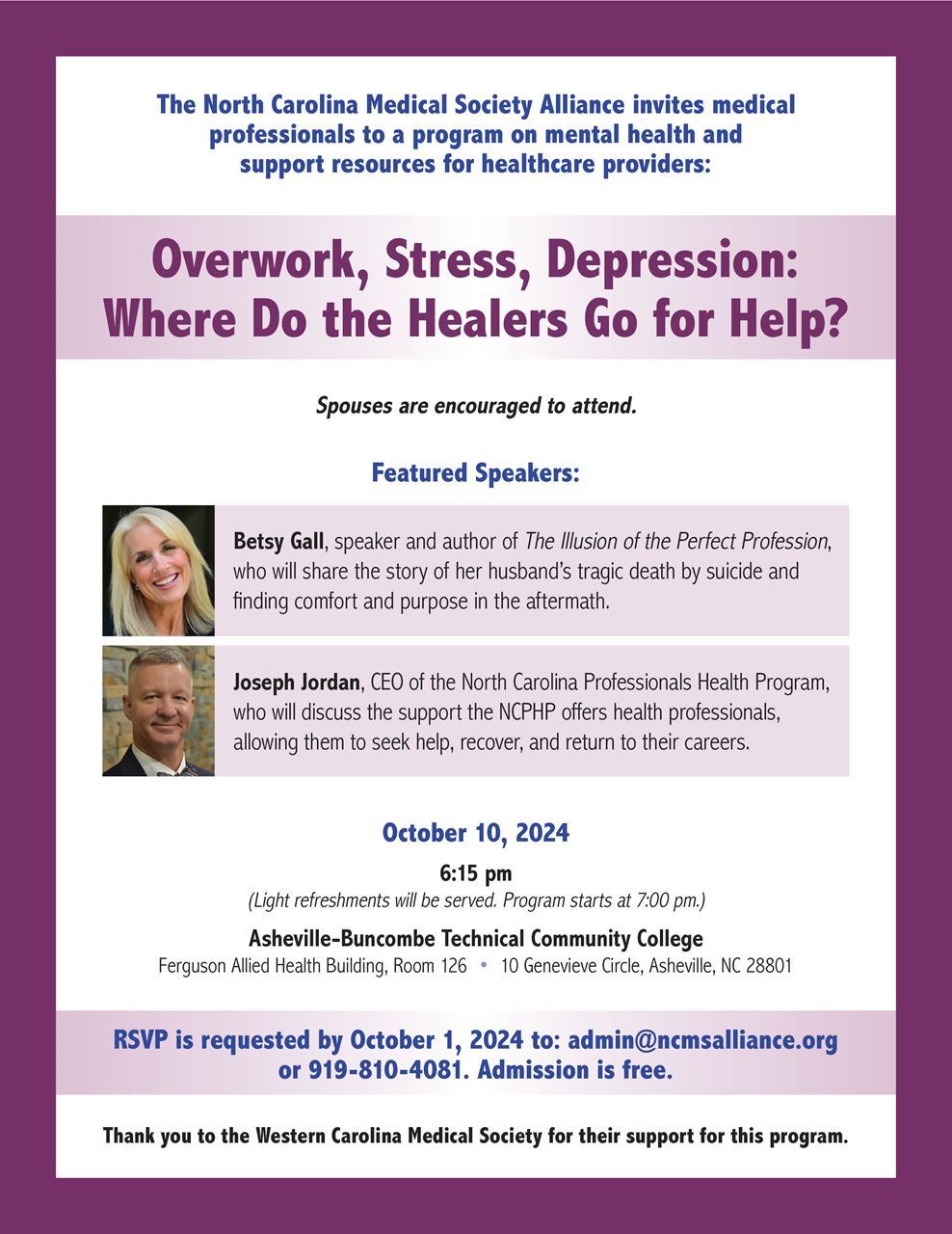
Overwork, Stress, Depression: Where Do the Healers Go for Help?
Mark your calendar for an important program on mental health and support resources for healthcare providers.
Overwork, Stress, Depression: Where Do the Healers Go for Help?
Thursday, October 10 at 6:15pm
RSVP by October 1 to admin@ncmsalliance.org or 919-810-4081

Conflict Management: Must-Have Skill for New Leaders Webinar
Conflict Management: Must-Have Skill for New Leaders
September 19, 2024
Noon-1 p.m.
Being able to manage conflict as a leader is a critical skill for success. When conflict is managed appropriately, it can be an active force that can build healthy relationships within and between teams.
This webinar will help you gain the conflict management skills you need to flourish in this next stage of your career. Make this part of your leader's toolbox so you can use it when conflict arises within your team with others.
Objectives
- Learn about the different sources, causes and cost of Conflict
- Discover the 5 different styles Leaders use to manage Conflict
- Identify the Skills needed to effectively Manage Conflict
- Develop Conflict Management Strategies for “Working it Out”
Learn more and register here.

NCTracks: Upcoming Changes to Service Location Management

Effective August 25, 2024, providers will no longer be able to modify an existing service location address in NCTracks. Instead, a new service location must be created for address changes. The Begin and End date of the new service location must represent the dates services are rendered at that location.
This will not impact the ability to edit Pay-to or Correspondence addresses.
As a result of these upcoming changes, all draft applications in the NCTracks system will be automatically deleted on August 25, 2024. Please submit all applications in the system prior to this date to avoid loss of data.

CDC: NC Life Expectancy Declining

Rate drops nationally, but at half the rate of NC
(David Raynor, The News & Observer) -- North Carolina’s average life expectancy declined by more than a year from 76.1 to 74.9 from 2020 to 2021, according to new Centers for Disease Control data for all 50 states. The rate dropped nationally, too, but at half the rate NC did: from 77 to 76.4.
All but 11 states saw their averages decline. In 2000, the CDC’s average life expectancy in NC was 76.3, 1.4 years higher than in 2021 and more comparable to 2020.
Based on this new data, the CDC now ranks North Carolina 36th in the country in life expectancy, with the state dropping one spot from 35th in 2020. In 2023, the agency released a report that did not include state data but put the national average life expectancy at 77.5, up 1.1 years from 2021.
Many factors contribute to the ranking. One is an increase in accidental and unintentional deaths and deaths from COVID-19, according to the NC Department of Health Human Services.
Average life span calculations are especially sensitive to factors that cause deaths in younger populations. North Carolina has seen a significant increase in overdose deaths in recent years, especially since COVID-19. From 2018 to 2022 there was an 89% increase in overdose deaths, from 2,301 to 4,339. The rate per 100,000 residents also very nearly doubled from 22.2 to 44.1. And opioid overdose deaths mainly occur among younger people, and have contributed to a decline in life expectancy, according to DHHS.
In 2022, the CDC reports that three-fourths of all drug overdose deaths in the country were under the age of 55. Seven out of ten who died were male.
Women still outlive men. Nationally and in North Carolina, the gap is about six years and it increased each year from 2019 to 2021, according to the CDC. The life expectancy for males in the state is 72, for females, 77.9, according to this CDC report. Nationally, for males it’s 73.5, females, 79.3. That said, the difference in life expectancy for males and females is not as great as it has been at times in the past. In 1980 in North Carolina, the gap was 8.8 years. It dropped about a year in 1990 to 7.7 and continued to decline to 6.5 years in 2000.
DHHS staff caution that life expectancy is a statistical measure, and is based on the ages at which people are dying now. To determine which factors have the largest impact in North Carolina, especially compared to the US, requires more comprehensive research and analysis.
Read source article here.

New Data Shows Congenital Syphilis Continues to Rise in NC, but Rate of Increase is Slowing

72 cases reported in 2023, 10 cases resulted in stillborn or neonatal death
(Matthew Sasser, State Affairs Pro) -- Cases of congenital syphilis continue to rise in North Carolina, but the rate of increase has slowed, according to data shared with the Perinatal Health Committee Thursday afternoon.
Dr. Victoria Mobley, the HIV/STD medical director at the North Carolina Department of Health and Human Services Division of Public Health, said 72 cases of congenital syphilis were reported in 2023, with 10 of those cases resulting in a stillborn or neonatal death.
Between January and May 2024, 41 congenital syphilis cases and three related neonatal deaths were reported, a 31% increase over the past three-year average.
“We were seeing a 50% increase in women … only just three to six months ago,” Mobley said. “So the rate of increase is low.”
Mobley said that women of color are disproportionately impacted in the reported cases but that the data shows a steady increase in reports from caucasian women.
“The majority of women who are diagnosed with syphilis during pregnancy have no clinical signs of infection at the time of their diagnosis,” Mobley said.
North Carolina public health law requires providers to screen pregnant women for syphilis three times: at their first prenatal care visit, between 28 and 30 weeks of gestation and again at delivery, regardless of reported risk factors.
Mobley said the health department has received 10 survey responses from women affected by the outbreak. While nine of them had access to prenatal care, they all reported an annual household income of less than $40,000 a year and reported having trouble meeting their basic financial responsibilities during their pregnancy.
“A significant portion of them reported seeking health care other places during their pregnancy other than their prenatal care provider, which is important because we were trying to figure out where the providers are,” Mobley said, adding that many of the women shared they knew very little about syphilis even after their diagnosis.
A social media campaign launched last December by the health department to raise awareness of congenital syphilis peaked in April, accumulating 28 million impressions overall , including 3.7 million impressions with medical providers. Mobley said the department’s Hispanic audience on social media had the highest click-through rate of any demographic during the campaign.
Plans to extend the campaign and provide more regional fact sheets for providers are in the works, Mobley said. A congenital syphilis quarterly review board in the next month will analyze every reported congenital syphilis case in the state and identify any missed opportunities for prevention.
Dr. Marty McCaffrey, a neonatologist at the University of North Carolina and director of the Perinatal Quality Collaborative of North Carolina, said screening for syphilis at admission for labor has been making a huge difference in a preterm infant project he’s a part of, filling a 4% gap of unscreened mothers at 53 hospitals.

The Wait is OVER! 2024 NCMS Photo Contest Results Are In!
We continue to be wowed each year by the impressive photo contest submissions. A stunning array of talent was again on display in this year's contest!
Selecting the winners was a challenge, but in the end, the following images came out on top in their respective categories:
Overall Winner
David Tart, MD - Retired dermatologist from Greensboro
“Dramatic Callanish Sunset”
Nature Category Winner
Karl Chiang, MD - Interventional radiologist from Greenville
“Winter Wonderland”

NC Category Winner
Demetri T. Poulis, MD, FACS - General surgeon from Nags Head
“Fishing Fleet, Oregon Inlet”

Travel Category Winner
Joel B. Miller, MD - Retired OB/GYN from Hickory
"Venice Grand Canal"

Wildlife Category Winner
Tony Huggins, MD - Anesthesiologist from Raleigh
“Sisters”

Congratulations and thank you to everyone who submitted!
Below is the complete list of results...
| David Tart, MD | Overall Winner | Dramatic Callanish Sunset |
| Karl Chiang, MD | Category Winner - Nature | Winter Wonderland |
| Demetri T. Poulis MD FACS | Category Winner - North Carolina | Fishing Fleet, Oregon Inlet |
| Joel B Miller, MD | Category Winner - Travel | Venice Grand Canal |
| Tony Huggins, MD | Category Winner - Wildlife | Sisters |
| Jeffrey Coston, DO, FASA | Finalist | Godafoss Waterfall |
| Steven Andrew Dingeldein, MD | Finalist | Atlantic Puffin |
| Rodger David Israel, MD, MHL | Finalist | Bear with the crooked nose |
| Kurt K. Lark, M.D. | Finalist | Foggy Sunrise |
| Pete Leuchtmann, MD | Finalist | Lower Antelope Canyon |
| Arnold Camacho Olegario, MD | Finalist | Dawn |
| Brian J. Sutton, MD | Finalist | Cliffs of Moher |
| Robert Yapundich, MD | Finalist | Curious Coyote |
| Sarah Atkins | Semi-Finalist | Joshua Tree Sunset |
| Charles H Classen Jr, MD | Semi-Finalist | Red Barn |
| Herb Clegg, MD | Semi-Finalist | Roanoke Marshes Lighthouse at dusk |
| Susan Lynne Evans, MD | Semi-Finalist | Madrid Nightlife |
| P. Mark Gallerani, MD | Semi-Finalist | Horned Grebe with ducklings |
| Lisa Gangarosa, MD | Semi-Finalist | Calliope and Clouds |
| John Goldfield, PA-C | Semi-Finalist | Secret Crater |
| Kathryn McConnell Greven, MD | Semi-Finalist | Transcendental |
| Jim Hill, M.Ed., PA-C Emeritus, DFAAPA | Semi-Finalist | Venturing Out |
| Julia Norem MD | Semi-Finalist | Sunset Holden Beach |
| Lourdes Pereda, MD | Semi-Finalist | Floral sunset at the sunflower farm |
| Leighton A. Raynor, MD | Semi-Finalist | Dry Falls |
| Donna Richardson, MD | Semi-Finalist | Bodega Bay, California |
| Nadine B. Skinner, MD, FAAFP | Semi-Finalist | Spring Mountain Sunset |
| Robert M. Varnell, MD | Semi-Finalist | Baby Humpback Whale Playing in the Sun |
| T. Rupert Ainsley, Jr. MD FACP | Honorable Mention | Hummingbird Hawk Moth |
| Yun L. Boylston, MD MBA | Honorable Mention | A Clear Night in Stari Grad |
| Tracy Eskra, MD | Honorable Mention | Dame de Fer |
| Stephen Ezzo, MD | Honorable Mention | I've waited 17 years to take this photo |
| Cynthia M. Gary, MPH, PA-C | Honorable Mention | Black is Beautiful! |
| Steven M. Genkins, M.D. ("Seadoc") | Honorable Mention | "Komodo Dragon Beach Patrol" |
| Jane Girskis, PA-C | Honorable Mention | Spring Has Sprung |
| Lawrence Greenblatt, MD | Honorable Mention | Flying high above Patagonia |
| Richard M. Griffin, MD | Honorable Mention | "Hand Out" |
| H Slade Howell, MD | Honorable Mention | Mountain Stream After a Rain |
| Kurt Lauenstein, MD | Honorable Mention | hummingbird |
| Marion McCrary MD FACP FAMWA | Honorable Mention | Winter is Coming |
| Steven Mendelsohn, MD | Honorable Mention | Morning on the Blue Ridge Parkway |
| David Mertz MD | Honorable Mention | Over Alaska, endless beauty |
| Danna Park MD, FAAP, FACP | Honorable Mention | Azaleas after the rain |
| Vikas Patel, MD | Honorable Mention | Parisian Nightfall: The Glow of Sacré-Cœur |
| Katherine J. Pierce, M.D. | Honorable Mention | Reaching for the Sky |
| James Salisbury MD | Honorable Mention | ‘ALL ENDS WELL’ |
| Michael Wolff, MD | Honorable Mention | Sailing by the Pitons |

BREAKING: FDA Signs Off on Updated Covid-19 Vaccines
Updated Covid-19 vaccines, including the shot made by Pfizer and BioNTech, received a greenlight from the US Food and Drug Administration
(CNN, Jamie Gumbrecht and Meg Tirrell) -- As a summer wave of Covid-19 continues to hit the United States, the US Food and Drug Administration on Thursday signed off on updated Covid-19 vaccines from Moderna and Pfizer/BioNTech.
Moderna and Pfizer said updated mRNA shots will be available in pharmacies and clinics in the days ahead.
“Vaccination continues to be the cornerstone of COVID-19 prevention,” Dr. Peter Marks, director of the FDA’s Center for Biologics Evaluation and Research, said in a statement. “These updated vaccines meet the agency’s rigorous, scientific standards for safety, effectiveness, and manufacturing quality. Given waning immunity of the population from previous exposure to the virus and from prior vaccination, we strongly encourage those who are eligible to consider receiving an updated COVID-19 vaccine to provide better protection against currently circulating variants.”
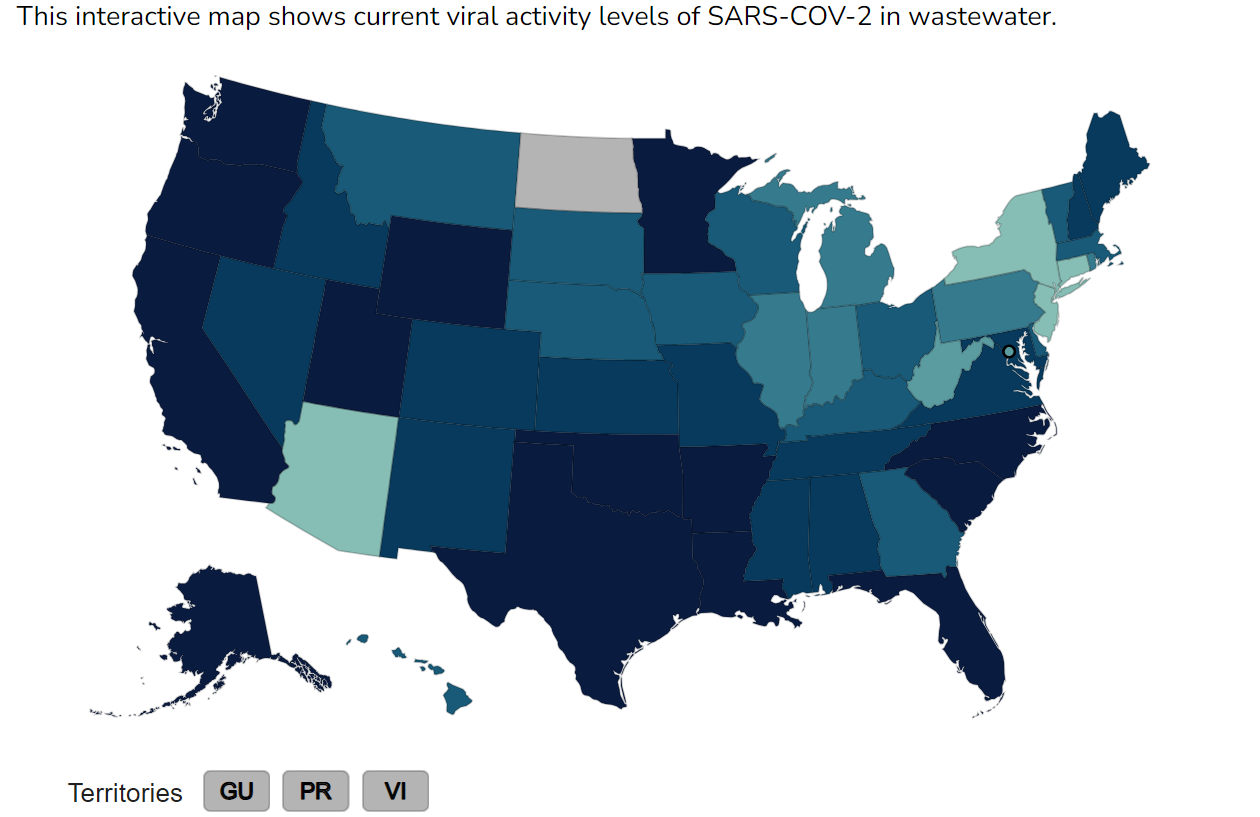
Levels of the SARS-CoV-2 virus, which causes Covid-19, measured in wastewater are at “very high” levels nationally, according to CDC data, sparking the highest summer peak in the US since July 2022. Monitoring of viral levels in wastewater can give a picture of how widespread the virus is as testing and other forms of monitoring have fallen off.
Measures of severe disease, including rates of hospitalization and death, have been rising, according to the CDC, but they’re nowhere near levels seen in previous years.
The prevalent strain in the US now is KP.3.1.1, according to CDC data, estimated to account for 37% of cases over the past two weeks. That’s triple its level a month ago.
KP.3.1.1 and KP.2 – the strain included in the updated mRNA vaccines – are both offshoots of JN.1, which will be the target of an updated protein-based vaccine from Novavax. All are versions of the Omicron variant.
The US Centers for Disease Control and Prevention recommended in June that everyone over 6 months old receive both an updated Covid-19 vaccine and a flu shot this year.
The FDA said Thursday that people 5 and older are eligible to receive an updated Pfizer or Moderna Covid-19 vaccine as long as it has been at least two months since their last dose.
Unvaccinated people age 6 months through 4 years can receive three doses of the updated Pfizer vaccine or two doses of the updated Moderna vaccine. People in this age group who have been previously vaccinated can receive one to two doses of the updated vaccines, depending on the timing and the number of doses they’ve previously received. Certain people ages 6 months through 11 years who have weakened immune systems may be eligible for additional doses.

FDA Approval of RTP Biotech Could Benefit Your Patients
Humacyte makes "spare parts for people" and will hear from the Food and Drug Administration soon about whether those parts will be approved to treat patients.
Humacyte is a biotech company in Durham, NC, that makes artificial blood vessels. The Artificial Tissue Engineered Vessels or ATEVs have been in development for almost two decades, but so far have been available only to patients in clinical trials. But with an FDA decision coming up, that could change. And an approval would be a win not only for the company, but also for the growing research and development presence in the Triangle region.
Bringing an innovative product to the market
Humacyte's ATEVs have been tested extensively in clinical trials for more than a decade, and have been in development since 2005. Humacyte's CEO and co-founder Laura Niklason is hopeful that after many years of work, the FDA will approve the ATEVs for use on August 10.
"That will allow us to launch our product into hospitals where trauma surgeons and vascular surgeons will be able to use it to treat patients who are wounded," she said.
Those could be patients who have been in car accidents or suffered gunshot wounds, and receiving an artificial blood vessel could salvage limbs or even save lives.
"Our engineered tissues, when we implant them, they don't have any cells in them," Niklason said. "But after they do get implanted, cells from the patient sort of crawl in and take up residence in the tissue and turn it into a living tissue. It becomes self."
Scientists have dreamed about this kind of engineered tissue for decades, but so far Humacyte is the only company that has been able to make a product like that a reality.
"It's very exciting for the company, because this represents an incredibly long journey," Niklason said. "To get to this point where we're getting to approval for something that's really fundamentally new is pretty cool."
Read the full article here.

Blue Cross NC Announces Long-Term Commitment to NC's Youth Mental Health Crisis
Blue Cross and Blue Shield of North Carolina (Blue Cross NC) launched the first phase of a statewide, transformational commitment to improving youth mental well-being, resiliency and connectivity. The initial phase begins with comprehensive enhancements to the company’s mental health offerings, targeting improvements in support services and access to care across all 100 North Carolina counties.
This foundational step is the beginning of an ongoing, multi-year effort that comes in response to insights gained from the Extra Miles Tour, a statewide listening tour completed in 2023. Throughout the tour, company leaders heard firsthand about widespread feelings of lacking purpose, social isolation and loneliness among young North Carolinians – underscoring the pressing and urgent need to improve the well-being and connectivity of youth across the state. Community leaders are stepping in to fill the gaps, but more work is needed to accelerate and elevate their work.
Continue to the full release here.

Duke Researchers: Cannabis and Tobacco Use on Rise, Especially Among Older Adults
Duke researchers analyzed two decades of national data
(Duke School of Medicine, Shantell M. Kirkendoll) -- The number of Americans using both cannabis and tobacco is increasing, with a particular surge among older adults, a new study finds.
Researchers at Duke University School of Medicine who analyzed two decades of national data warn that the combination poses greater health risks than the dangers of using either substance alone.
In 2021, 6.38% of U.S. adults reported using both cannabis and tobacco within the past month. While this might seem like a relatively small percentage, it’s a big jump from previous years. Researchers attribute the trend to more states legalizing marijuana, and people becoming more accepting of and comfortable with cannabis.
“When looking at the 2021 data, younger individuals, people with lower educational attainment and residing in a state with a medical marijuana law, were most likely to report co-use,” said lead study author Dana Rubenstein, a fourth-year medical student at the Duke University School of Medicine and translational science researcher.
“Trends in cannabis and tobacco co-use prevalence have not been examined in many years while regulatory policy has been changing quite a bit,” she said.
Before the Duke analysis, the most recent report on trends in exclusive tobacco use, exclusive cannabis use, and co-use relied on national data from 2003-2012. Since that time 24 states have lifted restrictions on marijuana use, and now most Americans live in a state where recreational marijuana is legal.
The Aug. 13 study in Addictive Behaviors analyzed data on 708,891 adults from the 2002-2021 National Survey on Drug Use and Health and revealed key trends: From 2002 to 2019, co-use of cannabis and tobacco increased. Exclusive cannabis use rose after 2007, while exclusive tobacco use declined during the same period.
While most groups experienced a rise in co-use of cannabis and tobacco, young adults aged 18-25 bucked the trend, with co-use declining after 2014.
Rubenstein said one potential reason for the decline in co-use in this age group is that over the past two decades fewer young adults are using tobacco.
Dangerous New Normal?
This decrease in co-use contrasts sharply with the behavior of older age groups where co-use has been on the rise.
The most dramatic rise was observed among individuals aged 50 and older whose co-use surged from a mere 0.42% in 2002 to 3.13% in 2019.
For those aged 26-34, co-use nearly doubled over the same period, jumping from 6.15% in 2002 to 10.3% in 2019. Similarly, adults aged 35-49 experienced a stable period from 2002-2009, followed by a notable increase, reaching 6.62% in 2019.
“As cannabis becomes more accessible due to legalization, we need to pay closer attention to the combined use of cannabis and tobacco, which poses unique health risks,” said Rubenstein, including exposure to cancer-causing chemicals and poorer cessation outcomes.
The trend suggests that health care providers should routinely screen for co-use when a patient reports using either tobacco or cannabis.
Study authors who include F. Joseph McClernon, PhD, and Lauren R. Pacek, PhD, formerly of Duke, urge the development of targeted programs to help people quit both substances and stresses the need to distinguish reasons for cannabis use – for medical relief or recreation – and how this affects co-use with tobacco.
The study was funded by the National Institutes of Health National Center for Advancing Translational Sciences TL1TR002555.

Curious About How Your Salary Compares to Your Peers? Try This Interactive Tool.

Medscape is making available their annual Physician Compensation Survey. Over 100,000 physicians contributed, providing comprehensive salary information from across the United States. This interactive format makes it easy to compare salaries by specialty, practice setting, and location.
Behind the data
- Only full-time (non-resident) salaries are included in our data set.
- For employed physicians, base salary, bonus, and profit-sharing contributions are included.
- For owners and partners, income is earnings after taxes and deductible business expenses before income taxes.
- All data is aggregated geographically to the nearest DMA (Designated Market Area) to ensure physician anonymity.
Access the tool here.

Share Your Story: Corporate Practice of Medicine
Please share your stories here on how corporate interventions in medicine have impacted you and your practice. This includes private equity acquisitions, noncompete agreements, management service organizations, and any business intervention that has impacted your ability to practice medicine.


NCMS Member Honored with Dr. John “Jack” Rose Distinguished Professorship

NCMS member Dr. John Catanzaro awarded Dr. John “Jack” Rose Distinguished Professorship, launches new Electrophysiology Fellowship at ECU Health
Dr. John Catanzaro, professor and chief of the Division of Cardiology at the Brody School of Medicine at East Carolina University and director of the East Carolina Heart Institute at ECU Health Medical Center, was recently honored with the prestigious Dr. John “Jack” Rose Distinguished Professorship, recognizing his significant contributions to improving health care delivery, excellence in clinical medicine, administration and academic advancement, including formation of the first Clinical Cardiac Electrophysiology Fellowship at ECU Health.
The Rose Professorship, established by ECU Health and East Carolina University through the ECU Health Foundation and state funds, honors Dr. Rose, a renowned cardiologist and professor. This endowed title supports the director of the East Carolina Heart Institute recognizes Dr. Rose’s exceptional contributions to cardiology and medical humanitarian work. Dr. Rose, who joined ECU Health in 1982 and the Brody School of Medicine in 1990, is celebrated for his dedication to patient care, teaching, and community service. Recipients of this professorship are expected to embody his ideals and passion for teaching, inspiring future generations of medical professionals.
Read the full article on this prestigious honor here.

Duke Health Contract Dispute Could Cause Major Coverage Risks to Patients
Duke Health is notifying patients that their coverage could be impacted by a contract dispute with UnitedHealthcare, one of the U.S.'s largest insurers.
Why it matters: If a deal isn't reached by Oct. 31, Duke Health patients with UnitedHealthcare insurance will be considered out of network, meaning most will need to pay more out of pocket or find a new doctor or health system, Duke informed patients in a Monday letter obtained by Axios.
- Around 170,000 Duke Health patients throughout the state could be affected if the UnitedHealthcare contract expires, per Duke Health.
The big picture: This isn't the first time a health system in the Triangle has gone public with its contract negotiations with UnitedHealthcare.
- Last year, UNC Health warned patients of potential disruption due to contract negotiations with the insurer but ultimately came to an agreement four days before its contract expired.
- In 2022, WakeMed saw thousands of UnitedHealthcare patients go out of network for months before it signed a new contract.
Zoom in: Duke and UnitedHealthcare have been negotiating since April, according to a UnitedHealthcare spokesperson, and the insurance company sent its fourth proposal to Duke on Tuesday.
What they're saying: Duke Health said in a statement to Axios that it hopes UnitedHealthcare will agree to a new contract that fairly reimburses Duke.
- In its letter, Duke Health said UnitedHealthcare's reimbursements have not kept up with inflation.
- "To continue serving the patients and families who trust us for unmatched quality, expertise and the best possible outcomes, we must ensure that UnitedHealthcare — and all insurance companies we partner with — reimburse Duke Health at fair rates that cover the rising cost of care," the health system said in the statement. "That is why we are negotiating today."
The other side: The UnitedHealthcare spokesperson said its priority is reaching an agreement with Duke Health.
- "We delivered a new proposal on Aug. 20 that includes meaningful rate increases that would ensure Duke continues to be reimbursed similar to peer health systems," UnitedHealthcare spokesperson Cole Manbeck said in a statement.
- "We will remain at the negotiating table as long as it takes to reach an agreement," Manbeck added. "We hope Duke joins us there and works toward a solution that North Carolina families and employers can afford."
[source]

Tirzepatide Cuts Risk of Diabetes by 94% in Prediabetic Adults
A three-year study of tirzepatide – a medication approved in the US as Mounjaro for diabetes and Zepbound for weight loss – found that when adults who had prediabetes and obesity or overweight used it weekly, it lowered their risk of progression to diabetes by 94% compared with a placebo, according to drugmaker Eli Lilly.
The company said Tuesday that people who got a 15-milligram (mg) dose of the medicine also had an average decrease in body weight of nearly 23%, compared with 2.1% in those who got a placebo.
During a 17-week off-treatment follow-up period, people who had stopped using tirzepatide began to regain weight, Lilly said in a news release, and there was “some increase in the progression to type 2 diabetes.”
“The most frequently reported adverse events were typically gastrointestinal-related and generally mild to moderate in severity,” Lilly said. “The most common gastrointestinal-related adverse events for patients treated with tirzepatide were diarrhea, nausea, constipation and vomiting.”
Prediabetes is a condition in which blood sugar, or glucose, levels are higher than normal but don’t reach the criteria for a diagnosis of diabetes. It affects about 1 in 3 adults in the US – 84 million people – and about 70% will go on to be diagnosed with diabetes. Lifestyle changes – especially weight loss – have generally been considered the most important management tool.
Tirzepatide works by mimicking hormones that stimulate the release of insulin, increase feelings of fullness and reduce appetite. It targets two hormone receptors, GIP and GLP-1. It’s part of a new class of drugs that includes semaglutide, known as Ozempic for diabetes and Wegovy for weight loss, which have skyrocketed in popularity in recent years.
In earlier trials of tirzepatide, the medication was found to yield more average weight loss than other approved medicines, and in November, the US Food and Drug Administration approved it for people with obesity or those characterized as overweight with at least one weight-related health condition, such as high blood pressure or heart disease. Like similar drugs, it’s used as a shot patients give themselves once a week and is recommended on top of a reduced-calorie diet and increased exercise.
The results of the new trial “will be submitted to a peer-reviewed journal and presented at ObesityWeek 2024” in November, Lilly says. [source]

Age Ain't Nothing But a Number! Or Is It Just a Number?

Scientists have found that human beings age at a molecular level in two accelerated bursts – first at the age of 44, and then again at 60.
In a study published in the journal Nature Aging, scientists at Stanford University and Nanyang Technological University in Singapore followed 108 participants over several years to observe aging changes in their molecules — RNA, proteins and participants’ microbiomes.
The scientists found that human aging does not happen in a gradual, linear way. Rather, the majority of the molecules they studied showed accelerated, non-linear changes at the ages of 44 and 60.
Xiaotao Shen, an assistant professor in microbiome medicine at Nanyang Technological University and first author of the study, told CNN that the results show “we are not becoming old gradually.” Some points in time are particularly important for our aging and health, he added.
For example, the ability to metabolize caffeine notably decreases – first around the age of 40 and once more around 60. Components involved in metabolizing alcohol also diminish, particularly around the age of 40, Michael Snyder, chair of the department of genetics at Stanford and an author of the study, told CNN, referring to the two waves of aging.
Continue to the full article here.

Pharmaceutical Group Granted Breakthrough Therapy Designation by FDA

Pharmaceutical group GSK has been granted breakthrough therapy designation by the US Food and Drug Administration (FDA) for a key lung cancer treatment.
The breakthrough therapy designation is designed to expedite the development and review of drugs with the potential to treat a serious condition.
Only treatments that are shown to offer a substantial improvement over currently available therapy are awarded this designation.
GSK’s treatment, its investigational B7-H3-targeted antibody drug conjugate, or GSK’227, is being evaluated for the treatment of patients with extensive-stage small-cell lung cancer.
The drug is aimed at patients who have seen disease progression on or after platinum-based chemotherapy.
The FDA breakthrough therapy designation has been awarded based on data from the drug’s ongoing phase one trial of more than 200 patients.
The trial’s results will be presented at the 2024 World Conference on Lung Cancer at the beginning of September.
Lung cancer is one of the most common cancers worldwide, and in the US, approximately 15 per cent of all lung cancers are small-cell.
What’s more, of those patients with small-cell lung cancer, 70 per cent have extensive-stage disease, according to GSK. That means the cancer has spread to one or both lungs and/or other parts of the body.
The five-year survival rate for these cancers is three per cent.
GSK acquired exclusive worldwide rights, excluding China’s mainland, Hong Kong, Macau, and Taiwan, from Hansoh Pharma earlier this year to progress the clinical development and commercialization of GSK’227.
Hesham Abdullah, senior vice president, global head oncology, research and development, GSK, said: “Extensive-stage small-cell lung cancer is aggressive with poor prognosis and significant need for new treatments. Today’s breakthrough therapy designation supports our ambition to accelerate GSK’227 for these patients as part of our broader antibody drug conjugate program focused on developing new treatment options with transformational and first-to-market potential.” [source]

Do Your Patients Have Long COVID? Share Your Treatment Experiences.

HHS (through FDA, NIH, and others) is collecting data on medications you are trying for your patients’ Long COVID symptoms.
Their seeking to learn whether you feel any of these medications have improved your patients’ symptoms, have had no impact, or have made your patients’ symptoms worse.
Share your experience through the CURE ID mobile app or visit the CURE ID website.
In addition, you can explore treatment data such as case reports, clinical trials and more.

Parvovirus B19 Rising in the US, Particularly Among Children. Poses Risk to Pregnant People
CDC Issues Alert. There's no vaccine or specific treatment for parvovirus B19.
(Verwellhealth, John Loeppky) -- Last week, the Centers for Disease Control (CDC) published a health alert due to a significant uptick in parvovirus B19 cases and the presence of associated antibodies.
Parvovirus B19 is also known as Fifth disease or "slapped cheek syndrome" because of the characteristic facial rash.
William Schaffner, MD, a professor of preventive medicine and an infectious disease expert at Vanderbilt University School of Medicine, said the condition has existed since 1975.
“It’s called fifth disease, because early on in pediatrics when they were noting the various rash-causing illnesses such as measles and German measles, this was the fifth one on the list," Schaffner told Verywell.
Most people infected with parvovirus B19 may show no symptoms at all, or mild symptoms such as throat, headache, cough, and temporary joint pain. Once the viral load has declined, a red rash may appear across the face, usually in children. The rash usually goes away in seven to 10 days.

The CDC’s alert about parvovirus B19 comes after a similar rise in Europe. While there is no cure or vaccine for the virus, more than 70% of those aged 40 and above have antibodies, according to the CDC. Those at the most risk of complications include children, pregnant people, and immunocompromised individuals.
Linda Yancey, MD, director of infection prevention at the Memorial Hermann Health System, said that parvovirus B19 is a public health concern that ebbs and flows.
“It’s one of these cyclic outbreaks where every three or four years, we’ll see a surge in cases. And that’s what we’re seeing right now. We’re up 15% from 2022 to 2024 and up 40% in June of 2024,” Yancey told Verywell.
Centers for Disease Control and Prevention. Increase in human parvovirus B19 activity in the United States.
Those percentages are associated with a rise in antibody detection rates in children aged five to nine. Yancey said the infection can spread quickly in daycare centers, and it's best to keep children home if they show signs of respiratory illness.
Suellen Hopfer, PhD, an associate professor at the University of California, Irvine, said pregnant people should take additional precautions because the parvovirus B19 can be passed from the mother to the unborn child.
If a pregnant parent has a child who's sick with parvovirus B19-like symptoms, Hopfer said, it's best to see a doctor and get the child tested.
Since parvovirus B19 is a bone marrow pathogen, it could lead to severe anemia in rare cases, especially in people with cancer, unregulated HIV infection, or conditions like sickle cell disease.2 For those who are pregnant, the risk of fetal loss is between 5-10%, with the highest risk between weeks nine and 20 of pregnancy.
Yancey said that in severe cases, healthcare providers would monitor for red blood cell counts and put patients in protective isolation.
Preventing parvovirus B19 is similar to protecting yourself from general respiratory conditions. People who are at high risk of severe parvovirus B19 can consider wearing a mask around others.

CDC: US Fertility Rate Drops to Record Low in 2023
There were 55 births for every 1,000 women of reproductive age in 2023, fewer than any other year on record.
(CNN, Deidre McPhillips) -- Women in the United States are having babies less often, and the fertility rate reached a record low in 2023, according to data from the US Centers for Disease Control and Prevention.
The US fertility rate has been trending down for decades, with particularly steep dips after the Great Recession of 2008. An uptick in 2021 spurred theories about a Covid-19 “baby bump,” but the birth rate has quickly returned to its more consistent downward pattern.
In 2023, the US fertility rate fell another 3% from the year before, to a historic low of about 55 births for every 1,000 females ages 15 to 44, according to final data published Tuesday by the CDC’s National Center for Health Statistics. Just under 3.6 million babies were born last year, about 68,000 fewer than the year before.
Since 2007, when the fertility rate was at its most recent high, the number of births has declined 17%, and the general fertility rate has declined 21%, according to the new report.
There’s not one particular reason why fertility rates are on the decline in the US, said Sarah Hayford, director of the Institute for Population Research at The Ohio State University. A number of social and economic factors are probably coming into play, she said.
A “package of demographic changes” – people getting married later and less often, spending more years in school and taking longer to get economically established in a steady job, to name a few – align with birth rate trends, said Hayford, who was not involved in the new report.
“People are waiting to have children. And on average, when people wait longer to have children, they end up having fewer children,” she said. “I think there’s also greater social acceptance of not having children or having a smaller family. So as that has become more acceptable, people are more carefully weighing their decision to become parents.”
The CDC data shows that births have continued to shift to older mothers; the birth rate was highest among women ages 30 to 34, with about 95 births for every 1,000 women in this group in 2023.
The data also shows that the teen birth rate dropped to a record low in 2023, with about 13 births for every 1,000 girls ages 15 to 19.
Longstanding trends aside, women in the US have also been facing a massive upheaval of reproductive care in the years since the US Supreme Court’s Dobbs decision overturned Roe v. Wade and revoked the federal right to an abortion.
National-level data may obscure some effects that state abortion bans have had on local birth trends. But an analysis from last year suggests that states with abortion bans had an average fertility rate that was 2.3% higher than states where abortion was not restricted in the first half of 2023, leading to about 32,000 more births than expected.
“The relationship between abortion rights and birth rates is complicated. We’re still seeing the recent trends in abortion policy play out in terms of demographic impact,” Hayford said. “But it turns out abortion access changes people’s plans for having children.”
People’s broader experiences with reproductive health can also shape these decisions, she said.
And the new CDC report shows a worrying trend.
Most pregnant women – about three-quarters – did receive prenatal care starting in their first trimester last year. But the share of women who receive care later – or not at all – has been ticking up in recent years. About 2.3% of pregnant women had no prenatal care in 2023, up 5% from the year before. Nearly 5% of women had prenatal care in only their third trimester, according to the new report.
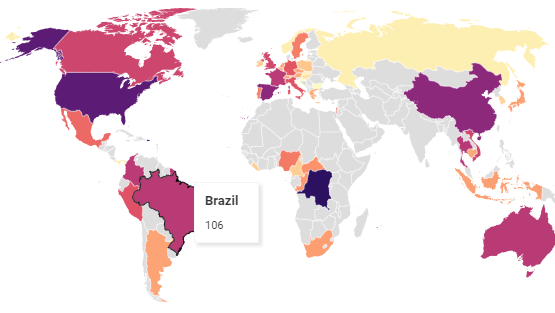
Mpox on the Map: All the Countries Where There are Confirmed Cases of New Strain

While the new clade 1 strain of mpox has appeared in parts of Africa, other types have been recorded around the world
(Independent, Albert Toth) -- A public health emergency has been declared by the World Health Organization (WHO) over a new outbreak of mpox in several African nations, with two case now reported outside of the continent.
Also known as monkeypox, the disease has seen an upsurge in the Democratic Republic of Congo (DRC) with confirmed cases reaching countries across the African subcontinent.
More than 17,000 cases have now been confirmed across Africa, with the WHO saying the outbreak is of “international concern”. The public health emergency was declared by the group’s director general, Dr Tedros Adhanom Ghebreyesus.
The outbreak comes as a new strain is identified, named clade 1, said to be spreading mainly through sexual networks. WHO says it has been identified in Burundi, Kenya, Rwanda and Uganda – all countries that have never reported cases of mpox before.
One case of this new strain has now been detected in Sweden, the country’s public health agency has confirmed. They say the person, who is now in isolation, had contracted it during a stay in an African country where other cases have been reported.
The Pakistan Ministry of National Health Services also confirmed its first case, saying the person had come from Saudi Arabia. Health officials said sequencing is underway to determine the exact strain of the virus the person had been infected with.
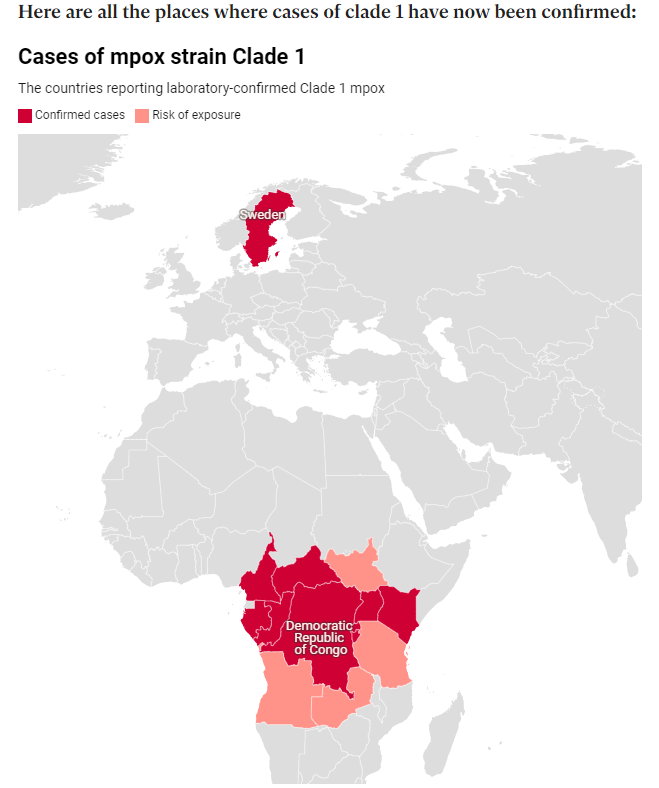
Dr Tedros said: “The emergence of a new clade of mpox, its rapid spread in eastern DRC, and the reporting of cases in several neighbouring countries are very worrying.
“On top of outbreaks of other mpox clades in DRC and other countries in Africa, it’s clear that a coordinated international response is needed to stop these outbreaks and save lives.”
The organisation is working with nations worldwide to coordinate accelerated vaccine access and containment measures. They say an initial sum of 15 million dollars will be required for an effective response.
Responding to the outbreak, the US government said the risk to the general public is “very low” with no cases of clade I reported there. However, the nation has seen 1,399 cases of other mpox strains since the start of the year, nearly level with the DRC.
A US spokesperson said: “In addition to ongoing health support, in the last few months the United States has provided an additional $17 million USD to support clade I mpox preparedness and response efforts in Central and Eastern Africa.
“The funding has enabled stronger surveillance, risk communication, and community engagement, as well as needed laboratory supplies and diagnostics, clinical services, and vaccine planning.”
So far, the risk assessment for the entire world has been set to ‘moderate’, with cases of clade I being largely located in the DRC and neighbouring countries.
