Call for Poster Abstracts
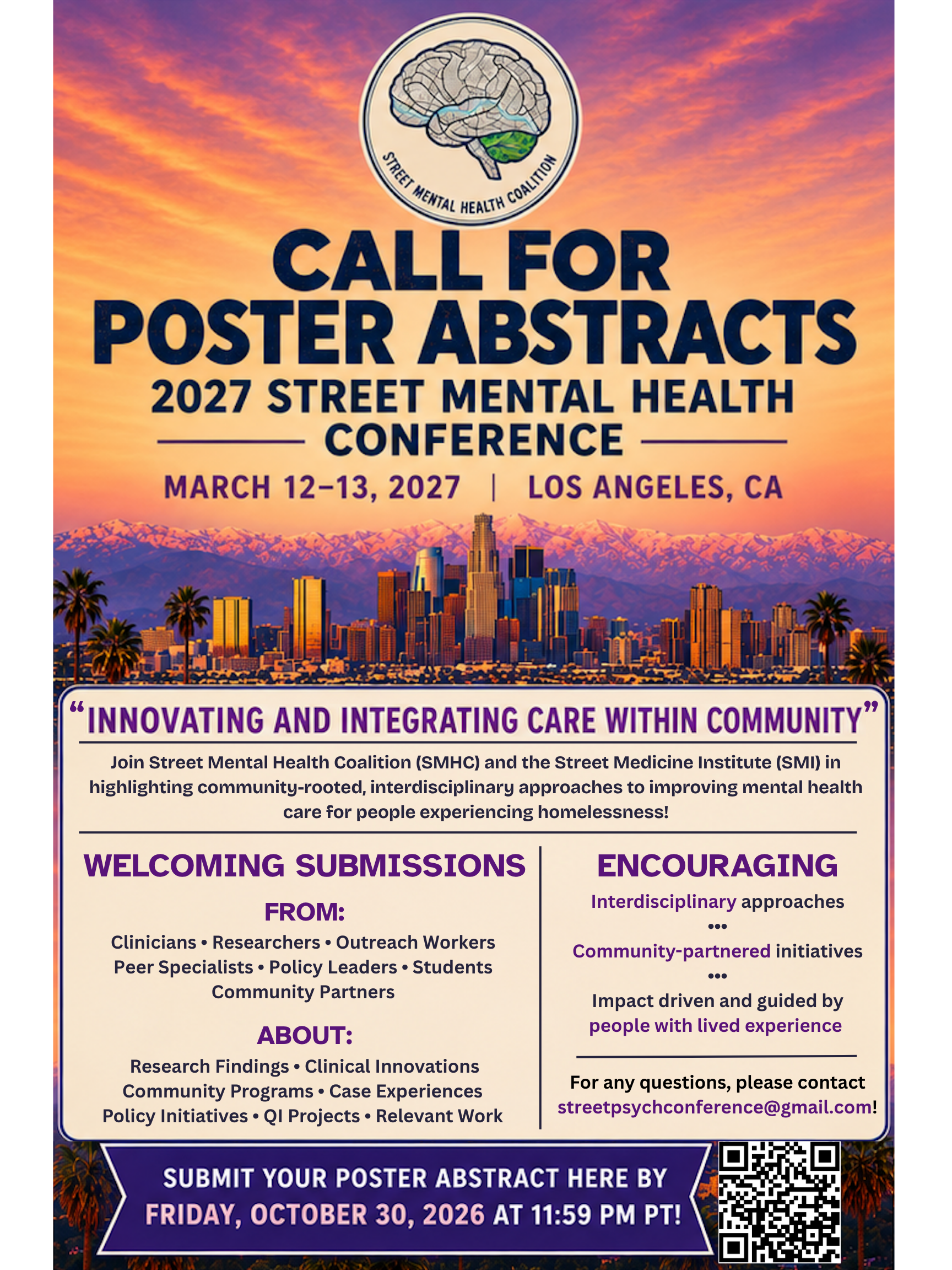
2027 Street Mental Health Conference
Call for Poster Abstracts
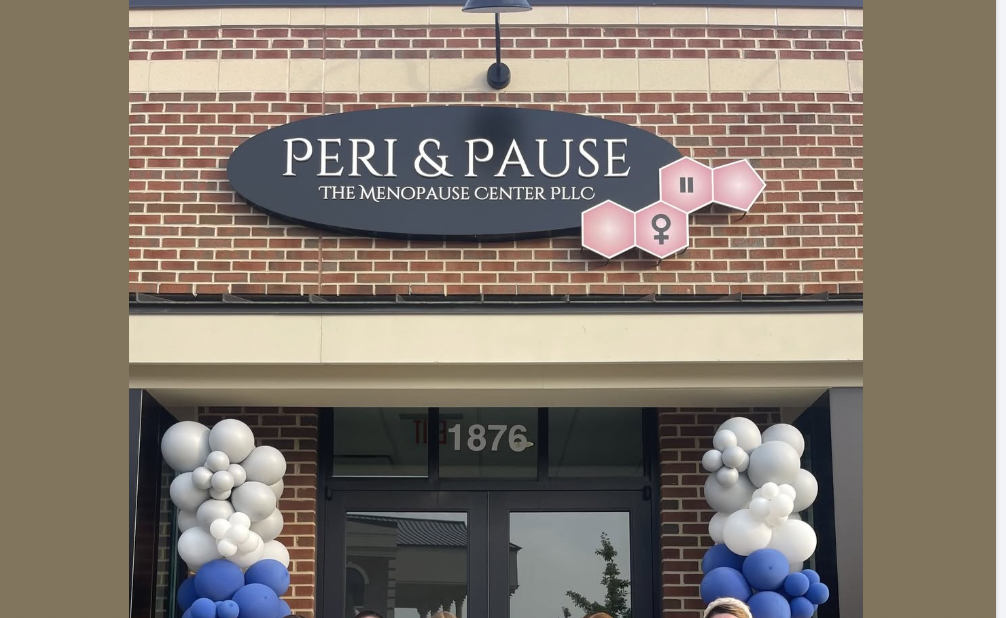
Veronica Butler, a medical student at Campbell University and NCMS member, is serving on the planning committee for the 2027 Street Mental Health Conference. Butler is also a participant in the NCMS Student Advocacy in Medicine Fellowship and NCMS Foundation’s Future Healthcare Leaders (FHL) Program.
She hopes to encourage greater representation from North Carolina through poster abstract submissions.
The Street Mental Health Coalition, in collaboration with the Street Medicine Institute (SMI), is now accepting poster abstracts for the 2027 Street Mental Health Conference, taking place March 12–13, 2027, in Los Angeles, California.
This year’s theme, Innovating and Integrating Care Within Community, centers community-rooted and interdisciplinary approaches to improving mental health care for people experiencing homelessness.
They welcome submissions from clinicians, researchers, outreach workers, peer specialists, policy leaders, students, and community partners. We especially encourage work that is interdisciplinary, community-partnered, and led by or meaningfully includes people with lived experience.
Poster submissions may feature:
- Research and quality improvement
- Clinical innovations and case experiences
- Street-based and community programs
- Policy initiatives and systems-level work
- Other innovative approaches to street mental health and care for people experiencing homelessness
Submission deadline: Friday, October 30, 2026, at 11:59 PM PT
Help bring North Carolina perspectives and innovations to the national conversation!
Submit your poster abstract here.
For questions or to learn more, contact Veronica Butler at veronicabutler510@gmail.com.

NCMS Attends Carolinas MGMA Fall Conference
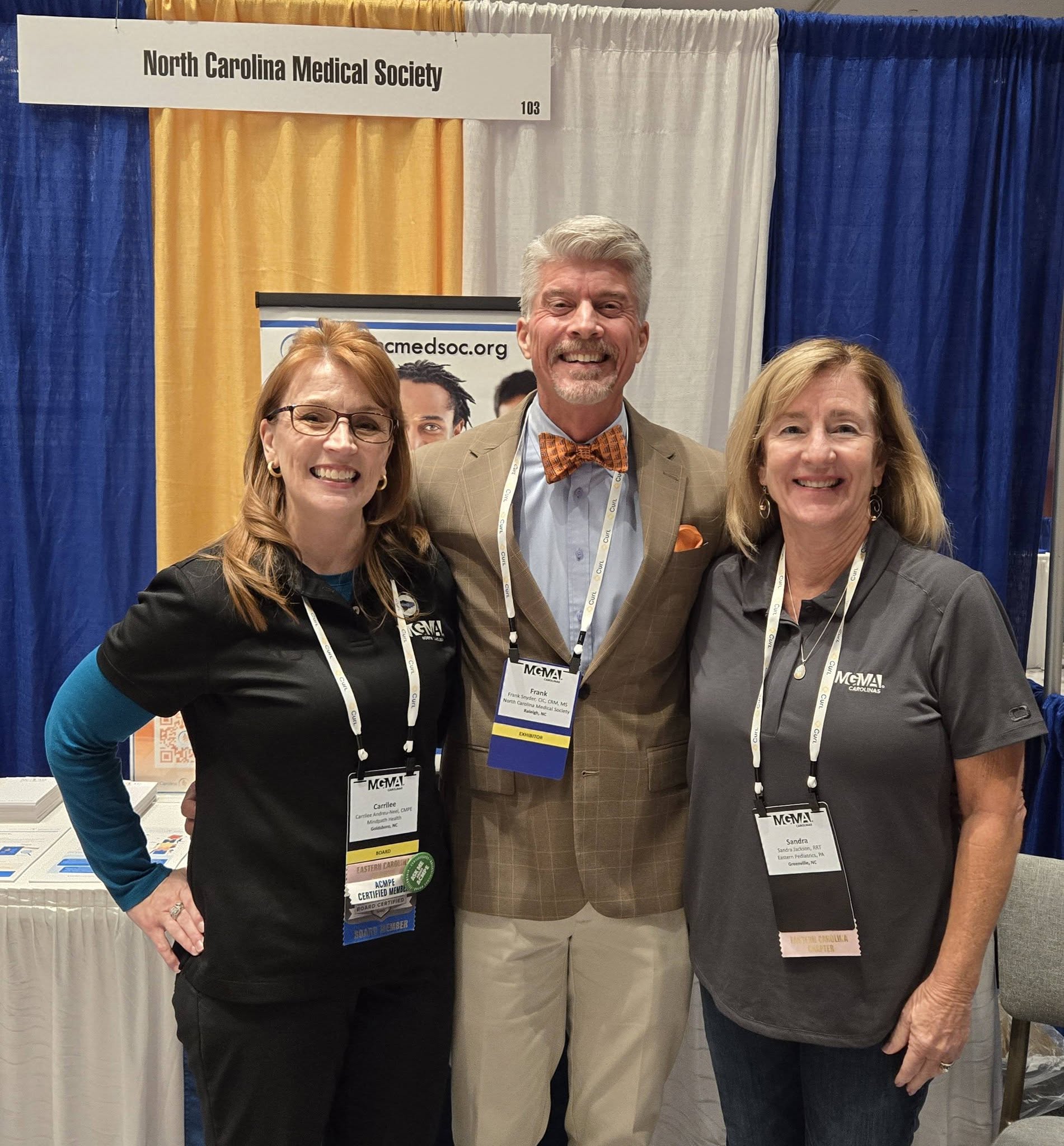
The North Carolina Medical Society was pleased to sponsor and attend the 2026 Carolinas MGMA Fall Conference in Charlotte this past weekend, with the theme Accelerating Healthcare Excellence in the Carolinas.
This CMGMA meeting had an increased attendance of 15% over last year’s Fall conference and a 27% increased attendance from this year’s Spring conference, a great tribute to the CMGMA Leadership in emphasizing the importance of medical practices administrators coming together in support of each other.
This message was further emphasized in keynote speaker Dean Otto’s presentation, Finish the Ride: The Power of Belief at Work and in Life. Mr. Otto stressed that “belief is not passive. It’s a discipline, a decision, a practice and something teams can build together.”
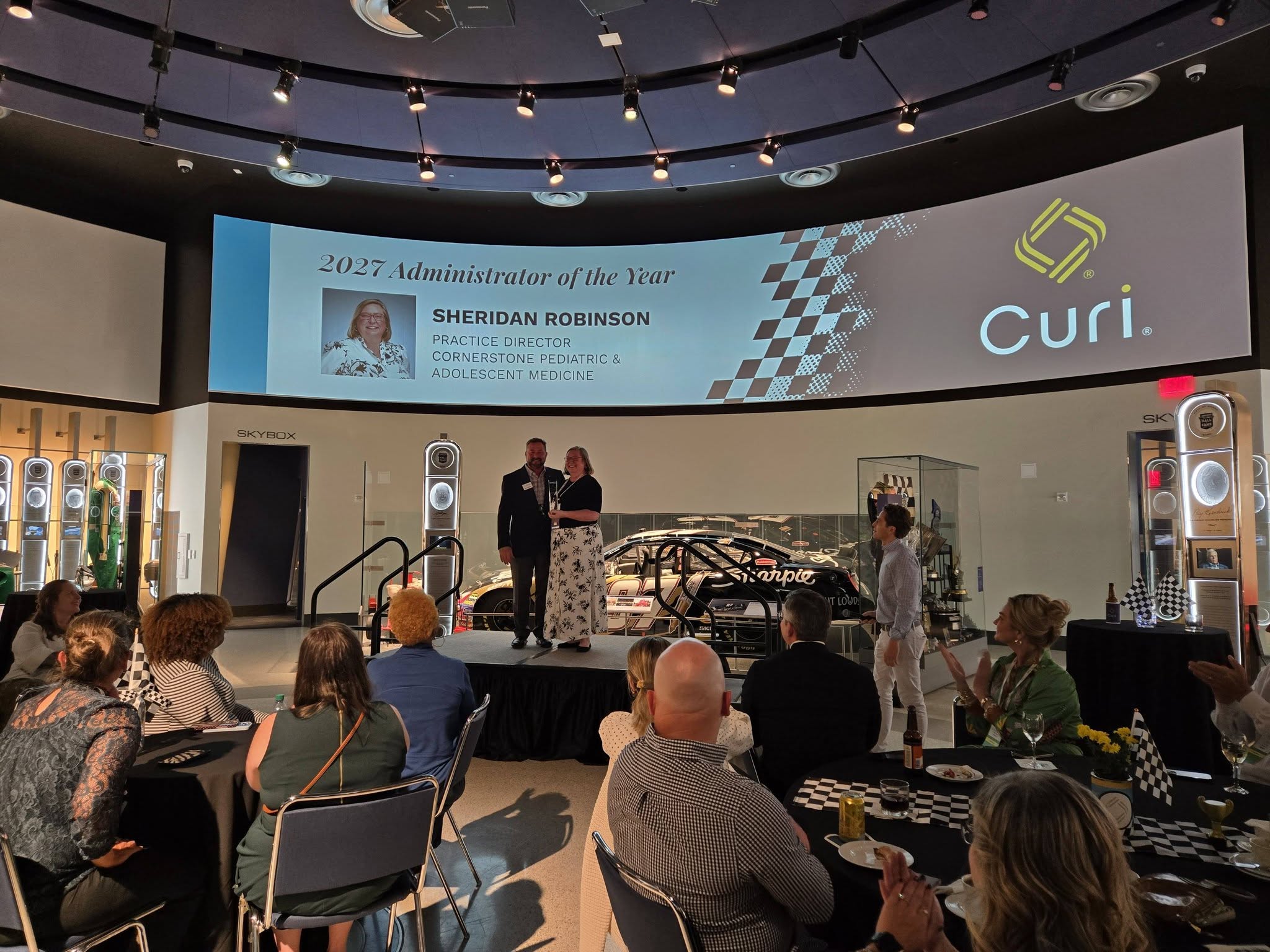
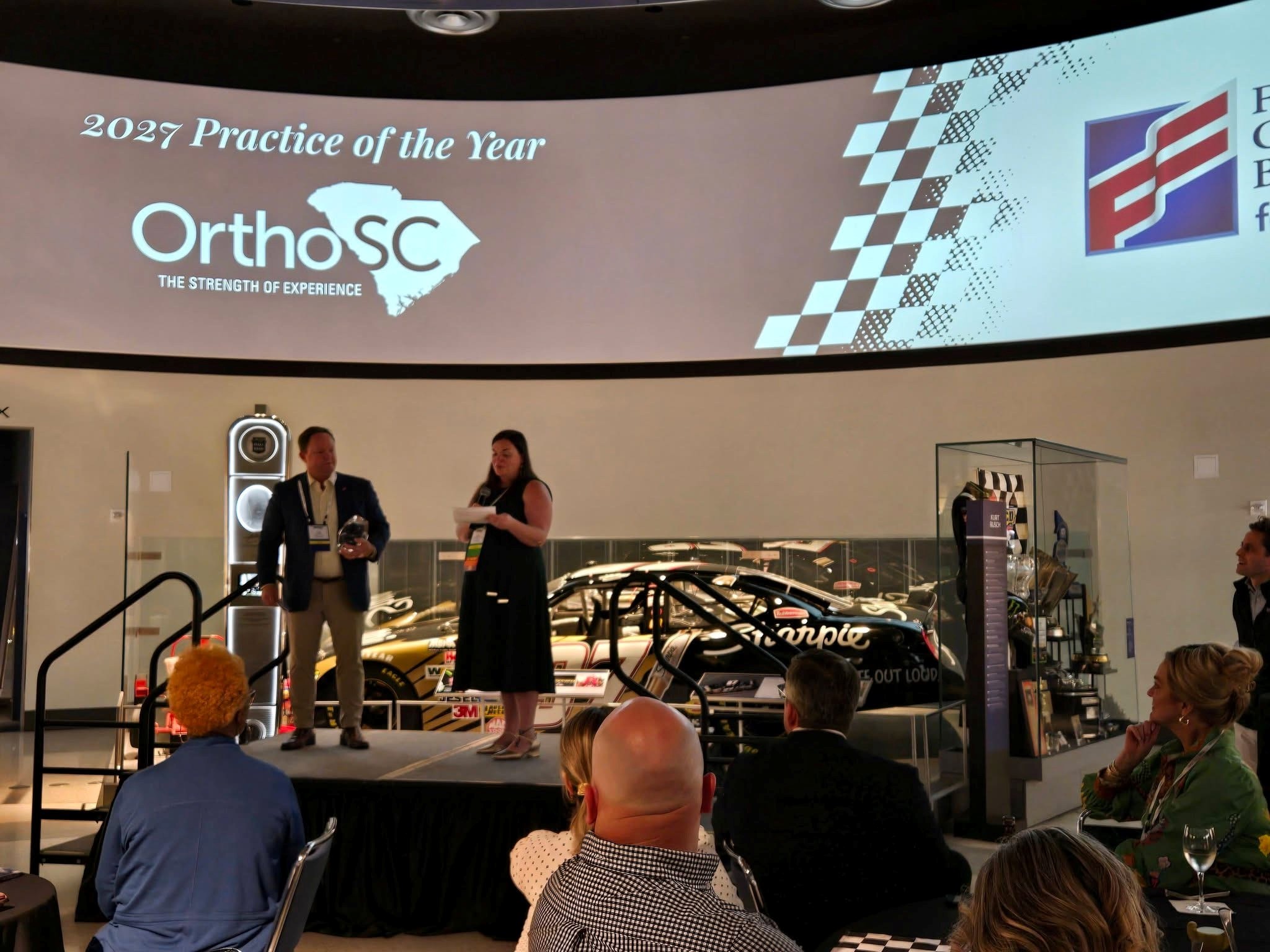
Congratulations to Cornerstone Pediatrics & Adolescent Medicine’s Sheridan Robinson for being named Practice Administrator of the Year, Ortho SC for being named Practice of the Year, and Melissa Klingberg for receiving the President’s Award!
New Insurance Options for NC Practices
New Insurance Options for NC Practices
Simplifying Coverage. Strengthening Practices. Supporting Physicians.
The North Carolina Medical Society is proud to launch a strategic partnership with the Medical Society of Virginia to deliver comprehensive property and casualty (P&C) insurance solutions to physicians across North Carolina.
Under the brand name InsureHaven, this collaboration marks a first-of-its-kind, mission-driven partnership between two state medical societies, designed to go beyond a traditional endorsement and create a stronger, more sustainable insurance resource for the medical community.
InsureHaven is more than an endorsement. It is a true partnership built around the unique needs of physicians, medical practices and the organizations that support them.
What This Means for You
InsureHaven offers a comprehensive suite of insurance solutions, including:
- Medical malpractice coverage
- Workers’ compensation
- Business and property & casualty (P&C) insurance
All offerings are supported by expert guidance and a streamlined service experience, helping you make confident, informed decisions.
Why This Partnership Matters
✔ Choice + Trust
You’ll benefit from carefully selected insurance options — curated and vetted with physicians in mind — backed by the trusted voice of your medical society.
✔ A Physician-Led Approach
This program is designed to simplify insurance decisions, reduce administrative burden, and support strong risk management — so you can stay focused on patient care.
✔ Value That Stays in the Profession
Unlike traditional insurance models, program revenue is reinvested into the medical society’s mission, supporting advocacy, physician wellness, and resources for you and your colleagues.
A Different Kind of Insurance Experience
InsureHaven was built by a medical society, for medical practices. That means:
- A deeper understanding of the challenges physicians face
- Proactive support, including coverage reviews and risk insights
- A long-term commitment to your success — not just a transaction
This partnership is part of a broader effort to strengthen physician support across state lines — bringing innovative, mission-driven solutions to the business side of medicine.
Have questions?
We’re here to help. Visit https://insurehaven.com/ncms/ for more information.
Making the Most of the Year-End Push!
Annual Wellness Visits
Making the Most of the Year-End Push
As year-end approaches, many practices accelerate Annual Wellness Visit (AWV) outreach and scheduling to close preventive-care gaps. Completing eligible AWVs can support more than patient engagement: in many value-based arrangements, AWV completion is tied to quality performance, risk-identification workflows, care-gap closure, and, in some contracts, shared savings or incentive payment opportunities.
Annual Wellness Visits: The Year-End Push
The Medicare AWV is a prevention-planning service, not a routine annual physical. Its purpose is to identify health risks, update the patient’s preventive-care plan, and create or refresh a personalized prevention plan. Medicare explicitly notes that the yearly wellness visit is not a routine physical examination. Often, additional patient education is necessary, as there is no physical exam required.
For practices racing to meet end-of-year targets, AWVs are a high-value opportunity to:
- Capture and update health-risk, functional, behavioral, and social-risk information.
- Identify and close preventive screening, immunization, and chronic-condition care gaps.
- Document a current prevention plan and screening schedule.
- Connect patients with needed follow-up, care management, health education, and community resources.
- Improve performance in value-based care programs where preventive engagement, quality measures, and attributed-population outreach affect financial results.
The operational message is simple: do not wait for a provider-only appointment model to complete the work.
Coding Refresher
| Service | HCPCS Code | Practical Reminder |
| Initial AWV | G0438 | Use for the patient’s first AWV; generally billable once per lifetime. |
| Subsequent AWV | G0439 | Use for follow-up AWVs after the initial service; Medicare permits G0438 or G0439 only once in a 12-month period |
| Initial Preventive Physical Examination (“Welcome to Medicare”) | G0402 | This is distinct from an AWV and is available during the patient’s initial Medicare Part B enrollment period. |
| FQHC IPPE/AWV Encounter | G0468 | Used by federally qualified health centers for the applicable bundled FQHC visit that includes an IPPE or AWV. |
CMS identifies G0438 as the first AWV and G0439 as subsequent AWVs; neither may be billed more than once within a 12-month period. CMS also lists G0468 for qualifying FQHC IPPE/AWV visits.
Use the Whole Care Team
Practices do not need to build the AWV around a physician or APP performing a hands-on exam. There is no CMS requirement for a comprehensive physical examination as part of an AWV alone. The required work is centered on a health risk assessment (HRA), preventive planning, risk review, and personalized recommendations, not a head-to-toe exam.
This creates an important opportunity to use team-based workflows:
- Front-desk and outreach staff can identify eligible patients, schedule visits, and distribute or collect pre-visit HRA questionnaires.
- Medical assistants, nurses, care managers, pharmacists, and other trained clinical staff can complete standardized data collection, vital signs, medication reconciliation, screening tools, functional and fall-risk assessments, and care-gap review, consistent with practice policies and scope of practice.
- The billing practitioner can review the information, conduct the required assessment and counseling, finalize the personalized prevention plan, and ensure documentation supports the billed service.
- Care coordinators and community health workers can support referrals, follow-up, and connection to preventive, behavioral-health, and social-support services.
CMS states that the HRA may be completed independently by the beneficiary or administered by a health professional before or as part of the AWV. In other words, efficient workflows can shift much of the standardized, preparatory work upstream, allowing the provider’s time to focus on interpretation, clinical judgment, shared decision-making, and the patient’s prevention plan.
Practical Year-End Reminder
A successful year-end AWV sprint is not simply a scheduling campaign. It is a structured population-health intervention: identify eligible patients, pre-complete the HRA and care-gap review, use staff at the top of their training, ensure clinician review and appropriate documentation, and convert identified needs into timely follow-up. Done well, AWVs advance patient-centered prevention while supporting quality and value-based payment performance.
Reference:
Centers for Medicare & Medicaid Services. (2026, February 11). Annual wellness visits.
https://www.cms.gov/training-education/medicare-learning-networkr-mln/compliance/medicare-provider-compliance-tips/annual-wellness-visits
Leadership Development That Strengthens Care: Beth Ehlers’ AHL Experience
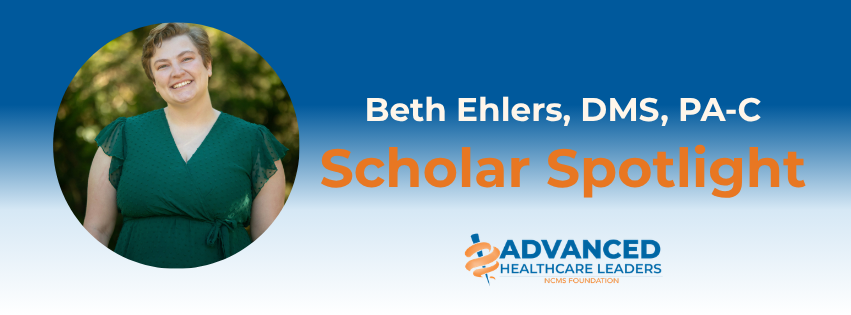
Beth Ehlers, DMS, PA-C, has always been drawn to the medical field. Her mother worked in healthcare, and Ehlers began shadowing different providers to explore the possibilities. She worked as a physical therapy technician and medical assistant and gained experience in several specialties before becoming a physician assistant. Although she initially had an interest in orthopedics, her first clinical rotation changed her direction.
She fell in love with psychiatry, drawn to the one-on-one time with patients and the opportunity to see how medication management could help people. Her interest in leadership development and work with the NC Academy of PAs brought her to the Advanced Healthcare Leaders (AHL) program.
For Ehlers, leadership development is closely connected to providing better support for providers and patients. She is particularly passionate about treating patients with schizophrenia and bipolar disorder and believes healthcare providers need to stay educated about new medications and know where to find reliable information.
Her project, “Antipsychotic Medication Guide for New Grads & Non-Psychiatry Providers,” focuses on helping PAs and other providers working in psychiatry navigate rapidly changing medication options.
Ehlers reached out to PAs who had recently graduated and were entering psychiatry, as well as providers who had recently transitioned into or out of psychiatry, to better understand where they felt unprepared or were still struggling. A common concern was the pace of change in antipsychotic medications. Even new graduates can find themselves behind when medications have been introduced while they were in school.
With the AHL leadership support, she decided to create a quick-reference guide as a starting point for providers, covering medication options, labs to monitor, potential interactions, and resources for finding more in-depth information. She hopes the guide will give providers another resource when considering different medication options and help support higher quality care for patients with mental health conditions.
The AHL program has also prompted Ehlers to reflect on her own leadership. She has gained a better understanding of the leadership styles that work well for her while becoming more conscious of behaviors that may come across as abrasive. Recognizing her tendencies in different situations has helped her determine when to step back and allow someone else to lead.
For Ehlers, the program’s interprofessional connections have been particularly valuable. Working alongside physicians, social workers, and others exposed her to different perspectives and approaches to problems. Feedback from faculty and staff provided a sounding board as she developed her project, helping ensure that the work was useful and would benefit the people she hoped to help.
Interested in learning more about this and other AHL scholars’ projects? Register here to attend the virtual graduations on September 28 and October 1.
The Academy for Healthcare Leaders is now accepting applications for the Advanced Healthcare Leaders and the Executive Healthcare Leaders programs. Full-tuition scholarship are available for eligible participants.
Questions about programs, scholarships, or employer tuition support, Contact Monecia Thomas/Lydie Ky
A Better Payment Experience Is Coming
NCMS is transitioning to a new platform designed to make payments easier, more user-friendly, and simpler to navigate, while also improving how we connect and interact with our members. This upgrade will help create a more streamlined experience across NCMS, making it easier to manage payments, access information, and engage with the Society.
As we make this upgrade, our payment system will be temporarily unavailable from September 30 through October 8. During this time, new payments, recurring payments, and donations will not be processed. If you anticipate needing to make a payment during this period, we encourage you to do so before September 30 or once the new platform becomes available.
We appreciate your patience and understanding as we complete this transition. We look forward to providing a smoother, more convenient experience beginning October 9.
NCMS Attends Annual GME Conference
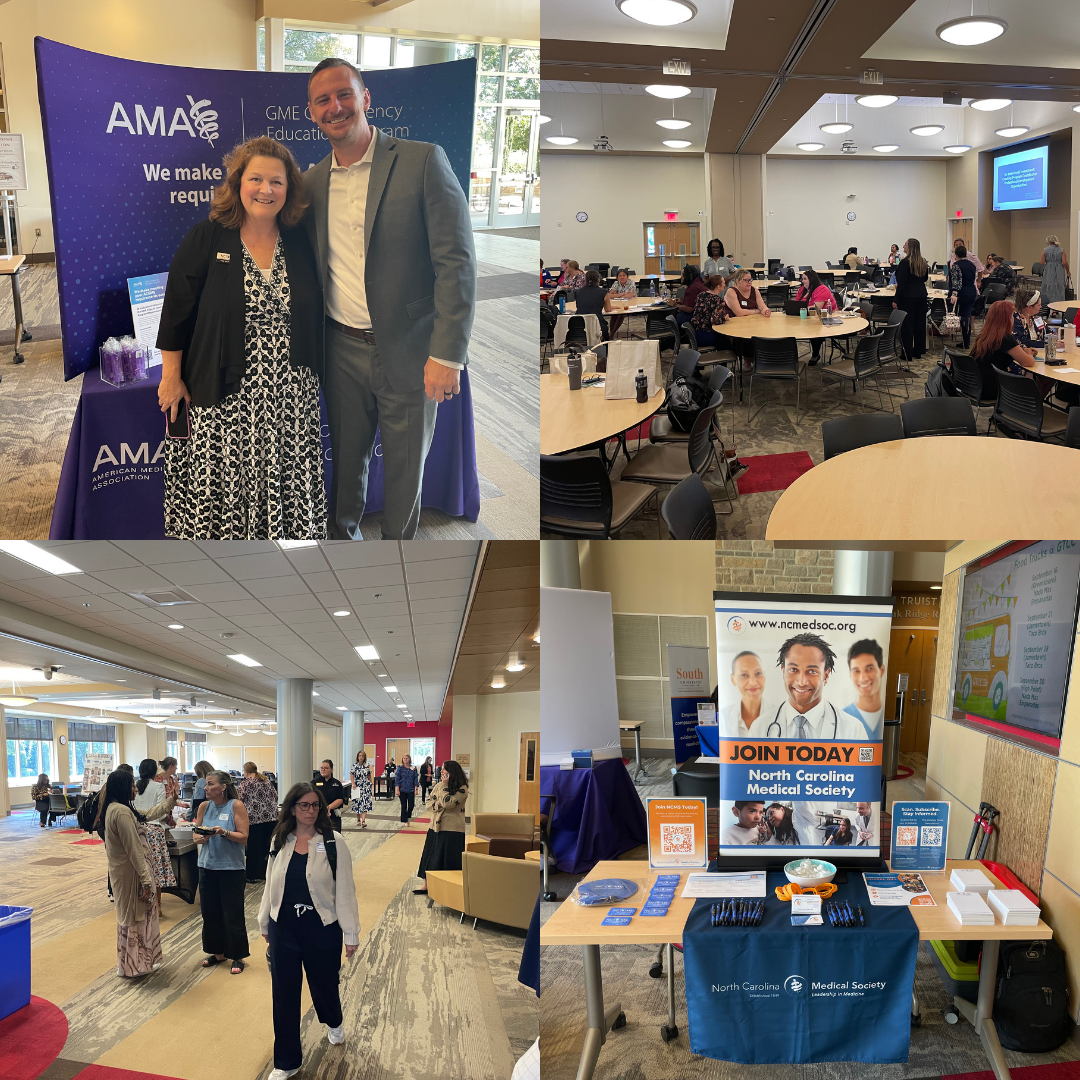
NCMS was honored to sponsor and attend the NC GME (Graduate Medical Education) Annual Conference last week in Greensboro. We had the opportunity to speak with GME program coordinators and program directors from across the state, as well as Ed Donnelly, representing the American Medical Association (AMA). We appreciate all that the GME programs do to support the next generation of physicians in North Carolina.
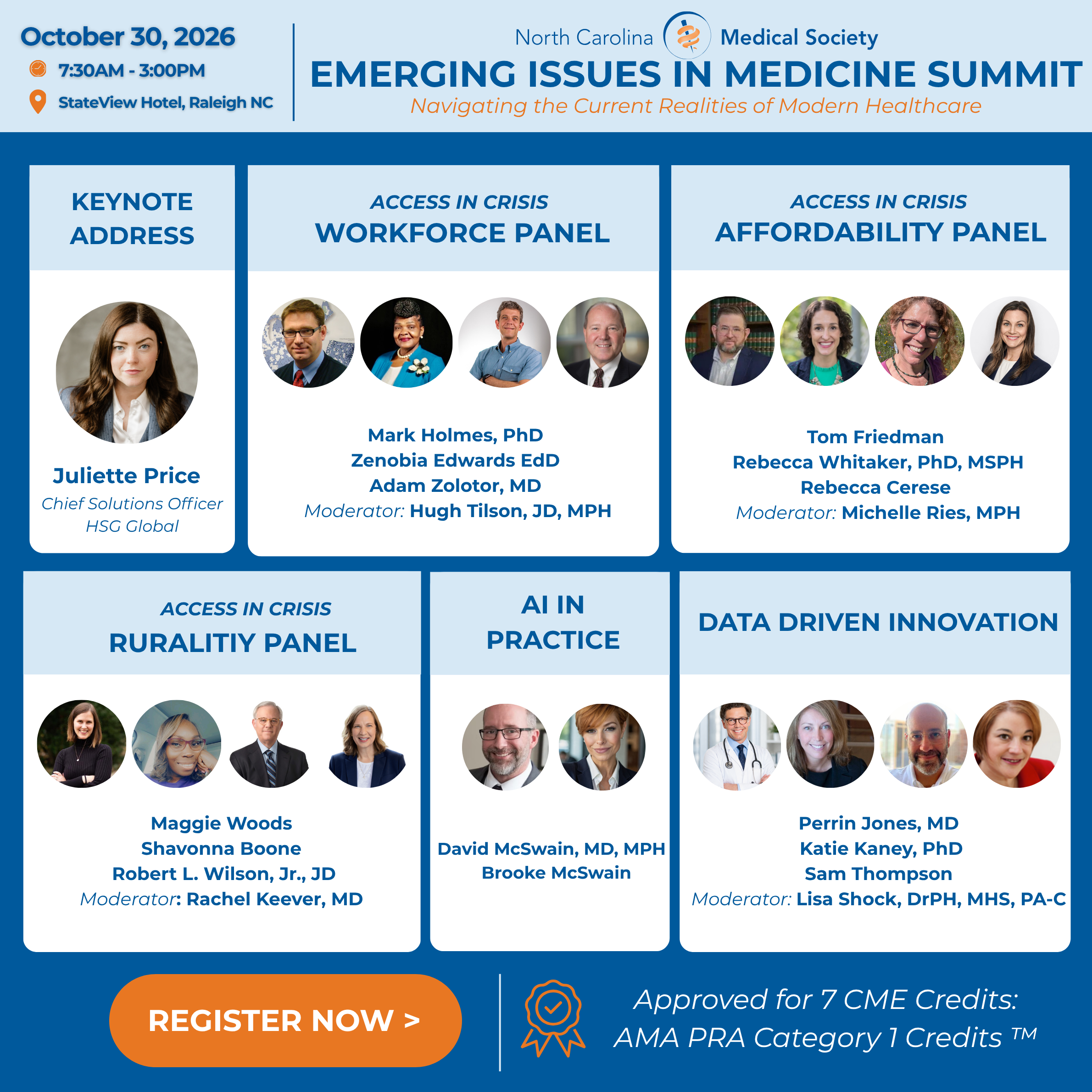
Emerging Issues in Medicine Summit: Speaker Panel
Meet the voices shaping the conversation at Emerging Issues in Medicine: Navigating the Current Realities of Modern Health Care. Hear from health care leaders, policy experts and innovators as they explore the challenges and opportunities impacting health care in North Carolina today.
NC SHIP Community Council Annual Virtual Meeting
NC SHIP Community Council Annual
Virtual Meeting
September 18th | 10:00 AM – 12:00 PM
The NC State Health Improvement Plan (SHIP) Community Council is a statewide collaborative created in 2020 by NCDHHS that brings together leaders from across sectors to develop data-driven strategies and action plans designed to improve health and well-being by addressing the Healthy North Carolina (HNC) 2030 priorities.
The annual meeting is a chance to review the most recent State Health Assessment (2025), hear updates from the SHIP workgroups, and discuss next steps for the Council and its work. The 2025 State Health Assessment report serves a mid-cycle review of the progress North Carolina has made towards meeting the HNC 2030 goals, which was released earlier this year.
The North Carolina Medical Society applauds and supports the NC SHIP Community Council on their continued efforts to drive collaborative strategies for a healthier North Carolina.
Please join us at the Virtual Annual Meeting on September 18th.
For additional information, please visit the NC DPH Healthy North Carolina 2030 and NC SHIP webpage.
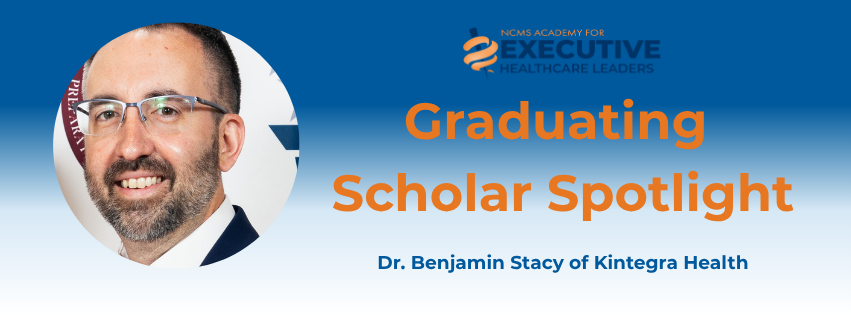
Graduating Scholar Spotlight
This week, the Executive Healthcare Leaders program would like to profile one of their Graduating Scholars, Dr. Benjamin Stacy of Kintegra Health, EHL Scholar 2026.
Benjamin Stacy, DO, has built his career serving underserved communities. During medical school he became a National Health Service Corps scholar and chose to pursue primary care to make a difference in communities. His interests led to a combined family medicine and psychiatry residency at the University of Iowa, where he served as chief resident. Drawn to North Carolina and the need for care across Appalachia, he joined Kintegra Health in 2019, focusing on integrating primary care and behavioral health services.
After serving as VA Outpatient Psychiatry section chief from 2023 to 2025, Dr. Stacy returned to Kintegra as psychiatric medical director. This work drives his Executive Healthcare Leaders (EHL) project, Expanding Primary Care’s Role in Access to Medications for Opioid Use Disorder (MOUD) which aims to increase first line access for patients to medications for opioid use disorder (MOUD). Primary care providers are often patients’ first point of contact and are well positioned to initiate treatment for opioid use disorder.
Through the Executive Healthcare Leaders program, Dr. Stacy has gained tools for leading change, organizing improvement projects, and building teams. Guided by his belief that leadership means creating value for others, he remains dedicated to driving meaningful change that expands from one person to benefit whole communities.
Interested in learning more about Dr. Stacy’s project and other EHL projects? Register here to attend the virtual Graduation on September 26.
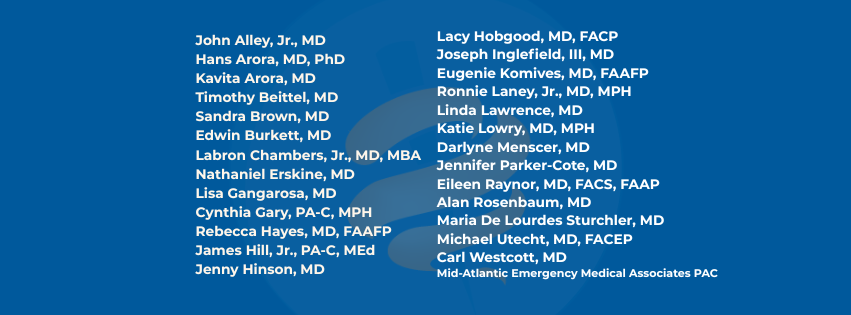
Thank You to Our 2026 PAC Donors
|
NCMS Responds to Lawsuit Challenging Physician Collaboration Requirements
A lawsuit filed this week in Wake County Superior Court is challenging North Carolina laws that require nurse practitioners (NPs) to practice in collaboration with physicians.
In Gallagher v. Rao-Patel and Ingram, a Wake County family nurse practitioner is asking the court to declare the state’s physician collaboration requirements unconstitutional and prevent the North Carolina Medical Board and North Carolina Board of Nursing from enforcing them against nationally certified NPs.
The lawsuit argues, among other claims, that requiring NPs to maintain collaborative practice agreements with physicians unfairly restricts their ability to practice and treats them differently from other healthcare professionals.
NCMS opposes this lawsuit and efforts to eliminate physician collaboration requirements through litigation.
Healthcare works best when we work together. Physicians, APPs, and other healthcare professionals all play an important role in caring for North Carolina patients. Strong team-based care brings those professionals together while ensuring patients have access to the right level of expertise when they need it.
Good physician supervision and meaningful collaboration are not barriers to care—they are important parts of delivering safe, coordinated, high-quality care.
NCMS encourages physicians and PAs across the state to stay informed and engaged on this issue. NCMS is rolling out additional information, including an action alert for you to express your views on this topic. Please watch for emails from NCMS in the coming days and we will continue to provide updates through the Weekly Dose as the case moves forward.
Advanced Healthcare Leaders Final Project Presentations 2026
September 28, 2026 | 6:00 – 8:00 PM
SCHEDULE DETAILS
6:00 PM – 6:14 PM
Welcome and Opening Comments
Monecia Thomas, PhD, MHA, VP, Professional Growth, NCMS Foundation
Lydie Ky, MIDP Program Manager, Professional Growth, NCMS Foundation
Lawrence (Larry) Greenblatt, MD, Co-Chair, Advanced Healthcare Leaders
Michaux Kilpatrick, MD, PhD, Co-Chair, Advanced Healthcare Leaders
Scholar Presentations: 10 minutes with 4 minutes for questions
6:15 PM – 6:29 PM
Presentation 1: Increasing Rural Access to Dermatology: Promotion and Implementation of Teledermatology Services
Sarah Rimmer, MD, Wake Forest University
6:30 PM – 6:44 PM
Presentation 2: Mitigating Physician Burnout Through AI-Enabled Documentation for Outpatient Clinic Visits
Mariam Tariq Awana, MD, ECU Health
6:45 PM – 6:59 PM
Presentation 3: Antipsychotic Guide for New Grads & Non-Psychiatry Providers
Beth Ehlers, DMS, PA-C, Good Hope Hospital/Daymark Recovery Services
7:00 PM – 7:14 PM
Presentation 4: Stroke Support Group
Jessica Mabe, FNP-BC, Hugh Chatham Health – Family Medicine
7:15 PM – 7:29 PM
Presentation 5: Connecting Wilkes to Mental Health Support
Jennifer Childress, FNP-BC, Hugh Chatham Health – Family Medicine
7:30 PM – 7:44 PM
Presentation 6: Moving Toward the Development of a Nonprofit for Mutual Aid Wellness Collective
Lucy Smith, DNP, MSN, BSN, BA, FNP-BC, RN, AAHIVS, Vecinos & Mutual Aid Wellness Collective
7:45 PM – 7:55 PM
Closing Statements
AHL Team
October 1, 2026 | 6:00 – 8:00 PM
SCHEDULE DETAILS
6:00 PM – 6:14 PM
Welcome and Opening Comments
Monecia Thomas, PhD, MHA, VP, Professional Growth, NCMS Foundation
Lydie Ky, MIDP Program Manager, Professional Growth, NCMS Foundation
Lawrence (Larry) Greenblatt, MD, Co-Chair, Advanced Healthcare Leaders
Michaux Kilpatrick, MD, PhD, Co-Chair, Advanced Healthcare Leaders
Scholar Presentations: 10 minutes with 4 minutes for questions
6:15 PM – 6:29 PM
Presentation 1: Addressing Barriers to ASWB Exam Success to Increase Diversity Among LCSW Clinicians
Dayna L. Farrington, MSW, LCSW, LCAS, CCS, Integrated Family Services, PLLC
6:30 PM – 6:44 PM
Presentation 2: Improving APP Retention in an FQHC Setting
Jennifer Pernesky, MSN, RN, NP-C, Rural Health Group
6:45 PM – 6:59 PM
Presentation 3: Hospital and Assertive Community Treatment (ACT)
Team Collaboration
Danielle Mohlhenrich-Thompson, LCSW, LCAS, Daymark Recovery Services
7:00 PM – 7:14 PM
Presentation 4: Redesigning Cardiology Consult Workflow: A Scalable, Team-Based Model for Continuity of Care
Osejie Oriaifo, MD, MSc, ECU Health
7:15 PM – 7:29 PM
Presentation 5: Closing the Loop: Improving Documentation of Emergent Consultation in Trauma
Bryson Jenkins, DO, ECU Health
7:30 PM – 7:44 PM
Presentation 6: Hospital Sponsored Group Home
Lauren Dunn, DO, ECU Health
7:45 PM – 7:55 PM
Closing Statements
AHL Team
2026 NCMS Executive Healthcare Leaders Program Graduation
SCHEDULE DETAILS
9:15 AM – 2:30 PM | Saturday, September 26
9:15 AM – 9:25 AM
Welcome and Opening Comments
Monecia Thomas, PhD, MHA, Vice President, Professional Growth, NCMS Foundation
Lydie Ky, MIDP, Program Manager, Professional Growth, NCMS Foundation
Eugenie (Genie) Komives, MD, Co-Chair, Executive Healthcare Leaders
Bryant Murphy, MD, MBA, Co-Chair, Executive Healthcare Leaders
9:25 AM – 9:30 AM
Guest Speaker Introduction: EHL Co-Chair Eugenie (Genie) Komives, MD
9:30 AM – 9:45 AM
Guest Speaker Remarks: NCDHHS Secretary, Devdutta Sangvai, MD
9:45 AM – 9:58 AM
Opening Comments
Monecia Thomas, PhD, MHA
Scholar Presentations: 12 minutes with 3 minutes for questions
10:00 AM – 10:15 AM
Presentation 1: Preventing Menopause Associated Recurrent UTIs with Vaginal Estrogen in Women with Intellectual Disabilities at a State Developmental Center
Kia Sewell-Chance, MD, Caswell Development Institute
10:17 AM – 10:32 AM
Presentation 2: Expedited Workup for Emergency Department Patients with Acute Chest Pain
Gary Asher, MD, MPH, UNC Health
10:34 AM – 10:49 AM
Presentation 3: Increase Primary Care Support to Act as a First Line of Defense to Ensure Access to MOUD Treatment for Patients Organization-Wide
Benjamin Stacy, DO, Kintegra Health
10:50 AM – 11:03 AM
Break
11:05 AM – 11:20 AM
Presentation 4: Medicaid Medical Claims Denial Reduction
Corey Taliaferro, MBA, Carolina Complete Health
11:22 AM – 11:37 AM
Presentation 5: More Than Scheduling: Strengthening the Frontline Pathway to OUD Care
Gwendolyn Gilbert, MS, LCMHCS, LCAS, CCS, Agape Community Health
11:40 AM – 11:55 AM
Presentation 6: Improving Scheduled 2-Week Postpartum Visits for ECU
IMPACT Patients
David Ryan, MD, FASAM, FACOG, ECU Health
12:00 PM – 12:55 PM
Lunch
1:00 PM – 1:15 PM
Presentation 7: Increasing CPR Competency in Rural Areas
Shannon Courtleigh, PA-C, MS, Stedman-Wade Health Services
1:17 PM – 1:32 PM
Presentation 8: Informed Consent Counseling
Vijaysinha Mandhare, MD, Wake Spine and Pain Specialists
1:34 PM – 1:49 PM
Presentation 9: Optimizing APP Schedule Utilization
Jessica Heestand, MD, Wake Internal Medicine Consultants, Inc.
1:50 PM – 2:10 PM
Closing Comments: Scholars
2:10 PM – 2:20 PM
Closing Comments: EHL Team
2:20 PM – 2:45 PM
Photos
Advocacy in Medicine Fellowship Applications Are Now Open!
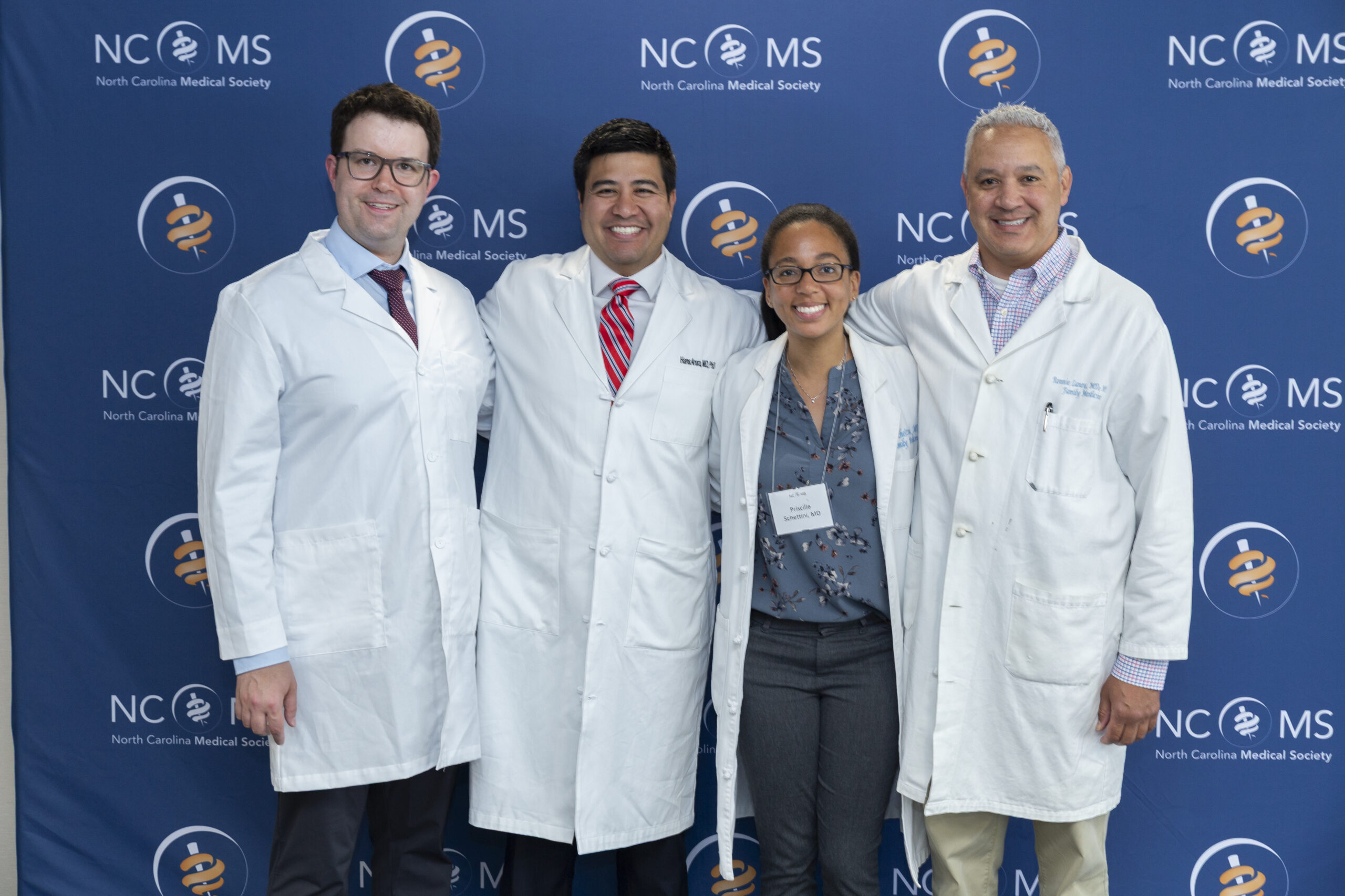
 Applications are now open for the 2027 NCMS Advocacy in Medicine Fellowship! This statewide program gives medical and PA students the tools, experience, and connections to become stronger advocates for themselves, their patients, and the future of healthcare in North Carolina.
The fellowship is the first statewide program of its kind, bringing together students from medical and PA schools across North Carolina to learn more about health policy and how they can make an impact. So far, more than 50 students from five medical schools and one PA school have participated.
Through virtual workshops and in-person experiences, fellows will learn how to:
- Understand North Carolina’s healthcare policy landscape and the issues impacting medicine.
- Advocate effectively with policymakers and other healthcare stakeholders.
- Lobby for legislation that affects patients and the practice of medicine.
- Build connections with legislators, regulatory officials, organized medicine leaders, and students from across the state.
The fellowship is a chance to start building advocacy skills and relationships now while gaining experience that can lead to future leadership opportunities at the state and national levels.
Applications close October 1!
NCMS Wants to Hear From You!
NCMS is gathering feedback to better understand how our organization is known and perceived within the medical community. We’d love to hear your perspective by filling out the brief survey below.
Your feedback will help shape how NCMS communicates and connects with physicians and PAs moving forward.
This survey should take 15 minutes or less, and your feedback is invaluable. We want to hear your perspectives and ensure your voice is heard. The survey closes September 11, 2026. Click below to participate.
Coming Thursday 8/20: New Political Pulse Episode
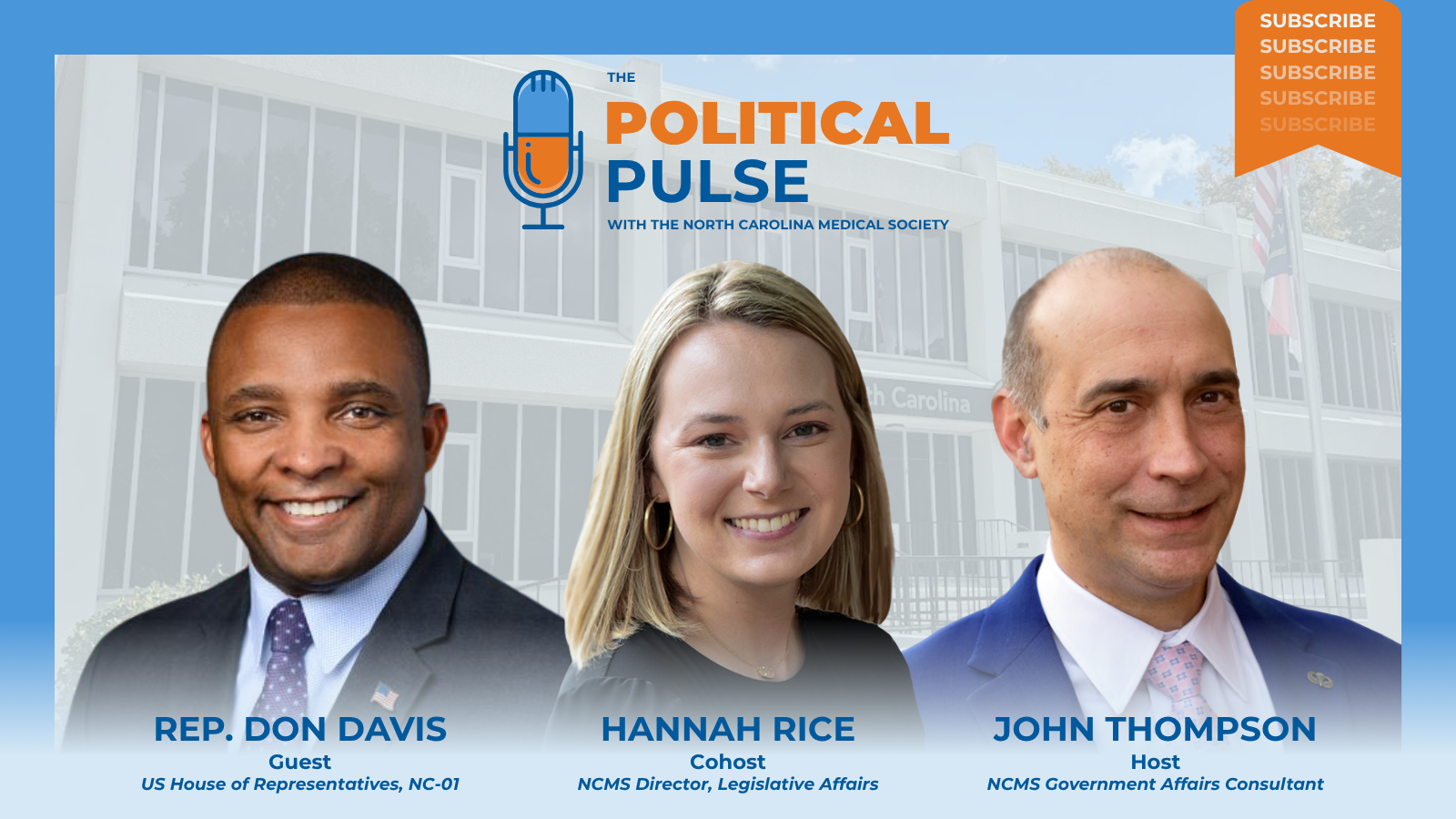
Announcing this week’s special guest on the Political Pulse Podcast: Congressman Don Davis!
Congressman Davis has spent his career in service — as an Air Force officer, educator, minister, Mayor of Snow Hill, State Senator, and now a member of Congress representing 22 counties across ENC.
Health care has been a major focus of his work, especially expanding access to affordable care in rural communities.
Tune in Thursday on the NCMS Substack for the full conversation! Make sure to subscribe so you don’t miss it!
Carolinas Society of Endocrinologists 2026 Annual Meeting
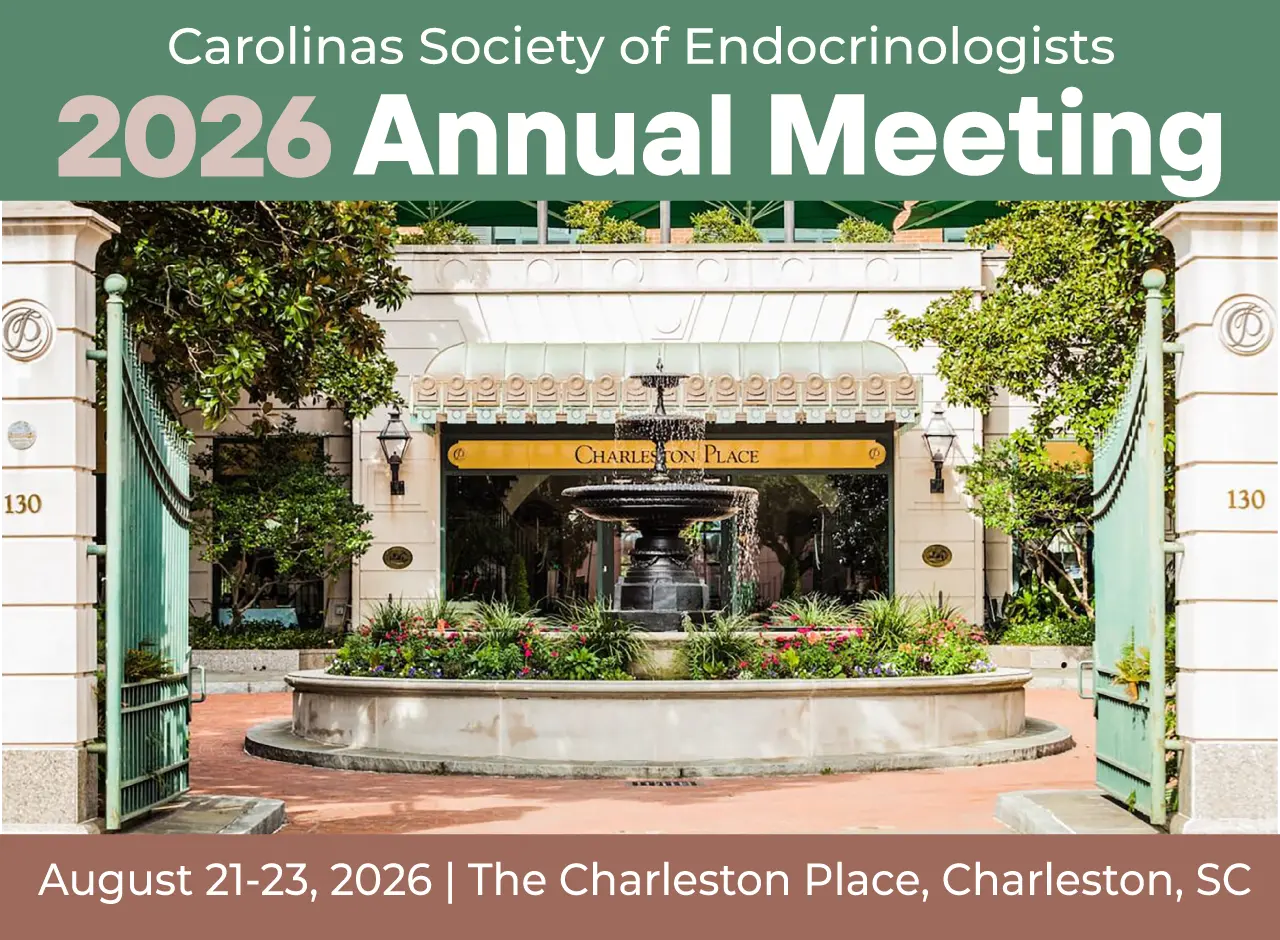
Join the Carolinas Society of Endocrinologists (CSE) for its 2026 Annual Meeting, this weekend, August 21–23 in Charleston, SC.
This premier endocrine education event brings together leading experts to share the latest advances in diagnosing, treating, and managing endocrine and metabolic disorders.
Designed for endocrinologists, trainees, and the wider healthcare team, the meeting features cutting-edge scientific sessions, practical clinical insights, and valuable networking opportunities — all set against the historic charm of Charleston. Elevate your practice, connect with colleagues, and stay at the forefront of endocrine care.

NCDHHS Updates Guidance for Fall Respiratory Vaccine Season
The North Carolina Department of Health and Human Services (NCDHHS) has shared several important updates for the upcoming fall respiratory vaccine season. The NC Board of Pharmacy has advised that pharmacists may continue administering routine influenza and COVID-19 vaccines under last year’s ACIP recommendations, which remain in effect.
The Department is also assessing the potential implications of the Aug. 10 Executive Order, which seeks to revise federal childhood vaccine recommendations by narrowing the vaccines routinely recommended for all children and shifting others, including influenza and COVID-19 vaccines, to shared clinical decision-making.
NCDHHS has not yet received formal federal guidance on how the order may affect North Carolina. In the meantime, the Vaccines for Children program is expected to operate as usual, NC Medicaid will cover indicated vaccines for beneficiaries, and pharmacists may administer the newly licensed mRNA influenza vaccine to adults 50 and older.
Additional guidance, seasonal updates and resources for health care professionals are available on NCDHHS’ Seasonal Respiratory Illnesses website.
ENROLL NOW: Free Quality Improvement Support for NC Clinical Practices
|
Old North State Medical Society Annual Scientific Conference
|
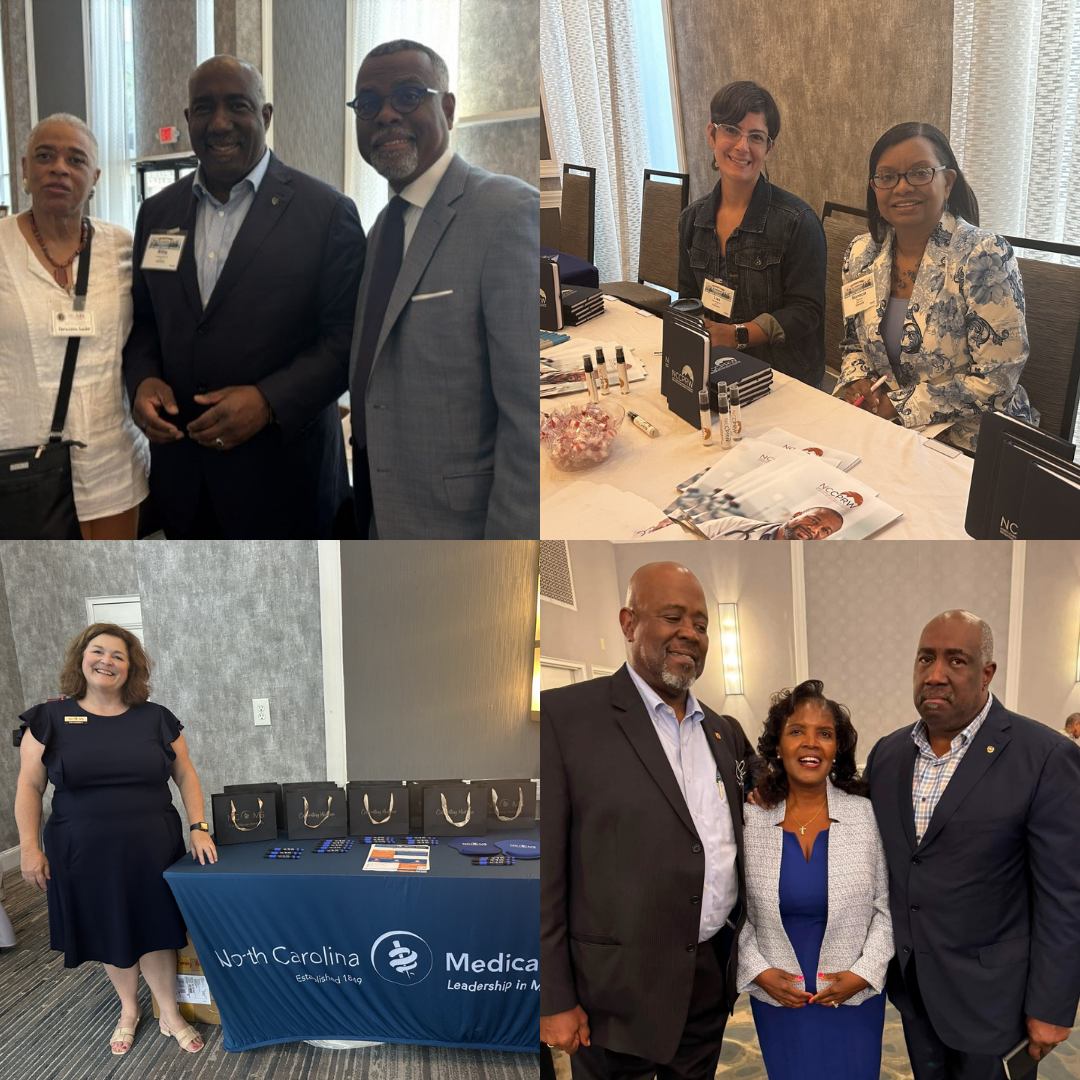
NCMS leaders and staff were pleased to support and attend the 135th Annual Scientific Conference of the Old North State Medical Society this past weekend. The conference brought together physicians and attorneys from across the state in Wilmington, where the NC Association of Black Lawyers held a joint meeting with ONSMS. NCMS President Carl Westcott, MD, and President-Elect Karen L. Smith, MD, FAAFP, were among the distinguished speakers. The lineup also included Willie Underwood, MD, President of the AMA; Cedric Bright, MD, President of ONSMS; Eddie Glaude Jr., PhD, a noted educator, author, and expert on racial and religious identity and politics in the U.S.; and the NCMS Foundation’s Monecia Thomas and Lisa Mwaikambo. |
NCMS Foundation’s Growing Impact Earns Regional Recognition
The North Carolina Medical Society Foundation (NCMSF) was recently recognized by the Triangle Business Journal among the Triangle’s largest foundations. The Foundation ranked #5 in annual giving percentage increase, #20 in dollar increase in giving, #32 in total assets, and #42 in total giving.
This recognition reflects the Foundation’s continued growth and increasing capacity to invest in programs that support physicians, strengthen communities, and improve health across North Carolina. We are grateful to our donors, partners, and supporters whose generosity makes this work possible and helps expand the Foundation’s impact across the state.
NCSEPS President & Surgeon Serves in South Sudan
|
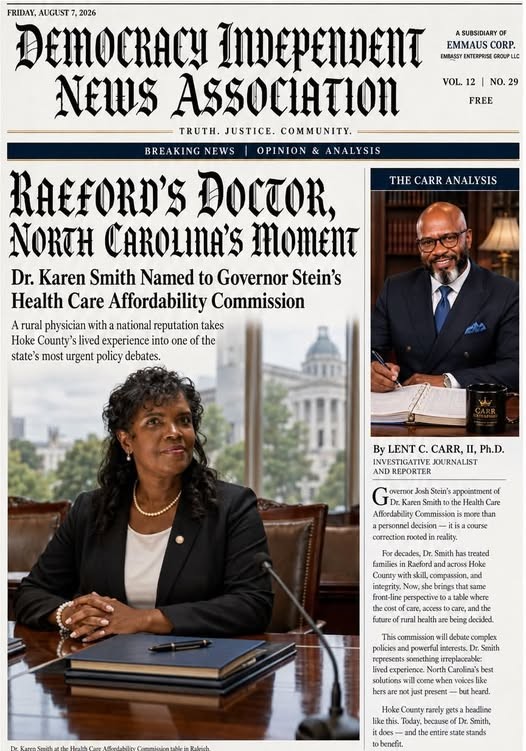
NCMS President-Elect Karen Smith, MD Appointed to Health Care Affordability Commission
|
BCBSNC E/M Leveling Program
NCMS is closely monitoring the August 15, 2026 implementation of Blue Cross and Blue Shield of North Carolina’s (BCBSNC) Evaluation and Management (E/M) Leveling Program and its potential impact on physicians and practices across the state.
BCBSNC has identified approximately 13% of its network providers for inclusion in the program, including physicians, physician associates (PAs) and nurse practitioners (NPs) across specialties. Letters to impacted providers were sent on July 27, 2026. Currently, the program is limited to office-based services (Place of Service 11) billed under E/M codes 99204, 99205, 99214 and 99215.
Under the program, BCBSNC may take one of three actions on an affected claim: pend the claim for further review, reimburse the service at a lower E/M level, or recoup payment through future reimbursements. When the program is applied, the provider’s payment remittance will include an EXCD code.
While the notification letter states the insurer will be using “an analytic solution to determine whether coding on these claims is aligned with national industry standard,” BCBSNC has indicated the process being used involves human review rather than AI. Providers who disagree with the determination will be directed to follow the health insurer’s standard claims dispute process.
What You Should Know: NCMS recognizes that changes to E/M claims review and reimbursement can create significant administrative and financial implications for physician practices. We encourage those who receive a notification letter to review it carefully, ensure documentation appropriately supports the E/M level billed, monitor remittance notices for EXCD codes, and track any claims that are reduced, pended or subject to recoupment.
NCMS will continue engaging BCBSNC on this issue, gathering feedback from the physician community and seeking additional clarity regarding implementation of the program. If your practice has received a notification letter or experienced a claim adjustment related to the E/M Leveling Program, we want to hear from you.
Please contact Jenni Hines at jhines@ncmedsoc.org to share your experience. Your feedback will help NCMS better understand the program’s impact on North Carolina physicians and inform our ongoing advocacy and education efforts.
NCMS Rounds: Let’s Talk Downcoding!
Welcome to NCMS Rounds, a new video series focused on your questions, challenges, and issues affecting physicians, PAs and medical practices. Let’s first talk downcoding!
Thank you to those who contributed questions for this episode!
Here’s what you asked:
- What is downcoding?
- What is the legality of downcoding?
- How prevalent is downcoding?
- What is the economic impact on small rural practices?
- What steps can we take to prevent or recognize downcoding within a practice?
- Why are only diagnosis codes becoming the basis for downcoding?
If this segment brought up additional questions or thoughts, we want to hear from you!
Fill out our quick form, drop your thoughts in the comments on our social media post, or reach out to Jenni Hines directly at jhines@ncmedsoc.org.
Bipartisan Bill Aims to Stabilize Medicare Physician Payments
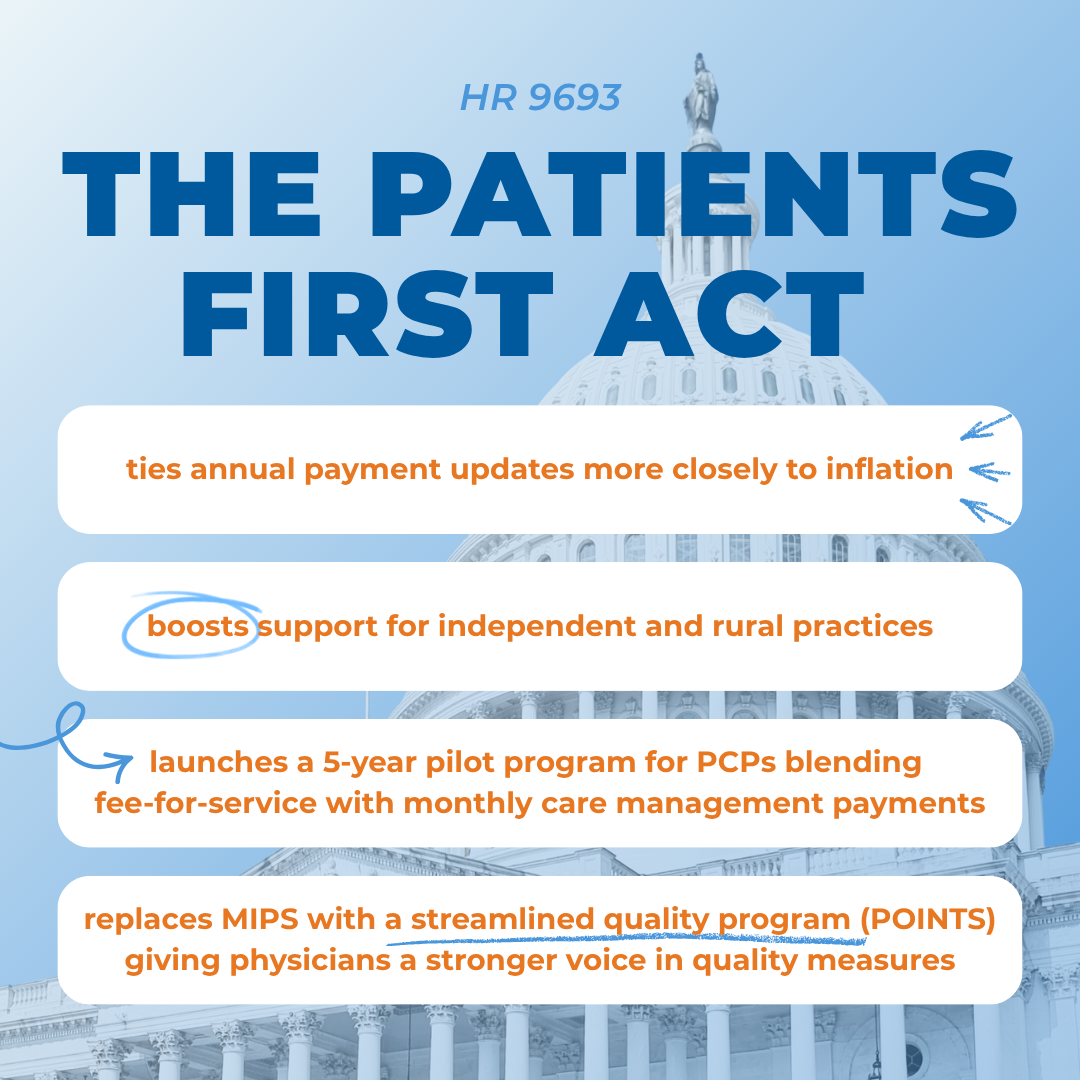
Last week, the bipartisan Doctors Caucus chairs – United States Representatives John Joyce, MD, Greg Murphy, MD, and Kim Schrier, MD – introduced the Patients First Act, HR 9693. A proposal to reform MACRA (Medicare Access and CHIP Reauthorization Act) and the Medicare physician payment system.
The proposed legislation would make several significant changes to Medicare physician payment with the goal of creating a more stable and predictable system. It would tie annual payment updates more closely to inflation, provide additional support for independent and rural physician practices, and launch a five-year pilot program that combines traditional fee-for-service payments with monthly care management payments for primary care practices.
The bill would also replace the current Merit-based Incentive Payment System (MIPS) with a new quality reporting program called the Patient Outcome Improvement National Tabulation System (POINTS). The new program is designed to simplify reporting, reduce administrative burden, and place greater emphasis on patient outcomes while giving physicians a stronger voice in developing quality measures.
Overall, the legislation aims to improve payment stability, reduce paperwork, encourage participation in value-based care, and help ensure Medicare patients continue to have access to high-quality physician care.